
First published in the June 2008 issue of Street Machine
There are many reasons to choose stainless steel braided fluid lines. The first is simply that they look good. But braided lines also perform better, and if you’re headed for the track, enhanced performance will be your number one requirement.
Braided line won’t make you faster around a circuit but it can make you more reliable. Between races it can make disconnecting and reconnecting hoses easier and reduce the likelihood of leaks or debris entering the line. Undoing hose clamps and doing them up again every time will damage the hose, especially if you use low quality clamps, which you never should. It can also be easier to undo a hex fitting and separate a tapered seat coupling than it is to prise a conventional rubber hose off a barbed or flared fitting.
If there’s relative movement between the components, an AN (US Army/Navy) swivel fitting will reduce fatigue failures.
Braided line is available from a number of sources, however the ‘dash’ numbering system that refers to the various sizes is virtually uniform. You can see the internal diameters that relate to the dash numbers in the table at the bottom of the page.

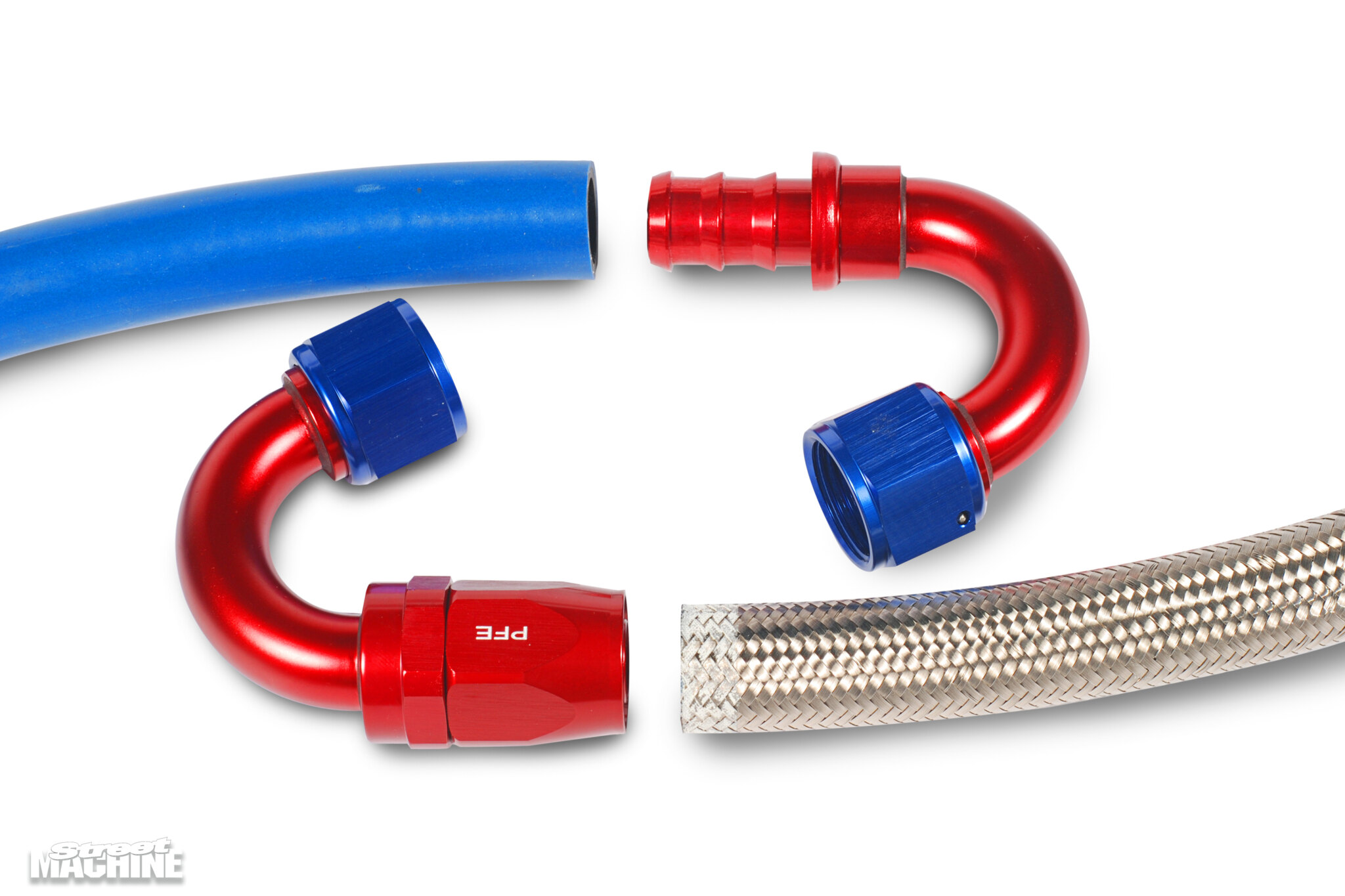
All the AN based hard fittings for braided lines use a 37-degree tapered seat for sealing (D, above). This basic design is used with other types of hose. The most common alternative to steel braided line is non-braided rubber in blue, red or black (A, below). These hoses push onto special AN hose ends and are held in place with annular barbs (C, above).

Joining stainless braided hoses calls for a firm push to get the hose into the fitting while the latter is held in a vice. ProFlow has eased the problem with the release of the new assembly tool (E, below), which makes assembly much easier.

The basic difference between non-braided rubber and stainless braided hose is operating pressure. Rubber lines and push-on fittings are designed for lower pressure systems like fuel supply circuits for carburettors. Rubber hoses are designed to handle working pressures around 300psi with bursts as high as 1000psi. Braided line can operate at constant pressures around 1000psi and handle bursts of 5000–6000psi. Larger diameter hoses have reduced pressure ratings. Even within recommended pressure ranges, braided hose experiences less swelling than non-braided rubber hose.
In addition to stainless braided hose and non-braided rubber there are other types of hose available. Many braided types now include a Teflon liner that’s resistant to just about any fluid you can pump through it. The constant quest to reduce weight in race cars has led to the introduction of Kevlar lines sheathed in flame-resistant Nomex, the material from which driving suits are made.

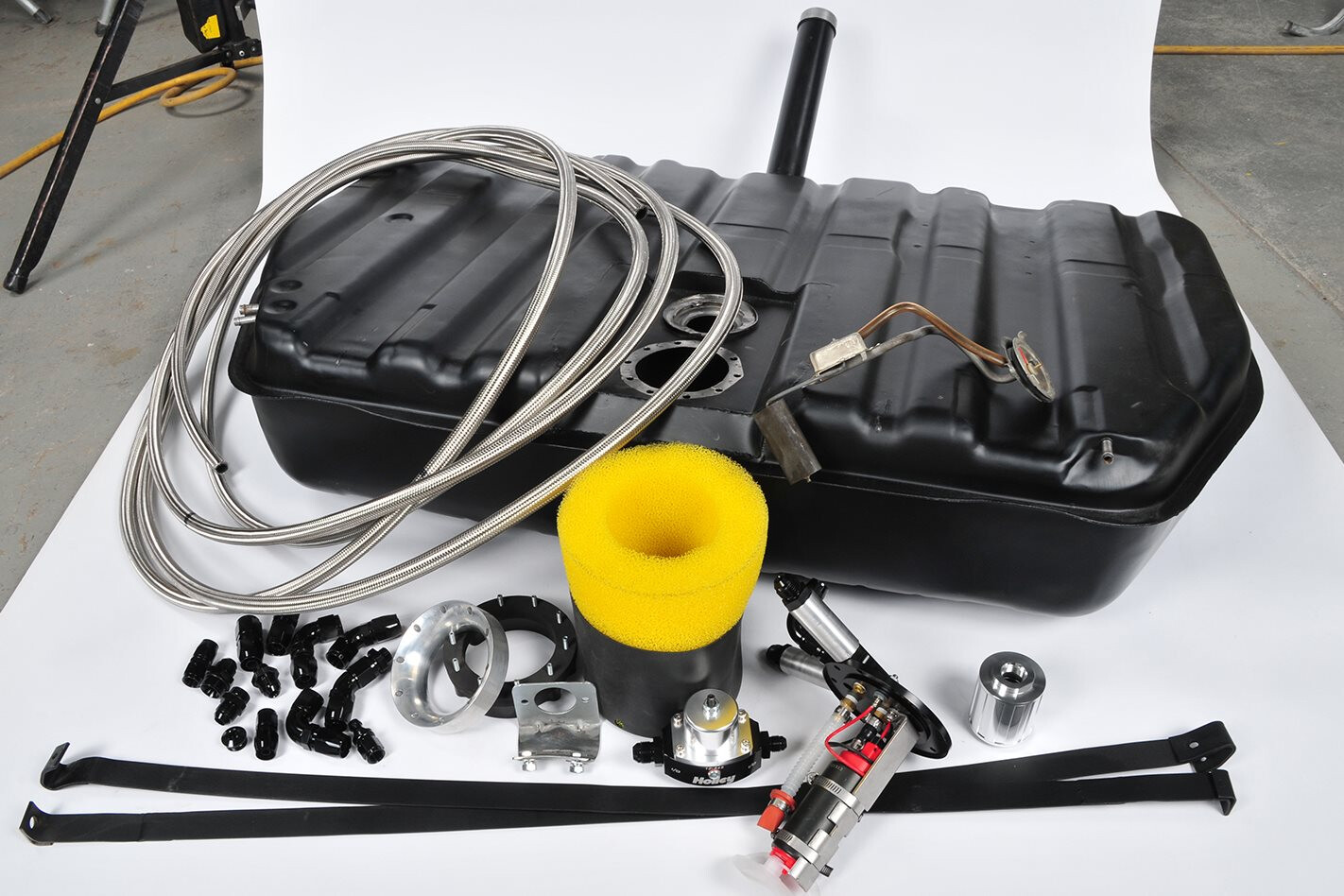
It seems that almost every type of fitting imaginable (B, above) is available, yet ProFlow says that it has new ones in development all the time for its PFE range. Other products, such as inline valves or fuel and oil filters featuring internal stainless steel meshes and magnets, are also available. The PFE range comes in red, blue, chrome, brushed aluminium and black. About mid-year ultra-high-gloss black fittings will be available.
Maintenance of braided lines and fittings is easy. Use the correct alloy spanner to work on them, while any non-alkaline cleaner for general use on a car will maintain their shine.
| Dash No. | Internal Diameter | External Diamater | Min Bend Radius |
| 3 | 0.16 | 0.38 | 2 |
| 4 | 0.22 | 0.44 | 2 |
| 6 | 0.34 | 0.55 | 2.5 |
| 8 | 0.44 | 0.65 | 3.5 |
| 10 | 0.56 | 0.8 | 4 |
| 12 | 0.69 | 0.94 | 4.5 |
| 16 | 0.88 | 1.15 | 5.5 |
| 20 | 1.12 | 1.41 | 8 |
NB – sizes are in inches as it’s an American system
Comments