
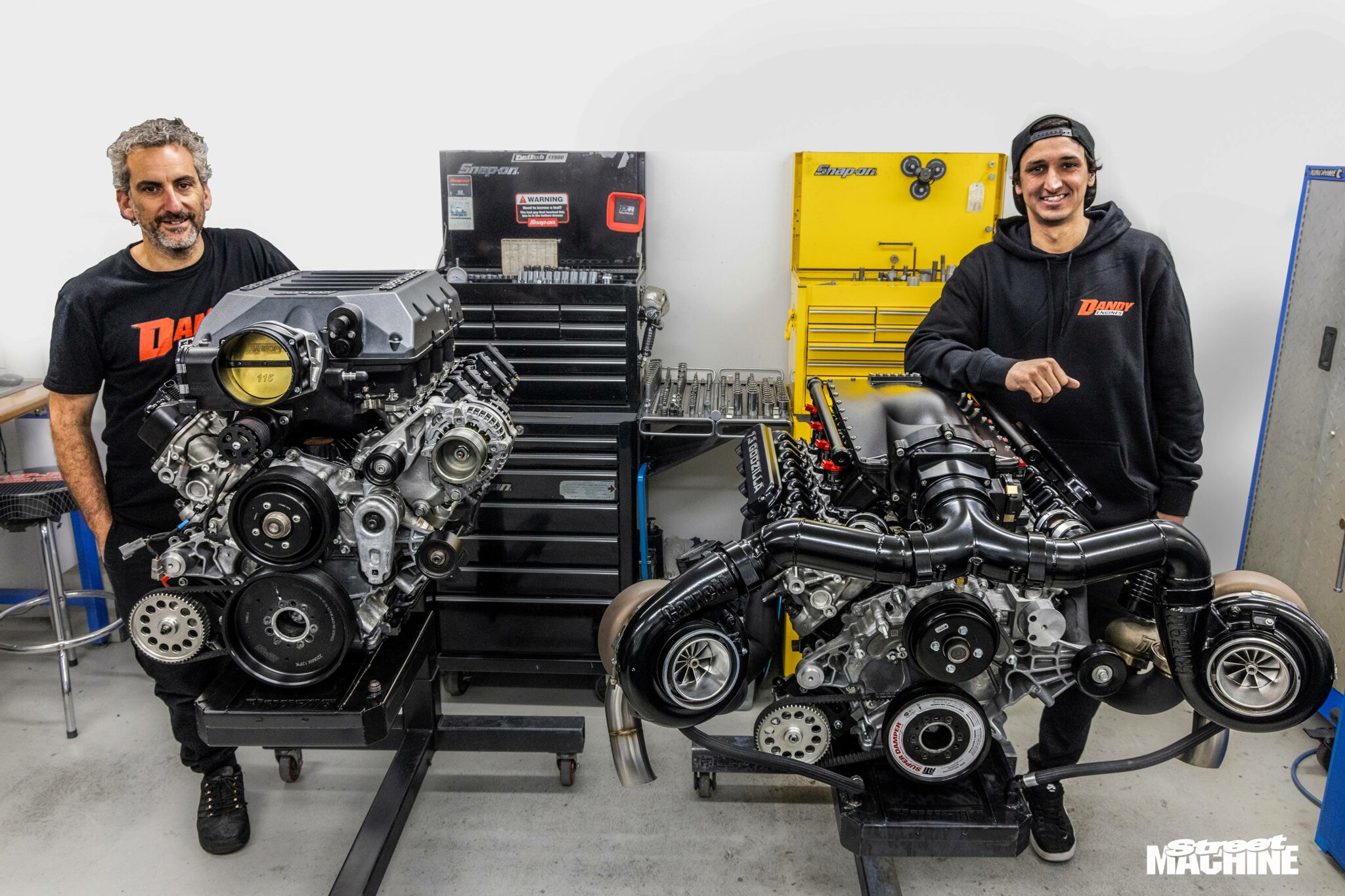
After making a big splash when it launched a couple of years ago, Ford’s 7.3-litre Godzilla small-block has been building a solid fanbase. Aftermarket companies have scrambled to develop new parts for this iron-block, alloy-headed, pushrod V8, and many street machiners are beginning to see the potential in the OE Ford architecture.
First published in the October 2024 issue of Street Machine
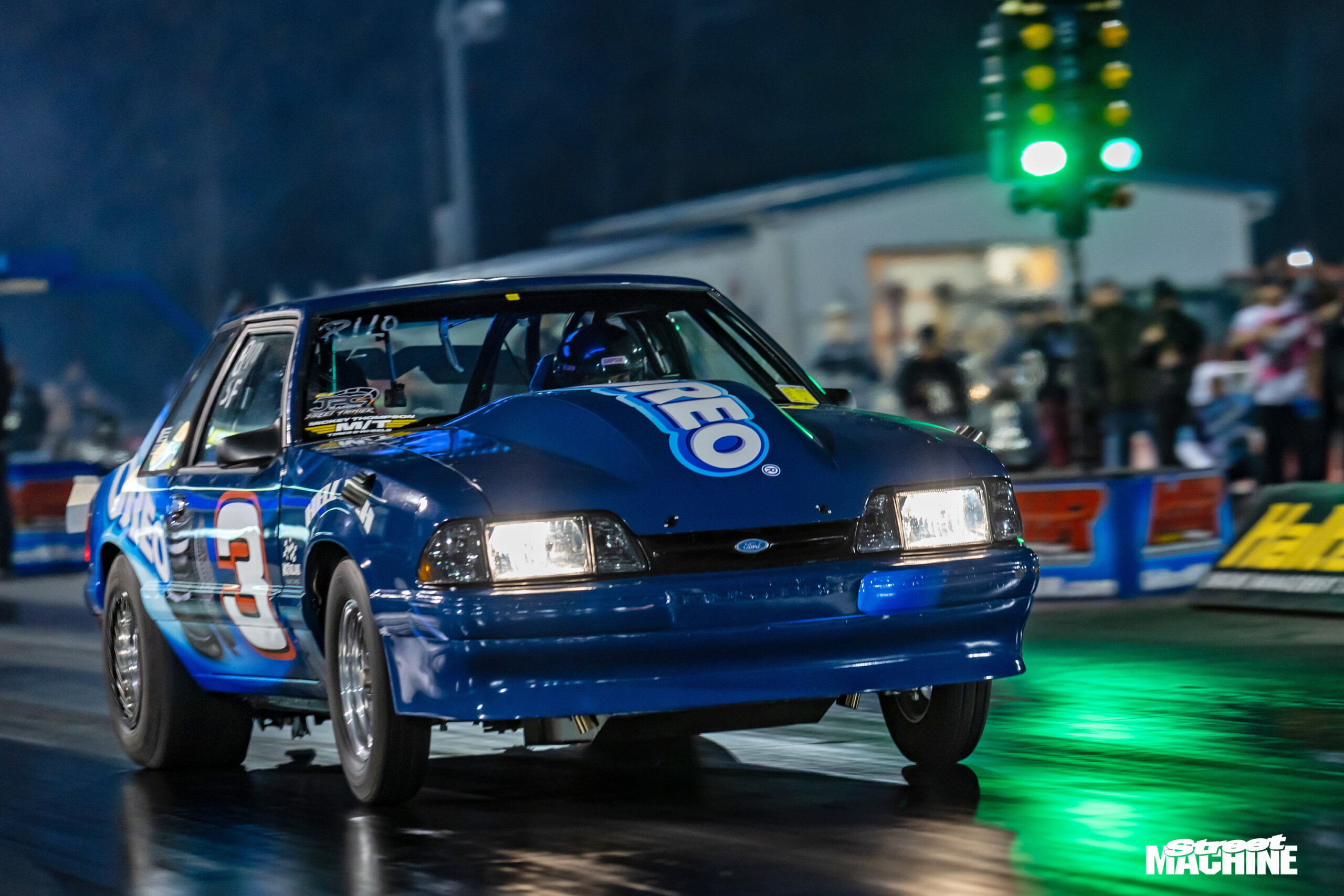
Cars like Nathaniel Ardern’s 1300hp XA sedan and Tim Cross’s 1200hp Capri both rock Harrop-blown Godzilla combos and are running numbers, while Drag Challenge veteran Phil Edmondson currently has a Whipple-blown ’Zilla going into his XA coupe. Riot Lab’s Danny Howe debuted his twin-turbo Godzilla-powered XE Falcon (SM, Dec ’23) at our most recent Drag Challenge, and is about to step things up even further.

Frank Marchese of Dandy Engines has built a few tough Godzillas, so we sought his opinion on the potential of Ford’s new small-block for power-hungry street machiners.
“We’ve had a few truck engines that we’ve fitted 2650 Harrop superchargers on, with only a little 6PK belt, and even as a standard long motor on pump fuel, they do 800hp and 800lb-ft on 9psi,” Frank begins. “That engine could drive from Melbourne to Sydney and have perfect manners, but we’ve also pushed a few pretty hard on the engine dyno and in customer cars. Tim Cross is one customer who’s pushed the boundaries with his Capri, as he’s been running 8.90s on factory rods and pistons; it’s just got a Harrop supercharger, bigger cam and valve spring upgrade.”

Frank and the Dandy crew haven’t just been recklessly leaning on Godzillas trying to break them, and they’re yet to shoot for the moon with Ford’s latest pushrod platform. “I can try and chase 2500-plus horsepower, but if I go straight there, I don’t find where the weak points of the engine are,” Frank explains. “We’ve seen failures with factory cam bearings and lifters, but I haven’t really gone too far into why, as we just fit roller cam bearings.
“We had a 1000hp turbo Godzilla set-up, and as soon as we went over 25psi, it kept breaking piston skirts. But that was sorted easily with a basic piston and rod combo.”
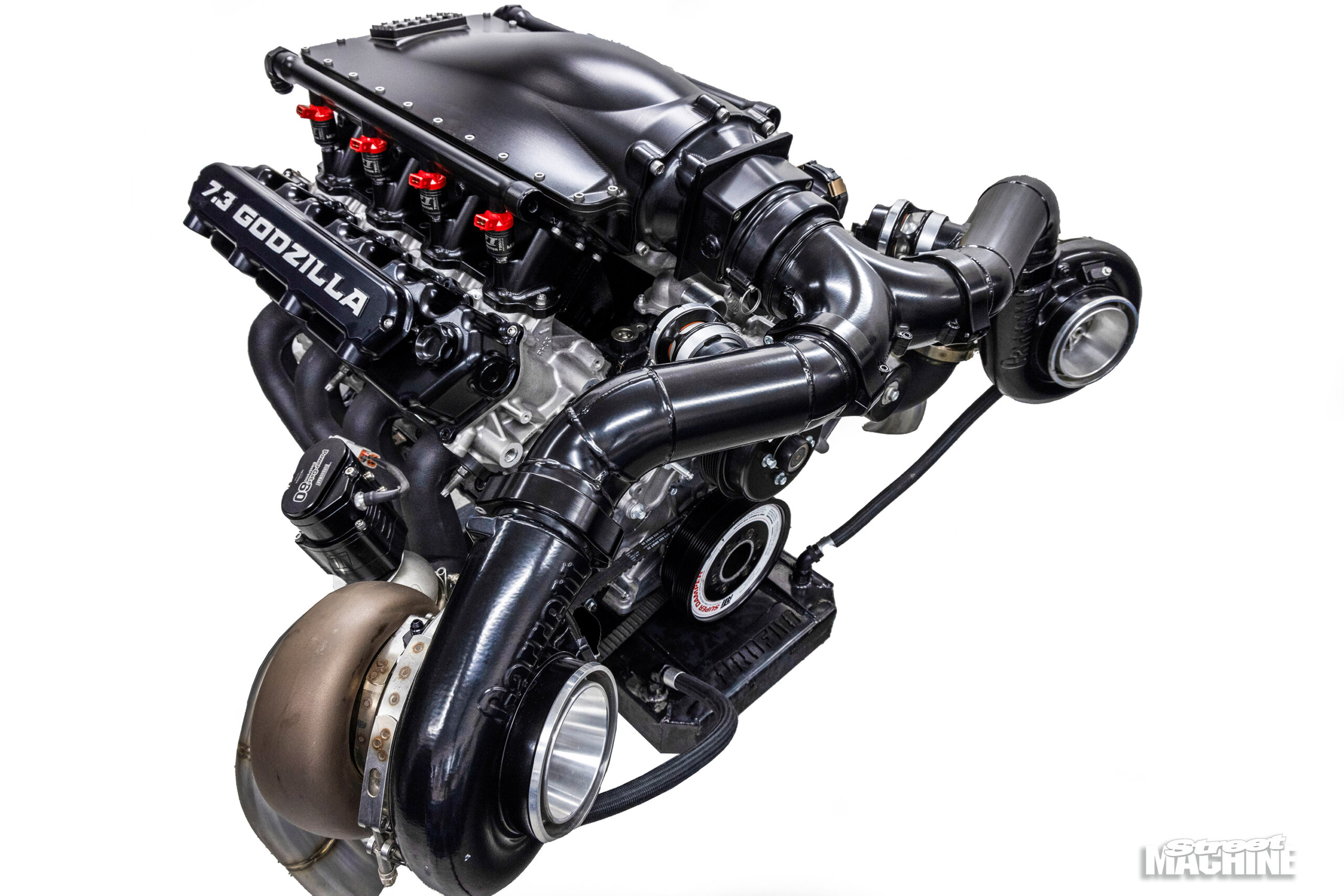
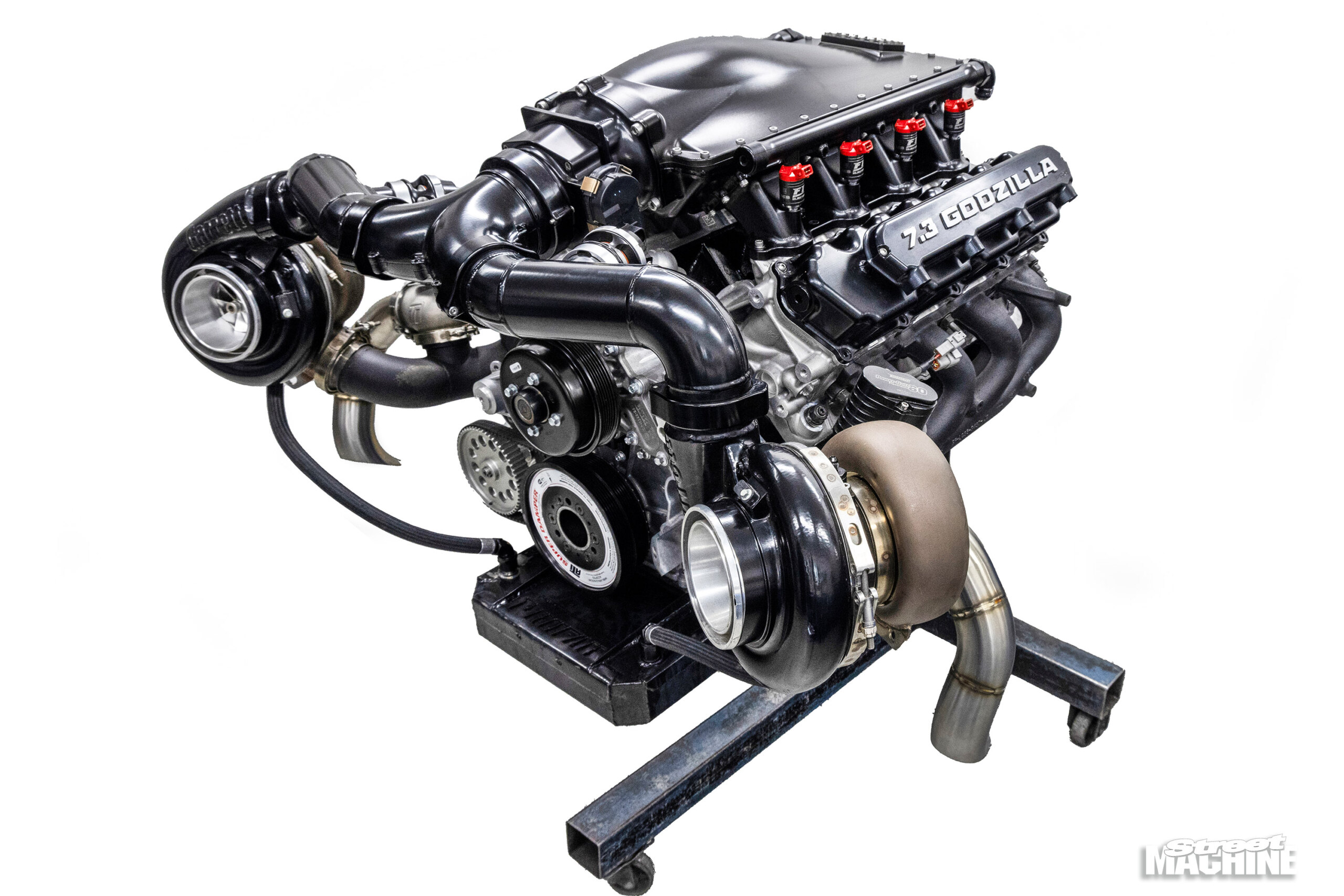
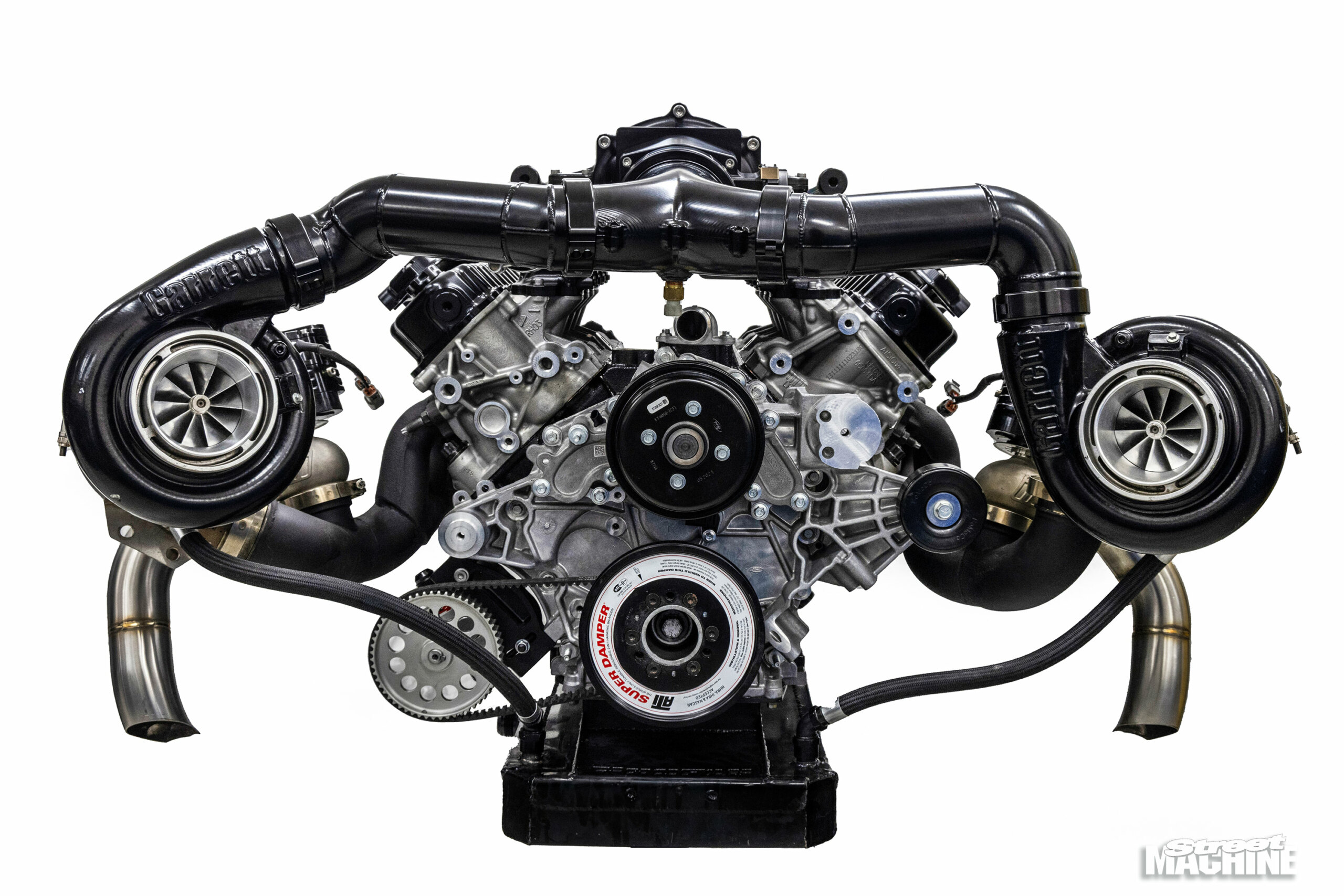
That mill came out of Danny Howe’s aforementioned XE, and it has since been treated to a proper glow-up at Dandy. “It now has upgraded main studs and head studs, fire-ring head gaskets, and better rods, pistons and rings,” Frank says. “Before we push it, I think we just need to find our way and see what the engine likes. Can it make 2000hp? And where does it go from there?”
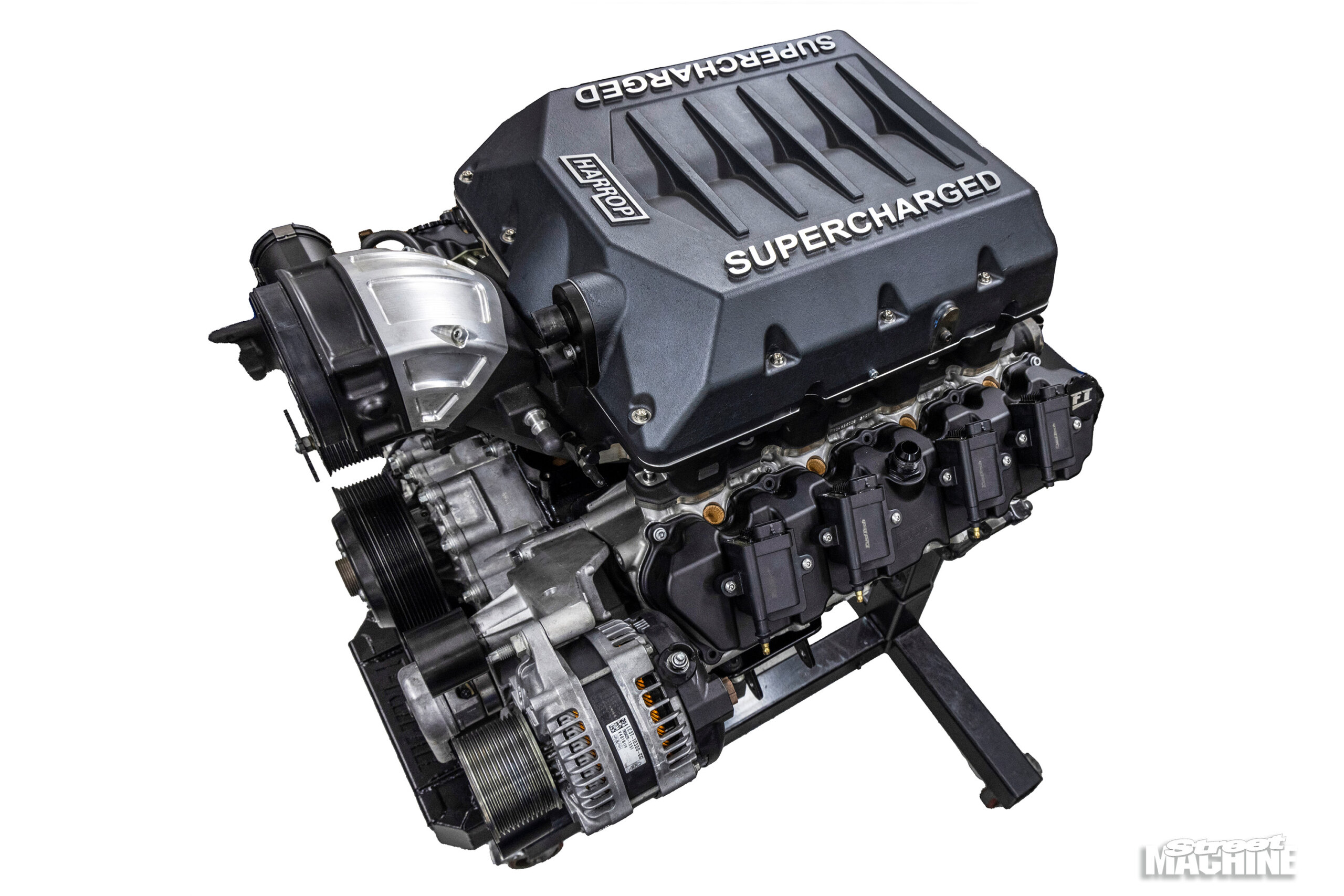
Would Frank feel confident pushing a Godzilla in a combo aimed at more than 2000hp? Or would a more traditional platform be preferable? “I think if you are after a maximum-effort combo, it is worth staying with a traditional platform that has great aftermarket support,” he says. “The Godzilla has large water holes in the surface of the deck, and that means there is less surface area to clamp a head gasket to; this is one of the things I don’t like about these engines. Up to 1000hp, we can just use an MLS gasket and it’s fine, but if you start getting after it like I would with a max-effort Windsor-style engine, the Godzilla’s production-engine roots limit it a bit.”
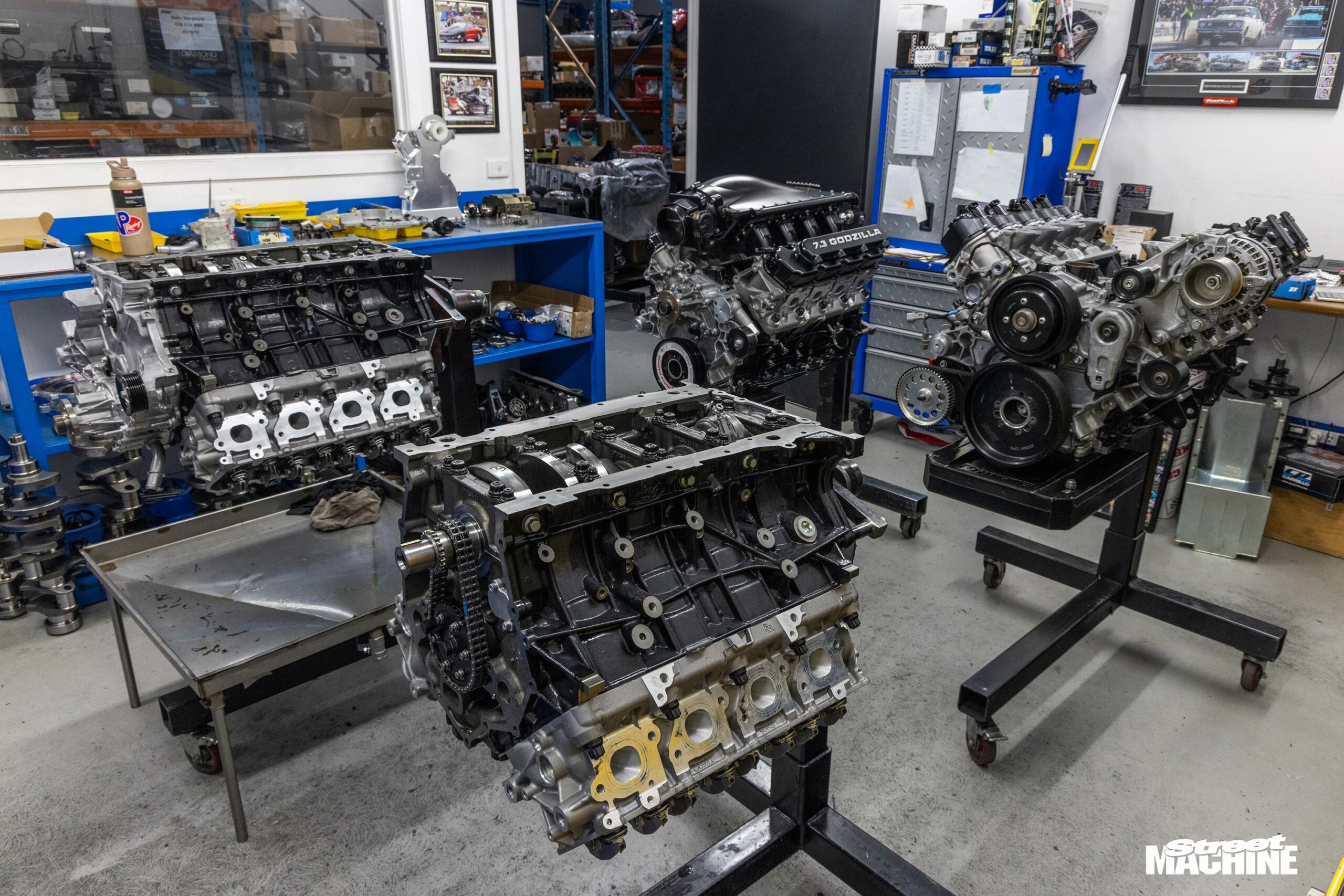
That’s not to say the Dandy team haven’t made some serious steam with the big-inch ’Zilla. Having now built several of these combos, they’re starting to work out combinations that deliver consistent performance.
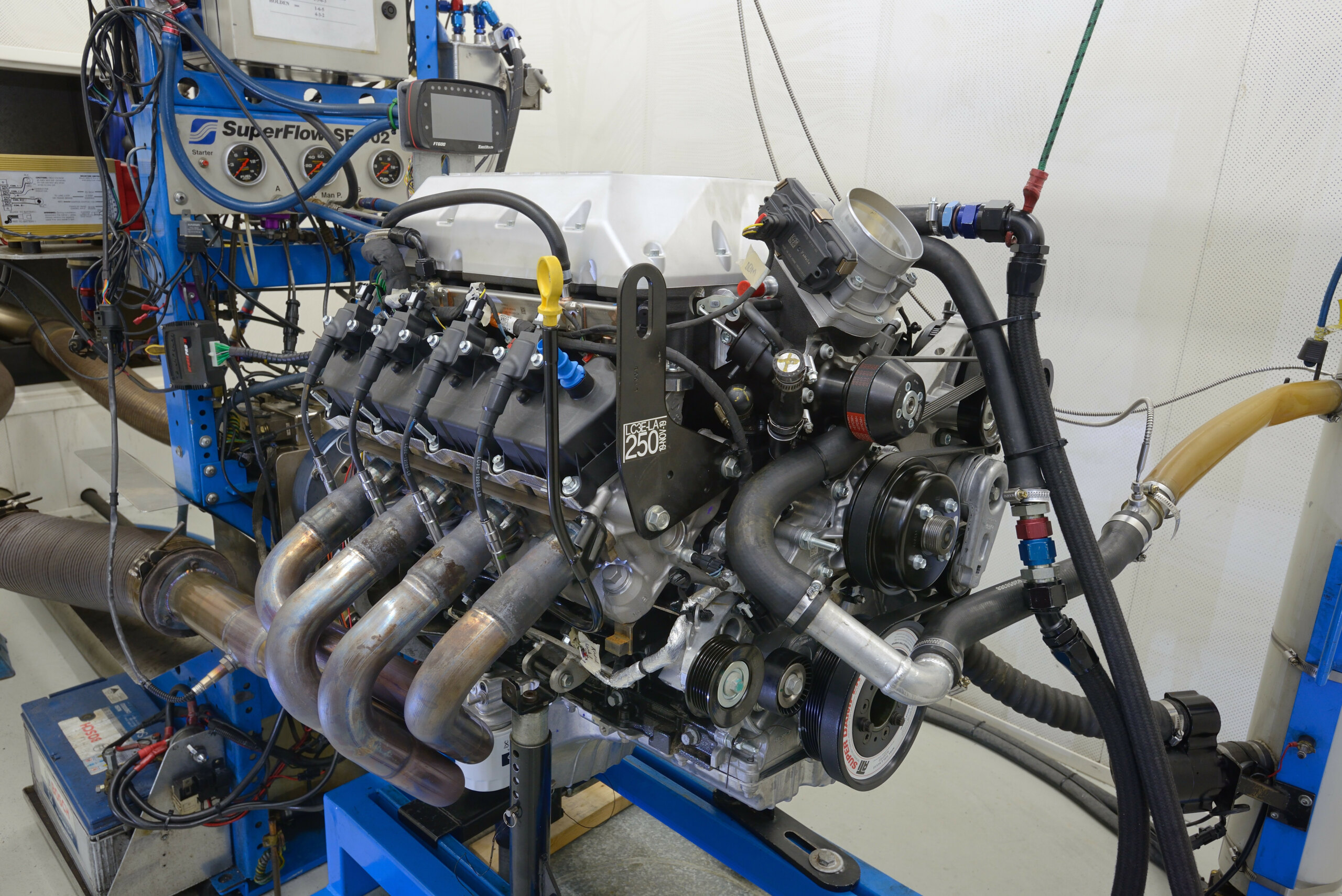
“We’ve already built one of the Harrop-blown engines in these photos, and it made 1344hp on the engine dyno, much like Nathaniel’s XA,” Frank says. “I’m happy to say we can now duplicate some of the R&D we’ve gone through. The compression and cam are the difference between making 1500hp or not. Having the right amount of compression with the right camshaft is night and day; we’ve turned some of these engines to 7500rpm.”
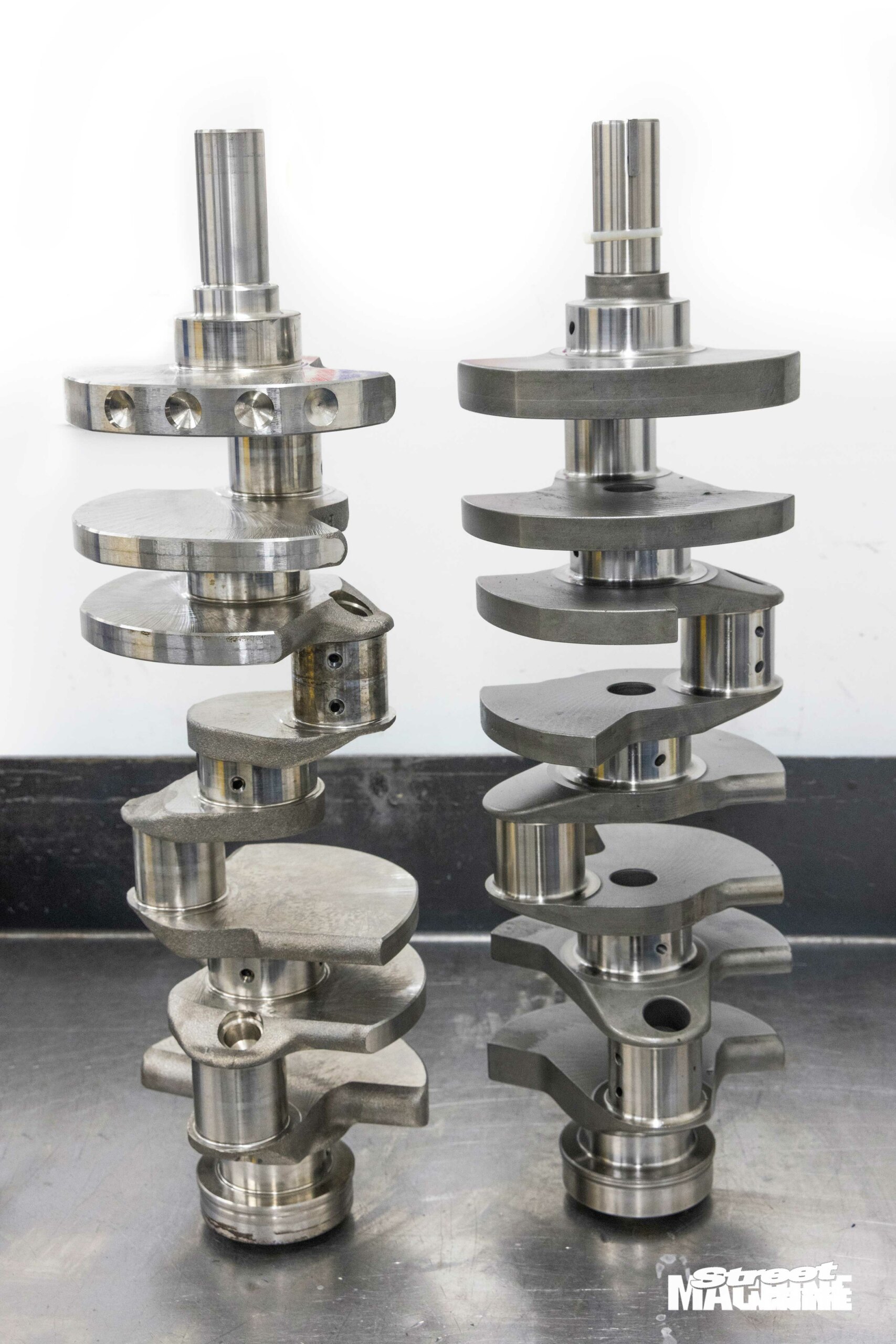
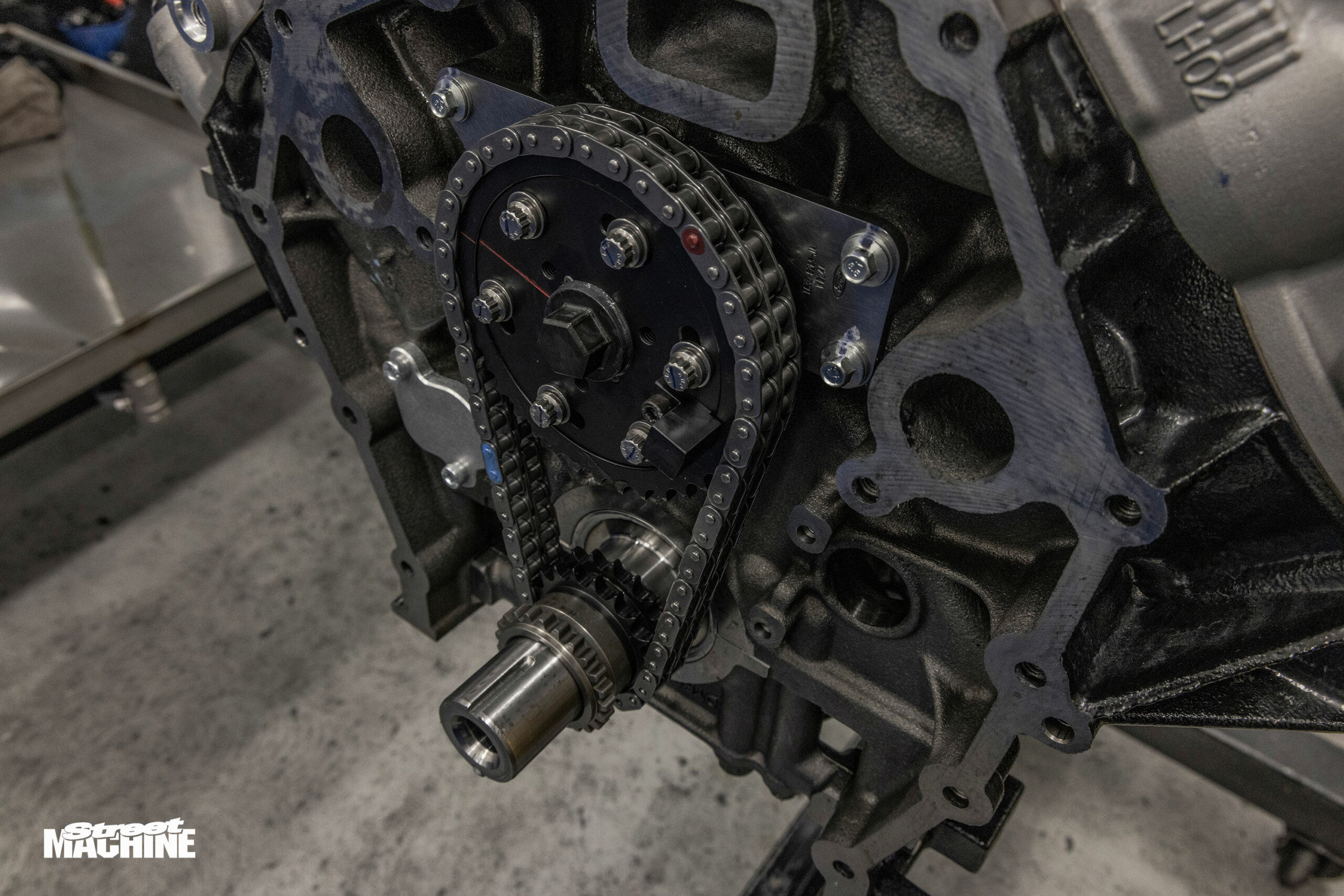
One of the biggest issues in swapping a Godzilla into a nice, low street car is the oil pump. Chain driven and positioned super low under the engine, it simply doesn’t work with low ride heights or old-school crossmembers, so an externally mounted, belt-driven pump is required. “It’s like Ford designed the engine and had forgotten the oil pump, so they stuck it on later,” Frank laughs. “I would love a nicer timing cover with an LS-style oil pump so that we didn’t have to put the external pump on them.
Harrop made a bracket for an external pump for us, as well as a hub for the balancer. At the time, I had an R4 Peterson pump, so that’s what we used, but there are many pumps that can suit the application.”
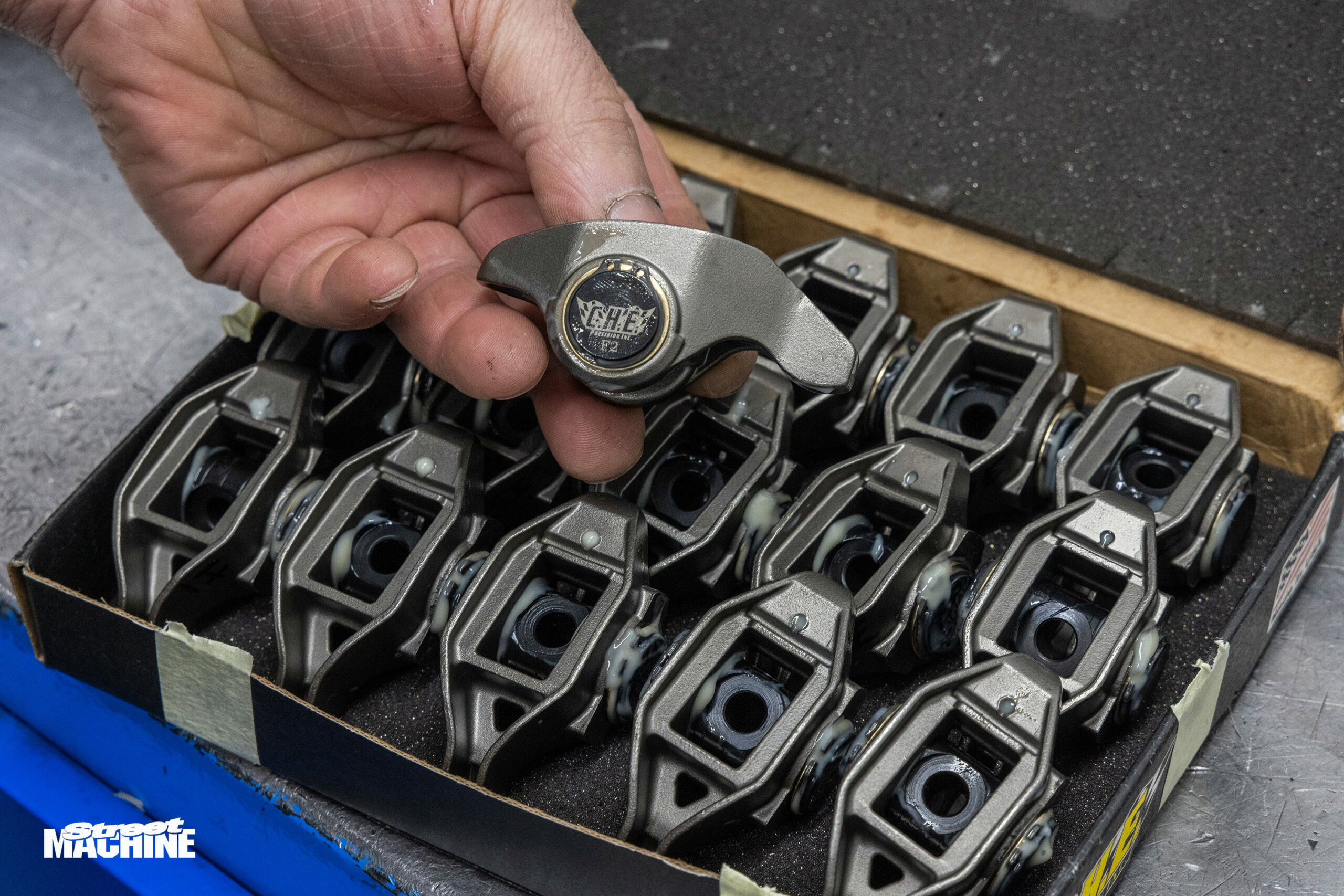
When it comes to developing packages and learning how the engine responds, Frank admits he’s not following a scientific method. “I’d rather build a motor, put it on the dyno and see what it likes,” he laughs.
“Some may like less or more compression; some may like a specific amount of boost. You can start pushing what some think is too much boost and it heats the air, but then you discover that the compression ratio likes that, and you find gains there.”
Despite the Godzilla’s limitations and the challenges involved in fitting one, being able to make 800hp with a basic late-model mill has to be worth investigating. As the Godzilla begins to show up in more builds in Australia and overseas, we’ll be keeping a close eye on how street machiners attempt to harness its potential.
SWAP SHOP
With plenty of Godzillas popping up on the second-hand market, Ford’s spicy new small-block is rapidly becoming a go-to mill to swap into all manner of cars. Slightly larger physically than a 351 Windsor but much smaller and cheaper than a DOHC Mod Motor, the ’Zilla is overtaking the LS as a popular engine swap into Fords – though installing one isn’t without its challenges.
For starters, the Godzilla’s chain-driven oil pump and front-hump oil pan pose problems for classic Fords that use rear-hump sumps. Thankfully Holley, 417 Motorsports and Indy Power Products all make aftermarket oil pans to suit the Godzilla, and several companies make brackets to mount an external oil pump.
The stock front accessory drive is a one-piece aluminium unit, making it a bit more difficult to package power steering, alternator and air-conditioning compressor accessories. Many swaps will require an external oil pump, which would take the place of a traditional, engine-driven air-con compressor.
On the plus side, our mates at Tuff Mounts already offer a weld-in, universal engine mount kit with the engine-side plates already fabbed up, so you can simply position the donk wherever you need and zap the base of the mounts into place.

Shaun’s Custom Alloy was one of the first companies to market a maximum-effort intake manifold for the Godzilla, although the stock composite intake has held together with over 1100hp put through it. CID has also recently released full aftermarket cast heads for big-power combos.
Transmission options for the Godzilla are plentiful, too, as it shares its bellhousing pattern with Mod Motors, so a wide variety of manual and automatic gearboxes can be paired with it.

STOCKTAKE
The horsepower potential of the Godzilla may sound beaut-to-the-power-of-rad to you, but where do you buy one of these wondrous pieces of Blue Oval hardware? Fitted to F250 Super Duty trucks and some E-series Ford commercial vans, they’re not exactly stacked 10-high at your local Pick-n-Pull.
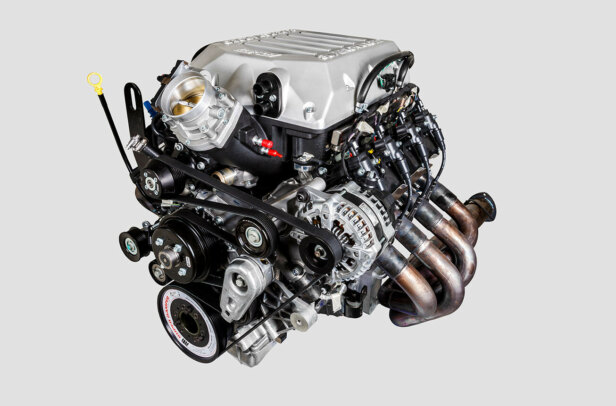
Thankfully, there is already a ripe supply of new and used Godzillas coming in from the USA. Aussie distributors like Eagle Auto Parts have brand-new Godzilla crate engines in stock, with Eagle also stocking a Ford Performance Megazilla (below), along with bare blocks for those wanting to build their own.
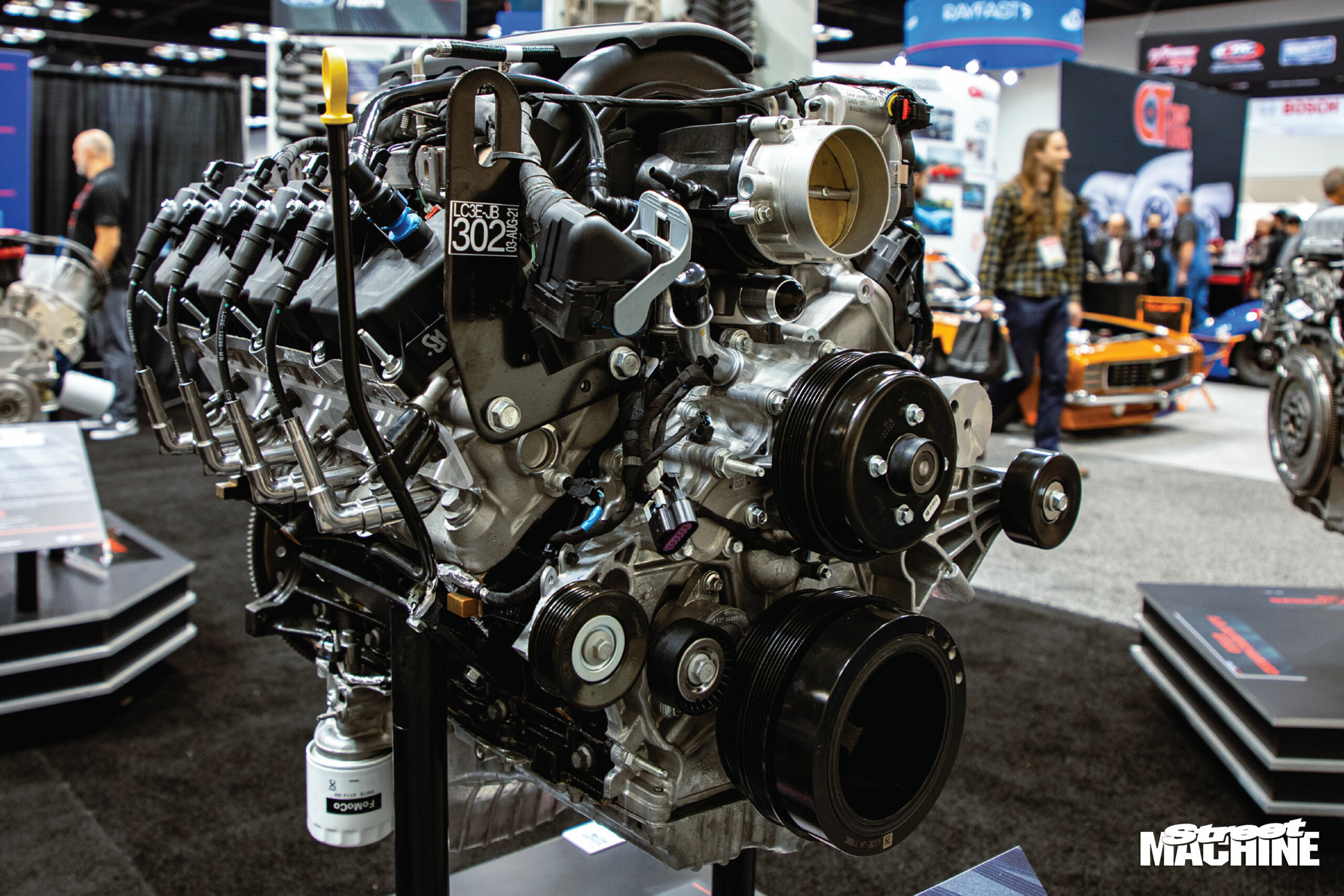
“We get a lot of enquiries on the Godzillas, and the supply of them out of the States is really good,” says Eagle’s Matt Telford. “There are a lot of people sizing up projects for them, so we have four on the shelf. All the engines come from Ford Performance, so they’re the 430hp versions in the crate, and because we’re an agent for Ford Performance, we just buy direct.”
For those wanting something spicier off the shelf, Eagle also carries stock of the baddest ’Zilla that Ford offers: the Megazilla. “As soon as the Megazilla was released, we got two,” Matt says. “They’re very new, so people are still finding out about them, but the power you get for the money – with warranty from Ford and the quality of Ford Performance – is bar none.”

If you’re after something used, there are good deals on low-kilometre ’Zillas out of the USA. Some state governments over there are giving rebates to fleet operators to convert V8 commercial vehicles to electric drivetrains, so near-new engine and transmission packages are popping up at clearance prices.
Comments