
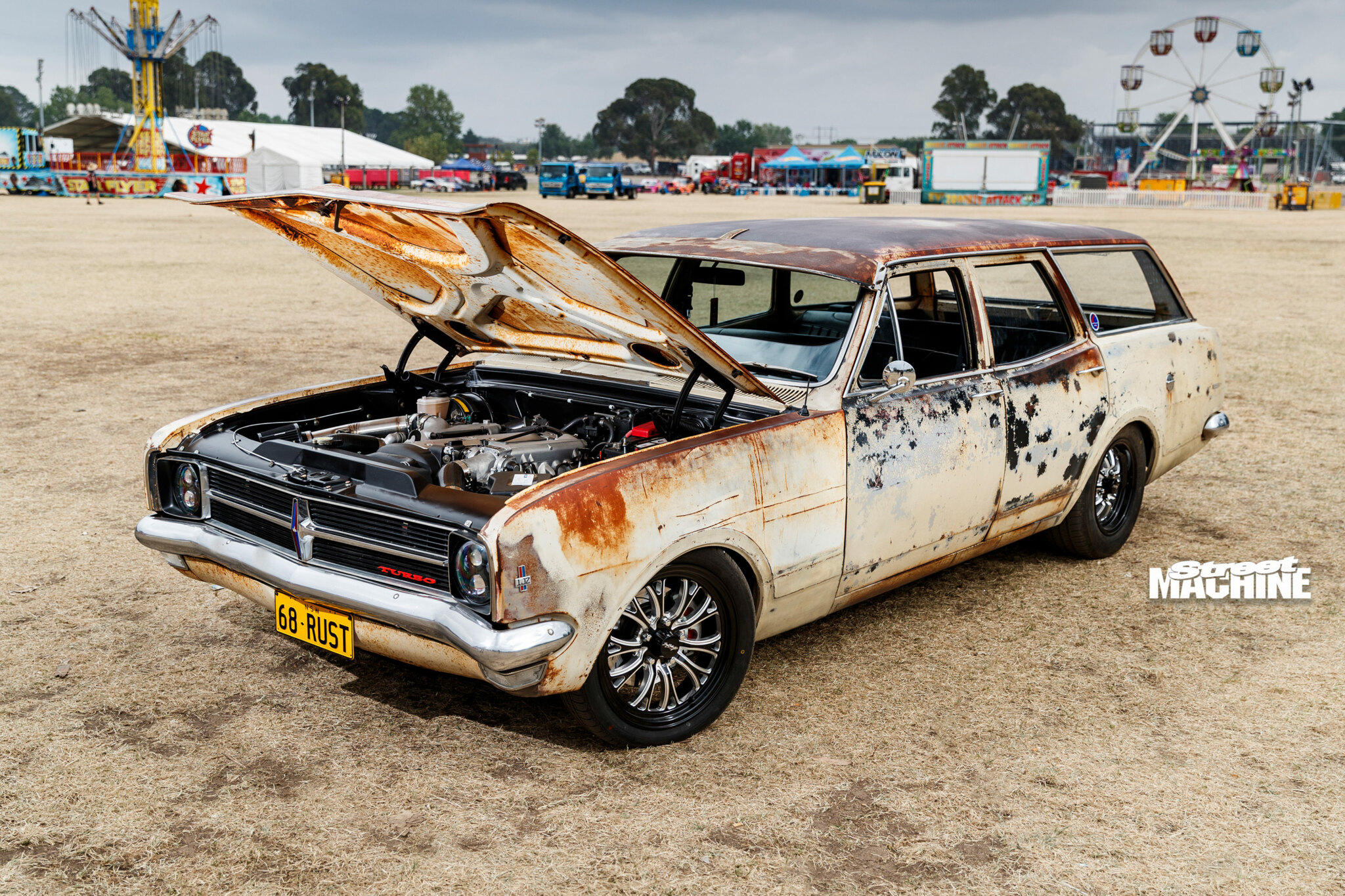
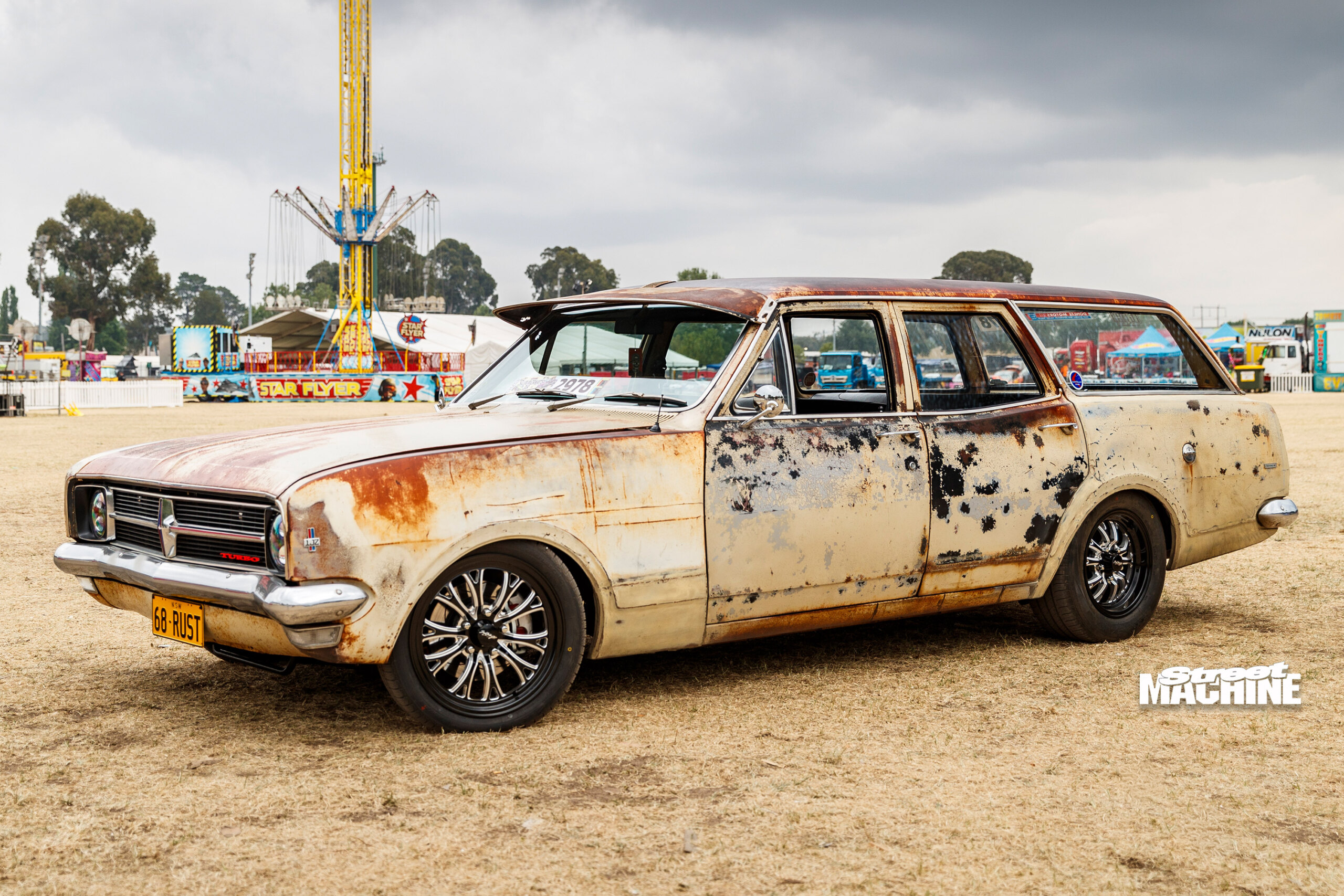
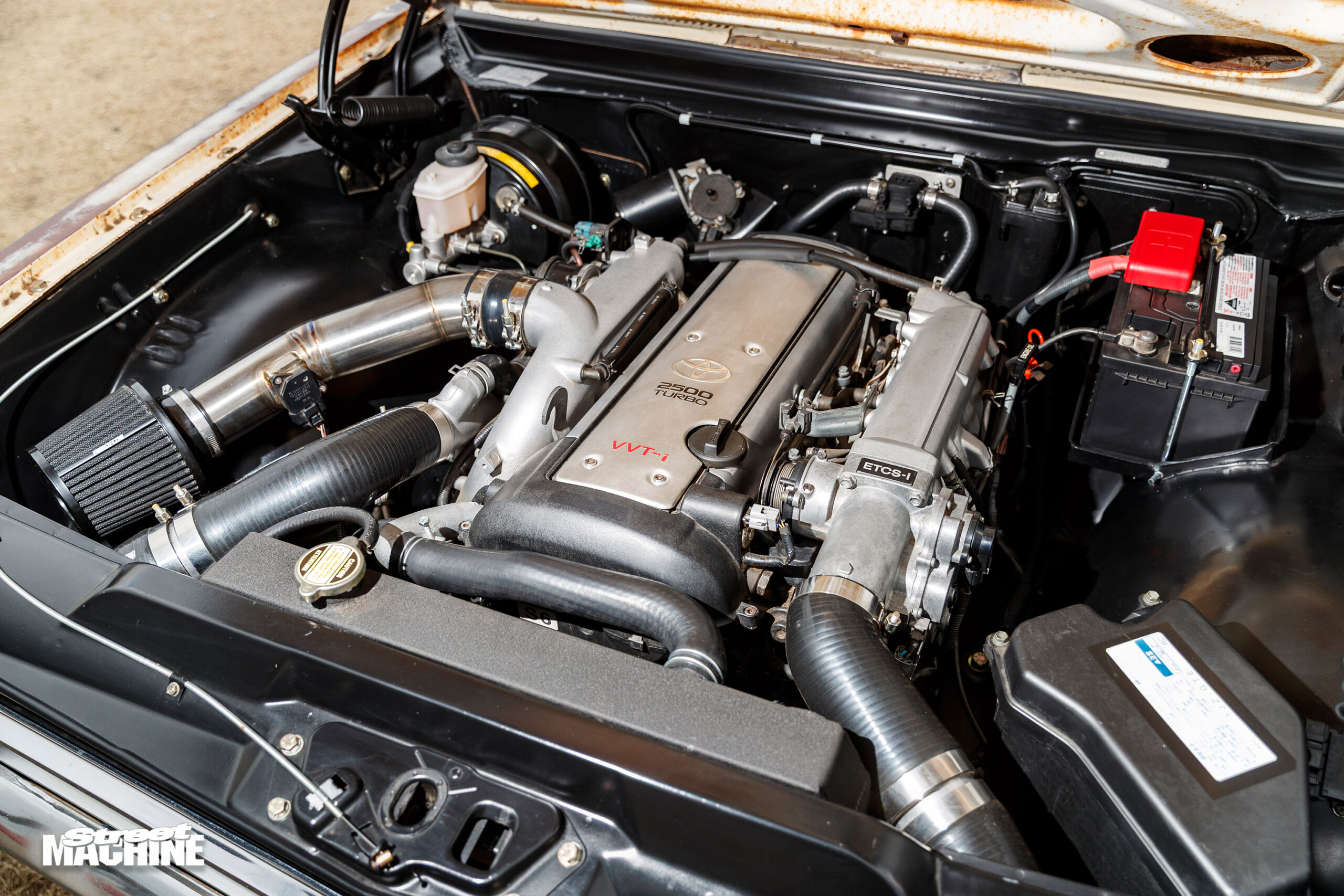
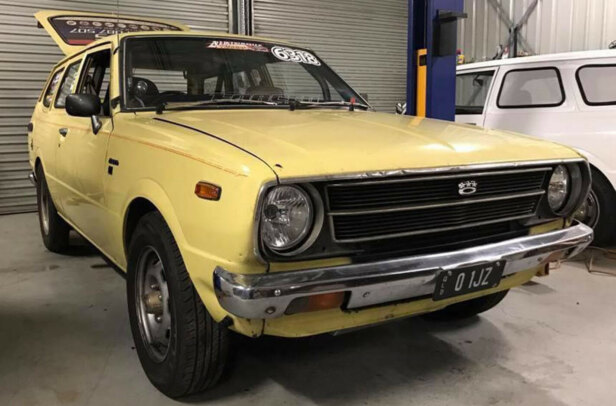
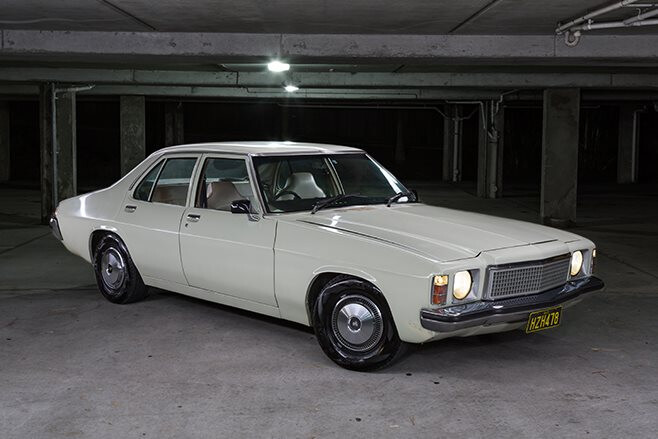
One of our favourite cars from Street Machine Summernats 38 was the HK wagon of Canberra local, Paul Trembearth. This super-cool family truckster not only boasts awesome patina, but it also rocks the unusual choice of a turbocharged, six-cylinder Toyota 1JZ, backed with a four-speed auto. The conversion has been done so well that it’s almost as if the car was sent to Toyota for the fit-up!
First published in the April 2026 issue of Street Machine

“I like different,” says Paul of his classic Holden’s potentially controversial powerplant. “My kids love it, the missus loves it, and people just spin out when I open the hood; it’s proper wow factor!”
Paul traded in his bridgeported, rotary-powered Mazda 1300 for the HK, and while he’s added a bunch of his own personal touches since buying it, the 1J transplant was carried out by the car’s previous owner, Justin Green, a former boilermaker from the NSW Central Coast.
“It was interesting how this car came about,” says Justin. “Years before I started, I’d been looking for a 1JZ engine for a Toyota Stout mini-truck build that I was a few years into, and I wasn’t able to just buy a 1JZ off the shelf for it. A Japanese-car wrecker only had a whole Toyota Crown in Sydney, so they offered to cut the front off it and stick it on a pallet.”

Justin’s goal was to build a street-legal, 1JZ-powered Stout, but he had to rethink things after his engineer informed him he could no longer sign off on that engine swap in a mini-truck build.
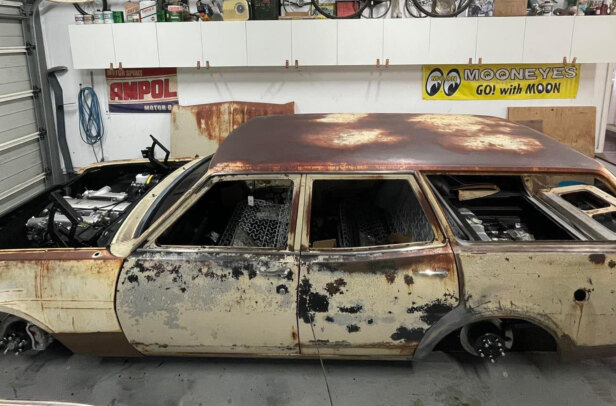
Despite already being several years into the Stout build, Justin began looking for another car to house the 1JZ. After a bit of scouting around, he came across this HK wagon. The doors and sills weren’t bad, but it was a total rust bucket otherwise.


“For the first year, all I did was rust repairs,” Justin recalls. “There were holes in this car that you could put your whole body through – it even had rust holes in the dash! It nearly ended me. I was working eight hours a day welding, and came home and kept on going. A bunch of times I said to myself, ’What the hell are you doing?’ In the end, I replaced every floorpan in the car from the firewall to the tailgate.”


Fortunately, the mechanical side of things proved a bit more straightforward. Even though the engine was in good shape, it was a 2003 model and Justin was worried about potential oil leaks, timing belt issues and other age-related problems, so he sent it to a local mechanic to have the O-rings, gaskets and timing belt replaced so it was ready to go another 20 years.

The biggest challenge of the 1JZ conversion was getting the sump to clear the HK’s front crossmember and drag link. In the end, the sump needed to be scalloped and the crossmember back-cut, plated and internally braced in order to get the tick from the engineer. Justin then built Tuff Mounts-style cotton-reel engine mounts with internal bushes welded to the crossmember.
Wiring it all up was another problem. “At the time of buying the motor, I was unable to find one without an immobiliser, and having an immobiliser engine is a bit of a hassle,” Justin says. “I ended up sending the whole loom out of the car to Sideshows Performance Wiring in Queensland, who unpicked all the unwanted wires and sent me back a loom that just had 10 wires to connect to make it all work.”
The car’s underpinnings got plenty of love, too, including a new BorgWarner rear end from a VN Commodore wagon, and a full brake upgrade due to the 300hp rating of the 1JZ.
“The engineer insisted on 300mm rotors on the front and disc brakes on the rear,” Justin explains. “That was fixed with a set of BA/BF Falcon V8 brakes matched to the Crown booster, which I scalloped into the engine bay and made an adapter to mate a LandCruiser master cylinder with a one-inch bore.”

The big brakes made it hard to go with period-correct wheels, so Justin chose some 17-inch chaser rims, although Paul has recently swapped those out for a set of Boyd Coddingtons.
Thankfully, there were no modifications required to the floorpan, and the A340 four-speed trans fitted easily and still has the paddle-shift option on a switch inside the car.

For Justin, getting everything compliant for the engineer was one of the most arduous parts of the build. “I was really hoping that I could certify the car with the early-1972 ADR rules, but the engineer wanted to run with a late 80s ADR checklist, which meant a few extras like inertia seat belts in the rear of the car,” he says. “But the HK passed engineering with flying colours, and it was great to have a 100 per cent legal car.

“Everywhere I took it and popped the bonnet, people would spin out. It drove absolutely mint, but I only put about 160km on it before I was ready to move on to something new. “I had over 30 people chasing me for the car, and it’s changed a few hands now, but the new owner, Paul, is really getting the most out of it with his family.”

Paul confirms that he has indeed been happily racking up kays in the wagon. “I’m going to start developing the motor to get some more power out of it, as I’d like to do some drag-and-drive events,” he says. “I’ve got a new BorgWarner diff ready that’s been narrowed so we can get some bigger wheels under the rear to help things hook up when we turn the wick up.”

It’d be great to see this Japanese-powered Holden putting the cat among the pigeons at Street Machine Drag Challenge!
Comments