
First published in Street Machine’s Hot Rod magazine #1, 2004
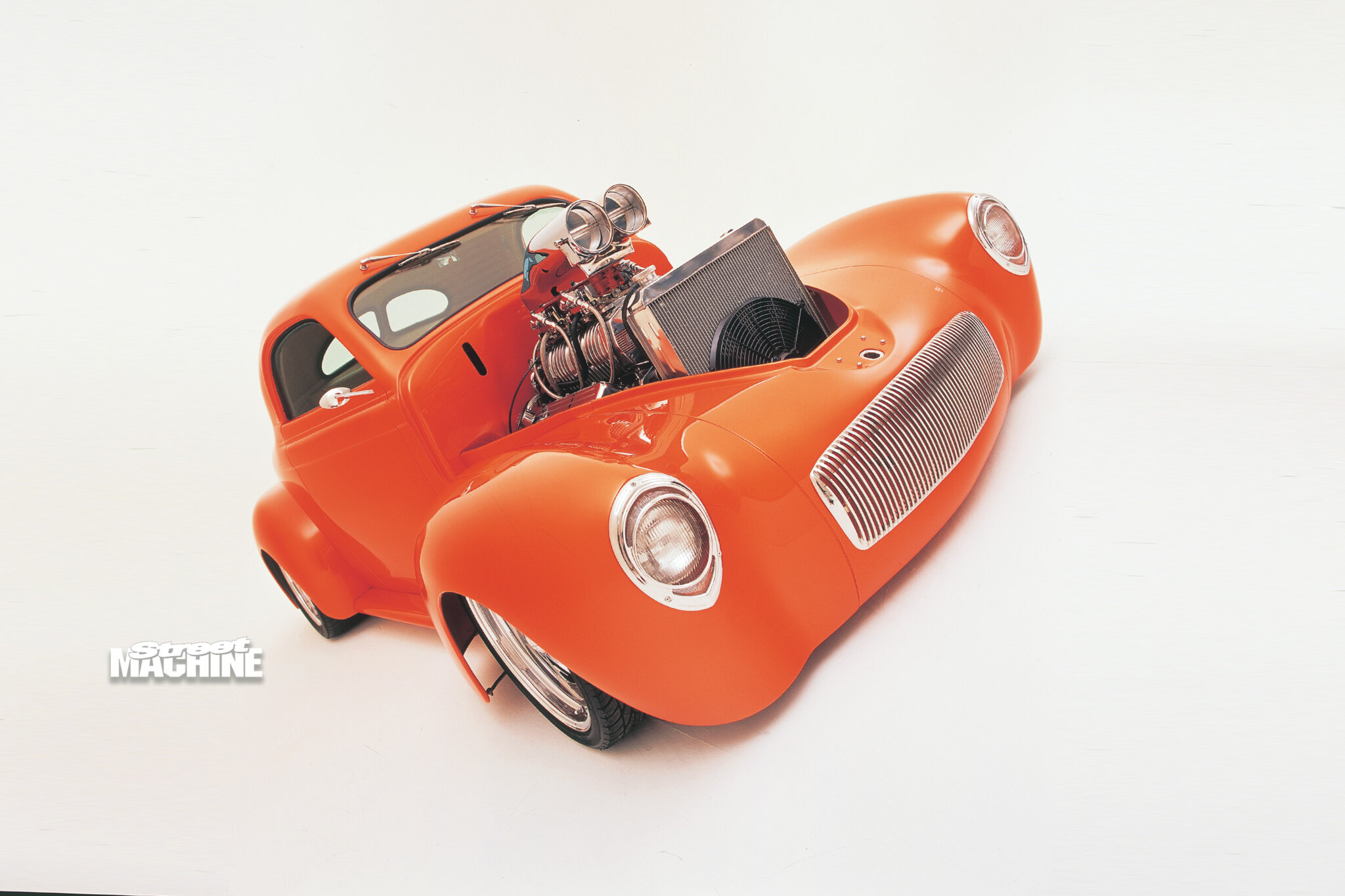
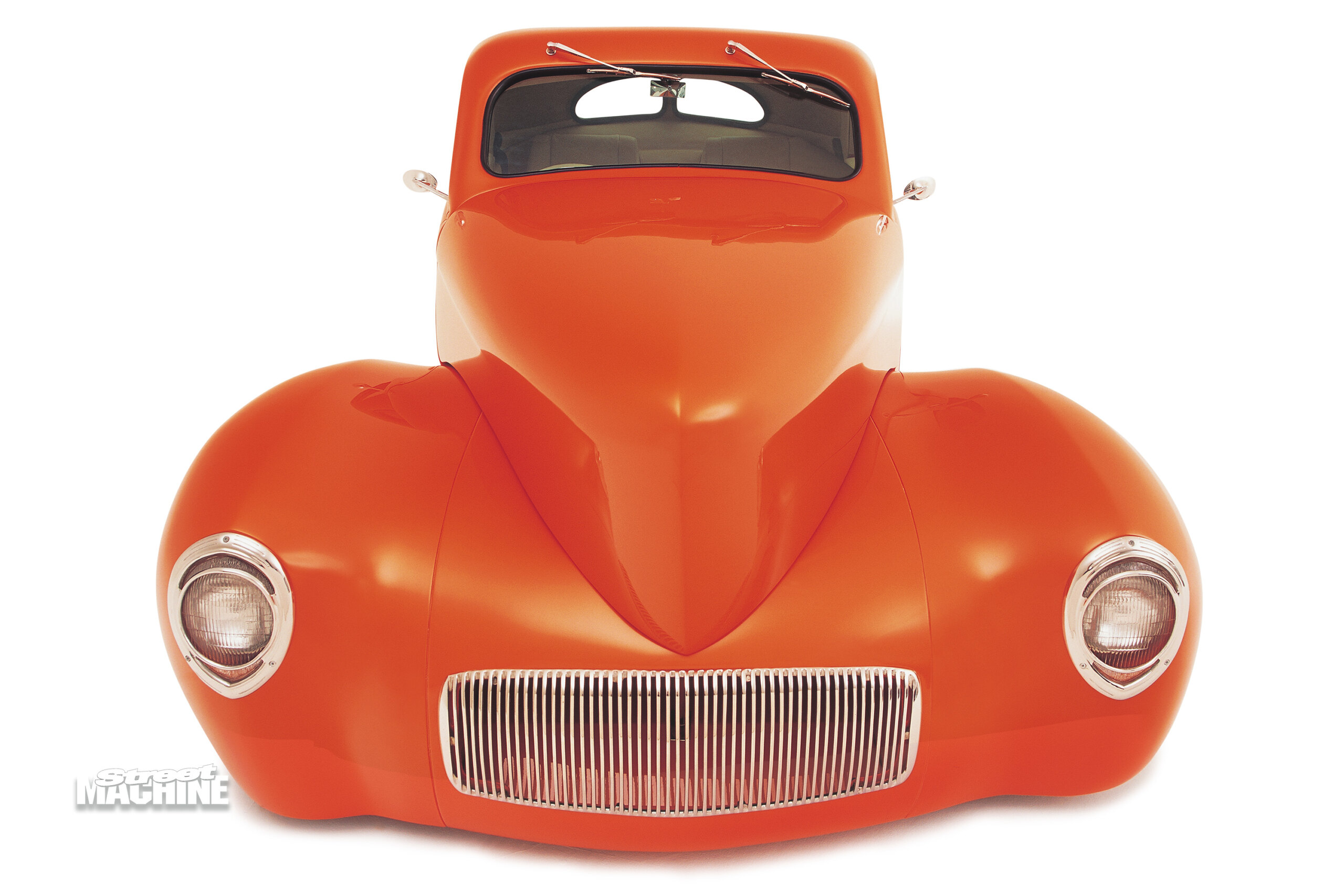
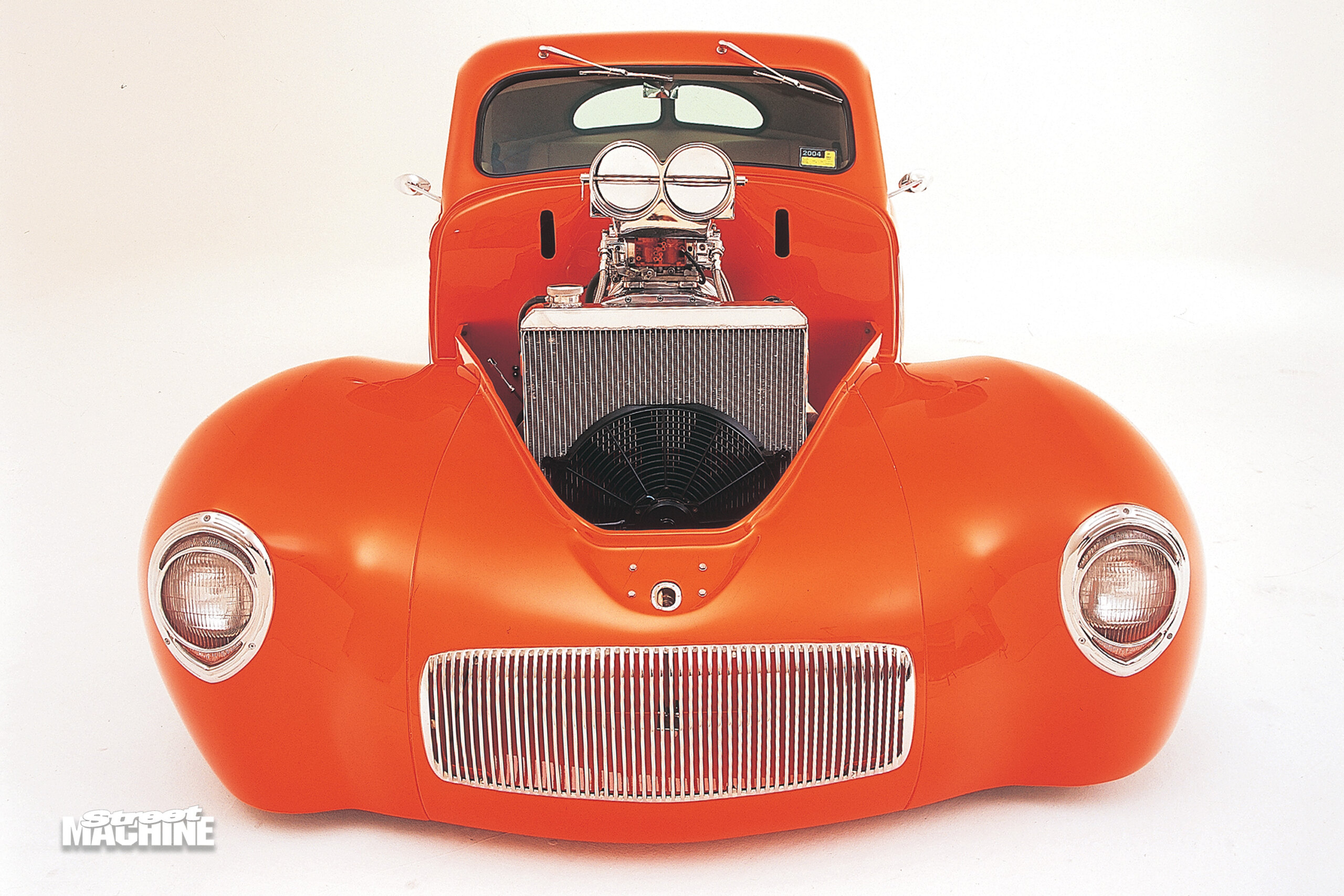
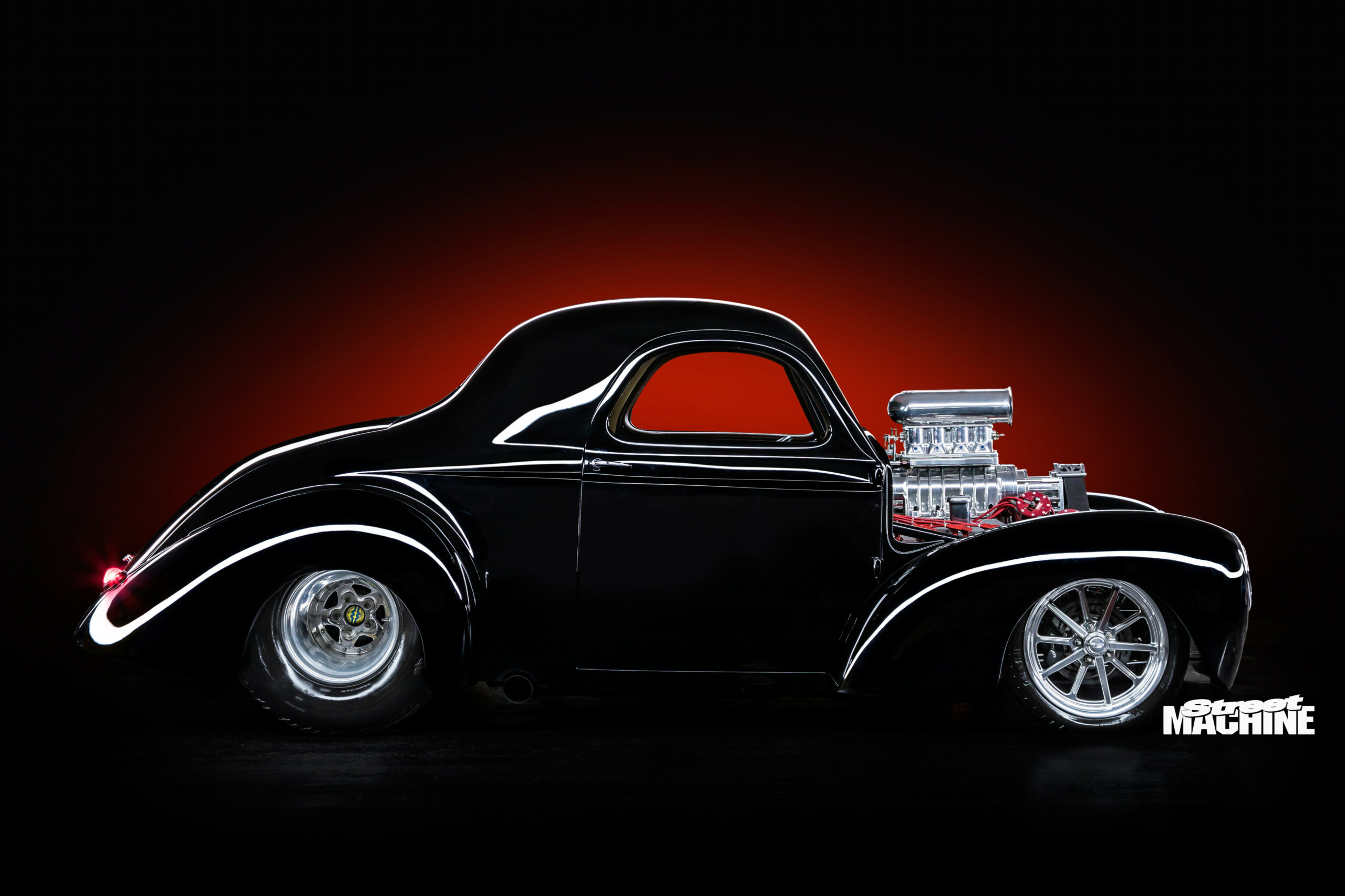
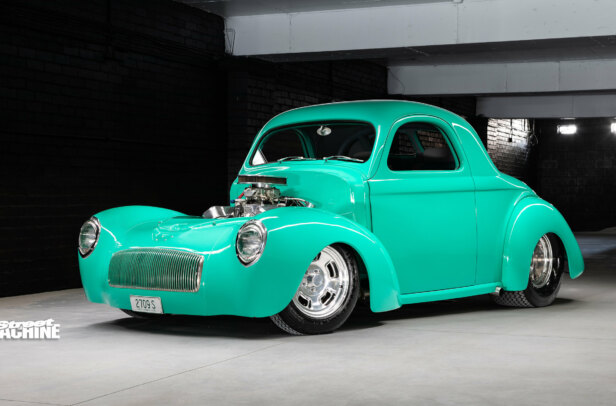
You won’t forget this Willys in a hurry, especially when we point out that it’s the first hot rod Dave Maiolo has built. He’s absolutely nailed this car, with scorching orange pearl paint, a kick-arse wheel/tyre combo, a blown big-block Chev trying to bust out of the constraints of a scoopless bonnet, and some painstakingly customised bodywork.

Dave doesn’t have a typical hot rodder’s background. His first car was an LJ Torana that he bought pretty much done, but like all good street machiners he added his own touches. Soon he helped build his brother’s ’57 Chev. The people who painted the Chev introduced him to hot rodding. Dave, aged 19, began dreaming of a ’41 Willys coupe.

He looked everywhere but couldn’t find one. However, he did come across a ’37 coupe, which he snapped up. The plan was to fit it with the later front sheet metal, but – why does it always happen like this? – the next thing he knew he found a ’41 in Tamworth.

The ’37 chassis was in better condition anyway, so he kept it and sold all the parts he didn’t need. He boxed the chassis for strength and set it up for a small-block Chev, TH400 and Commodore IRS, then realised he could legally register the car with a big-block. So, like a good horsepower junkie, he re-did the chassis to accept a bigger powerplant. How big? Try a worked 454 Chev, topped by a beefy B&M blower and twin 725 Holleys!

The front end is from an HK Holden upgraded with Commodore rack and pinion, and DBA rotors fitted with Commodore calipers. That ground-scraping stance isn’t created by cutting a couple of coils out of the springs. Firestone airbags and an extra-large compressor ensure the Willys gets from slammed power parking to highway cruising in no time.
So far the Commodore IRS has withstood the punishment Dave has handed it, but he figures diff centres are cheap and he’s got a few spares, so he should be right for a while.
The body was pretty much cactus – “just a few rusty bits of tin”, in Dave’s words. The wooden framework was gone, but that’s not too surprising with a car of this vintage. There were no sills, no door pillars, the driver’s door was junk, there was no lip in the boot area and, to top it off, no boot lid, either! With a lot of help from Rob Mellish, a complete frame and skin were made from scratch and in the process the corners were rounded and the bottom edge curved.

That was just the start of it. The body has undergone myriad subtle changes that only Willys fans will notice. The most obvious change is the 2¼-inch roof chop, but even that’s hard to pick as the rear window has been kept the original size and moved down three inches. The window frames on the doors have also been removed, which effectively makes the side openings look larger and avoids the ‘mail slot’ look of some roof chops. Everything – trim, handles, badges – has been shaved off the body.
Less obvious are the suicide doors. Smaller hinges from an EH Holden worked just fine, and before long Dave was confusing everyone with his backward-opening doors.
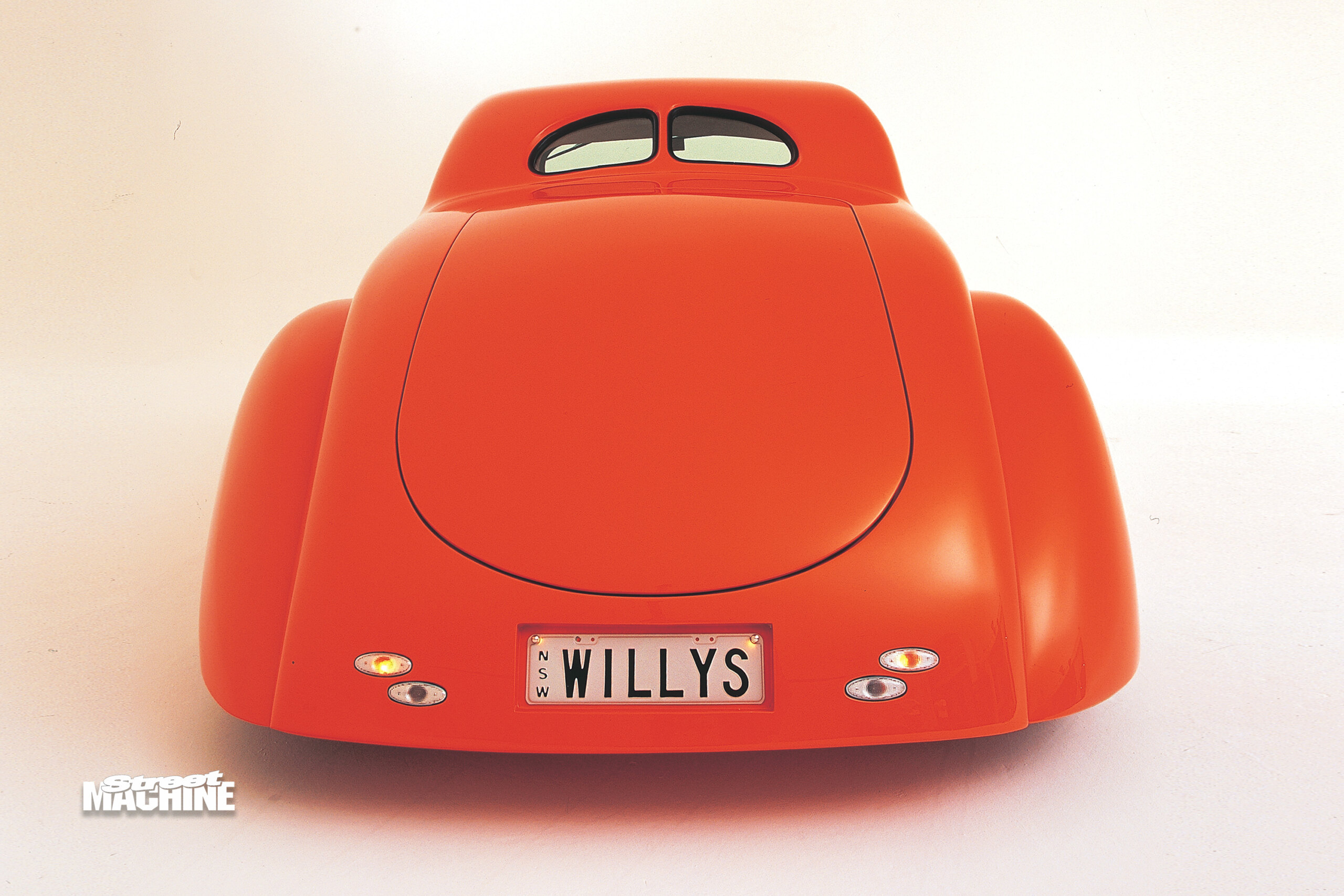
There was never any grand plan about how this car would come together, but one thing was certain (well, four things, actually): 17-inch Billet Specialties GT53 wheels. To fit the 11-inch rears without tubbing the car or modifying the chassis, the fenders were widened 100mm on each side. The job is done so well that it’s difficult to tell it never came from the factory like that.
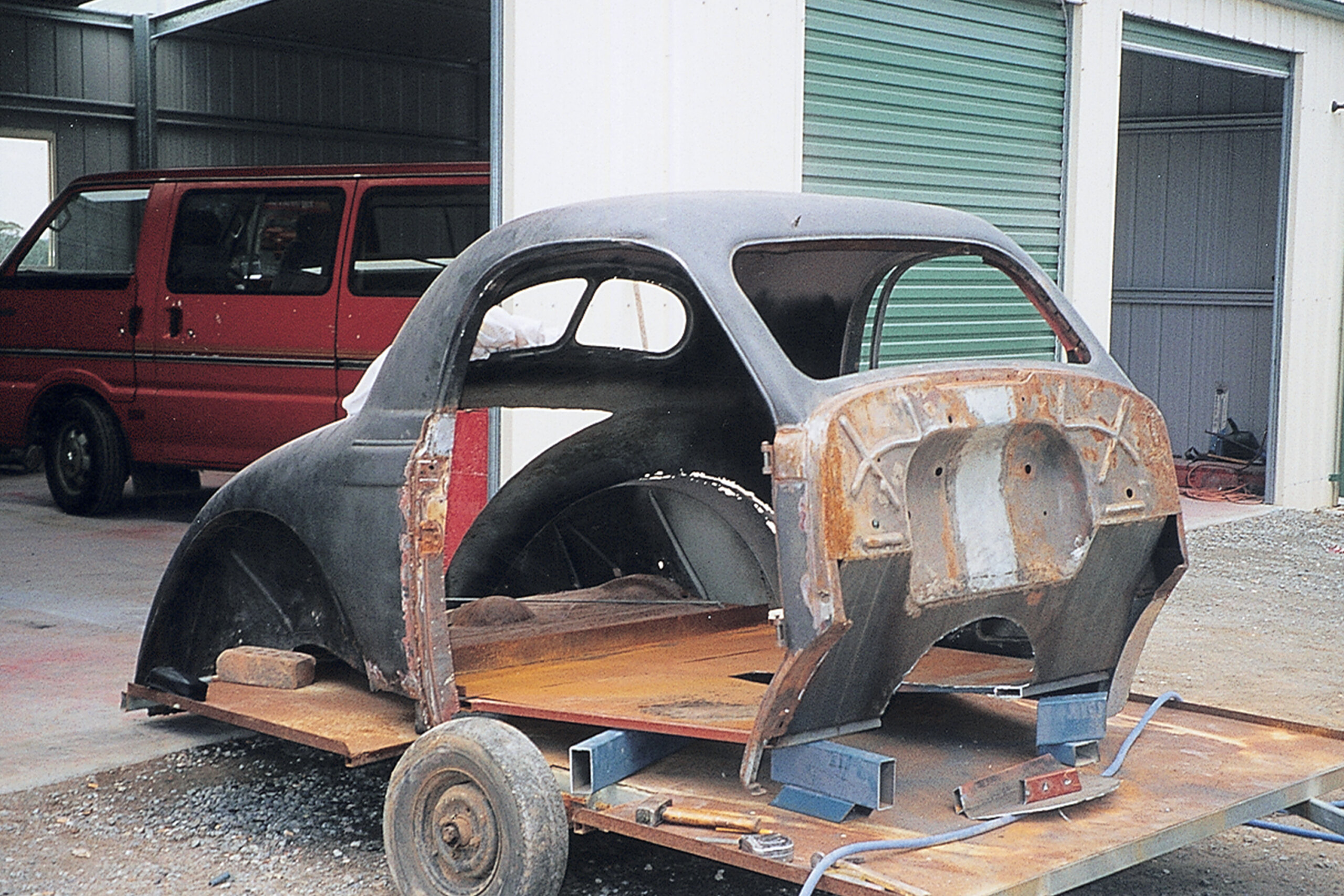
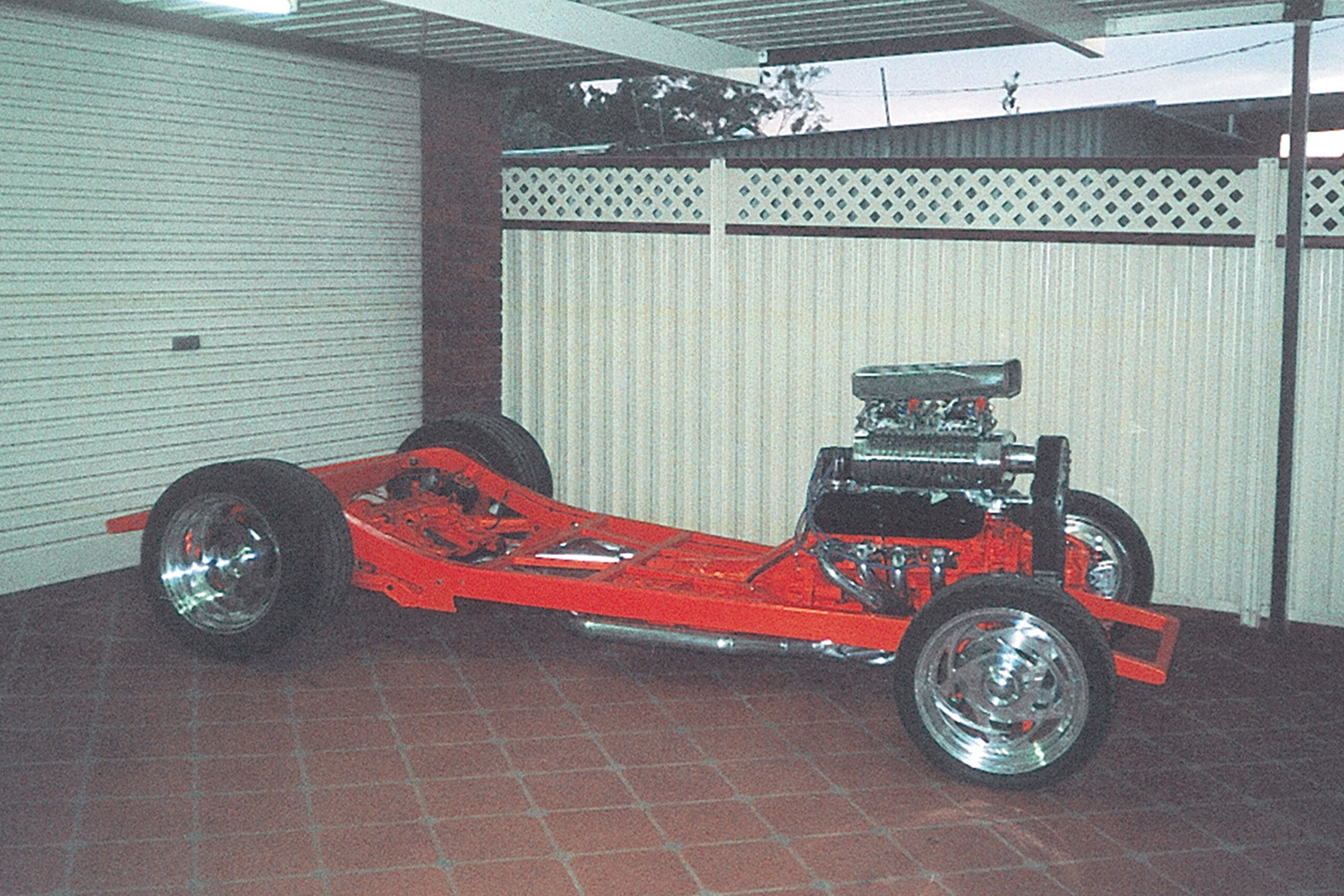
But suddenly the Willys looked weird because it was much wider at the rear than the front. To balance the proportions and make room for the eight-inch-wide front wheels, the front fenders were widened 40mm each side. As with the rears, the front fenders were widened where they mount to the body, and again you wouldn’t know it unless you parked a stock Willys next to it.

David is a motor trimmer by trade, and did his time with his brother, Steve, at Alltrim Car Interiors. They combined to put together the stunning Oyster leather interior. There was no dashboard when Dave got the car, so the guys made one. It’s a lot deeper than the original, providing more room for wiring and giving the interior a more modern look by reducing the gap between the dash and the Billet Specialties steering wheel.
Four 12-inch Pioneer subs and two Pioneer amps hide behind the seats. The doors hold a couple of Pioneer splits and the Alpine head unit is in the dash.

For a first-time effort, Dave has produced an absolutely outstanding car. It was never meant to be a show car, yet it has done pretty well on the tinware circuit. Accolades include Top 20 at Summernats 16, Top Hot Rod and Entrant’s Choice at Kandos 2003, and Top 10 at the Sydney Car Festival.
“It just turned out heaps better than we thought,” says Dave.
IN DETAIL:

- Steel body has many custom touches only Willys fans will notice
- Suicide doors have hidden hinges and shaved handles
- Rear fenders are widened a full 100mm to fit 11-inch wheels
- 2¼-inch roof chop emphasises the Willys’ extra widt
- Power windows are operated from the centre console
- Worked 454 would scare the Willys’ old flathead four to death
- Standard rear glass adds subtlety to the roof’s chop job
- A pair of 725 Holleys keep pace with the engine’s thirst
- Is it overkill to add a 6/71 blower to a big-block? Nah, never
- Bonnet must come off to allow use of the full metal tower
- Huge PWR aluminium radiator reliably protects the engine
- Front fenders widened 40mm to maintain balance front to rear
What’s a Willys?
Willys came into being in 1907 when New York car dealer John North Willys bought the Overland car company. He renamed it Willlys-Overland and at one point the four-pot Overland was the second-best selling car in the US after Ford’s Model T. The company went on to make heaps of Jeeps for the US military during WW2 and never really got back into the swing of producing passenger cars. Willys was bought out by the Kaiser company in 1953 and the nameplate disappeared altogether in 1965.
The classic rounded Willys shape was made between 1937 and 1942, but was not initially popular with hot rodders as it was seen as an economy car and was stuck with a low-powered flathead four.
This all changed in the late ’50s when blokes realised Willys were a cheaper and lighter alternative to Chev or Ford coupes for gas-class drag racing. The motors got bigger, blowers and fuel injection were added, wheels got so wide that they wouldn’t fit under the fenders, and front ends were raised to assist with weight transfer. This nose-high stance soon became known as the ‘Gasser’ look and is once again gaining popularity in the street rod crowd.
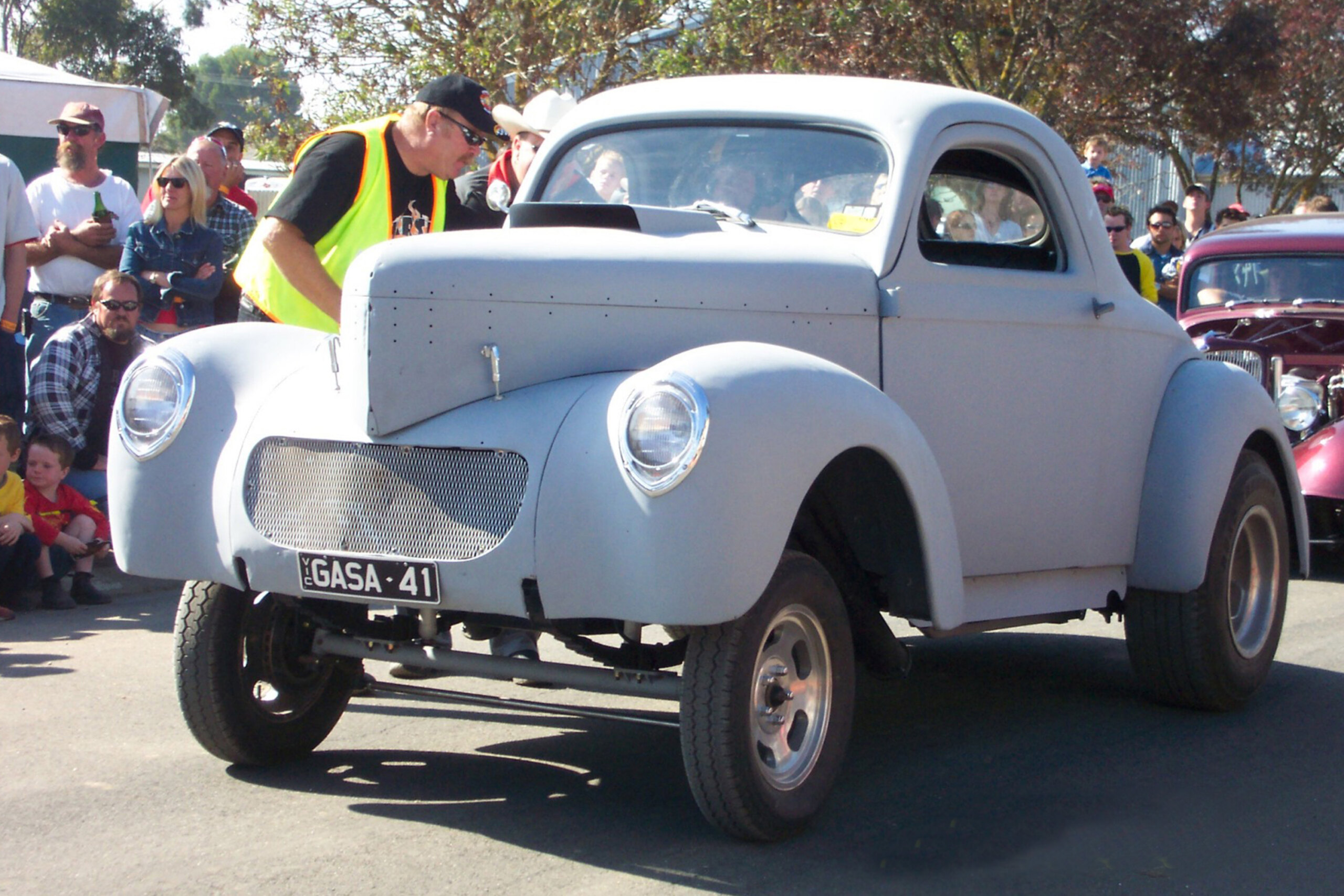
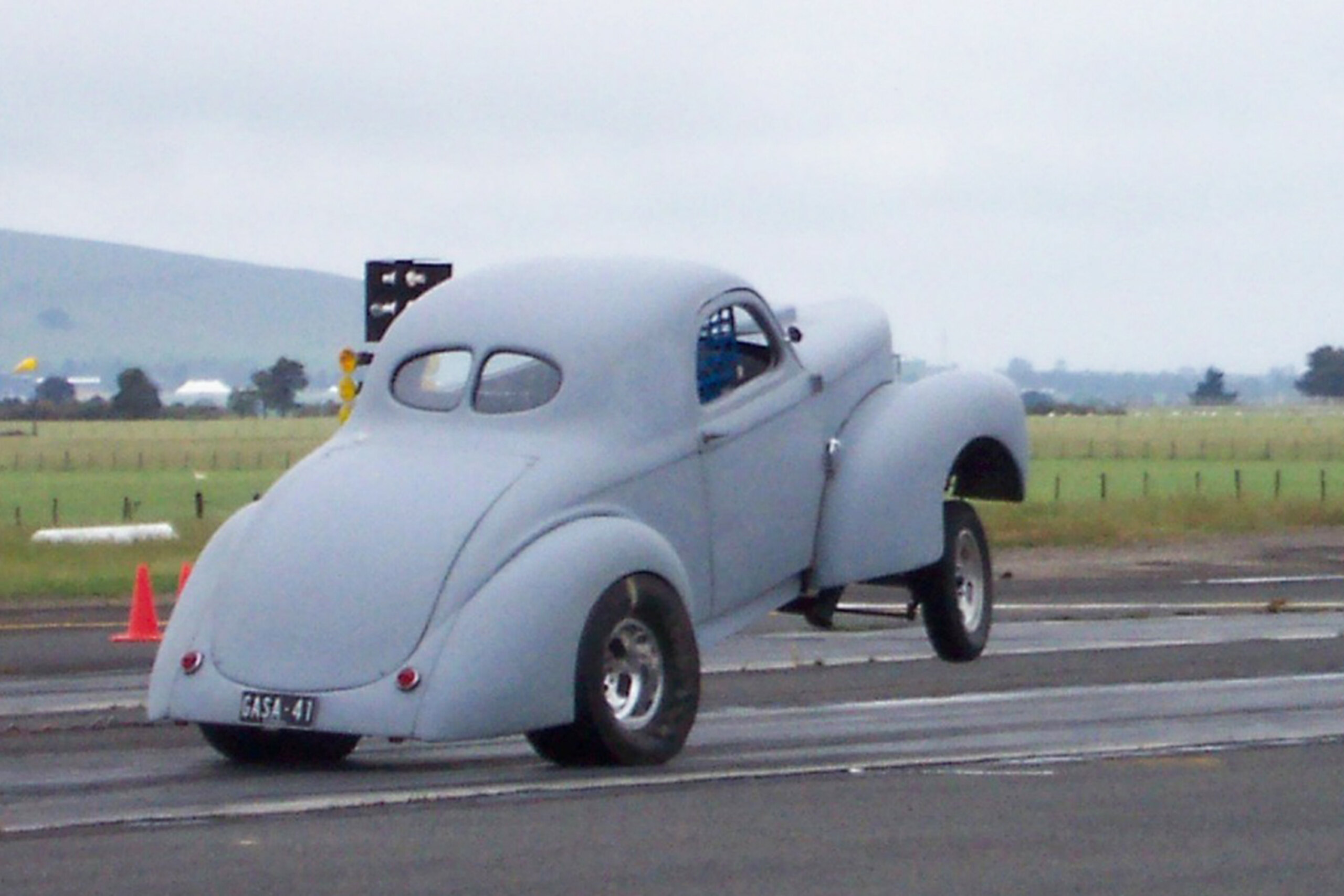
From the late ’50s to the late ’60s, Gassers were one of the most popular attractions at any drag-racing meet, so popular that some of the top cars travelled to Australia and the UK. Their popularity was partially due to the fact that they were based on recognisable body styles, but the combination of huge horsepower and a short wheelbase made for very entertaining racing. Many different makes and body styles were used in the Gasser class, but the Willys was — and still is — the most popular.
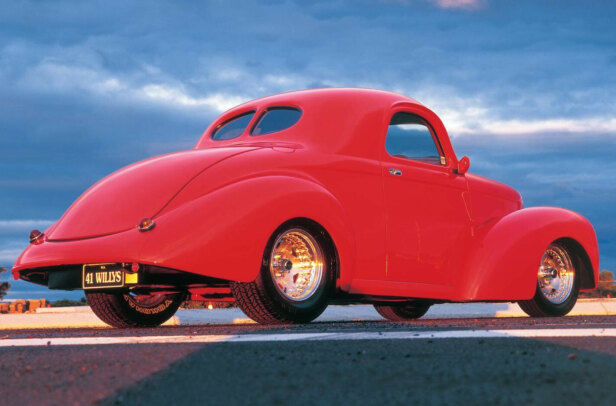
Plenty of Willys are raced on the US nostalgia drags circuit and there are even a few examples getting around in Oz. Steve Costa’s ’41 (above) may not be a show stopper, but it pulls wheelstands like a beauty! Thanks to Luke Pyne for the pics.

David Maiolo
1941 Willys coupe
| Colour: | Custom orange with gold pearl |
| ENGINE | |
| Type: | 454ci Chev |
| Blower: | 6/71 B&M |
| Carbs: | Twin 725 Holleys |
| Pistons: | Forged |
| Radiator: | PWR, aluminium |
| Exhaust: | Twin three-inch |
| DRIVELINE | |
| Gearbox: | Turbo 400 |
| Stall: | 2500rpm |
| Diff: | Commodore IRS |
| RUNNING GEAR | |
| Suspension: | Firestone airbags, Pedders shocks |
| Steering: | Commodore |
| Brakes: | DBA rotors, Commodore calipers, XC Ford master cylinder |
| Wheels: | Billet Specialties GT53 17×8-inch (f), 17×11-inch (r) |
| Tyres: | Falken 215/40 (f), Michelin 335/35 (r) |
| INTERIOR | |
| Seats: | ’94 Eunos |
| Steering wheel: | Billet Specialties |
| Gauges: | Auto Meter |
| Shifter: | B&M |
| Stereo: | Alpine deck, two Pioneer splits, four 12-inch Pioneer subs, two Pioneer amps |
THANKS
Rob Mellish and Chris Vella for bodywork and paint Mark Sant from On Track Auto Electrical John Agassy at OzTorc Dave at Hume Mufflers Mark and Joanne Heaton Family and friends who helped.
Comments