
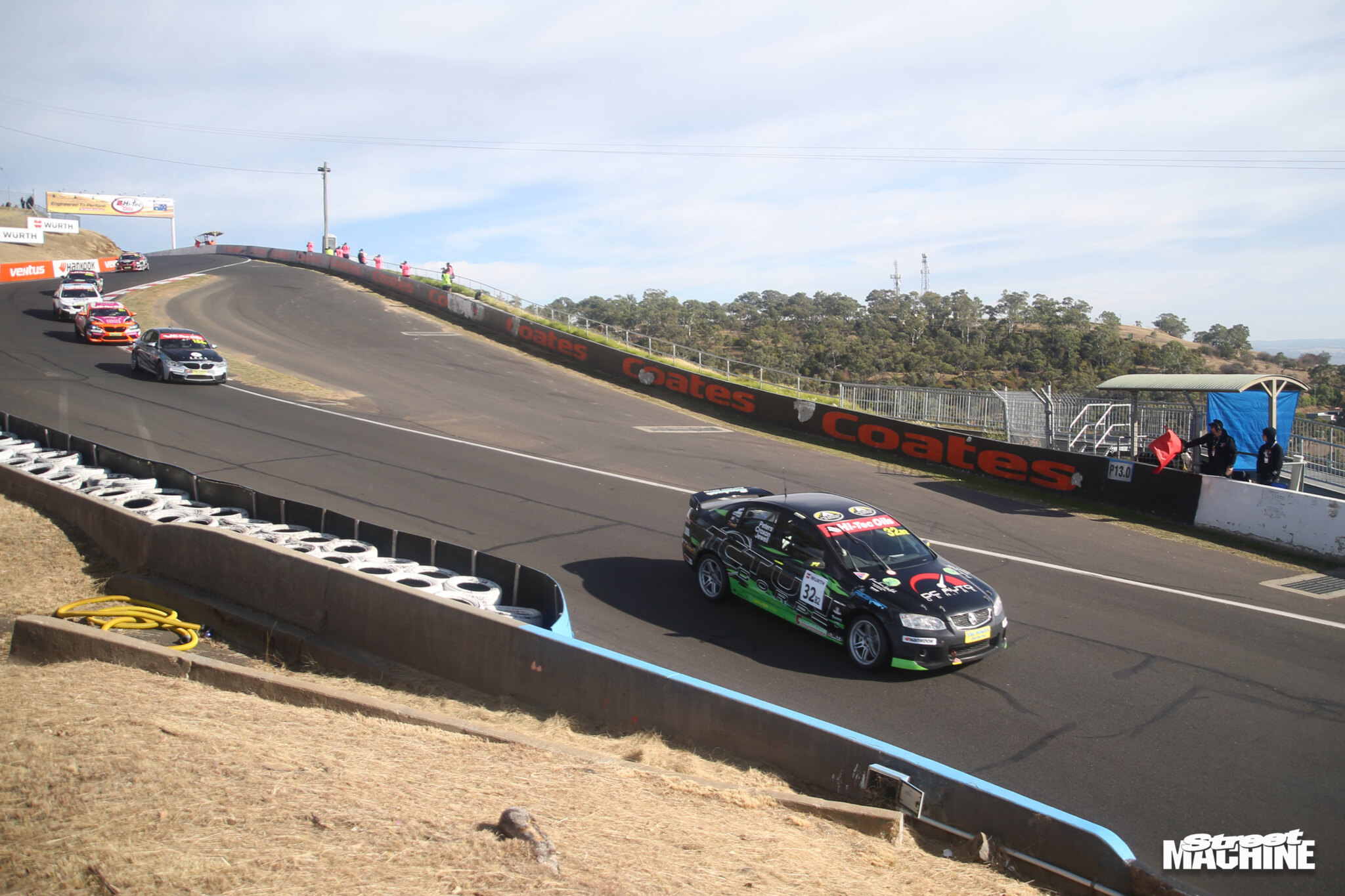
When I was 21, my mates and I crammed into the back of my little turbo Celica and made the pilgrimage to Mount Panorama. As we sat in our camp chairs up at McPhillamy Park enjoying our cans of Woodstock, we watched on with wonder and excitement as the Bathurst 24-Hour played out before us.
First published in the October 2025 issue of Street Machine

Never in my wildest dreams did I imagine I’d ever be involved in a race team at that level, yet somehow, more years later than I’m comfortable admitting, here I was. I’d been asked to be team manager and crew chief for a Bathurst 6-Hour team, and I was quietly shitting myself.
For those of you who might be new to cars that go around corners, the Bathurst 6-Hour is a production car race that takes place at God’s own race track. While there’s a rule book as thick as Street Machine’s back catalogue, it boils down to each race car needing to remain as close to its road-going counterpart as possible. Other than safety components and some freedoms around things like exhaust, brakes and suspension, the rest of the car must remain factory standard.

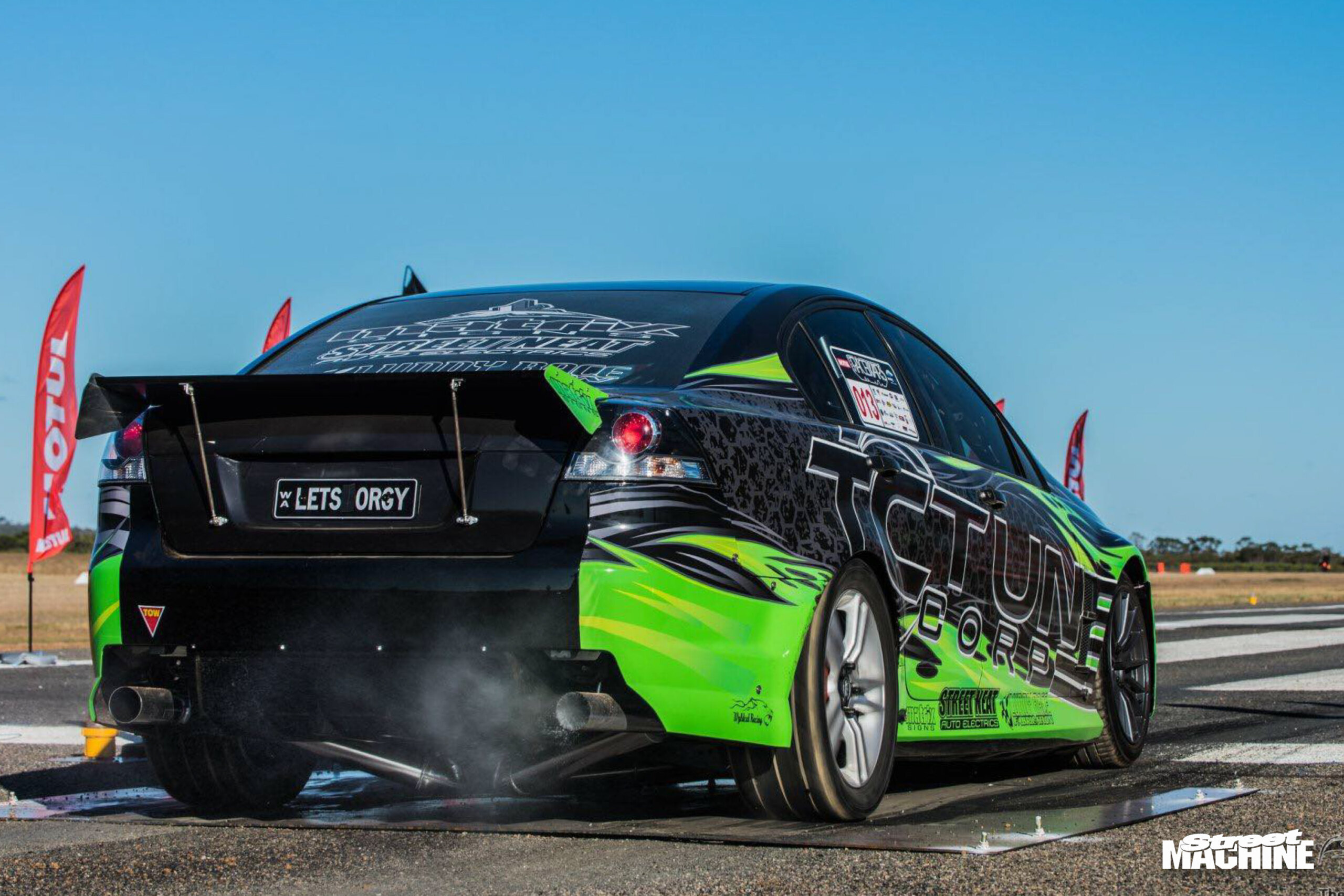
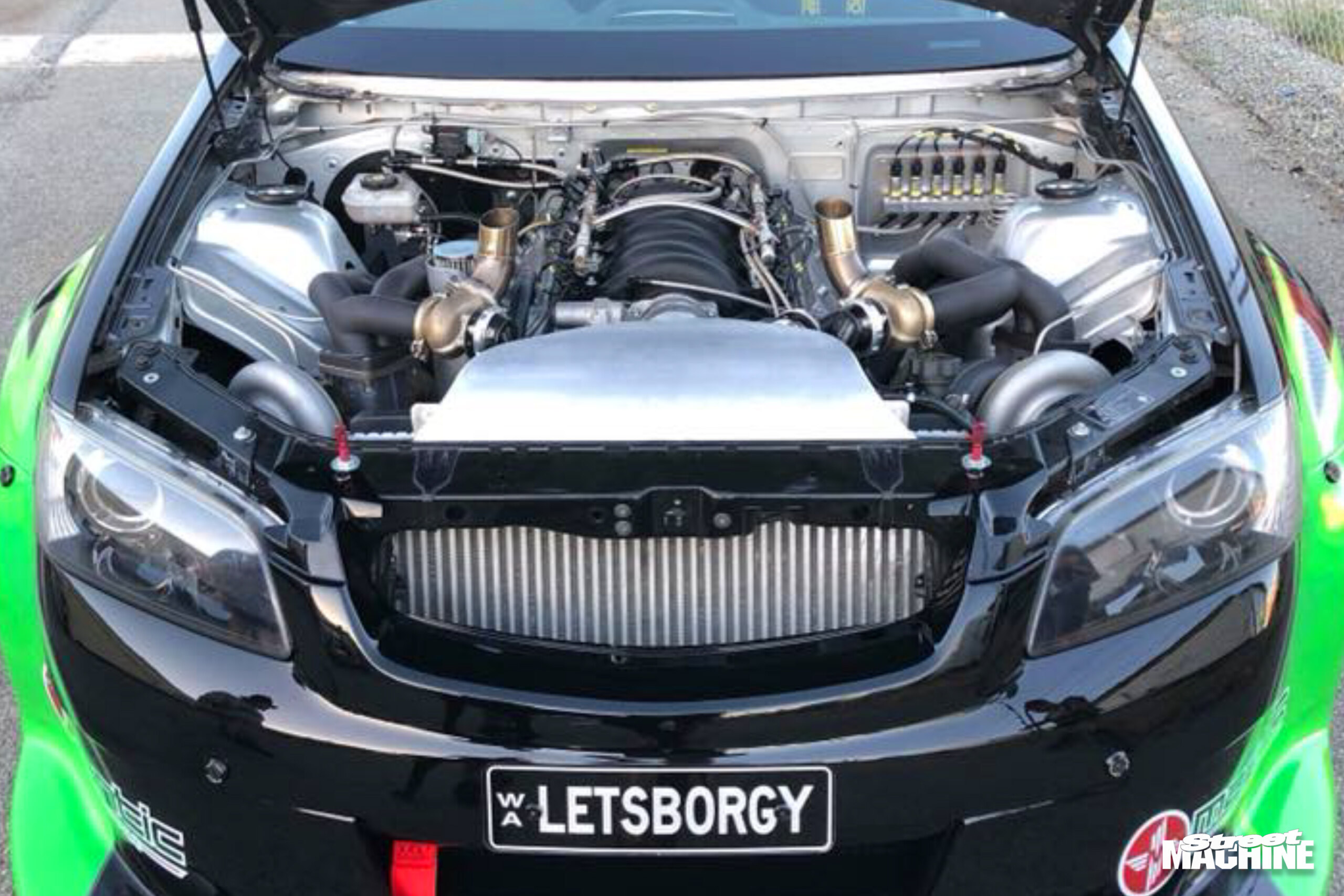
Our team’s weapon of choice was a 2008 VE Commodore – but there were no droning autos or fart-box Alloytecs here. This one was equipped with the mighty 6.0-litre L98 V8 and factory Tremec T56 six-speed manual. The car started life as an HSV ClubSport, but having been through many iterations, it now found itself in SS Redline guise to compete in the slightly more budget-friendly B2 Production class. If it was still in ClubSport spec, it would land in the A2 class up against the newer, lighter and faster Mustangs and Camaros run by teams with much bigger wallets.
So, there I was at Bathurst, one of the most famous race tracks in the world, and I was watching people like John Bowe casually walking past while chatting to Grant Denyer, before getting his race suit out of his transporter. Starstruck as I was, we had business to take care of.
We unstrapped the VE from the open trailer, which had been towed to the track by the VE ute that team owner Brent Peters had bought the week before the race. It would serve not only as a tow rig, but also as an emergency spare parts car if anything untoward were to happen to the race car.

Our Bathurst sojourn would be a four-day campaign. On Thursday, we went through scrutineering and filled out the necessary paperwork. The VE copped a few raised eyebrows from the scrutes about things we hadn’t even considered, but the beauty of racing a Commodore is that you can go to the local wreckers and raid parts easily. We brought everything up to spec, and the car was given the thumbs-up for three days of racing.
Friday and Saturday morning was all about practice for our three drivers – Brent, Damien Croxon, and our 20-year-old young gun, Anthony Jewell – but probably more importantly, it was good practice for our crew. Anthony had brought over four of his good mates from Perth to crew for us – Daniel George, Connor Gaglia, Matt Voisey and Peter Coluccio – while Brent had enlisted mechanic Az Bassula, as well as Pat Lenane and Tahlia Rose Krisanski, who he knew from Perth’s speedway scene.
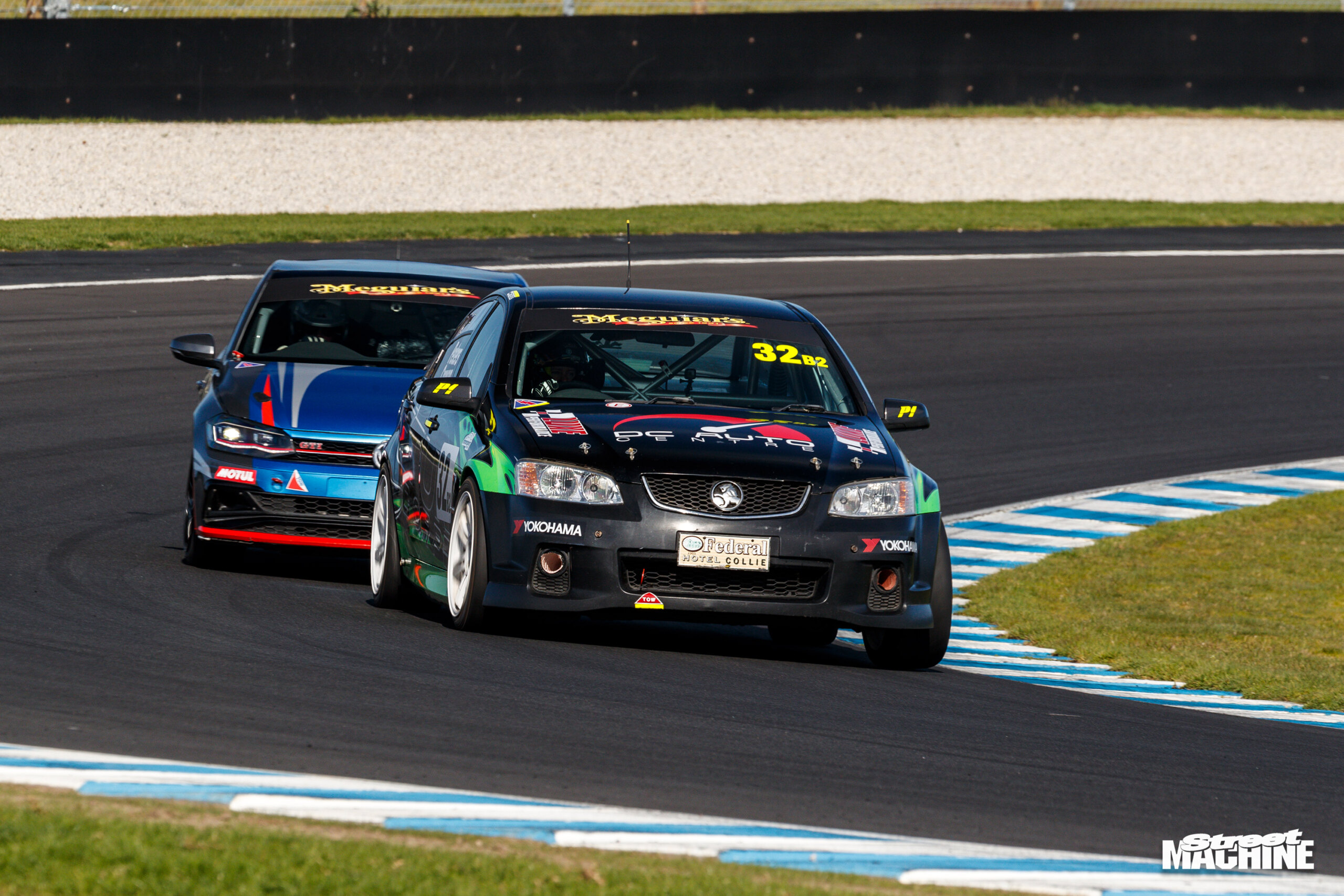
The practice sessions were the first time any of us had been involved in live track fuelling. The rules are very strict for this process, with marshals watching your every move. The only person allowed out on pit lane is the car controller – yours truly – and everyone involved in the fuelling process has to be clothed head-to-toe in proper fireproof race gear. Once the car controller has guided the car in, the engine has to be shut off, and only then can the refuelling team cross the line into pit lane. One person mans the fire extinguisher, one works the ‘deadman handle’ on the fuelling rig, and another does the refuelling. We had a 200-litre gravity-fed fuelling rig – the same as you see in Supercars races, with twin hoses that plug into the side of the car. During this time, the two drivers can swap over, as they are also in fireproof gear.
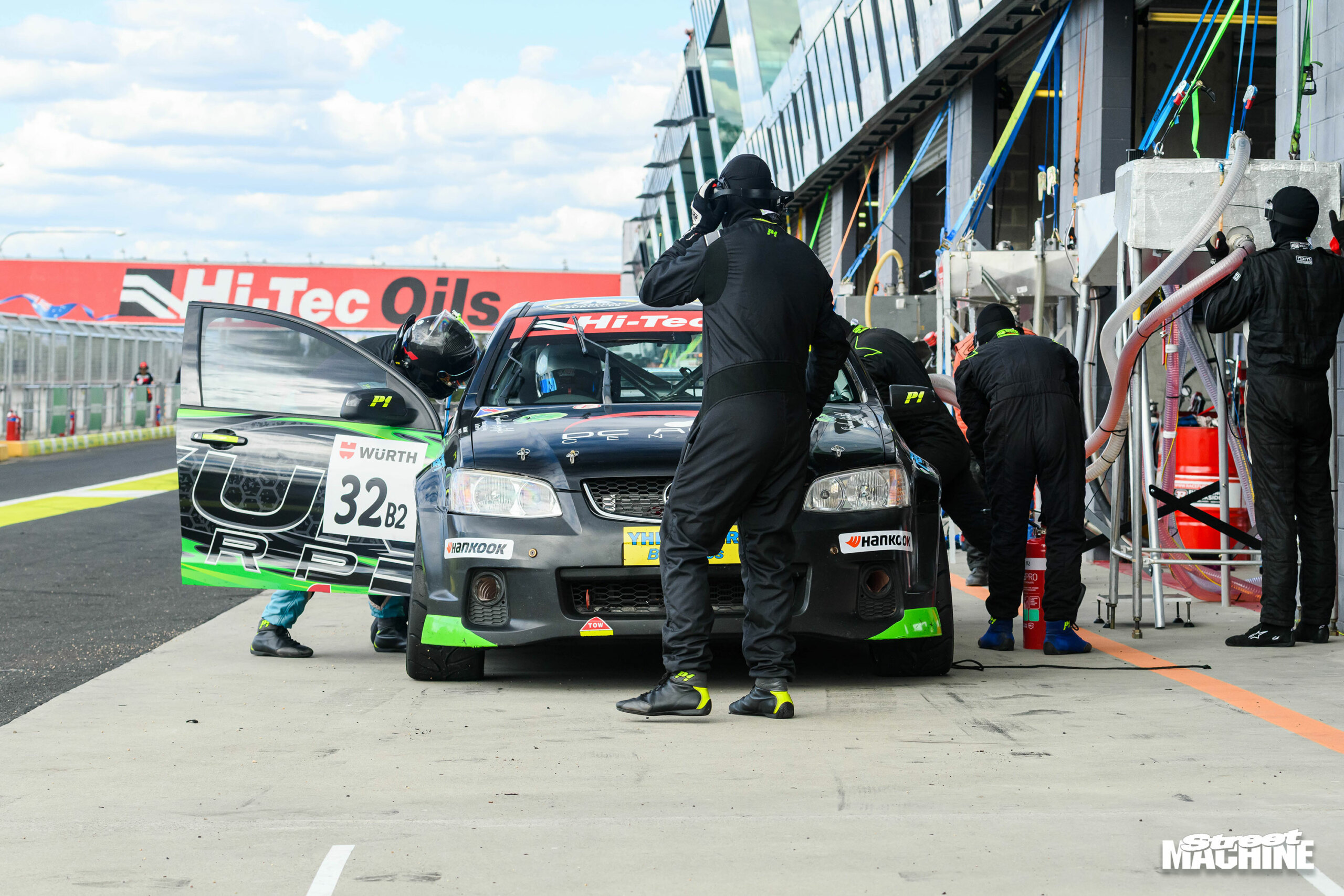
Once the fuelling process is finished and the filler nozzle hung up, the fuelling crew have to go back over the line and the wheel guys can come out to change wheels or check tyre pressures if necessary. During this time, the car controller can communicate with the driver but is not allowed to touch the car; place so much as a finger on it and there is a penalty. If the car moves away without everyone bar the car controller back in the pits, that’s also a penalty. I’m happy to say we didn’t receive one penalty for our pit lane activities the whole weekend – not something that could be said for some of the much larger and more experienced teams.
With two practice sessions under our belts and feeling slightly more confident, we prepped the car for qualifying and strapped Anthony in, politely requesting that he not bin it. This was his first time at The Mountain and his first door-to-door racing experience outside of a Hyundai Excel Cup car, and he drove admirably, qualifying 38th out of 73 cars. We were stoked to be starting the next day’s race in a solid position.

On Saturday night, we went through the whole car, fitting new discs and pads for the AP Racing six-pot endurance brakes (the thickest brake pads I’ve ever seen!), and adding fresh oils, plugs, leads, and everything we could to give this old girl a fighting chance to endure Sunday’s six hours of punishment.
Race day arrived before we knew it, and it was game on. Brent got strapped into the car and rolled with the rest of the 70-car field down Conrod Straight towards the startline – what a sight!

The green flag came down and the field thundered off for six hours of racing. Brent saw green and went for it, but unfortunately he mistook which line was the ‘control’ line that marks the point where you’re allowed to overtake. He nudged past a car before the control line, which would end up costing us later in the race.
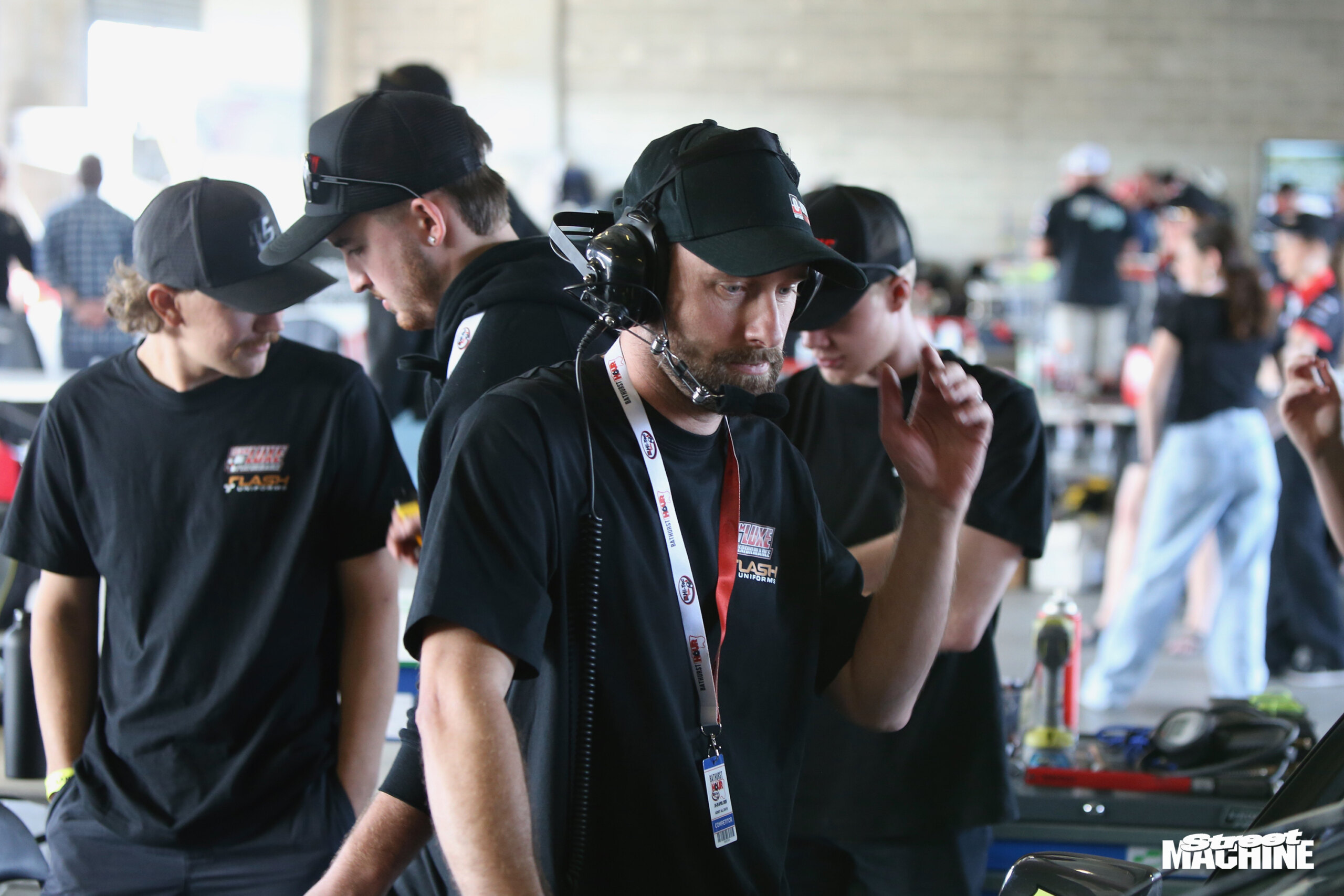
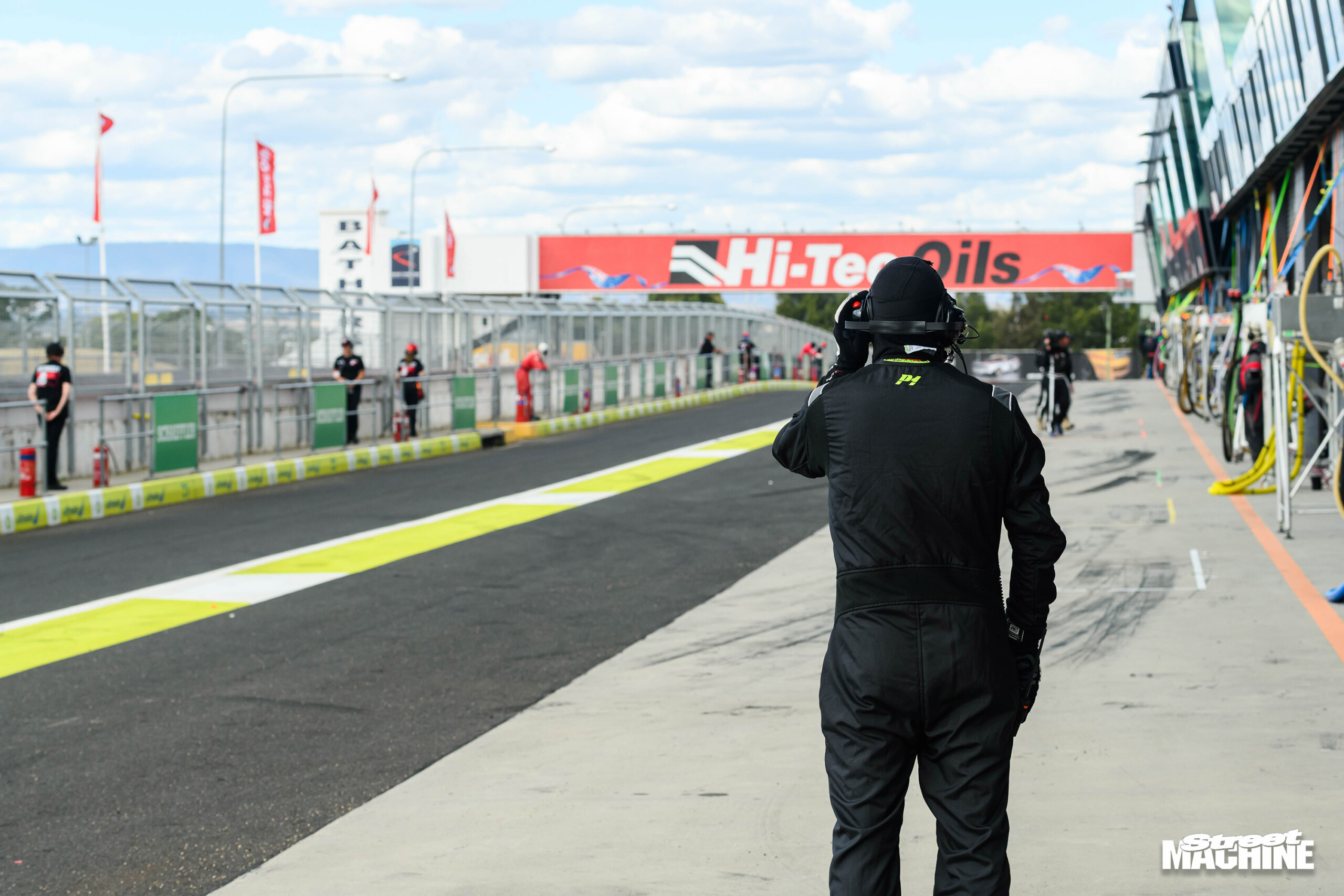
After a solid 45 minutes in the car, Brent came into the pits to swap driving duties with Damo, and it was time for the rest of us to undertake our first proper race refuelling stop. The boys were flawless, but sadly, the VE was not. The small breather for the 100-litre enduro fuel cell (mounted inside the lip of the boot) had worked itself loose and fallen into the boot, so when the boys topped up the cell with 40-odd litres of fuel, it ran through the now-horizontal breather and flooded over pit lane. With marshals flapping their arms and the firies running up to us with extinguishers at the ready, two of the boys mopped up the spill while the other two worked to reattach the breather hose.
The boys did a great job, but it cost us a lot of time, and Az had to wait until they were finished to check the pressures on the Hankook Z221 medium-compound control tyres and top up the cooling and drink systems. By the time I gave Damo the thumbs-up to go, we had lost a lot of laps. It’s always the two-dollar part that brings everything to a grinding halt!

As the race went on, my anxiety was peaking. Honestly, I would rather have been behind the wheel; I found that way less stressful than this team manager caper!
With Damo back on track, things seemed to be going smoothly, but then I got a crackle over my headset. Our radio system wasn’t amazing, but when the signal cleared, I heard “I’ve had a blow-out!” from Damo as the VE crested the hill coming up pit lane. I rushed to get Anthony ready to jump in the car, and the crew hustled to prepare for an unscheduled pit stop. The car rolled in, and the front right tyre was cactus; it had blown on Conrod Straight at well over 200km/h, but Damo had handled it like a champion and kept the car on the track and off the wall.
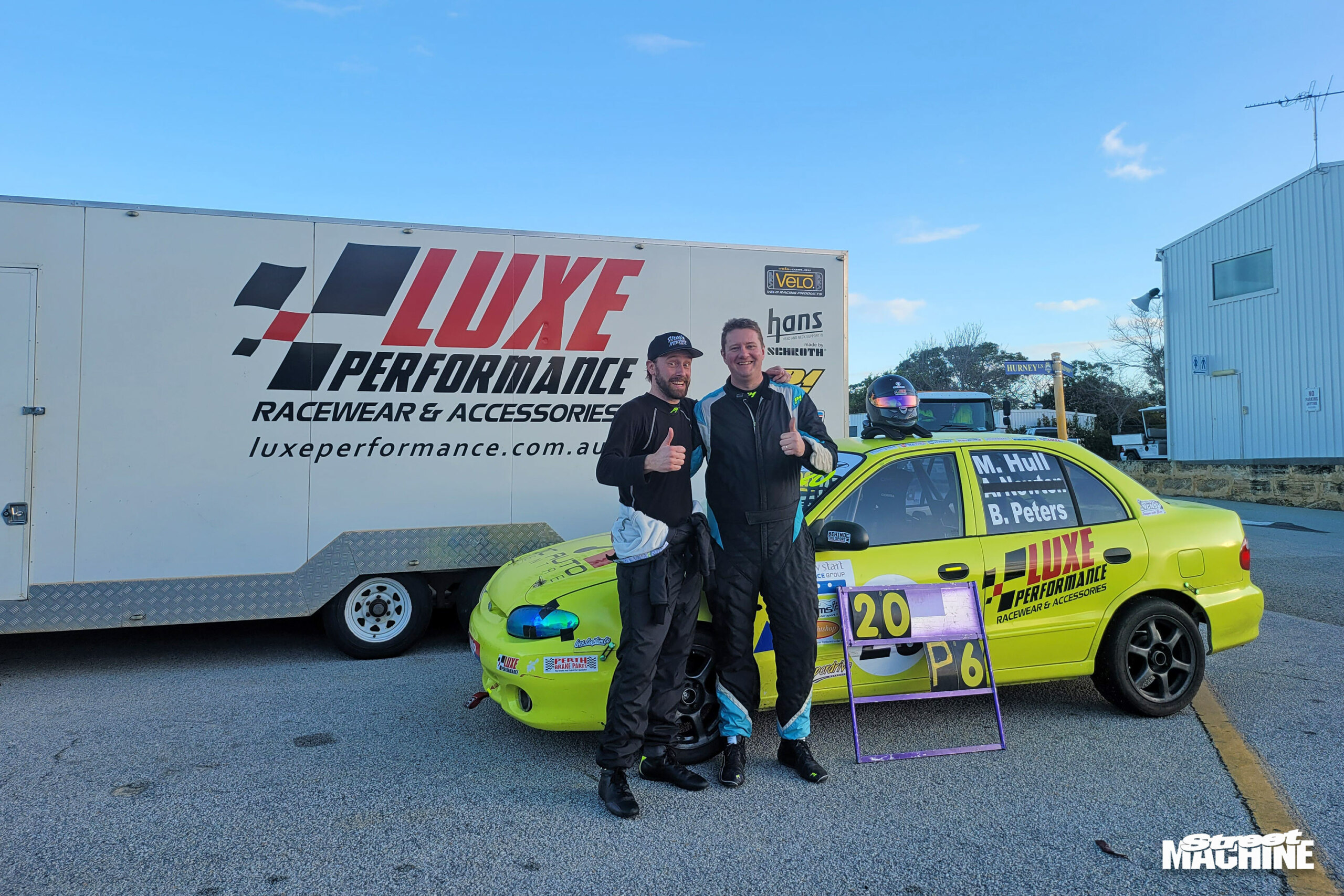
With four-and-a-half hours left on the clock, Anthony took Damo’s place and pushed at a steady pace to make up lost time, but Brent’s over-enthusiastic start came back to bite us, with race control giving us a drive-through penalty – bugger. Just as we got that call, there was an incident up on the mountain and the safety car came out. Being new to this race series, I cornered three marshals on pit wall, who confirmed that we couldn’t serve our penalty during the safety car period. As soon as the lights went green and the safety car was in, we’d have to bring the car in, drive down pit lane without stopping, and then continue racing.
Anthony was unimpressed when I radioed him with the news, but I stressed that he wasn’t the cause of the penalty. When the lights went green, he came straight in, served his drive-through and continued racing.

Straight away, another radio call from the ivory tower came through: “Car 32 must serve a drive-through.” Unfortunately, the marshals I’d spoken to were wrong – after the light went green, Anthony was meant to cross the control line, do a lap, and then come in to serve his drive-through. Holding back my rage from the waffling marshal – who was back-pedalling, saying I should have known the rules (to be fair, he wasn’t wrong) – I said some choice words and radioed Anthony to tell him serve another drive-through. He was not happy, and fair enough.
With all the drivers doing two stints each, the rest of the race was thankfully uneventful, although poor Damo got another front right tyre blow-out on Conrod Straight, while Anthony did a stellar job of avoiding some seriously large incidents that brought out the safety car again. We finished with Anthony pushing out brilliant lap times, with his fastest lap being a 2:36.6.

Rolling across the finish line after 109 laps, 677km and just over six hours, we had done it – we had completed the Bathurst 6-Hour. Sadly, with our refuelling issue on the first pit stop and two drive-through penalties, we finished eight laps down on our direct competition, but we still finished fourth in class and 39th overall out of 70 cars.

The car consumed just under two litres of fuel per lap; however, I can tell you the team was nowhere near as fuel efficient at the pub that night. Team owner Brent had the bar staff and random barflies doing shots with us, and as the anxiety from the day faded away, so did my vision. The last thing I remember was lying on the bonnet of the VE tow ute with Brent in the Airbnb driveway, surrounded by empty cans.
“Same time next year, mate?”
BY THE NUMBERS
- Qualifying time: 2:34.8 (Anthony Jewell)
- Qualifying position: 38th
- Laps completed: 109
- Race distance completed: 677km
- Fastest race lap: 2:36.6 (Anthony Jewell)
- Fuel consumption: Under two litres per lap
- Total fuel consumption: approximately 210 litres
- Class result: 4th
- Overall result: 39th
- Beers consumed after race:
- Data inconclusive
2008 HOLDEN VE COMMODORE SS REDLINE
| Specs: | |
| Engine: | 6.0L L98 |
| Transmission: | Tremec T56 six-speed manual |
| Suspension: | Custom Shockworks coil-overs |
| Brakes: | AP Racing six-piston calipers with enduro pads |
| Rollcage: | International-spec, with extensive cross-bracing and double lateral bars |
| Minimum race weight: | 1618kg with fuel and driver at end of session |
| Engine management: | Stock ECU, MoTeC dash |
Comments