

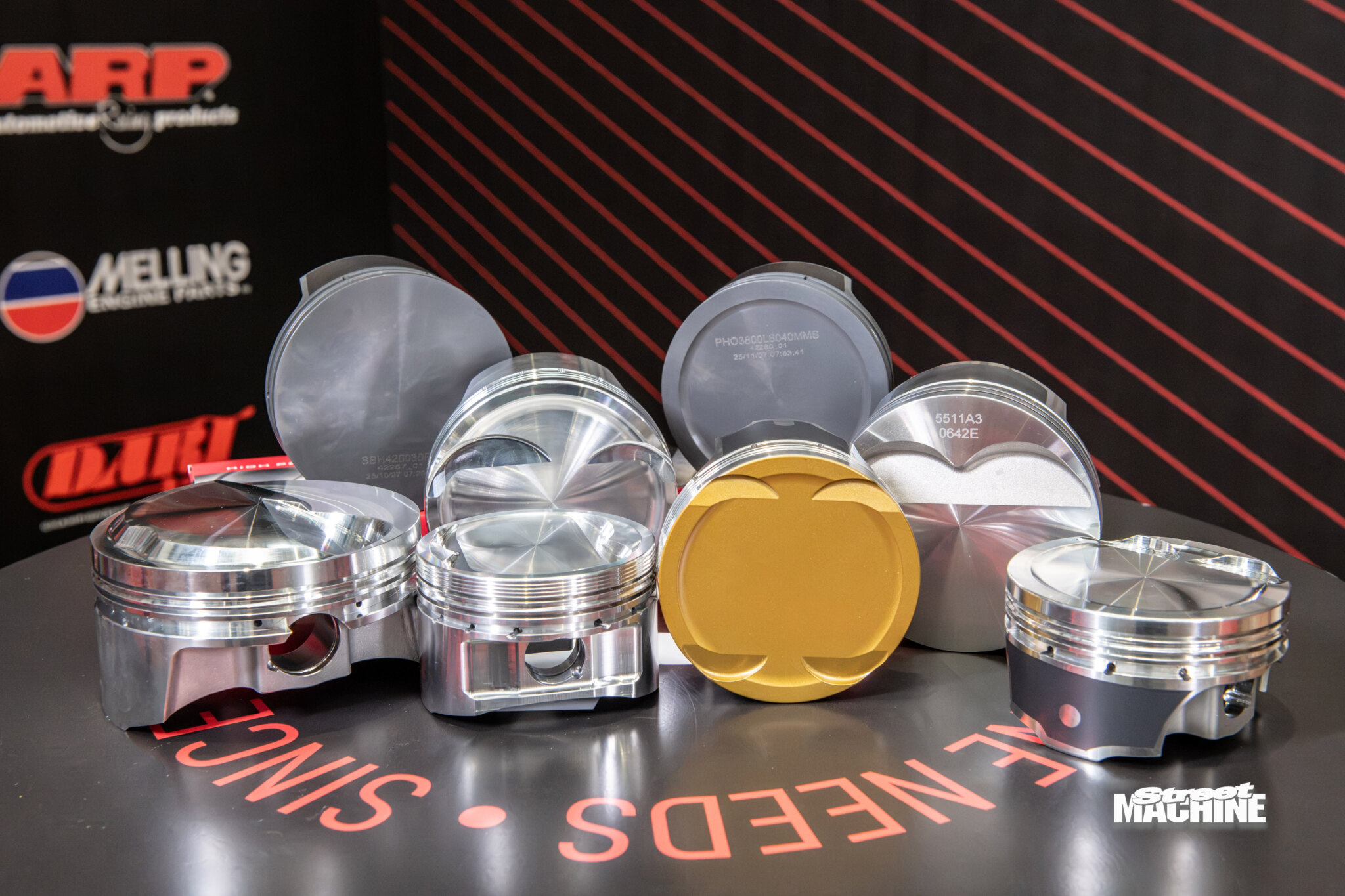
Nothing cops a pounding quite like a piston, and if you want your engine to last, you need the right slugs to do the job. Your basic four-stroke engine has to draw the fuel/air charge in, compress it, take the load from the explosive shock that happens when the engine fires, and then push the combusted gases out the exhaust port. And it does all of these things hundreds of times a second.
First published in the October 2026 issue of Street Machine
Pistons are engineered to do a torturous job. Peak combustion temperatures can reach 2000–2700°C at the point of ignition, but generally average out at 900–1500°C. No wonder your engine gets hot in summer!
Your pistons are tasked with taking that abuse day in, day out for years, and are the literal drive force behind your engine. They take all that explosive force and transfer it through the piston and gudgeon pin to the connecting rod, down the crankshaft and through your drivetrain. Everything that happens in the combustion chamber above the piston is what makes the horsepower to drive your car down the quarter-mile, or to the shops for milk.
In the early days of internal combustion automotive petrol engines, pistons were made of cast iron or even steel, as engineers thought they had to be heavy and solid to take the loads. Compression ratios were low, pistons were heavy, and insanely thick combustion rings caused massive amounts of drag. As a result, some of those old engines just didn’t make much power. Nowadays, most pistons are lightweight and made from aluminium alloys, with thin steel rings, and last hundreds of thousands of kilometres. There are some modern diesels that still use steel pistons, but for the purposes of this article – and the fact that this is Street Machine – we’re going to stick with performance petrol engines and aftermarket pistons.
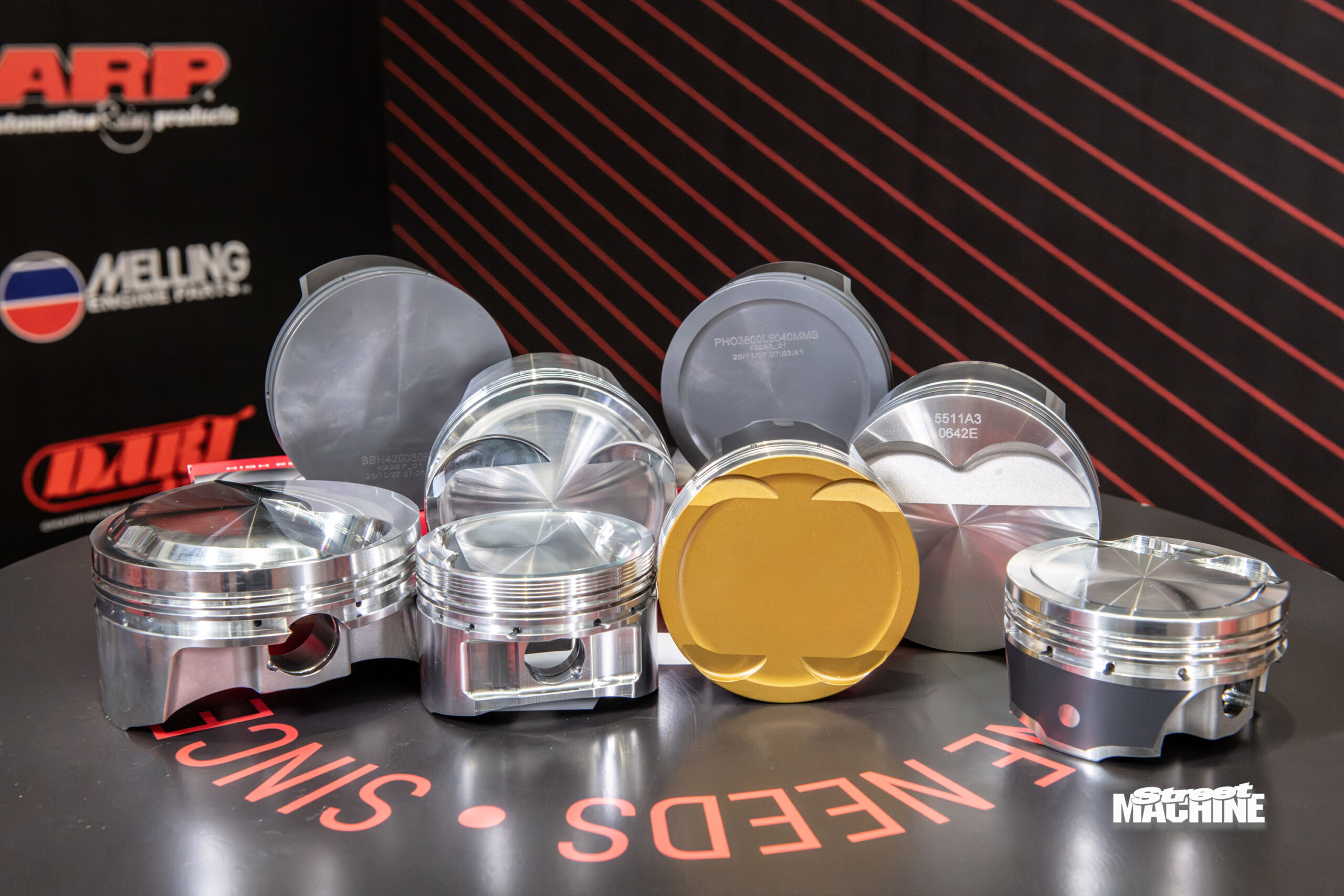
Premium forged billets, insanely precise machining and decades of research and development have combined to give modern-day consumers the best pistons available at any point in history. Manufacturers like Mahle, Wiseco, JE and SRP make some of the best pistons in the world; we’ve used all those brands at one point or another in Street Machine or Carnage projects to good effect.
The pistons your dad used a few decades ago look nothing like the ones we have today – but Dad wasn’t making 2000hp out of his street car, either. So, we asked engine building expert Frank Marchese from Dandy Engines for his opinion on piston selection.
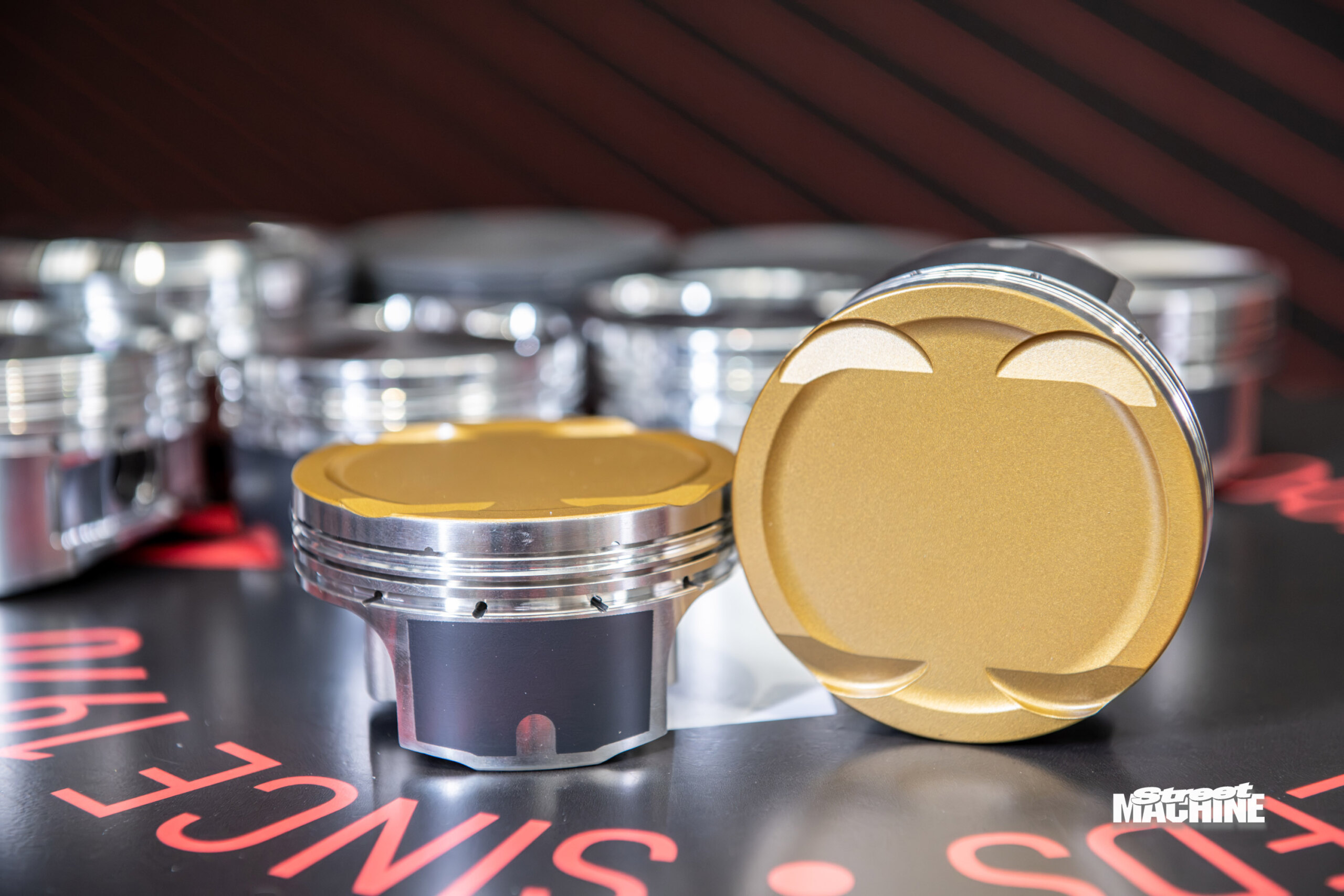
On the question of forged versus cast pistons, the answer is always forged, according to Frank. “Maybe if it’s just going to be a straight restoration – something non-performance – you would use a cast piston,” he says. “But I feel like a forged piston is the safest thing, because most people we deal with today are going to thrash their cars, and a forged piston is the most durable piston to take punishment.”
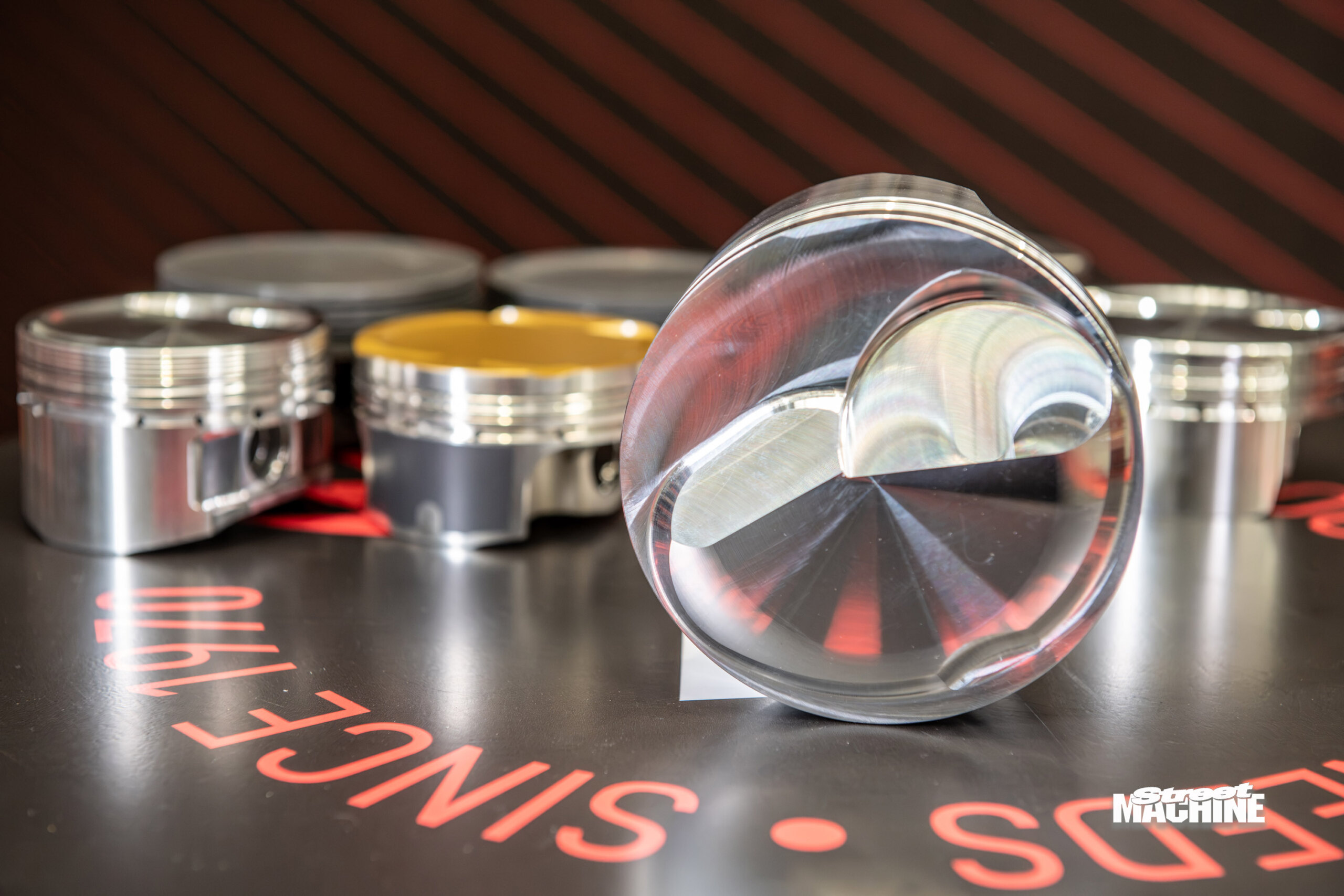
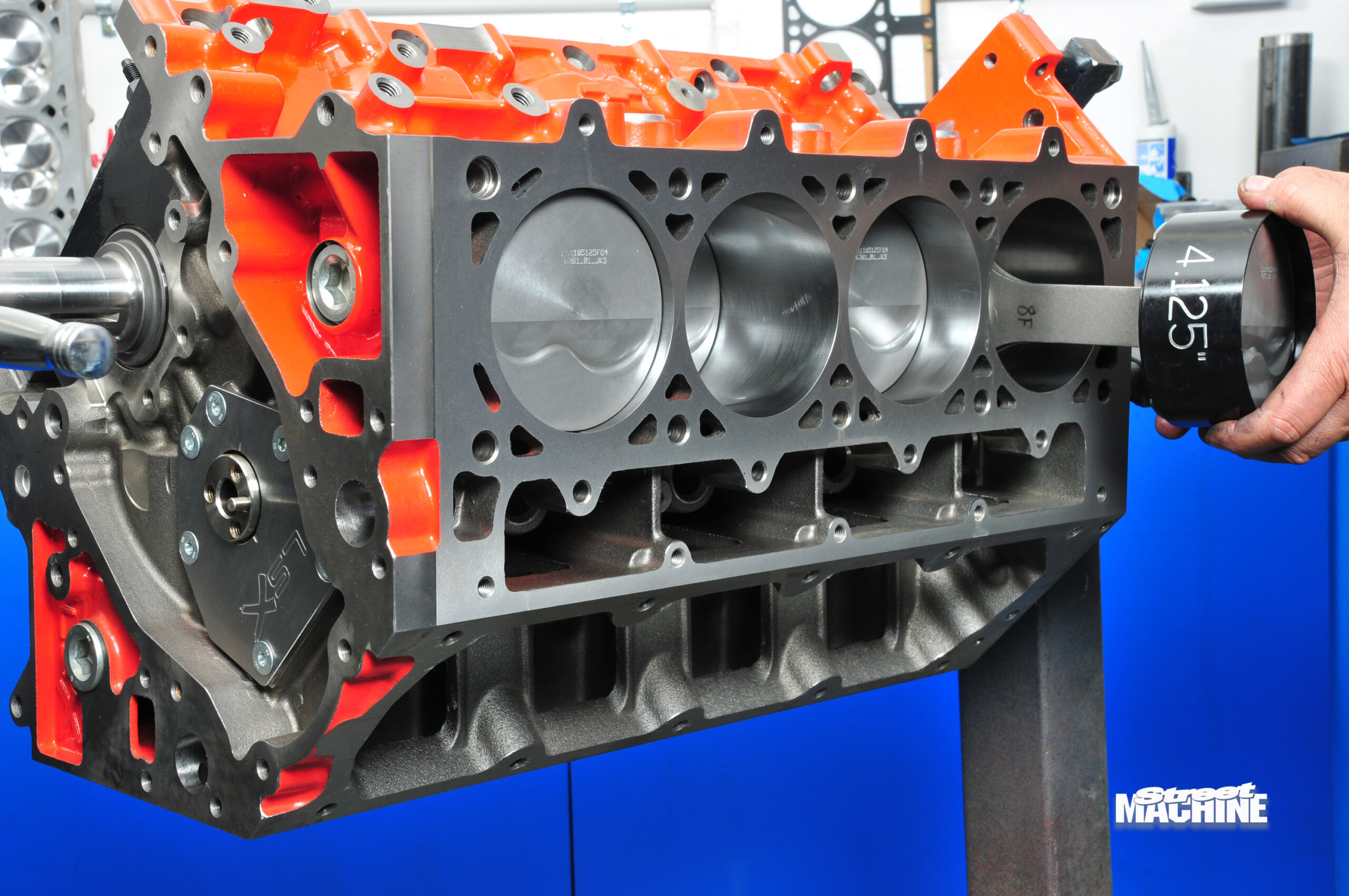
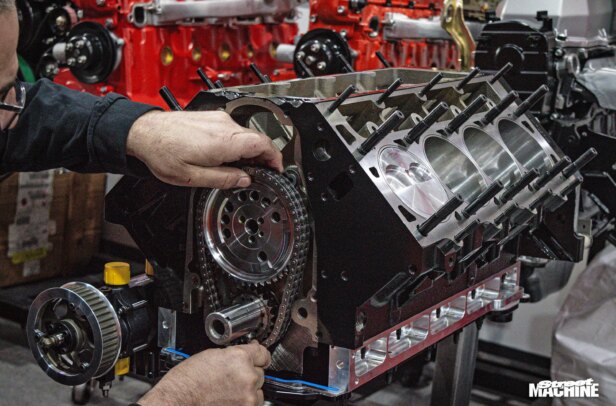
At 4.53in in diameter, it’s a massive slug, and the non-symmetrical canted valves of the big-block
Chev design require aggressive valve reliefs
Frank would know. We’ve seen him weld up pistons during Drag Challenge to get a car to the next track, and that’s not something you would ever do with a cast piston. Frank also admits to pushing the boundaries of some modern OEM cast pistons, including when developing the Godzilla 7.3-litre Ford V8 for some local customers. “If you want to push the boundaries of a stock motor like we did with the Godzilla, you can,” he says. “But as soon as we got near 20 pounds of boost, they just couldn’t handle the punishment on the skirt side. So, that’s a bit of an example as to why we don’t use cast pistons.”
What does Frank look for in a piston when he’s beginning a fresh build?
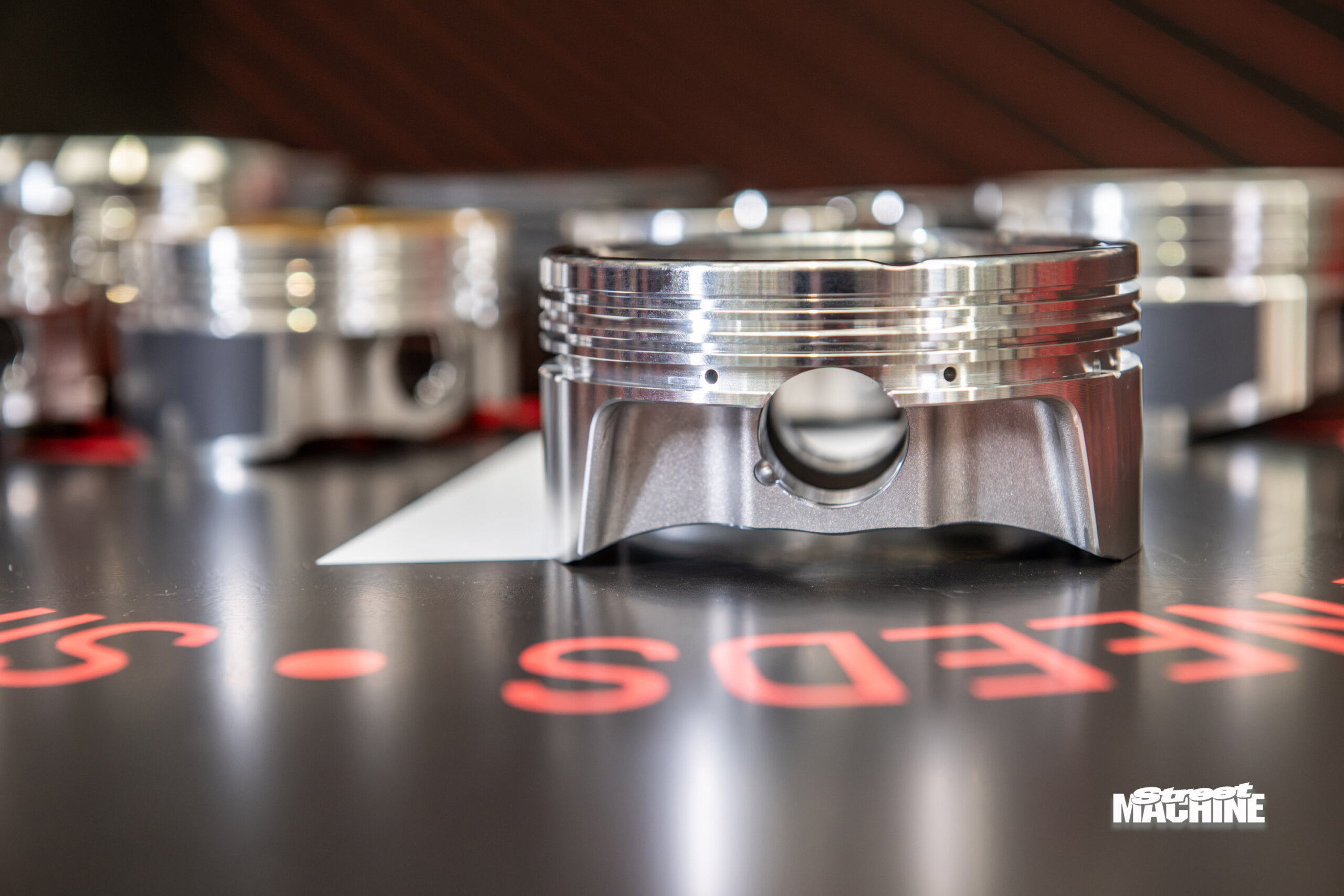
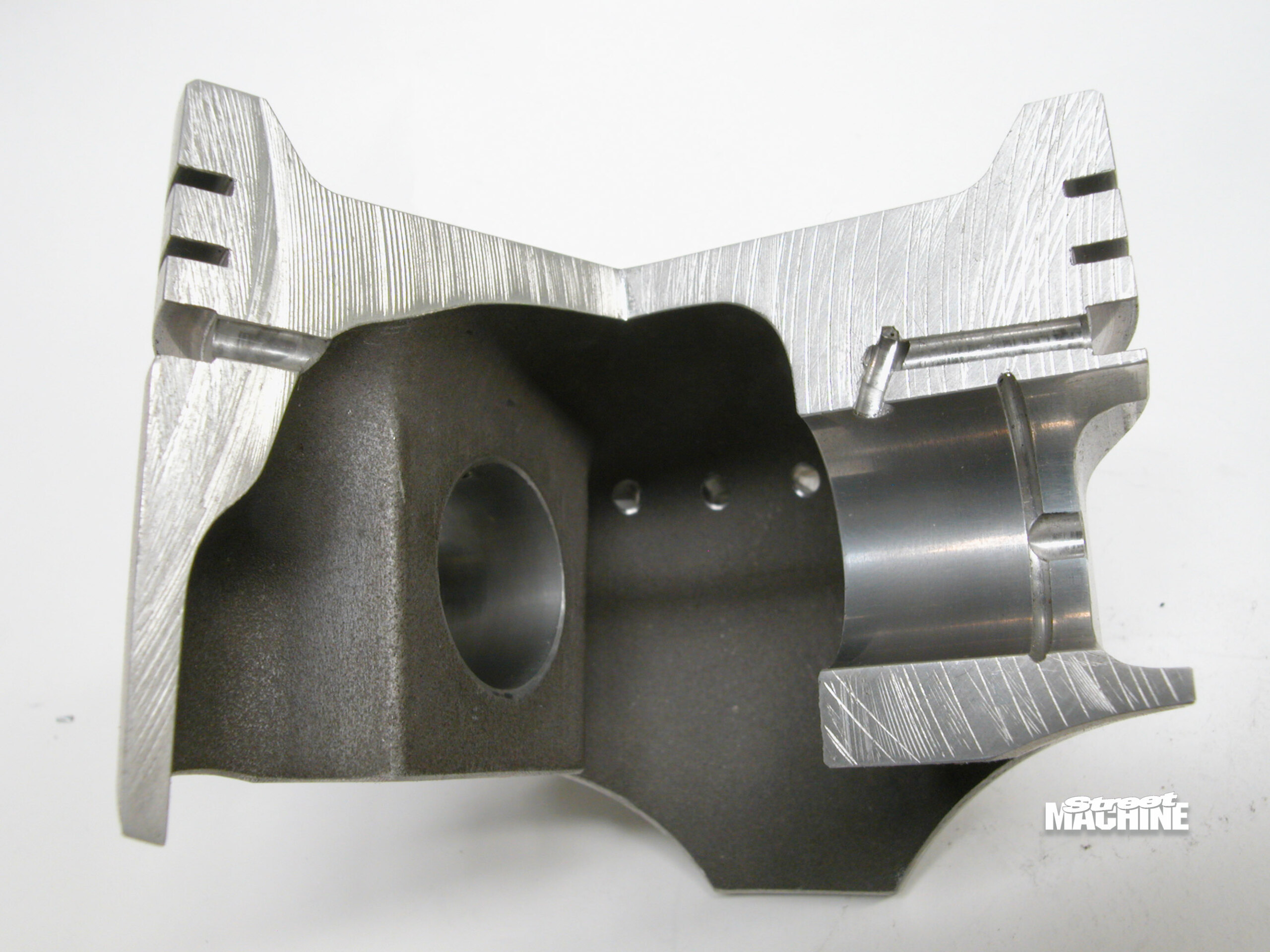
“It all starts with the application,” he says. “Say it’s a twin-turbo or it’s supercharged, we’re generally going to go for a real thick skirt design that will take the pressure above the piston when it’s trying to compress. The skirt takes a big beating. Everyone looks at the crown, but the first thing I look at is the skirts.”
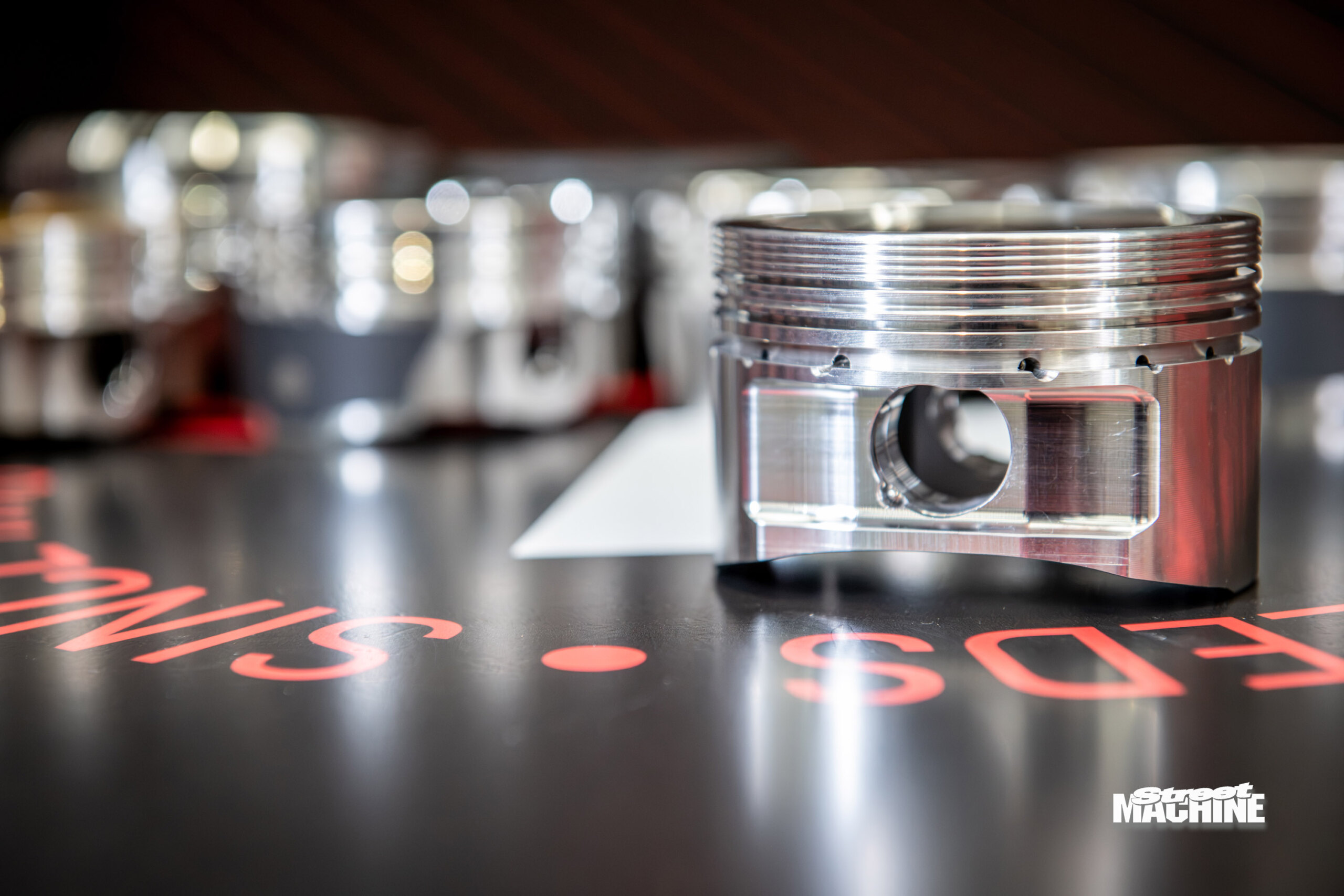
That makes perfect sense when you think about what’s going on. The combustion cycle is still happening as it’s forcing down on the piston just past top dead centre, and even with a tight sidewall clearance, that pressure is bearing down and rocking the piston on the thrust face of the skirt. If it can’t handle the load, you’re going to end up with pieces of piston in the sump, and possibly bits of rod not long afterwards.
Choosing a piston to suit your application is critical – it’s not a one-size-fits-all situation anymore. That’s not to say that it ever really was, but back in the day, manufacturers just didn’t make that many variations to select from. The catalogue showed a couple of different compression ratios and oversized options, and that was about it; you chose what was closest to what you needed. Nowadays, the world is your oyster, with companies making pistons to suit just about every use you could think of, including massive boosted applications; lightweight, high-rpm naturally aspirated screamers; and strokers of just about every shape and size. It’s a brave new world.
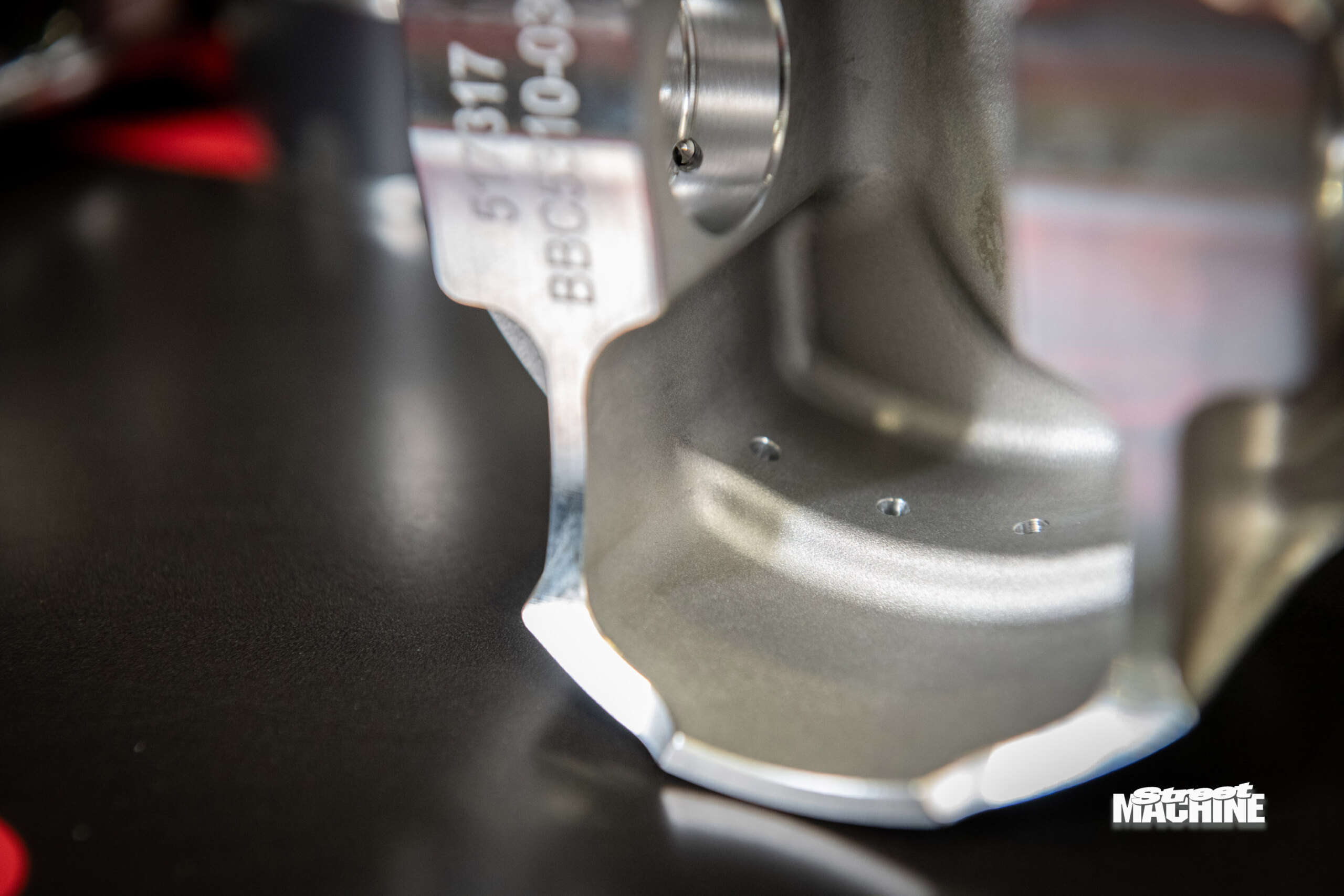
NICE PINS
Gudgeon pins, or wrist pins as they are sometimes called, act as a bearing between the conrod and the piston. Many OEM pistons use semi-floating pins, where the pin is usually secured via an interference fit by heating up the small end of the conrod and sliding the pin through the piston and the rod at the same time. Once the rod has cooled, the pin can rotate within the piston but is fixed within the rod. It’s a simple arrangement that requires the fewest number of parts.
Most performance pistons use free-floating pins that can rotate within both the piston and the conrod simultaneously. However, they require retaining locks at either end of the pin to keep it secured within the piston and away from the cylinder walls. These could be C-clips, circlips or spiral locks, or even aluminium buttons, and depending on the design, they can be a real pain to install.
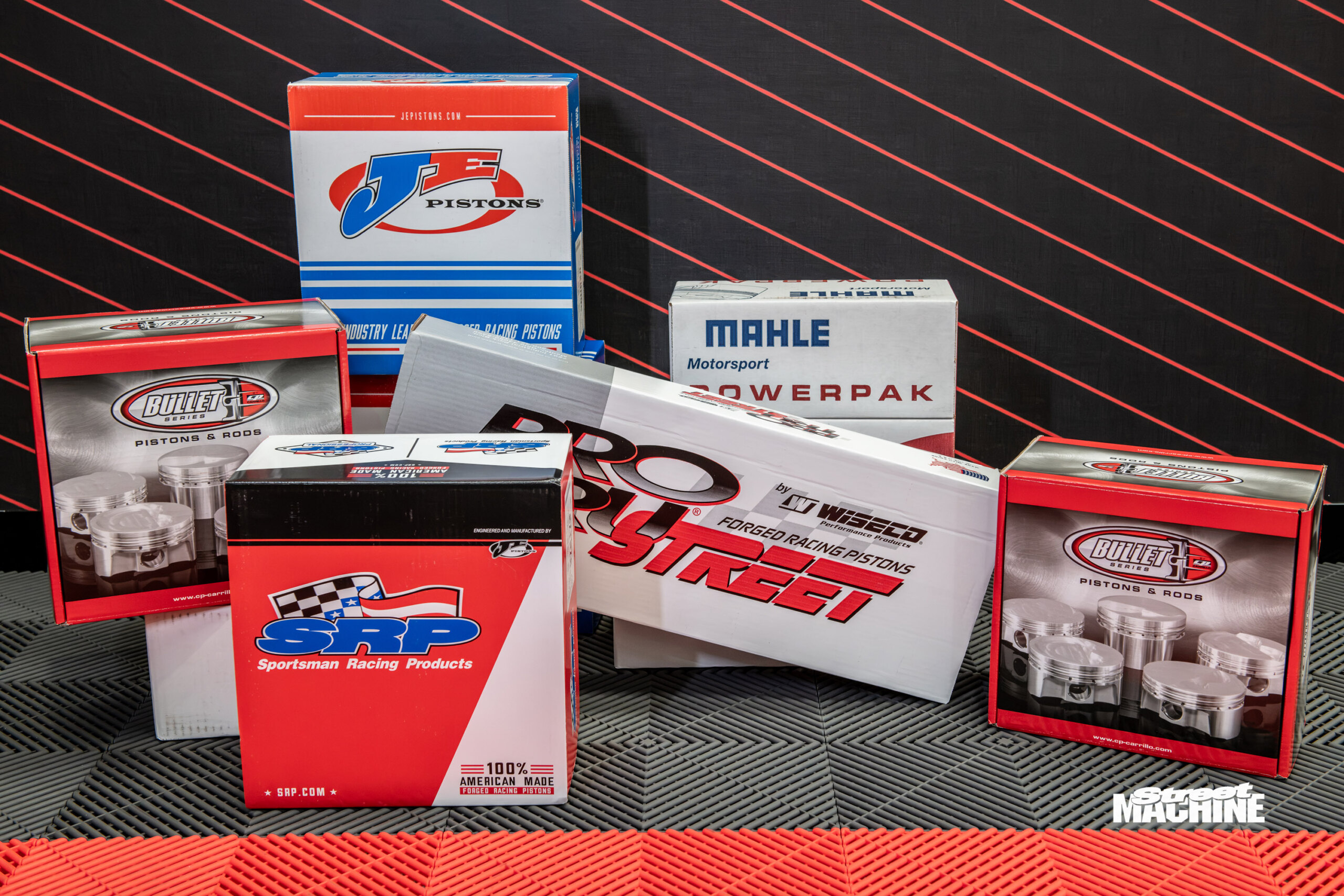
The pins themselves are important – they take all the load from the piston and transfer it to the rod, so a lot goes into the design. The end use has everything to do with the pin diameter and thickness of the pin wall. Obviously, a solid steel pin made from the thickest material would handle most of the load, but at the cost of a massive weight increase and decreased horsepower and rpm, which also places excessive loads on the conrods and cap fasteners.
A high-revving, lightweight piston in a naturally aspirated engine might use a high-quality steel pin with a wall thickness of 0.125 to 0.200in, but if boost is involved, it’s a whole new ballgame. Depending on the boost and power level, you could find yourself upgrading to 0.200, 0.250 or even 0.300in pins made from premium tool steel to deal with the extreme cylinder pressures involved. DLC (diamond-like carbon) coating may also be required to prevent galling inside the alloy pistons.
So, while piston choice is vital, remember that the gudgeon pins share that load and require equal attention.
LORD OF THE RINGS
Piston rings seal in the goodness, although there will always be some loss. There has to be, because if the ring ends butt up against each other, it’s all over. At best, it’ll break a ring land; at worst, it’ll crack the piston and possibly rip the top off it. As the old saying goes, “If your ring gap is too big, only you will know; if it’s too small, everyone will know”.
But combustion chamber sealing isn’t the piston rings’ only job; they also transfer heat from the piston to the cylinder wall and onwards to your cooling system. They also have to limit the amount of oil that gets into your combustion chamber. Considering their size, piston rings do a lot of work!
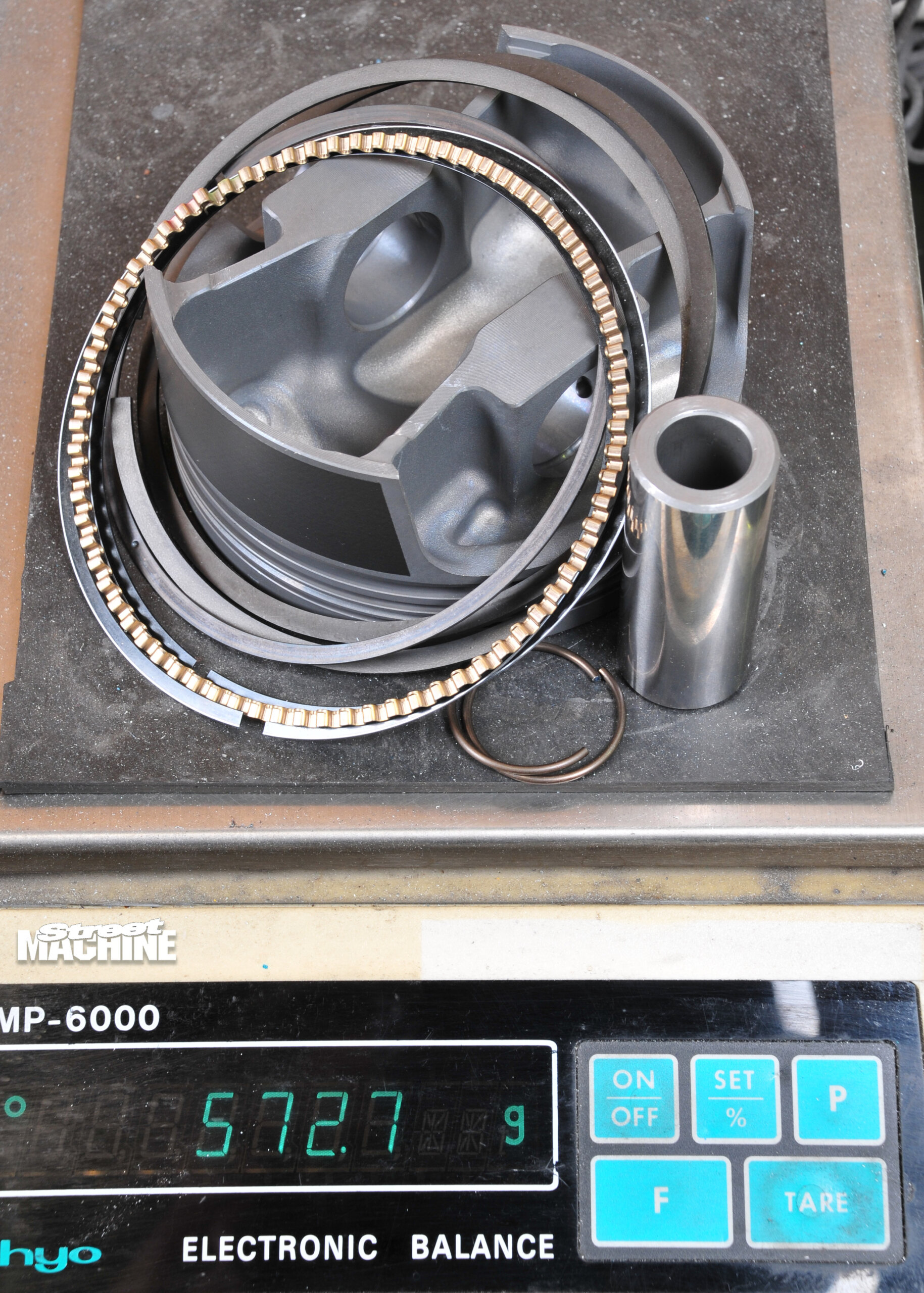
Ring materials and thicknesses have changed dramatically over the years; thicknesses have decreased from as much as ¼in before World War II, to 5/64in being common 30 years ago, to 3/64in being the performance standard these days. Rings are getting thinner and making more horsepower due to lower friction, but they’re also sealing better due to better material science and lower mass. Cast-iron rings are almost history these days, and while chrome rings used to be the hot ticket, they too are falling out of favour, with ductile plasma moly, stainless-steel nitride and even tool-steel rings coming to the fore.
In years to come, maybe we’ll see some trickle-down from the aerospace industry, where they are using all kinds of exotic coatings and materials, and see the rings get even thinner. As Frank says, “You should see the rings I’m working with right now in Pro Stock applications; they’re like 22thou thick – it’s insane!”
PISTON VARIATIONS
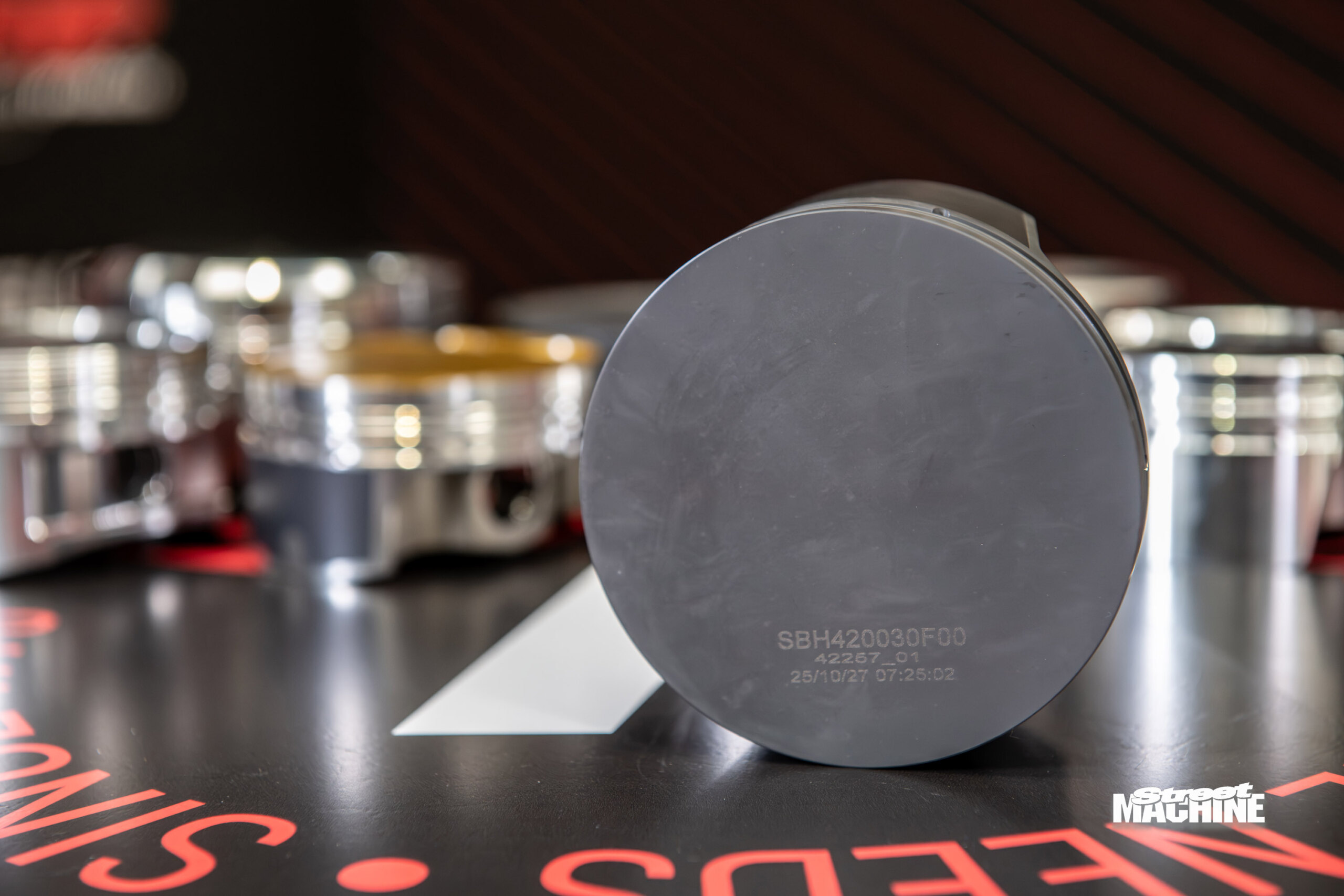
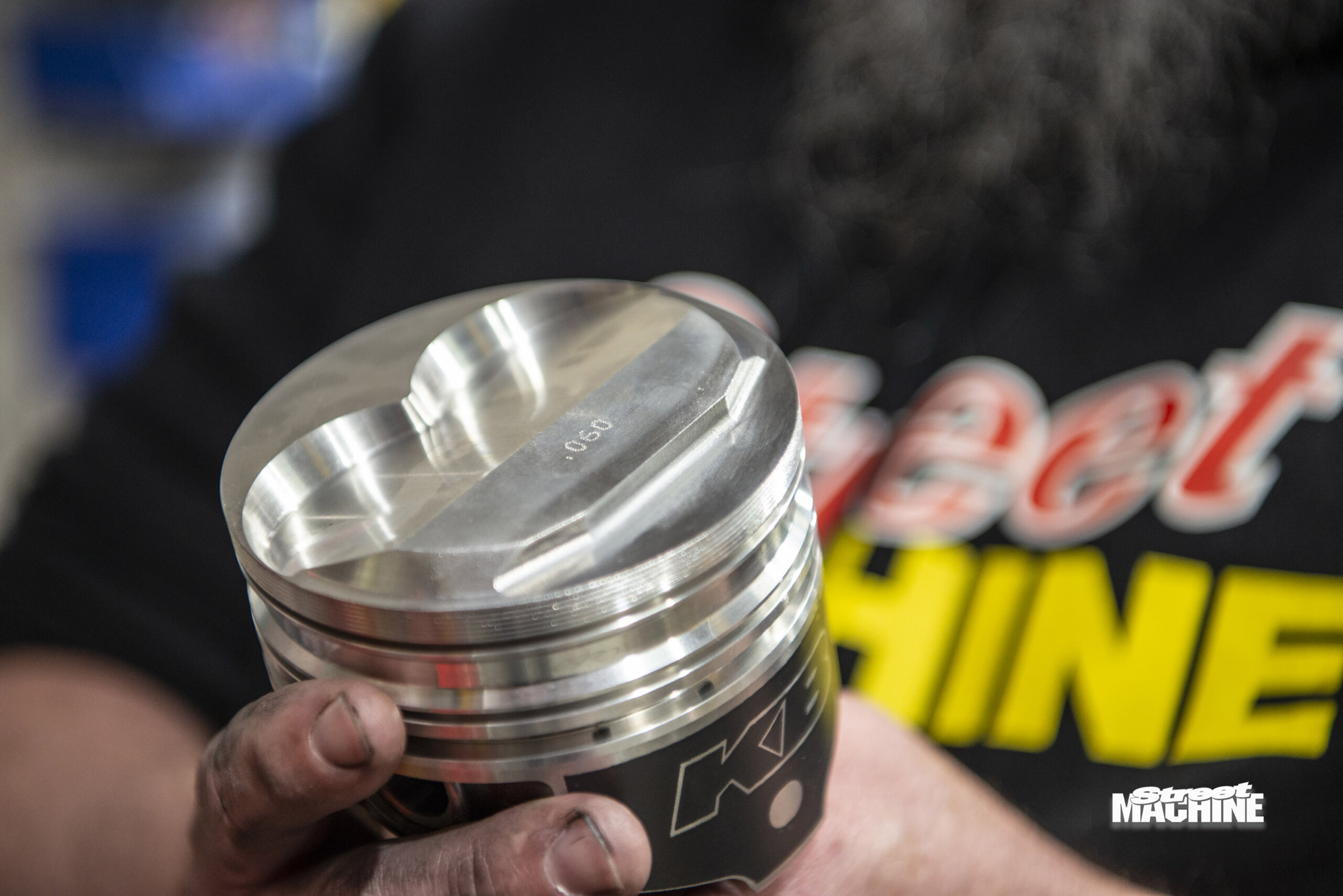
JE AND SRP
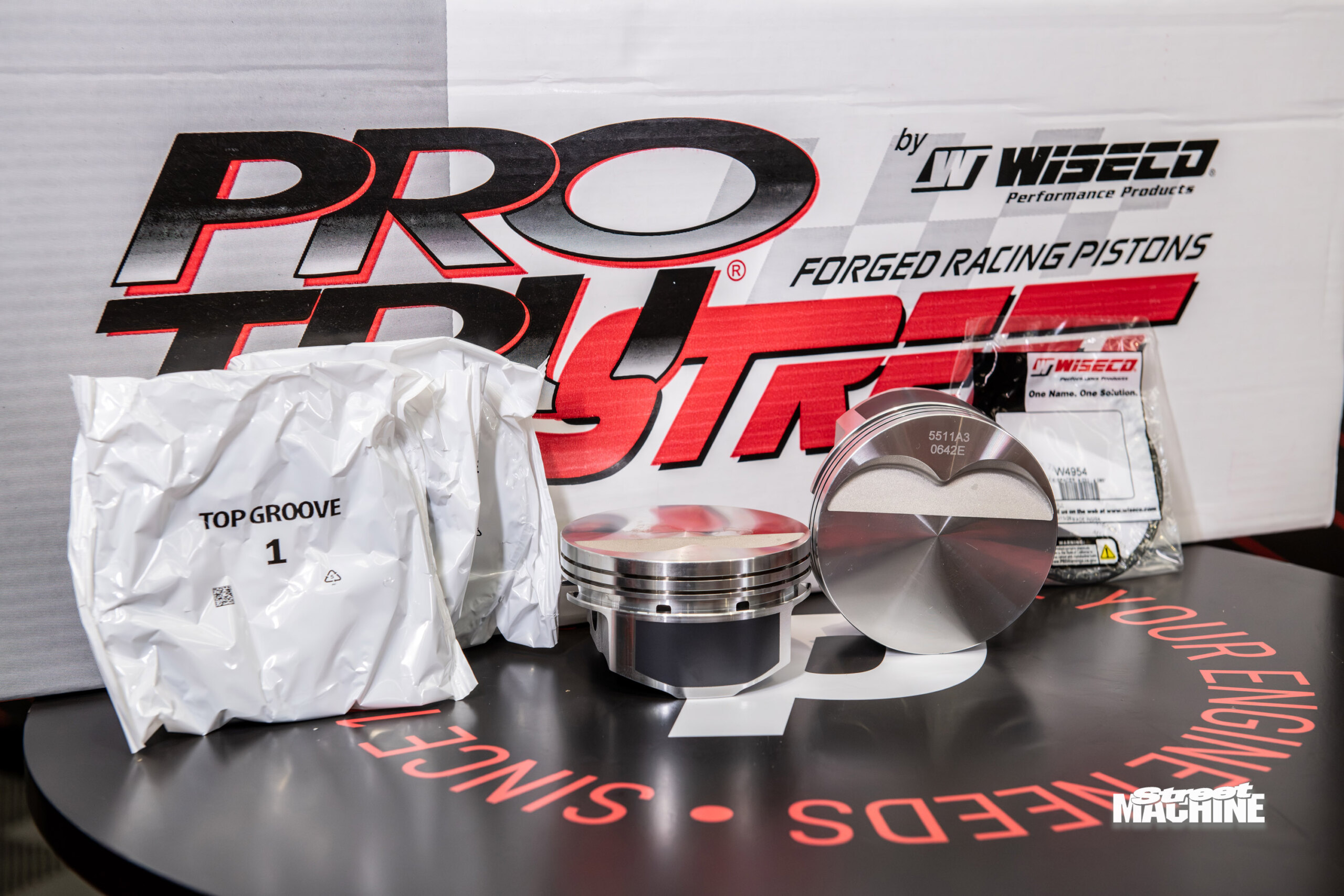
With decades of experience stretching back over 70 years, JE Pistons is at the top of the game when it comes to high-performance slugs. Every aspect of JE’s piston design and manufacturing is handled in the USA, from conception, to material selection and forging, to final machining.
In 1997, JE created the SRP piston line, with the aim of supplying quality, affordable pistons made from 4032 alloy for street-and-strip applications. This was later expanded to the SRP Professional and SRP Professional 2618 lines for those looking for lighter and more modern piston designs with narrower wrist pins for minimum weight and maximum performance, with the Professional 2618 line manufactured from stronger 2618 alloy.
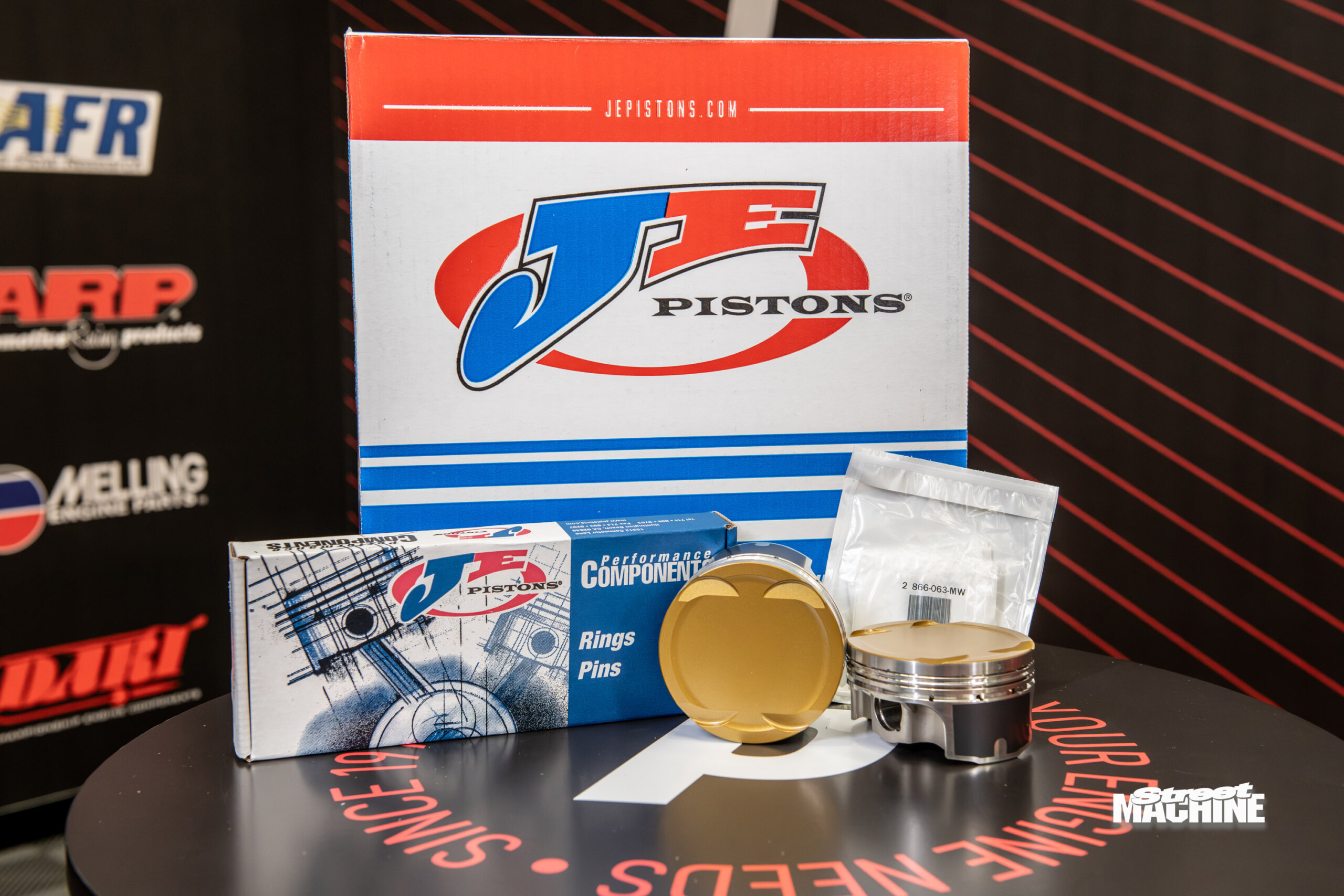
Meanwhile, JE Pistons has maintained its quality line of standard forged pistons, with diamond-turned skirts, radiused valve reliefs, and single forced pin oilers.
The company’s ultimate performance piston is the JE Ultra Series, which aligns the flow of the forging grain in the most critical areas, and features coated skirts and crowns. When it comes to off-the-shelf pistons, these are pretty much the pinnacle.
CP BULLET
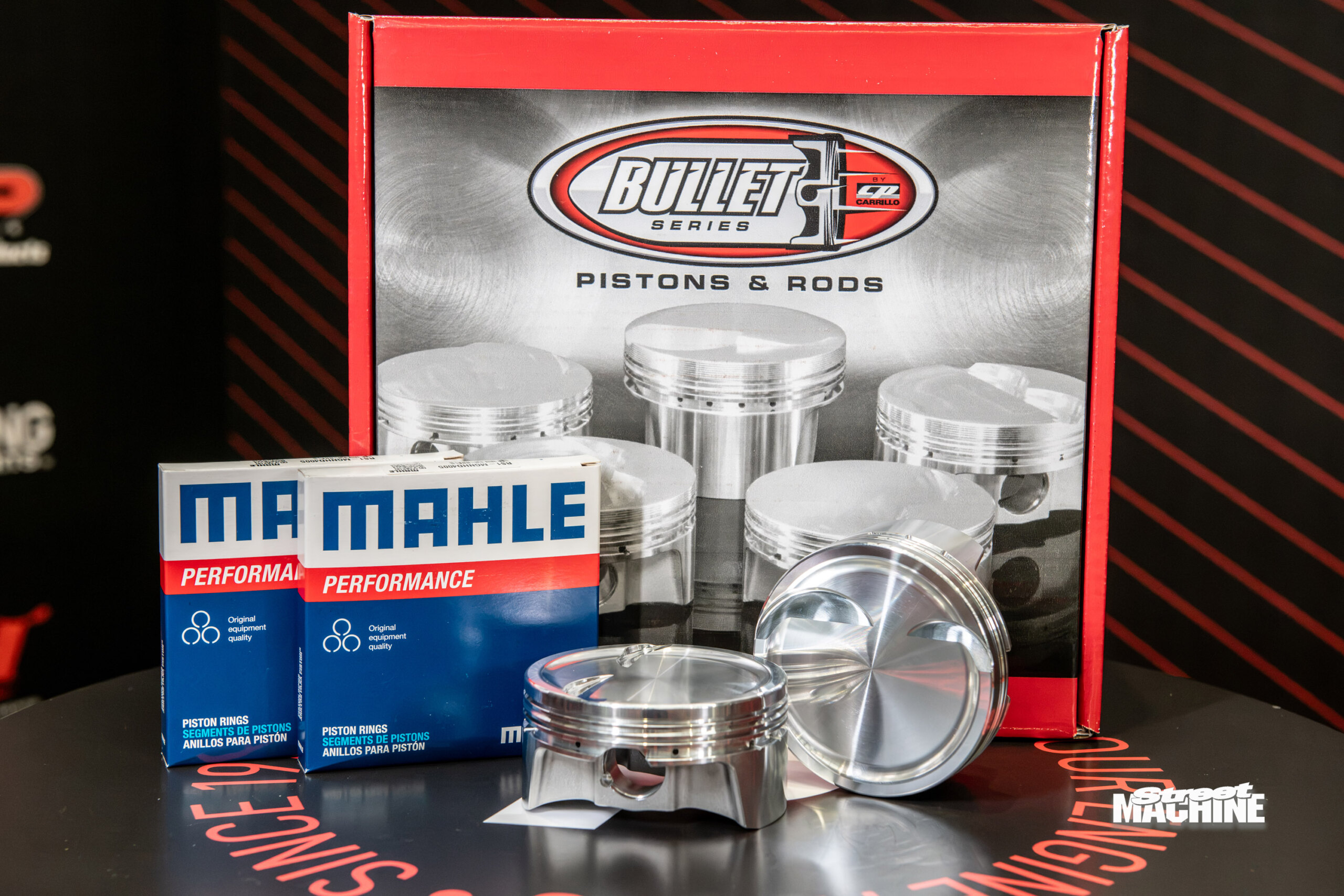
Made in the USA by CP-Carrillo, the CP Bullet range was designed as a low-cost, off-the-shelf forged piston option for racers looking for premium-grade components, ready to ship when they need them. The Bullet range is available to suit most popular engines, and for us here in Australia, that includes all the GM LS platforms and the legendary Barra.
Made from high-strength 2618 alloy, CP Bullet pistons are designed to cope with heavy loads and high heat, including boosted applications, and they’re match-balanced to +/- 1 gram. Each Bullet piston is packed with 1.5mm x 1.5mm x 3mm ring sets, with the top rings made of gas-nitrided high-grade steel, and also comes with chrome-moly wrist pins and wire locks.
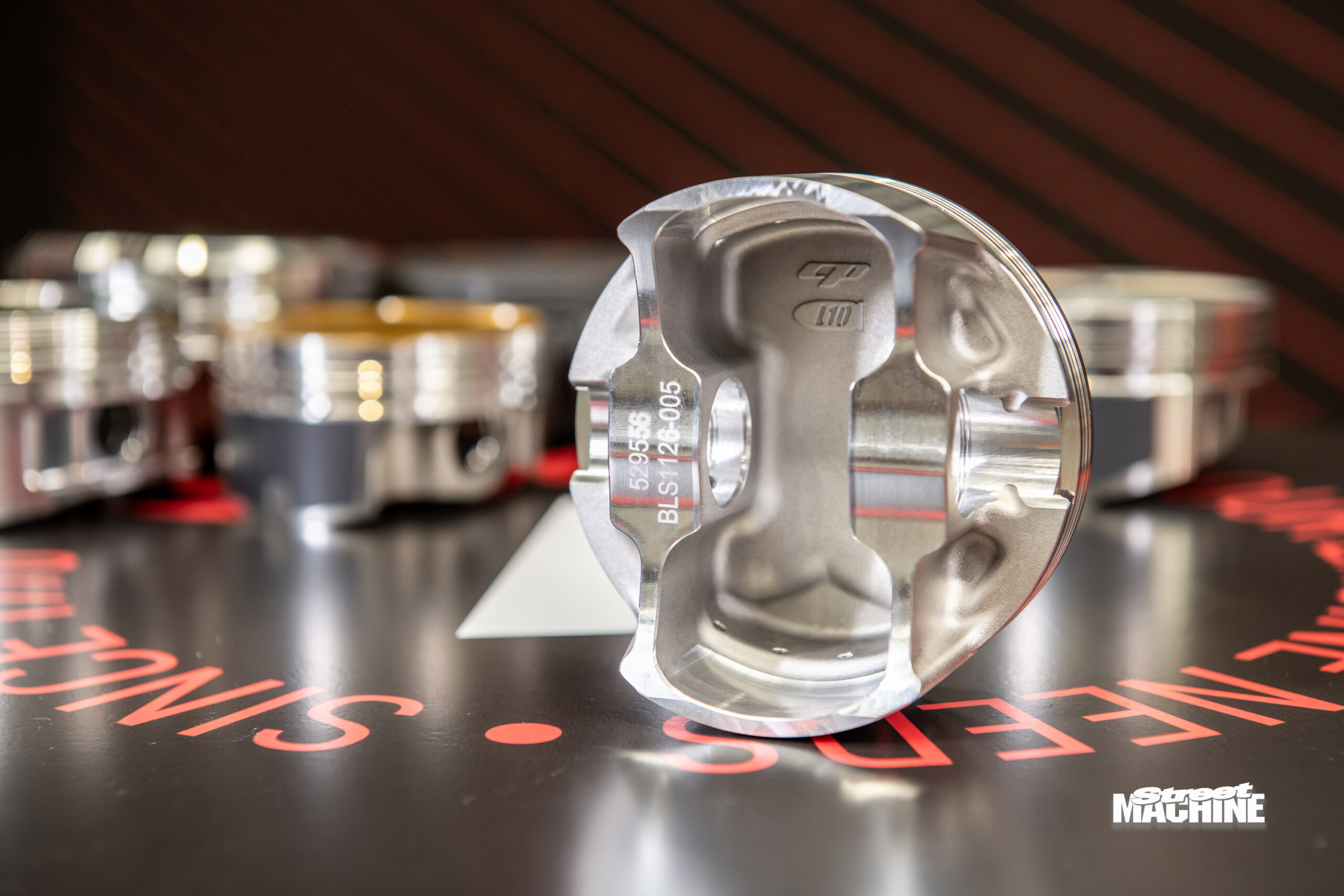
Precision International carries a massive range of CP Bullet pistons in stock, so you’ll no longer have to suffer through long and expensive lead times waiting for pistons for your performance build.
MAHLE MOTORSPORT
Mahle Motorsport is one of the world’s leading performance piston manufacturers, having been in the game for over 100 years.
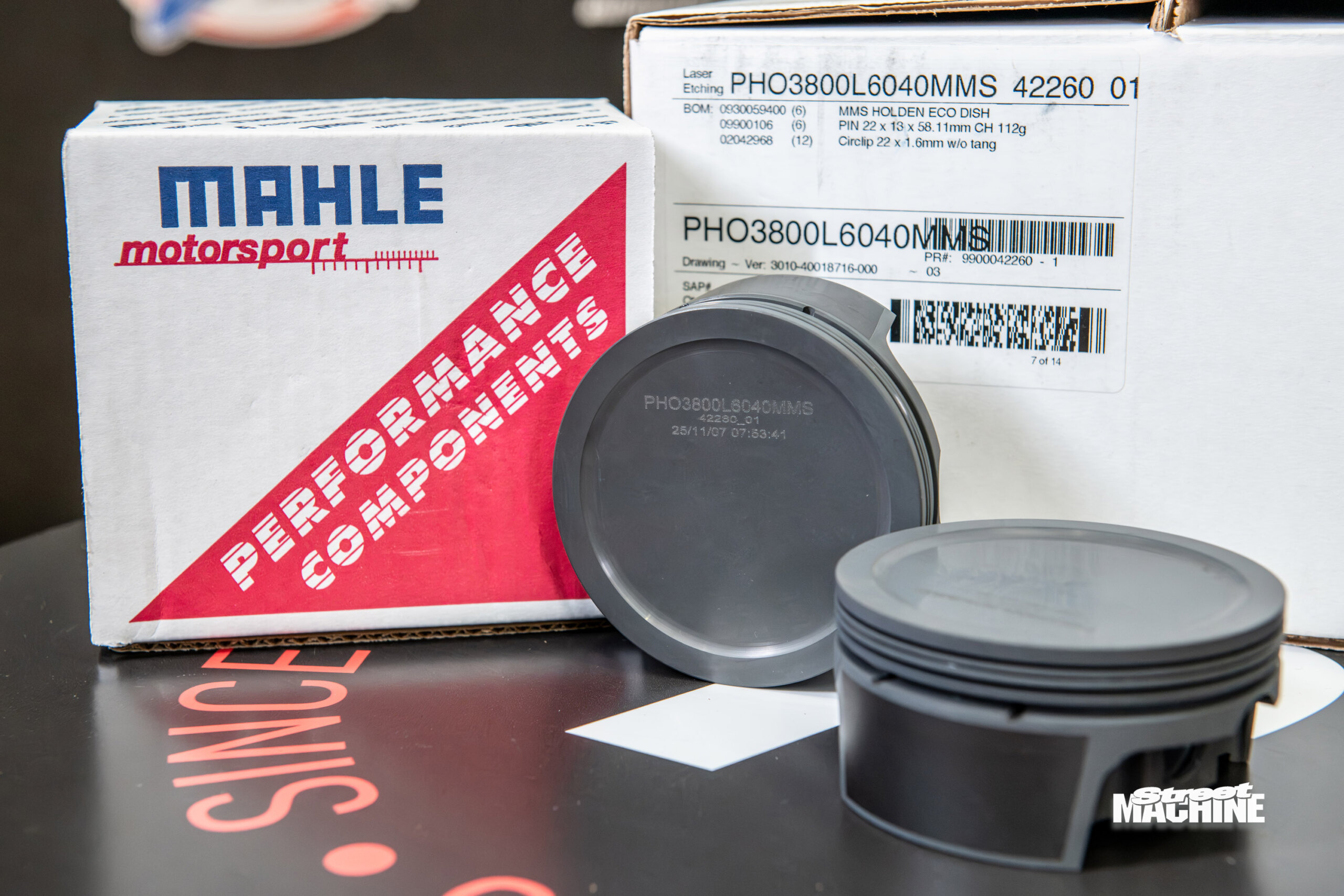
Made in Morristown, Tennessee, Mahle’s Powerpak piston kits contain everything you need for your performance build, from the high-quality, lightweight forged pistons to the matching pins, clips and rings, and are used by racers who demand perfection, durability and maximum performance from their race parts. The proprietary Grafal coating on the skirts of Powerpak pistons minimise both friction and sidewall scuffing, while also reducing noise on start-up.
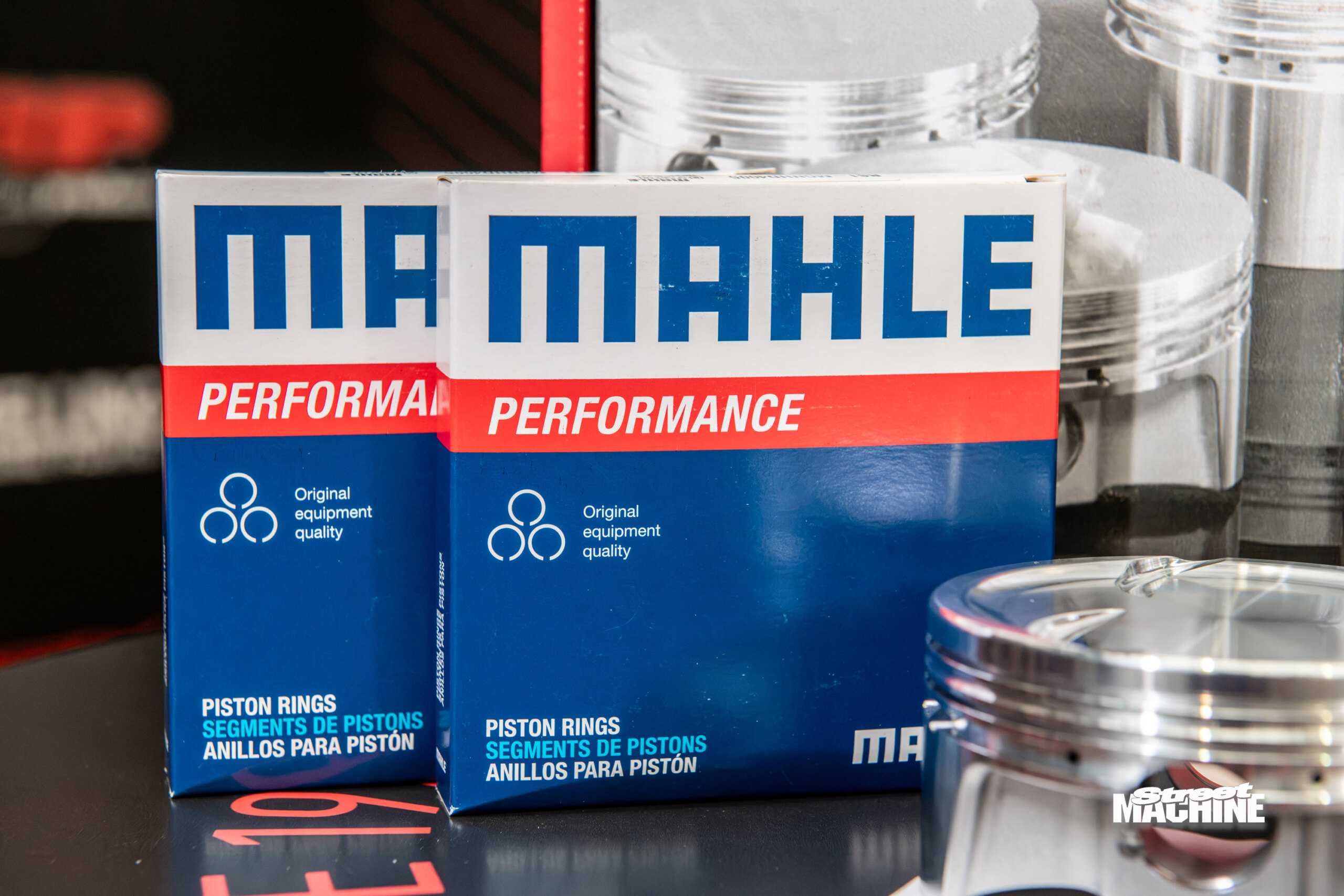
The Powerpak range includes pistons for everything from the venerable Chevy small-block and just about every other American V8, to the latest Audi, Porsche and Subaru mills. And if they don’t have it, the Mahle team can make it.


Comments