
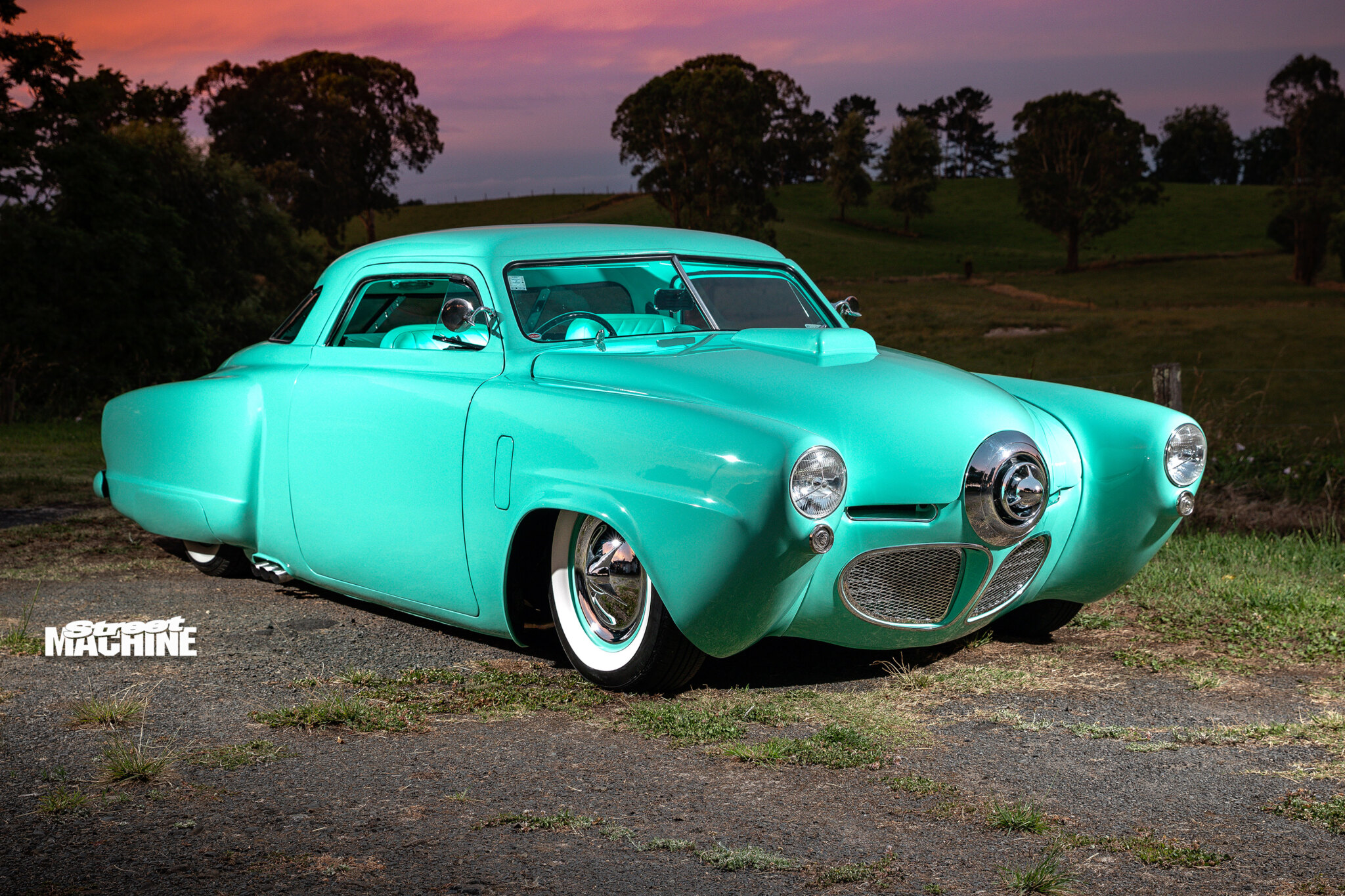
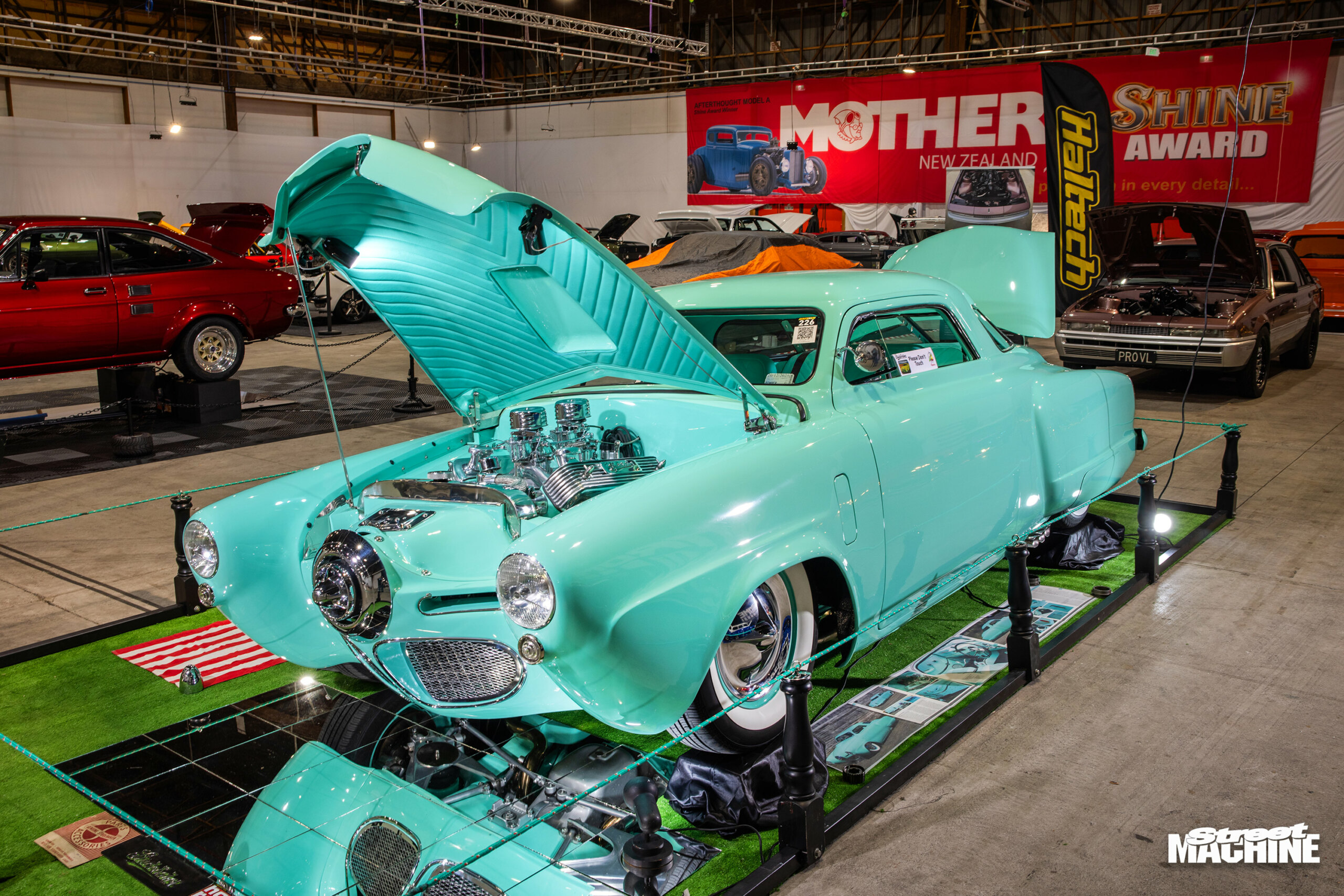
Building a custom Studebaker isn’t for everyone. Besides the fact there’s almost none of them around in comparison to most other brands, they already look custom from the factory. That means you don’t just build a Studebaker. You pick a fight with history, search for unobtainable parts and tempt fate by cutting up something irreplaceable. That’s exactly what New Zealand custom legend Trev Halstead’s known for, and his most recent of many custom Studes is no different. This ’51 Starlite, ‘Bomber’, is now far more Trev than Stude, yet somehow still perfectly Studebaker in the places where it counts.
First published in the May 2026 issue of Street Machine
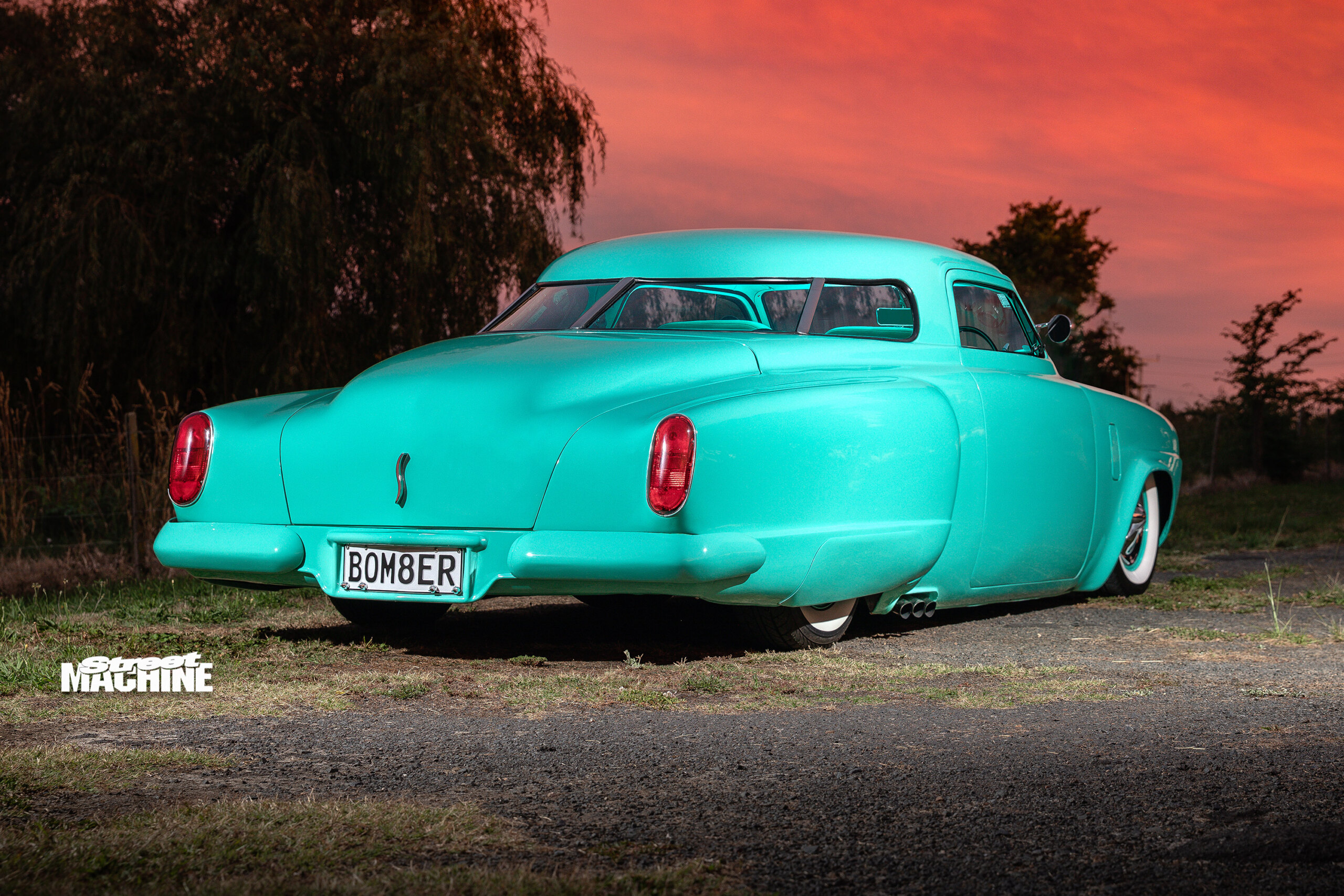
With the rarity of Starlite coupes, it’s hard to tell what’s stock and what’s been created in Trev’s rural home workshop. Spoiler alert: the list of untouched bits is basically the rear brakes and an inner courtesy light; everything else has been massaged, sculpted, or straight-up reinvented.
Trev’s not some social‑media render warrior. He’s old-school, in the most complimentary of ways, turning to literal scissors and paper cut-outs to plan the right level of chop. That planning led to an impressive 4.5 inches coming out at the front pillars and 3.5 inches at the rear, with the centre peaked for a split screen that looks like it was born that way.
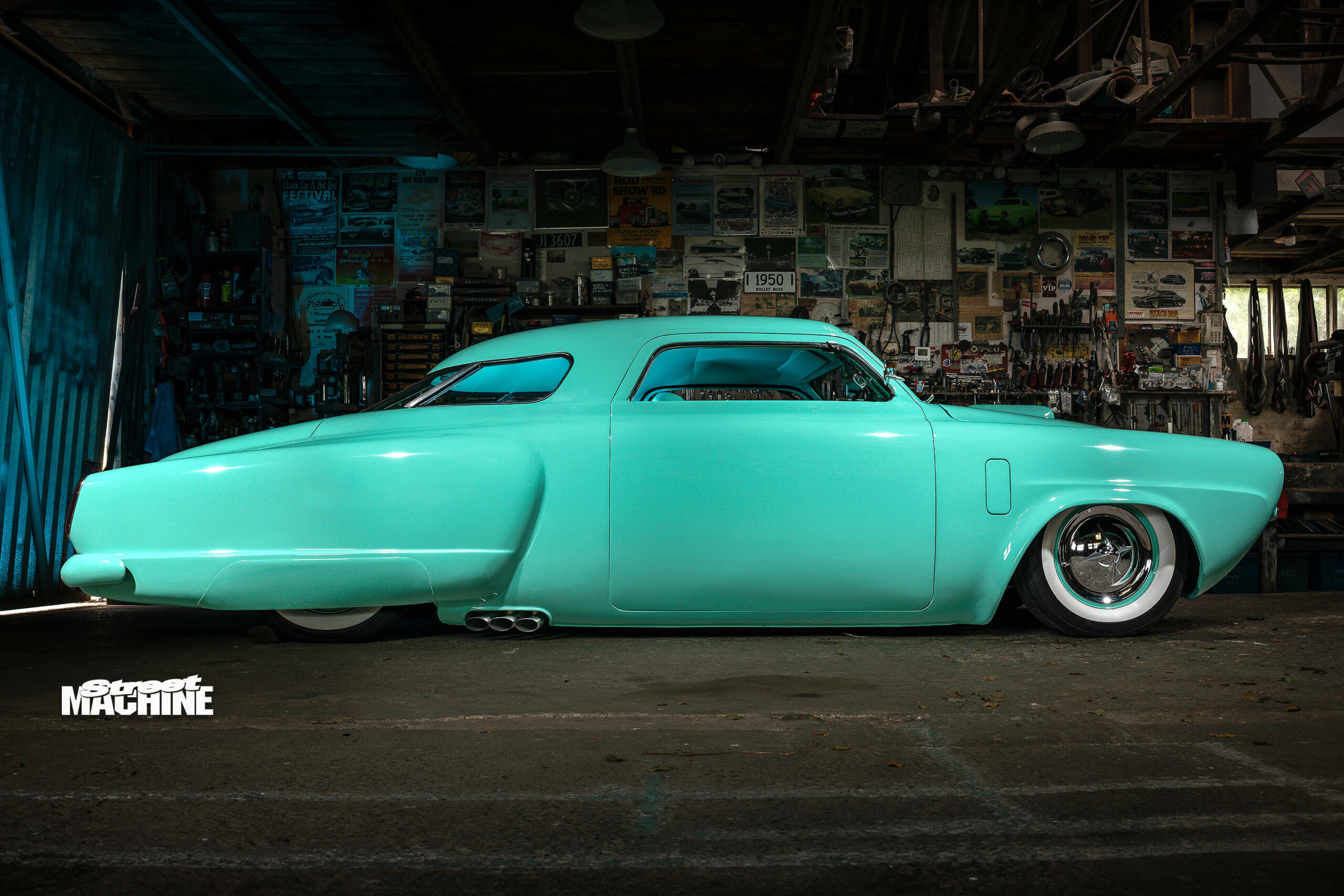
During that process, the rain gutters were also ditched and the window surrounds extended to suit the new proportions. It’s traditional customising with a brutal level of finesse, done by a bloke who trusts his own vision over anything online.
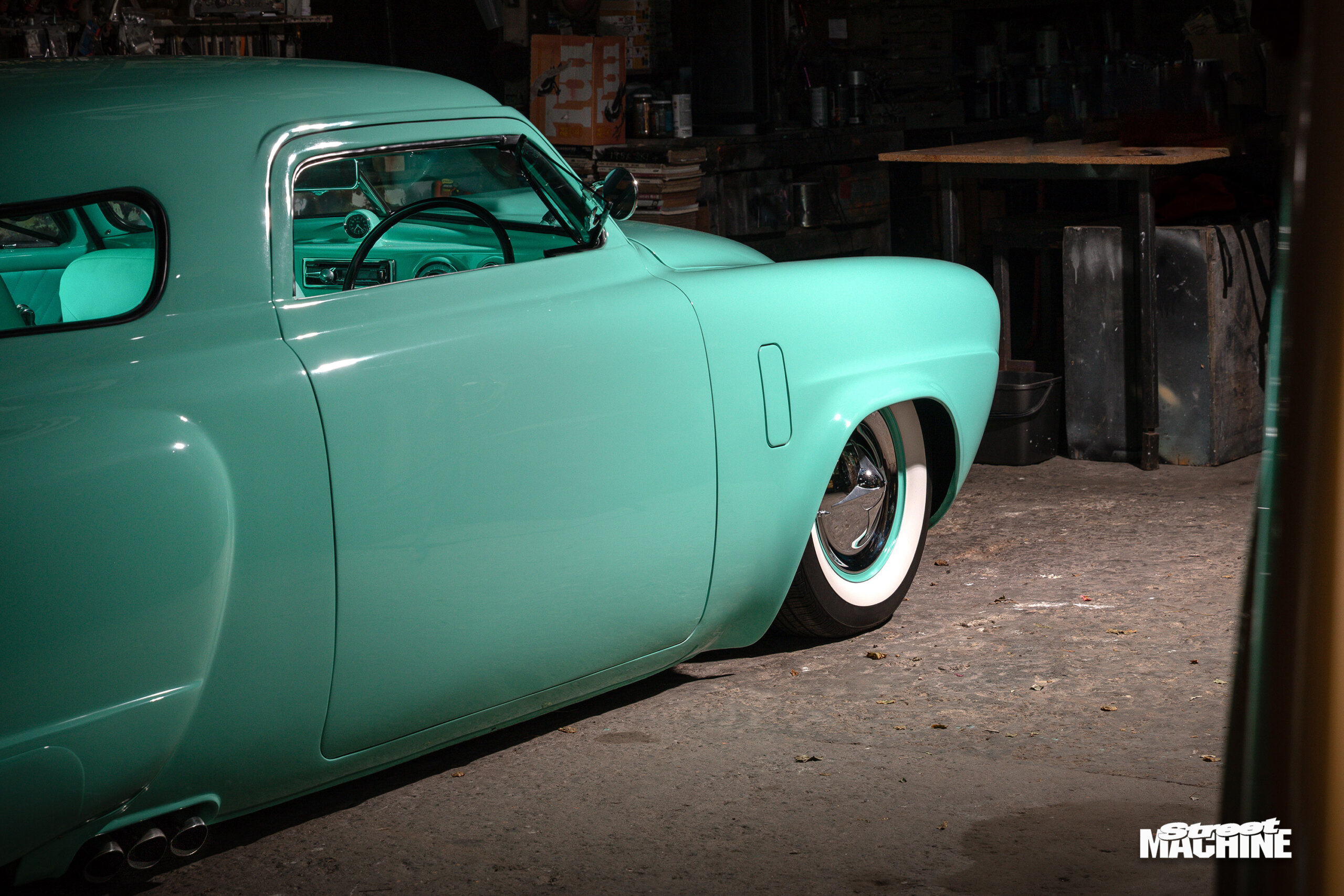
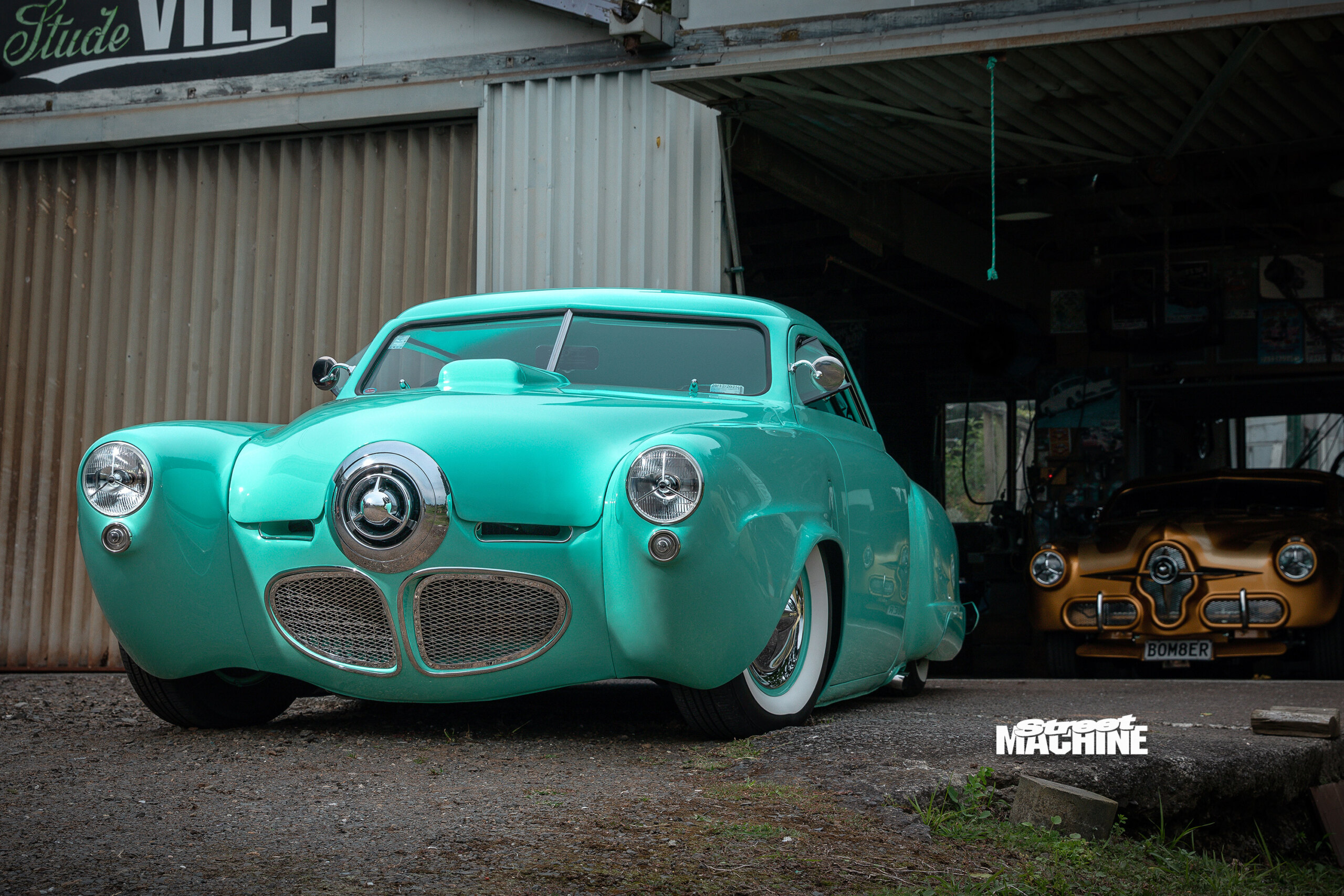
The stance isn’t an accident; the body’s been channelled three inches over the chassis, and the floors, firewall and trans tunnel have been made by Trev to suit. Up front, he binned the car’s factory sheet metal for a 1950 Champion nose – shaving, smoothing, and then crafting custom grilles to tie it all together. The front guards were then seam‑welded into one piece, and the bonnet was lengthened to close up where then trim once lived. Around the back, those wraparound rear windows didn’t just magically appear; there are 200 hours in the rear acrylic windows alone, with steel and plastic templates used to get the shape right before Visual Plastics moulded the final pieces. Even the famous Studebaker bullet nose is Trev’s own — cast in bronze, linished, polished and sent off for chrome.

Clearly, this isn’t Trev’s first rodeo. The bloke’s been turning rusty shells into hero cars for decades, stocking his shed – affectionately dubbed ‘Studeville’ – with enough Studebaker bits to confuse a museum curator. While he’s owned close to 70 of them, he claims that most were basket cases that others wouldn’t bother saving, but they’ve provided him with parts and projects for decades to come.
Underneath the lacquer-painted body is a Z-notched, boxed and smoothed chassis with the corners radiused to echo the rounded edges he’s carved into the doors, bonnet and boot. Down the back, you’ll find a narrowed Dana 44 loaded with 3.31:1 gears, hung on a custom four‑link. Airbags all ’round were a smart call here; Trev loves cars sitting low enough to scare road markings, but he also loves getting them home with the sump in one piece.


Speaking of sumps, the 299ci Studebaker donk – crafted from a 259 block and a forged 289 crank – is a combo that provides proper Studebaker DNA with the poke and reliability to cruise and bruise. Trev smoothed the casting marks before paint, then bolted on a rare Edmunds 2×2 manifold wearing twin Stromberg carbs. Factory Studebaker Avanti headers feed a stainless exhaust that ends in custom lakes pipes beneath reinforced sills. The triple tips are handcrafted showpieces; Trev’s way of pointing out the details.
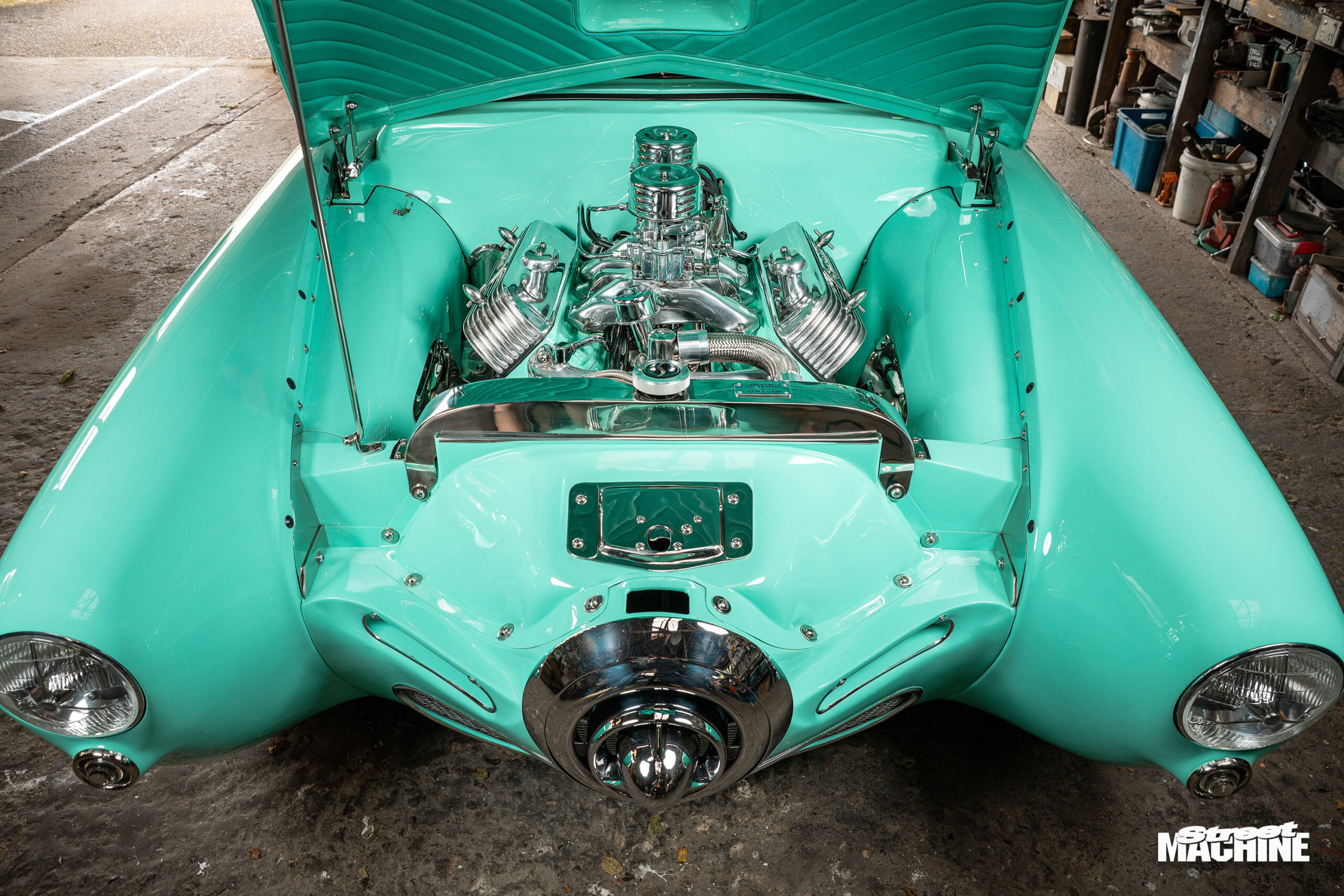
Backing it all is a BorgWarner three‑speed ’box, smoothed and painted to match the engine bay. The Studebaker-based driveline speaks the same language as the rest of the car: period‑flavoured, sharply finished, and proudly giving a middle finger to convention.


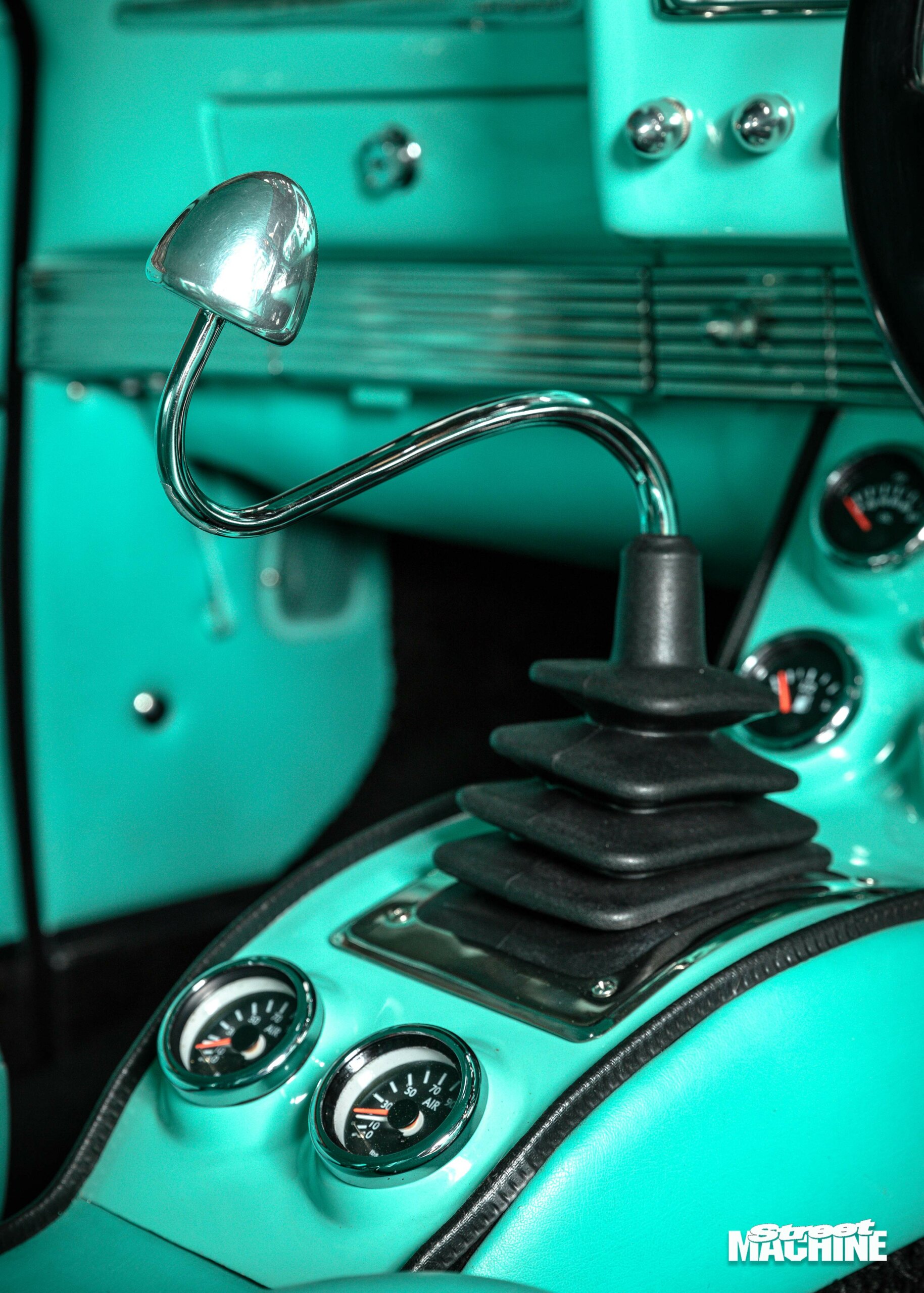
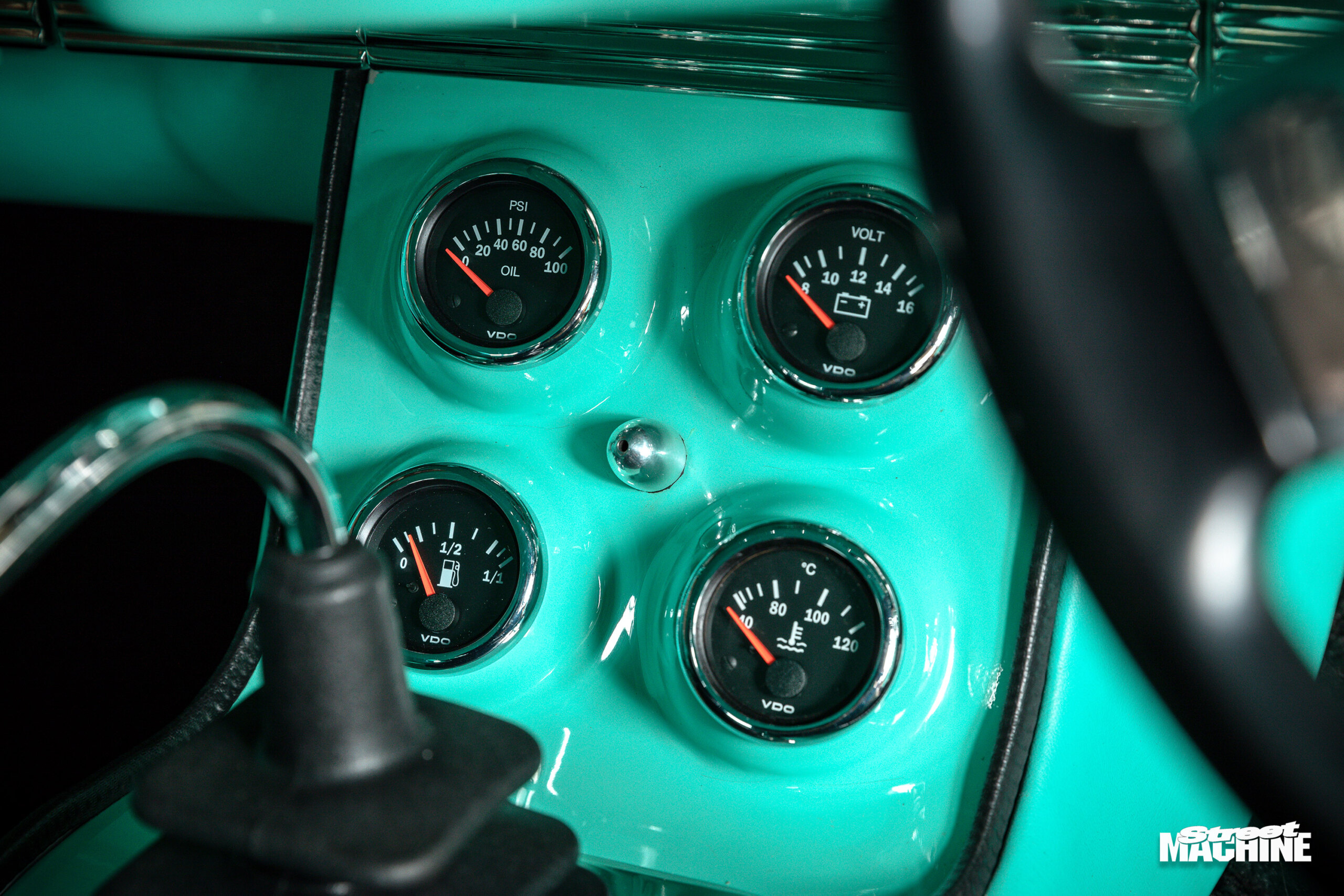
Inside, Trev’s gone to town. Most of the trim work is by his own hand, with Greg Mather at Midnight Upholstery stitching the seats, door cards and hoodlining so they fit the car’s persona rather than fight it. The dashboard started life as a ’47 Champion unit, now reinterpreted with VDO instruments and a Smiths speedo. The steering wheel is an HQ Holden item transformed: custom centre, ’56 Stude horn button, and the sort of smoothing and shaping that makes it look factory.
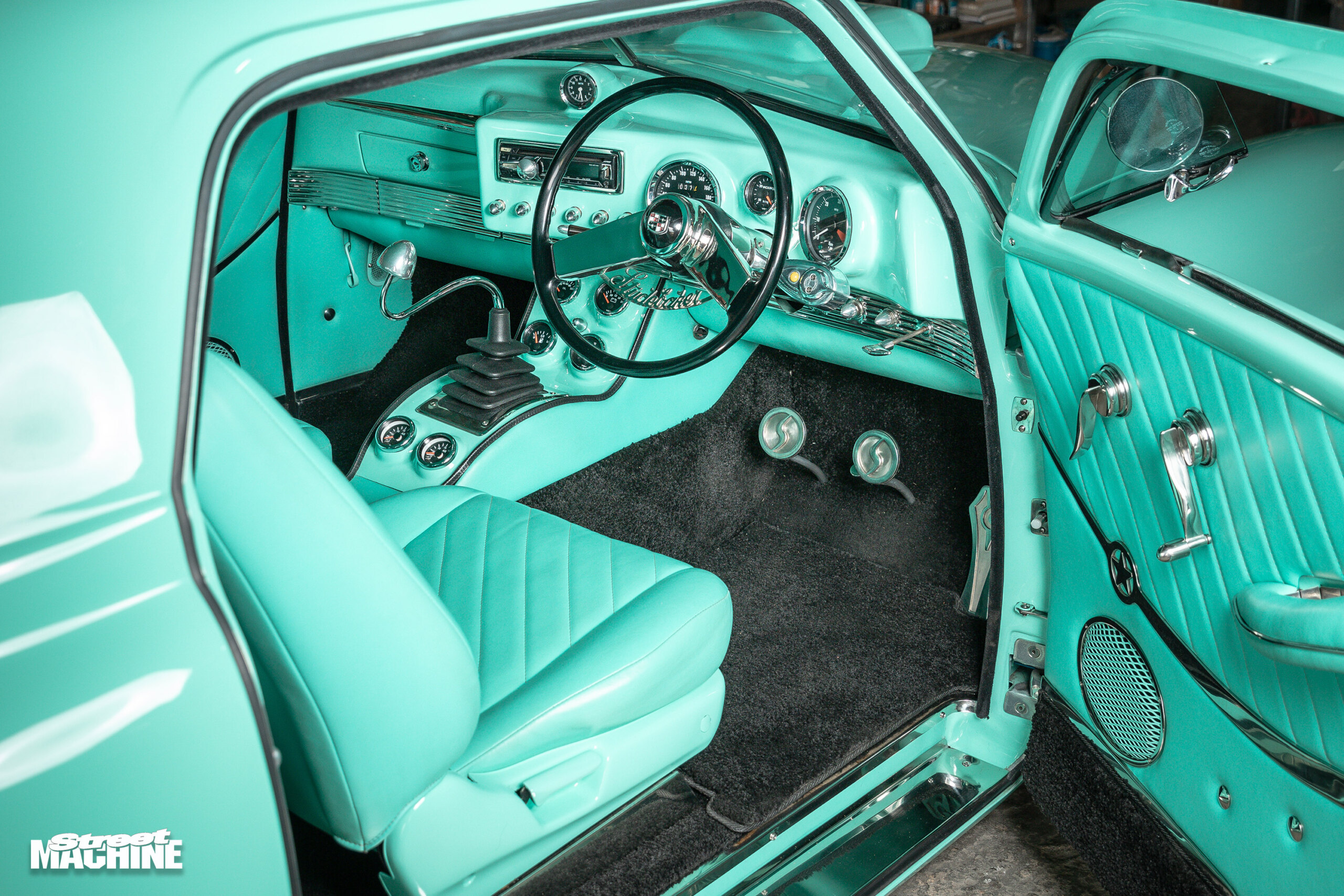
Scan the cabin and you’ll spot polished stainless domes across the boot and door trims, handmade window winders and door handles, a Ford Escort handbrake, and a custom shifter massaged into the right profile. Nothing here is off‑the‑shelf. Even the knobs below the Sony head unit are hand-shaped aluminium alloy, polished to a shine that would shame most commercial pieces.
While he may be old-school, Trev’s learned a few new tricks over the years, including how to add electric power steering neatly under the dash to keep the engine bay pure. The wiper motor’s hidden for the same reason, and the brake booster is tucked up under the floor.


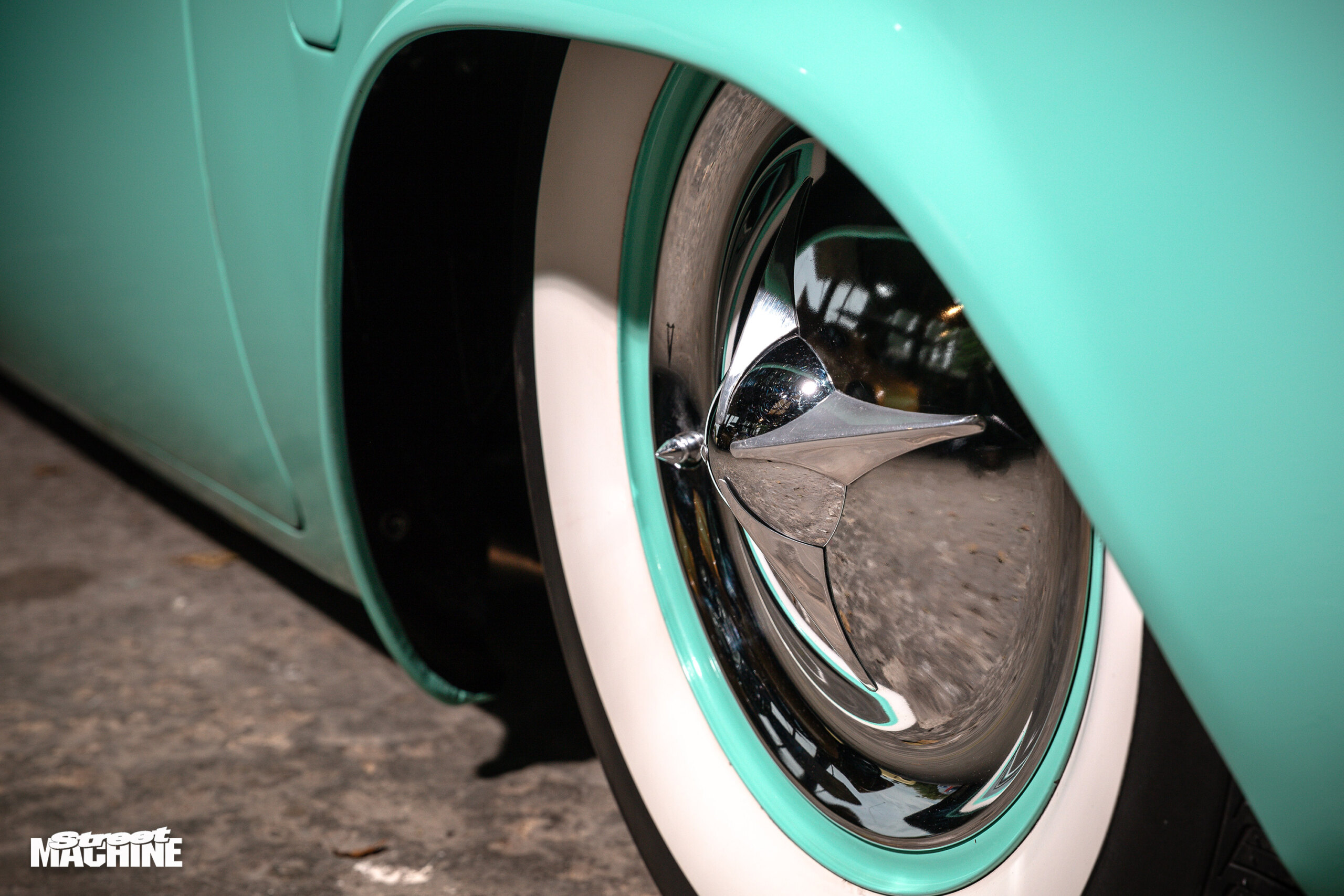
That booster assists HQ Holden front calipers with Ford Falcon rotors, while the back sticks to rebuilt factory drums – which Trev says work plenty well enough. The wheels around them are Stude Hawk 15×6-inch steels, capped and wrapped in wide whitewalls for the right amount of traditional flavour.
All of this would be impressive enough if it lived under lights and covers waiting for one show a year. Instead, Trev has clocked up 11,000km in the car since finishing it in 2024. During that time, it’s taken home plenty of tinware, each piece earned the old‑fashioned way: alone in a shed with a welder and stubbornness, laying down paint, metal and patience until it all clicks. And yeah, the finish is insane; there’s a reason that strangers stick their noses under the sills and around the inner guards, trying to find the rough bit that’ll make them feel better. Good luck – ain’t gonna happen!
When Trev was building this Stude, he swore it would be his last. Clearly, that changed – he’s now almost finished the next project, a radical reimagining of one of his earlier builds: a four-door sedan turned into a custom two-door coupe!

SO STUDIOUS
There’s only a handful of customised Studebakers in New Zealand, and Trev owns almost all of them. Each and every one is a credit to his workmanship and vision, built almost entirely in his rural Waikato shed. The collection currently includes a 1950 two-door custom; a 1950 sedan delivery; a 1951 custom coupe; a stock 1952 Commander; a 1953 Starlite; and a 1956 Sky Hawk.

While a couple of the cars remain stock, the rest pack big-block Chevs, Holden front ends, and countless hours of Trev’s handiwork. Trev rarely parts with his creations, but a few have left the shed to make room for the next wild idea.
TREV HALSTEAD
1951 STUDEBAKER STARLITE COUPE
| Paint: | Custom lacquer |
| ENGINE | |
| Brand: | 299ci Studebaker V8 |
| Induction: | Edmunds 2×2 manifold, dual Stromberg WW carbs |
| Heads: | CNC-ported Edelbrock Performer RPM 87cc |
| Camshaft: | R1 grind |
| Conrods: | Stock |
| Pistons: | Ross |
| Crank: | Forged |
| Fuel system: | Stock |
| Cooling: | Custom radiator |
| Exhaust: | Studebaker Avanti headers, twin 2in stainless exhaust, 3in lakes pipes |
| Ignition: | MSD Street Fire ignition |
| TRANSMISSION | |
| Gearbox: | BorgWarner T86 three-speed |
| Converter: | Stock |
| Diff: | Dana 44, 3.31:1 final drive |
| SUSPENSION & BRAKES | |
| Front: | 6in airbags, relocated shocks |
| Rear: | Custom four-link |
| Brakes: | Ford Falcon discs and Holden HQ calipers (f), stock drums (r) |
| Master cylinder: | Stock |
| WHEELS & TYRES | |
| Rims: | Studebaker Hawk 15×6, custom hubcaps (f & r) |
| Rubber: | Wide whitewalls 215/75R15 (f & r) |
THANKS
Eric Carter; George Panfilow; Greg Knight; Greg Mather; Peter Dellaway; Glen Odlum; Gary Hooker; Jamie Hazlitt; Di, Tash and Jesse – without their help, the build may never have been completed.
Comments