
This year marks 50 years since the first Street Machine Nationals took place in Griffith, NSW, so it’s the perfect time to highlight builds from those early years of street machining that helped lay the foundations for the modified car scene we enjoy today.
First published in the December 2025 issue of Street Machine
Flip your calendars back to 1982 and Tamworth’s Byron Hiscock was a 17-year-old apprentice mechanic at Harold Kensell Chrysler, just as the Mitsubishi takeover of Australia’s Mother Pentastar was in full swing. “My uncle owned Hiscock Chrysler in nearby Barraba, so I grew up surrounded by Chryslers and was keen to get one of my own,” Byron says. “I had a Mk2 Cortina that I would race in hillclimbs and the like, but it couldn’t keep up with my driving style, and I kept breaking stuff!”
Byron loved the Charger bodystyle, so he put the feelers out for one. “I was offered five R/Ts in pretty quick succession – it seems ludicrous now – but they’ve never really done it for me,” he says. “I was adamant that it had to be a CL.”
As it turned out, a one-owner, Lemon Twist CL 770 was traded at a nearby caryard, so Byron had his boss wholesale it back for him. The Charger had come from Gosford, and the coastal air had done it no favours; even though it was only a five-year-old car at the time, it had rust issues. Thankfully, Byron could still buy brand-new parts through the dealership and managed to replace all the bolt-on panels. And the CL’s Hemi 265 and automatic transmission still ran sweet, so Byron was soon clocking up the miles in his new steed and made plans to attend the 6th Street Machine Nationals being held in Canberra over Easter 1984.
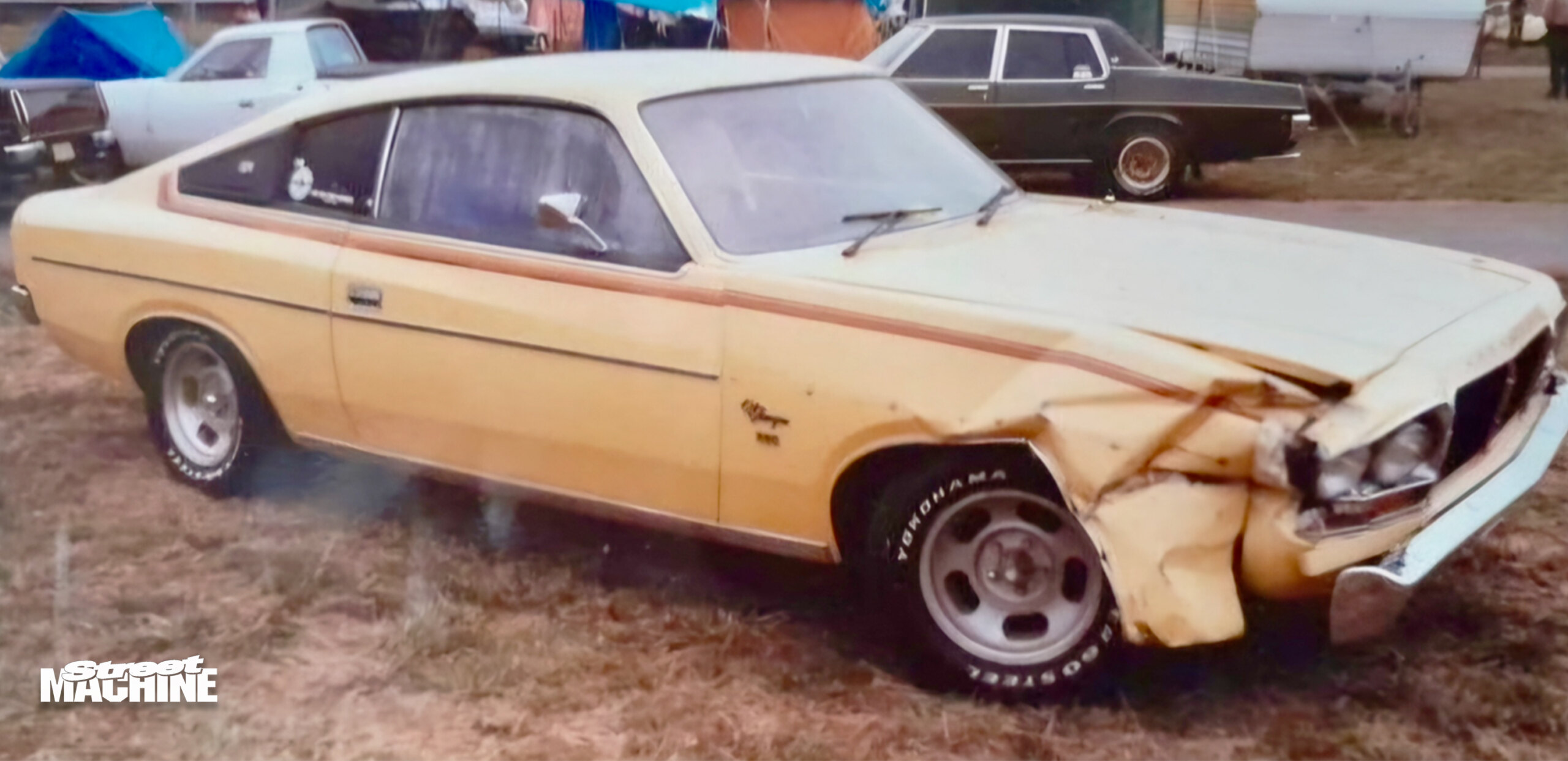
Unfortunately, while on the way to our nation’s capital to take part, Byron lost control in the wet at night and hit the Armco. The car was banged up but driveable, so he still made it to the Nationals, where he jammed his head full of big plans for the now fast-tracked rebuild.
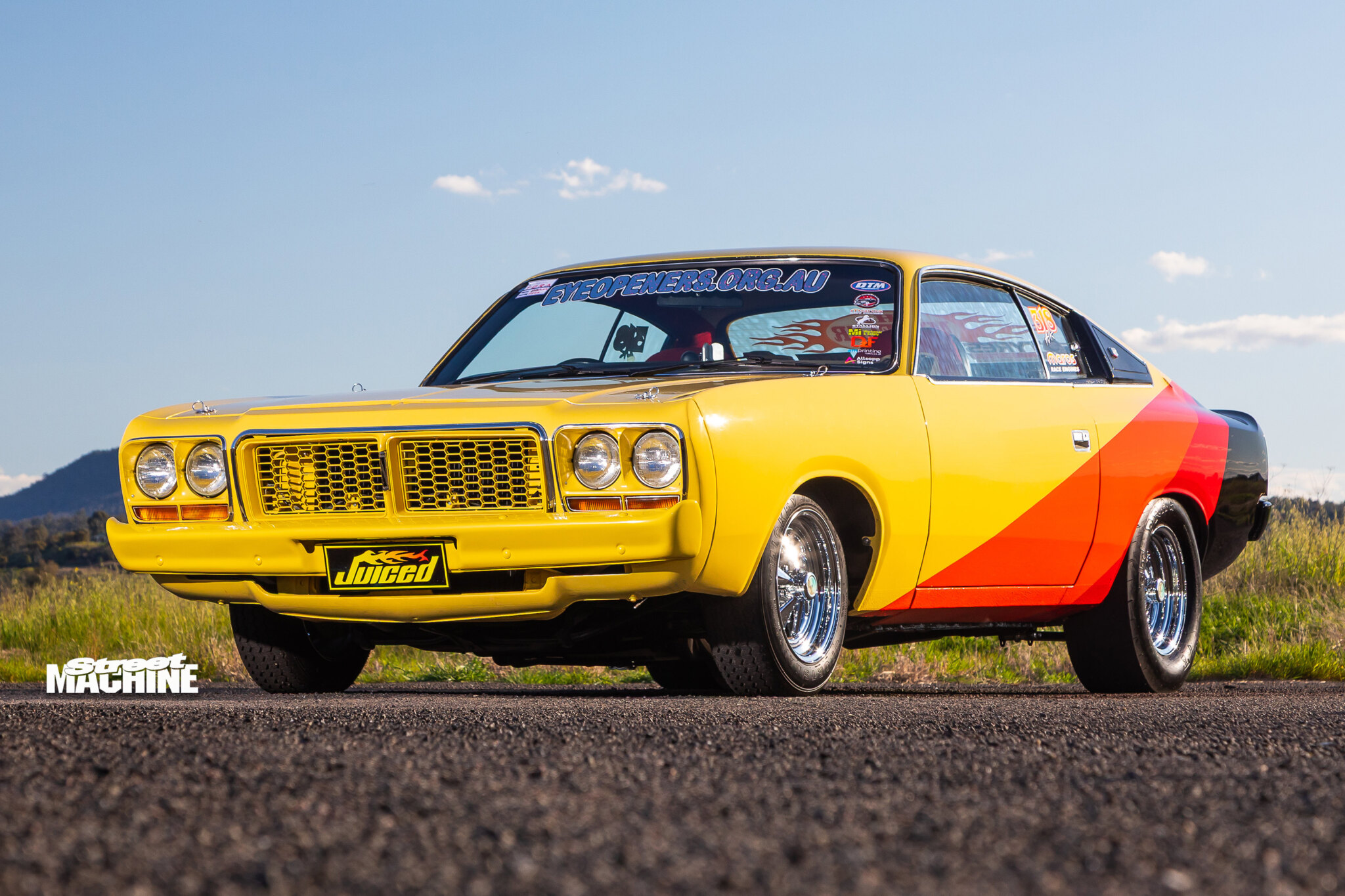
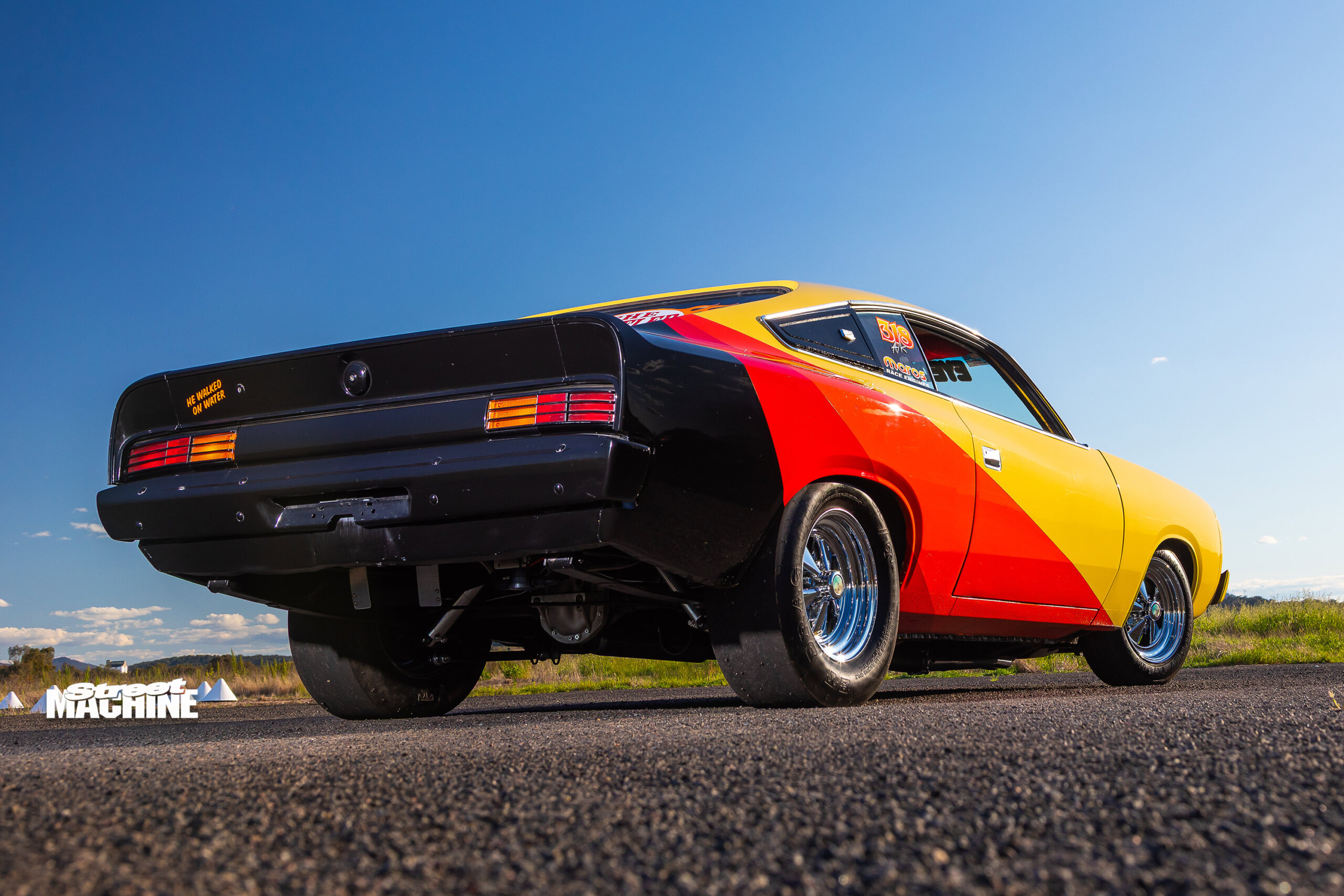
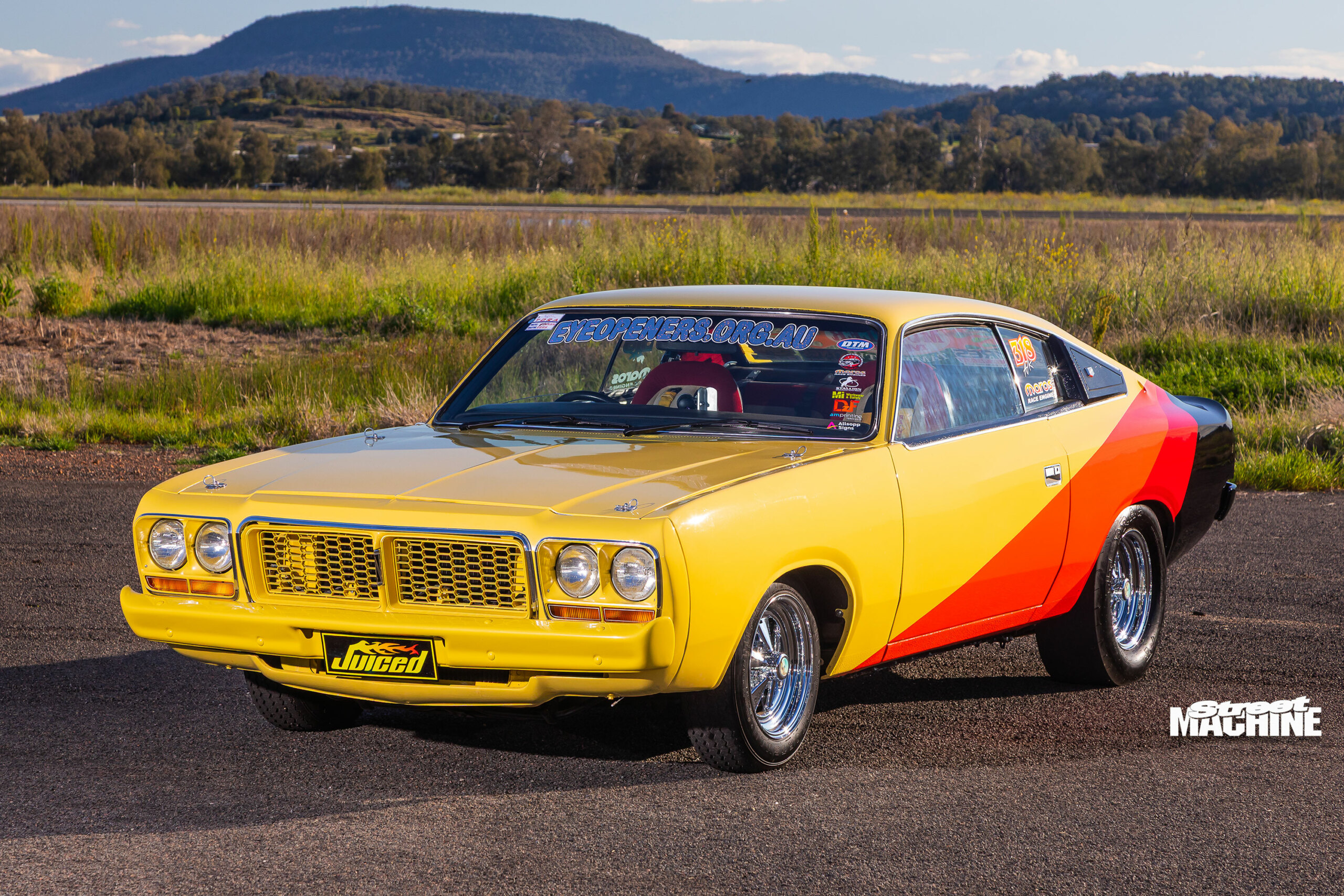
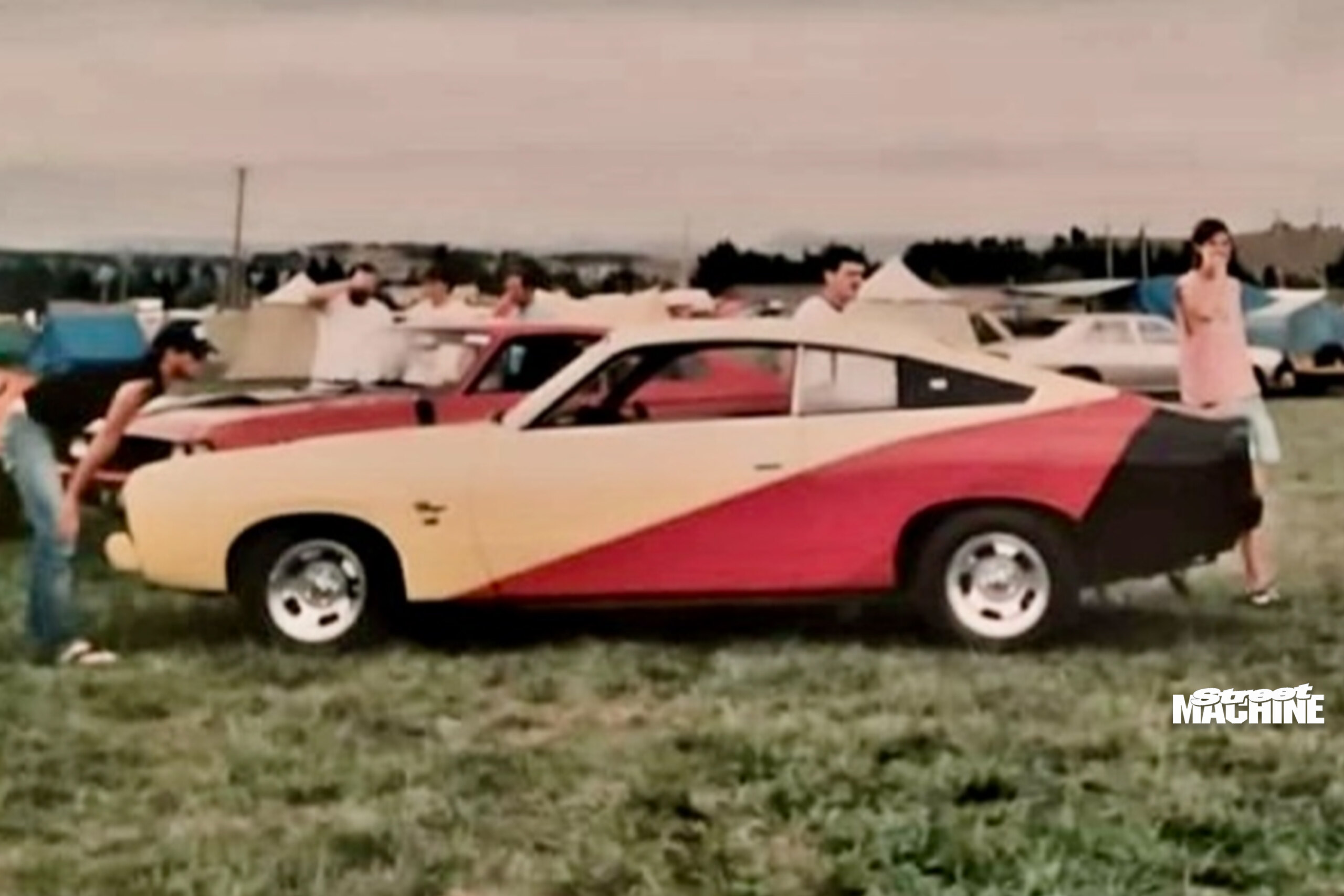
Byron’s toolbox was decorated with the cover of a Yankee Super Stock & Drag Illustrated magazine, which depicted a yellow ’68 Camaro with orange, red and black stripes, so he seized upon that as the Charger’s new paint scheme. The body repairs were sorted by his friend, John Urquhart, before Byron’s long-time mate, Rowan Rayner, laid down a tweaked version of the original yellow along with three-colour graphics.

In the meantime, Byron was busy doing what he enjoyed most: building a tough engine to help match the car’s fresh new look. The 265 was stroked to 288 cubes using a custom crank and Buick pistons, along with a Lynx replica E34 Pacer intake and 600 Holley. Terry Cook built Byron a transmission to cope with the Hemi’s newfound horsepower, while a 3.89-geared nine-inch from a wrecked XC replaced the original.

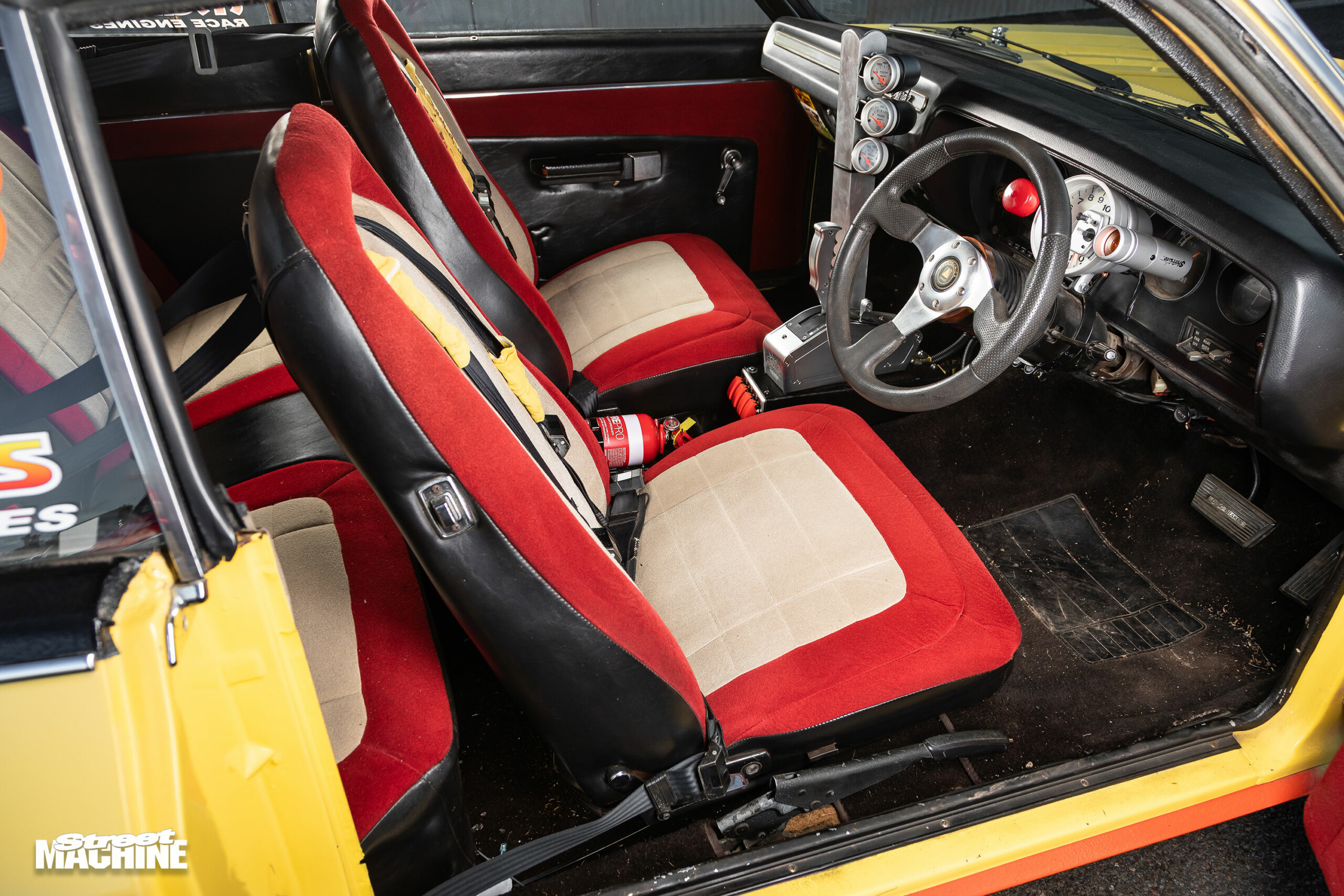
A 12.82 quarter-mile best made the revitalised Charger a very stout six-pot car for the time, while its letterbox scoop and new interior in black vinyl and red and cream velour just oozed 1980s awesomeness.
Thankfully, Byron’s drive to Canberra for the ’86 Nationals was far less eventful than his previous one, and with the updated Charger one of only a handful of cars sporting graphics at the event, he found himself at the pointy end of a new trend.
He refreshed those graphics to better contrast the orange and red in time for the first Street Machine Summernats, held over the 1987-’88 New Year’s period, and the jellybean wheels were replaced with Speedy Kalifornias.
The Charger was exactly how Byron had envisaged it as he entered the 1990s, but his life was about to take an unexpected turn. In 1991, he broke his back in a motorcycle crash, leaving him in a wheelchair for life. The Charger was parked up and gradually stripped of its running gear to help with medical and treatment costs, waiting patiently for its time to shine once again.
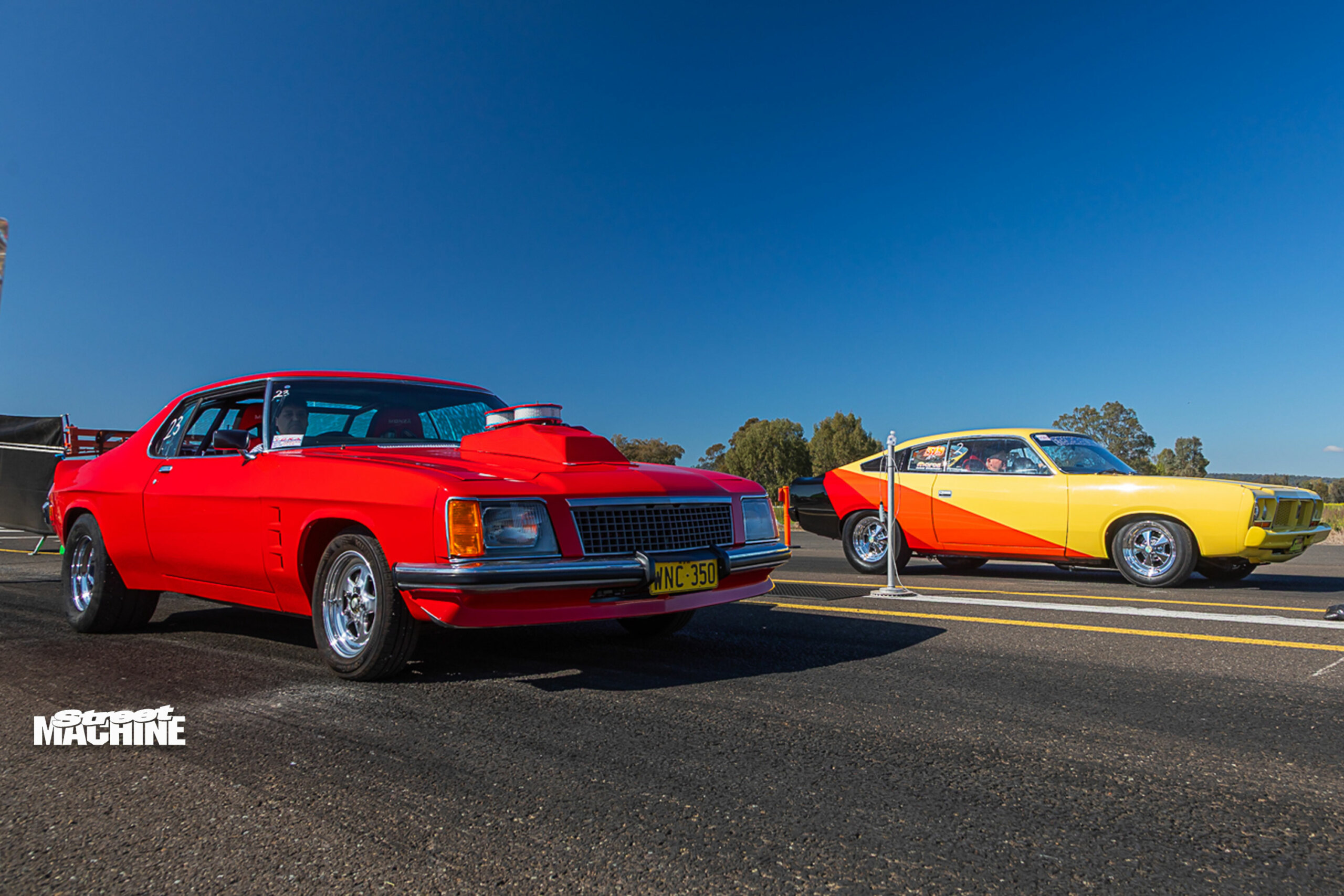
Byron busied himself with life, building and tuning engines to keep the money rolling in, but in 2022, he decided it was time to get the Charger out. “The no-prep drag racing concept had always piqued my interest, and I figured we could make the Charger a strong runner at the Gunnedah Airport eighth-mile events,” he explains. “I was done with the struggle of hot old-school six-cylinders, so I decided it was V8 time. A bulging disc in my neck had since sidelined my physical ability to screw engines together, but I’d become friendly with Jason Maros from Maros Engines in Victoria, and I knew he was the bloke for the job.”


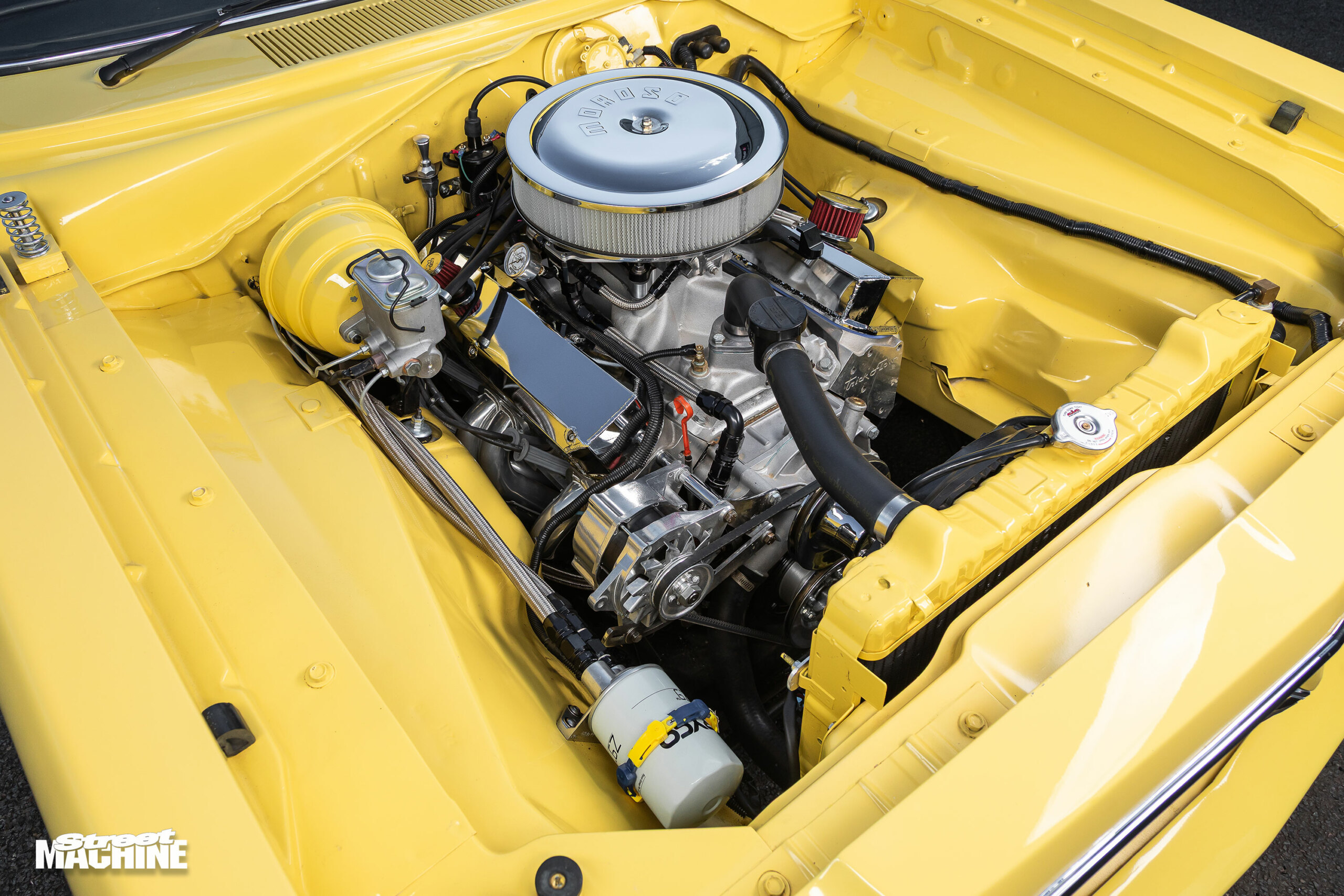
Byron and Jason brainstormed the specs before Jason assembled a stout, stock-stroke 318 based around a factory steel crank and cast block, topped with Trick Flow alloy heads and a Holley 750 Ultra XP carb on an Edelbrock Victor 340 intake. The new combo made 468hp@7000rpm on the engine dyno and has so far pushed the Charger to an 8.20-second PB over the eighth.

Terry Cook was again responsible for the transmission, this time building a 904 Torqueflite with a manual valvebody and 4500 TCE converter, while the diff has reverted to an original BorgWarner built by Darren Conroy, with 4.11:1 gears and Currie billet axles.
“Getting it going again only happened because I had a lot of help from a number of friends: Tim and Sue Wales; Mark Robb; Paul Vella; Bill Cooper; Rowan Rayner; Brett Morris; and my sisters Rhonda and Cheryl,” Byron says. “I need to make special mention of Bill Ausling at Stallion Wholesale Auto Parts, who was a very big part of the build. If it wasn’t for Bill, along with Sandy McIntosh from Monogram It and the team at eyeopeners.org.au, the car wouldn’t be competing.”
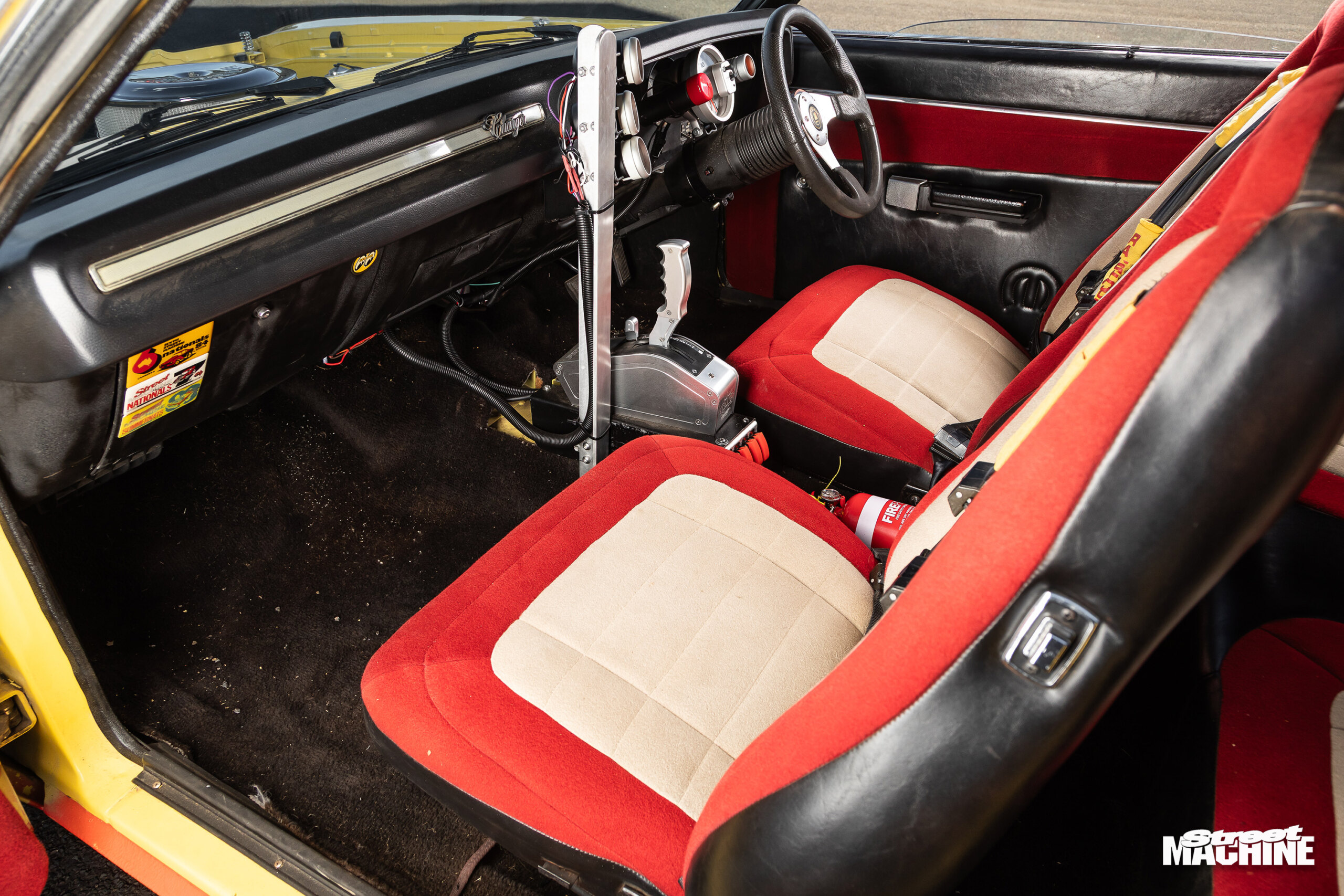
Byron’s been loving the fact that the Charger is back out there, tearing up drag strips and being enjoyed. “Tim Wales takes care of the driving duties, while I do the engine and suspension tuning,” he says. “The attention and comments it gets from people are all really positive, too. The plan now is to get it running into the sixes over the eighth and eventually have it street-registered again. That will happen in the very near future – not in another 30 years’ time!”
Comments