
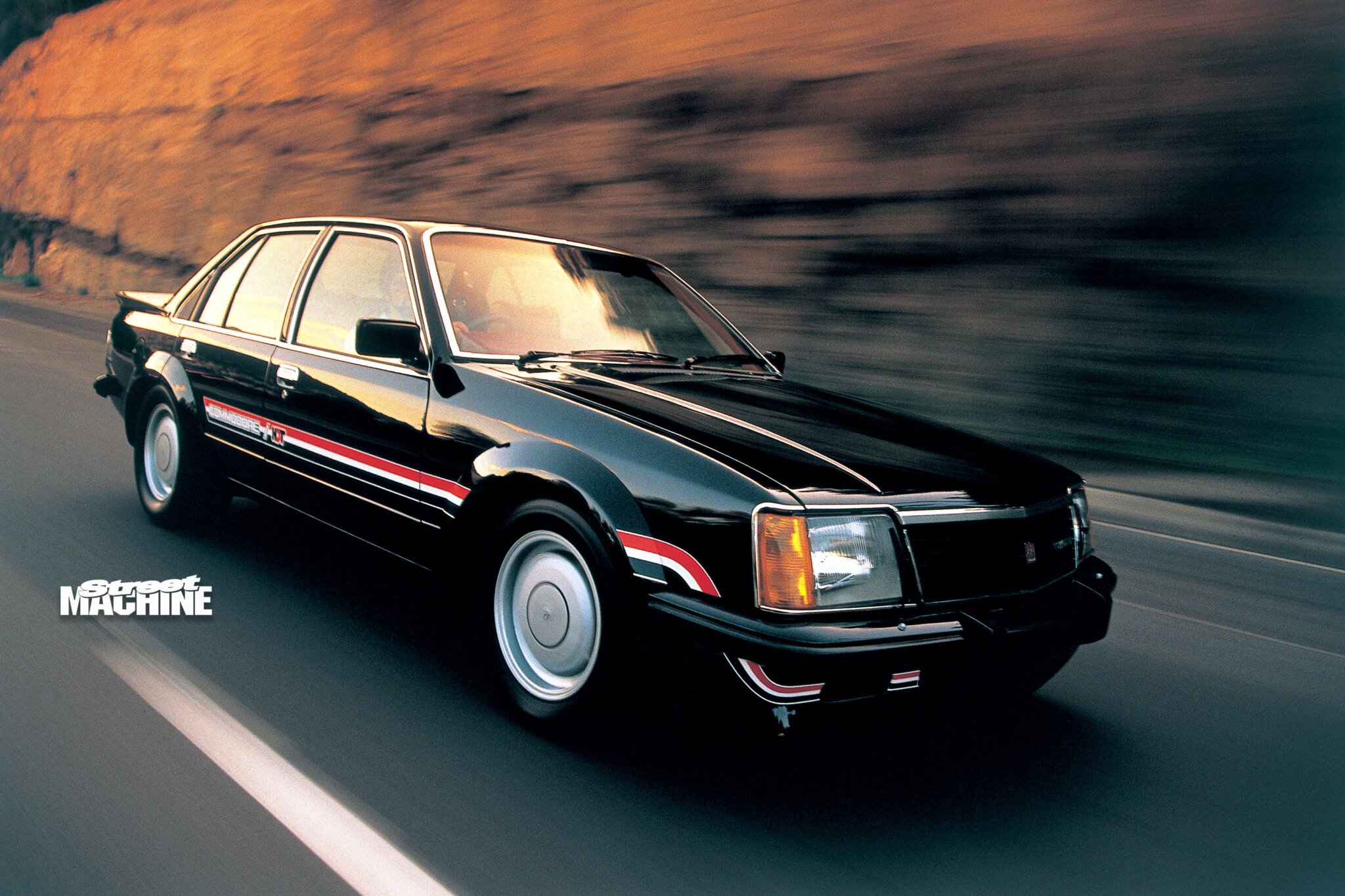
Although it’s a bloke’s name, ‘Brock’ has become a word in its own right, denoting performance, exclusivity and describing the most desirable homegrown cars ever built. In just eight short years of production, the racing driver from country Victoria and his HDT Special Vehicles operation redefined performance motoring in Australia and produced vehicles that are now more sought-after than ever.
HDT LEGENDS VC-VK
Go to: VB Prototype/VC | VH SS Group I – III | VK SS & Group III | VK SS Group A
First published in Street Machine’s Australia’s Slickest Commodores #2, 2002
Mirroring his tremendous success on the track, Peter Brock’s business blossomed until the well publicised split with Holden in the late ’80s brought it to an all too sudden end. But then it is perhaps that very limited nature of the Brock cars as much as their performance and appointment that endears them to the legions of car enthusiasts everywhere. It’s a bit like the old saying about investing in property: ‘You can’t lose buying land, because they’re not making any more of it’. HDT Special Vehicles enjoyed its meteoric rise from late 1979 until early in ’87, and like land, they ain’t making any more of them.

It all started as a matter of necessity, a side venture designed to shore up the income of the race team. In the late ’70s, Holden’s decision to withdraw support from the Holden Dealer Team cast a great shadow over the team’s future in racing. The owner of the HDT at the time, John Sheppard, also felt that the time had come to call it a day, and so, after enjoying two very successful seasons (1978 and 1979), he put the team up for sale.
Surprising many at the time, it was racing driver Peter Brock, already a superstar on the track, who bought the HDT and began looking for ways to keep the team functioning and winning races.

Obviously, money was the overriding concern, and without the financial backing of The General, an alternative needed to be found – and quickly. The name may have been Holden Dealer Team, but up until this point, the Holden Dealers had never actually contributed financially to the team, so the first job facing Brock was to persuade the dealers to literally keep the operation on track. The solution was to become the stuff of Australian automotive legend. Brock would build a limited number of ‘Brock specials’ – road cars – to be sold exclusively through the participating dealers in return for their bucks.
Although exact dollar amounts are hard to confirm, the deal was struck between HDT and 57 Holden dealers who would supply an estimated $10 million in hard currency to keep the team rolling and kick-start the car-building venture.

And so it was that HDT Special Vehicles manager John Harvey announced on September 18, 1980 that a limited production run of 500 cars would be produced by HDT to be sold exclusively through participating dealers around the country.
Brock’s enormous racing success throughout the ’70s had already earned him hero status and there was no doubting the man’s popularity both on and off the track, but there was nothing to suggest that HDT Special Vehicles would take off the way it did, or that the legend would endure and indeed grow over time.
RACING LINES

Not surprisingly, the link between the HDT’s racing heritage and the road cars was a strong selling point. Motor racing played a big part in marketing, and the saying ‘win on Sunday, sell on Monday’ summed up the situation perfectly.

Although the sedans were the mainstay of the operation, HDT did experiment at times, producing one-off vehicles and special orders for customers. Although exact numbers are not easy to come by, these included wagons and even a 4WD at one stage.
THE FIRST BORN
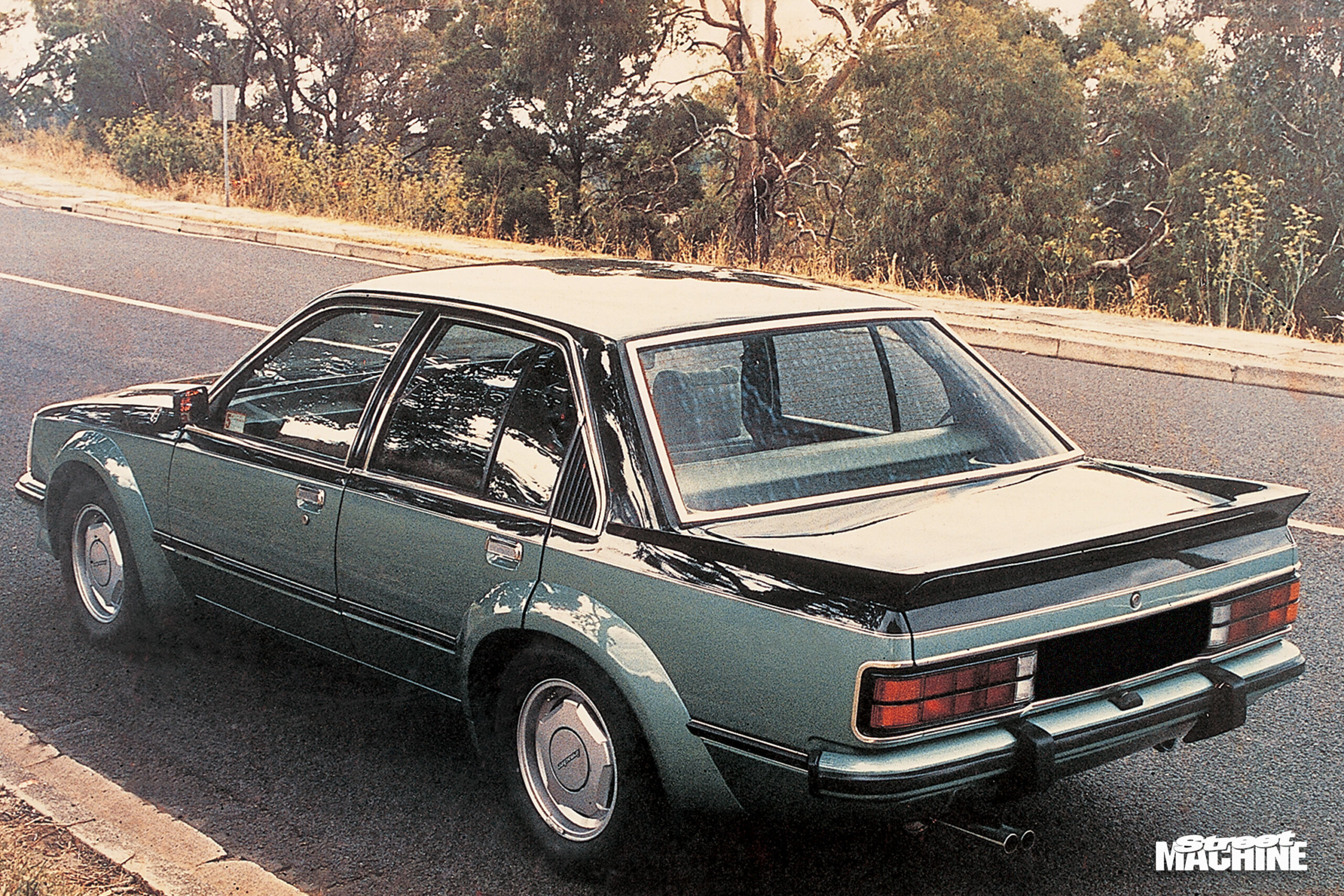
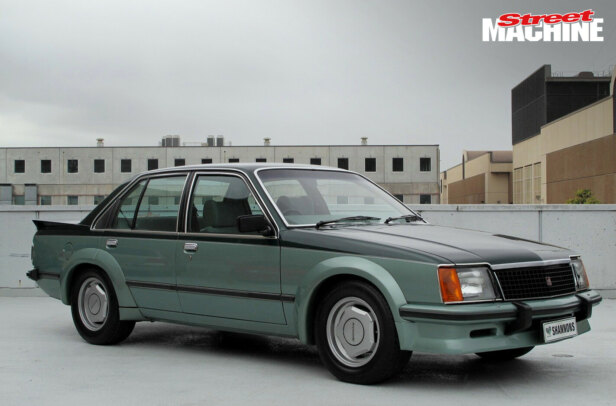
Original development work for the first HDT cars was conducted late in 1979. South Australian Holden Dealer and president of the Holden Dealer Team, Vin Keane supplied one of the original prototype vehicles (one of the original prototype cars, pictured above) for what would become the HDT VC a year later. In all, 500 of these cars were built between late 1980 and mid-1981, launching the HDT legend to an eager motoring public.
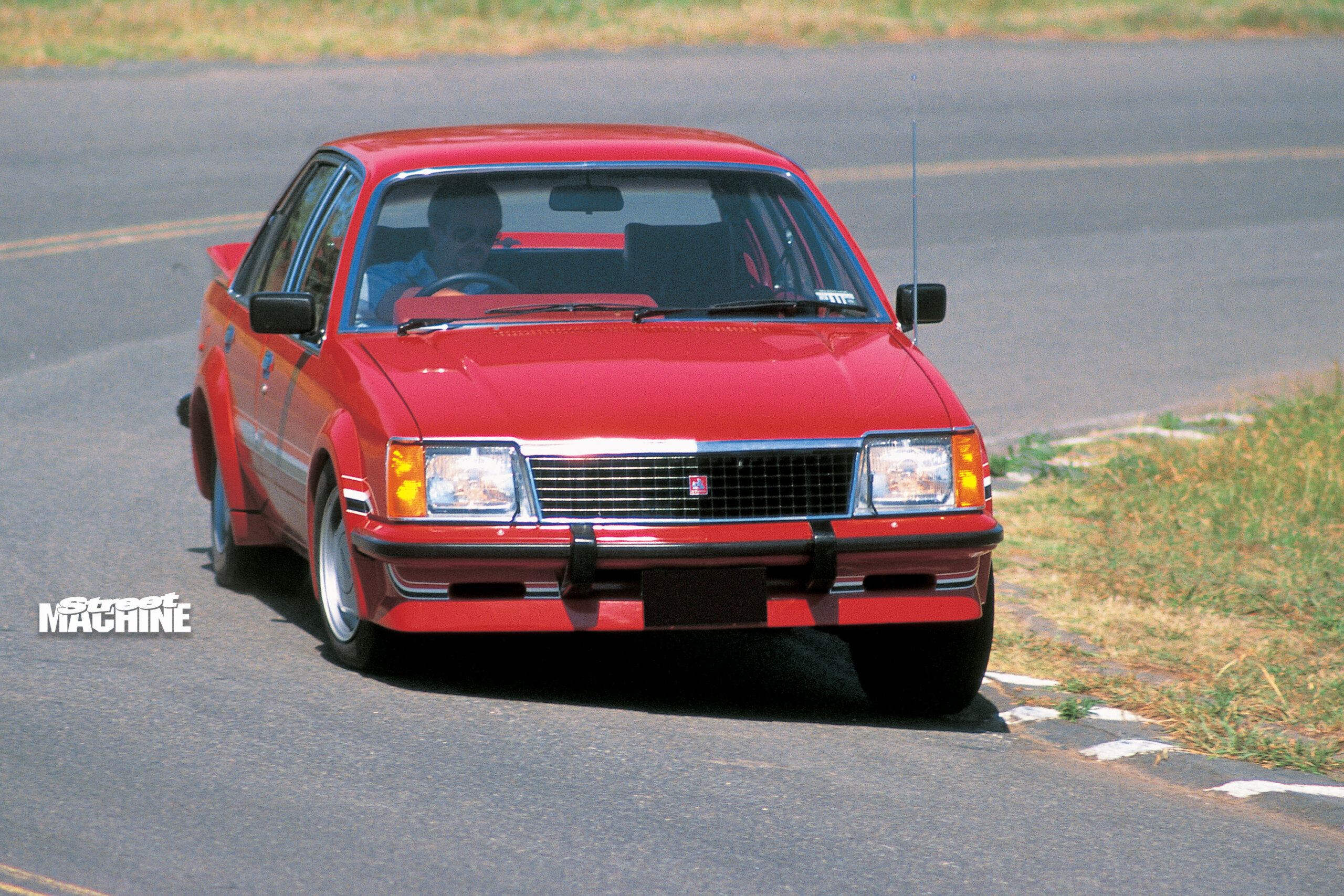
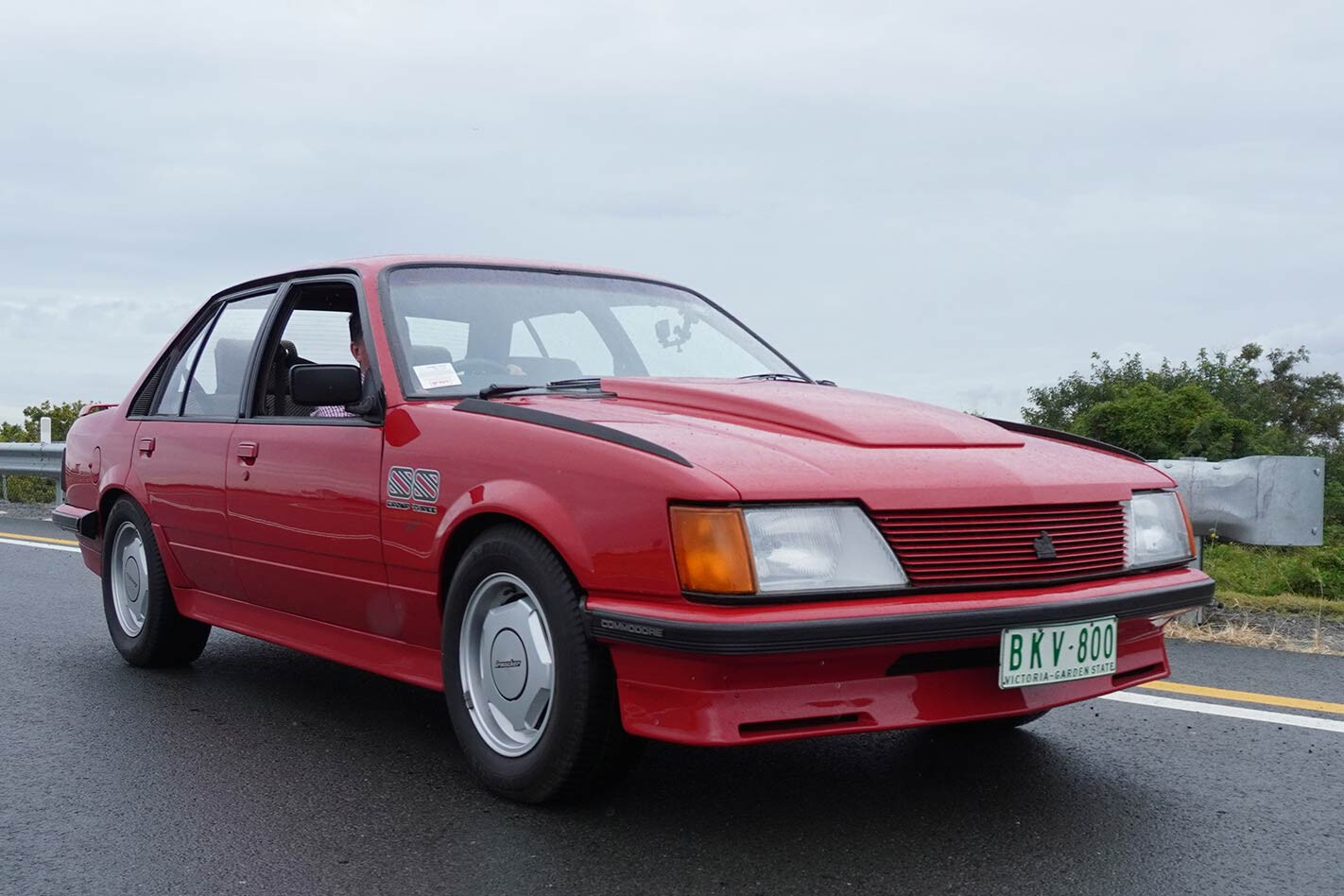
Available in black, white and red (or Firethorn, as the colour was called), the look of the cars was instantly different from anything else, with the large three-piece rear deck spoiler, imported German wheels (16-inch Irmscher) under seriously massaged guards, and those stripes. The famous red, white and black stripes that started on the front air dam and ran along the cars’ sides met with a mixed reaction. Some owners had them removed on taking delivery of their Brock specials, while others had their cars delivered without the decals on the vehicle, but supplied separately should they ever want to sell up and return it to original. The VC also carried a rear fender badge to commemorate Brock and Commodore’s win in the 1980 ATCC – these days very much a collector’s item and essential inclusion to get the best price for one of these cars.
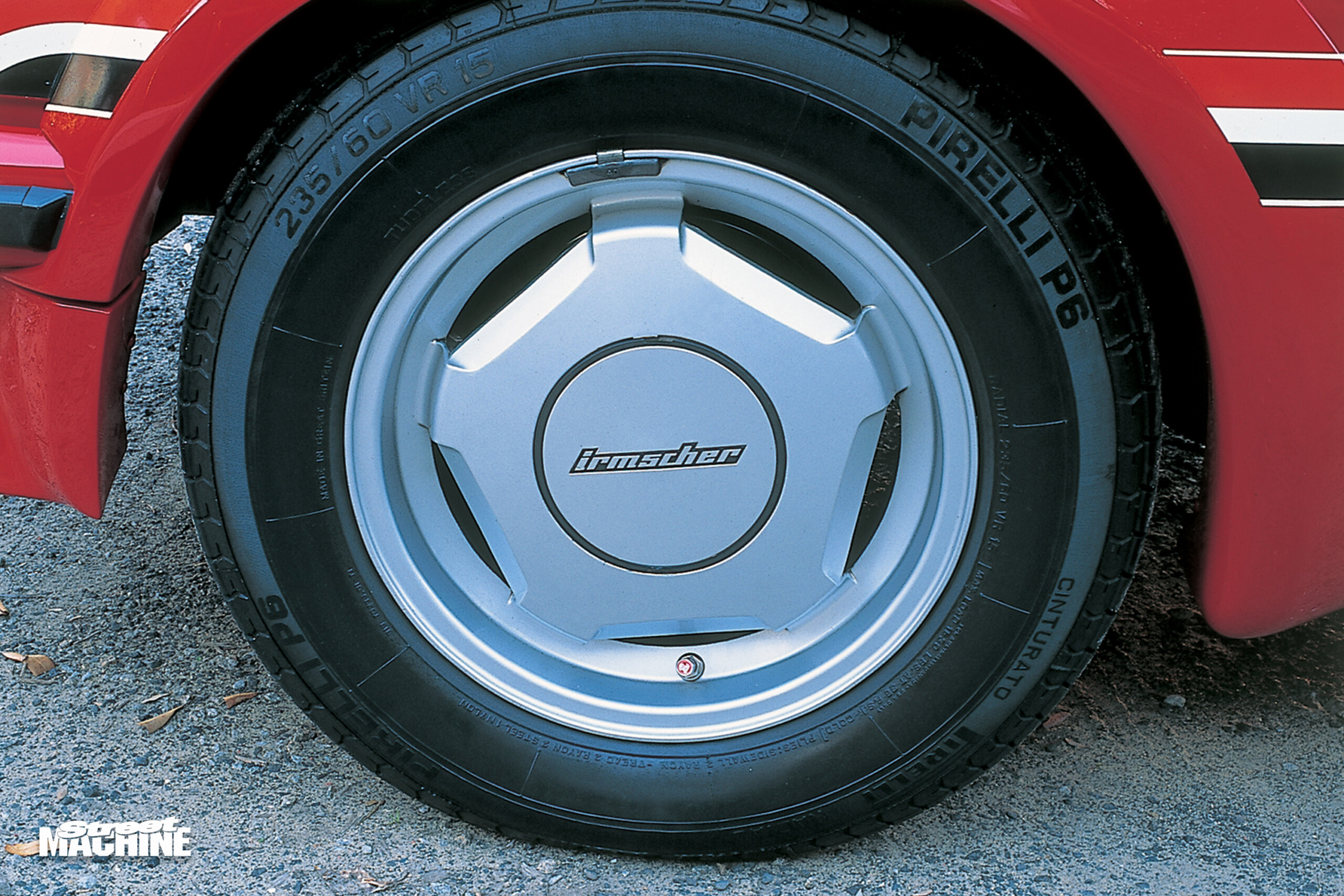
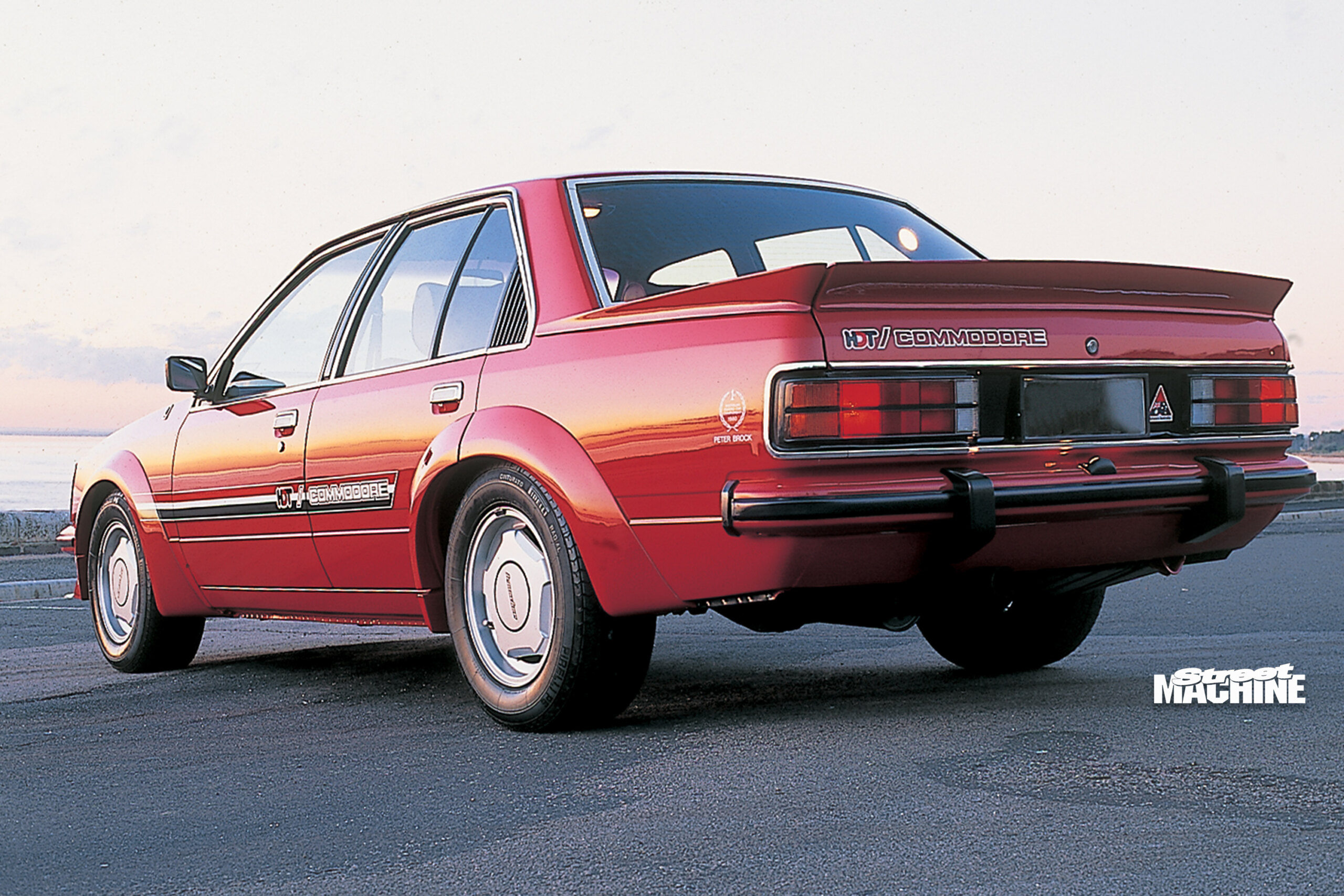
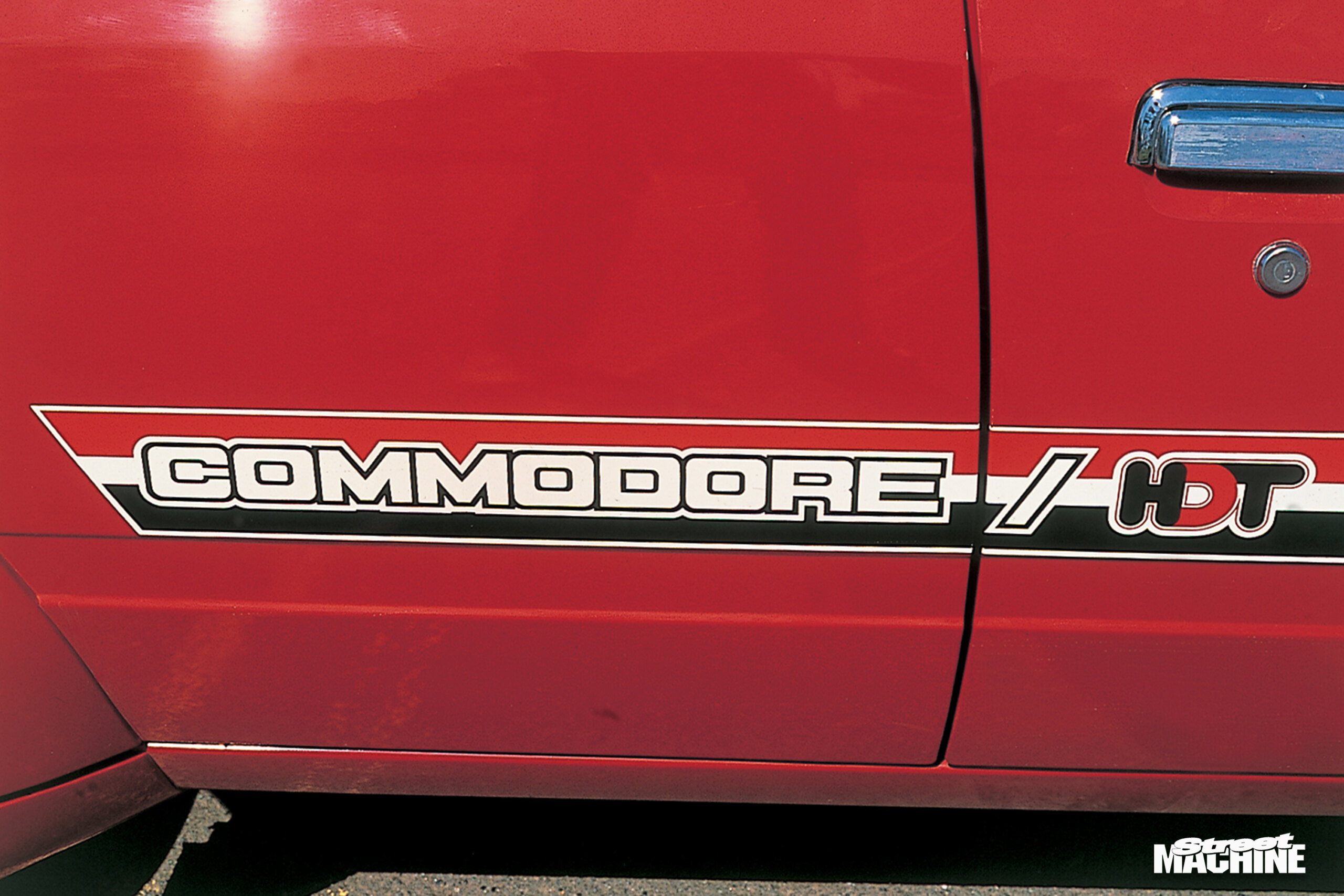
Regardless of the striping, the body and lowered stance immediately hit the right note, as did the worked internals that gave the HDT VC the go to really set it apart. Powered by Holden’s 5.0-litre V8, the HDT VCs offered a four-speed M21 close-ratio manual transmission or a three-speed auto.
Engine modifications included a gas-flowed cylinder head and significant changes to the porting and combustion face, bigger valves, a larger inlet manifold and a cold air intake. A dual exhaust system was also employed.

A heavy-duty LSD was fitted to handle the increased power, as were new brakes (four-wheel power-assisted discs), stiffer springs and gas dampers to improve body roll. With a final drive ratio of 3.36:1, the VC pulled hard off the line, reaching the 100km/h mark from a standing start in a little over eight seconds. Top speed was more than 200km/h, so in terms of performance and indeed handling, the HDT VC left its standard Holden counterpart panting for air in pretty much every department.
In a statement by John Harvey at the time of the VC’s launch, he described the production programme that produced a superb road car: “Design criteria have included handling, fuel economy and the ability to function in operating extremes. It has also taken into account aerodynamics for country touring and towing and the styling to set the vehicle apart. Twenty seven changes have been made to the base vehicle. The styling of the HDT Commodore has been planned to be distinctive and to blend with the new aerodynamic features of the car. The appointments with the HDT Commodore are conducive with luxury touring. Aerodynamic air dam, deck spoiler and wheel arches have been designed to improve touring air flow and increase economy…”

But the HDT VC wasn’t just muscle and a bodykit, boasting standard equipment that once again made it very special. Air was standard, as was a pretty decent AM/FM stereo, power aerial (remember, this is 1980), power steering, tinted glass, remote wing mirrors, black leather Momo steering wheel (carrying the Brock signature) and a HDT gear knob on the manual version.
The cars were an instant success and all 500 of the production run were quickly sold. HDT Special Vehicles had come out fighting and proved an instant success.
HDT Holden Commodore VC 5.0-litre
| VEHICLE: | One model only, Four-door sedan, available red, white, black |
| PRODUCED: | (1980) 500 units, original price $20,000 (approx) |
| ENGINE: | Type – 5.04-litre V8, Bore & Stroke – 101.6mm x 77.8mm, Power – 160kW @ 4500rpm, Torque – 450Nm @ 2800rpm |
| TRANSMISSION: | Four-speed manual three-speed auto |
| CLUTCH: | Single dry plate (manual), Torque converter (auto) |
| PERFORMANCE: | (manual), Top Speed – 213km/h, 0-100km/h – 8.5 seconds, 0-400m – 16.2 seconds, (auto), Top Speed – 210km/h, 0-100km/h – 8.5 seconds, 0-400m – 16.3 seconds |
| SUSPENSION: | (Front) Fully independent, MacPherson strut, coil springs, anti-roll bar (rear)Live axle located by trailing arms, panhard rod. Coil springs, anti-roll bar |
| BRAKES: | Split circuit hydraulic system with power booster (front) 269mm ventilated discs (rear) 258mm discs |
| WHEELS: | 15 x 6 Irmscher mags |
AND THEN THERE WERE THREE (or Four)
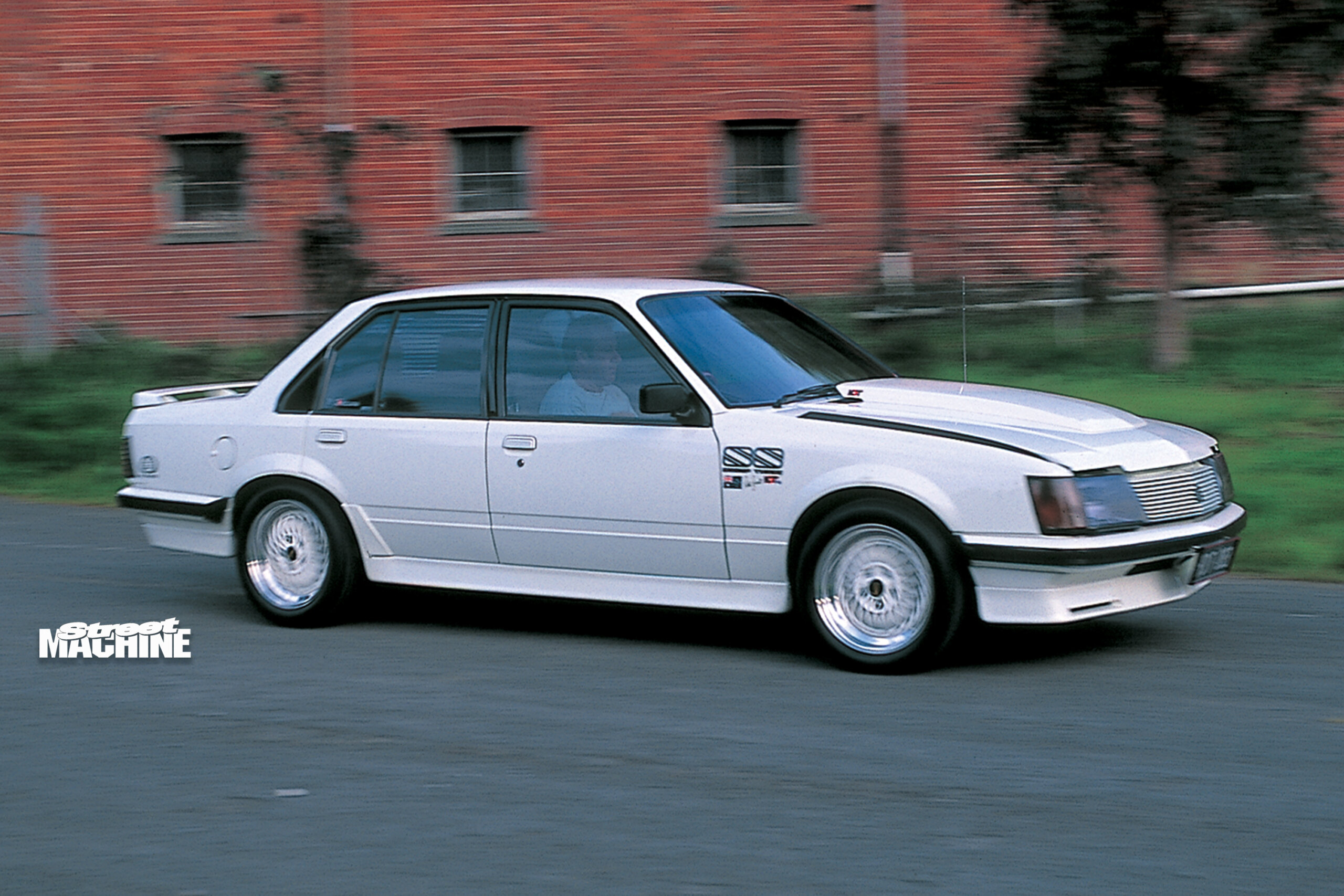
The next cars to emerge from the workshops of HDT were based on the new VH model and in total, Brock offered three models (or effectively four variants with the engine options on the Group III). Holden had produced the fairly basic VH SS, which allowed punters something of a budget entry point to the world of performance motoring. The SS from GM was a stripped-down car, not only to contain pricing but also because the car was being used as the homologation vehicle. Using the standard VH SS as the starting point, Brock offered a Group I, Group II and top-of-the-line Group III to the public with the choice of a 4.2-litre or 5.0-litre motor in the Group III. Not surprisingly, it was the Group III with the full-blown 5.0-litre that ran away with sales with its boast of ultimate performance and luxury.

At the entry level, the Group I with its 4.2-litre V8 was no slouch, but mods were limited to a more serious master cylinder, HDT’s cold air intake, firmer suspension than the standard SS, HDT steering wheel and gear shift – and the now prized decals. The Group I was no ugly duckling, but it differed little in enhanced appearance from the GM SS.
Group II got everything its little brother received in addition to blueprinted cylinder heads and extractors. The Group II also got a gas-flowed inlet manifold and much of the engine was chromed.

Exterior appearance was upgraded with the addition of a rear deck spoiler and the now famous (but never terribly popular) ‘wind splitters’ on the front fenders and the appropriate Group II decal set.
The Group III offered all the goodies of the other two, but further improvements to the 308 engine. It also got 15-inch Irmscher wheels over the 14-inch fitted to the other VH models, 60 Series Uniroyal Wildcat rubber and the distinctive VH Group III body kit. The Group III was instantly recognisable by its huge bonnet scoop and front apron, raised rear deck spoiler and side body mouldings, which HDT called ‘body side rocker extensions’. It also got rear apron/skirt and the wind splitters.
But the VH Group III, particularly with the 5.0-litre option certainly did have appeal with the buying public and the car was a huge success. Not many of the Group Is or IIs were sold, or the 4.2-litre Group III variants for that matter, but the 184kW 5.0-litre made up for the bulk of the 322 cars produced in this model and further cemented the HDT name as builders of highly desirable, high performance cars.

HDT Holden VH SS GROUP III 5.0-litre
| VEHICLE: | Three models with fourth option. Group I, II and III with two engine choices. Four-door sedan, available in red & white |
| PRODUCED: | (1982) 300+ units, original price $19,300 (approx, specs Group III 5.0-litre) |
| ENGINE: | 5.04-litre V8. Bore & stroke – 101.6mm x 77.8mm. Power – 184kW @ 4750rpm. Torque – 418Nm @ 3500rpm. |
| TRANSMISSION: | Four-speed manual, three-speed auto |
| CLUTCH: | Single dry plate (manual), torque converter (auto) |
| PERFORMANCE: | (manual) Top speed – 210km/h. 0-100km/h – 6.7 seconds. 0-400m – 14.9 seconds |
| SUSPENSION: | (Front) Fully independent, MacPherson strut, coil springs, anti-roll bar (Rear)Live axle located by trailing arms, panhard rod. Coil springs, anti-roll bar |
| BRAKES: | (Front ) split circuit hydraulic system with power booster, 281mm ventilated discs (Rear) 281mm discs |
| WHEELS: | 15 x 7 Irmscher mags |
TWO FOR THE ROAD
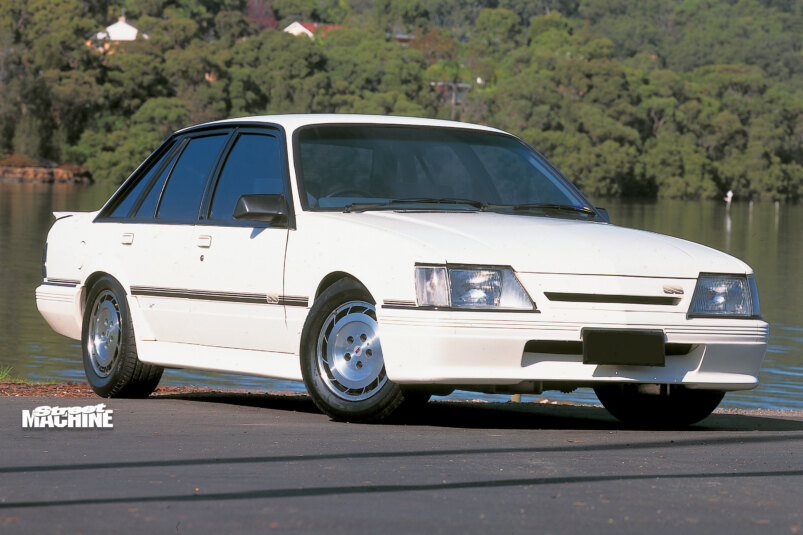
Given the comparative disinterest in the Group I and II VH derivatives, when the time came for the new HDT VK models to hit the street, it was decided that the I and II designation would be dropped altogether and only the SS and the Group III be sold.

Business was going gang busters for Brock and HDT Special Vehicles and the co-operation between HDT and GM-H had never been better. Holden, acutely aware of the benefits of the flow-on effect from HDT, began separating the cars bound for Brock’s workshops on the production line, saving HDT enormous time and money. In fact, GM-H was even adding the new HDT wheels on its assembly line prior to delivery to save them removing the standard steel items on arrival at HDT SV.

Available in only white or silver, the two models made their first public appearances in 1984, offering a rich and poor alternative in terms of appointment, performance and look. As with the VH cars, the bulk of punters opted for the VK Group III, paying the significant premium to get the go-fast gear, luxury appointments and the full bodykit as well. Compared to the VH, the VK’s bodykit was more subtle, with a small boot lip spoiler, side skirts, front air damn and rear apron and a rear opening bonnet scoop. In fact, the bonnet scoop and the wind splitters (yet again) were often deleted from the list of options prior to delivery. This was because the bulk of the fully optioned cars were going to company executive types who wanted their ride to go and handle, but didn’t necessarily want to advertise the fact to all comers. Even without the scoop, the VK and the VK Group III were unmistakably Brock, but a more played-down version nonetheless.

The VK also featured new three-piece, five-spoke colour-matched wheels from HDT (shod in 50 series rubber), rather than the German Irmscher items that had seen duty since the start of operations.

In terms of engine mods, ports were enlarged, bigger valves used with manifolds matched to heads and HDT’s cold air intake mated to the carbie. Power output was 177kW at 4800rpm – slightly down on the VH Group III, but torque was slightly better at 419Nm at 3500rpm. Transmissions offered were the Borg Warner four-speed manual or a three-speed automatic. Suspension was fully independent with MacPherson struts and coil springs up front and a live axle arrangement located by trailing arms and a panhard rod on the rear. Disc brakes were standard equipment on both models, with 281mm ventilated units on the front and solid discs of the same diameter on the rear.

Inside, both models boasted a schmick blue interior with the leather Momo signature wheel and HDT shift knob on the manual versions, and Scheel provided the body-hugging cloth-trimmed seats in the Group III.

More than 200 of the VK cars rolled out of the HDT workshops, the bulk of which were the fully optioned Group IIIs – mostly without the bonnet scoop. These models proved enormously successful for Brock in terms of sales and remain among the most popular original cars doing the rounds.

HDT Holden VK SS GROUP III 5.0-litre
| VEHICLE: | Two models. SS and SS Group III 5.0-litre. Four-door sedan, available in silver & white |
| PRODUCED: | (1984) 300+ units, original price $24,500 ( specs Group III 5.0-litre) |
| ENGINE: | Type – 5.04-litre V8. Bore & stroke – 101.6mm x 77.8mm. Power – 177kW @ 4800rpm. Torque – 419Nm @ 3500rpm |
| TRANSMISSION: | Four-speed manual, three-speed auto |
| CLUTCH: | Single dry-plate (manual), torque converter (auto) |
| PERFORMANCE: | (manual) Top speed – 210km/h. 0-100km/h – 7.6 seconds. 0-400m – 15.6 seconds |
| SUSPENSION: | (Front) Fully independent, MacPherson strut, coil springs, anti-roll bar. (Rear) Live axle located by trailing arms, panhard rod. Coil springs, anti-roll bar |
| BRAKES: | (Front) split-circuit hydraulic system with power booster, 281mm ventilated discs (Rear) 281mm discs |
| WHEELS: | 15 x 7 HDT three-piece alloys |
AND THEN THERE WAS BLUE
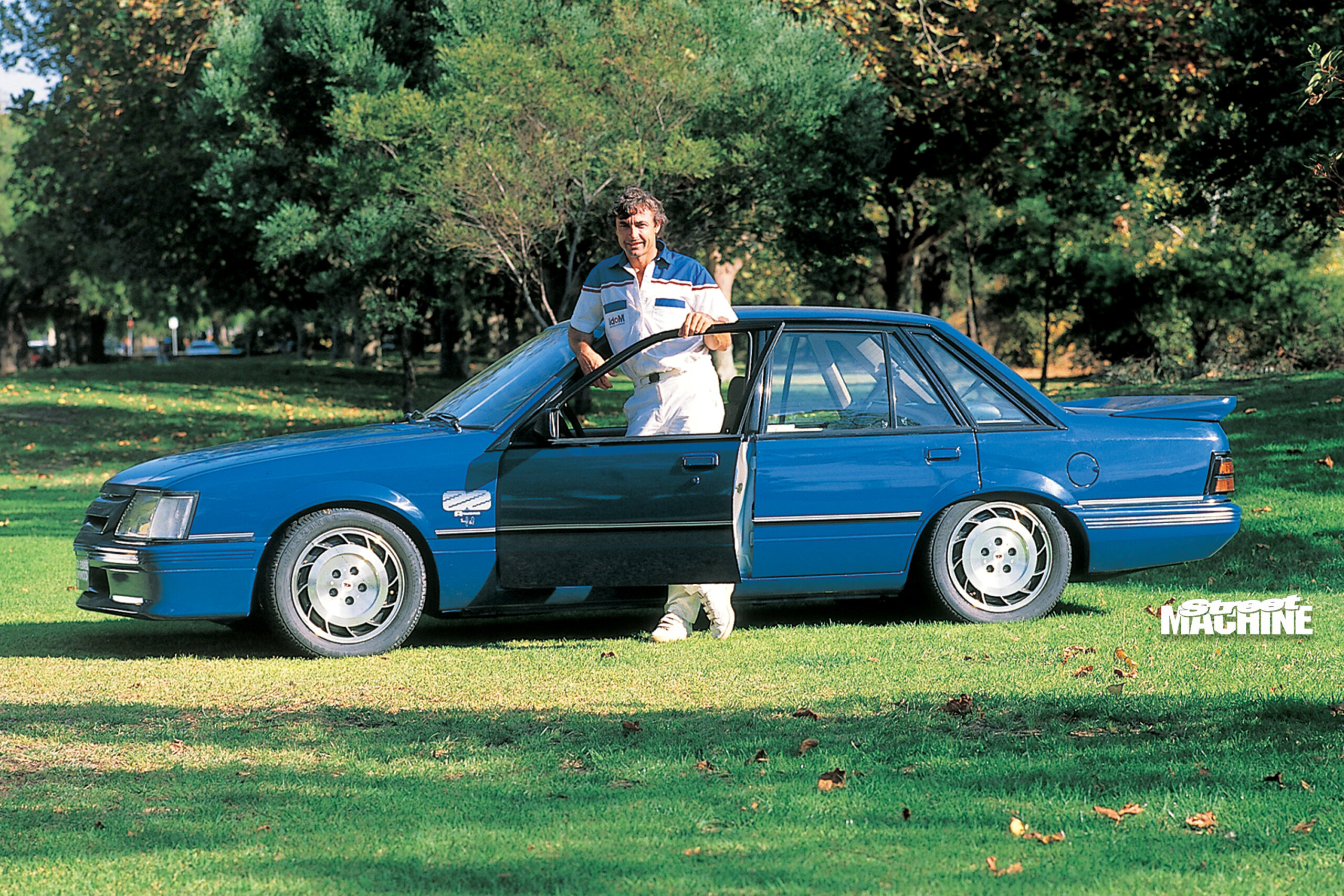
Even while the VK SS Group III was still being produced, word came through that a new homologation special was in the pipeline and a new VK HDT variant would not be too far away. Australia’s change from the Group C regulations to the internationally recognised Group A regulations would change the way we raced in this country and would obviously require new hardware to do battle under the new rules. Group A regs would also make it possible for overseas teams to come to Australia, and likewise make it easier for Australian teams to travel and compete overseas.
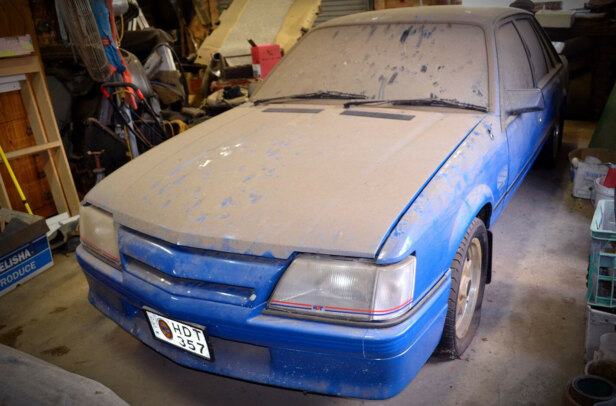
The result of all this in terms of street machines was ultimately the VK SS Group A, aka The Bluey.
In keeping with the new regulations, The Bluey would have its displacement dropped below the 5.0-litre mark to 4.9-litres (4.99-litres, to be exact), and the new engine designated the LV2 received a host of enhancements to keep it at the cutting edge of performance and ensure it remained competitive. The LV2 received a high-lift cam and roller rockers as well as a new header and exhaust system. Torana L34 con rods were used instead of the prohibitively expensive Carillo items, and new push rods and guide plates, lifters and a double-row timing chain all got a run. Once again, the heavy-duty M21 manual four-speed got the transmission job, although race versions of the car were better equipped with the Borg Warner T5 trans.
Bilstein gas dampers were once again used in the suspension department, while the distinctive 16×7 Aero wheels were originally shod in Bridgestone Potenza rubber.
As the nickname might suggest, the Blueys were only available in blue – a colour called Formula Blue, which, along with the wheels, makes them instantly recognisable. The bodykit was not dissimilar to the VK SS Group III, but the bonnet scoop was never offered as an option given its mediocre acceptance on the previous model, and there were no side skirts offered on the standard Bluey model. The rear deck spoiler was more prominent on the Group A, but in general terms, the car was not overly styled and remains one of the all-time classics. Towards the end of the car’s 500 strong production run, some of the Group As were fitted with full side skirting and even more luxurious interiors (a result of special orders), but this was the exception rather than the rule.
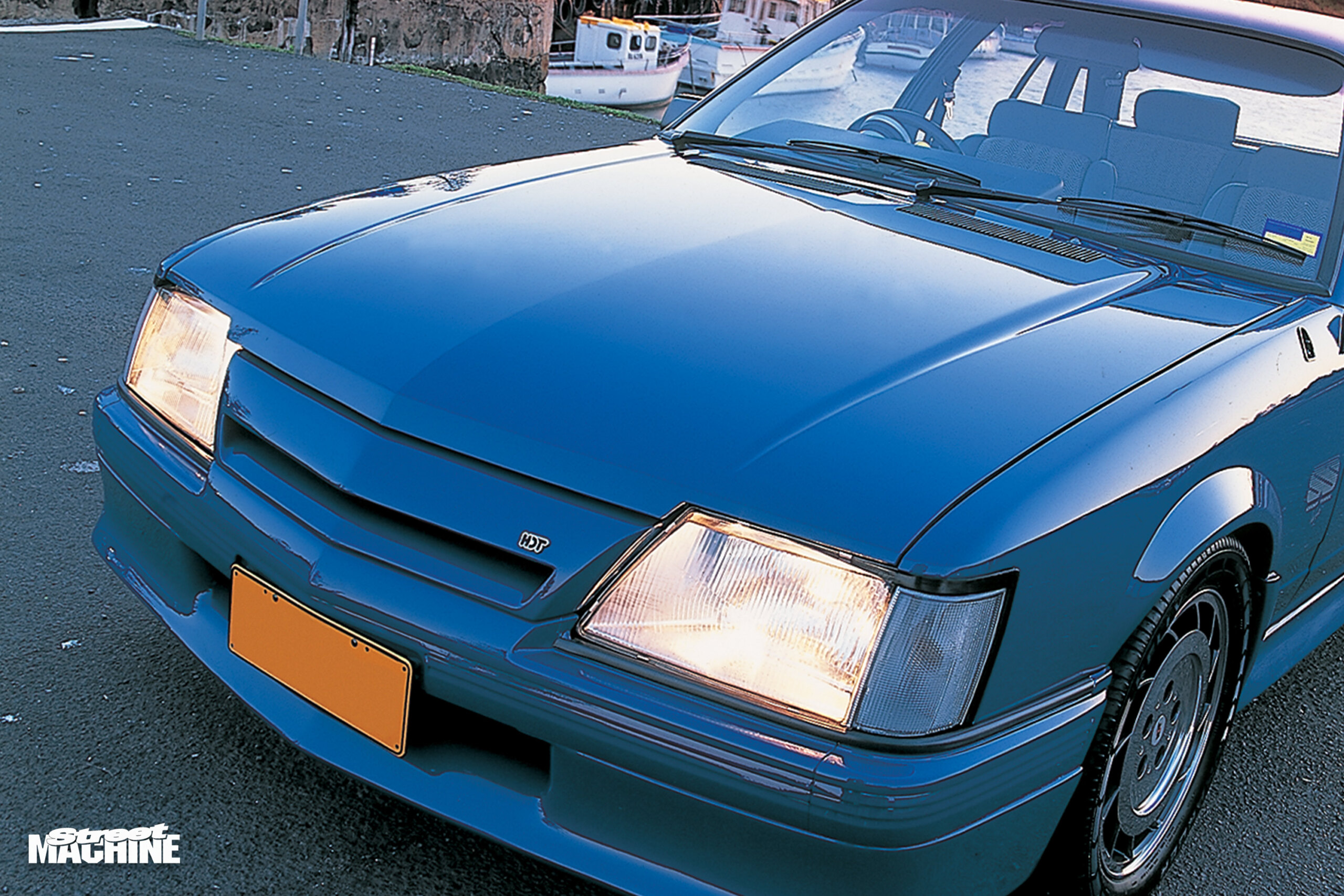
At the time, the Bluey was also the fastest production Holden available, despite the decreased displacement – yet another resounding success for Peter Brock and HDT SV. It seemed that there was no limit to the public’s acceptance of these special vehicles and the sky appeared to be the limit where these cars were concerned.
Although at the time no-one would have guessed it, Brock and Holden would only continue their association for another two years, but massive developments were just around the corner and some of Brock’s finest cars were yet to come.
HDT Holden VK SS GROUP A 5.0-litre
| VEHICLE: | One model. Four-door sedan, available in Formula Blue only |
| PRODUCED: | (1985) 500 units, original price $22,250 (approx) |
| ENGINE: | Type – 4.99-litre V8. Bore & Stroke – 101.6mm x 77.8mm. Power – 196kW @ 5200rpm. Torque – 418Nm @ 3600rpm |
| TRANSMISSION: | Four-speed manual |
| CLUTCH: | Single dry-plate (manual) |
| PERFORMANCE: | Top speed – 215km/h. 0-100km/h – 7.0 seconds. 0-400m – 14.8 seconds |
| SUSPENSION: | (Front) Fully independent, MacPherson strut, coil springs, anti-roll bar. (Rear) Live axle located by trailing arms, panhard rod. Coil springs, anti-roll bar |
| BRAKES: | (Front) Split circuit hydraulic system with power booster, 281mm ventilated discs. (Rear) 281mm discs |
Special thanks to Len & Syd Pennisi of HDT in Sydney for their help with this article.
Comments