
First published in the June 2008 issue of Street Machine
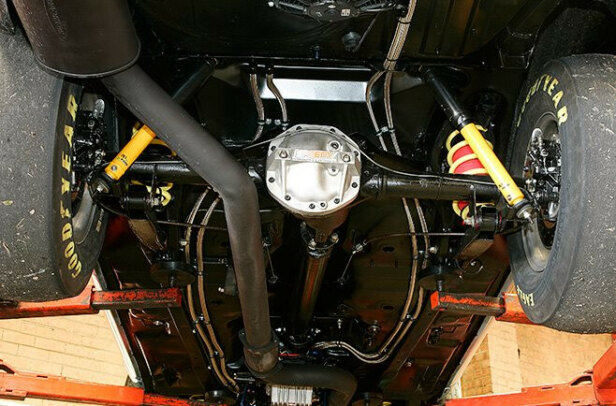
Since it appeared in the mid-60s, the BorgWarner 78 has been original equipment in a huge variety of Australian six cylinder and V8 vehicles, in solid axle and IRS variants. Now, while it’s a relatively tough bit of gear, if you start pushing a decent amount of power through one there’s a good chance you’re going to break it. The traditional solution is to fit a nine-inch and have done with it — which G&J Differentials can certainly help you with. The problems with a nine-inch are weight and cost. A nine-inch weighs a tonne and upgrading to a new diff housing and centre can be expensive. More often than not it’s overkill too.

As an alternative, G&J has developed a range of beefed-up components for the Aussie BorgWarner (BW).
Ultimately, it may not be as tough as a nine-inch but G&J’s uprated BWs are capable of handling very healthy amounts of power. Also, being able to retain your existing housing makes it simpler and more cost-effective — you’ll also save a lot of weight! Better still, the BW 78 design has remained virtually unchanged since its introduction. That means the scope for mixing and matching components is nearly endless — any configuration can be catered for. Follow along while we give you a guided tour of G&J’s toughened BW centre.
STEP-BY-STEP:

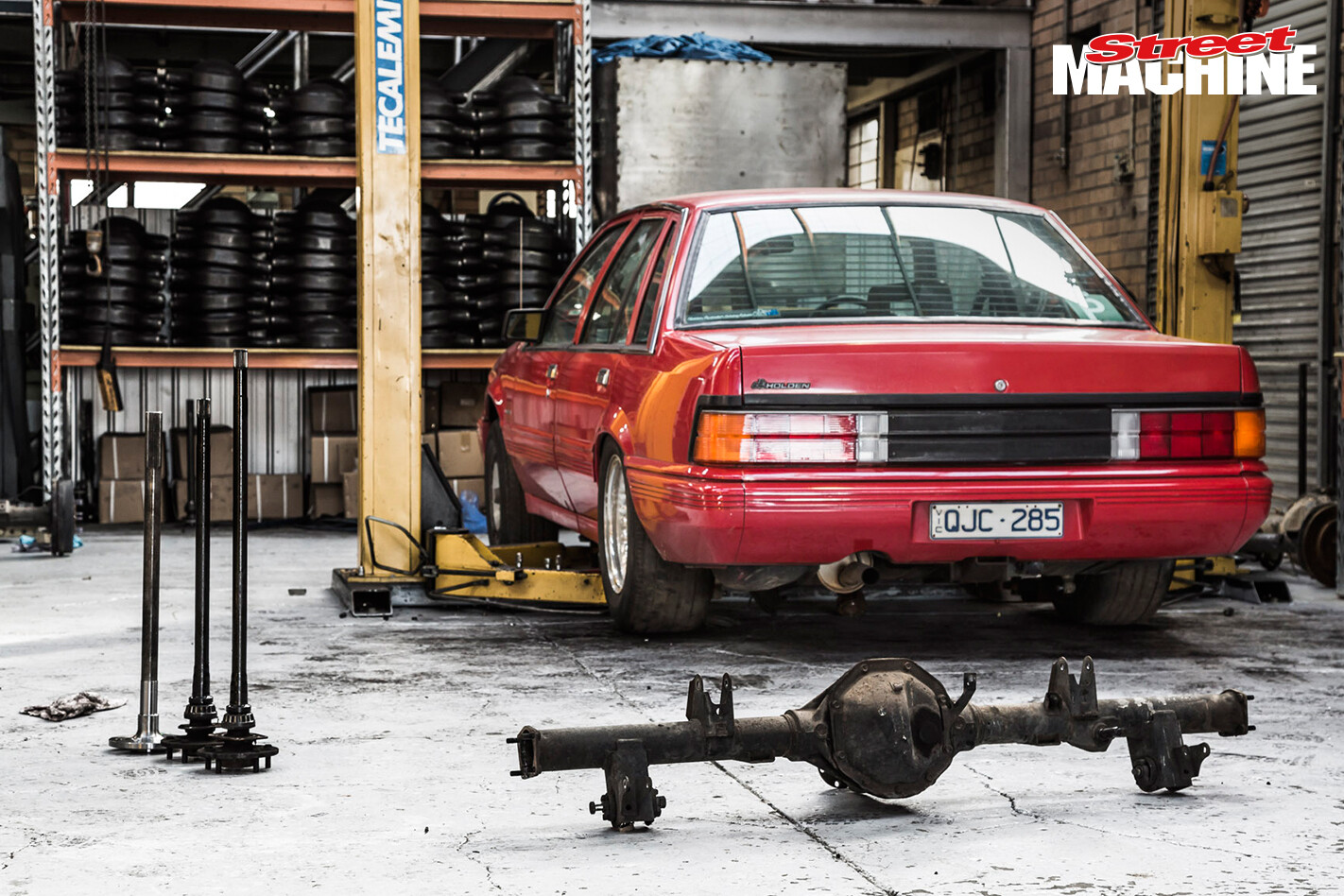
1. To remove the carrier, you’ll need to slide the axles out until their splines are disengaged. So remove the brakes (discs on this car) and through the hole in the axle flange, undo the four bolts securing the bearing retaining plate. Be extra careful if these are socket-headed bolts as the internal hexes are easily damaged. Never use a rattle gun to undo them. A worn hex-driver can also damage them.

2. ABS wheel speed sensors (if fitted) should be undone and placed out of harm’s way. G&J uses a slide hammer to disengage the axle splines from the side gears and LSD cones. If you don’t have a slide hammer, drop a wheel on and thread a few wheel nuts on just a couple of turns. Using free play and the mass of the wheel, give it a good yank — it works quite well as a makeshift slide hammer.

3. Don’t undo the bearing retaining cap bolts with a rattle gun. And don’t mix up the retaining caps as they need to be refitted back to their original sides — same goes for the bearing spacers. Depending on model, the carrier can be difficult to remove from the housing. Sometimes it can be simply levered out, other times will require using a spreader tool to slightly open the housing.

4. The drive pinion is more robust and can be undone with a rattle gun — stop it turning by holding the pinion flange by hand. If cracking it with a bar, use the handbrake to lock everything up before beginning disassembly. A new crush spacer is used to achieve the appropriate tension when reassembled. Note that the bearing caps and spacers have been placed on the sides from which they were removed.

5. A lot of force is transferred through the side gears so it’s quite common to see obvious wear like this (note the faces of the teeth). G&J’s all-new side gears (Step 10) are not only stronger but also longer wearing. Early BW 78 centres featured smaller bearings. However, later centres with their bigger, more durable bearings can be retrofitted into the early housings for improved strength.

6. Another common wear area is the surface of each thrust disc, which bears against the preload springs. Each should be smooth across its whole surface. In worn units, the area that sits against the hollow centre of the small preload spring remains unworn and develops a sharp high spot. G&J manufactures a harder, more durable version that lasts longer than the original units.

7. The outer faces of the side gears rub against the inner faces of the LSD cones (the side gear is shown here turned upside-down — see Step 11C). If the intermediate thrust washer is displaced, galling wear like this will occur, making replacement necessary. G&J says this is a common sight in BorgWarner differentials that have given extended service, and they must be replaced.

8. Most BW carriers are made from cast iron (A), however there is a cast steel version (B). They look similar but the steel unit has much better wear resistance, which is important in LSD versions. The unit on the left is a single wheeler, or open version. If you’re out scouring the wrecking yards looking for an LSD unit, a tag stating: “Spin Resistant Diff, use recommended oil only” means you’ve scored.

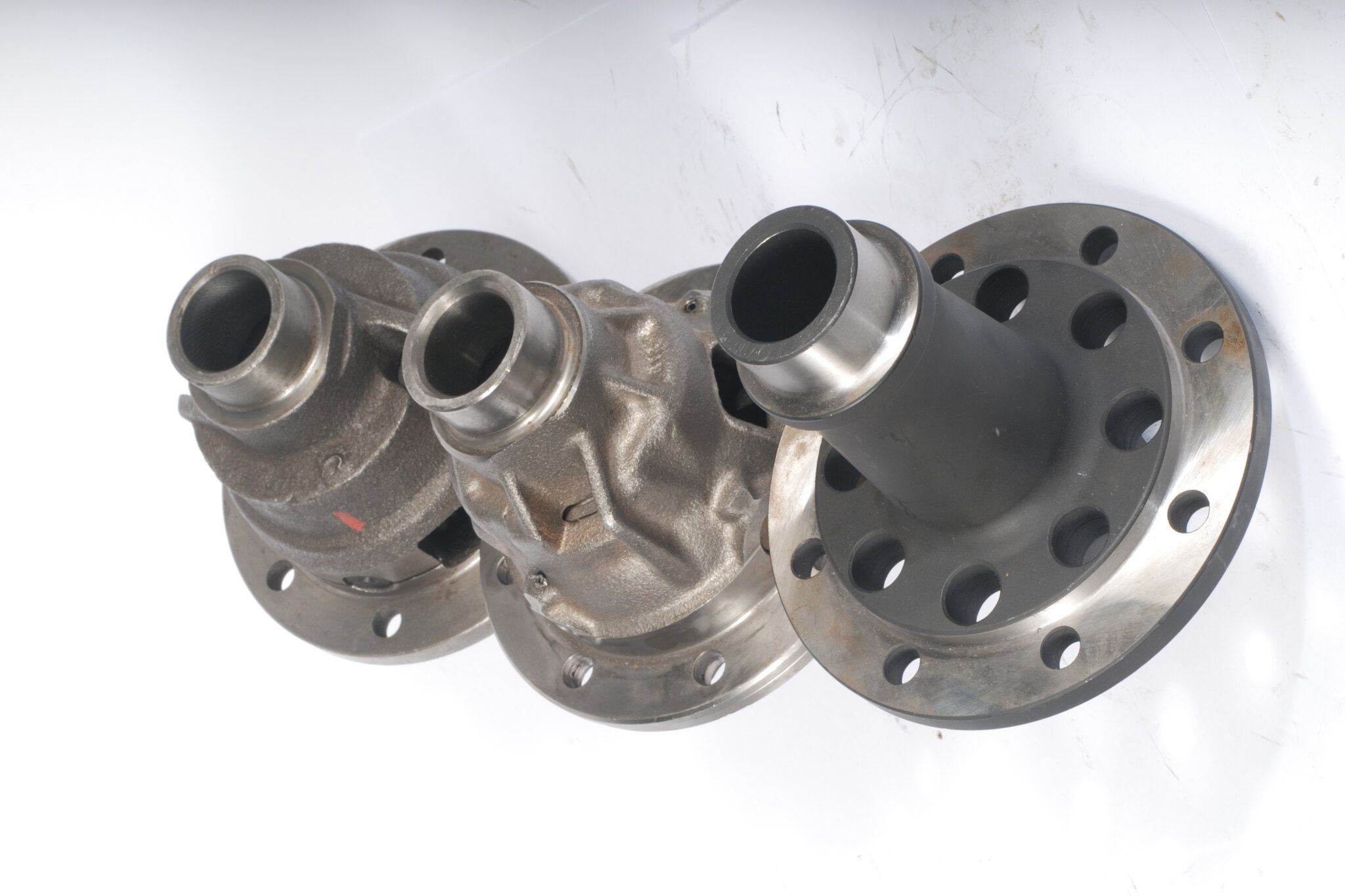
9. There are some aftermarket gear sets available for the BW 78 but they’re limited in range — and often very difficult to find. That said, the factory gears are extremely durable. Being factory fitment in such a wide variety of cars and utes means there’s a huge array of ratios available. Anything from 2.92:1 right up to 3.91:1 and even 4.11:1! Note that the 2.77:1 ratio differs physically from all other gears.

10. G&J manufactures this stronger spider carrier (A), pinion gears (B) and side gears (C). The side gears are available in 25, 28 and 31-spline versions. While some BWs featured four-pinion centres (ie, four pinion gears), most were only two pinion versions. Four-pinion gears have double the torque-handling capacity of two, making the four-pinion set-up the better option for performance applications.

11. So that you can see how all these internal components relate to each other, here is the assembled planetary (A); the axles are splined into both the side gears and the LSD cones — at the bottom here. With the side gear removed (B) the small LSD preload springs (centre) can be clearly seen. With side gears, pinion gears and the spider carrier removed, the action of the LSD cones and preload springs can be seen. G&J manufactures replacement LSD cones (C) that are much tougher and harder wearing than the original factory versions. This allows the fitment of heavy duty preload springs, which increase the pressure on the LSD cones for increased torque-handling capacity and the LSD’s break-away torque rating. Note the location of the thrust disc (D) between spring and side gear.

12. Internally, IRS BWs differ from the live-axle versions. IRS side gears have internal grooves cut into their splines and are identified by the fine groove machined into their outer faces. The retaining clips on the end of the IRS axles lock into the side gear’s internal grooves and prevent the axles from easily popping out. IRS side gears can be used in live-axle units but not vice versa.

13. While the crown wheel and pinion can handle quite reasonable amounts of torque, the pinion (spider) gears and planetary are more limited. At this stage a mini-spool is the answer. G&J makes them to suit 25, 28, and 31-spline axles. In the BW 78, mini-spools will only fit into a non-LSD carrier as shown. For severe use, G&J offers a full spool — which can be seen in the opening image.

14. As an offshoot of its BorgWarner development program, G&J has developed a strong, hard-wearing cast steel replacement carrier for the Salisbury differential. The unique thing about its new Salisbury carrier is that it takes all the BorgWarner internals, which is a vast improvement over the Salisbury’s original single-pin design. G&J has only just released this model.

15. While it does make a lot of sense to stick with the BW and avoid the expense and effort of changing housings and the like, there are some applications where a nine-inch will be the preferred option. G&J is also a nine-inch specialist, offering a complete range of high performance components, including housings. The team will be able to give you the right advice regarding the best diff for you.
WRAP UP


Factory BW 78s were either 25 or 28-spline — G&J has added a stronger 31-spline option in LSD, mini and full-spool versions. While all of the upgraded centres feature similar strength, 25-spline axles are a definite weak point and should not be considered for performance applications. To go with its tough centres, G&J offers high-strength custom axles manufactured from ultra-durable EN19 steel, along with full-floater set-ups (A) for extreme-duty applications. When combined with its tough axles, G&J believes its 28-spline LSD centres are capable of handling 700hp; the 31s will cope with around 850hp. Unlike a nine-inch, which can be purchased complete, the BW centre is assembled inside the housing. This requires specialist tools and specific set-up knowledge. You can take your housing or car to G&J to have it fitted up. Alternatively, G&J can supply all the components and your local diff shop can take care of the assembly.
G&J Differential Services
21 Dingley Avenue
Dandenong, Vic 3175
gjdiffs.com.au
(03) 9708 5636
Email: joe@gjdiffs.com.au
Comments