

First published in the March 2009 issue of Street Machine
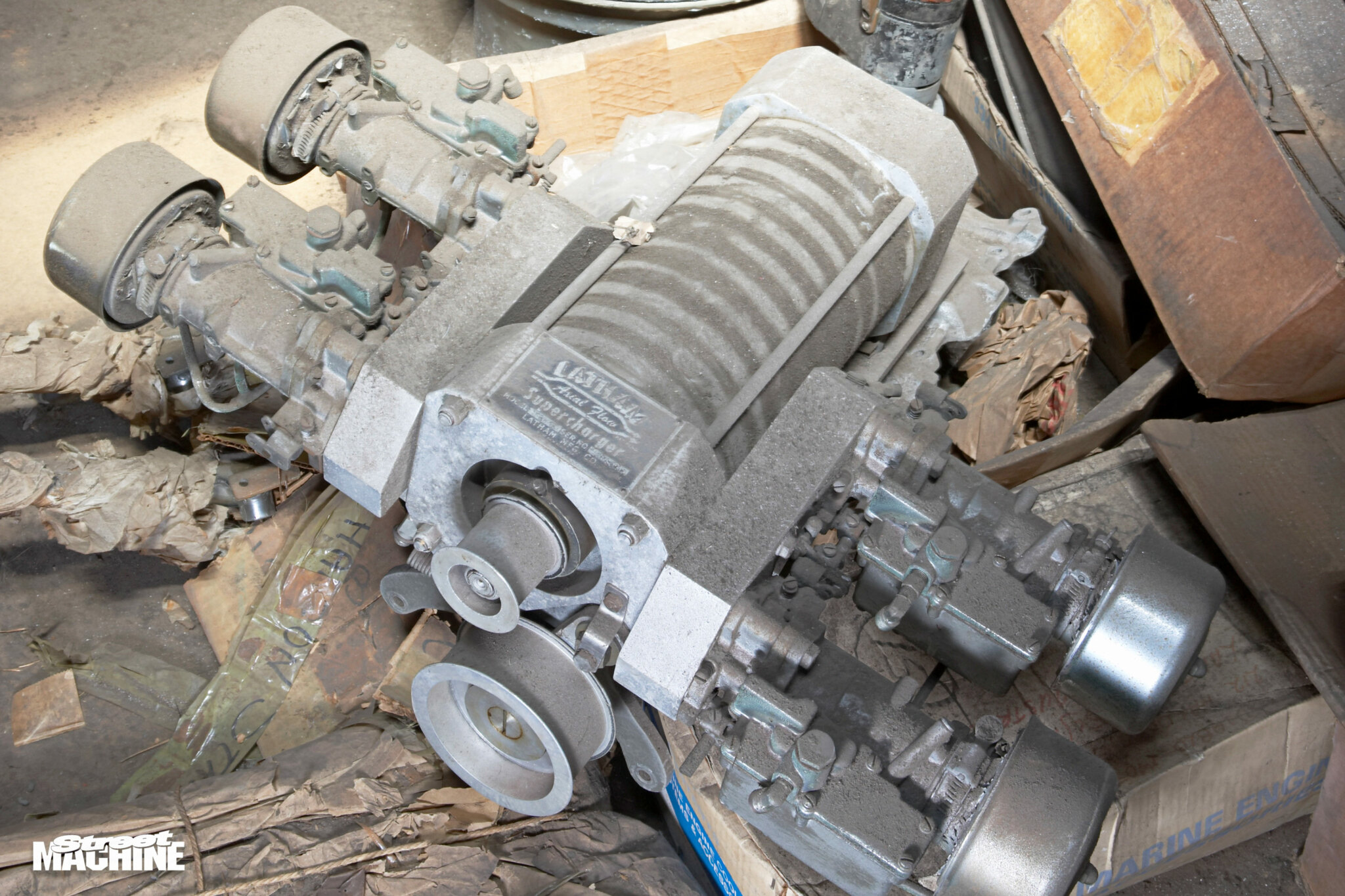
Know someone with a perfectly restored piece of American iron and owe them a big favour? You could square the deal — and then some — by saving up a big wad of cash and hunting down a Latham Axial Flow supercharger to suit their car.

Latham blowers were the brainchild of Norman Latham, who produced them out of West Palm Beach, Florida, between 1956 and 1965. Norman made around 600 exquisitely engineered units in total, covering most Ford, Chrysler and GM V8s made during that time. Not only did they look cool but they performed well too. So much so that GM fitted a number of its concept cars with Latham blowers, including the 1961 Mako Shark Corvette. A small number of Lathams were sold new in Australia by Bill Warner, who had one fitted to his ’63 Impala.

THE ACHILLES’ HEEL
The reason we aren’t all running around with Axial Flow superchargers on our cars these days is that they were crushingly expensive to build and even at $1000 for a complete kit, they weren’t profitable to produce. Their main practical disadvantage was their propensity for throwing off blower belts. Because the blower runs at up to five times the crank speed, getting the blower crank pulleys precisely aligned was critical.

HOW IT WORKS
An Axial Flow supercharger is essentially a turbine fan, similar in design to a jet engine. The blower consists of a cylinder covered in small sheet-metal fan blades, which is spun at high speed inside a cylindrical housing. The housing has its own row of blades — stators — which face in the opposite direction to the rotor blades. Each rotor fan accelerates the air, while the stator fans change its direction, which increases the pressure. This process is repeated along the length of the blower, until the fuel/air mix reaches the back of the housing at high pressure. The term ‘axial flow’ comes from the fact that the charge travels along the axis of the rotor, rather than being spun radially, as happens on a centrifugal supercharger.
Latham set his blowers up draw-through style, using either twin or quad single-barrel Carter side-draught carbs. They were capable of making around 10psi at 4000rpm.

THE UPSIDE
Latham promoted his blower design as having several advantages, the first being that the unit only had one moving part — the rotor turning on two double-row ball bearings. “No part touches or rubs against any other part to make noise or wear out,” said the sales literature. The design was more efficient than a Roots blower, with high levels of volumetric and adiabatic efficiency. Latham blowers took less horsepower to run than most competitors and the company claimed fuel economy increases of up to 12 per cent. They were also light, compact and beautifully made.
LATHAM TODAY
The company lives on under new ownership as Axial Flow Engineering, and currently produces a redesigned ultra-compact version of the Latham blower, with the first kit designed to suit the Mazda RX-8. If you want to get yourself a classic Latham, keep your eye on eBay and as much as US$4000 in your bank account (note, value from 2009).

Comments