
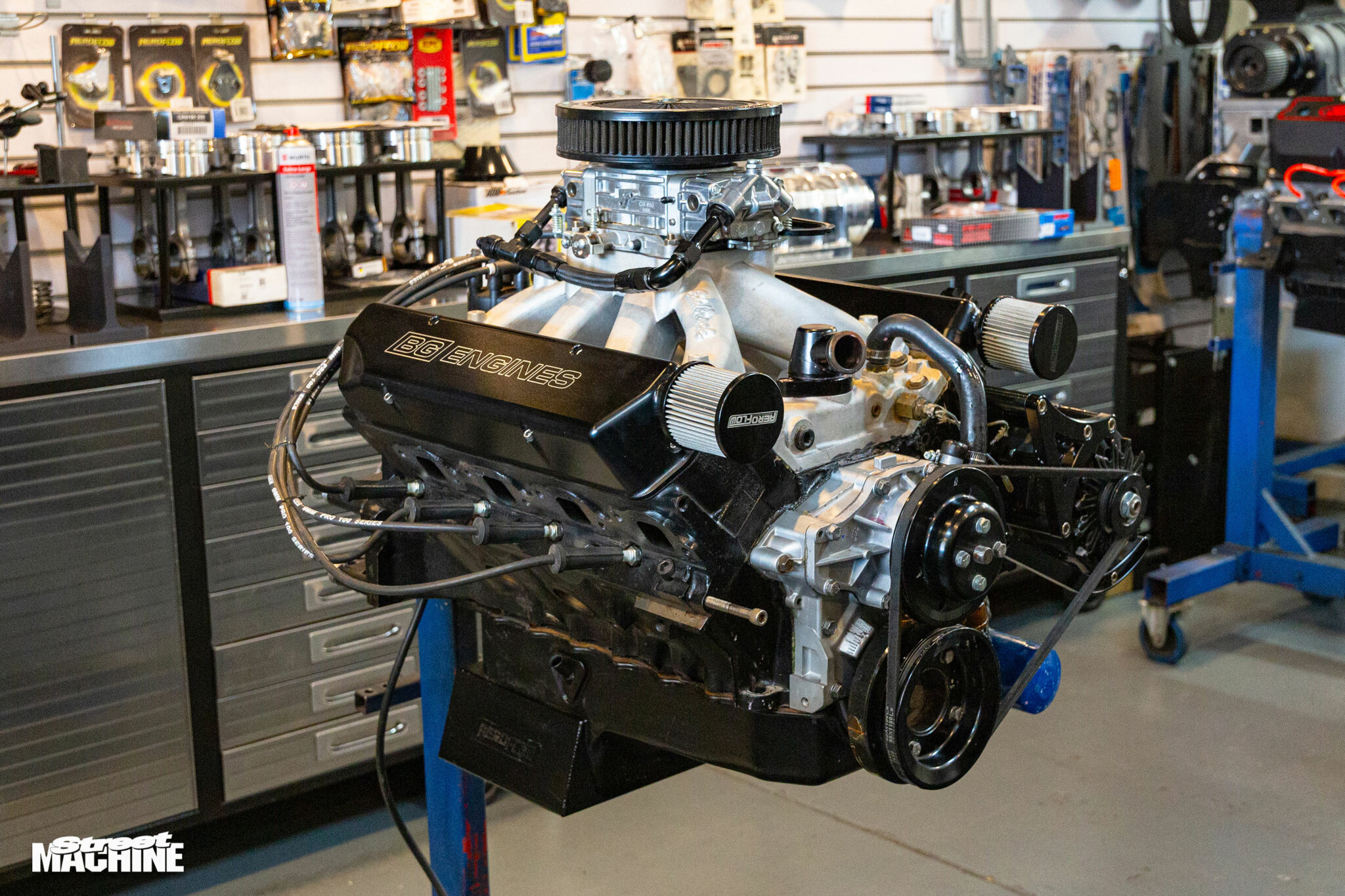
Holden’s venerable Iron Lion V8 has seen a resurgence in popularity since the iconic brand was shuttered in 2020. GM-H fans can now pick up all manner of go-fast equipment for their Holden V8, including aftermarket blocks that swing up to 500ci, a range of early- and VN-pattern alloy cylinder heads, bolt-on blower kits, and more.
First published in the November 2025 issue of Street Machine
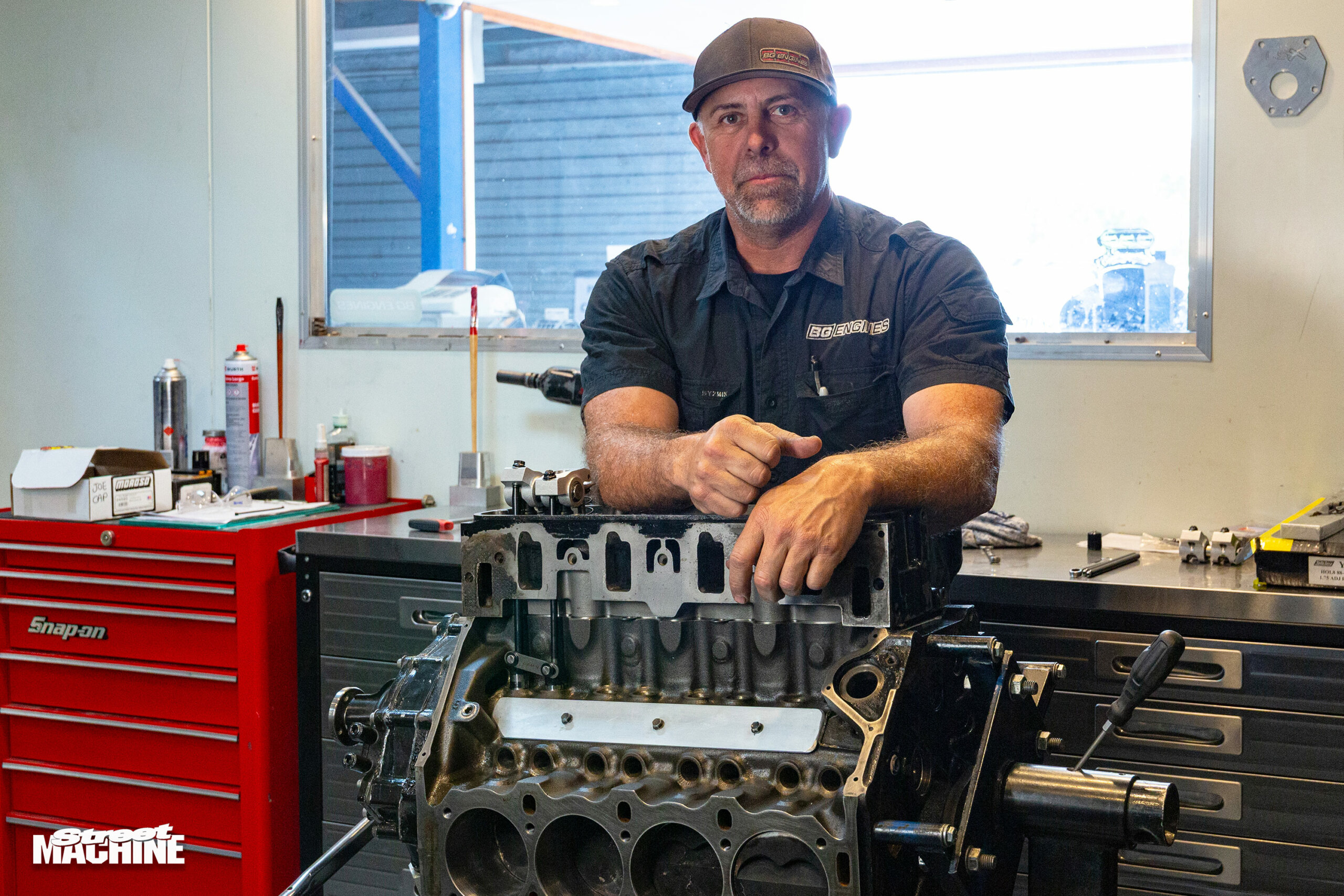
So, it was the perfect time to sit down with Damian Baker from BG Engines to get the good oil on building stout Holden V8s today, from mild to wild. Damo has been putting Holden V8s together for a few decades now, and with a complete machine shop in-house, he’s incredibly well-placed to discuss some of the strengths and weaknesses of the platform.
We focused on aspirated, street-based, pump-fuel combos, at three different levels of intensity.
ENTRY LEVEL
450HP-550HP
Right off the bat, a 500hp Holden V8 won’t be keeping a stock stroke. While that sounds spendy, Damo reckons we’re in a golden era for cost-effective capacity increases for Holden mills, and it’s the easiest way to juice up your street-driven Iron Lion.
“There are heaps of options for cranks, rods and pistons out there,” he says. “Whether it’s 5.0-litre or 355 cubes, there are great options, but 355s are probably the hottest combination to do at the moment. We’ve used Scat, COME, Harrop, and now Precision has the SRP gear that’s great too.”
Damo’s recommendation for a street-spec, 500hp Holden V8 on pump gas consists of a 355ci stroker, worked VN-VS EFI heads, a single-plane manifold, and a hydraulic-roller cam. The combo can easily be set up for either EFI or carb and a variety of ignition, fuel and exhaust systems to suit the car it’s going into, all without breaking the bank.
“You could upgrade it to 550-570hp with more work and a 2.20in valve set-up,” Damo adds. “There’s no custom parts in this one, so I feel it’s the best, most affordable way to build a 500hp street Holden V8.”
While he recognises changing to an EFI-style head will need a new exhaust and intake for pre-VN Holdens, Damo says there are huge benefits to going this way in terms of the power produced and the cost of machining and labour required to set them up. “The VN-VS head is my pick for factory equipment, as it’s the most readily available and makes the best power,” he says. “Early heads are getting really hard to find, and they just have a harder time making power. If a VN head like this one is making 550hp, then with the same work, the earlier head is only going to be around 450hp.”

One area all Holden V8s struggle with is the intake; Damo says none of the ordinary factory intakes work. “The bunch of bananas has got to go,” he laughs. “They’ll flow 450hp-470hp, max. A single-plane, four-barrel manifold is what is needed, and this can work with EFI too. But keeping it under-bonnet is the big challenge. It’s not so hard for Toranas and early Commodores, because they had factory reverse-cowl bonnets, but the guy in the HQ is limited for options, and that limits his power, as you can’t get 650hp naturally aspirated under a flat Kingswood bonnet.”
“The VN-VS head is my pick for factory equipment, as it’s the most readily available and makes the best power,”
The Holden V8’s nickname of ‘plastic’ is a dirty word near Damo, and he’s quick to point out the solution to the platform’s fabled weaknesses. “I think the biggest area to address on a Holden V8 build is oiling,” he says. “The external oil pump on Holdens makes it hard to maintain constant pressure, or even to build pressure on a new build, and this also makes keeping bearings alive a challenge.”
The BG Engines crew typically use a new JP high-volume oil pump on their Holden V8 builds but take the time to open up the internal passages to ensure the oil flows quickly and consistently. “They’re very agricultural when they’re made, so we open up those entry and exit ports,” says Damo. “There is a hole drilled from the left and one drilled from the top, but there’s no radiusing, so I try to correct that as much as possible.”
While BG has done plenty of four-bolt main cap mods over the years, Damo has an alternative. “We primarily use a bolt-in girdle we developed in-house. We’ve gotten just as good results with the girdle, because the cap itself isn’t the weak point – where it bolts to the block is. We also grout-fill the blocks to the Welch plug, as that doesn’t affect the road orientation, and it really ties the bottom end together, like a secondary girdle.”
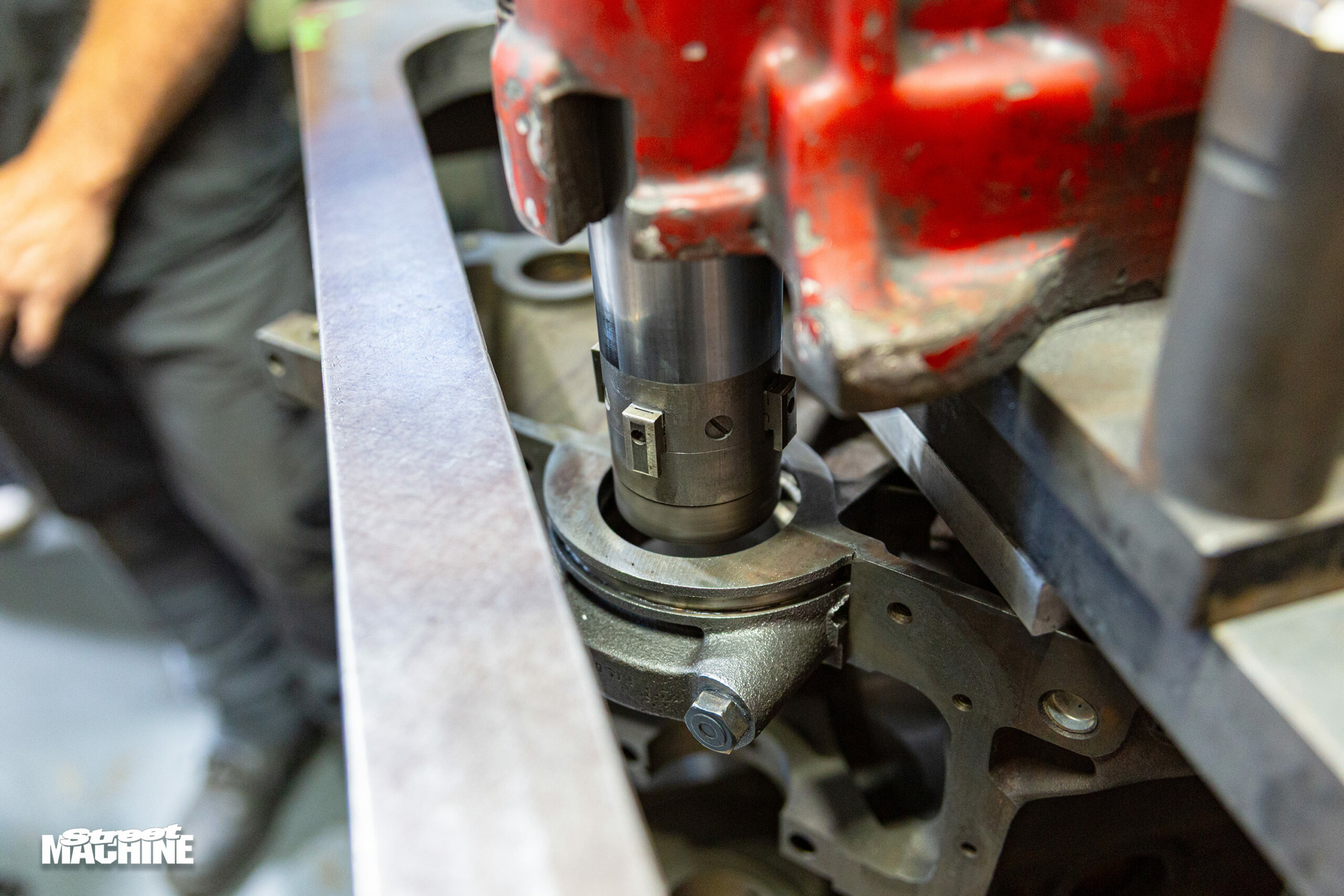
Another big shift in modern times is moving away from flat-tappet cams, as the failure rate of the lifters has been getting up there lately. “We run mostly hydraulic- or solid-roller cams now,” says Damo.
“Hydraulic-rollers are popular today because there’s no risk of wiping a lobe, but the solid-roller is the way to go for guys chasing peak power. We can spin a solid-roller to 7500-7800rpm, but I’d keep an entry-level, 500-horse, hydraulic-roller Holden V8 to 6000rpm. It won’t have to be touched outside basic regular maintenance if you keep the revs there; there’d be no rocker arms to set, or valve lashes to do.”

1. Upgrading from a stock oil pan is another great idea, Damo reckons. “Even on basic engines, we use Aeroflow sumps, or the ASR street-strip pan, which is probably the best oil pan in the Holden market,” he says. “The ASR is Aussie-made, and it’s the one I feel gives us the best results for bearing life.”

2. “I like the Romac balancer with the alloy outer, as I try to go for a bit of lightweight rotating mass,” Damo says. “We use VT Commodore serpentine pulleys, so we get a four- or five-rib belt. Reidspeed in Melbourne also does similar set-ups, and they’re a good option, too.

3. “I like a mechanical water pump, as it puts pressure into the cooling system, and with an iron-headed motor, getting pressure into those water jackets really gets the heat out of the back of the chamber,” says Damo. “We’ve also welded –20 fittings onto factory mechanical pumps to get away from good old hose clamps when we’re on Drag Challenge.”

4. Damo doesn’t mince words when it comes to main cap strength. “You’ll spend triple the amount doing four-bolt mods to a block compared to just fitting a girdle,” he says. “Engines like the Nissan RB use a girdle and a two-bolt cap, and they’re fine.”

5. “I think the bushed lifter is nearly the only way to go with these engines doing street miles,” Damo says. “We use the DLC-coated BAM lifters, and while they’re not cheap, they’re reliable, and I think we’ve done enough drag-and-drive events to prove we know what we’re talking about.”

6. “Holdens run a good rocker ratio, and the off-the-shelf shaft-mount rocker options definitely help these engines sustain high rpm,” Damo says. “The bigger the piston-to-valve clearance, the more punishment the engine cops, as the rocker and lifter go through a stop-start process. I run a very tight lobe angle on cams, so they have bugger-all valve clearance, and using 12thou and 16thou clearances in those areas helps avoid harmonics.”

7. One trick Damo applies to his engines is to ensure the oil gets its best shot at returning quickly to the oil pan. “I put a little dressing in the corners of the block for the oil return to match up to the heads a bit nicer; that’s all we do at this level of around 570hp,” he says.

8. BG Engines tends to use modified JP oil pumps on its Holden builds, but another popular option is to fit a kit that adapts a gerotor-style big-block Mopar oil pump, like this one available through Precision.
TOUGH STREETER
550HP-650HP
By the time you’re cresting 600hp – more power than a factory Holden ever came with – you’re not playing tiddlywinks and will have a very spicy streeter on your hands. At the same time, you’re still a long way off having an all-out race package that would require constant, meticulous maintenance.
“At the start, we sonic-test blocks, especially for the guys who are going to have a bit of a swing with them,” Damo says of his tough streeter-level builds. “We also crack-test them, and then we measure the cylinder bores and lifter bores, to make sure nothing’s torn up on it. Then you’ve really just got to roll with it, man.”
Saving tired blocks is also an option, which is great news for people wanting to retain their pre-pollution, matching-numbers core but still want it to chirp second.
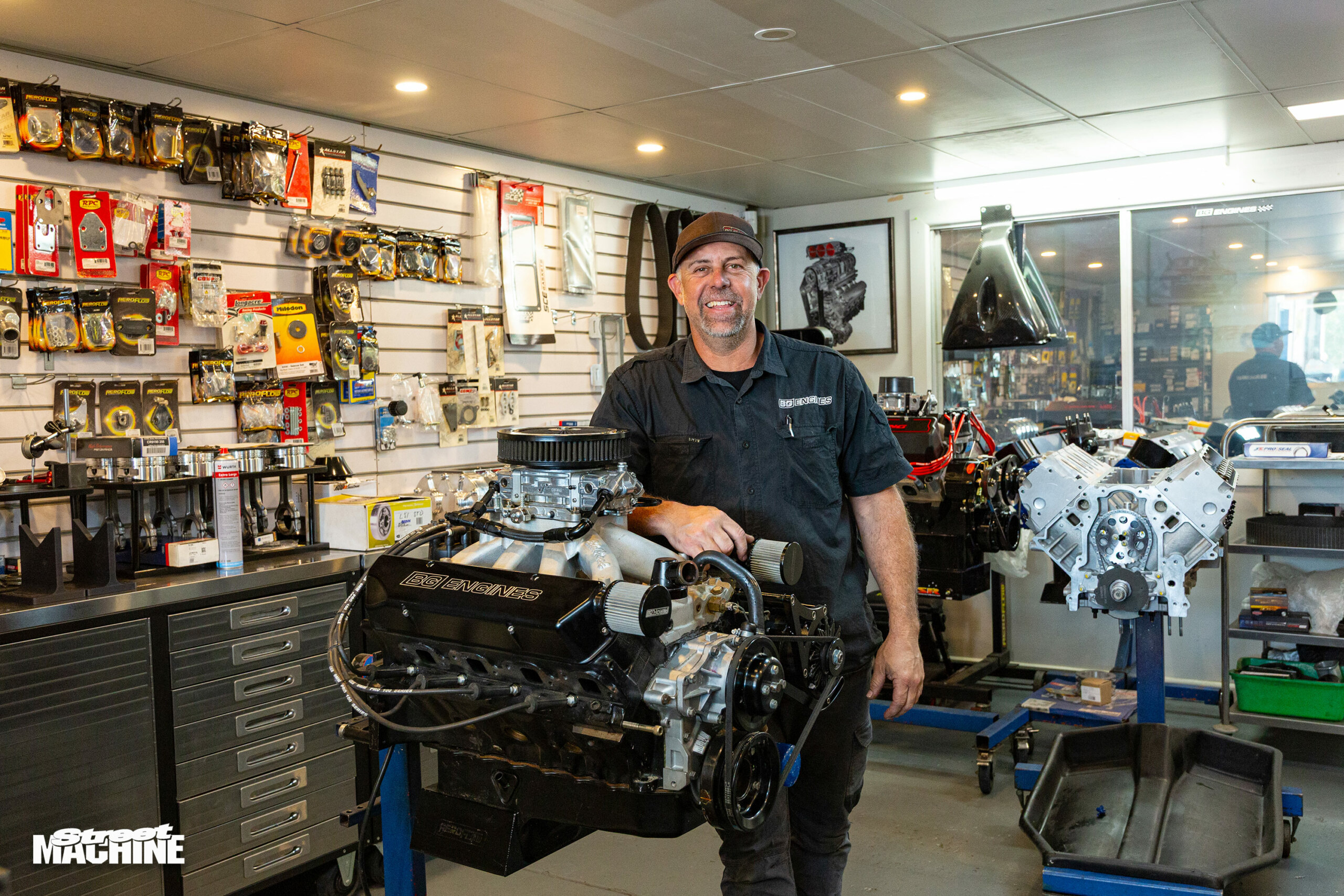
“We have sleeved these engines plenty of times, but I think we still have lots of standard-bore VN-VR and VT-type blocks out there,” Damo says. “We designed a thin-wall sleeve ourselves to bring heavily bored engines back to 20thou so it opens up piston options. So, for the 60thou-bore guys, it doesn’t matter; we can just put in a thin bore-liner and there are still lots of piston and rod options.”
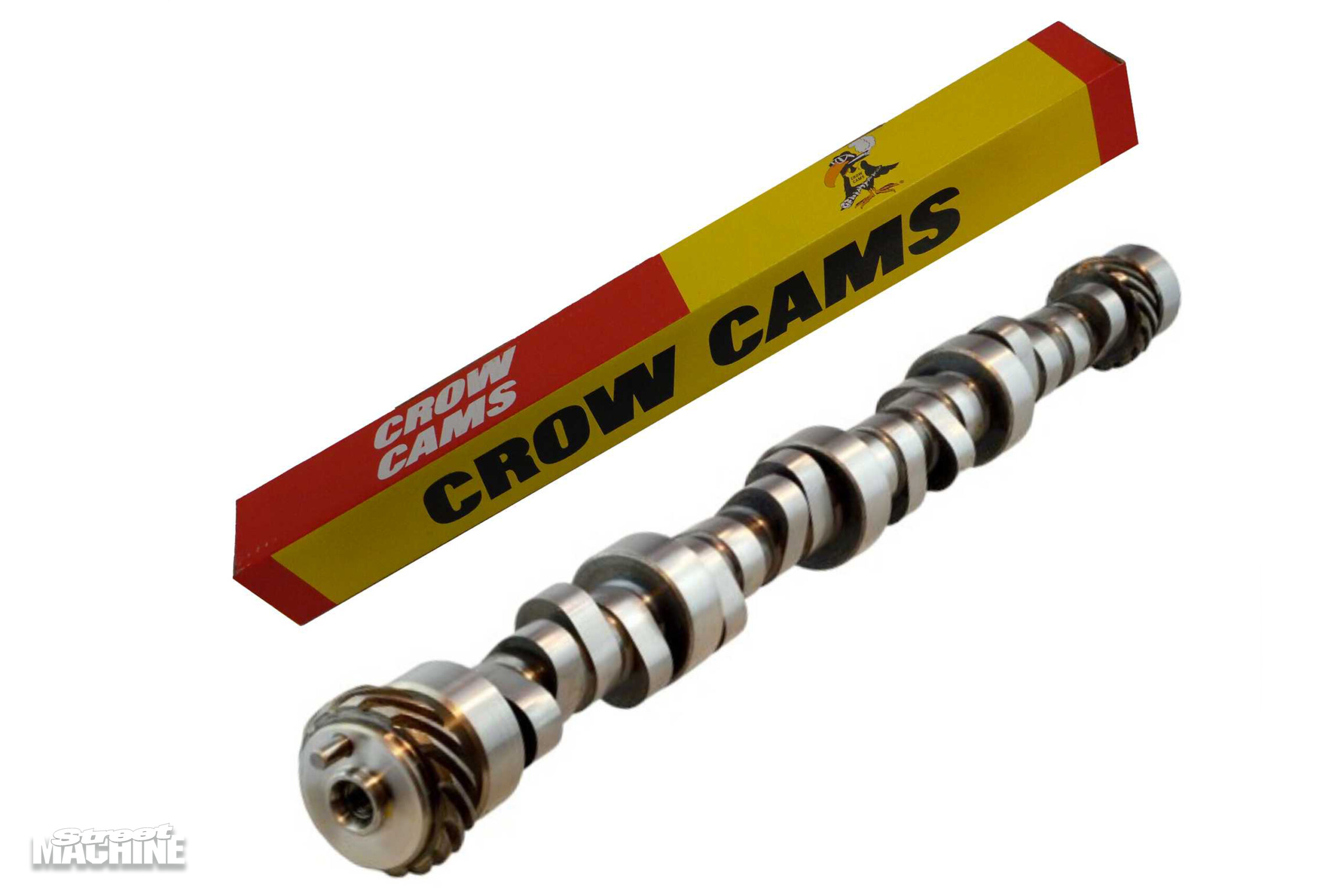
Sitting in the centre of the engine building room at BG is what Damo considers a great example of this style of pump-gas Holden V8, good for around 600 horses. “This is a simple package using an early COME Racing 355ci eight-counterweight steel crank with Wiseco 12:1-compression pistons, Eagle rods, a Crow solid-roller cam, worked iron VN heads, BAM bushed tie-bar lifters, shaft-mount Yella Terra rockers, and an 850cfm carburettor,” he says. “It’s a pump-gas drag-and-drive engine going into my son’s VH Commodore, which has gone 10.7s previously. I’ve got a big annular carb from Ray Edwards in Queensland to test as well, as we’ll run this to around 7500rpm, being a solid-roller engine, but we might go to 8000rpm.”
Damo points to an important modification BG has developed to control oil splash. “One thing I do on all the Holdens build is a block-off plate in the lifter valley,” he says. “You’re trying to get oil to run back through a spinning camshaft and crankshaft, which is hard. Have you ever thrown a tennis ball soaked in water and seen how the water flies off? In an engine, you’re trying to get oil to go on a spinning tennis ball, and it doesn’t want to.”
Despite sticking with Holden cast-iron heads for his son’s engine, Damo more often uses Edelbrock alloy heads, which BG has a CNC program for. While they cost more up front, they save customers in important areas like machining.
“A combo like this should run a solid-roller cam, and that creates issues with pushrod size in a factory head,” he says. “But the advantage of most aftermarket heads, like the Edelbrocks here, is that they’ve got a bigger pushrod bore to start with. They also cater for increased rocker ratios, too.”

1. While this engine retains a conventional face, BG has been O-ringing blocks on nitrous combos. “We’ve done fire-rings to take an MLS head gasket on our nitrous combos lately, and that’s been working well,” Damo says. “Andrew Natoli’s car, which makes 900hp on the bottle, has O-rings and is still using 7/16in head bolts.”

2. “For aftermarket cylinder heads, we’ve got a CNC version, and then there’s the hand-ported version, which is our best power-producing deal,” Damo says. “These Edelbrock CNC-ported units would be for the guy that’s happy to buy new heads and bolt them on. They come with the spring bases done and already have bronze guides, screw-in studs and guide plates, so they’re good out of the box.”

3. “We had nothing for Holden V8s for ages,” laughs Damo. “We didn’t have any aluminium heads to muck around with, so these Edelbrocks are amazing. These heads are probably 40 hours ahead of where you’d be with a factory Holden iron head, right out of the box.”

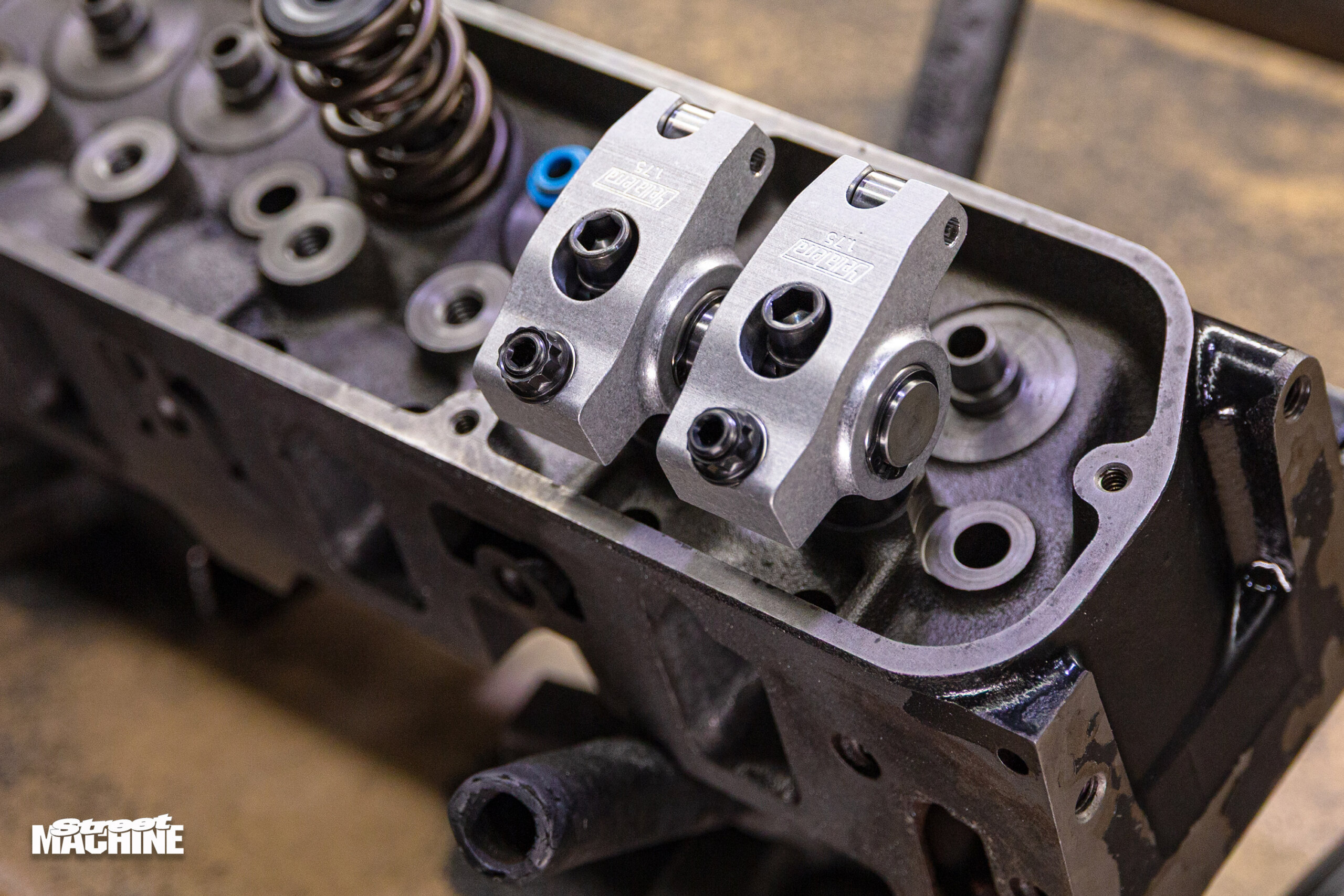
4. “We’re trying to go old-school with this one, with the least number of things you can put on a Holden V8 besides a carburettor and ignition system,” Damo laughs. “Chasing the valvetrain is probably the biggest thing with engines like this, as you do have to move the pushrod holes over so the 3/8in pushrods clear the bores with the 1.75-ratio rockers”4.

5. BG’s bolt-in oil plate keeps all the oil in the bottom end and drains it back either side of the rotating parts. “I believe it’s an advantage,” Damo says. “Look at NASCAR; they have encapsulated cam tunnels and crank tunnels, as they don’t want oil hitting rotating parts.”


6. “Pushrod length is probably one of the biggest issues with these engines, but they don’t really have lots of valvetrain problems,” says Damo. “In a hydraulic-roller engine, 5/16in pushrods are okay, but solid-rollers definitely have to run a bigger-wall pushrod, and you’ve got to modify the head to accept them, because the Holden heads are only aimed at small-lift production car parts.”
MAX EFFORT 650HP+
Drag Challenge alumnus Andrew Natoli has shown just how tough a BG-built Holden V8 can go, and if you’re after a carb-fed, high-rpm, solid-roller big-inch Holden like that, there’s no secret sauce, according to Damo.
“We’ve made nearly 700hp aspirated on 109-octane race fuel in a 385ci combo for Andrew,” says Damo. “Later, the same port design in a nitrous engine made 925hp. These heads still suit a Harrop or Edelbrock intake manifold, so you don’t need to go into exotic stuff, and that makes it so much more achievable
for customers.”

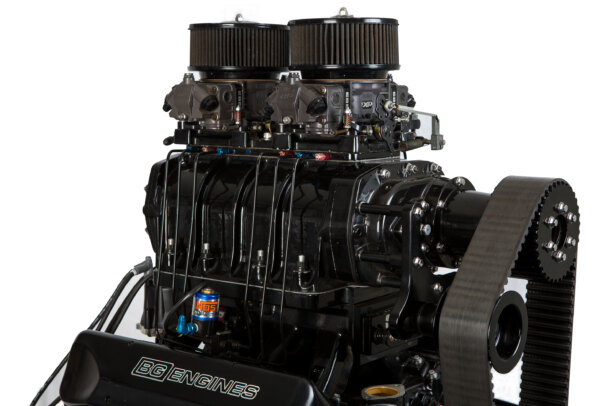
Brenden ‘Bubba’ Medlyn has taken the Holden V8 way off the reservation. His twin-turbo VH Commodore shut down all the LS- and big-block Chev-powered cars when it set a new Horsepower Heroes record of 2483rwhp at Street Machine Summernats 32. The Glenn Wells-built, 398ci Torque-Power Little Paw combo showed just how hard the Holden platform could party, but Damo cautions those who want to follow in Bubba’s footsteps.
“We don’t touch aftermarket blocks until a customer wants to run a lot of boost,” he says. “Once you start making a lot of boost or putting a lot of nitrous in them, the only option is aftermarket blocks and heads, because you need more head bolts, or bigger head bolts. That means you’re going with a Torque-Power block or Bullet’s billet option, and you’re deep into a custom build with huge expense and big timelines.
“I love the Holden V8, but by this stage you have to question whether you’re still using a Holden engine, as so much is changed inside them,” he continues. “The cost to build them is extreme, and I’d argue there are better platforms to use that will make the power easier for less money, take less time, and have fewer drawbacks.”
Comments