
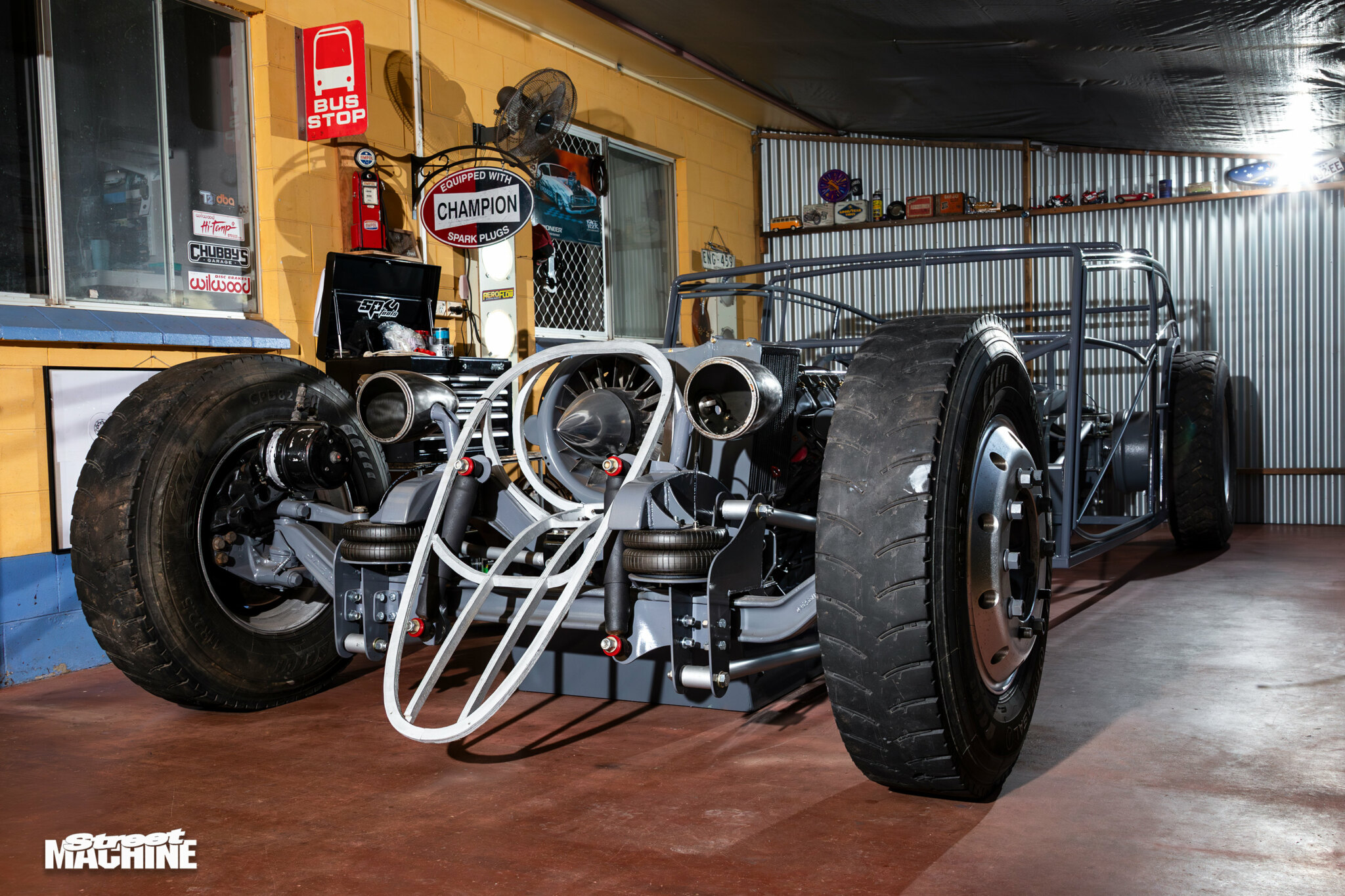
Hidden in the Tablelands region of Far North Queensland, not far from Springmount Raceway, backyard builder Ronald ‘Tewesy’ Tewes is fabricating a machine that really can only be identified by the name he has given it: the Deutzenbarge.
First published in the September 2025 issue of Street Machine

If the shape of the Deutzenbarge is one you can’t quite place, we’ll save you the brain-ache of trying to figure it out, as you won’t have seen it before. You see, despite its decidedly 1930s appearance, the Deutzenbarge is not a make or model of anything. Tewesy is building the chassis and body structure out of raw materials to create his vision of something wild and different. And it’ll be encasing an air-cooled, 19.1-litre Deutz V12 diesel engine that puts out 1000Nm (737lb-ft) of torque!
One might expect such a creation to be built by a big workshop, or an esteemed mad scientist like Ron Hadfield, but Tewesy is just a bloke with a wild idea, chipping away at it in his carport.

That’s not to say he doesn’t have form. Although he’s worked primarily as an aircraft maintenance engineer, Tewesy is a jack of all trades and has some great projects in his back catalogue. He just likes piecing together cool stuff and challenging himself, and as he explains, cramming a V12 into an existing chassis just isn’t how he likes to do things – so he created his own.

We paid Tewesy a visit on our way to Northern Nats 9 to have a chat about the Deutzenbarge, diesel V12s, all things engineering, and his mind-boggling collection of Lego kits.

How did you come across such an unusual engine?
I wanted to do something a bit different, and I was looking around for a Rolls-Royce Merlin or something like that, but budget was always a thing. Then one night, I was just sitting on Facebook Marketplace and this came up. It was only 15km away and the price was right. I knew the fella I was buying it off, and he didn’t have much history on it, but as far as he knew, it was a running engine. So, I went and picked it up the next day.
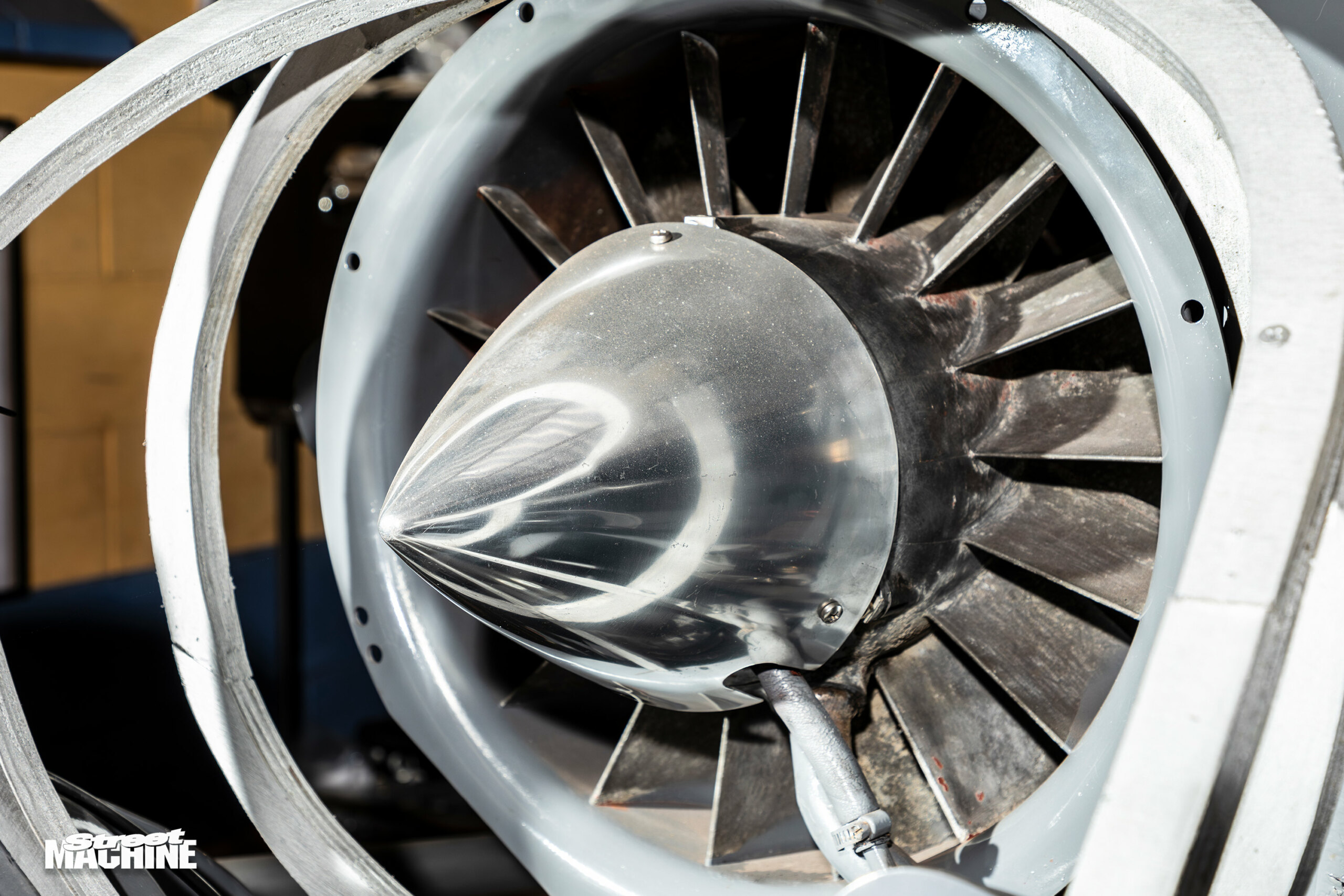
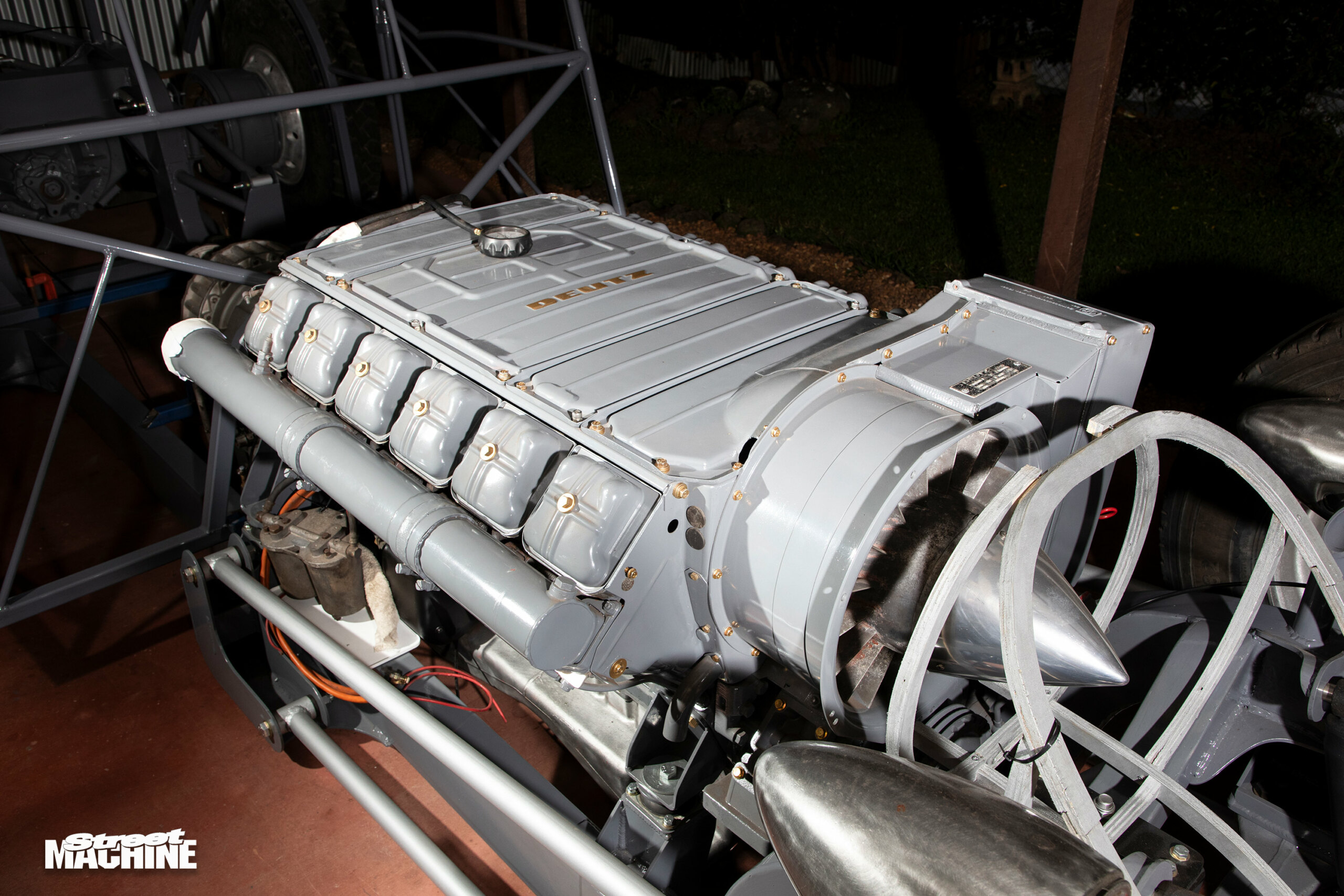
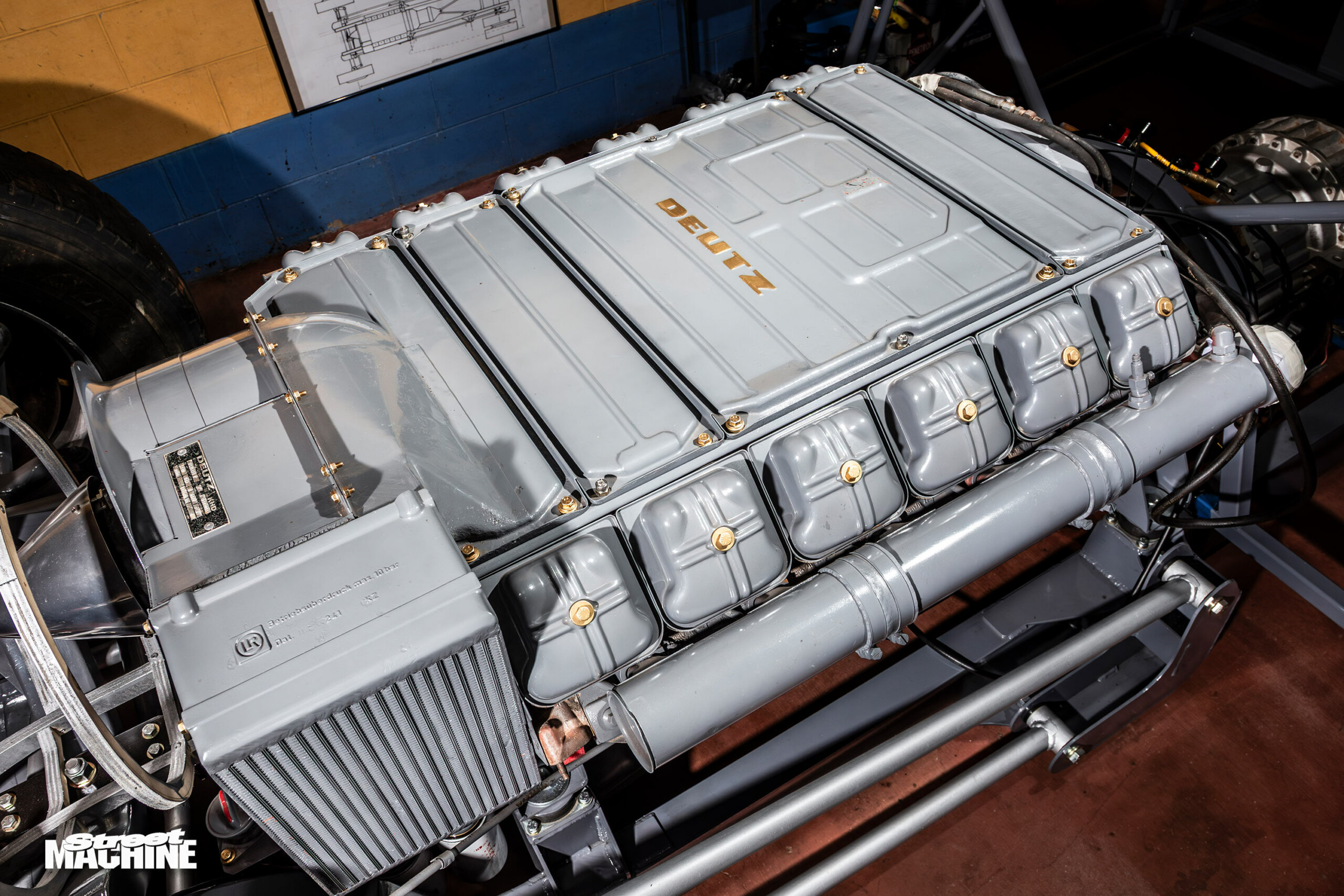
Do you know much about these Deutz engines? Surely it’s not an old WW2 mill?
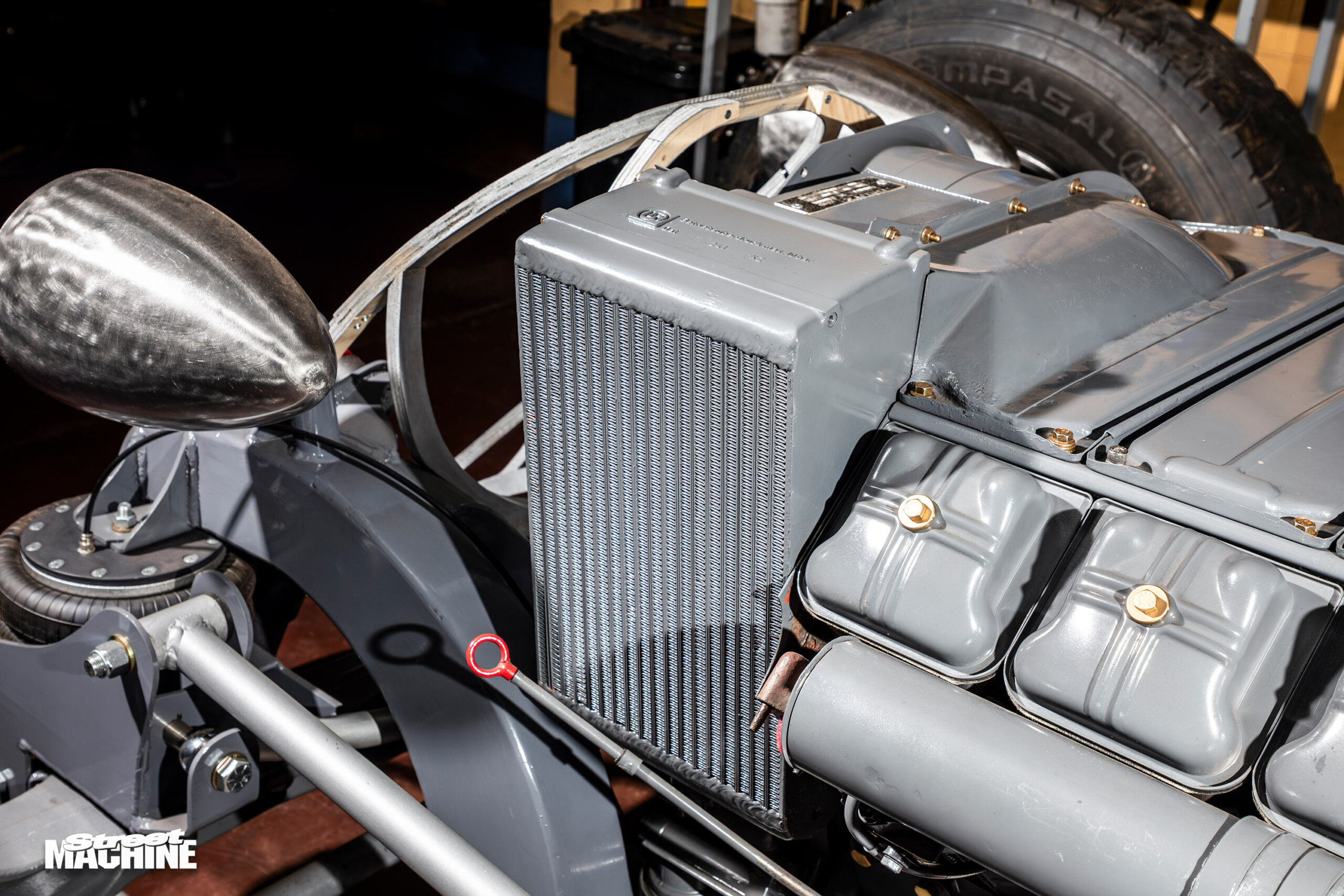
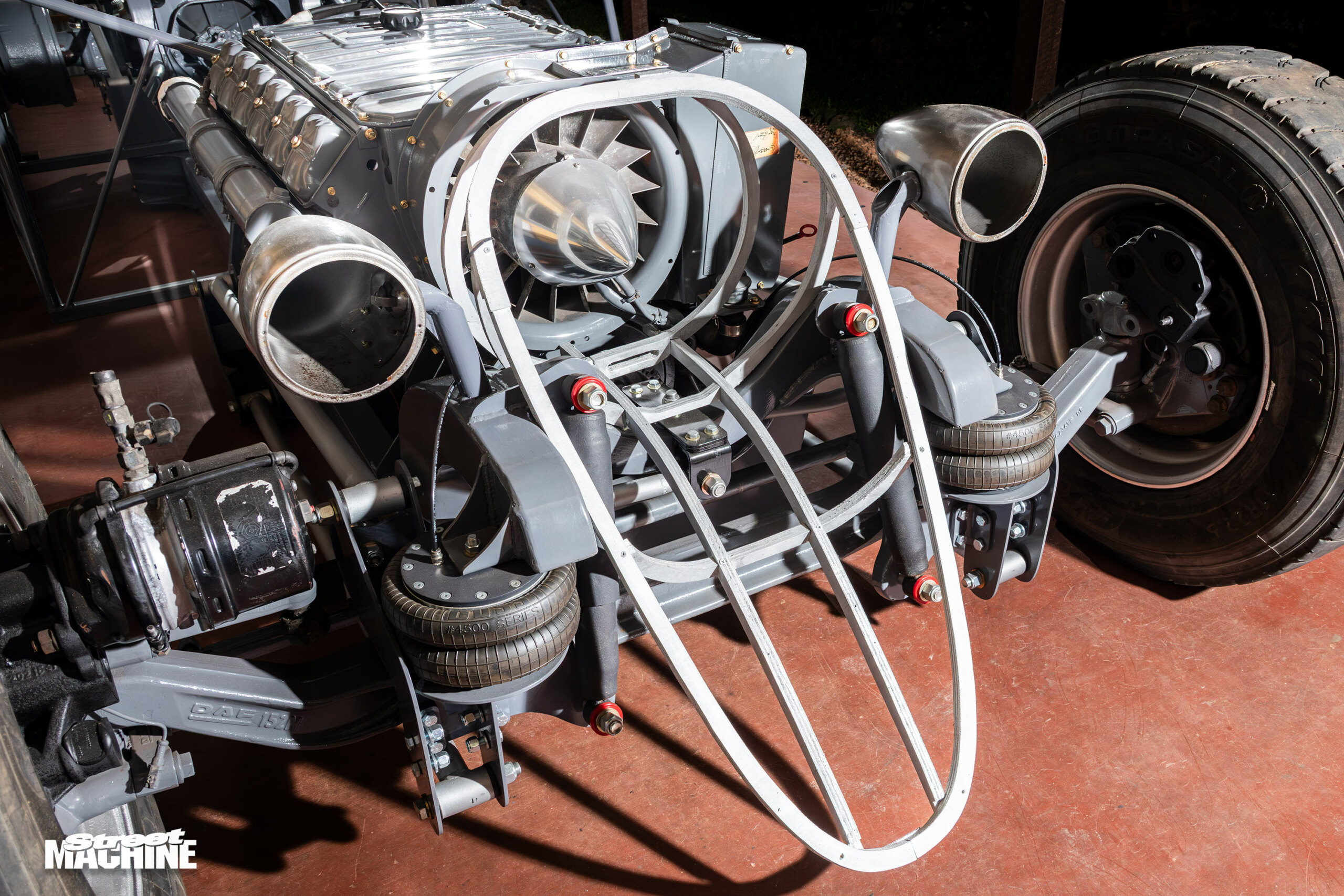
It’s originally an industrial air compressor motor, and normally it’d have a big supercharger bolted onto it. Everyone thinks it’s an aircraft engine, especially because I put the spinner on the front of it, which does the air cooling by sucking the air through the front and pushing it across all the cylinders. An aircraft engine would’ve been cool, but they’re rare as hell, and even if I found one, the budget probably wouldn’t have allowed for it.


Did it look as neat as this when you first got it?
Not at all. I’ve wire-brushed it and painted it in some basic stuff. It looks to either have had the top end redone at some point or be a very low-hours or even standby engine. It was pretty crusty when I got it, and when I took the covers off, there was a family of nine baby mice living in the valley! I’ve had it running for around 30 minutes at a time. The biggest thing is trying not to upset the neighbours, because it’s like an earthquake when it’s going!

Tell us a bit about the chassis – it looks plenty beefy.
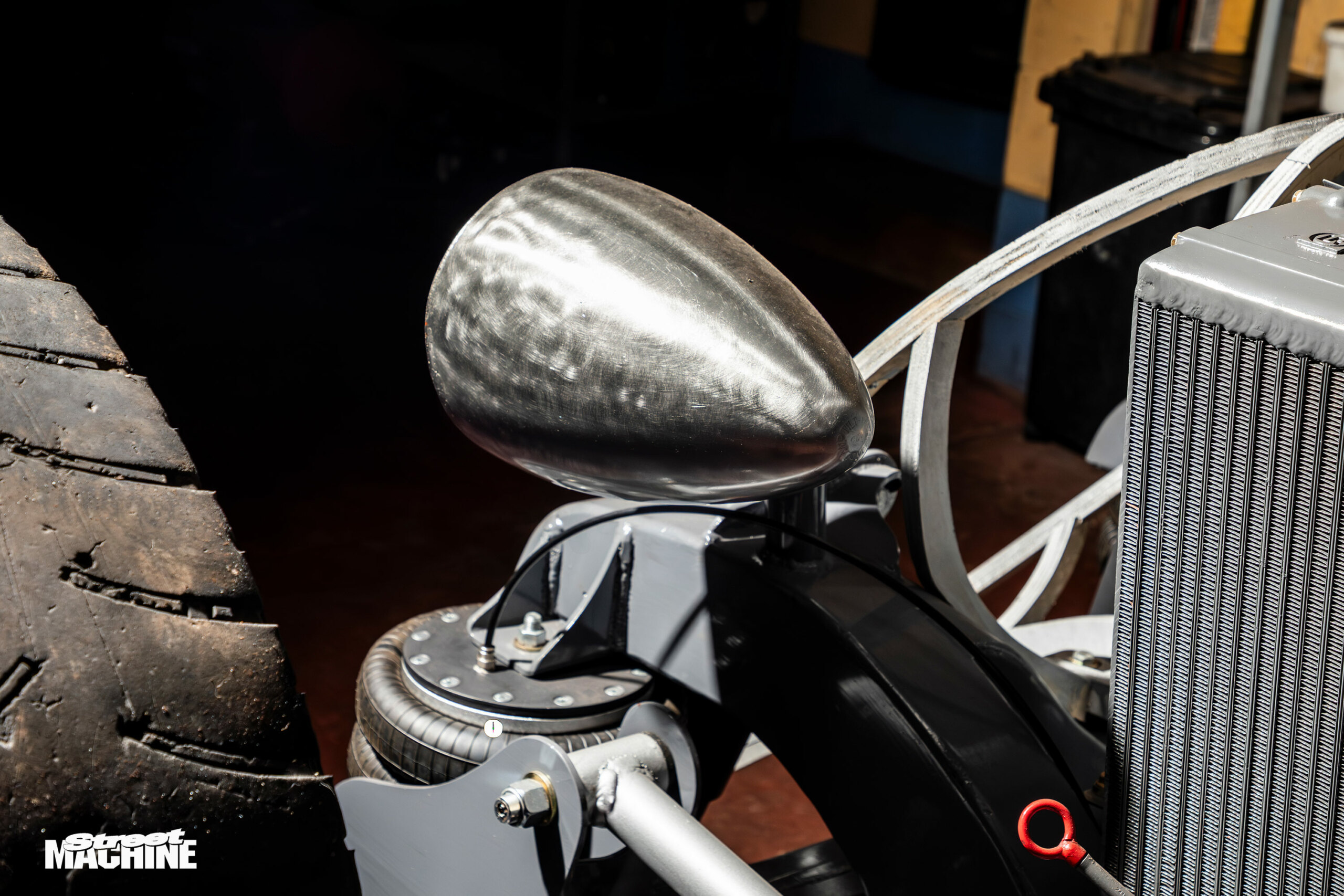
Most of it is done on the fly, and I do it based on experience and general engineering knowledge. The chassis is made of 180x75mm parallel-flange channel, so they’ve got about a 7mm-thick wall. The channel is a lot more accessible to build with over normal RHS, and it’s stuff used for buildings, so it’s plenty strong enough for a car like this. I wanted it to be a proper-scale hot rod; not mismatched. I wanted it to be low just like how it looks in the sketches, which is why it has the airbags.


What about the driveline and axles?
The engine itself weighs 1100kg, so the front axle is 7.5 tonne-rated and from a DAF tipper truck. Behind the engine is an Allison HT 750 five-speed gearbox, which adds another 600kg, which is out of a Mack truck that had a seized engine. The diff is from a Hino tipper truck, and that’s rated at 13.5 tonnes. It’s all well and truly overkill for this, that’s for sure, but when people question if what I’ve built can handle the weight or torque of the engine, I’m pretty happy with how all of those numbers stack up for what I’m planning to do with it.


And just what is the plan? We assume getting something like this road-legal would be a fair task.
Look, it’s unlikely it’ll make it to the road. It’s not impossible, and I have built it to a standard where I believe it should be safe enough. But it’s far more likely it’ll just get used at events like Northern Nats; I haven’t built it to any specific set of road rules. It’ll be a cruiser; I haven’t built it for drag racing or anything like that.
We can see the basic frame right now; what do you have in mind for the body panels?
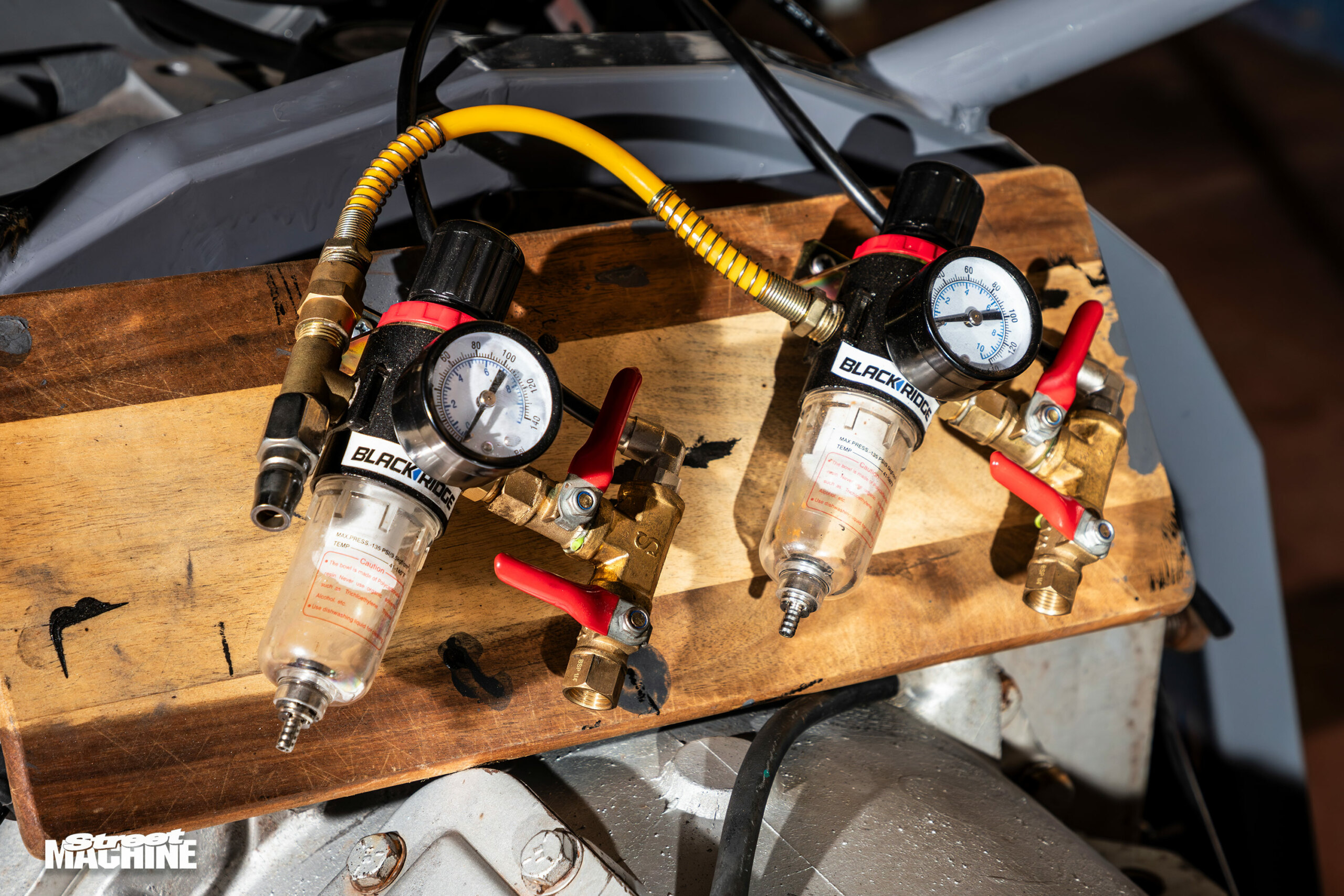
The body will all just stay natural aluminium. I’ll probably do all the windows out of Perspex, with rivets and so on, so it’ll look a bit like an aircraft in that way. I might do a few decals like the bomber planes had, with some big headers out the side that’ll then run to an exhaust under the floor. I want it to be as simple as I can, so no electronics beyond the starter motor, headlight stuff and airbag controls. I’m probably going to make it so the body splits straight down the middle to make it super-simple to work on it once it’s all together.
Tell us a bit about your background with cars and car building.
I just love fabricating stuff. I love it more than driving the cars – I’d rather build them. The last car I had was a ’55 Chevy Bel Air, and it was schmick-as, but I got sick of babying it and polishing it, and I was always worried about people running into me, so I sold that to build another hot rod. I had a Statesman with an LS in it for a bit, but I just wasn’t feeling it. I wanted to build something more exciting – something that would utilise all my skills. I started fiddling at around age 11 with Dad’s welder, using all his gas in the shed, just welding, burning and destroying stuff as much as I could. I used to restore cars, and did a lot of manufacturing of pumps and generators when I was in Mount Isa many years ago. I did a trade in aircraft engineering maintenance, but everything else is basically self-taught – no fancy uni degrees here!
Have you drawn inspiration from anywhere when conceptualising such an unusual build?
Not really. I try not to take too much inspiration from people; I’d rather come up with my own thing. This was all my vision. I didn’t want it to be a bitser; I wanted it all to fit nice and be purpose-built for this car. Everything I’ve done has all been done here with basic tooling, and in my opinion, any person in their shed can do the same if they apply themselves.
What’s still on the to-do list to get the Deutzenbarge finished?
There’s obviously still a fair bit to do, but I’ve only been working on it for around 12 months to get to this point, so it’ll come a bit down to money to get it done. I need to make a body, sort the bench seats for the interior, and so on. I have to give thanks to everyone who has supported the build so far, whether it be with parts, metal, support or just watching the videos on my Engineering by Ronald “Tewesy” YouTube channel. She’ll be done sooner than you’d think!
BRICKING IT

When he isn’t bending metal to satisfy his engineering brain, Tewesy builds custom Lego sets, either for individual clients or to sell to big companies for mass production. “People say Lego is just for kids, but it’s an incredibly valuable tool for engineering, and I love problem-solving,” he says.

Tewesy’s pictured here (above) with a working, rotating Lego version of the Deutz V12, and has a stack of functional Lego engines on display in his office that have been sold all over the world as kits.


Comments