
As the world’s premier automotive aftermarket industry event, the annual Specialty Equipment Market Association (SEMA) Show in Las Vegas always delivers a plethora of wild builds, along with innovation in spades. But the 2025 event felt different. You could sense a real shift in how the industry is approaching design, technology, and craftsmanship – particularly in the higher-end builds.

The tools, the talent, and the thinking behind today’s best custom creations are transforming what’s possible and redefining what ‘custom’ even means. Here’s what the 2025 SEMA Show signalled about the future of car design, innovation and the industry as a whole.

GLOBAL ELITE
SEMA 2025 proved that the best builders in the world are now operating at or even above OEM-level concept car standard. Ringbrothers’ latest build, a 1971 Aston Martin DBS dubbed ‘Octavia’ (SM, Nov ’25), stands as the perfect example – a car that could hold its own against something like Holden’s Efijy concept in both imagination and execution.
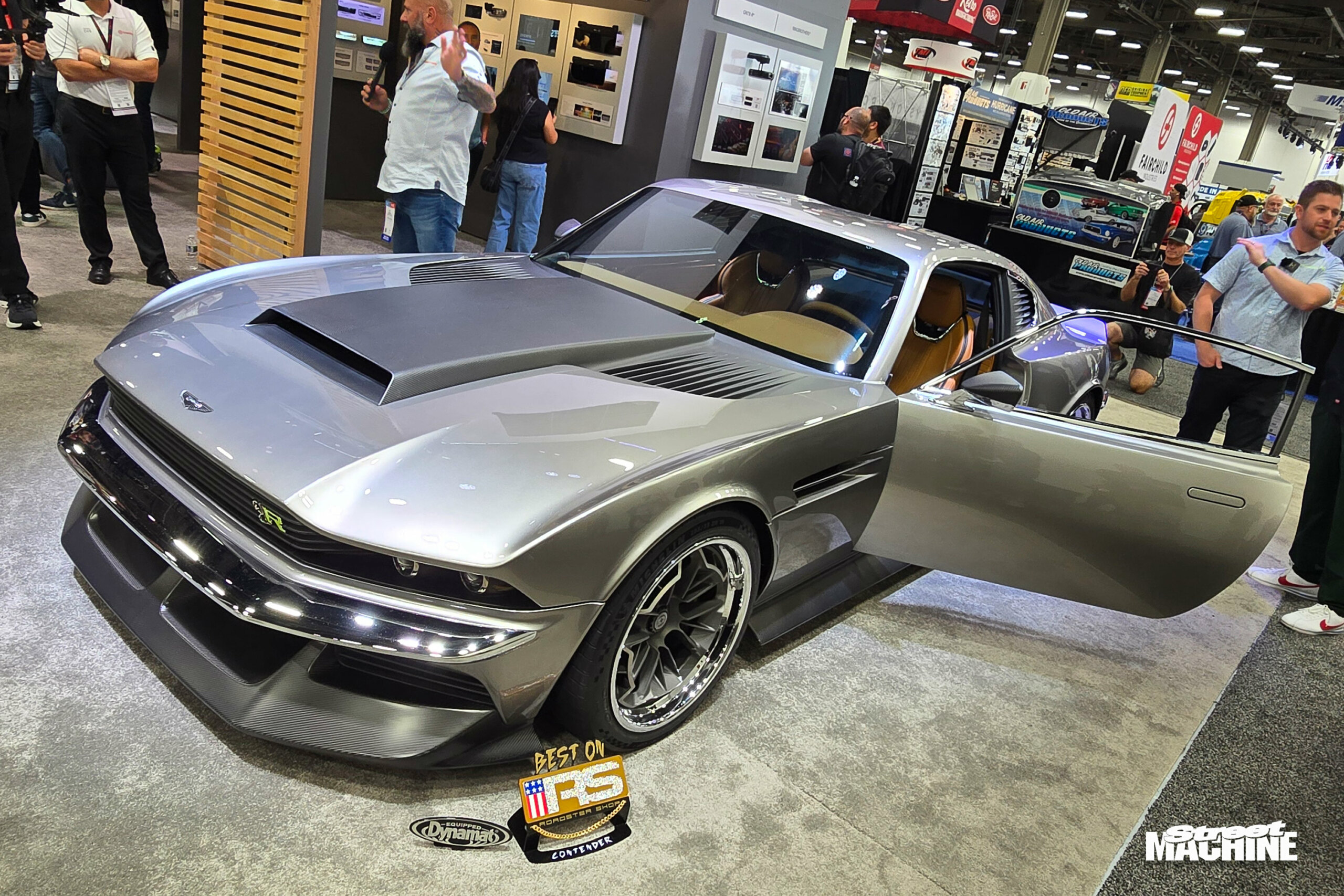
Ringbrothers and similar workshops are no longer just custom garages; they’re boutique micro-manufacturers with access to design tools that once belonged only to major auto makers, from digital scanning and 3D modelling to CNC machining and additive manufacturing. It’s no exaggeration to say the world’s best custom shops are now matching the processes used by global OEM design studios.


The exciting part is that this tech isn’t staying exclusive for long. As 3D scanning and CAD software continue to drop in price, it’s becoming more accessible than ever. In the next few years – or even right now in some cases – this same tech will be available to anyone with the passion to learn it. That means more creative builds, better fit and finish, and more people turning their big ideas into reality.
THREE-DIMENSIONAL CHESS
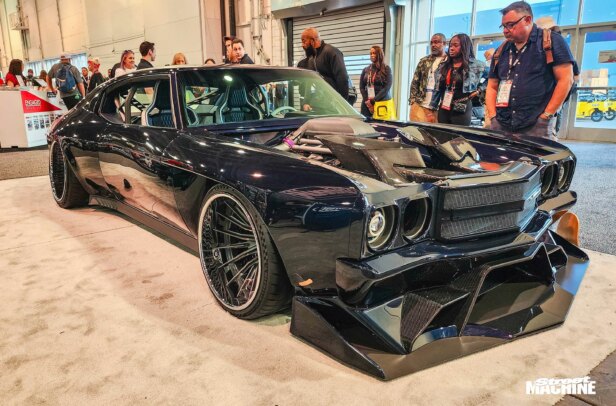
If there’s one technology that is shaping the next decade, it’s 3D design and printing. Everywhere you looked at SEMA ’25, there were components – spoilers, grilles, lighting, interior hardware and even full panels – designed and fabricated using CAD tools.
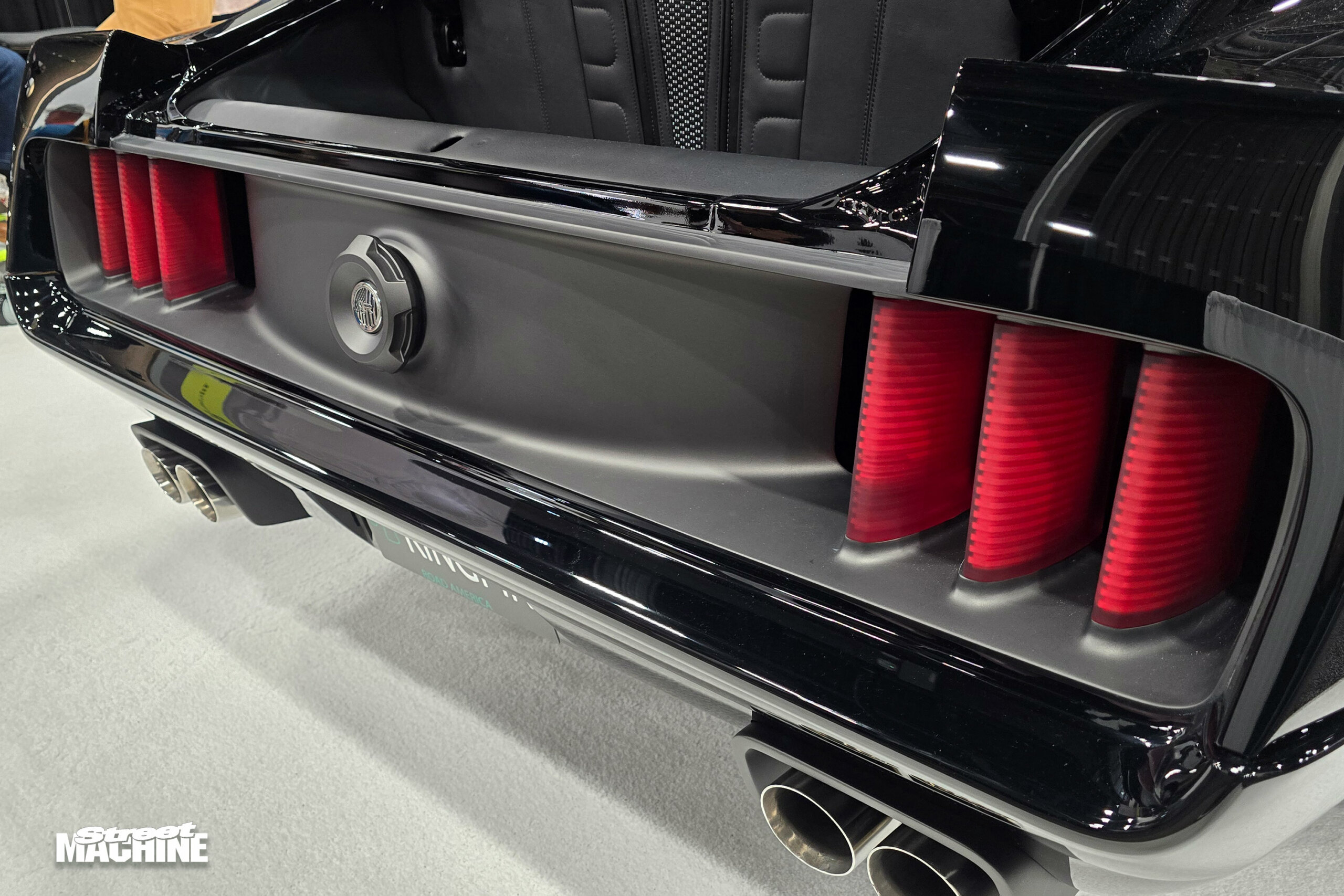
This technology is making ideas that once lived only in sketches now able to be realised with millimetre precision. It’s allowing builders to think like designers and designers to build like fabricators.
Of course, the technology is only as good as the designer behind it. Some cars nailed the integration of 3D-printed parts, with every line, vent and surface working together, while others had parts that seemed to have been 3D fabricated simply because they could be.


The best builds at SEMA ’25 used 3D design as an invisible backbone rather than a gimmick, with every element – whether digital or hand- formed – combining to form a cohesive whole.
CABIN FEVER
Across the show, it was patently obvious that the standard of interiors had jumped to another level. It wasn’t just the cockpits of a few high-profile cars, either – the quality and creativity on show was apparent across the board.
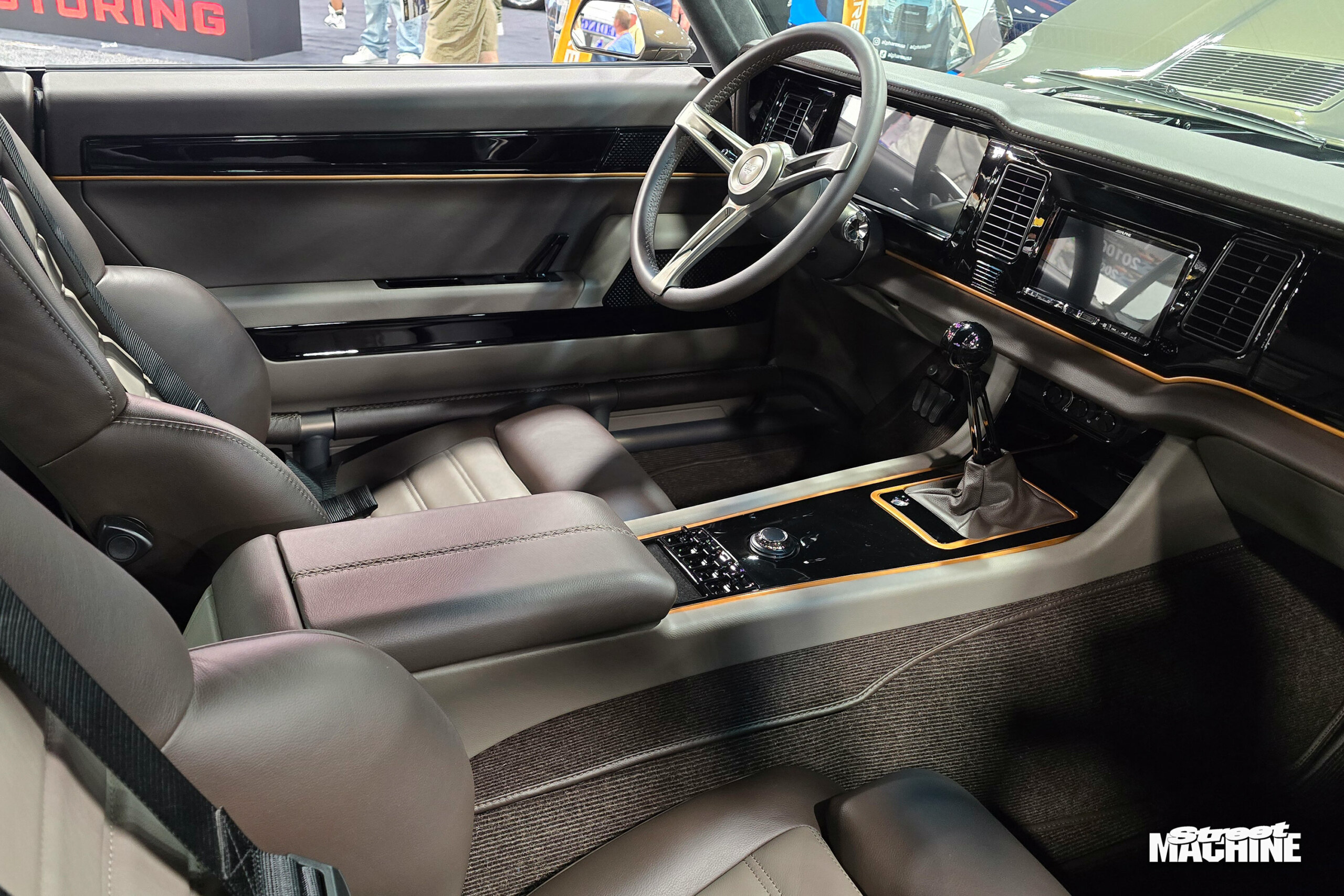
Gone are the days of off-the-shelf seats and retrimmed factory dashboards. Builders are now designing complete interiors from scratch – scanning original cabins, reworking them digitally, and machining or printing new components to match.
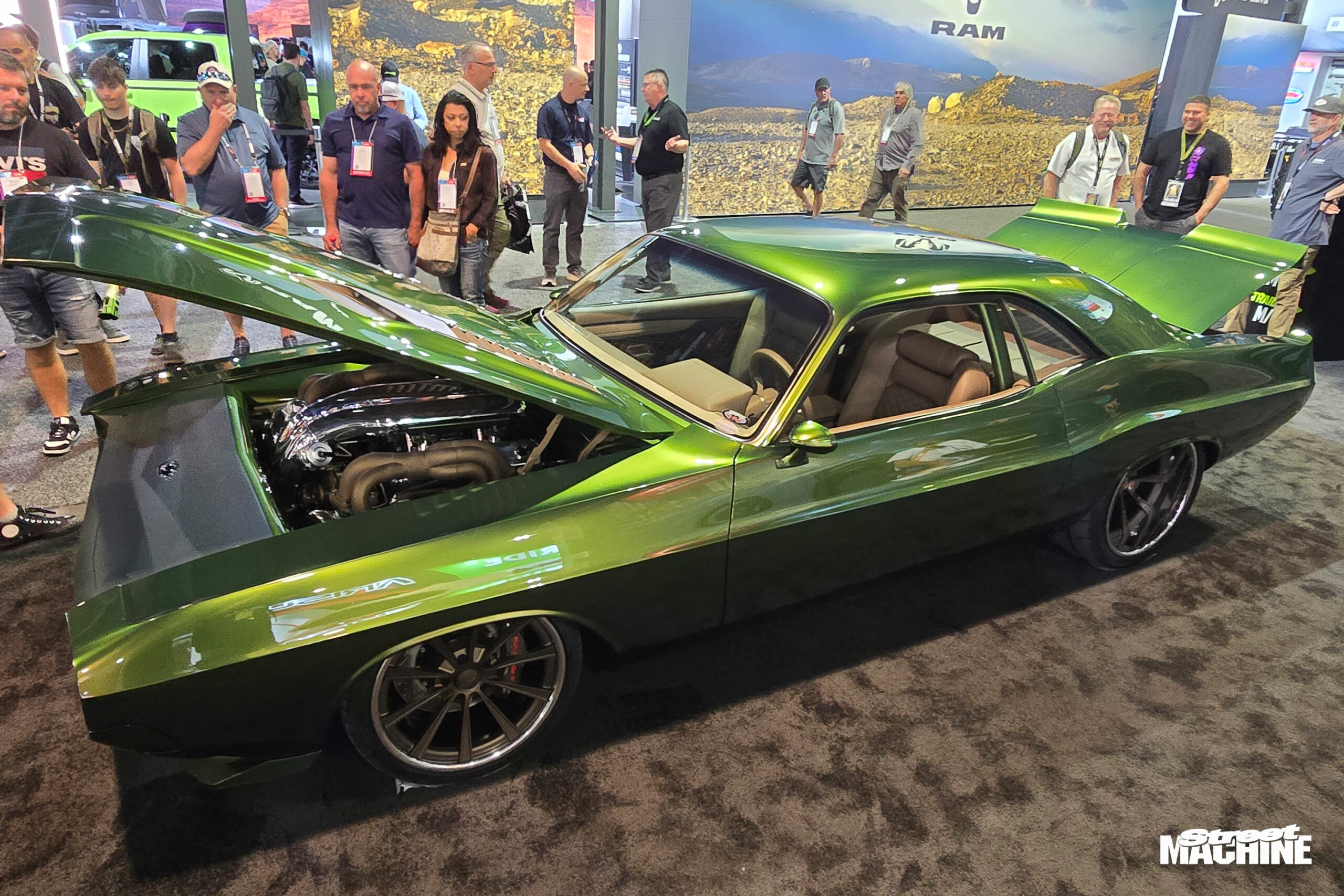
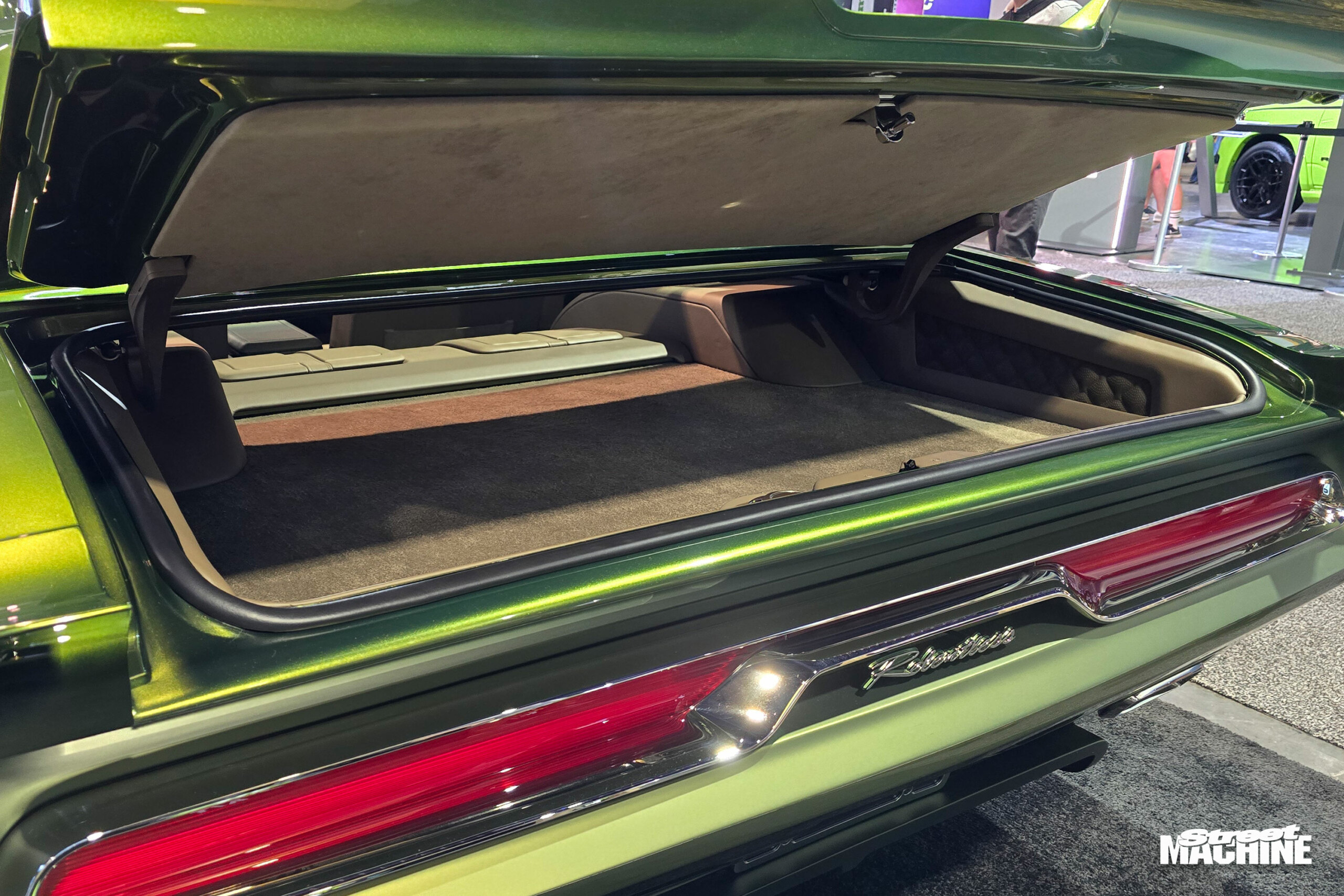
It’s resulted in a wave of interiors that look like they’ve rolled straight out of an OEM design studio, while each being unique. At SEMA 2025, it was clear that smooth, flowing consoles, precision-milled switchgear, integrated lighting and CNC-sculpted door cards had become the new normal. Digital screens and dash clusters no longer look like afterthoughts – they now appear as if they were part of the car from day one.

FLYING COLOURS
When it came to colours, the 2025 SEMA Show didn’t deliver one standout trend, and that’s exactly what made it interesting. Subdued metallics and pastels still had a strong presence, but there were more gloss blacks, solid bright colours and a surprising number of clean, understated finishes. Satin colour-matched or black engine bays were still very much the go-to trend, though.
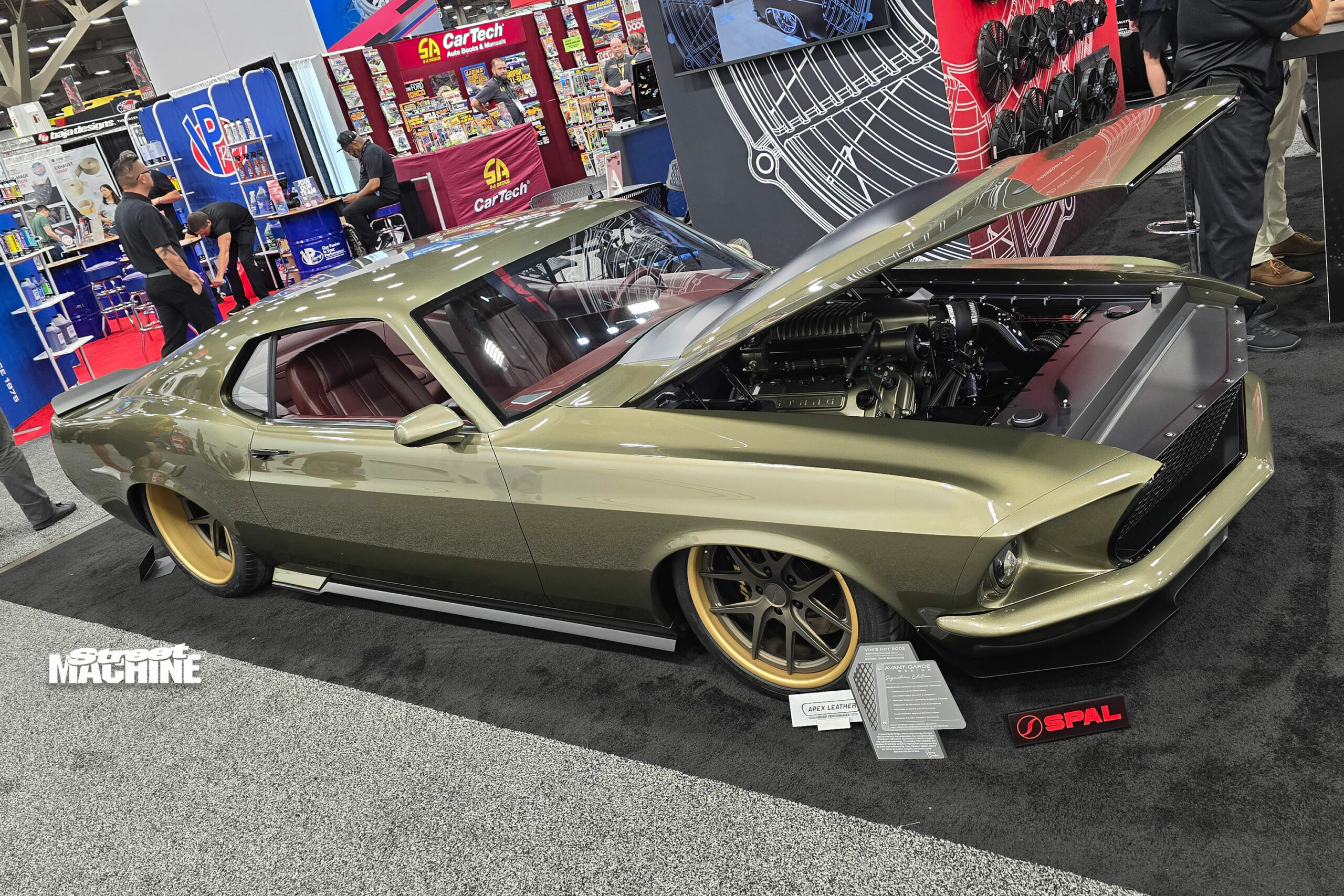
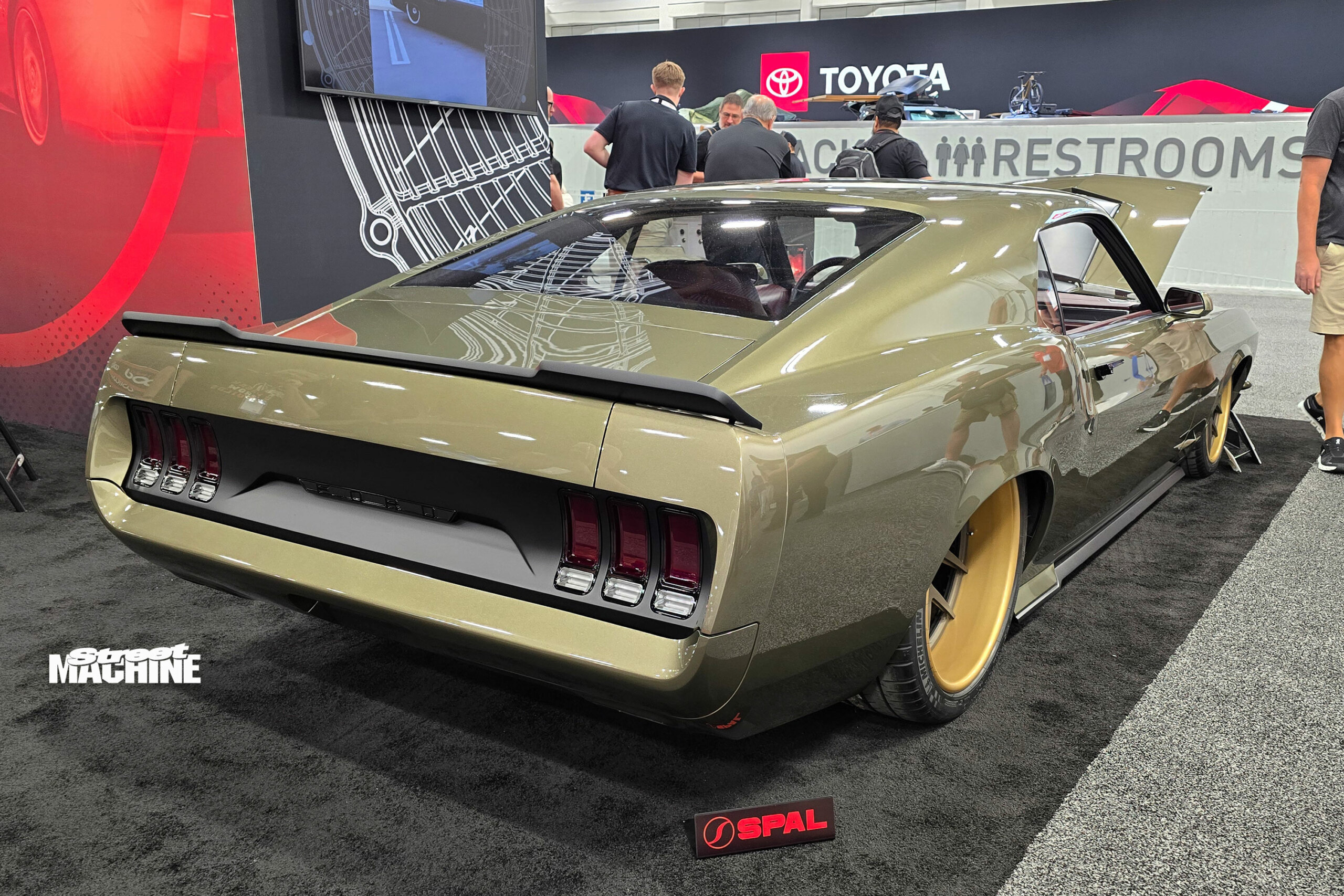
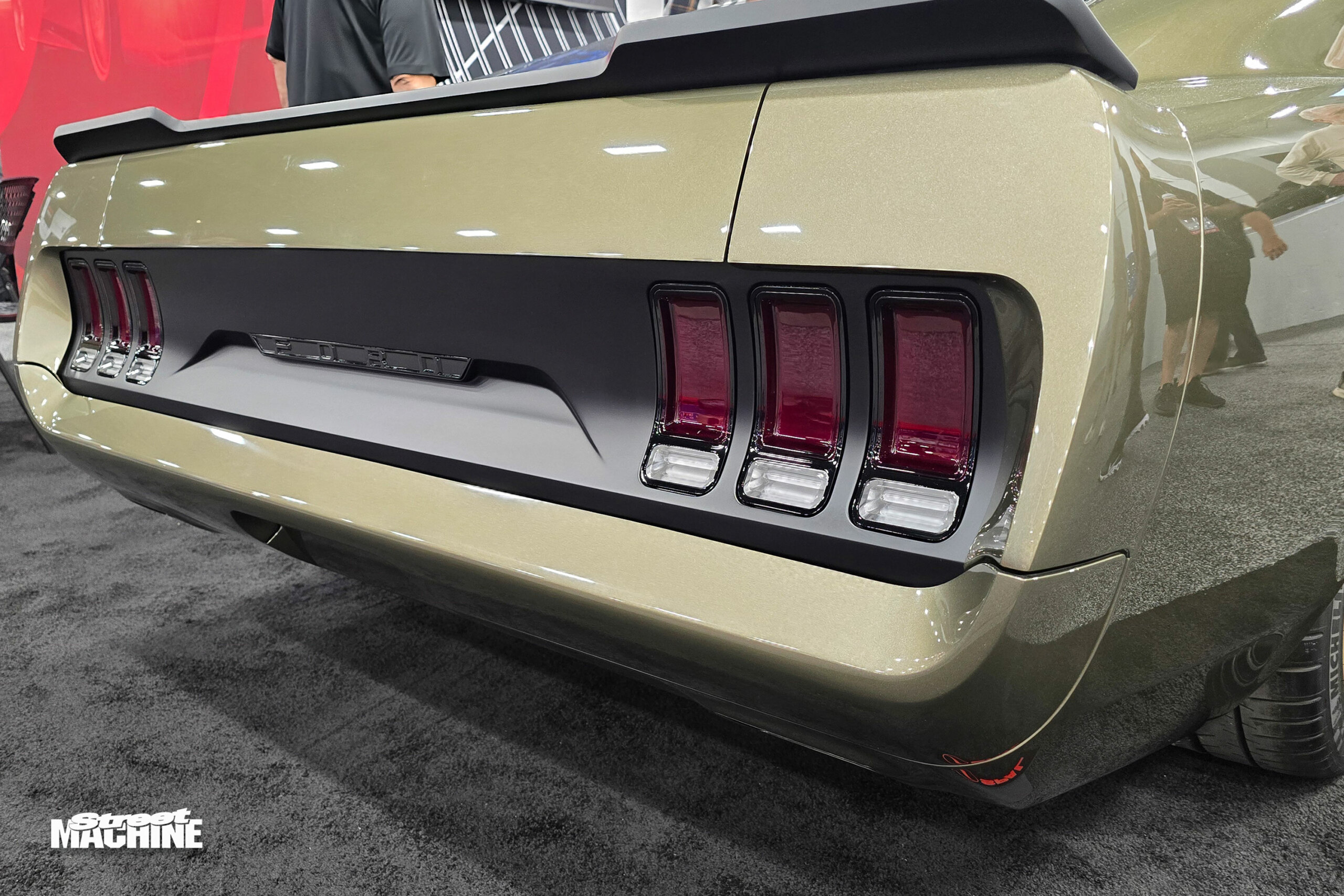
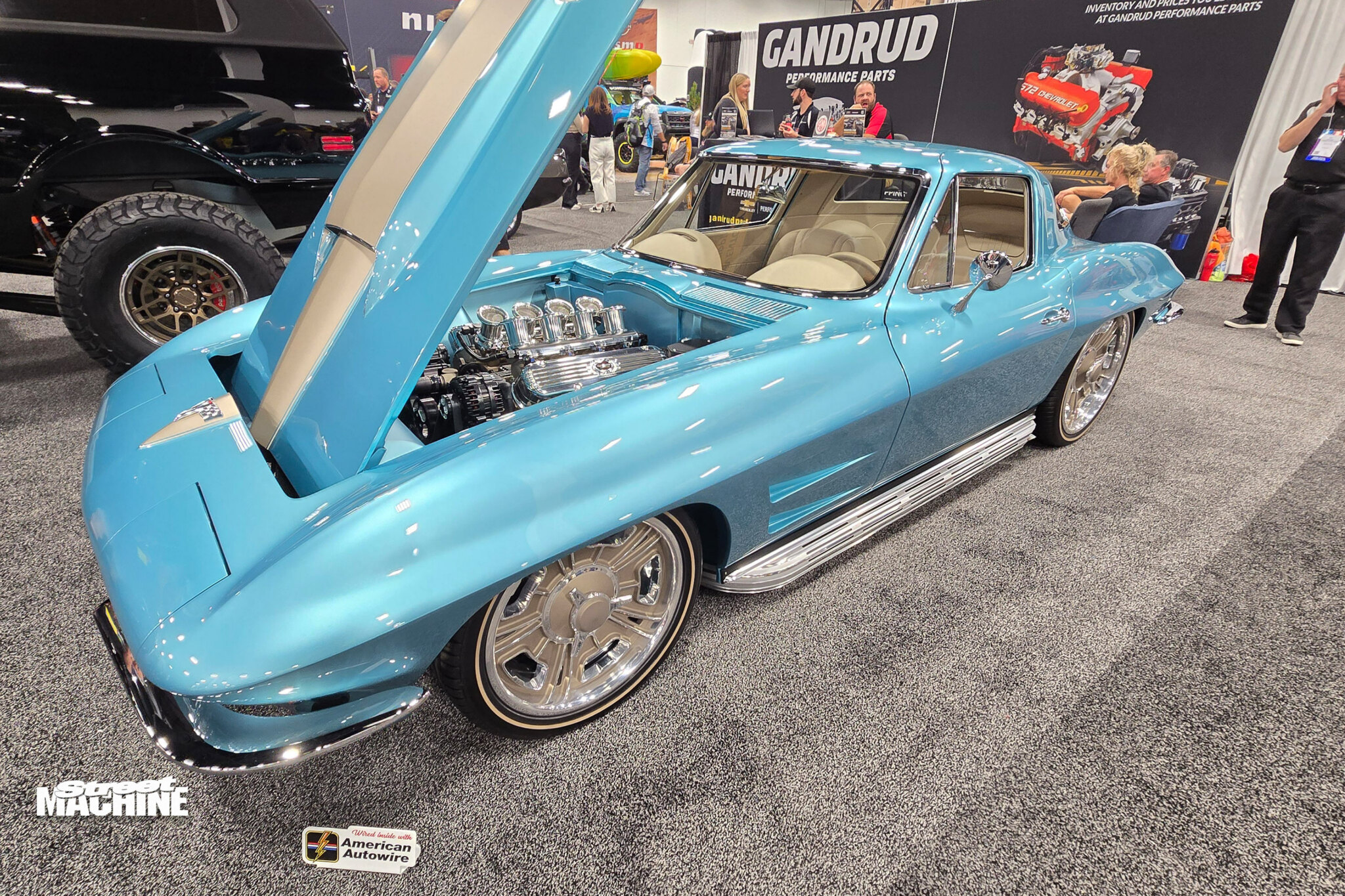
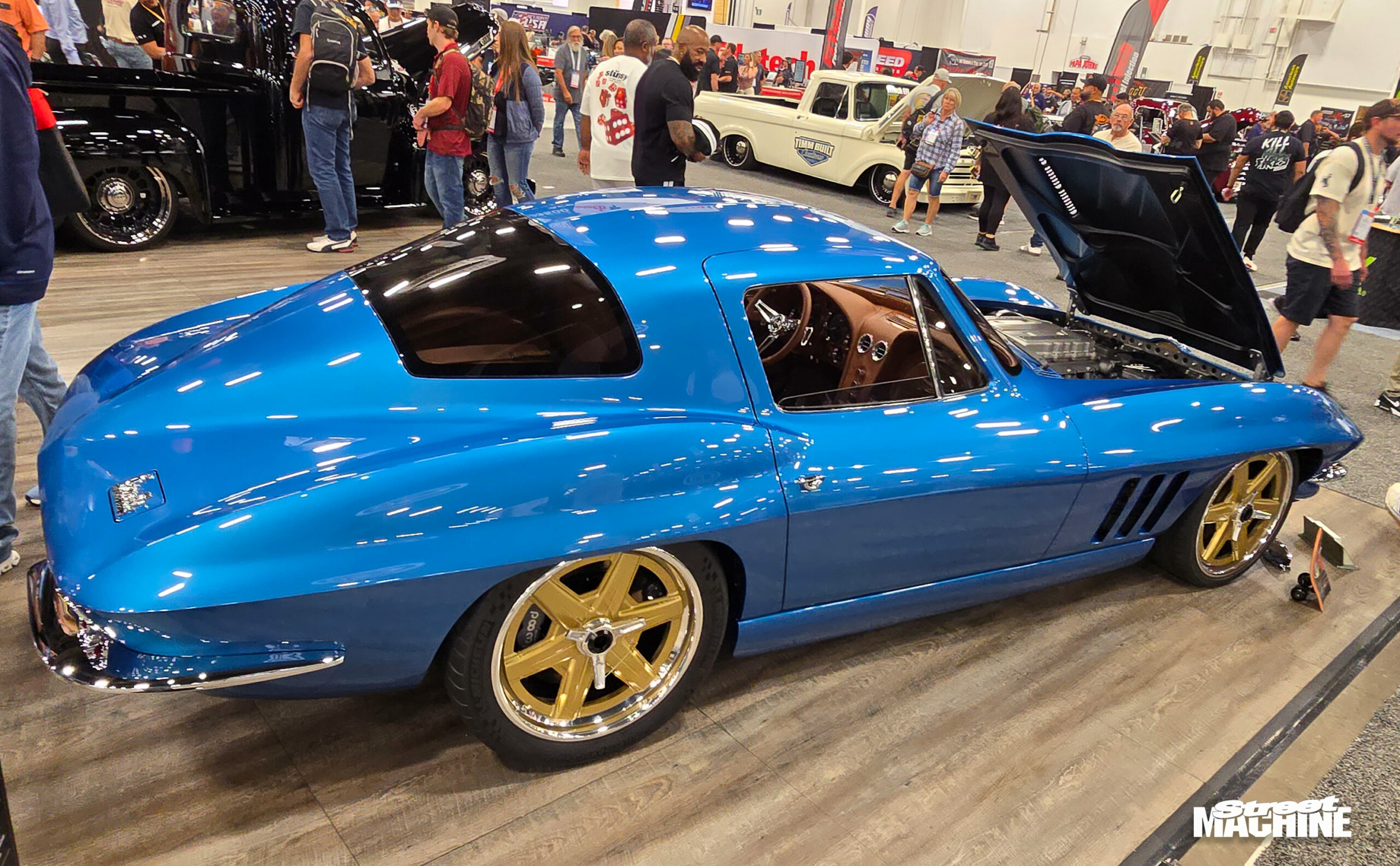
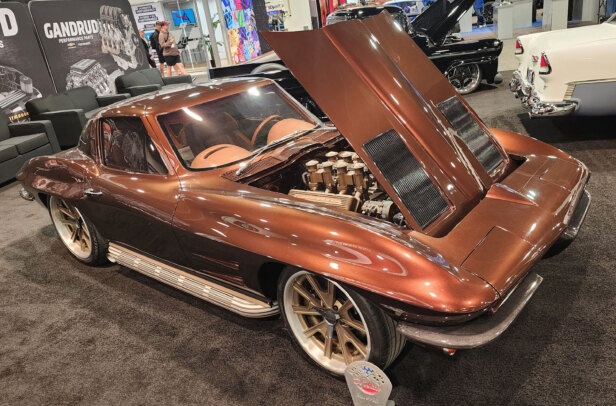
A few exterior shades really stood out. Kuhnhausen Metal Concepts’ 1966 Corvette, ‘Sirius 66’, shimmered in a deep metallic blue that caught every bit of light, while the ’64 ’Vette build from Mike Goldman Customs wore a more understated blue metallic that suited its flowing lines perfectly. Vini’s Hot Rods’ 1969 Mach 1 Mustang again nailed it with a unique metallic green – the kind of colour that might look odd on a spray-out card but transforms completely once it hits the bodylines.
THINKING ’CAPS
If the 2025 SEMA Show was anything to go by, hubcaps are well and truly back. Or at least, the look of them.
Across the show, a subtle but powerful trend emerged: the top builders and wheel makers took factory-inspired hubcap designs or OE-style wheels and reimagined them in larger diameters.
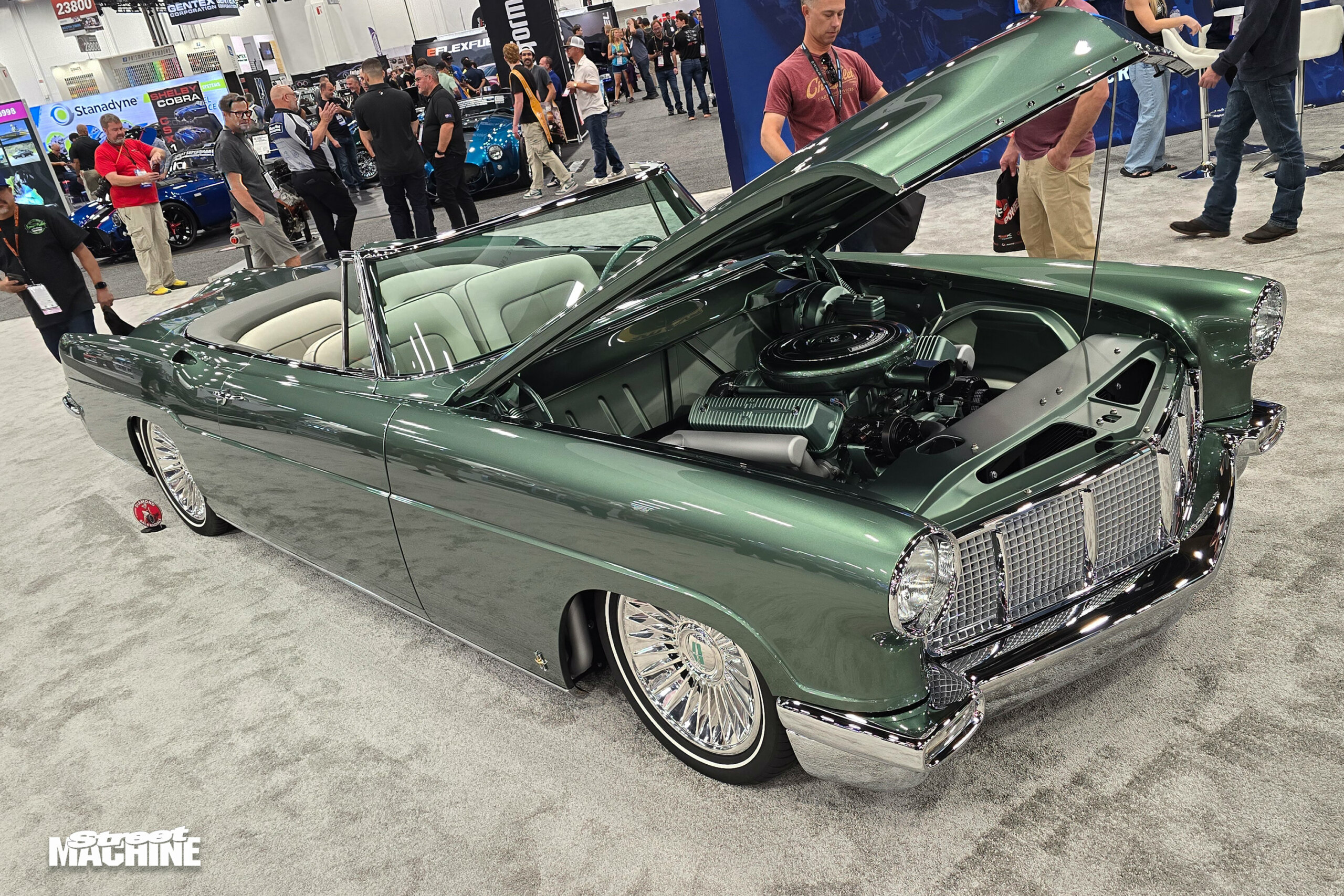
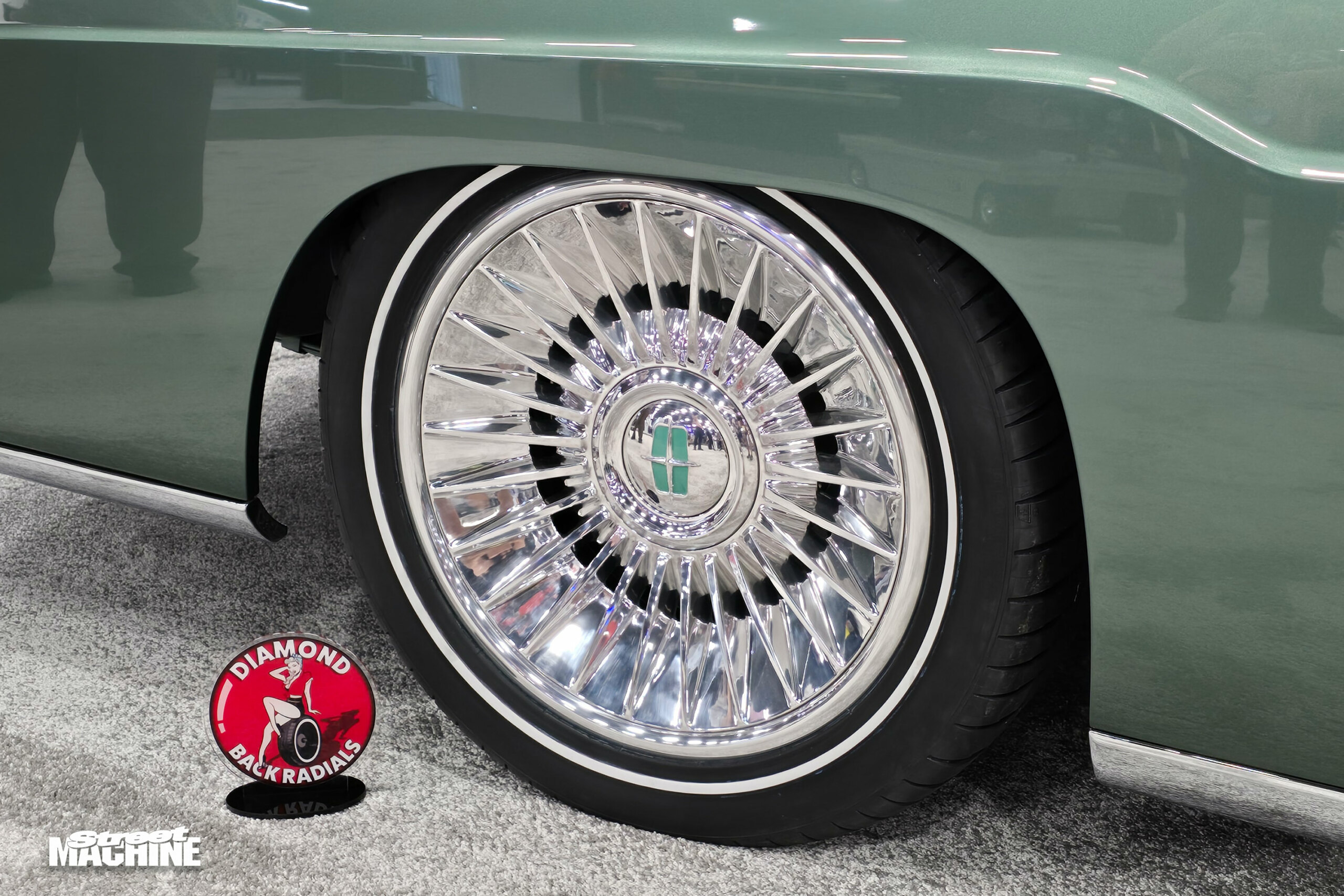
Troy Trepanier’s 1936 Ford roadster, which won Battle of the Builders, rolled on custom wheels that paid tribute to classic factory styling. Chip Foose’s 1956 Lincoln Continental featured turbine-style rollers that looked straight out of a late-50s design sketch, while the Southern Comfort Customs’ Ridler-winning ‘Grey Madder’ 1955 Chevy Nomad went all-in with hubcap-inspired wheels and redwall tyres.


Even major wheel brands like Forgeline, Schott and US Mags showcased new OE-inspired styles, an indication that his blend of nostalgia and refinement might be here to stay for a while.
DIRECT MESSAGING
While LS engines still dominated, the 2025 SEMA Show felt like the official coming-of-age for General Motors’ Gen V LT platform. The supercharged LT4, in particular, seemed to be on the way to supplanting the LS as the go-to powerplant for high-end builds.


As crate LS engines become harder to find, it makes sense that builders are pivoting to the newer generation. The direct-injection LTs bring fresh performance potential – and it makes you wonder how long before this trend hits Australia.
It was a similar story for the Blue Oval at SEMA, with Ford’s 5.0-litre Coyote a popular choice for fresh projects.


It seemed clear that the next engine-swap trend will revolve around these newer, more complex mills as tuning options become easier and more affordable.
MODERN CLASSICAL
Call it a restomod, a restorod, or even a ‘mod rod’ – as Dave Kindig described his latest ’69 Camaro build – the common build theme at SEMA 2025 was timeless shapes reinvented through modern design, built for sale in small, limited numbers.
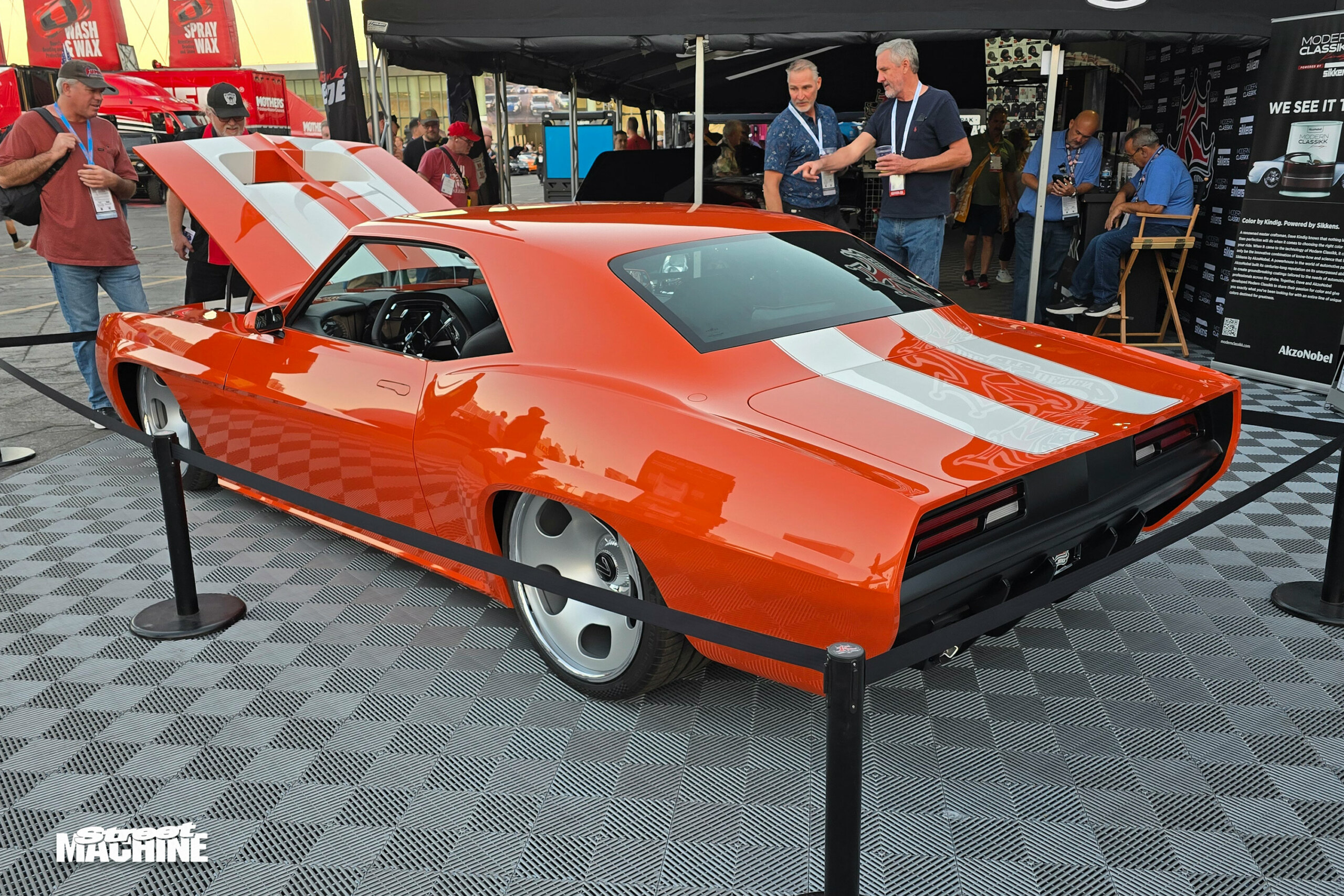
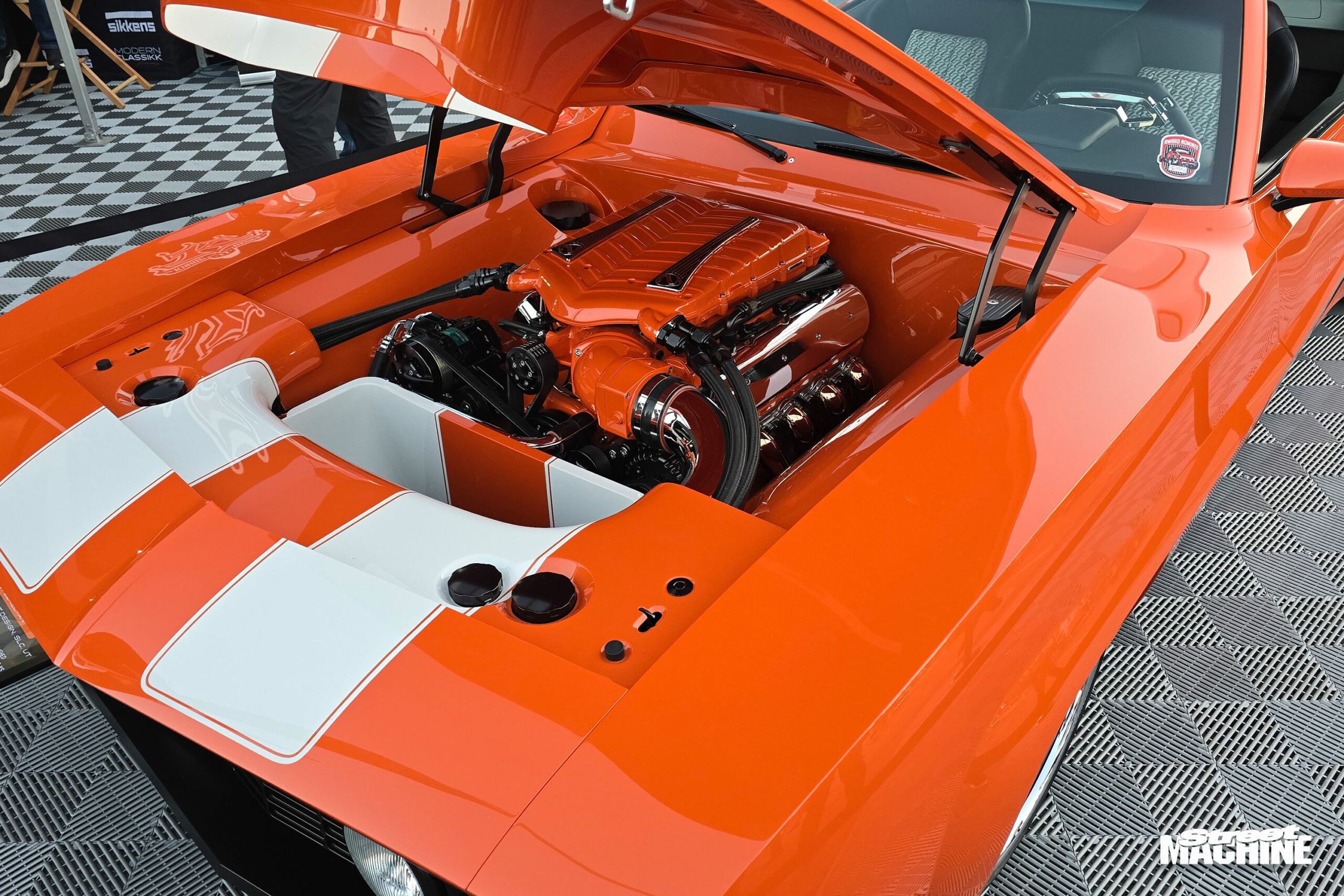
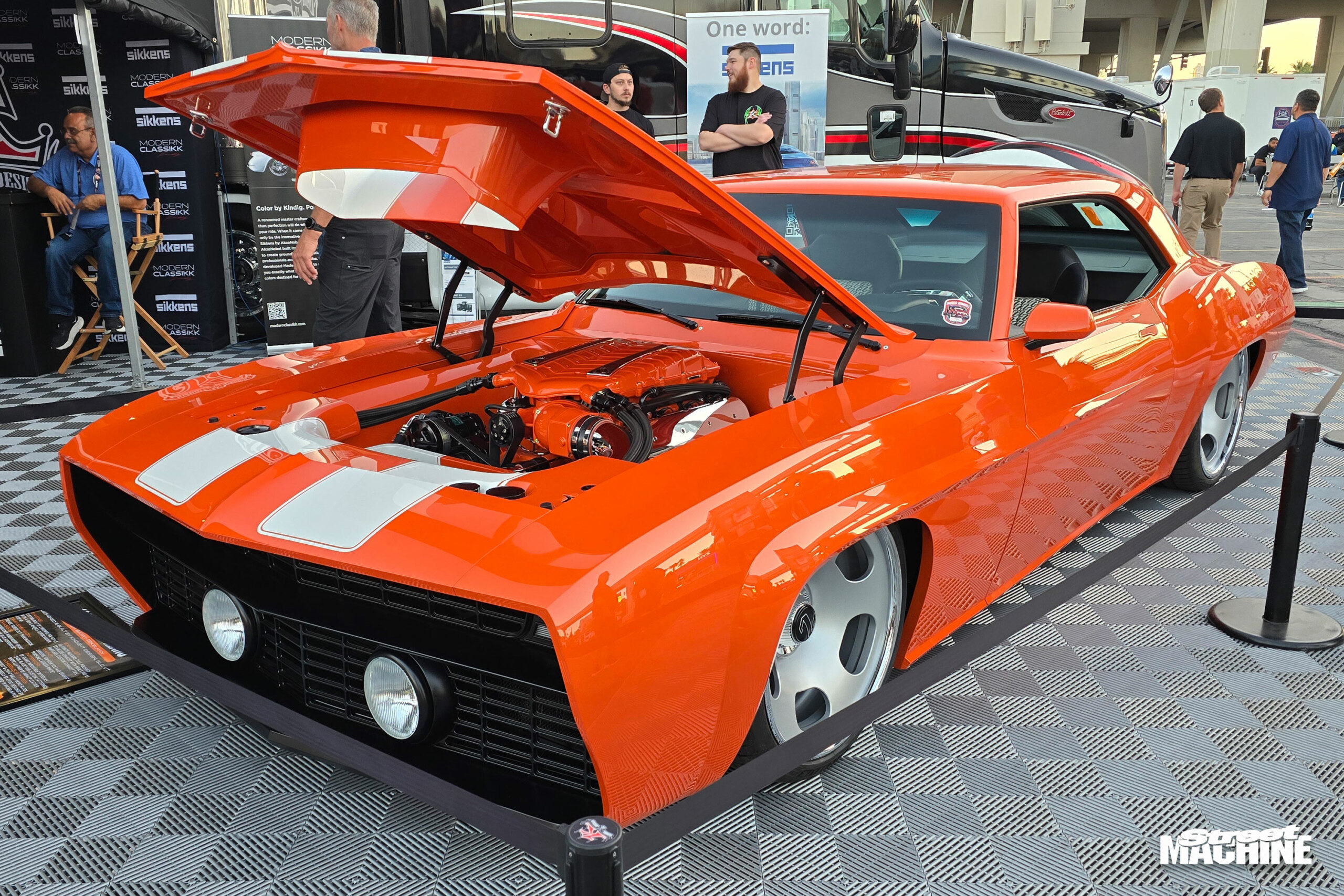
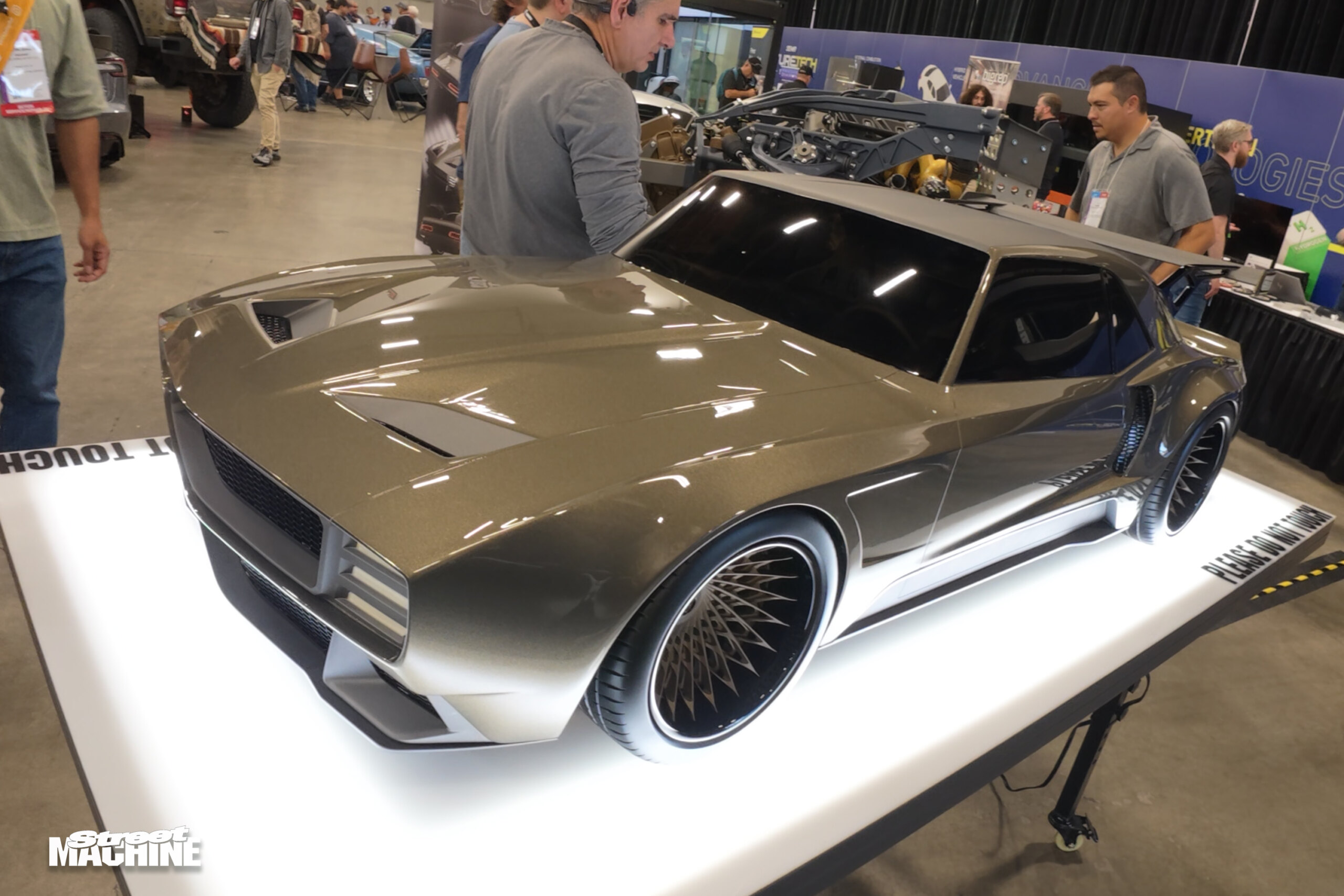
Rather than simply restoring or modifying an original, these projects reinterpreted the spirit of a classic through a designer’s eye. Kindig-It Design is already doing this with its CF1 Corvettes, and at SEMA 2025, another company, Blazin Rodz (responsible for the wild ‘Doughboy’ 1970 Chevelle at the 2024 show), debuted its hybrid AWD, 1600hp ’69 Camaro concept, which is set to be produced in limited numbers – with prices expected to start at around US$1.6 million. A 1:3-scale clay model of the concept was unveiled at the show, alongside digital 3D renders and a full-size front-end assembly showcasing the suspension set-up and hybrid drivetrain.
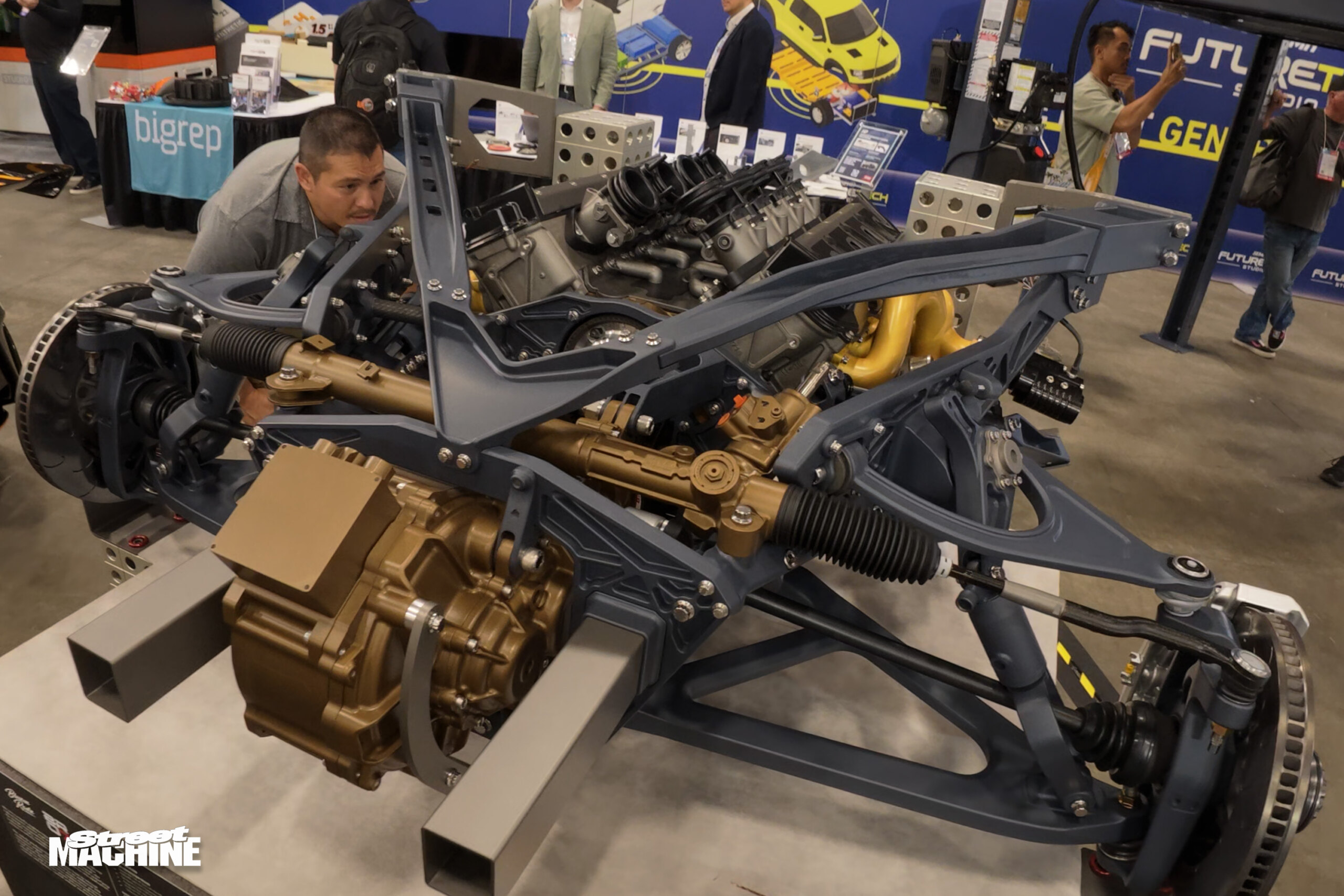
the car’s NASCAR Cup-spec R07 V8, bespoke suspension set-up and 300hp electric motor
This isn’t an entirely new concept – companies like Singer, Gunther Werks, and others have already proven the model with low-volume bespoke Porsches, and Shelby’s been doing it since day dot. But with Kindig and Blazin Rodz entering the space, it feels like it could be a genuine turning point for the industry.
And it’s easy to imagine this philosophy expanding. If a small Aussie workshop unveiled something like Holden’s Efijy concept today and announced plans to build a handful of them for collectors at a couple of million bucks a pop, nobody would doubt it could be done. That’s how far the game has progressed, and it gives one hope that the Aussie automotive manufacturing industry might still have a chance at a renaissance.
If there was one takeaway from SEMA 2025, it’s that we’ve reached a point where almost anything is possible. Technology is levelling the playing field, craftsmanship has caught up with imagination, and creativity is thriving.
But the best part? These innovations are no longer just for the elite builders. As tools like 3D scanning, CAD and 3D printing become more accessible, small shops and DIYers are gaining the same power to design and build at a professional level.

That’s what makes this such an exciting time for our scene, whether you’re a seasoned fabricator or someone building their first project in the shed.
Comments