
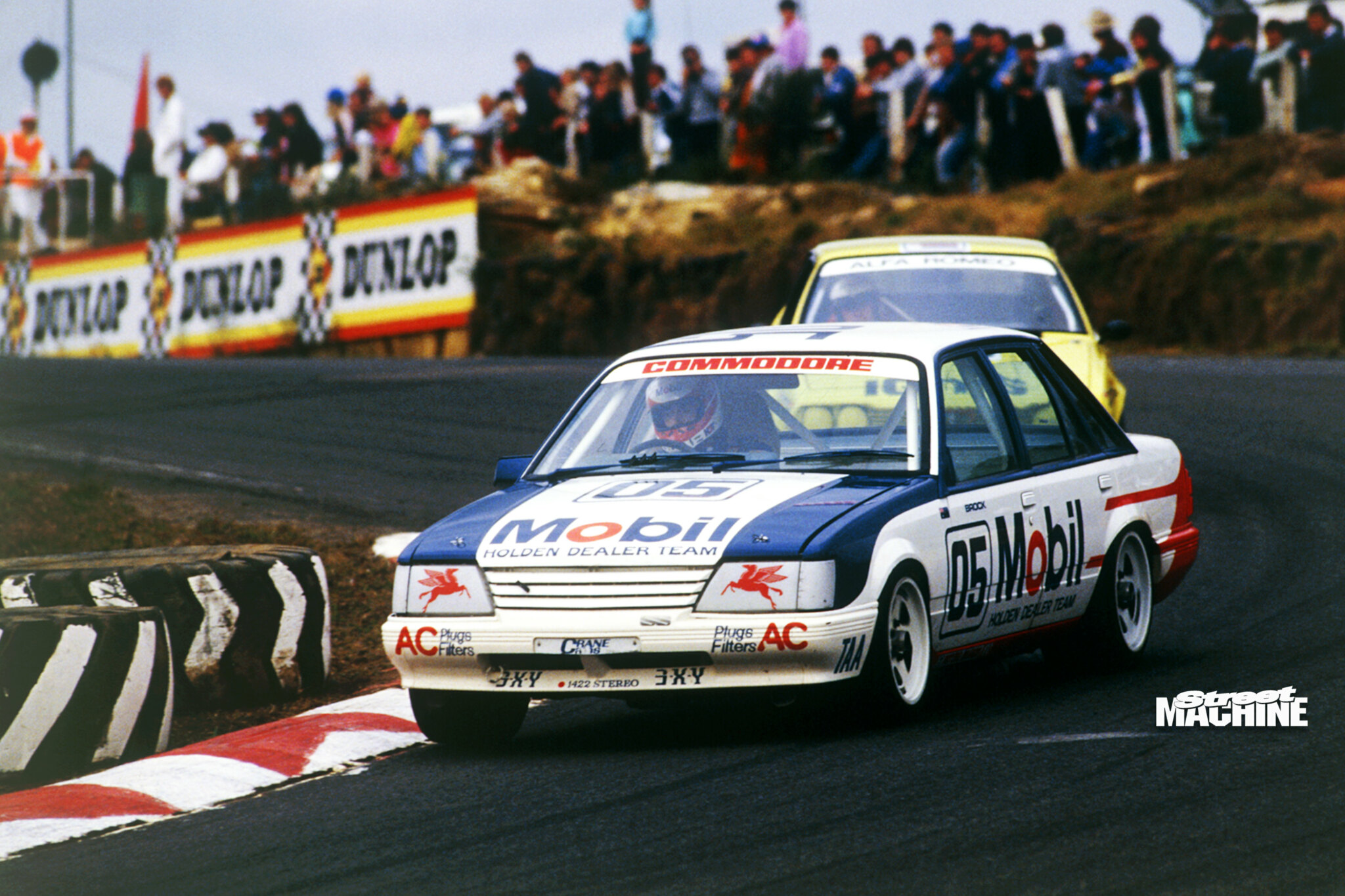
Bathurst 1985 was one of Brocky’s greatest ever drives…
First published in Street Machine’s Australia’s Slickest Commodores #13, 2005

With the sun setting on the local Group C touring car regulations at the end of 1984, Peter Brock and the Mobil Holden Dealer Team (their association with Marlboro having come to an end) were faced with a new challenge for 1985. Equipped with the new Commodore VK Group A, they had a number of factors to fight before the car would become competitive against opposition such as the BMW 635CSi, Jaguar XJS V12, Volvo 240T and Ford Mustang.
The new car was much more standard looking. There were no spoilers or wild wheel-arch flares like those of the old Group C cars. The Group A also dropped in performance, horsepower plummeting from 420 to a fraction over 300. The 5044cc engine had been sleeved back to 4987cc, which allowed the team to drop a weight category and trim the overall mass of the car from 1400kg to 1325kg. The loss of weight also carried the penalty of a reduction in wheel rim size by one inch to 12 inches, but the weight saving was well worth the trade.
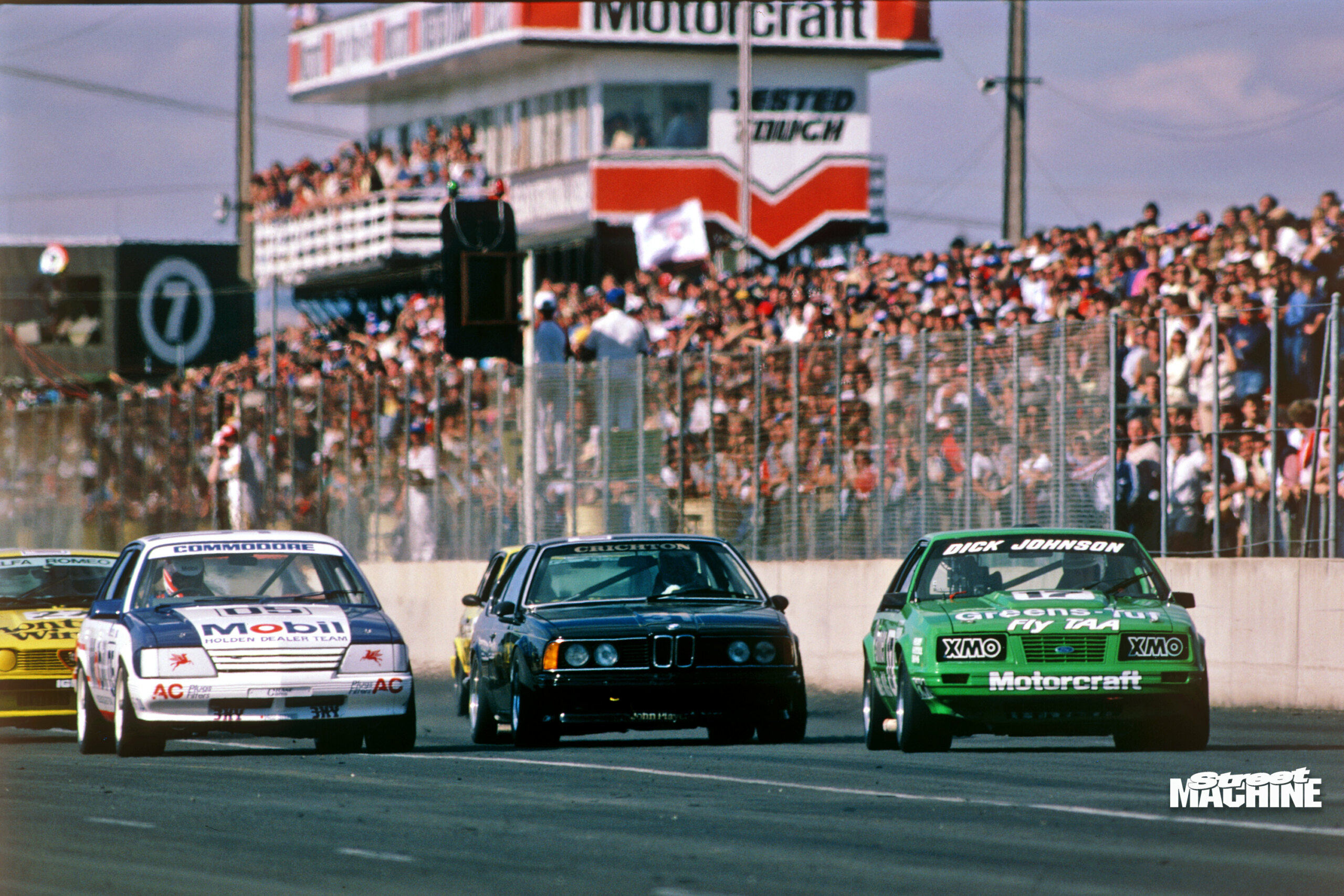
As with everything that was great fun about Group A (er, not really…), manufacturers had to homologate cars for the Group A rules and build 5000 in 12 months, with provision added for an evolution model. HDT missed out on having the VK Evolution up and running by August 1, in time for the endurance series, by a total of just 50 cars! The VK Evo would have to wait until 1986. So that left Brock to fight on with the car in which he’d started the season.
Brock and Larry Perkins debuted the VK Group A in the Wellington 500 in New Zealand early in the year and, in a bid to increase its competitiveness, skipped the Australian Touring Car Championship opener at Winton to work on the car. It was the first time in 25 years and 136 events that a Holden hadn’t appeared in an ATCC round. Although Brock won on the Mobil car’s first Sandown outing, he couldn’t manage another win that year and finished third in the series behind Jim Richards’ dominant BMW and Dick Johnson’s Mustang.

As time went by, it became clear that the VK’s single-row timing chain was a weak point, though the Commodore was helped by some concessions from CAMS, principally in the homologation of a five-speed gearbox in time for the endurance series, which included rounds at Amaroo, Oran Park, Sandown, Bathurst and Surfers Paradise. Richards went on a blitz in the enduros, scooping four wins from five starts. Brock’s car and the Allan Grice/Warren Cullen Roadways Holden both broke rockers in the Castrol 500 at Sandown and headed to Bathurst as total underdogs against the visiting Tom Walkinshaw Jaguars and a horde of locally developed cars.
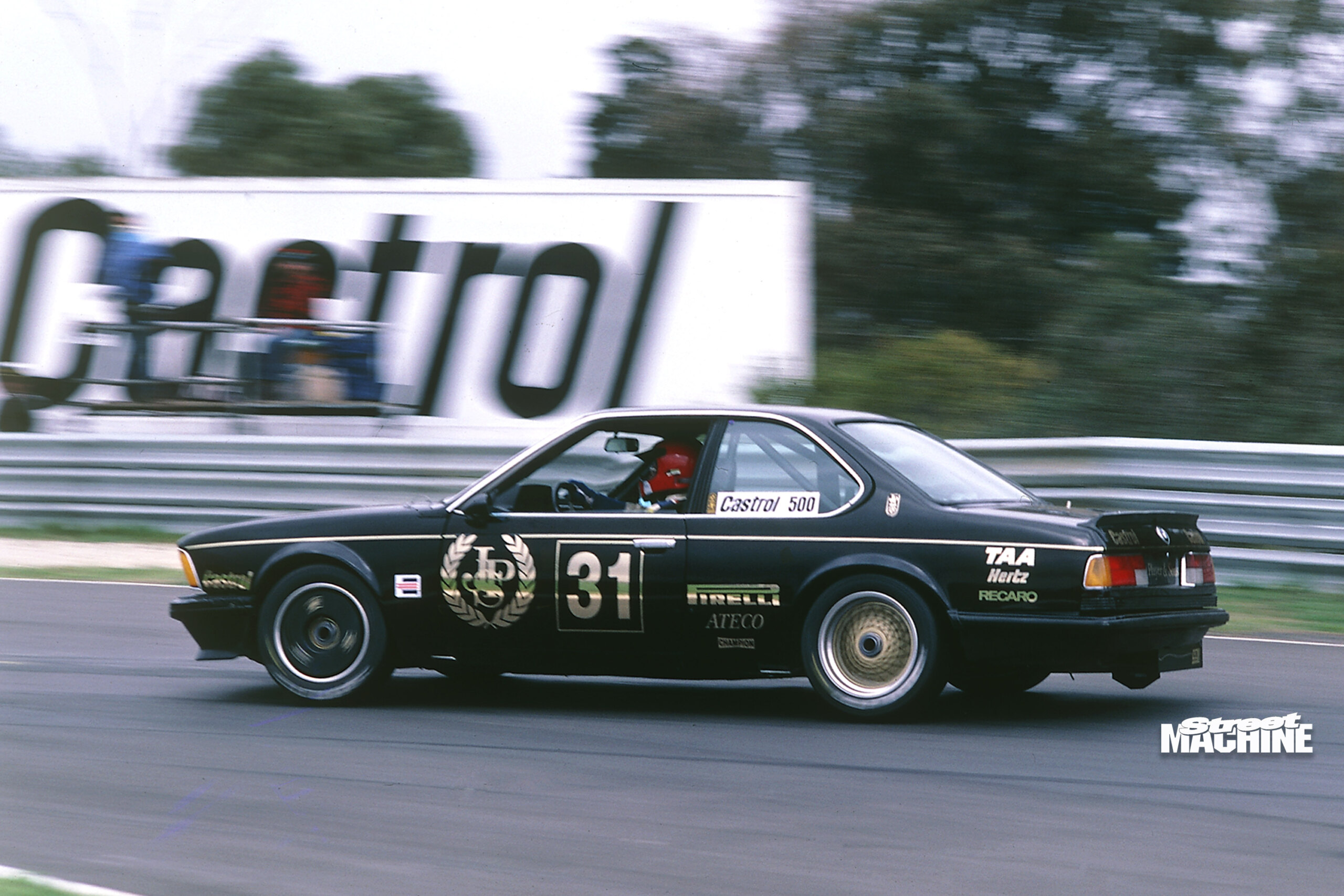
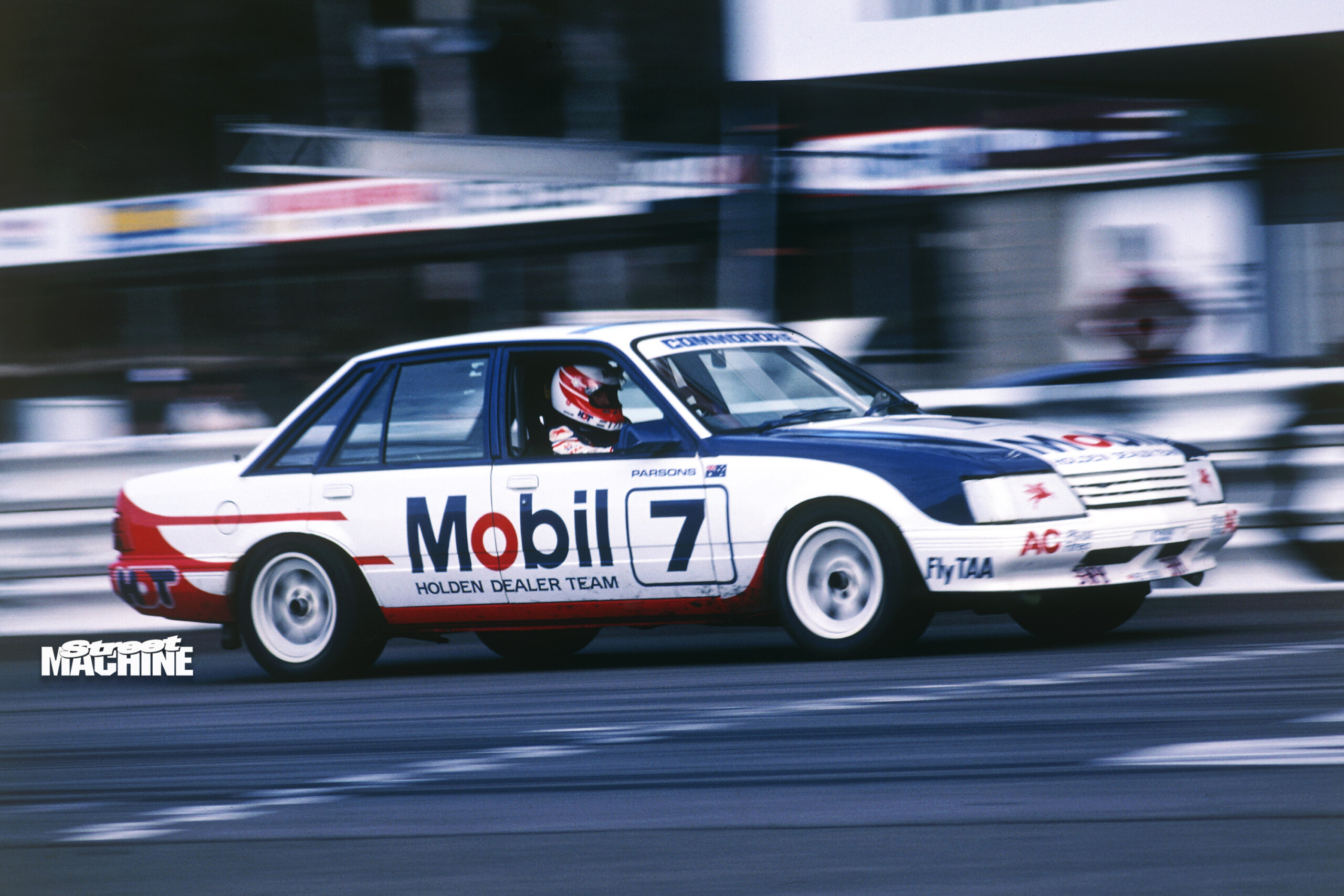
After a mid-season split with Perkins, Brock recruited Kiwi David Oxton to fill the co-driver’s chair at Bathurst, leaving John Harvey again to pair up with David ‘Skippy’ Parsons in the #7 car among a total of 19 Commodore runners.
Down on power and generally outgunned, the HDT cars scraped into the top 10 Hardie’s Heroes run-off and qualified ninth and 10th, leaving them with an uphill fight on race day.
In the Great Race, Harvey’s car expired with a broken timing chain as Brock slowly but surely clawed his way up the order. The rest of them had dramas: Johnson was delayed, while Richards and George Fury built sand castles at Hell Corner. The Grice Commodore died with electrical problems, and Walkinshaw was also delayed late in the race for 10 minutes with an oil leak.
Brock had worked his way up to second behind John Goss’s Jag, but a crack in the #05 windscreen was spreading and he headed to the pits to have it removed, at the same time grabbing Oxton’s helmet, complete with tinted visor.
The stop dropped him to third spot behind the Roberto Ravaglia/Johnny Cecotto BMW, and so began the great chase, which was delayed again a few laps later by a black flag. Officials said that with the windscreen gone, the rear glass should go as well, to eliminate the possibility of it popping out under air pressure.
Regardless of HDT’s belief that it would be fine, Brock was forced to pit again and mechanic Marty Watt swung into the rear door. He delivered probably the only recorded karate kick in Bathurst history to boot the rear window out. The HDT ‘mules’ slammed the door as Watt scurried out the side and Brock dropped the clutch and fired back into the battle.
The stop dropped him to around 14 seconds behind Ravaglia. In what must rank as one of his finest drives, an inspired Brock cut the Italian’s lead, finally blowing away the BMW down Conrod Straight on lap 150. Ravaglia, a highly experienced driver who would go on to win the World Touring Car Championship for BMW in 1987, was making his Bathurst debut and simply couldn’t believe it as Brock motored on past while the crowd on Pit Straight cheered like hell.
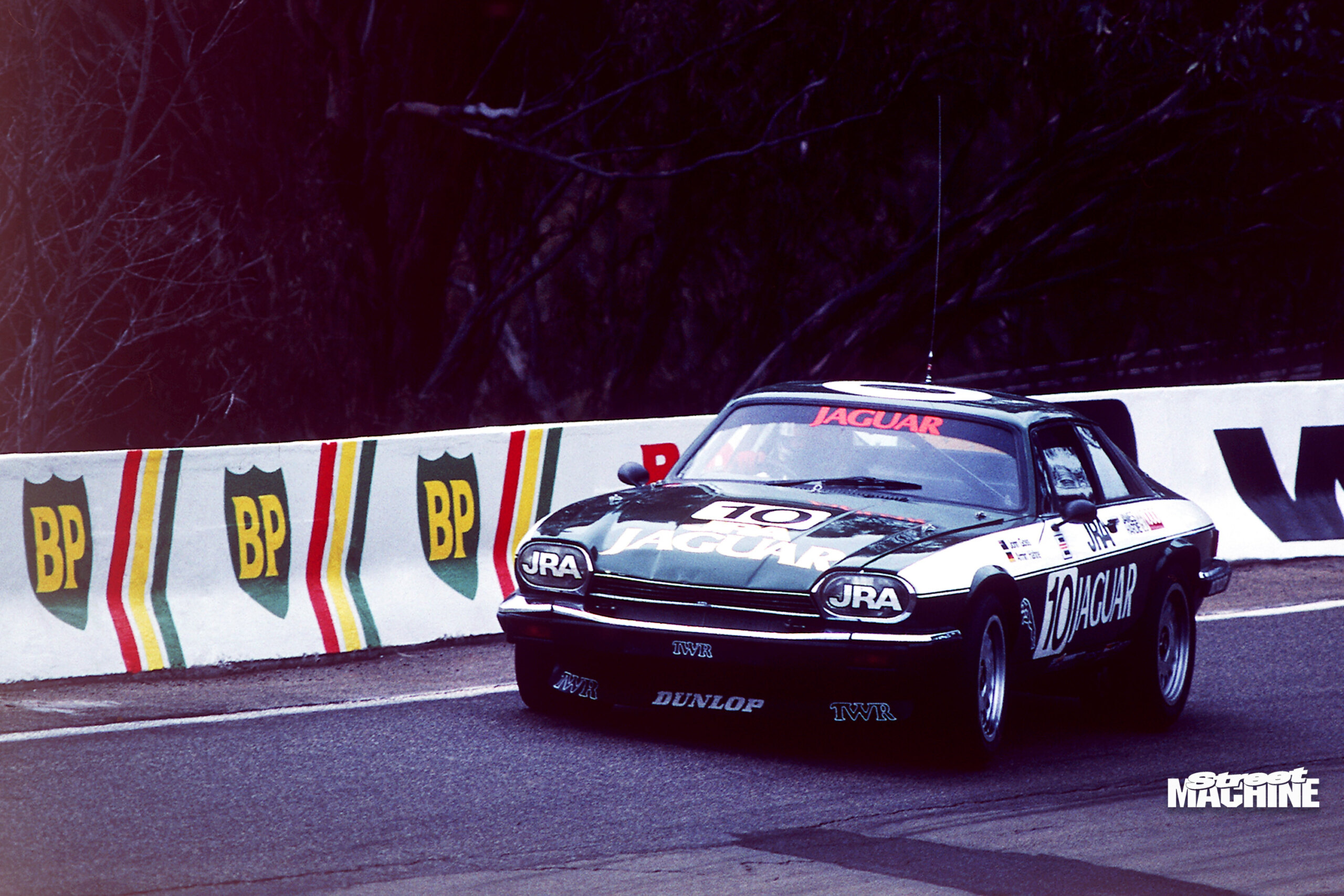
With just 13 laps to go, there was blood in the water. Leader Goss had been wobbling around in the #10 Jag, a broken seat forcing the 1974 Bathurst winner to hang onto the wheel for grim death and punch out the best times he could. Brock closed remorselessly, taking out two and three seconds per lap. The margin had started at 43 seconds when he’d passed Ravaglia and had been reduced to 26 seconds by lap 155. It pushed back out to 32 seconds with three laps to go.
Suddenly, things went silent. That single-row timing chain had broken and the great chase was over. Brock’s fourth Bathurst win in a row wasn’t going to happen and the fairytale was lost.
Goss made it home to win, Ravaglia grabbed second spot and ran out of fuel immediately after crossing the line, and Walkinshaw fought back to finish third with Win Percy in the #8 XJS.
Talk spread along the pit lane that Brock had simply thrown in the towel because he was running a cheater engine to stay on the pace and wanted to avoid detection post-race. It was a classic tale of the tall poppy. Scrutineers sealed the engine and checked it; everything was legal.
Although not victorious, Brock described the after-race party as one of the best on record, even though HDT hadn’t won and it was the first time both HDT cars had failed to finish Bathurst in the then 18-year history of the team. It wasn’t a win, but it was certainly a winning drive – perhaps the best of Brock’s 32 starts on the Mountain in the Great Race.
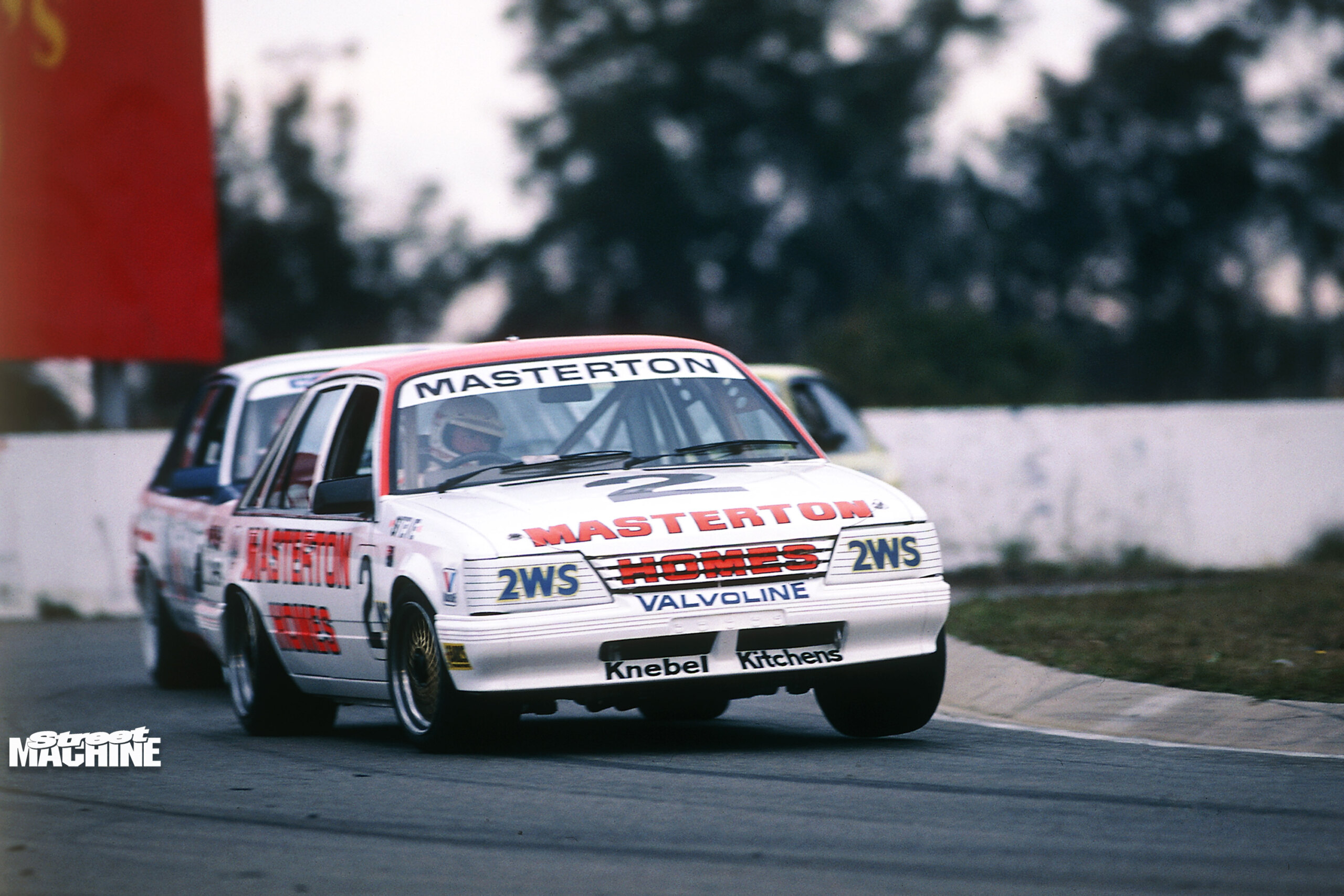
It was left to privateers Tony Mulvihill and Barry Jones to bring home the best-placed Commodore, in 10th. Holden quietly got ready to take on the world in 1986 with the VK Evolution, making an assault on the European Touring Car Championship as well as the domestic series.
Comments