
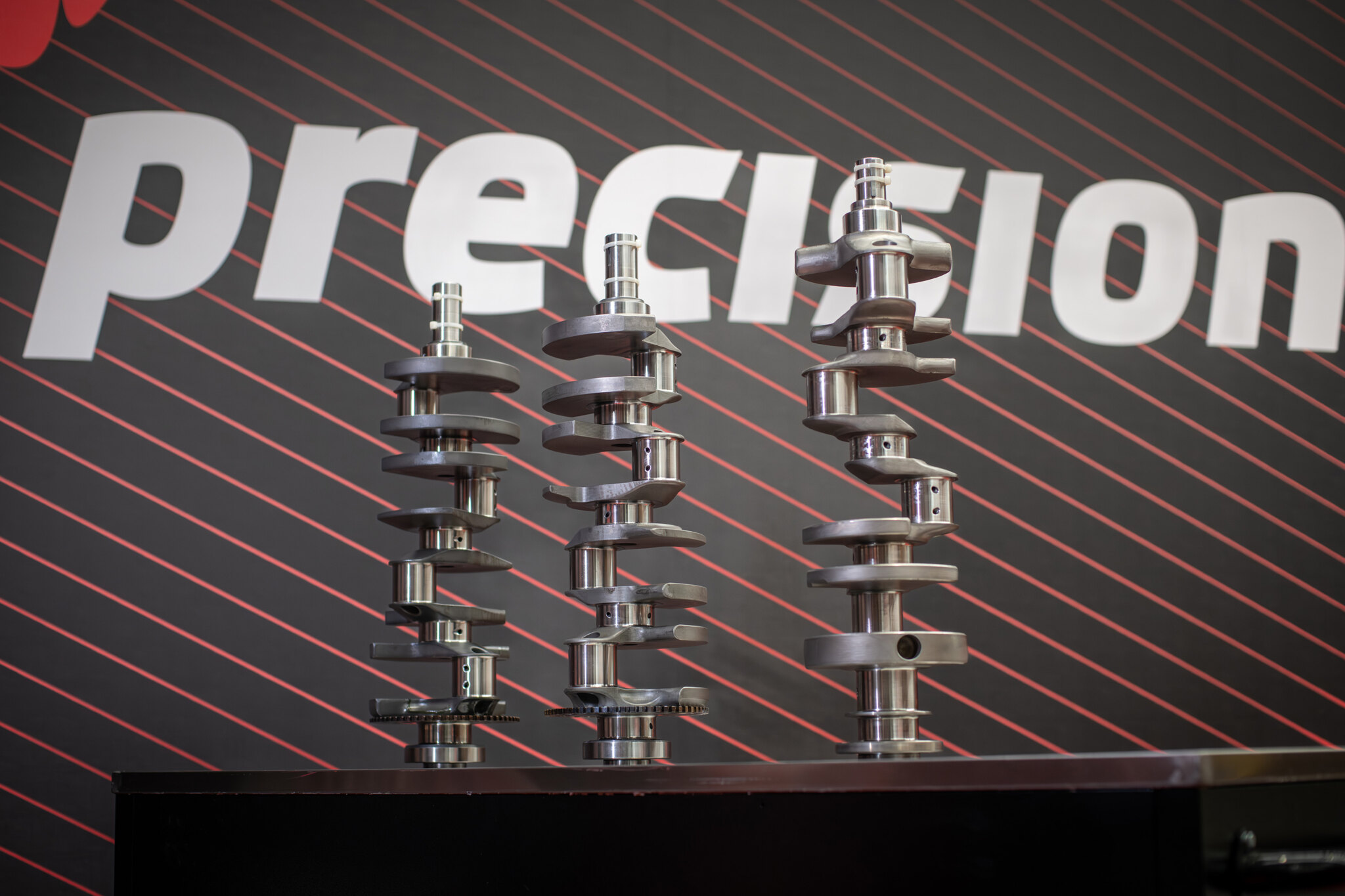
Crankshafts turn reciprocating forces made by pistons and connecting rods into rotational forces that obliterate tyres and cause vehicles to move at rapid speeds. They are key to the overwhelming majority of internal combustion engines. However, while crankshafts may appear simple on the outside, they contain a lot of tricky science that differentiates the good, the bad, and the best.
First published in the May 2026 issue of Street Machine

Frank Marchese of Dandy Engines spent 16 years working as a machinist before a storied career building some of Australia’s biggest-horsepower combos, like the one in Daniel Szabolics’s 3800rwhp BOLICS HQ Monaro (pictured below). He understands the vital role a crank plays, but remembers a time when we couldn’t enjoy such easy horsepower gains.

“The first part of my career was as a machinist, and I was grinding cranks for stock manufacturer rebuilds, repairing them, and working out how they worked in a standard car that had to do 100,000km or more reliably,” Frank says. “Even in the late 90s, things were very different in the street scene, and not many people could afford aftermarket crankshafts except big racers or people with money. Today we’re spoiled for choice when it comes to parts, which allows us to design and build a combo that will work very closely with the customer’s goal for their car.”

With the boom in four-digit power outputs from engines over the past 20 years, the dizzying number of options when it comes to crankshafts alone presents a quandary for the average consumer wanting a stout donk that’ll run well and not require Top Fuel-style maintenance. Frank is a big advocate of maximising cubes in street cars, and for using quality cranks that feature solid engineering as the combo’s base.
“Back in the late 90s, it was very expensive to buy an aftermarket crankshaft,” he says. “We tried using a customised 400M crank in a Cleveland to stroke it, and it was a big job grinding the counterweights down to make it a 393ci. We put it in my orange XA, and it went from 11.60s to 10.70s immediately, so we picked up over 100hp. It left so hard off the footbrake that other racers actually thought it had a transbrake in it, which was another rarity at that time.

“The goal was to see what we could do with more cubes to get more horsepower. Most guys with flat-tappet 4V 351s back then were making around 600hp, so we divided 600 by 357, which was the cubes in my car, to get 1.68hp per cube. We then multiplied 1.68 by 393 and got 660, so we knew we could potentially pick up 60hp by going to a 393 without touching comp or the cam specs. We also got more torque, which gets those big Falcons working off the line much easier.”
Frank has been using Callies cranks in his engines since 2006, as he chased reliability through superior material choice.
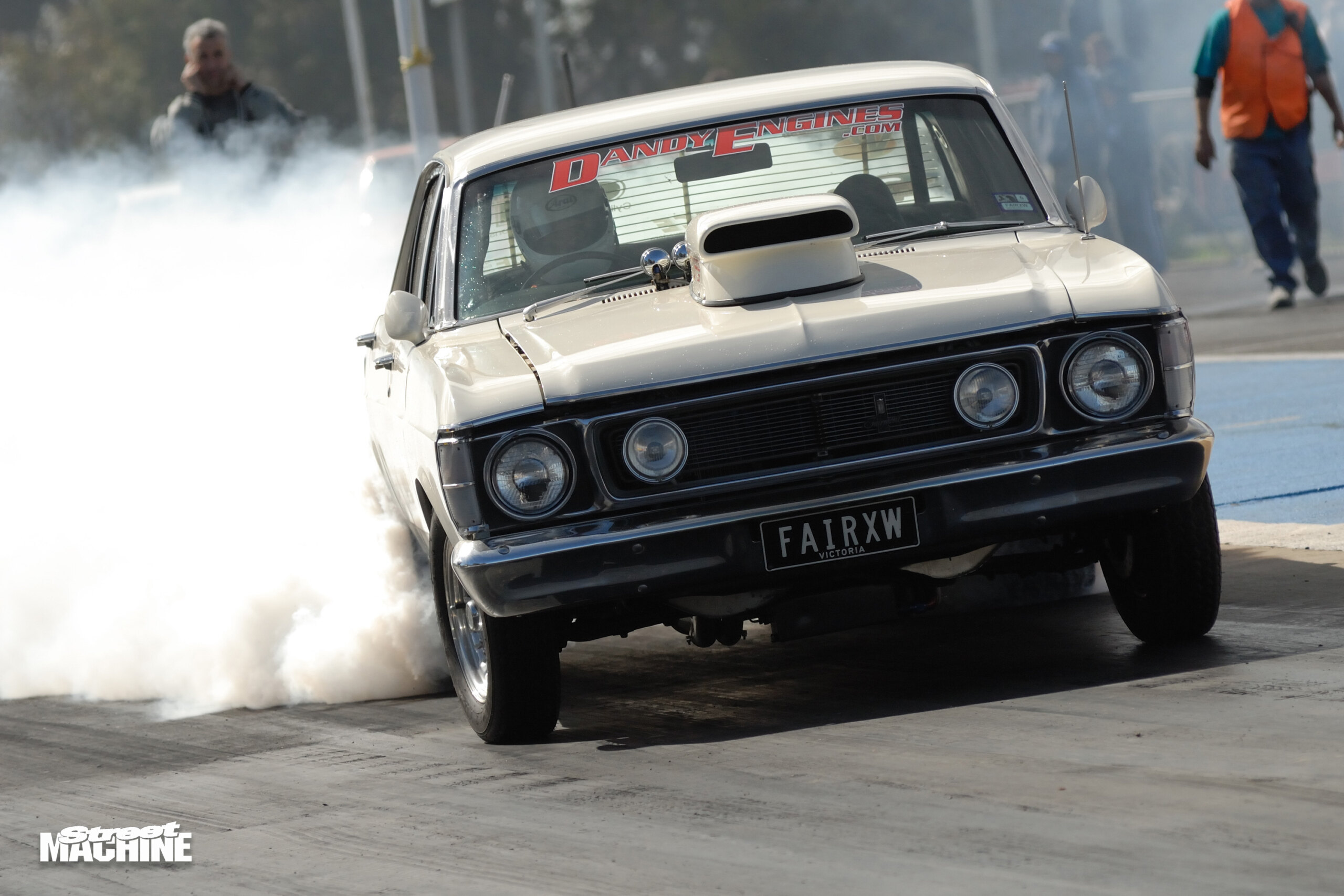
“Callies wasn’t a known aftermarket brand down here in the late 90s, and it wasn’t until ’06 that I did my first ‘good’ engine, in FAIRXW,” he says. “I really went all in, with a 427ci Dart block, Callies crank, Oliver rods, and good heads. It ran 9.72, but that car had started off in the 10.70s with a 378ci 4V Clevo. After we sold the 427, we built a 440 and went 9.20s in 2008, and we kept making power with bigger motors from then on. Having the option of an off-the-shelf, high-quality crank to add cubes and turn the engine harder than before made building more powerful engines and faster cars so much easier.”
Crank failures aren’t unheard of, whether from lower-quality materials being used or from the parts being pushed beyond what they were designed for.
“Cheaper cranks can generally crack at the front journal,” Frank says. “It’s a material failure, but I don’t know why they fail that way; you’d have to talk to a metallurgist. The mains caps in the block also cop a hammering, and when you’re making big power in a small-block – or even some of these over-3000hp big-blocks – the crank is trying to push the caps out of shape due to the force it’s operating under.”
Deciding between a cast, forged, or Gucci-spec billet crank requires serious consideration when building an engine. Thankfully, Frank can break it all down easily, and it comes down to picking the appropriate metal for the job.

“Cast is just a replacement for a factory crank, but then you’ve got billet cranks, like the custom-order Callies Ultra, for when you’re pushing the absolute limit of horsepower like in our 3000hp-plus small-blocks. Forged sits somewhere in the middle,” Frank explains. “I broke a few of our early 460 strokers we did when we were using another company’s forged crank, so we moved to Callies cranks and they held together because the materials are better.
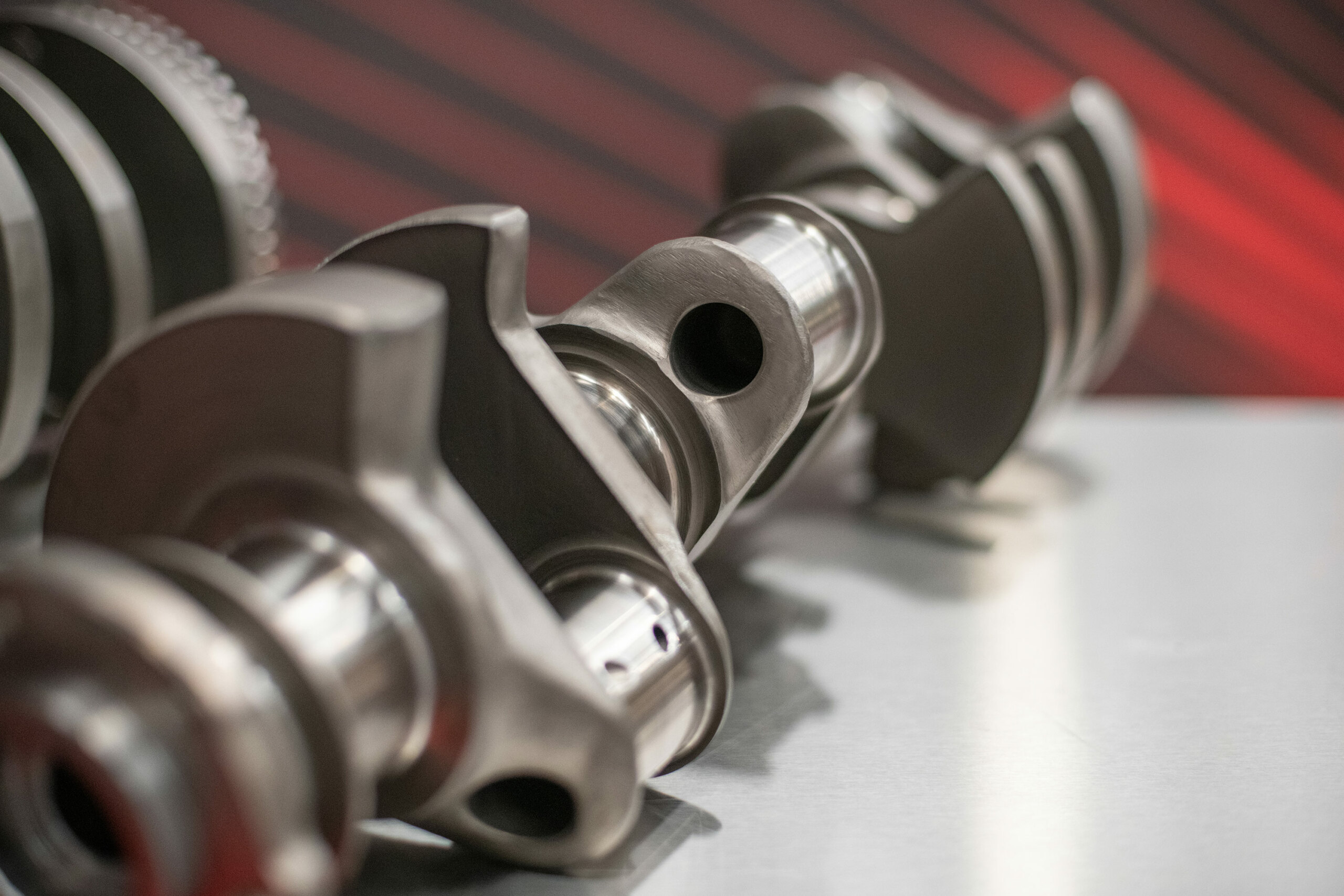
“We want to put combos together that last, and the reason I like Callies is the background of founder Rick Norton, who made cranks for high-end manufacturers and production cars. They knew about the base material before they ever made a crankshaft; it’s a deeply scientific approach at a material level.”
If you’re wondering which forged crank would be right for your street or race car, Frank says it’s ultimately up to what you’re looking to do with the car that will guide the specifics of the motor.


“I look at what the customer is trying to achieve with their car, and then whether they’re limited by cubes or rpm, and that guides what rotating assembly specs we need,” he says. “If we’re going to do something Pro Stock-style with a 10,000rpm redline, we need smaller counterweights, and we need to look at how many counterweights we can run. If you don’t have the right-size counterweights, you will get flex through the crank, which can make it move like a piece of liquorice, and that’s never good.”
For more information, or to view the range of Callies crankshafts, head to precisionintl.com or call the team on 1300 364 350.
Callies Magnum

The ultimate in forged cranks from Callies, the Magnum is a high-strength unit commonly used in ultra high-performance and race engines. Made in America and forged with SAE 4340 steel, each crankshaft receives deep nitriding treatment for additional wear-resistance.
It features a fully counterweighted design for improved balance and bearing life, and gun-drilled mains for improved oiling and reduced weight, backed up with lightened rod journals and profiled counterweights to further reduce rotating mass. Dual keyways on the crank snout offer a far more secure locating option for pulleys, which is especially important in blown applications.
Callies Apex

The Apex series is a mid-tier option between the Compstar line and the higher-end Magnum forged cranks, offering Magnum-quality material strength at a lower price.
Available for LS/LT engines – soon to be joined by small-block Fords – Apex cranks can’t be ordered with a custom stroke size, as Callies is trying to provide the best bang-for-buck crank on the market by using the same proprietary forgings as the Magnum crank with the lower-cost machining of the Compstar.
The final sizing and quality inspections are then done in-house at Callies HQ in Ohio.
Callies Compstar

The Compstar is Callies’ entry-level forged racing crank, designed to give strong performance at a lower price than the more premium lines.
Forged on Callies’ proprietary forging dies using 4340 steel for high strength and extreme fatigue resistance, the Compstar crank features nitride treatment to improve wear and durability, and each unit is particle-inspected to check for potential cracks or material defects.
Commonly used in 600hp-1200hp engine builds (depending on the platform and tune), Compstar cranks are forged and rough-machined overseas before being finish-polished and quality-checked in the USA.
Cross-plane vs flat

Cross-plane cranks are what you find in a conventional engine, where the crank throws 90 degrees apart, while a flat-plane crank, as found in exotic and race engines, will throw 180 degrees apart, leading to an odd firing order.
Typically, flat-plane crank engines will work better than cross-planes at very high rpm.
SNOUT

The crank’s forward nose portion, often drilled to mount a balancer and front-driven accessories. Blowers running big boost can put huge load on the snout, so some cranks use reinforced snouts, while adding a Torrington bearing to the front of a crank surface has become popular to limit bearing and cap damage from transmission line pressure.
TIMING

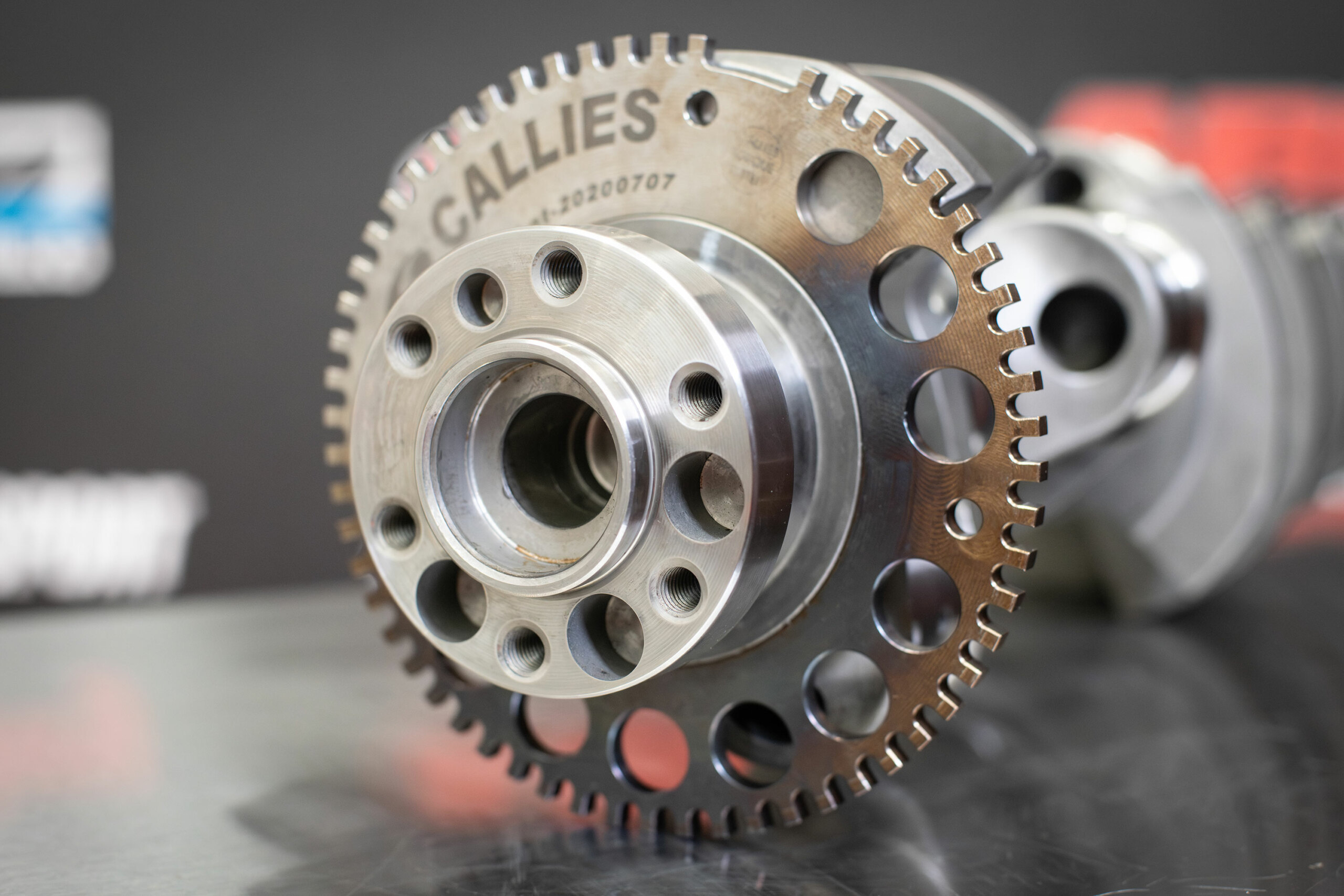
Cranks on modern engines like the GM LS and LT platforms use toothed trigger wheels welded to the crank to draw a signal by a crank angle sensor for the ECU to read and determine engine position. You need to know the tooth count if using an aftermarket ECU to set up the crank trigger, otherwise your engine won’t fire.
MAIN JOURNALS

The crankshaft is carried in the block by bolt-on caps, which carry carefully measured bearings that allow a thin film of oil to lubricate the spinning crank, known as main bearings. The number of main bearings in an engine is determined by physical packaging, the desired rpm, and expected cylinder pressure.
COUNTERWEIGHTS

The crank cops huge rotating force from the motion of the piston and conrod going through their stroke, so counterweights are used along the crankshaft’s length to keep it balanced at high rpm. These can be modified during fine-tolerance balancing by drilling and adding Mallory, which is twice the weight of steel.
KEYWAY

Rectangular slots can be machined into a crank snout – called a keyway – to fit a hardened steel key, which securely locates timing gear, harmonic balancers, or blower drives. Some race applications feature dual-keyways to protect against slippage from severe backfires, rpm or belt-driven force.
ROD JOURNALS


The conrods are connected by their big-end bearings to the crank on rotating journals, also called crankpins. The distance between the axis of the rod journals and the axis of the crank centre line determines the stroke of the engine. Most V-engines share rod journals between opposing cylinders.
Comments