
First published in the July 2003 issue of Street Machine
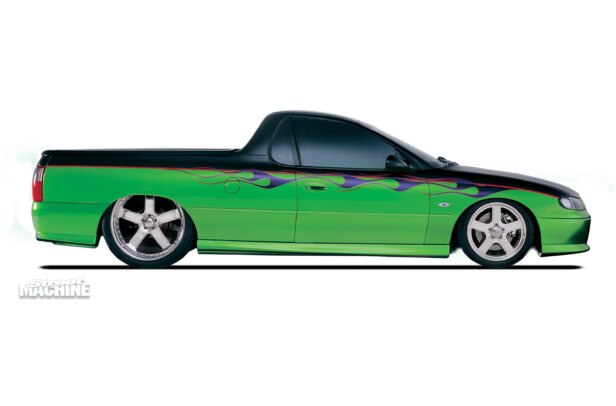
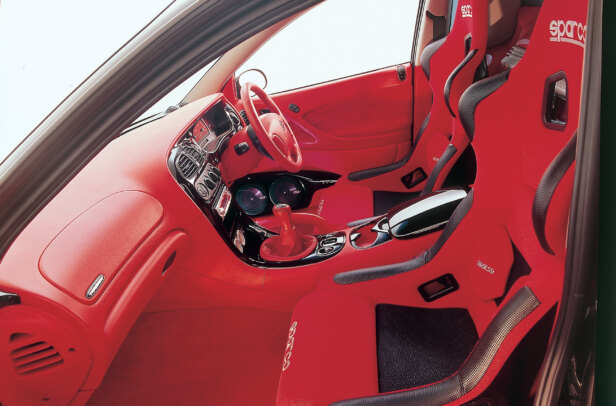
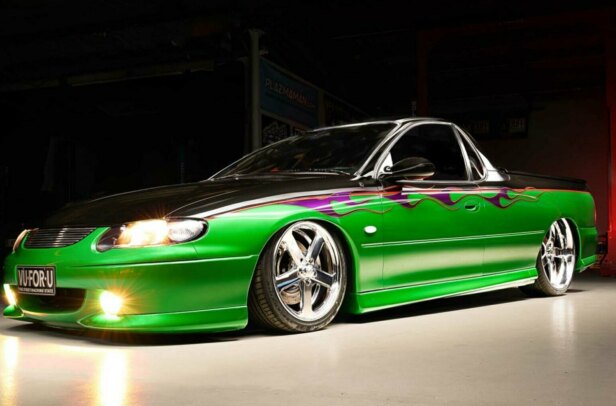
With the outside of VU FOR U looking good enough to stop traffic dead in its tracks, it was time to turn our attention to the interior. Straight up we knew the factory carpets were just not going to cut it. While there was nothing wrong with their quality or condition, their plain grey was just too boring – especially when compared to the ultra-vibrant Sparco seats. In fact, we were so impressed with the colour of the bright-red Sparcos we decided to continue the colour theme onto the rest of the trim – carpets included!
We got in contact with Geoff at Tru-Fit carpets to see what could be done about the situation.
“No problems,” he replied, “we’ve got our own carpet knitting machines and can make just about any colour under the sun.”
Beaut! So it was off to Tru-Fit for Geoff and the team to start stage one of VU FOR U’s new redder-than-red interior.
STEP-BY-STEP:

1. For a snug fit, carpets require a specific mould and this is just a glimpse of the countless number of moulds Tru-Fit have created. With the VU ute still new on the market, VU FOR U was the very first chance for Tru-Fit to create one matching the model.

2. All carpet starts out as individual bales of thread. Looking more like something out of a sci-fi movie than a sewing machine, this spinner gives Tru-Fit the ability to make carpets to just about any specification with a multitude of different colours in their range.

3. The carpet is manufactured in 40m rolls up to 1.8m wide. It has a stiff plastic backing which softens when heated in an oven. Once hot, it can be moulded into the desired shape which it will hold even after having cooled off.

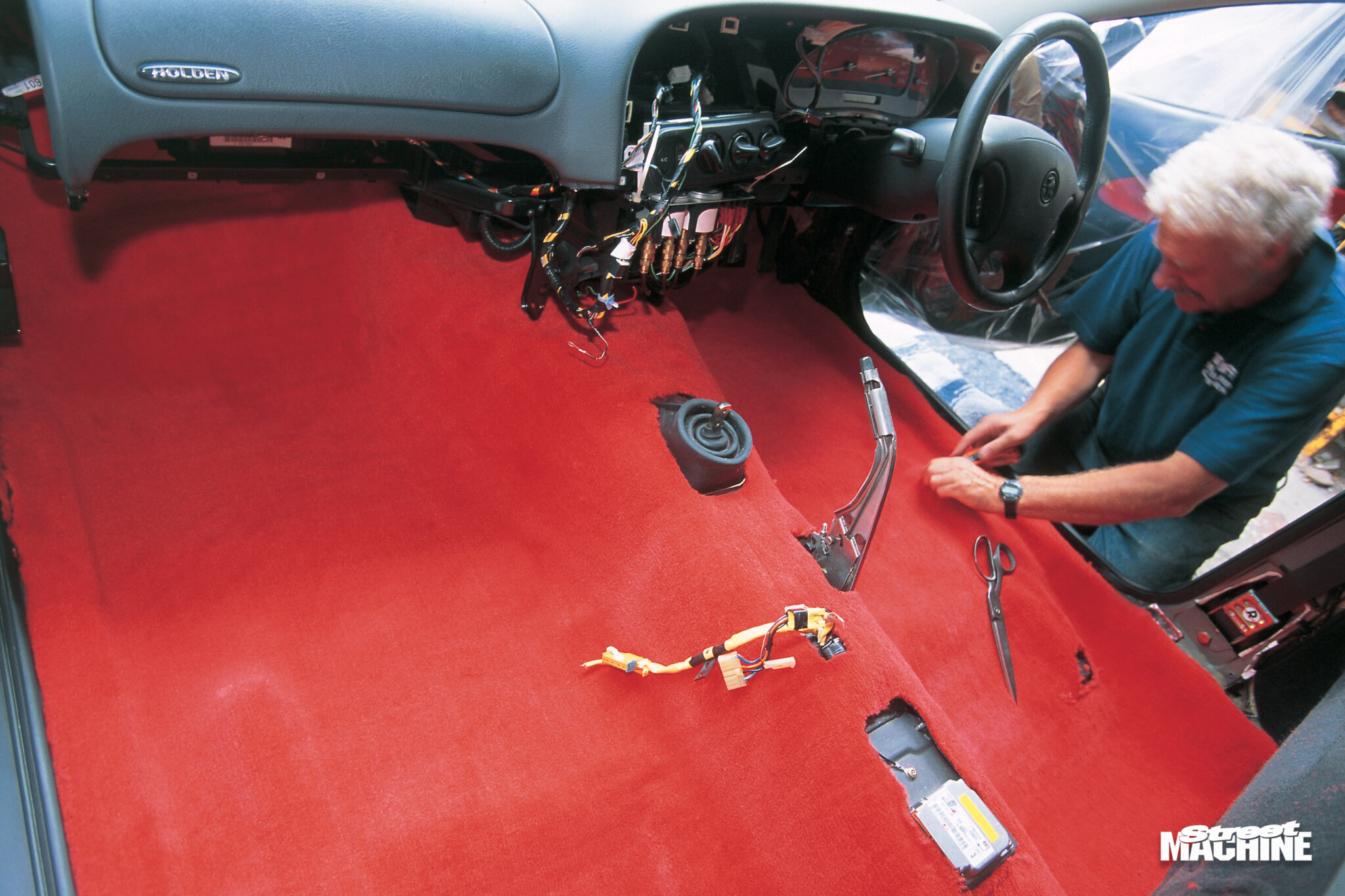
4. The carpet is heated by an array of electric elements. It’s just like the bar heater you have at home – only bigger! Once out of the oven, time is at a premium, as the carpet cools quickly. It must be accurately placed in the mould as there’s not much overhang.

5. The carpet is clamped in the mould for around two minutes until it cools. Gloves must be worn when handling hot carpet as its plastic backing will cause nasty burns. Once relatively cool, any excess is trimmed off and the gearshift and handbrake cut-outs are marked.

6. And there you have it: one set of moulded carpets! Tru-Fit prefer the polypropylene-backed carpets as they tend to wear better. They also offer cut or loop pile finishes. We wanted that lush look and soft feel so we went for the deep cut pile.

7. Fitting the bright red carpets required stripping out just about all of VU FOR U’s interior. We started with the seats. Extra care was taken not to bash the sharp corners of the seat bases into the door trim or kick strips as they’re both quite easily damaged.

8. The factory carpets wrap around the two vertical steel dash supports just in behind the lower half of the centre console. Rather than rip the entire dash out, we just cut the last section to make things easier.

9. Laying the new carpets in is fairly easy. Keep pushing and prodding it in the corners until it fits snug. Portions of the original carpet were left in place as Holden used moulded foam under some sections for a nice flat floor.

10. The carpets fit very neatly and require only minor trimming. While the cut-outs for handbrake, gear shift, etc, have already been incorporated, a few holes are made for brackets and other things that may be added.

11. With the carpets in place, replace all the trim. Take your time and don’t force things, as everything should easily go back into place. One hint for lining up screw holes behind trim panels is to poke a spike through the panel to find the obscured screw hole.
MOUNT UP

As soon as we spied Sparco’s awesome-looking Fighter buckets, there was never any doubt they would become the centrepiece of VU FOR U’s swish new interior. New to the R&R Speed line-up, the Fighter is an ADR-approved street version of Sparco’s very popular Pro 2000 FIA racing bucket. We liked them for their visual impact, however their hip-hugging design and stylish side-wear patches were welcomed bonuses.
Mounting them up was relatively easy, but there were a few considerations. Most late model cars (including the VU ute) have seatbelt tensioners built into the original seat base frames. Their job is to tighten the seatbelt and pull the occupant hard into the seat when the airbag/s go off – and they must be retained.

This was not a problem as an aftermarket seat can be easily adapted to mount to the original Holden base frame. A simple H-style frame was fabricated from 35x5mm steel and fixed to the original bases with the same bolt holes used to secure the factory seat squab. From there, the Sparcos were secured to the new fabricated section with high-tensile bolts that screw into the captive threads moulded into the bottom of the buckets during manufacture.

Comments