
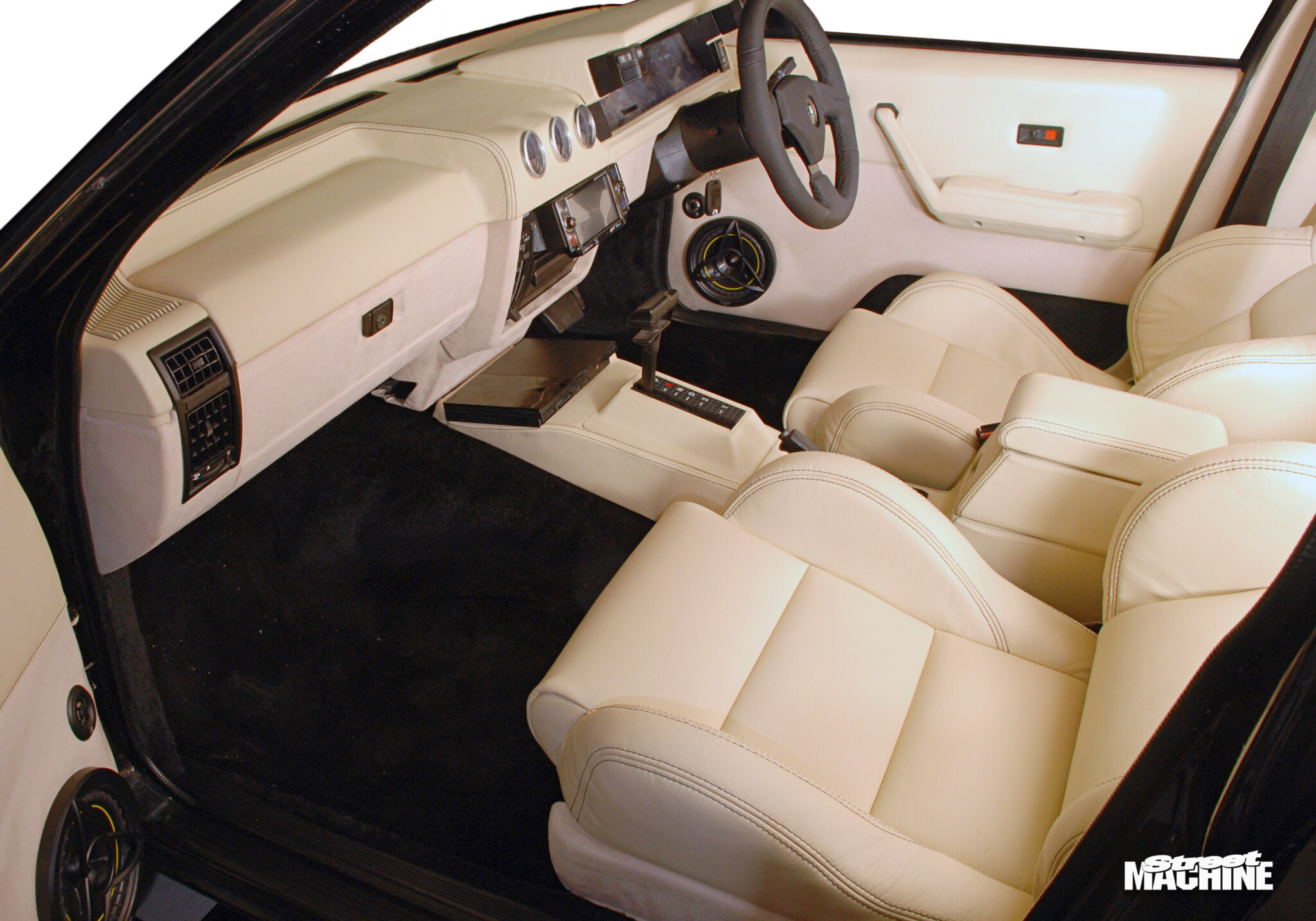
First published in the March 2009 issue of Street Machine
The best built car needs an interior to match. And as Debbie Dunham put it in American Graffiti: “I really love the feel of tuck and roll upholstery.”
1. LEATHER vs VINYL
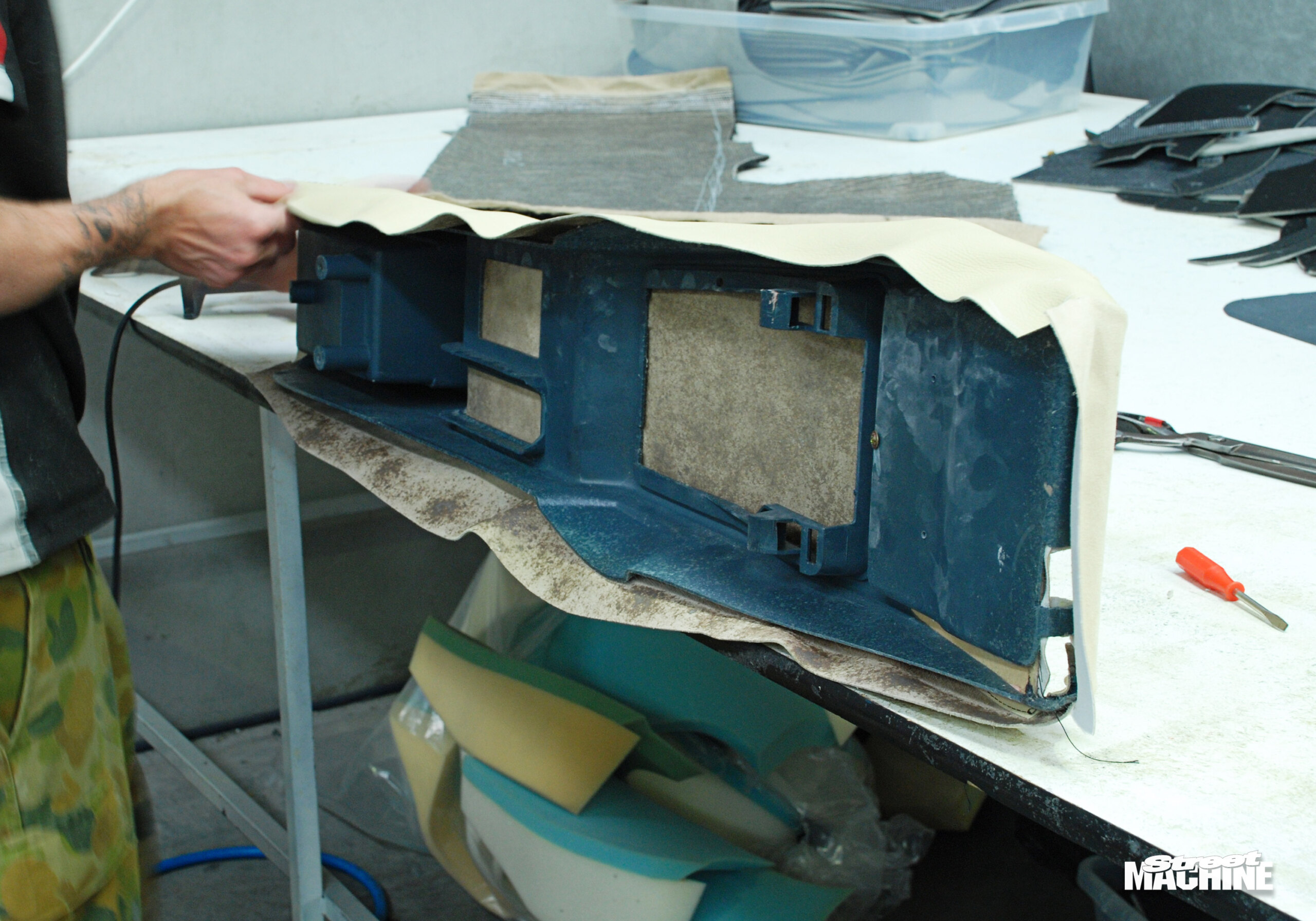
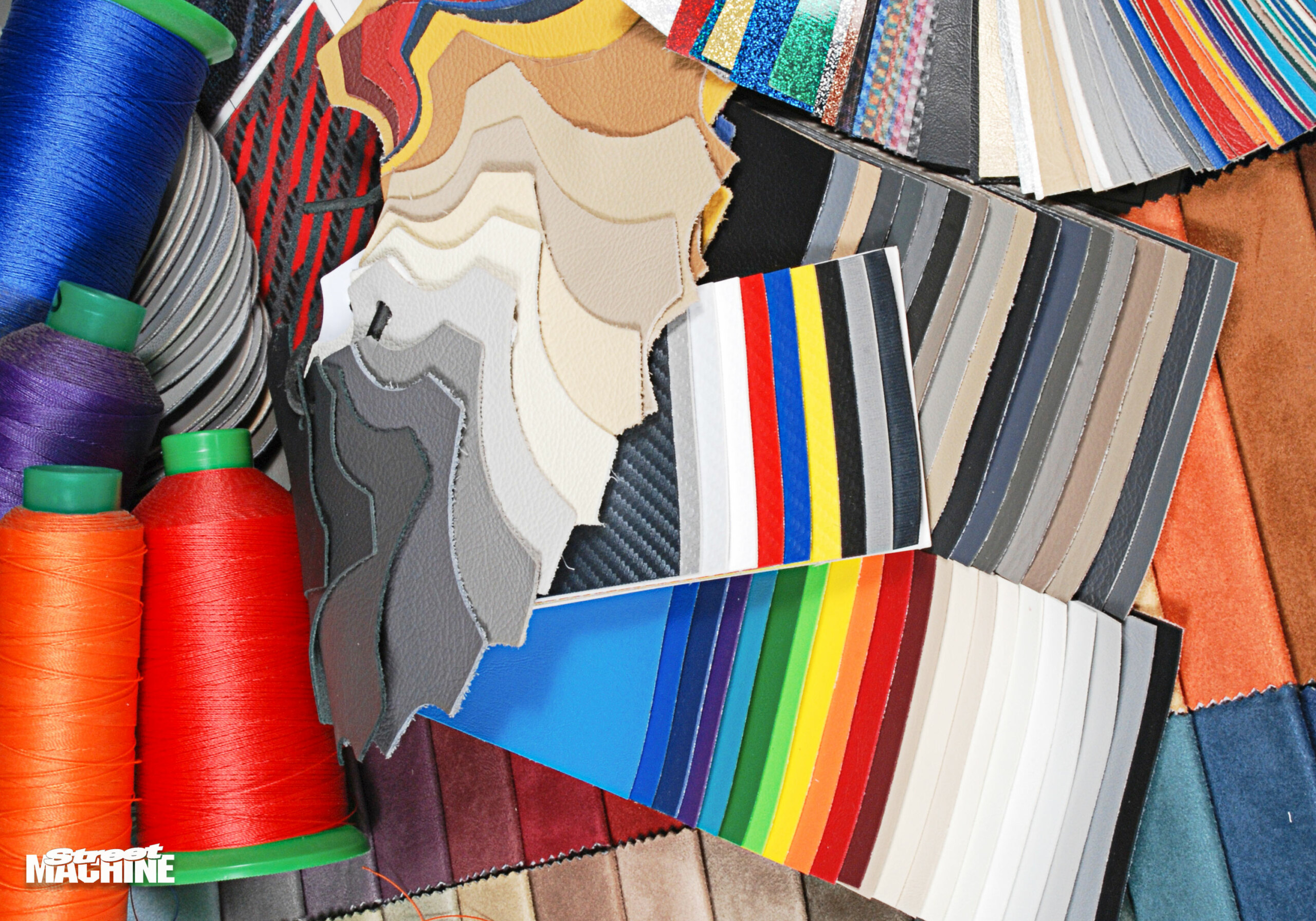
Having decided on a re-trim, the first choice is leather or vinyl. Leather adds thousands to a full job, with four door trims, dash, parcel tray, front and rear seats. But the quality and feel of modern vinyl can be soft and supple with a pattern that’s a direct imitation of leather.
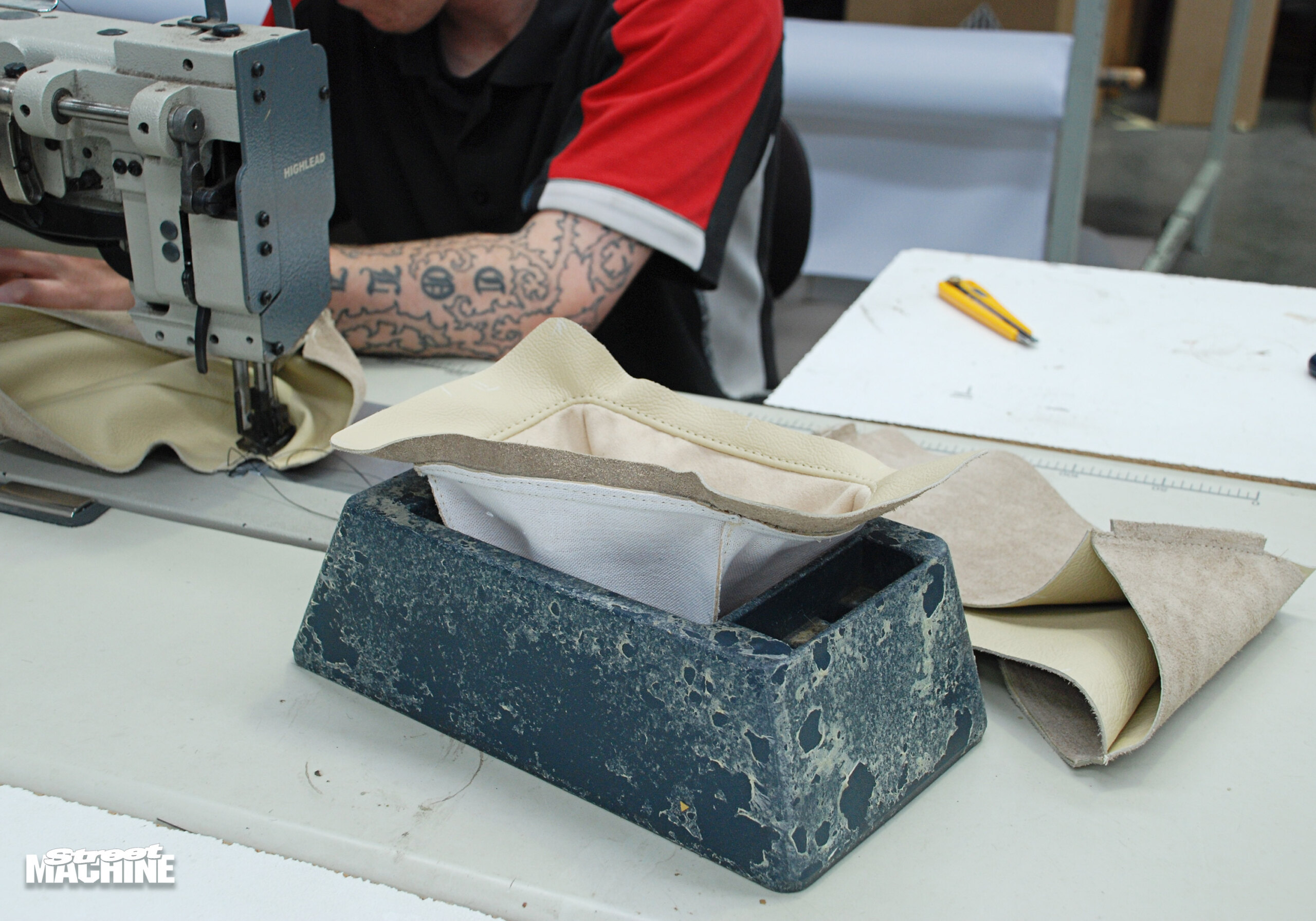
To distinguish leather from vinyl, look at the backing. If it has a fibrous, suede appearance, it’s leather. If it has a white, woven backing it’s vinyl.
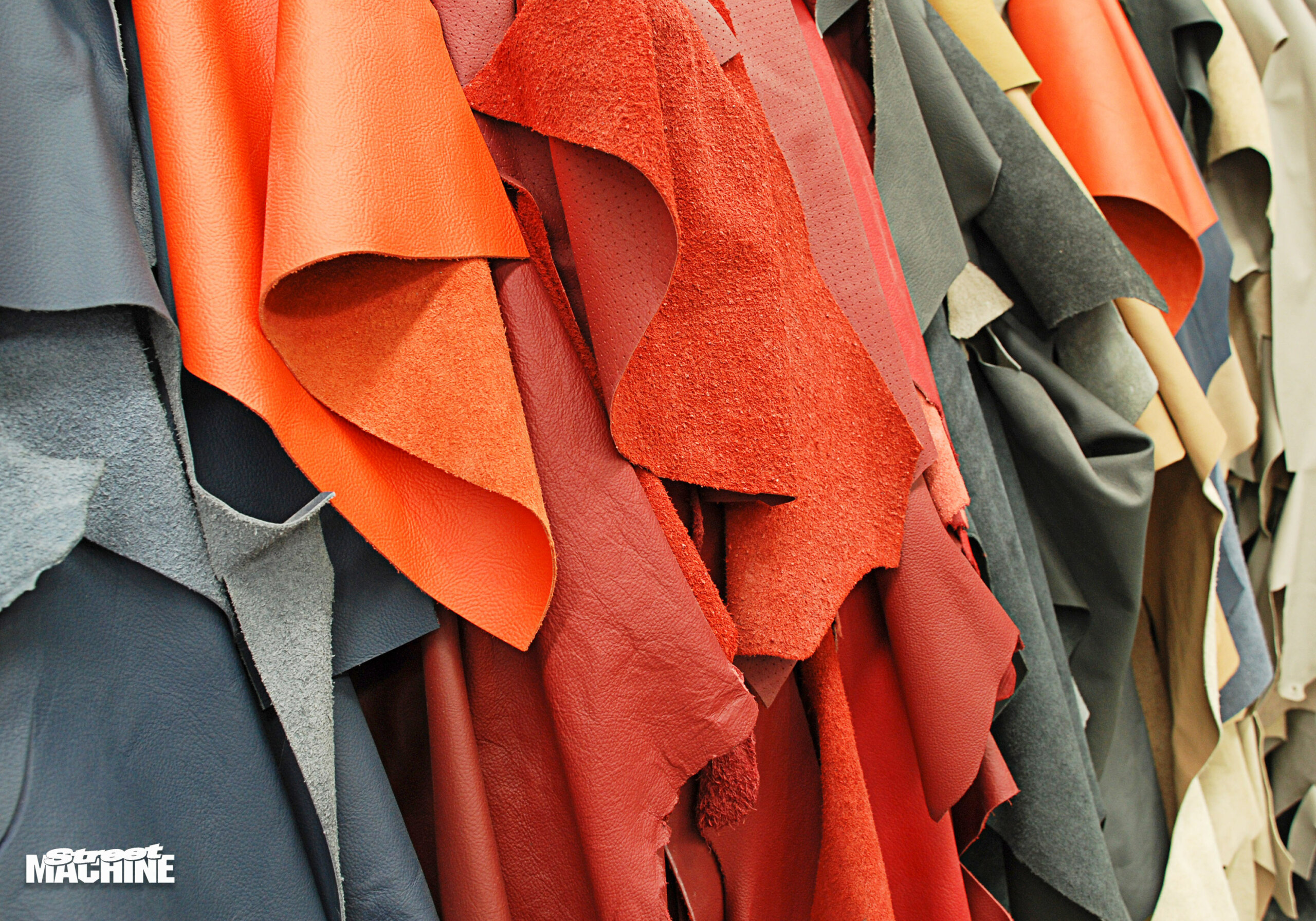
Motor-trimming supplier Nolan sells leather and vinyl. It says the inside of a car is a far harsher environment than the average lounge room, so automotive leather needs extra processing, with more coatings and is generally thicker than furniture or clothing leather. That’s why it doesn’t fade as quickly as ordinary upholstery. Auto leather is also stiffer but that doesn’t mean it’s low quality.
2. WHAT DO YOU MEAN?
There are standardised terms for referring to leather but hardly anyone uses them. As a rough guide, corrected-grain leather is a hide that’s had a fair bit of processing and has a grain pressed into it. Full-grain (or top-grain) leather has fewer coatings and exhibits more natural texture. Aniline leather is drum-dyed, with no extra dye applied to the surface. These are high quality hides. You’ll also hear ‘nappa leather’ referred to but in common use it’s just soft leather with a range of surface finishes.
3. VINYL DIVERSITY
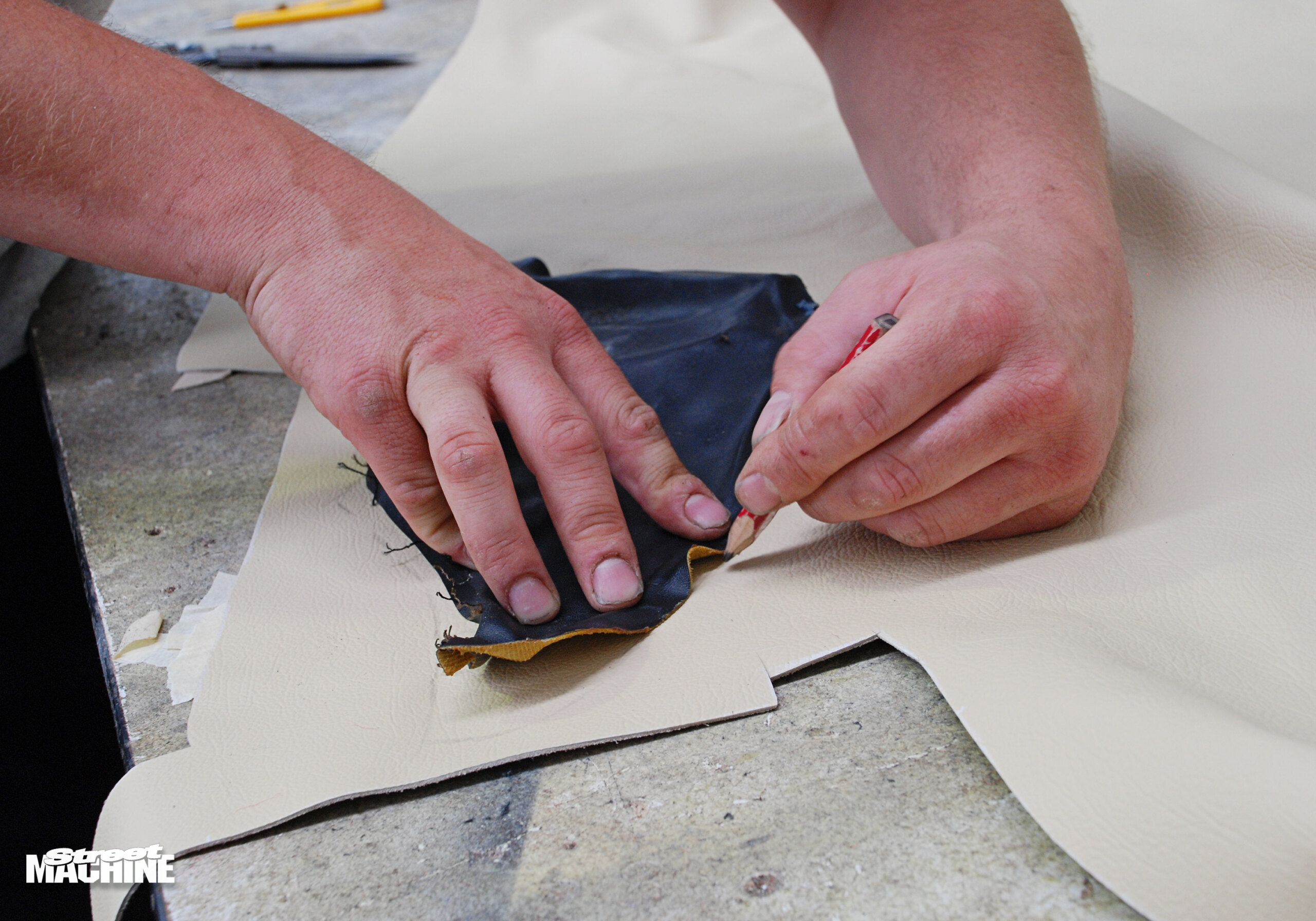
Automotive and marine-grade vinyls differ in formulation and surface coatings. Auto vinyl is made to take a lot of movement from the occupants while marine vinyl is formulated to deal with UV exposure. The backing on auto vinyl is usually a blend of cotton and polyester, which is slightly more supple. Marine vinyl has little or no cotton because it’s likely to get wet.
Automotive vinyls generally come in OEM colours and patterns; marine vinyl offers a broader range, so it’s often used to match custom paint-jobs. That’s probably the only good reason to use marine vinyl in a car.
4. SEATS
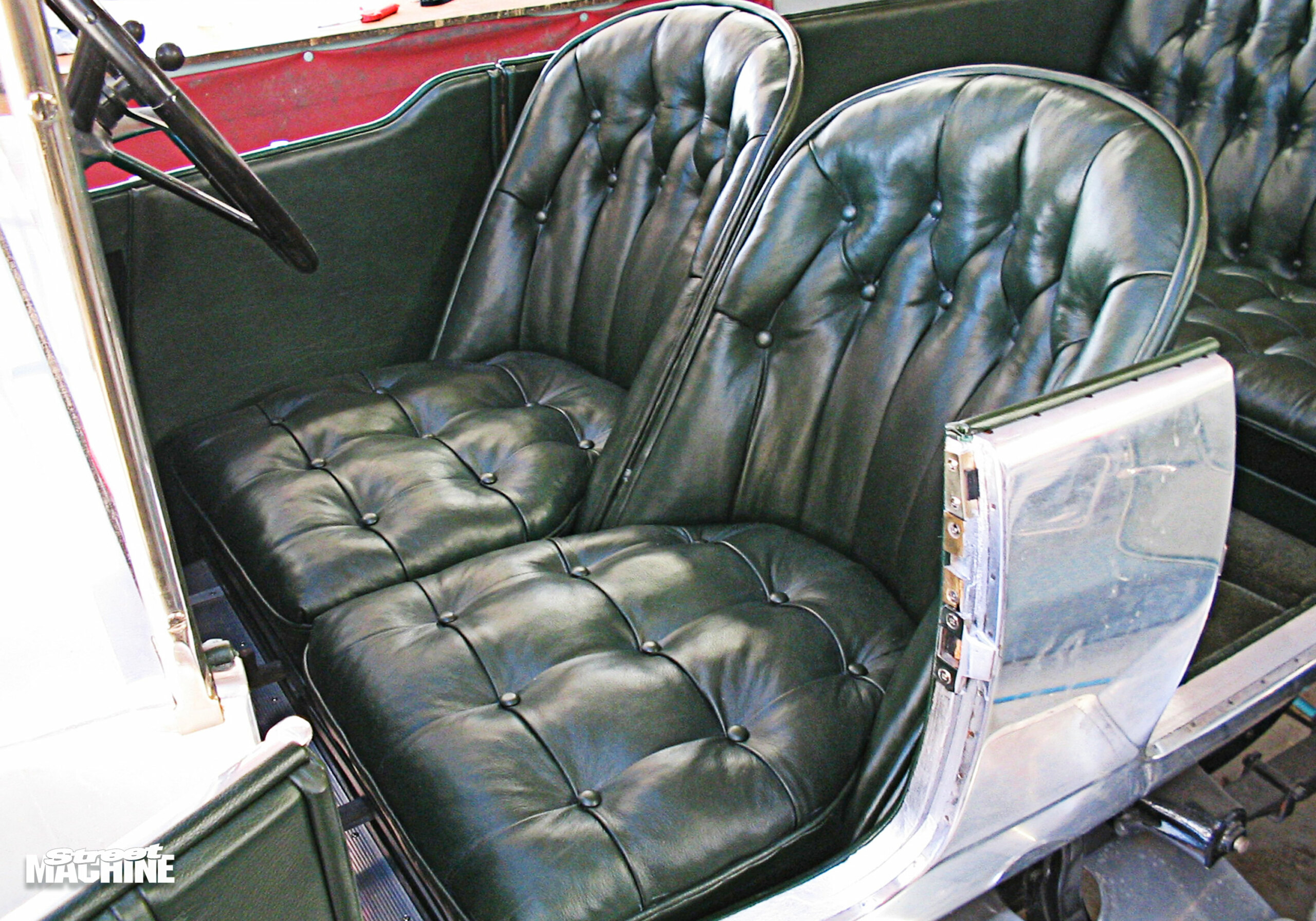
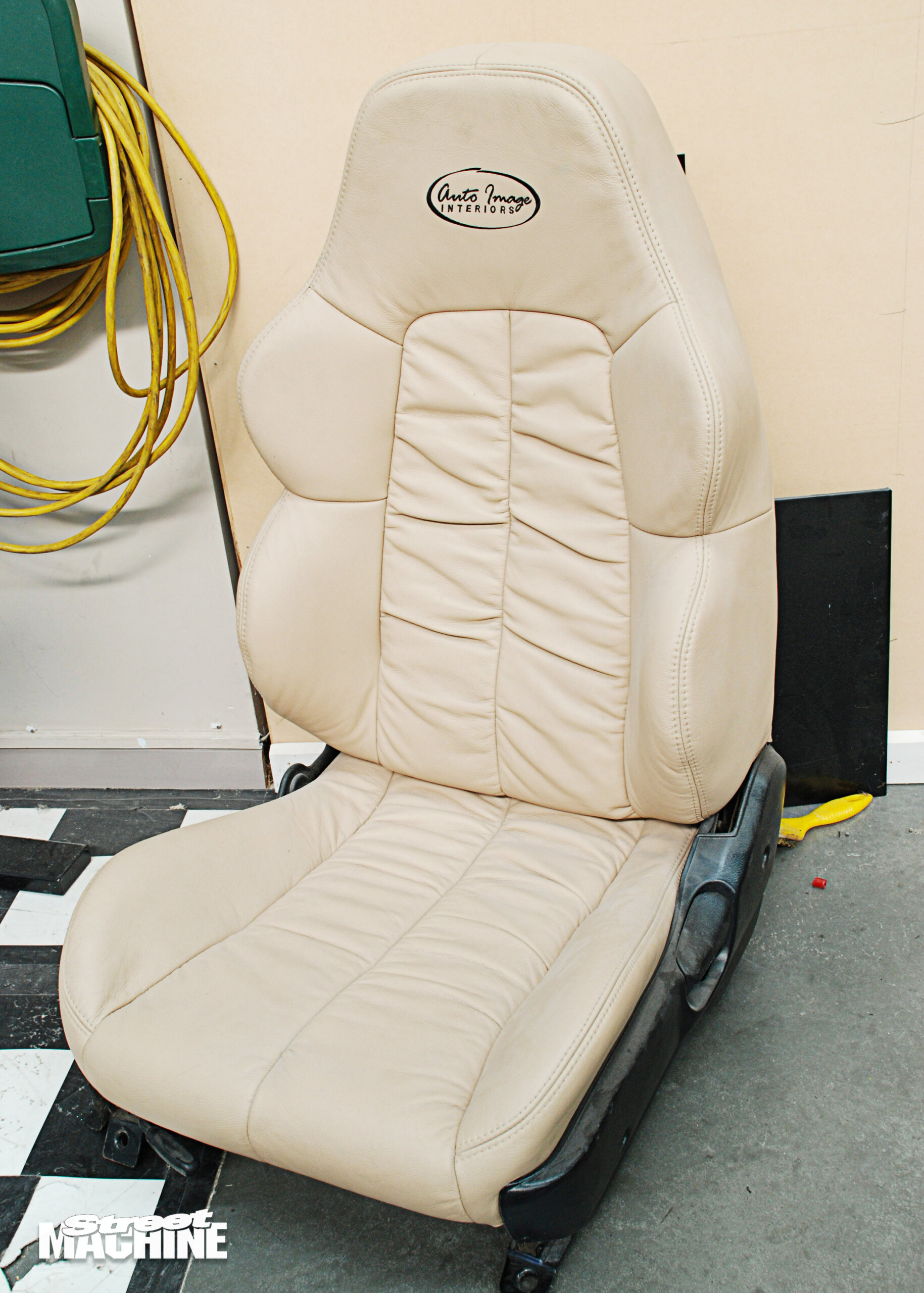
RIGHT: Gathered effects are created by cutting the backing foam to the right length but making the leather longer. Here’s the result when the longer leather is gathered and stitched to the shorter foam
Because seats are complex shapes, each cover has to be made from several pieces. Each can be a different colour, texture and material. This means the bits you actually sit on can be leather while other panels could be vinyl. That saves money without compromising the look and feel.
Panel design and stitching are extremely important. A job can look good but deteriorate rapidly if the trimmer doesn’t know what he’s doing. There isn’t a single correct method but there are certain things which should be avoided. For instance, large panels tend to stretch and develop creases. Dividing such panels by placing joins where stretching would otherwise occur can help a re-trim maintain its appearance.
5. FOAM
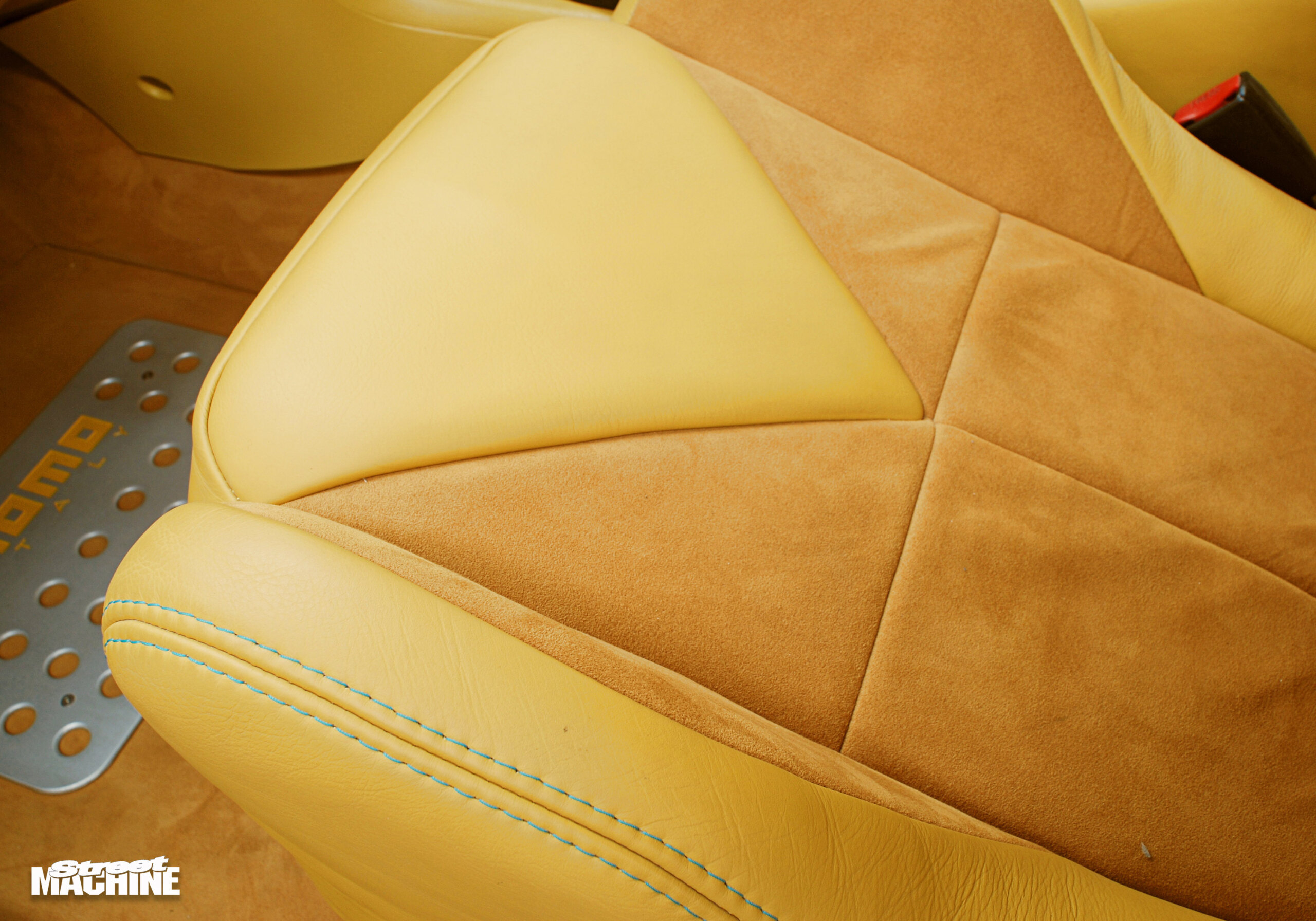
To create a smooth look with nice flat seams, each panel in a seat cover generally has a thin layer of foam sheeting stitched to the underside. Varying the foam’s thickness can create different effects.
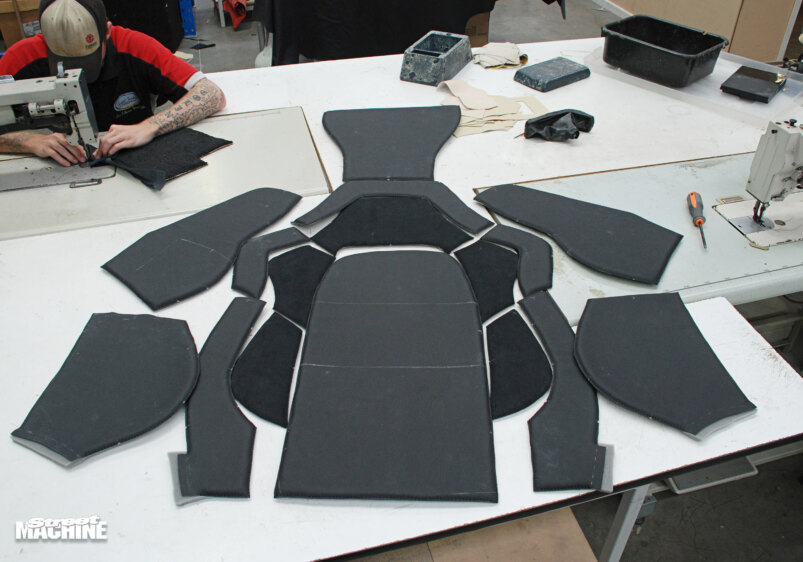
Thicker foam creates deeper-looking joins, while decorative top stitching will appear deeper and more plush with thicker foam.
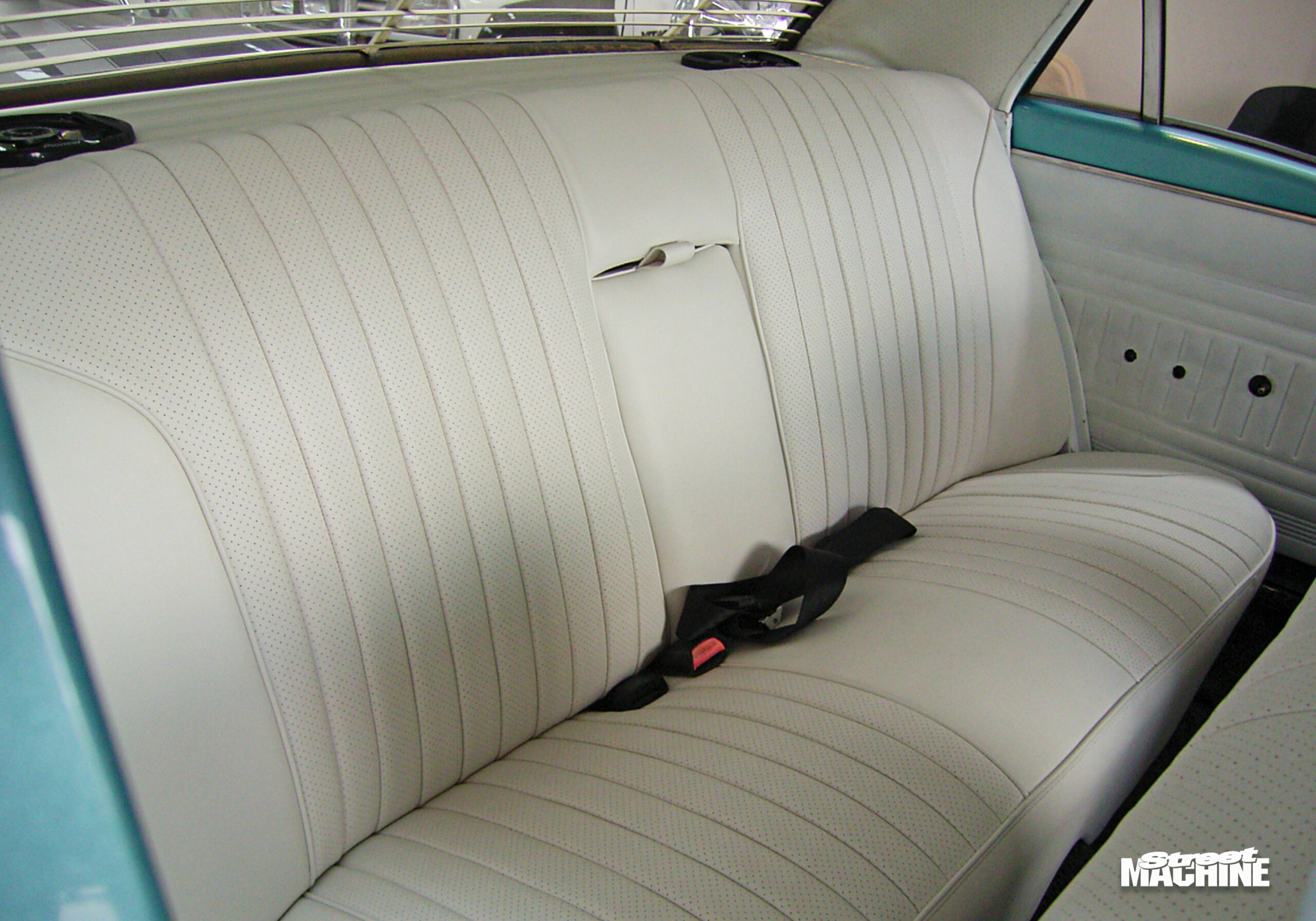
Parallel stitch-lines through deep foam backing is how simulated tuck and roll is achieved. Another way of creating really deep seams is to sew Velcro down into the actual seam.
6. DASHES
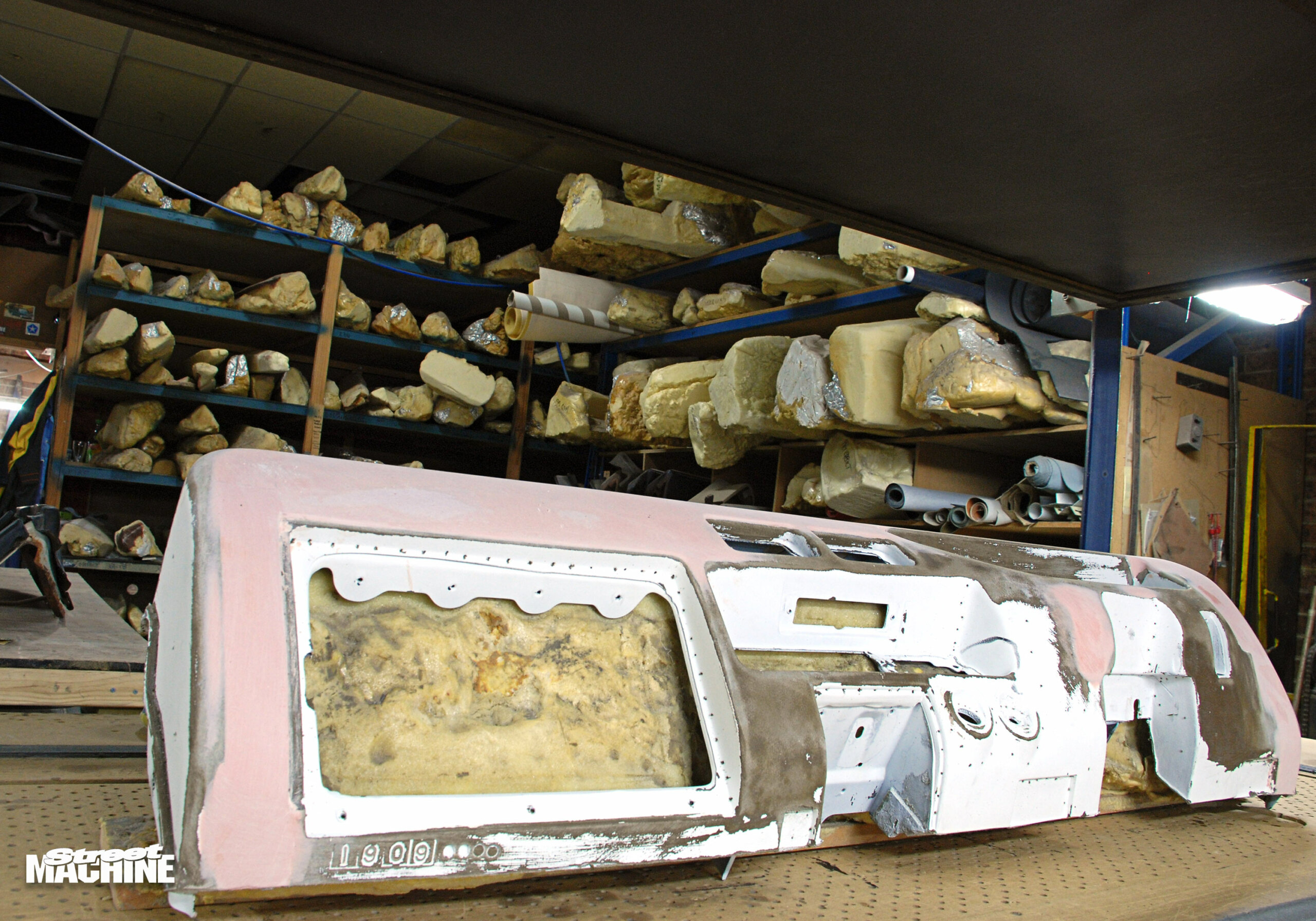
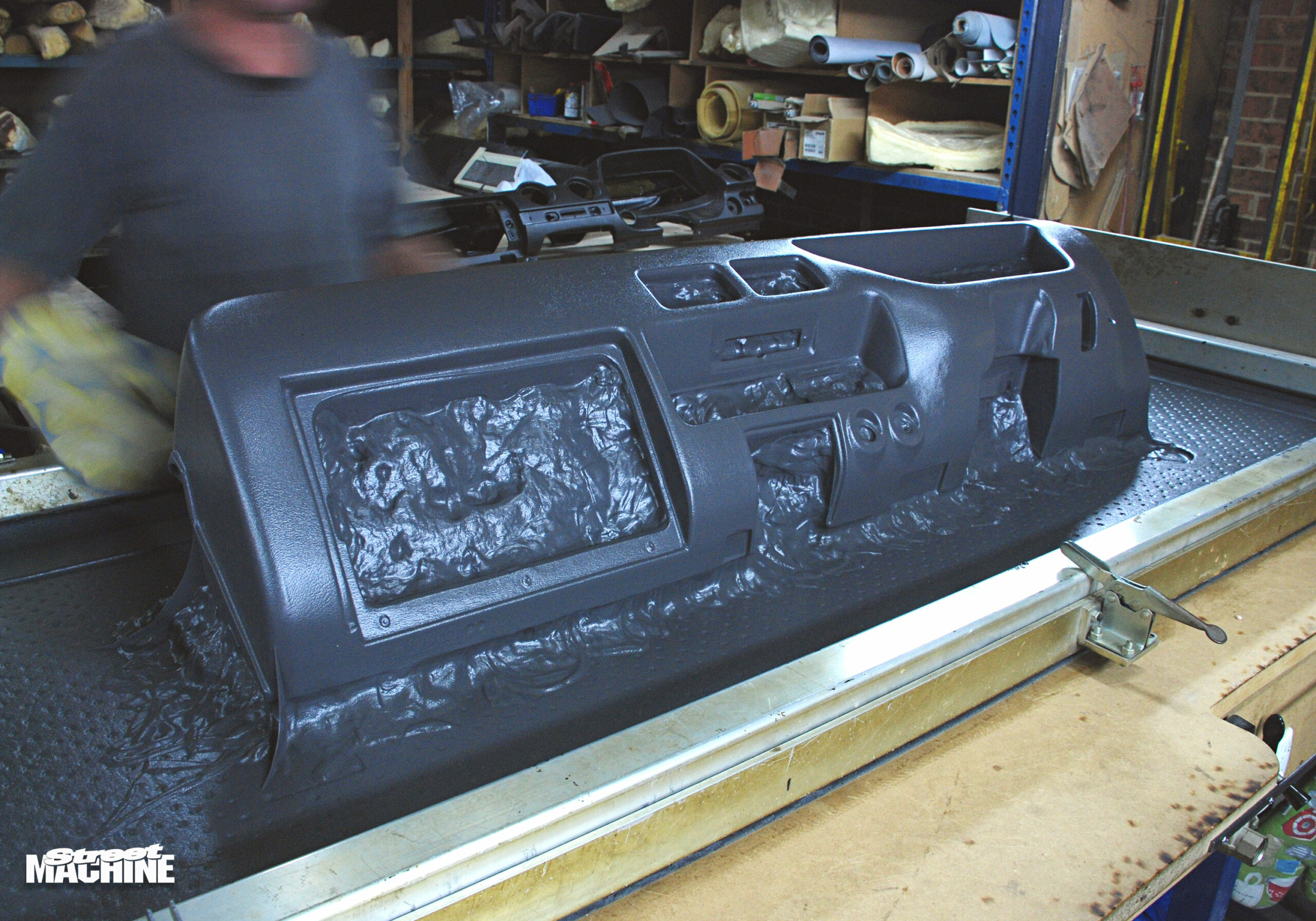
Vinyl is very supple and mouldable and some areas — particularly dashes — have shapes that are too intricate for leather. In such locations, vinyl is the better choice and the only way the covering can be held in place is with glue.
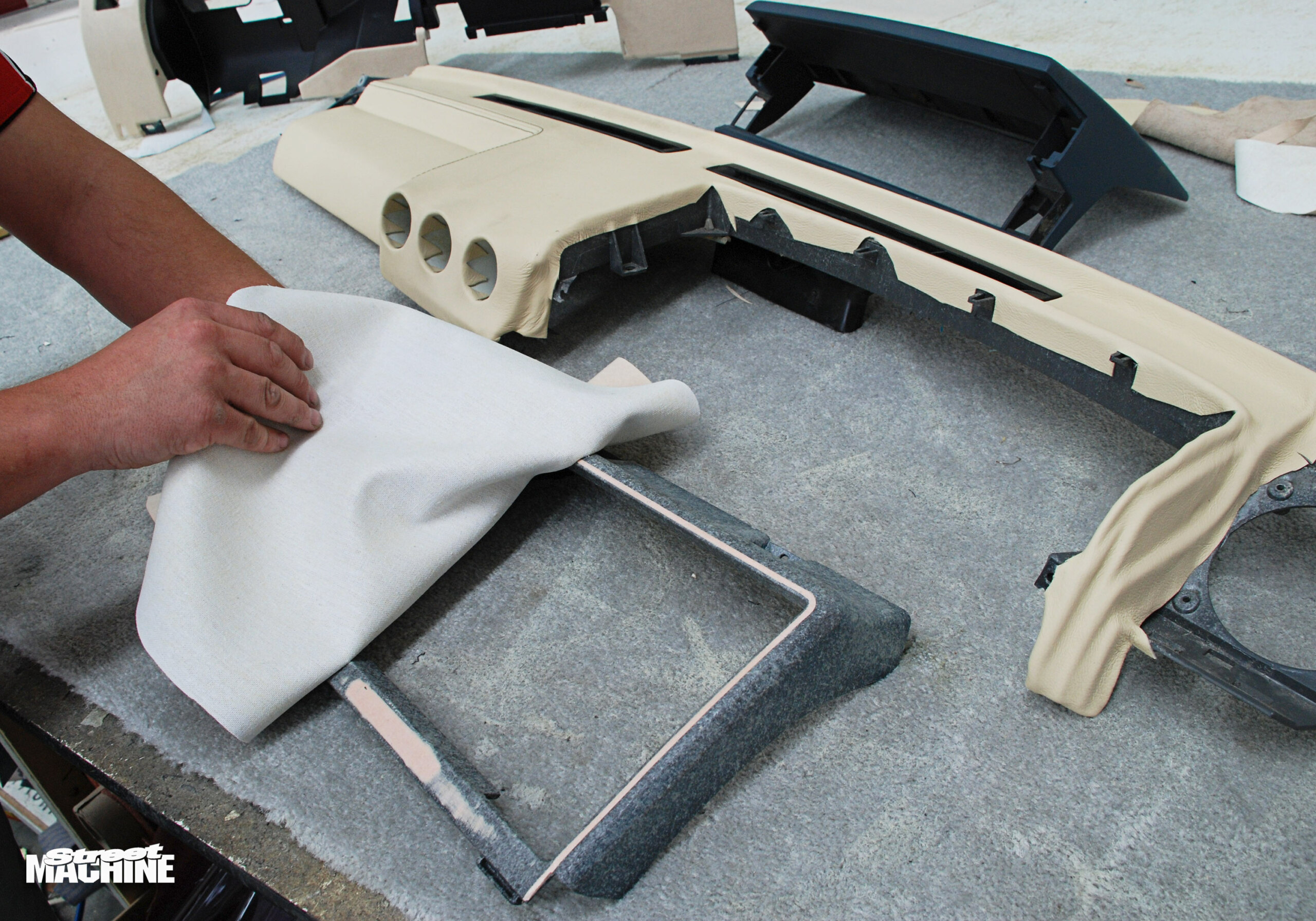
While it is possible to force leather in, it will inevitably lift and look terrible. Some pieces (dash panels again) are even beyond the flexibility of normal vinyl. These are re-skinned using a stiff unbacked vinyl that’s softened by heating before being vacuum-shrunk over the form. This vinyl is thin, so the old vinyl must be removed and any damage repaired first.
7. ADDING BULK
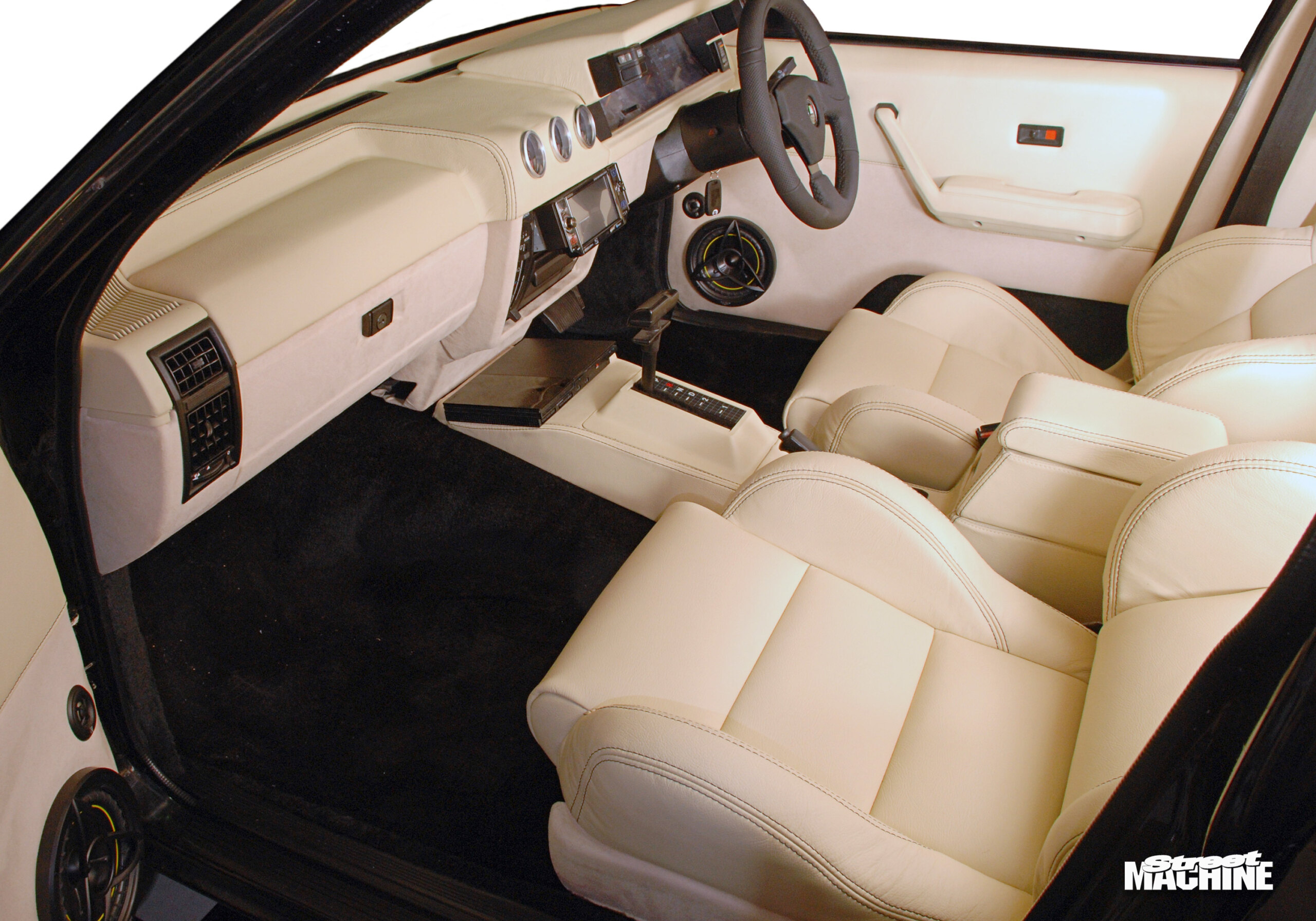
Many original interior pieces are uncovered. Not only is covering such pieces a challenge, so too is allowing for the thickness added by the covering. Vent bezels, gauges and close-fitting trim pieces will need checking to allow for a few millimetres of covering. Careful selection and placement of seams makes a huge difference. The upper edge of the VL Commodore top compartment (above) is a good example; a single top stitch gives a sharp right-angle around the edge, minimising bulk and allowing the upper lid to sit flat.
8. PILLARS & PODS
Pillars and instrument pods can often be covered successfully by securing the edges of the leather or vinyl at the back of the moulding. However, heavily shaped sections can be a challenge in the same way as dashes and it may be better to get these vacuum-skinned. The Dashboard Doctor does quite a lot of them.
9. DOOR TRIMS
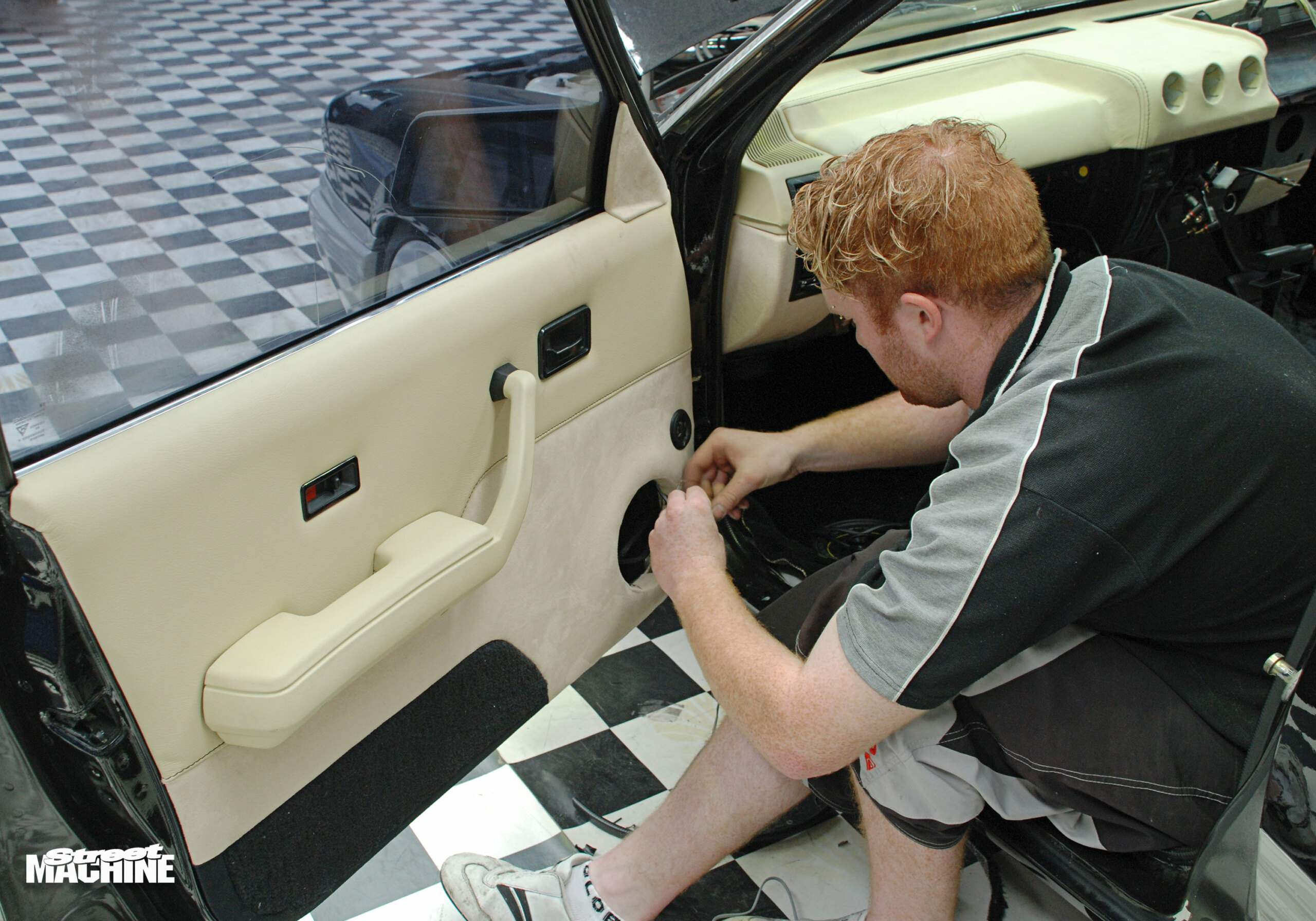
Reproduction trims are available for many Australian classics, featuring authentic heat-pressed vinyl covering and chrome accents, as well as insert panels in different materials. But custom door-trims can really make your project stand out. Strong effects are possible by creating trims from shaped and matched panels covered in different colours and materials. Again, varied thickness backing foam can be used to good effect. Covering individual panels and fitting them together helps achieve the look of really deep seams with no stitching showing.
10. SHIFTER BOOTS
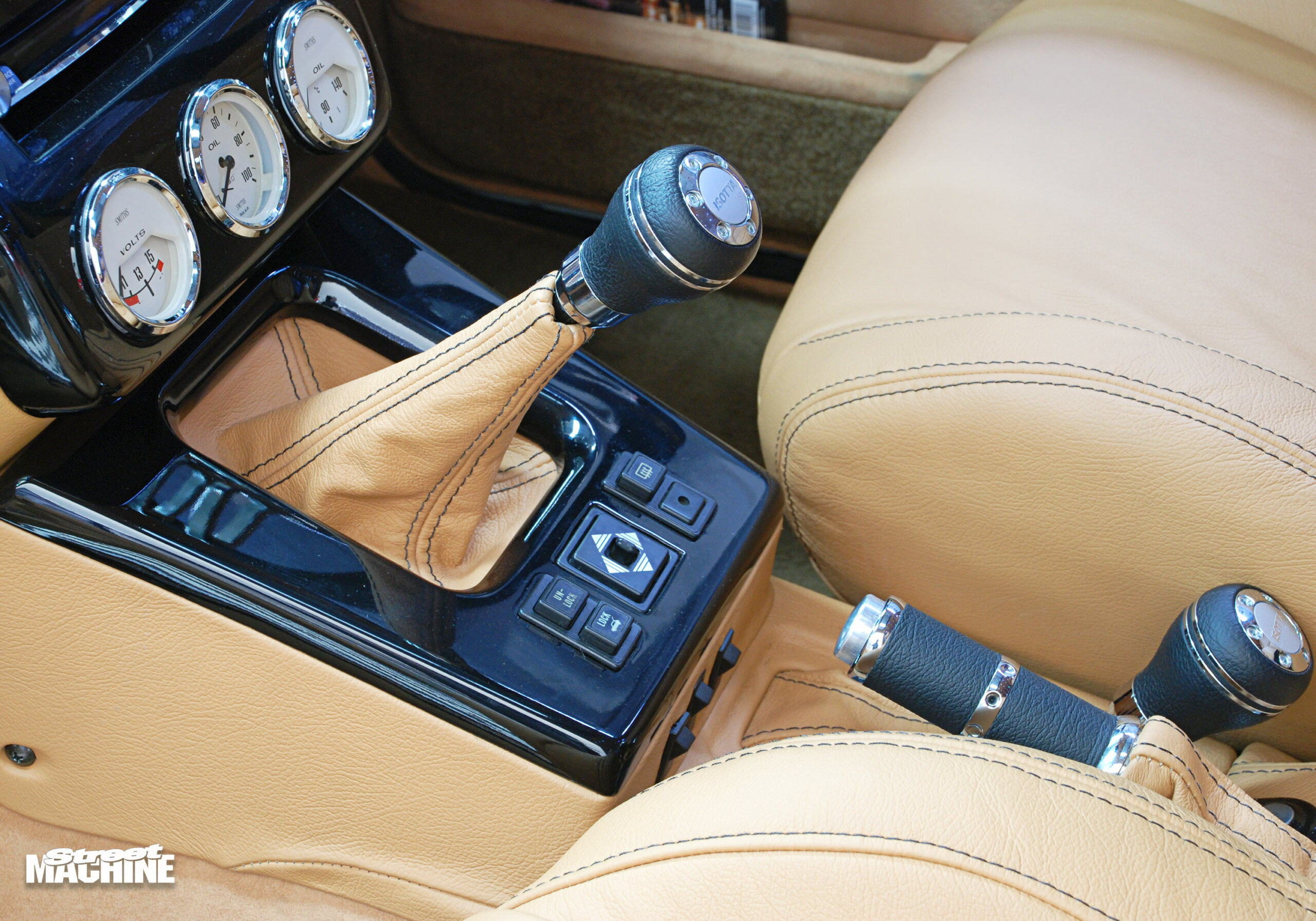
The most important thing with shifter boots is to cover the full range of movement. In some cars, they’re sewn into the carpet so if there isn’t enough travel they’ll start pulling the carpet up.
11. WHEELS & KNOBS
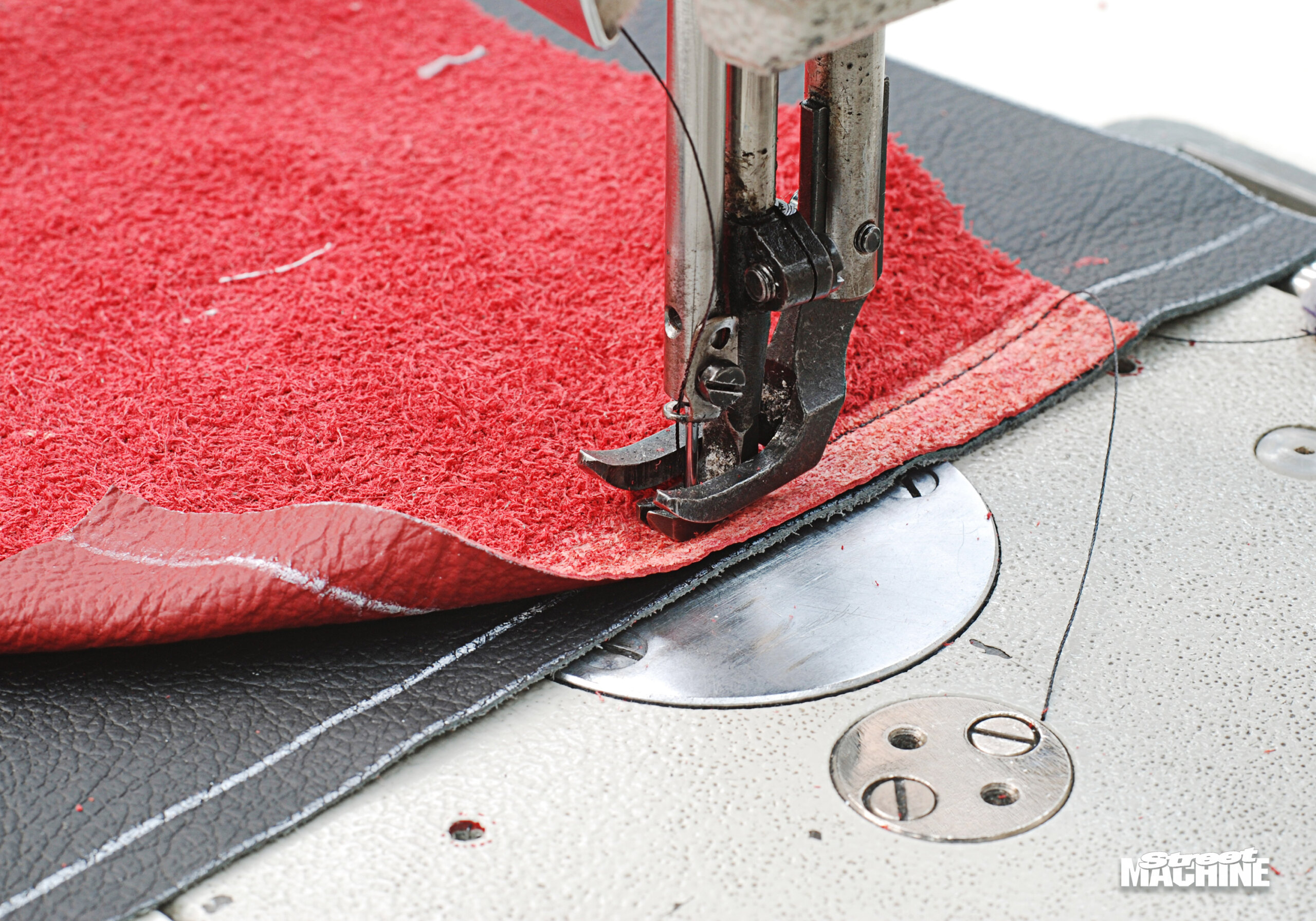
Steering wheels and gear-knobs are tricky. If the covers stretch, they become loose and unpleasant to use. This is tackled by making them extremely tight. The edges of panels on components like these are made thinner by means of a process called ‘skiving’ to avoid lumpy seams.
12. ROOF LININGS
There are basically two types roof lining: moulded and hoop. The former is more modern and is usually one piece, while the latter is identifiable by transverse seams. Sam from Auto Image Interiors says that ordinary leathers and vinyls can’t be used for hood linings as they’re too heavy. Other trimmers may disagree but he says they’ll eventually sag regardless of whether it’s a one-piece or traditional hoop design. The solution is special lightweight vinyl and velour.
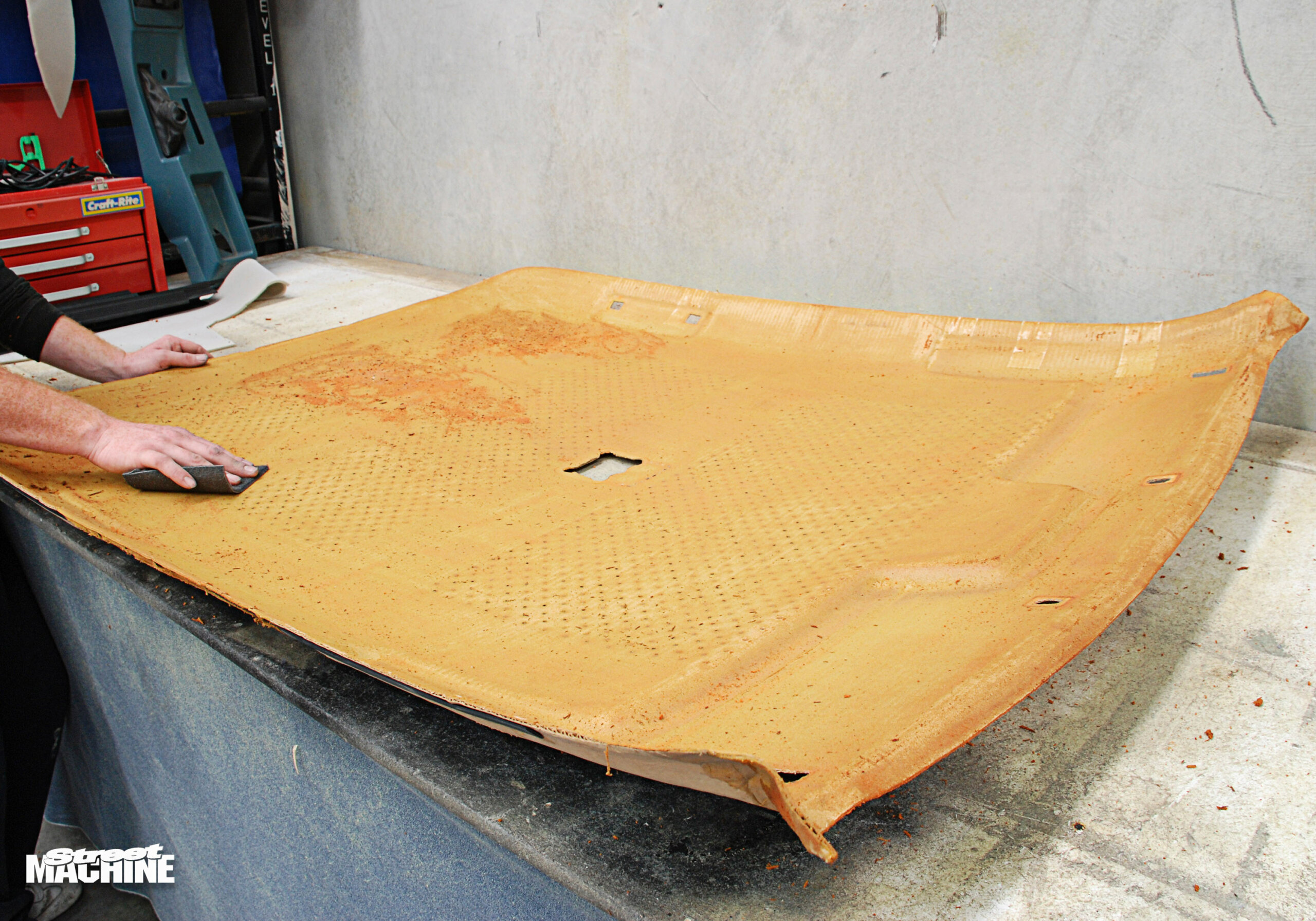
Sam says that while full leather interiors are most popular, budget-conscious customers can get extremely good-looking results with vinyl, while the tasteless velour interiors of years ago have been left behind.
When it comes to matching original fabrics, OEM suppliers sell off their over-runs, seconds and left-over materials to motor body trimmers’ suppliers. After that material is gone, it’s gone. You’re only option is to start ringing individual motor trimmers — sometimes you strike it lucky.
Thanks to Auto Image Interiors (www.autoimage.com.au) and Nolan (www.nolans.com.au) for their help.
A STITCH IN TIME

Stitching panels together is an opportunity to use different effects. The main trimming stitch is back sewing, where two pieces are laid face-to-face and sewn along the edge (above).

When they’re opened, the result is a neat seam with unobtrusive stitching (above). Sam at Auto Image says curving these seams to follow the piece ensures a smooth fit.

A popular stitch is the double top stitch or boot stitch (above). Often this is decorative, applied after back sewing, but if backing material is used (as here) it increases the join’s overall strength.

With single top stitch, only one edge is folded over; the other is simply laid underneath (above). Here, the top stitch is for strength as well as decoration. Single top stitch is excellent for forming sharp right-angle joins.

Ordinary top stitching is often applied to create feature lines. Designs with sharp points are best achieved this way. The black leather seats in Sam’s Ford Territory feature ‘baseball glove’ stitching (above). Holes have to be punched to get the leather strip through the edges.

Piping is created by rolling a thin strip of material over a flexible core, then sewing along it. It can hide unsightly seams (above).
Panel shape and stitching are important; Sam notes that a football is shaped like a football even when there’s no air in it. This is due to the shape of its panels. When it’s filled with air, the stitching distributes the strains evenly and the ball becomes smooth.
Comments