
First published in the June 2008 issue of Street Machine
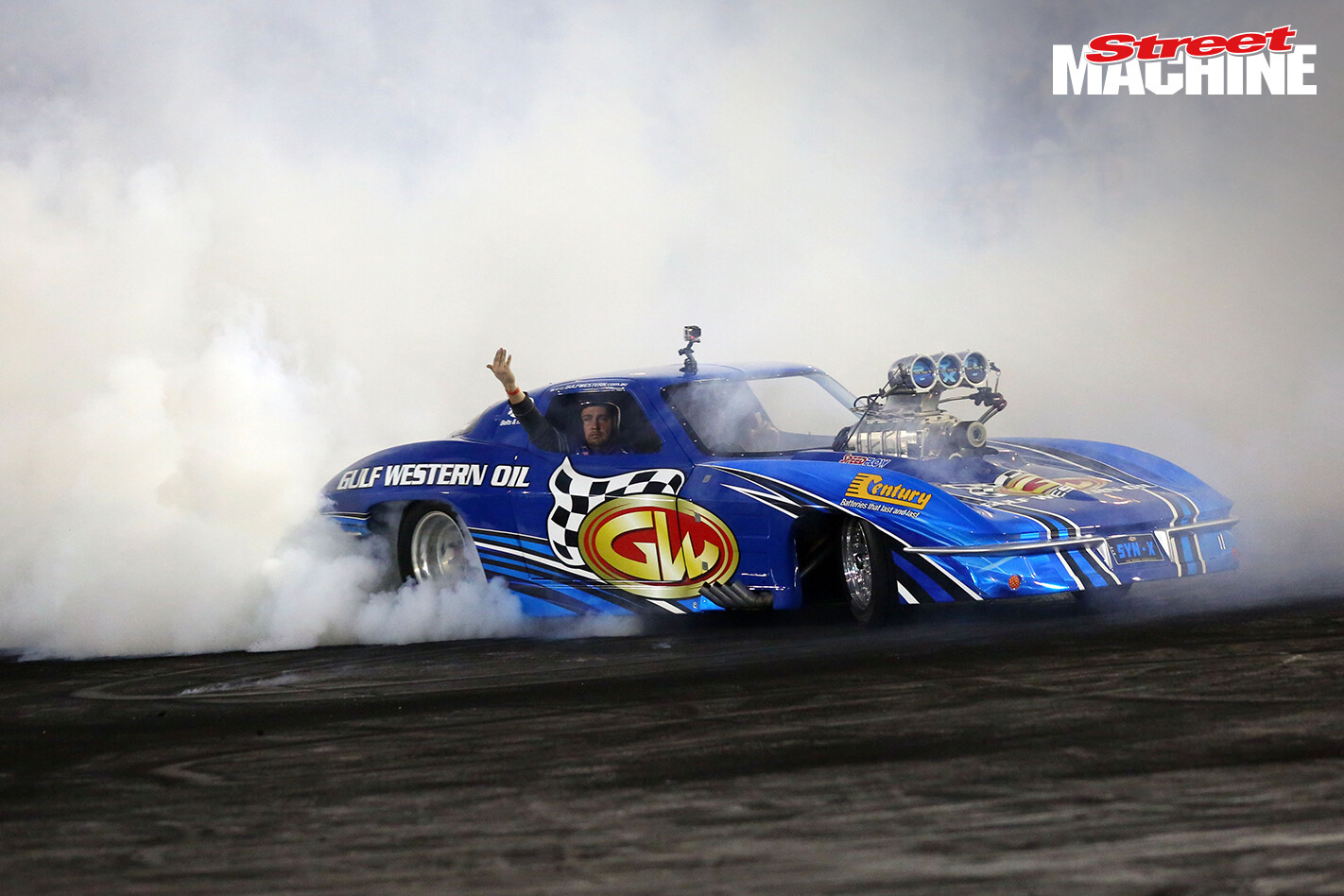
No two people have had a bigger impact on Top Doorslammer drag racing than Victor Bray and Murray Anderson. Victor is a giant of the sport having won six championships and although wins have been sparse lately, Team Bray is still a dominant force.
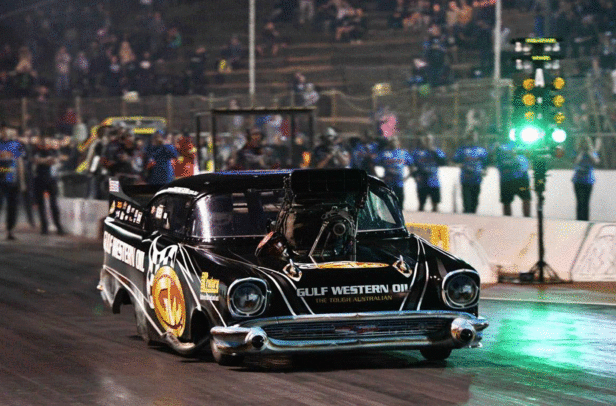
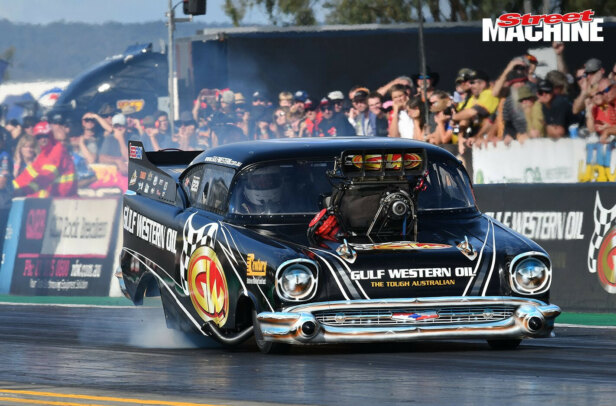
Just as important to the team’s success is the man most readers wouldn’t recognise at the strip — Anderson. When he and Bray put their heads together to build Vic’s second ’57 Chev they revolutionised the bracket and were unbeatable for years.

Anderson has gone on to build many more race cars and his fame is not just restricted to these shores. There are Anderson cars racing in eight countries at last count but what might amaze you is Anderson Race Cars is based in a small Bayswater, Victoria, workshop and is basically a one-man show.
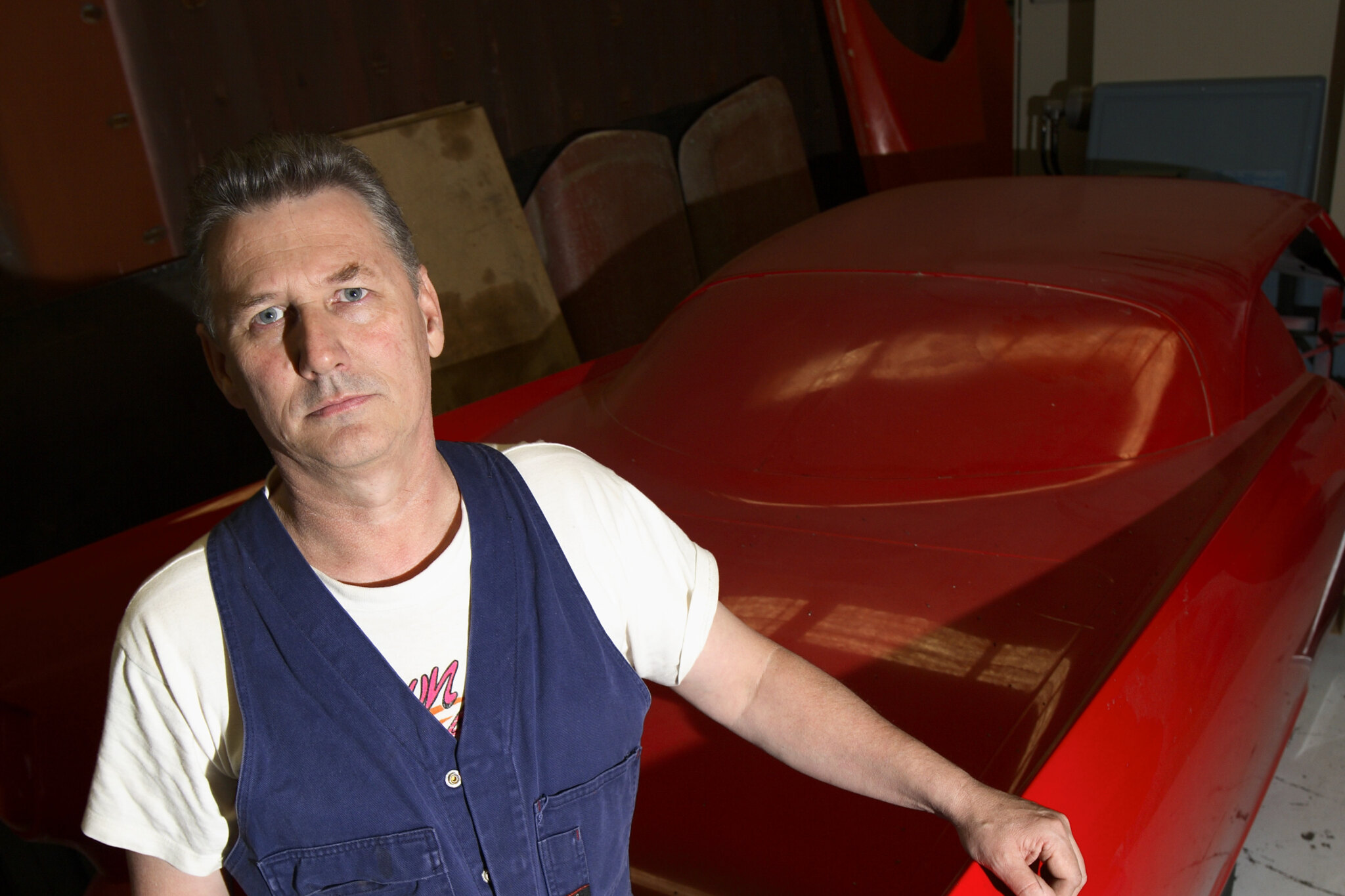
Murray, 50, is self-taught and does everything, from design to fabrication and carbon-fibre lay-up, with a little help from his son and his Staffy. These days Murray is getting into custom motorcycles but we interrupted him to get this revealing insight into Doorslammer’s most successful engineer.

Were you into slot cars as a kid?
I never had slot cars; I come from a poor family. I’ve got six sisters and a brother and we lived in outback NSW. I was born in Wentworth but we lived halfway between there and Broken Hill. My dad was a shearer and fisherman and we’d follow the work all over Victoria and NSW in the 50s and 60s, so where it all started I don’t know. My cousin Richard was a bit of a revhead and he had a Vespa. One night I rode it ’til it stopped. I didn’t realise it was just out of fuel so I pulled it apart to figure out why it didn’t go. I tried to put it back together and had to throw away the rings to reassemble it! I said nothing, refuelled it, fired it up and it started smoking like anything.
The next bike he got was a BSA 250 side-valve. That really got me going and we used to pull it apart; I was about 13. In those days, if something broke you learned how to fix it.

Did you do a formal apprenticeship?
I left school and worked for Brentmore Leyland when the P76 was brand new but only for about eight months; it was too much about learning and I wanted to do something else. That was my only official training. Then I went to Nick The Wreckers when I was about 17. Nick and I started Eagle Spares. We set up a wrecking yard using a building that had been an ironworks. We just went back and forth to the US, buying Mustangs, Camaros and Corvettes before moving Eagle Spares to Dandenong in 1978. We brought in Holley, Weiand, Edelbrock, Accel, Center Line and MSD. Back then, A$1 bought US$1.47, import duty was only three per cent and we were making big profits.
How did you get into drag racing?
Brentmore Leyland was across the road from Graham Withers Speed Shop. He’d brought out Don Garlits and he had his dragster out the front of the shop. I’d never heard of him but I was fascinated by this dragster. One day I was looking at it when a guy came out and it turned out to be Garlits himself. I asked him why the rear tyres were rubbing on the frame and he told me about the tyres expanding and how that affects handling. When I told [drag racer] Tommy Easton, who was a mate, about it, he didn’t believe me but that was when I started making cars.

What was the first race car you built?
It was a blown 512ci Altered in 1976–’77 and Tommy bought it. The only way I could get involved was to make cars.
How do you go from having no training in drag car chassis construction to building a 250km/h Altered?
At the start, I guess you copy what other people are doing. When I was 14 my first street car was a 100E Prefect panel van. I put a complete XU-1 package in it and did the whole thing with an oxy welder, putting layer over layer of welds. I’d go out to Ian Splatt’s place [Dragway Engineering] and ask questions. I started working as a toolmaker when I was about 22, learning about mills, grinders and lathes so that’s where my machining skills came from. I was fortunate enough to work with the head of Repco research and pick his brains, plus there were Graeme Hussey, Ian Splatt, Jim Walton, John Maher, and Peter Ridgeway, all those guys.

What was that Prefect like?
It was undriveable! I had no idea of front-end geometry, I didn’t understand Ackerman and kingpin angles or camber and castor. After I got the car together I went around the block — once. Then the running gear went into an EH. It had triple Webers, a Vertix magneto, Duggan head and Wade cam. After that we put a 253 V8 in. I didn’t have the money for a small-block Chev; 308s were too exy and people were throwing 253s away. But I put the steering at the front and it didn’t drive. I had to figure out the geometry.
I went to another car, turned the wheels and measured it with a tape measure; I just investigated the mechanics. Then someone explained Ackerman to me. It was a path of discovery. The only how-to book I ever bought was How To Hot Rod A Small-Block Chevy. I built a 327 to go into my sister’s 186S Monaro then started doing 327 to 350 conversions at home while still working at Eagle Spares.
You must have trashed a few cars while you were learning?
No, I didn’t. The Prefect was a death-trap but I never trashed one; every car was sold. After the EH I had a Bathurst 350 Monaro but I sold that to buy a house, then I built the Altered but sold it to buy a mill and lathe. Then it started: from 1978–’82 I must have made six chassis-cars, including the Altered in which Tommy won a few Nationals at Heathcote in the 80s and a Lancer that won Super Gas four years in a row. In 1982, I finally shifted into a factory.

You obviously enjoy problem-solving.
I do. Although I love drag racing, if the Nationals were on at Calder and I had something in my head, I’d stay in the shop and do that; it’s more about the creativity.
You never had the urge to race?
I did — the first Altered was going to be mine. Ian asked if I was game enough to drive it but I had a big fright in 1974 with Tommy after Garlits suggested we go to Adelaide to see John Force and the US Funny Car tour. Tommy did 100mph all the way to Adelaide then rolled the car in the Adelaide Hills; we ended up upside-down in the dark. I refused to get back in the car. Tom was a maniac and I could never be in a car as a passenger again. That took the edge off wanting to race. I also gave myself a few frights in my 350 Monaro, which was a very fast street car. I don’t like to fly either — I don’t have any control.

Let’s talk about your successful association with Victor Bray.
Victor’s car was a good, powerful and successful combination. I built successful cars for Victor but he’s had as much input as I have. When it gets down to the final stages he might just say: ‘Do what you think,’ but I take in everything the customer is telling me.
George Clasby, Peter Russo and Victor were probably the three who kicked-started me in drag racing and made me successful. Victor held the top-speed record in Doorslammer for years and I think he reset it 13 times without anyone interrupting his streak, until he got to 245mph. Then Peter Kapiris reset it at 247mph — in one of my cars — and still holds it.
These days Anderson Race Cars is international, though, right?
Yeah, I’ve got cars racing in seven other countries and have franchises selling bodies as well. I’ve got race cars in Australia, New Zealand, the US, Canada, Japan, Norway, Finland, Holland. Right now my cars hold speed records in three countries.

Who would you say is the smartest racer you’ve worked with?
There are so many levels of smart. Victor would have to be one; he’s done it through his whole career. Before me, his first ’57 was phenomenal. Before we’d even met, he turned up at Calder with Mick Atholwood, rolled the car out of the Pacific Performance truck and I was looking at a one-tonner Holden chassis that still had the six-cylinder engine mounts welded to the original front-end that they had adapted and stuck in there. I couldn’t believe it. Mick said: “You chassis builders, stop looking at what you’re looking at.” Victor was wearing an army duffle coat as a fire suit and thongs.
Another guy up there is Peter Russo; he’s got five Nitro Funny Car championships.
Ben Bray’s Monaro has a lot of new thinking in it but it’s been a little erratic. Did you go too far on that car?
There are lots of dynamic concepts we haven’t even tapped into and to get an idea on some of them you have to venture that way. But when you have a sponsor that expects results, if it’s not going the way you want it, you start putting it back to how you’ve always run it.

What’s with the Harley-style motorcycle frame in the corner?
I’ve always been into bikes and I started making Harley frames 10 years ago. I’ve done a lot of frames for CME, an American mob that Orange County Choppers used before they started making their own. We’re going to start making these new bikes. I’ve created a unique swing-arm system, the frame is chrome-moly, and it’s super-light; the last bike I made was 250 pounds [113kg] lighter than a Fat Boy. It’s got double the power, has all carbon components, perfect handling, good stopping — everything you’d want in a bike. I make them long so they handle and the ride is supple. All the little things I do with cars I carried over to bikes. I like the concept of fabricating bikes and you can build them quicker; you can do a dozen in a year. I’m looking at a production line. They’ll be sold as complete rolling bikes.
So the Top Doorslammers are financing the bikes, are they?
Yeah, everything I’m making I’m putting into the bike deal; I like it. But I’m not going to build a drag bike unless someone serious comes to me. I like building race cars for people I like. No disrespect to any of my customers but you know if you build a car for Victor it’s going to be at the racetrack the first chance he gets. But I’ve made cars that have been sold three times before they’ve even raced. Guys like Peter Kapiris, Lucky Belleri, Stuart Bishop and Tony DeFelice are so keen to race their cars; I like building cars for people like that.

That big Dodge body looks awesome!
I’ll build three more ’59 Dodges then that’ll be the end. The Dodge has some concepts in it that I can’t tell you about. It’ll take three years to finish and I’ll be 53 by then. After that I’ll just do bikes. It’s time to slow down.
Comments