
Over time, washing your car with a hose can cause corrosion in body joins and hard-to-dry areas, and that’s particularly problematic for older cars. The solution is rinseless washing – a practical method for safe and effective car cleaning without the need to flood panels with water.
First published in the August 2025 issue of Street Machine
When carried out correctly, rinseless washing minimises water intrusion and drastically reduces the risk of scratching and rust, all while leaving a slick, streak-free finish. Chrome-bumper, high-end and show cars can all benefit greatly from the method, and it’s also perfect for those who live in water-restricted areas or apartments, or have garages without proper drainage.
For daily drivers and more modern vehicles, snow foam and two-bucket washing can be suitable, but for older cars, especially those that don’t get a big build-up of contamination and are only driven on sunny weekends, the rinseless method works a lot better and is much safer in the long run.
It’s the true all-in-one solution for enthusiasts and pros alike. Read on to learn how it’s done!

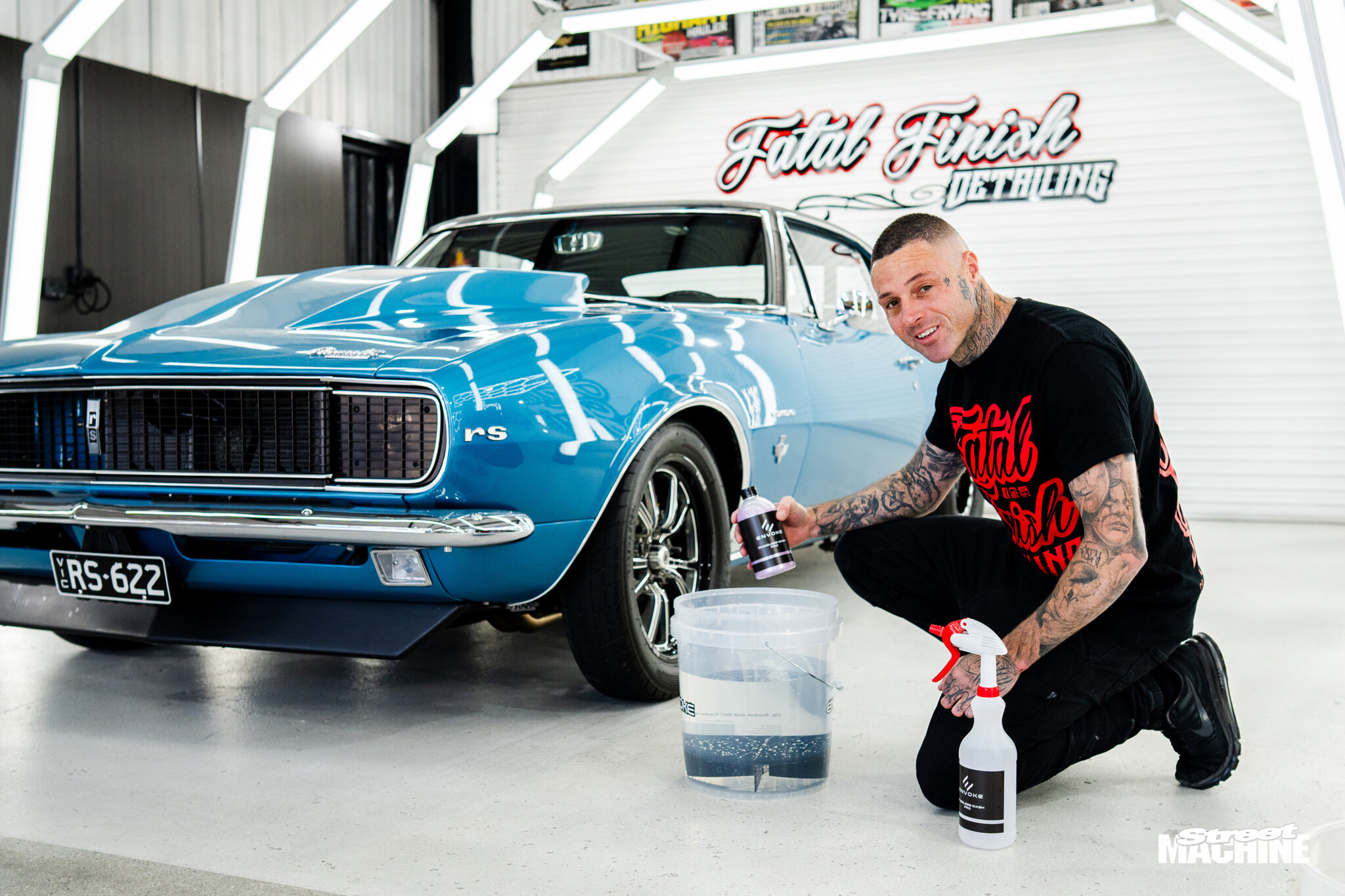
Above: Jimmy Allen is the bossman at Fatal Finish Detailing in Wodonga on the NSW/Victoria border. Regarded as one of Australia’s leading specialist detailers, Jimmy’s had a hand in countless SM feature cars, including the Myers family’s SMOTY-winning Mustang, Daniel Szabolics’s HQ Monaro, and Tim Laidler’s VL SV88, to name but a few.
WHAT YOU’LL NEED
- Bucket (approx. 20L capacity)
- Rinseless wash solution
- 8-12 plush microfibre towels (edgeless or 300–500gsm preferred)
- Clean drying towel
- Spray bottle with pre-mixed rinseless wash for pre-treating (optional)
Step 1: Mix your solution

Fill your bucket with around 10-15L of water and add the correct amount of rinseless wash solution. It’s usually 1-2 capfuls, but it varies according to the product, so follow the directions on the label.
Step 2: Prep your towels


Place all your microfibre towels in the bucket and let them soak, fully saturating them so they’ll safely glide across your car’s paint.
Step 3: Pre-treat the panel

This step is optional but highly recommended. Fill a spray bottle with the same rinseless mix (again, check product recommendations on the label) and lightly mist the panel before wiping. This softens surface dust and adds an extra layer of lubrication, helping to prevent swirl marks.
Step 4: Wash one panel at a time


Grab a soaked microfibre towel, wring it out gently, and fold it into quarters. Work in straight lines, using a fresh side for each pass. The key here is to focus on one panel at a time, minimise drag, and avoid reintroducing dirt. Once all four sides are used, retire the towel to your dirty pile – don’t chuck it back in the bucket.
Step 5: Dry the panel immediately

Before the product evaporates, follow up with a clean drying towel. This stops water spotting and ensures a crisp, streak-free finish.
Step 6: Repeat until gleaming

Keep moving panel by panel. Save the dirtiest zones – wheels, engine bay and lower panels – for last, and always switch to fresh towels for those areas.

PRO TIPS
- A top-down approach works best – start with the roof and work your way down. It’s the best way to work from cleanest to dirtiest.
- Polished metal or chrome bits? Hit them with a quality detail spray to restore that showroom shine.
- Rinseless washing isn’t just suitable for paint; it also gives you peace of mind on chrome and trim pieces, and is safe on ceramic coating, paint protection film, and non-treated surfaces.
- A quality rinseless wash solution is a truly multipurpose product; it can be used with great results as a clay bar lubricant, interior cleaner, glass cleaner or drying aid.

Comments