

First published in Street Machine’s Australia’s Toughest Fords #3, 2005
When it comes to drag racing in Australia, there is no mistaking the influence that the little Pommy Capri has had on the scene. There are so many of these things at various racetracks around Australia in either street or full race form that it’s hard to believe they actually made so many. It’s almost like there is some factory hidden away somewhere that is still pumping these things out, because V8 Capris seem to be everywhere.
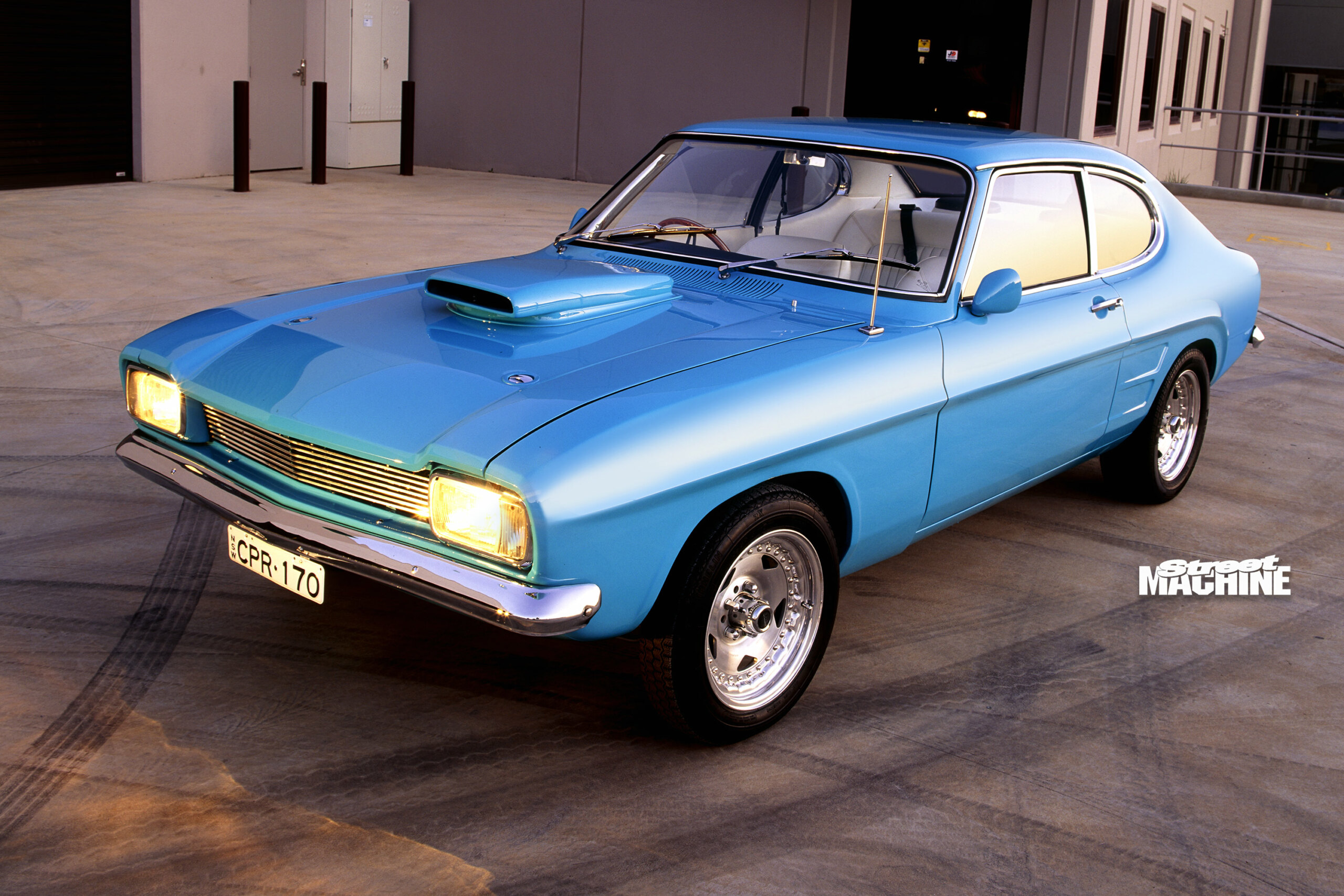
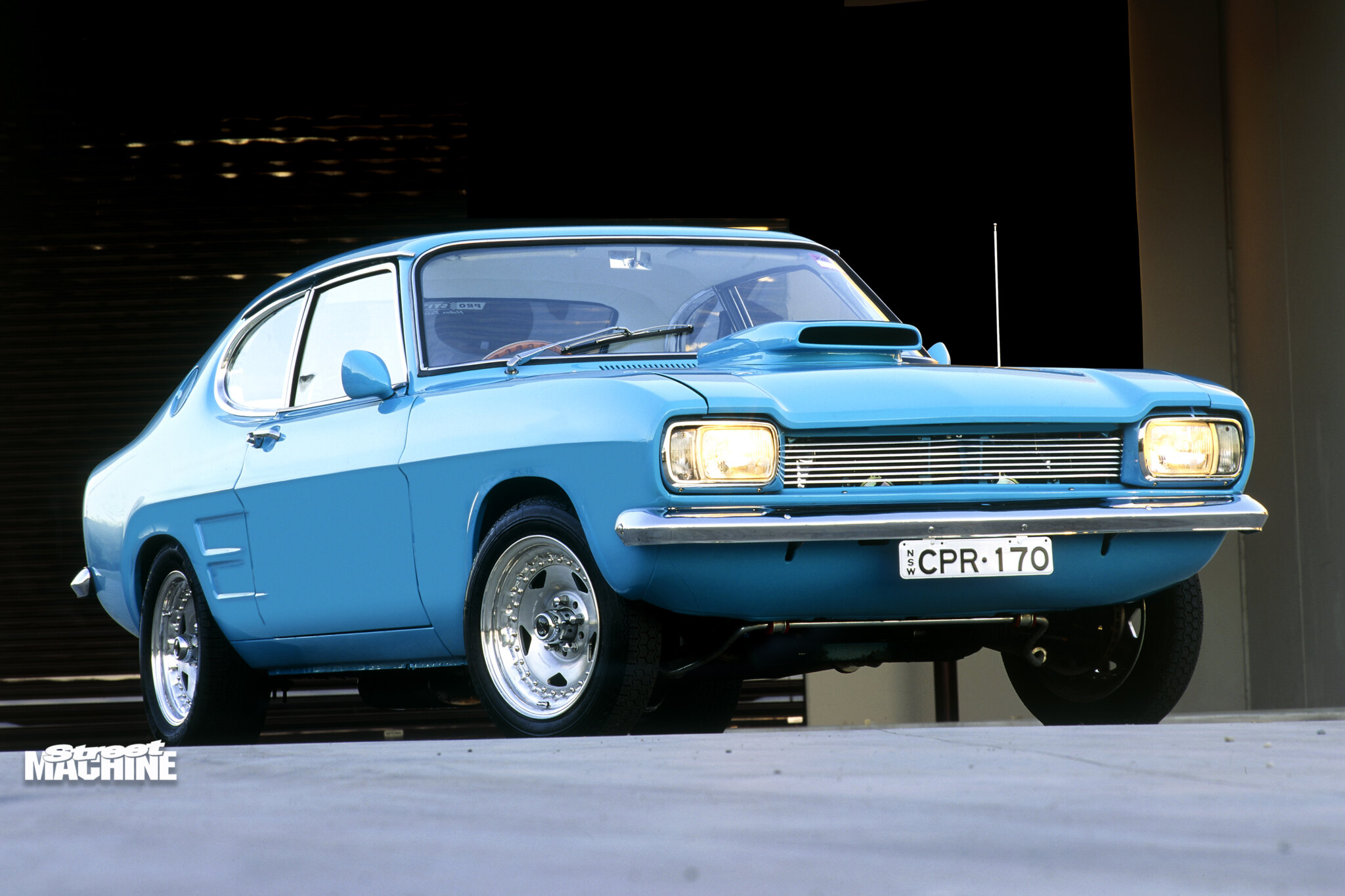
Being as popular as they are, it’s not hard to see why John Vella would want to build up his Capri a little different from most. By retaining the diminutive 3.0-litre V6, he’s certainly done that.
For John, it started back in high school, where he always had a hankering for the Capri’s smooth lines.
“I loved these cars since the beginning of high school,” he admits.

When you’re at school, nothing says sporty like only having two doors, so when John bought a genuine GT V6 as his first car, you can understand why he would have been king of the kids.
Sadly, that Capri didn’t survive to have a long and fruitful life, as usually happens to us all when we are young. He was having a little too much fun one day and, well, let’s just say that the motor was looking for a new home after that.
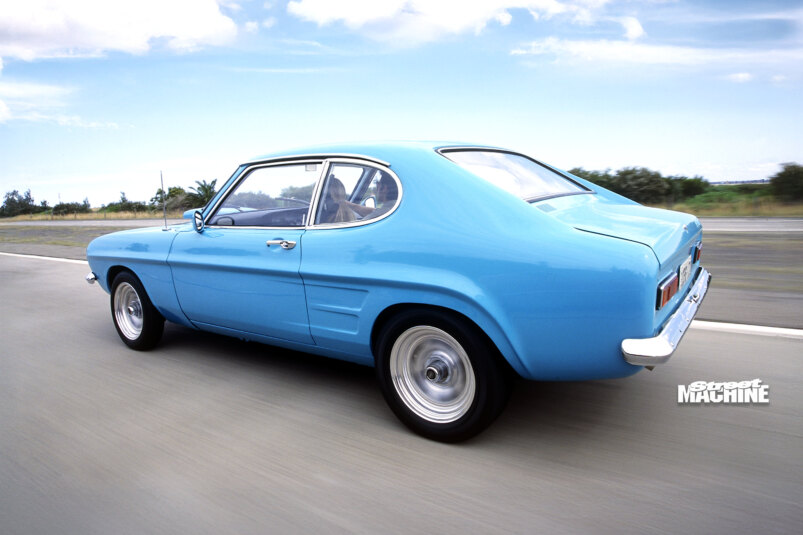
So the hunt was on for a new Capri, but John wasn’t willing to settle for just anything. He wanted a perfect shell to start with – not an easy task when dealing with 30-year-old cars that were rarely perfect when they left the factory.
“I knew I wanted the next one to be perfect, and the only way was to buy one as a bare metal shell,” John says.
It makes a lot of sense to buy one this way if you have the choice, because then you can not only ensure that the shell is free of cancer and hidden battle damage, but you can also choose the new colour.

With the right shell found and the Capri back in John’s father-in-law’s garage, they were ready to get things under way.
It’s here that we should put a special shout out to Albert, John’s father-in-law. Not only did he put up the garage space for the build-up, but he also dealt with all the deliveries of parts and tow vehicles when John couldn’t be there.
“I couldn’t have built the car up without him,” says John.

First area of attack was the body. Even though the shell was already bare metal, they had it blasted anyway to remove all imperfections. Michael Pisani at Race Paint handled the bodywork preparation and the application of the PPG Blue, and an outstanding job he did, too. That excellent choice of colour suits the smooth curves of the Capri perfectly, creating a car that we would be proud to call our own.
Back in the garage, the newly painted shell was in need of suspension and brakes. Up front, Pedders springs have been fitted to the front struts, along with Pedders GT sports inserts. Cobra Craft used their vast experience to adapt XY discs with HQ Holden calipers so they could be used to provide the Capri with enough stopping power. John painted and detailed each component along the way, as well as installing new Nolathane bushes where required.

Up the back end, John knew that one day he would need a decent diff, so he had Diff Technics put together a 3.9-geared nine-inch with an LSD centre. Mounted on reset rear leaf springs, the diff also settles any dramas with the rear brakes by providing two large drums.
During this time, the 3.0-litre V6 from the first car had been sent off the Fenech Race Engines for a freshen-up and power upgrade. Finding power pieces for the little V6 isn’t that easy these days, so a few components were ordered out of the UK, where there is still a bit of performance stuff around.

Being a fairly small-capacity engine, it doesn’t need a big four-barrel Holley, so a 350 Holley does the job just fine. It works with a pair of ported heads and imported Burton Power camshaft to bump the power up.
While the standard V6 put out only 128hp back in 1970, we’re sure that John’s engine is pumping out a fair bit more, even though he hasn’t thrown it on a dyno yet.

Backing the little V6 up is an original four-speed ’box that uses a heavy-duty tailshaft to transfer the grunt back to the nine-inch rear and those 15×6-inch Convo Pros. Up the front, there’s a pair of 15×4-inch Convo Pros to complete the look.
It’s a set-up that has a bit of punch, but John reckons the best times are when he’s out cruising with his brother, who owns a ’65 Mustang. Cruising is something that John has done a fair bit of; they have even taken the Capri for a run up to Wintersun at Coolangatta, which is a fair haul away from Sydney.

Of course, long trips like this are made easier with the right interior. Pro-Stich was responsible for retrimming the original seats, door trims and console top in white vinyl, while John fashioned up the dash facia himself. Autometer gauges abound to keep John informed and a Kenwood CD player keeps him entertained.
Check out the wood-rimmed Cobra steering wheel. Can you think of a better-looking addition to this car? We can’t. It’s a welcome change from all the boring black ‘sports’ wheels out there.

Overall, John has created a neat streeter, but the urge for more grunt is like an itch he can’t scratch. So a 351 Windsor might be on the horizon for the Capri. While that will fulfill John’s power requirements, we can’t help thinking that it would be a shame to see the little V6 removed. How about a turbo, John? That will keep the individuality factor going and deliver enough grunt to make the V8 boys wish they had thought of that. Food for thought, isn’t it?
Whatever John’s decision will be, we’re sure that the Capri will be just as well put together and just as beautiful as it is today.

WHAT’S THE DEAL?
Ever wonder why Capris are so popular as street cars? Well, it’s not such a big secret, but they have extremely low weight.
How low? Well, a 1300cc Capri Mk I weighs just 880kg empty, which is enough to make an XY Falcon feel obese.
Even the GT V6 Capri was just 1057kg, and with more than double the horsepower of the 1300, it’s no wonder the GT was considered quick by stock Capri standards.
So while bolting in a V8 will make a Capri heavier, using lightweight components like aluminium heads and manifolds can keep the weight down and performance up.
Also take a look at the photos and check out the size of the engine bay; for a car of its size, the Capri has a lot of engine space. So much so that a few people have even bolted in big-block Chev engines.
Obviously, the numbers of good shells are dwindling over here, but with the Capri available back in the UK right up to 1986, we really wonder when people will start importing more to take up the slack.
JOHN VELLA
1970 FORD CAPRI
| Colour: | PPG Blue |
| POWER | |
| Engine: | 3.0-litre V6 |
| Carb: | 350 Holley |
| Exhaust: | Hurricane headers, twin system |
| DRIVE | |
| Gearbox: | four-speed |
| Diff: | Ford nine-inch 3.9:1 LSD |
| COMFORT | |
| Seats: | Factory retrimmed |
| Gauges: | Autometer gauges |
| Stereo: | Kenwood CD unit, tweeters and 7×10 rear speakers |
| BOUNCE | |
| Brakes: | XY discs, HQ calipers (f); Ford drums (r) |
| Springs: | Pedders (f), reset leaf (r) |
| Shocks: | Pedders GT Sports all round |
| Bushes: | Nolathane |
| Rims: | Convo Pro 15×4 (f), 15×6 (r) |
Comments