
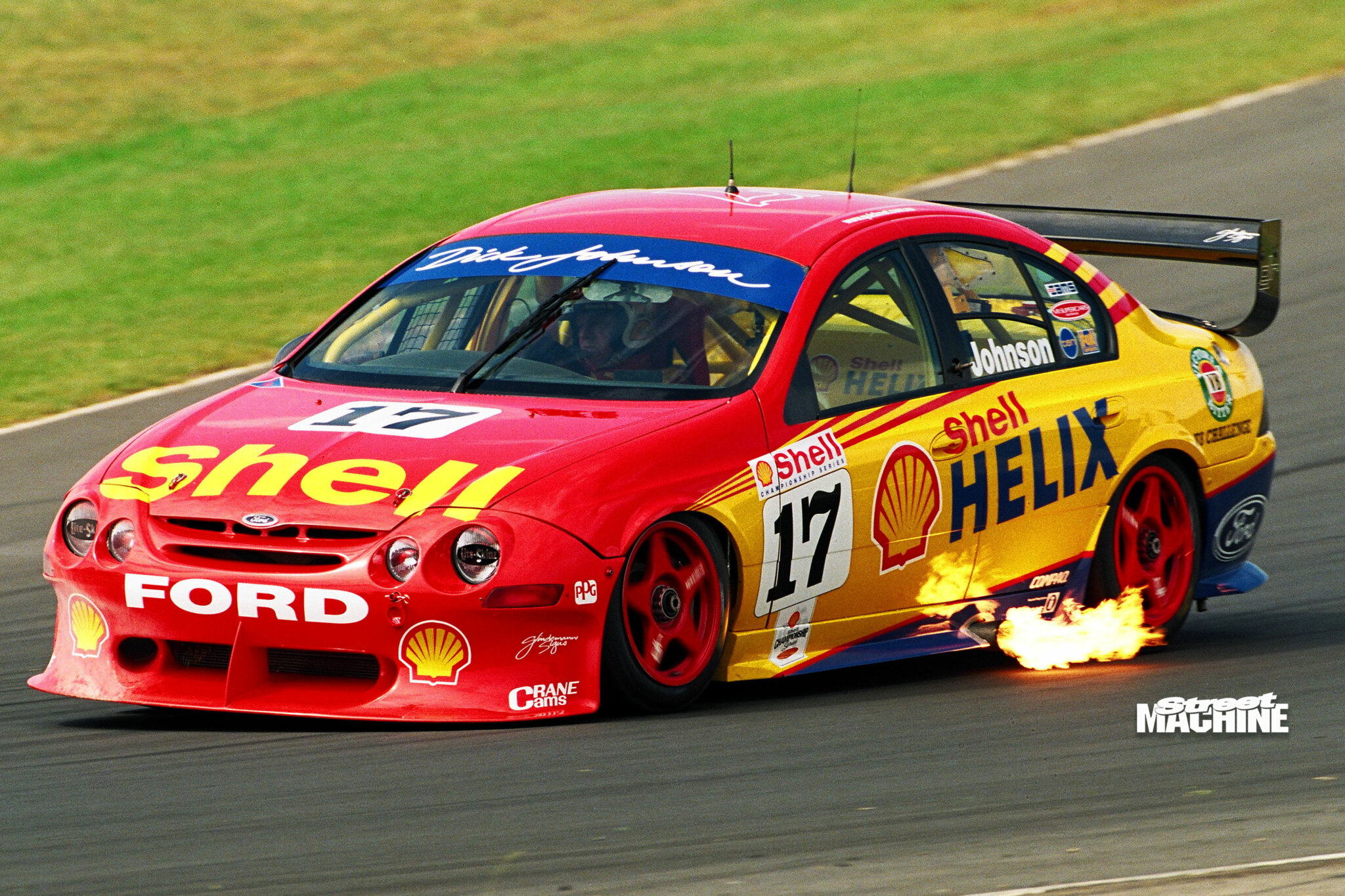
First published in Street Machine’s Australia’s Toughest Fords #3, 2005
Dick Johnson
Few drivers have had a greater impact on touring car racing in Australia than Dick Johnson. A genuine legend, he had a racing career that lasted for 35 years, and the eponymous team he formed in his Shell servo back in the 60s is still one of the sport’s most famous, and most loved. Johnson is a one-off, a natural racer, one of the funniest blokes in racing, and one of the most passionate, a man who has always worn his heart on his sleeve, and called a spade a bloody shovel. Two months younger, to the day, than his great rival, Peter Brock (a fact he never lets him forget), Johnson turns 60 on April 26. Here, he looks back over his past and ahead to the future.

Let’s turn the clock back to 1964, when you started racing…
I’ve been a member of the MG Car Club since I was 14; I’ve always enjoyed cars, even when I was a kid. I used to go to swim training every morning at 4.30am, and the only way my old man could get me to go was if he allowed me to drive the car; I was about eight then. Things developed from there. I was keen on cars and loved to work on cars; I’d rather work on cars than go out on a Saturday night.
Then I hooked up with people in the club and started working on some guys’ cars, and when I first got a car, every cent I got was spent getting it to the point where I could actually race it. And that was the car I drove to work every day: FJ Holden, licence plate number Q621081. I retired after my first race meeting because I ran out of money. I had aspirations; Norm Beechey and co were heroes, and one of my dreams was to be like them.
I got drafted into National Service, which allowed me to do a number of things because of the equipment the army had at my disposal, and gave me an opportunity to make parts for my racecar, which was an EH Holden by that stage, but still my road car too.
But it didn’t take me long to realise that if I was going to get serious about racing, I wasn’t going to be able to fund it on wages. So as soon as I got out of the army, at 21, I started my own business and have never worked for a boss since.

Is that when the Shell connection started?
Yes, Shell had state teams that they sponsored, because national motorsport was almost non-existent; those were the days when there was one race for the Australian Touring Car Championship, it wasn’t a series. I was invited into the Shell Queensland team, which had an open-wheeler, a sports sedan and two touring cars, and that’s when we really started to see the big bucks. I think it was 35 bucks for a win and 5 bucks for second! But it gave me the opportunity to mix with the right people and get a Shell service station, and that’s where things really started to kick on for me.
Did you have a five-year plan for your racing in those days?
Plans weren’t common in the 60s; that’s a more recent thing. My plan was always to continue in motorsport, and when the opportunity came along to have someone else foot the bill, I grabbed it with both hands. I started driving a Torana for John Zupp, who was a Holden dealer in the early 70s. We didn’t have that much success [south of the border], but we won everything at Lakeside and Surfers Paradise. Zupps were semi hooked up with Harry Firth and the Holden Dealer Team and I drove the HDT car once at Surfers.

Was there ever a chance you could have become a factory Holden driver?
That would have been terrific, but unless you came from Sydney or Melbourne… Queensland was like a banana republic. Old Harry used to notice people and I know that I was noticed, but not enough, I guess. At that time Brock was the Holden hero and Moffat was the Ford hero. When the category went to L34 and SLR Toranas, it was too much for Zuppy and, yet again, I was left with a helmet and pair of gloves and wondering what the hell I was going to do. I had rented an ex-HDT Torana that had been rolled at Forrest’s Elbow and was in a million pieces, but that led me to get a drive at Bathurst with Bobby Forbes, and I think we came fifth in my first Bathurst.
What did you think of Bathurst when you first got there?
You think you’re going reasonably well until somebody harasses you across the top of the Mountain, and you think, “Shit, I’m not giving everything I’ve got here, I need to step up the pace”, and that really made me think about it. I was being very cautious, but I was still 10 seconds a lap faster than the guy who owned the car. Bathurst is one of those places you either love or hate; fortunately I enjoyed every second that I raced there, just like Lakeside.

Tell us about your first Bathurst 1000…
That wasn’t the first time I’d driven around the track; I drove a GTR Torana around there at an Easter race meeting in 1970, but it wasn’t running well and we came home and wrote it off as a bad experience. Then Forbes asked me to drive with him. The idea was that he would send the car to me and my part of the deal was to do the engine, but, typical Forbes, the bloody thing turned up and all it had in it was a roll cage. We were still screwing it together as we went to Bathurst. I had to build the exhaust at Orange! That was my first real taste of Bathurst.
The next opportunity came up when John French offered me a drive in an Alfa. Bryan Byrt was my next mentor. He loved motorsport and spent an absolute fortune. That connection only came about because Frenchy’s factory Alfa was pinged for some stupid reason and he lost his licence, and Bryan asked me to drive his Falcon sports sedan. That continued until the end of 1979 when the rules changed to Group C, with the XDs, and I said to Jilly, “We have an opportunity here; we’ll either make it or forget it all together,” and she said, “Why don’t we have a go?” We hocked the house, bought all the stuff from Bryan Byrt Ford, bought an ex-police car, and built the 1980 car that came to grief at Bathurst with the Rock.

The Rock was a pivotal moment in your life…
Yeah, at the time it seemed the worst thing, but with the support I got I thought, “Gee, I can’t let this [opportunity] slide by. And that’s when we got real serious about the whole thing.
You have the Rock mounted in your house. What if that accident had never happened and you’d never received the support?
It’s my pet rock! I would have been in deep shit, but had that not happened, I honestly believe we could have continued to race. The car was good [in the race]. Frenchy was an absolute gem to work with and had a tremendous amount of input, and really we had the field shot to pieces when we crashed.
Tell us about John French…
He was an unbelievable driver. Frenchy, along with Pete and Leo Geoghegan, was one of the gun guys in FJs, and he was a real thinker and innovator. He was such a relaxed guy in the car. Frenchy loved to eat and the XD Falcon had such a deep console that he used to fill it with Vegemite sandwiches and orange quarters to keep up his strength, although it wasn’t so good when we found the leftovers two weeks later.
Can you single out your favourite racecar?
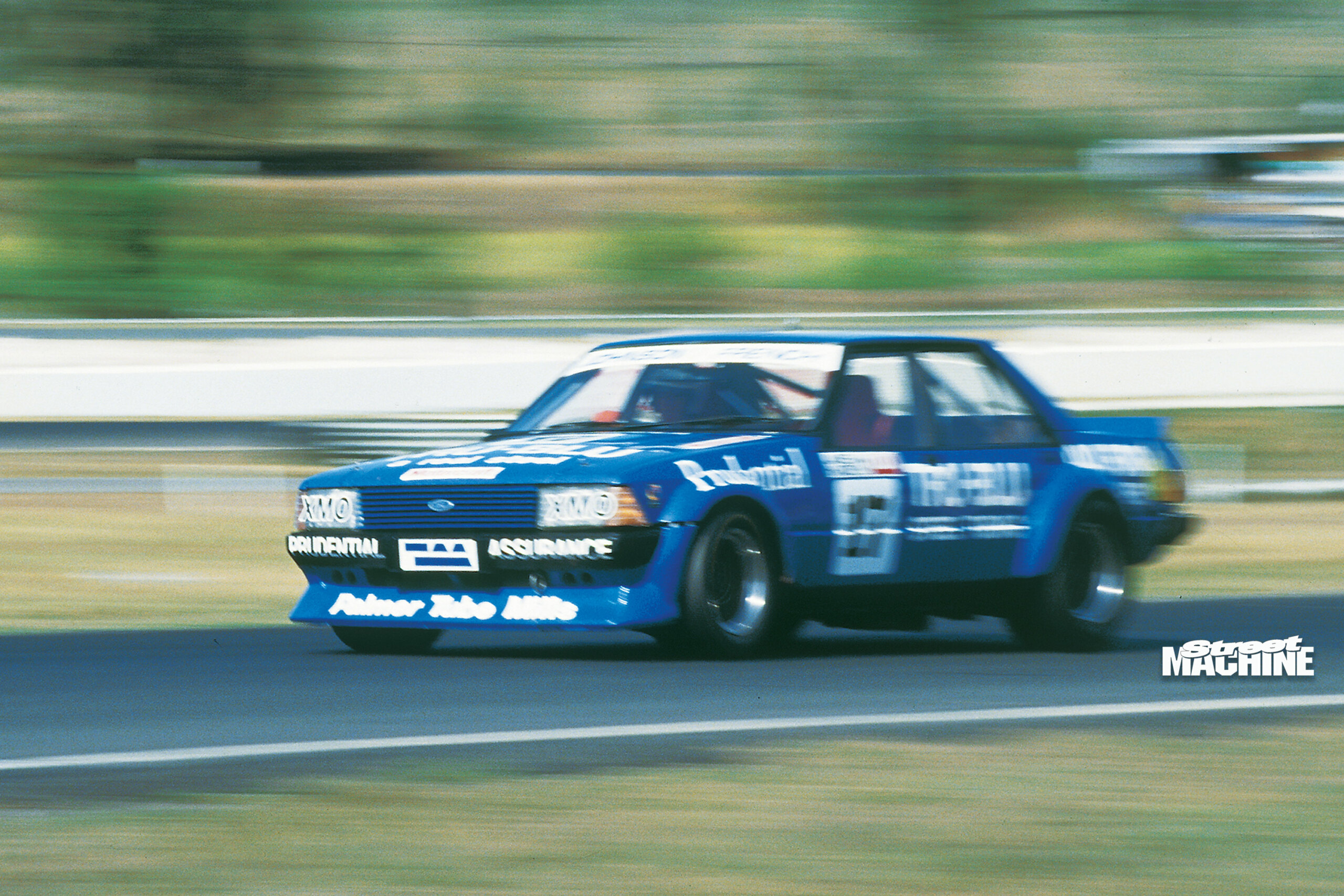
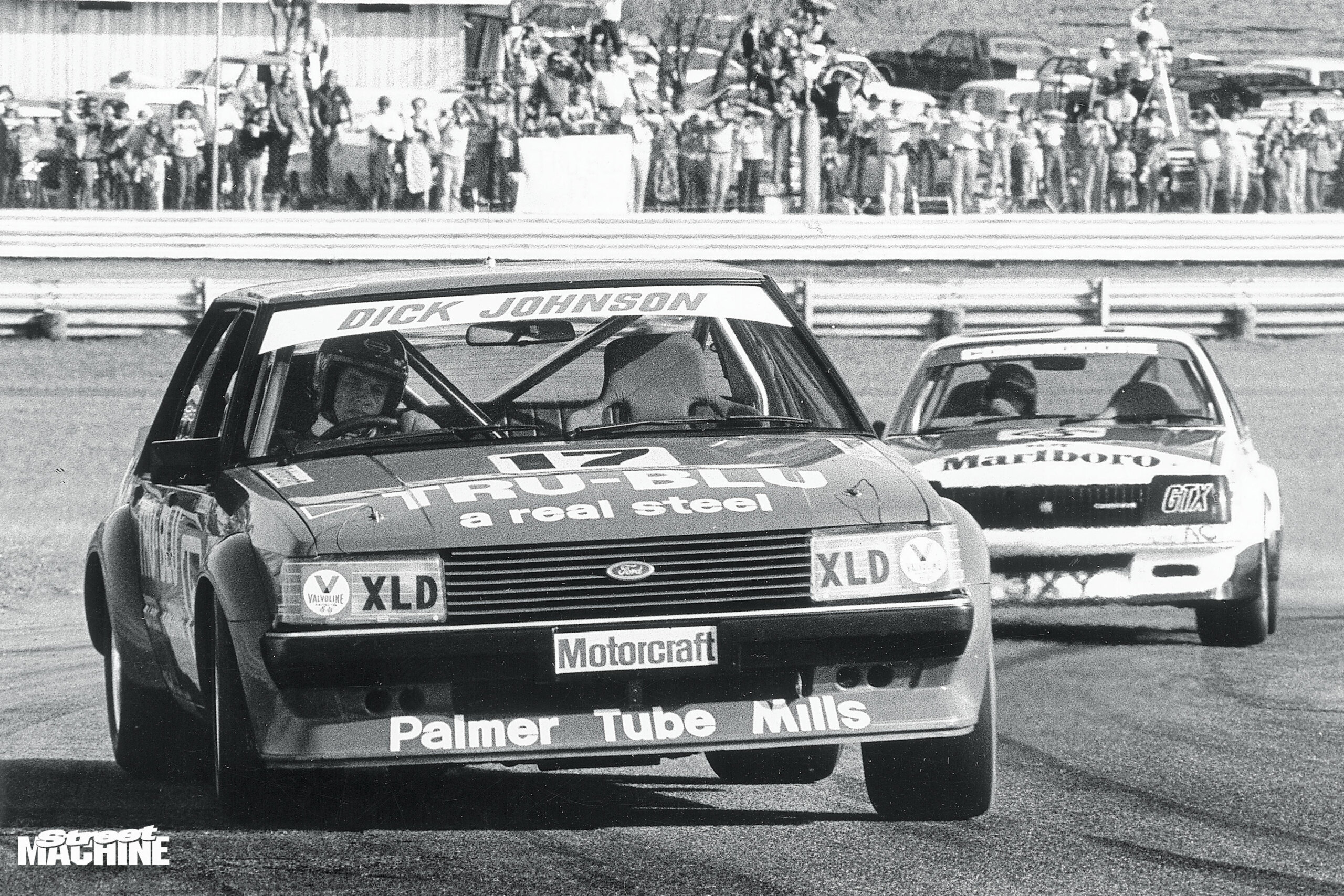
There were two, actually, and that’s not because they won races, but because I had an affinity with them. The public loved the blue [Tru-Blu] Falcon and the green [Greens-Tuf] Falcon, but to me the blue 1981 car was really special because it won its first championship and Bathurst in the same year. It was a ripper car to drive, and at that point in time it was the most advanced touring car out there. We spent an awful lot of time and effort on it and it was a long time before anyone tweaked what was going on.
I was always a real stickler for [low] weight. Weight can relate to your brakes, horsepower, handling, straight-line speed and tyre life, and we were very careful to build the car down to the weight it was homologated at, which was 1360 kilos. You were supposed to homologate the weight of the original [V8] car, which was probably 1600kg, but Ford didn’t want to know about doing the homologation, so Murray Carter [Ford team owner and racer] actually did the papers, and the cagey old fox put in the weight for a six-cylinder Falcon! So the homologation papers said 1360 kilos, and we made sure we built it to that weight. Everyone said we had a million horsepower, but we didn’t; the weight of the car gave it advantages in every area.
When did everyone else catch on; the first meeting?
Shit no! We were at Calder and they called the car to scrutineering. Back then they never used to weigh the cars. I usually took the car to scrutineering and, just in case they weighed it, I always made sure it was full of fuel so it’d weigh in heavy. But I had to do some promotional thing and this time Roy took the car up and it only had about 20 litres of fuel in it. It went over the scales at about 1375, and that’s when they twigged what was going on; Bobby Morris’s car weighed 1780 kilos or something! There was hell to pay after that, and teams had to put air conditioners back in Commodores, for example, because cars had to have all their original equipment; that’s why my car still has a radio in it.
And the green Falcon?
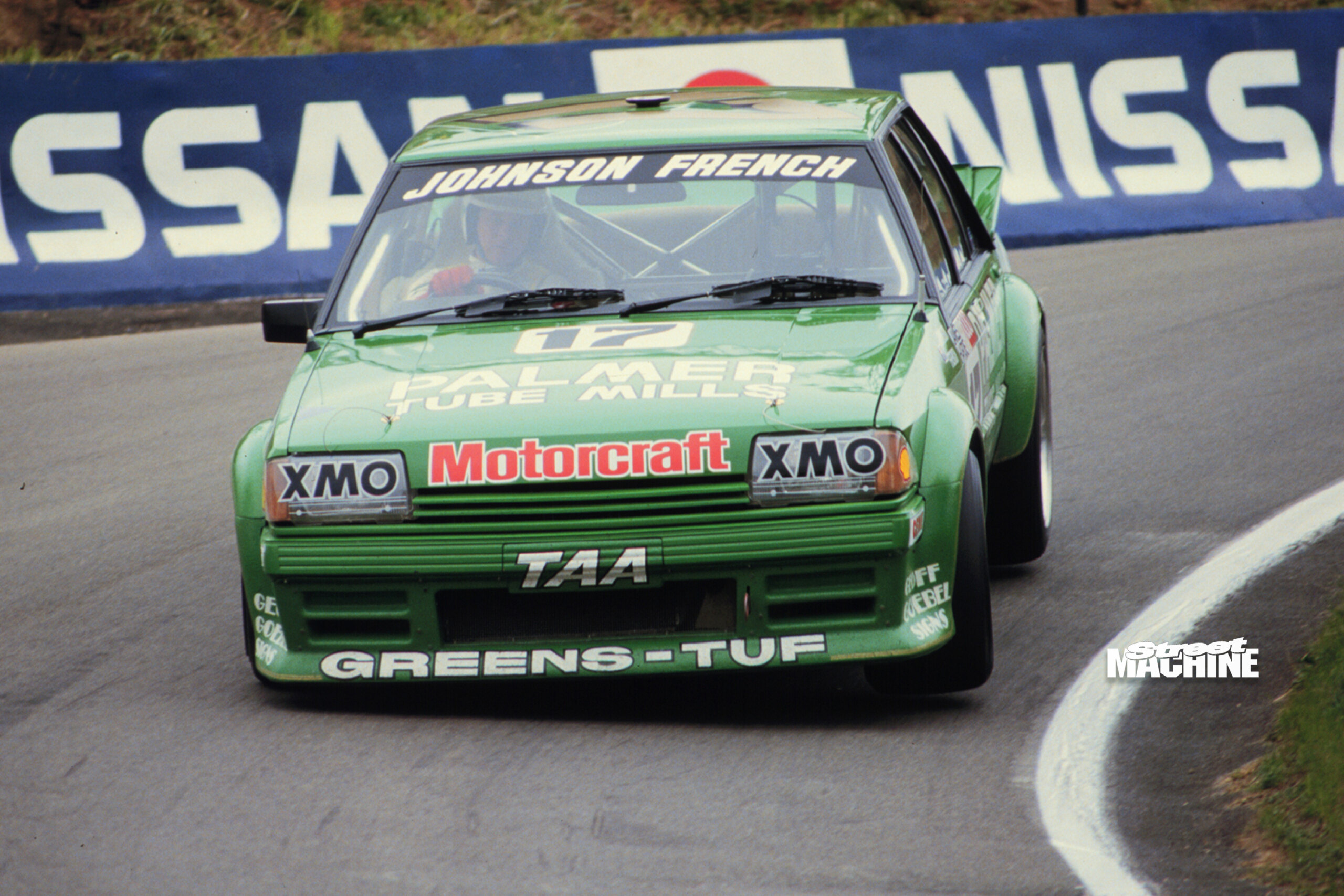
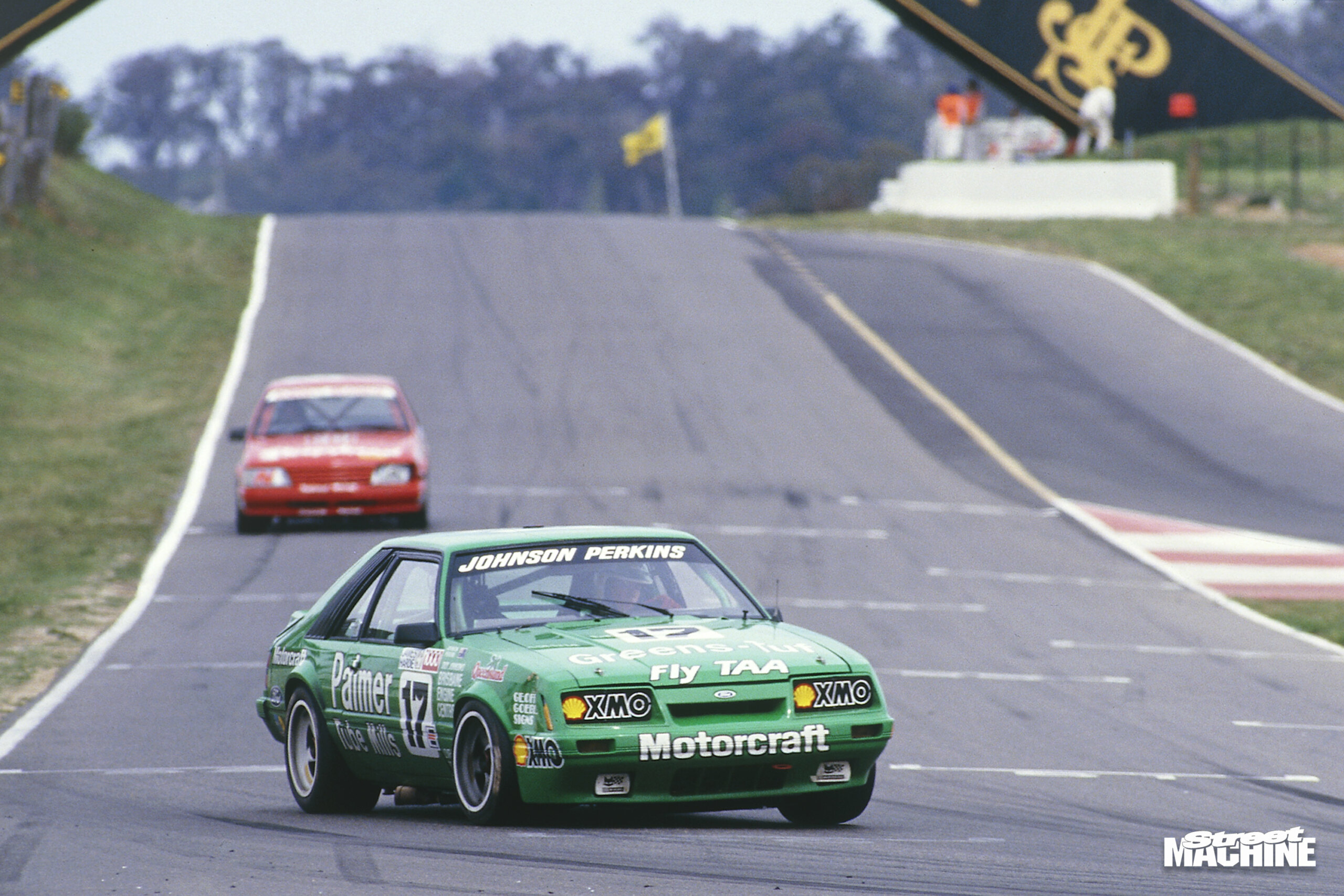
It was terrific. We had a few problems with tyres because they were never really designed for that type of vehicle – they were for 956 Porsches – and we ran 19×14-inch rims, bloody huge, with a tremendous amount of tyre. Coming onto a straight or in the heavily loaded corners, when you were full on the throttle, you could hear the cords in the sidewalls popping and it’d get this dreadful shudder and the mirror would actually fall off the windscreen. But gee it was good car.
But you had the mutha of all crashes at Bathurst in it; it almost killed you. That must have made you take stock?
Nup, I wasn’t fazed at all. The car was under-steering like a pig in qualifying and I wanted to get on pole, and would have done if it had kept going. It just grazed the wall [on the exit of Forrest’s Elbow], but what I didn’t count on was the tyre bundle at the end of the wall, and it grabbed the right front wheel and broke a tie-rod. It took out a few trees before it came to a stop. [Long-time sponsor] Ross Palmer bought Andrew Harris’s car and we put all our gear into it and repainted it, and the only thing that stopped it in the race was a blown fuse in the alternator dash light, which stopped the alternator charging the battery; it kept going flat.

What’s the worst car you ever raced?
The most death-defying would have to be the NASCARs. On the road courses they were quite good, because I understood how to set a car up for a road course, but I had no experience of weight jacking and [tyre] stagger for ovals and just what to do to a car to make it react. They’re very easy to drive, but if it’s a dog, Jesus, they can bite you – and a 3800lb car going 200mph travels a long way in a short period of time in a crash…
Why did you go NASCAR; did you like the racing or was it for the money?
I didn’t get paid a cent; the only pay I got was a cheque that turned up out of the blue one day because my car was in some footage in Days Of Thunder. I did it because I was asked by Ross Palmer to help promote a new business he had bought in the US. And I guess I made a name for myself over there, because nobody had ever said “fk” live on American television. It was late in a race at Sears Point, and I’d run over something and cut a tyre, but because they have those inner tyres, you don’t know you’ve got a flat, until you go straight ahead into a tyre wall. It did bugger all damage, but I said, “Aaah, fk!” and didn’t know they had the cameras on.
Earlier in the race, Richard Petty had hit me right in front of the pits, and I called up my crew chief, Ray Evernham, and said, “Ray, did you see what that prick did? He drove straight into the side of me.” What I didn’t know was I’d called Petty a prick, live on national television, and it took me three races after that to convince him that “prick” in Australia was a term of endearment.

Who was your favourite team-mate?
Frenchy was absolutely magnificent; it was like being part of a family. He was a tremendous racing driver, an unbelievable talent; he was just born in the wrong generation. But I’d have to say John Bowe has been by far the best, because he was around for a long, long time; we shared 11 or 12 years of our lives as real close mates. We never really had any difficulties at all.
It was a big shock when he left, wasn’t it? You didn’t take it well…
Like most of these separations, it could have been done better. I didn’t hold it against him, but it really hurt at that point in time. I wouldn’t have had a problem if he’d said he’d had enough and wanted to pursue another avenue. But to find out that he’d left without saying boo, then left us hanging, thinking he might come back… we had a business to run. Quite frankly, I would have liked to see him end his career with us because he was a great asset to the team.
What was your favourite era?
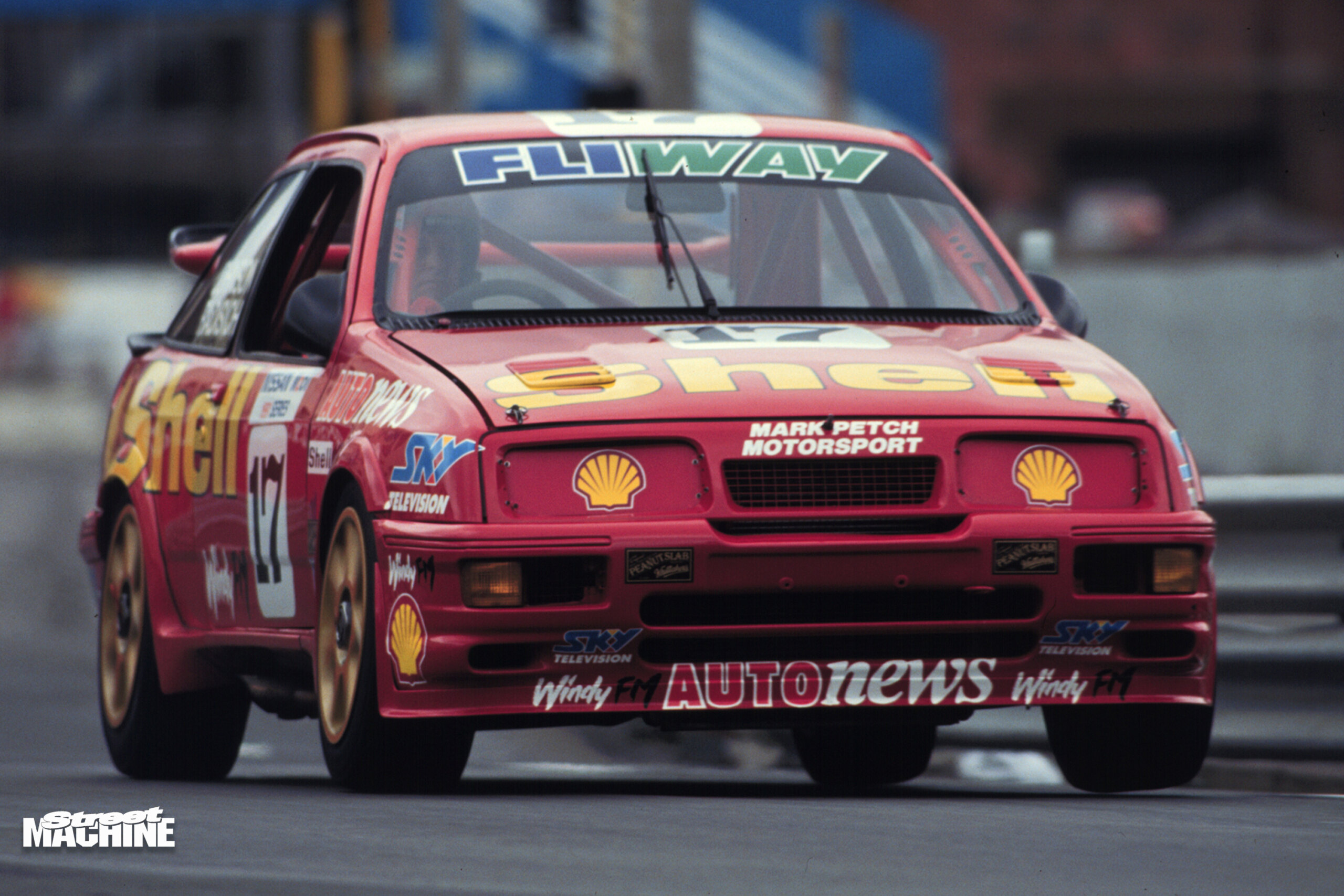
The Sierra years. What really motivated me more than anything else was when the Europeans came out here in 1987 and treated us like a bunch of bloody colonials; they thought we were idiots. Frankly, the 1987 Bathurst was the worst one I’ve ever done and I felt really embarrassed to be an Australian. When we got our act together in ’88 and got the cars going properly, we took the thing over to England and blew them away. It was a great car; it and the 1992 car were really good.
It’s not widely known, but you and Fred Gibson basically saved V8 touring car racing in Australia and set the scene for the success it is today…
Freddy and myself spent an awful lot of money keeping the whole thing afloat. I just didn’t want to be controlled by CAMS any more, who changed at the flick of a light switch, and rendered things inoperative. In the late 80s there was no forward planning, no future, no nothing. CAMS did everything they could to not recognise us; they ignored us [TEGA] completely, thinking we might go away. But that never happened, and they started speaking to us and we slowly wormed our way in there. In the middle to late 90s we got control of our own category. And as most people can see, it has gone ahead in leaps and bounds. But we’ve got to be very careful, at this point, that we don’t disappear up our own arse.
You retired from driving at the end of 1999; were you ready to go? You had terrible sinus problems, didn’t you?
I was over-ready. If I’d had my health, I would have been a much better driver and a better person. The dramas I had and the pain I went through were amazing. I should have left earlier.
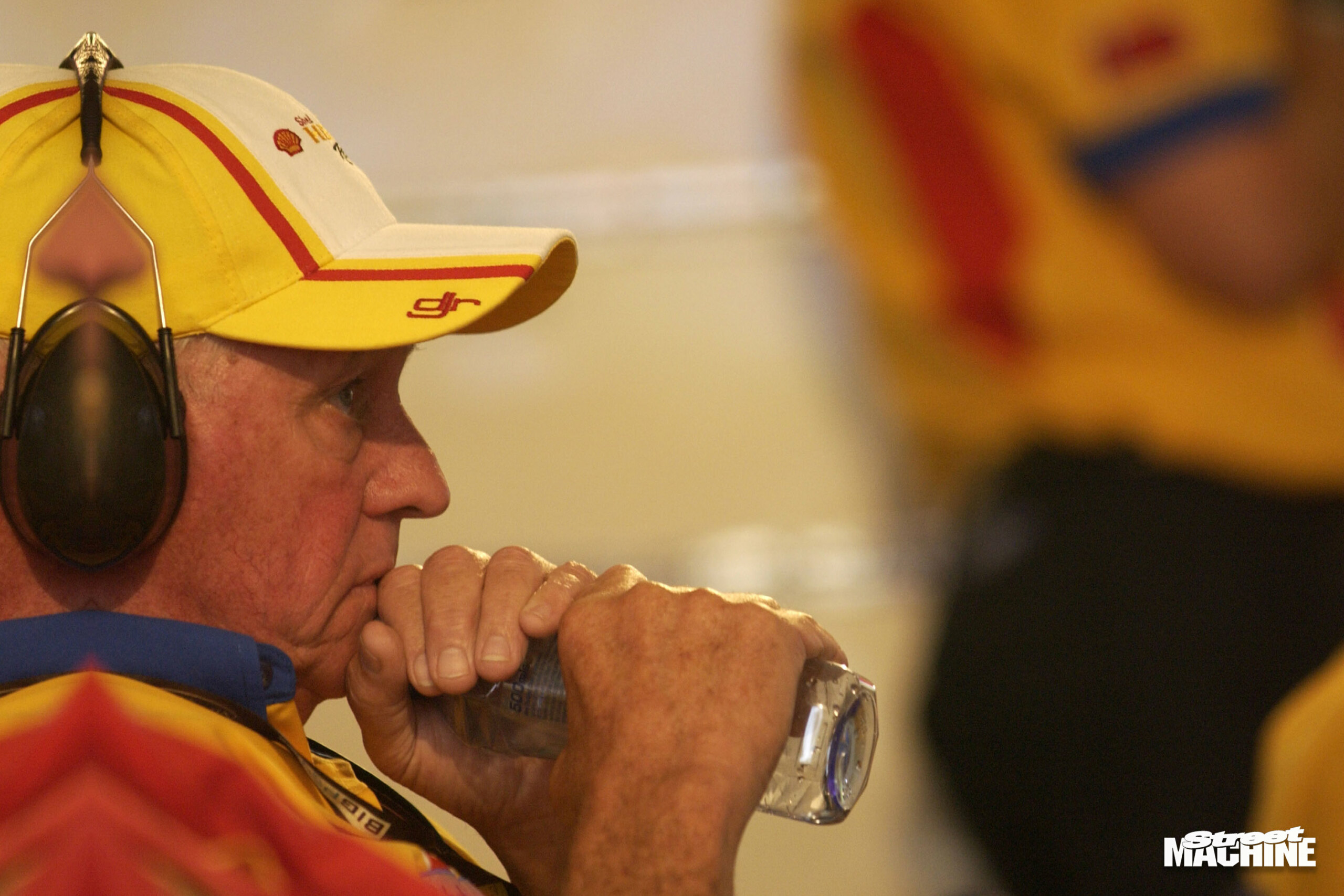
It had nothing to do with making room for Steven?
Not at all. If I’d wanted to do that, and felt he would have done a better job than me, I would have gone in ’96, and he would be a much better driver now. He was a better driver than me at that point, but he didn’t have any experience. I’d sort of outlived it, and it was becoming really difficult at the end.
It must have been hard to leave a track at the end of the day not having been competitive?
It was gut-wrenching; you just don’t want to be in the car, duncing around halfway down the field. [Because of the sinus problem] I couldn’t see. I used to have towelling stitched on the back of my gloves so I could wipe my eyes to see where I was going; they were bucketing. It was a good thing they never had drug testing then, because I was on steroids and all sorts of shit to try and speed up the healing. I had nine operations [before the final successful procedure after he retired].
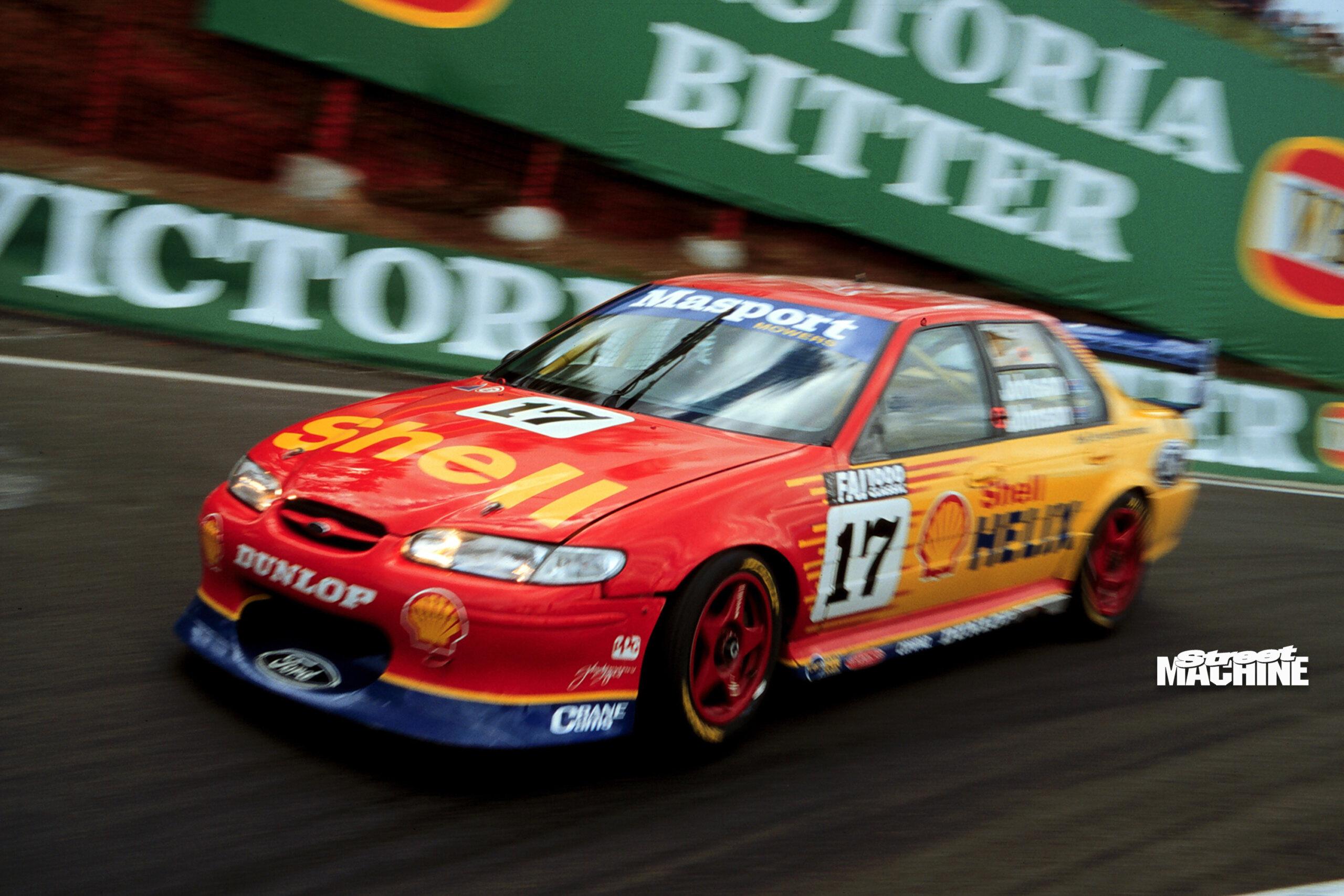
Steven has copped flak over his weight and his performances in recent years, sometimes unfairly. Where’s he at now?
If you look back, he’s never been beaten by a team-mate, but that’s not what we want to achieve; he’s got to have higher aspirations than that. If we give him the right equipment, I have no doubt that he can be competitive. Talent is only one part of what you need to be successful. You’ve got to have a fair bit of prick in you, and he’s a pretty nice guy most of the time. If I can get some more aggro in him, he’ll be fine.
How important was Glenn Seton joining?
Glenn is going to bring an awful lot to the team. He understands what it’s like to run a team and to win races, and he’s got a tremendous ability to look after a car and he fits in real well.
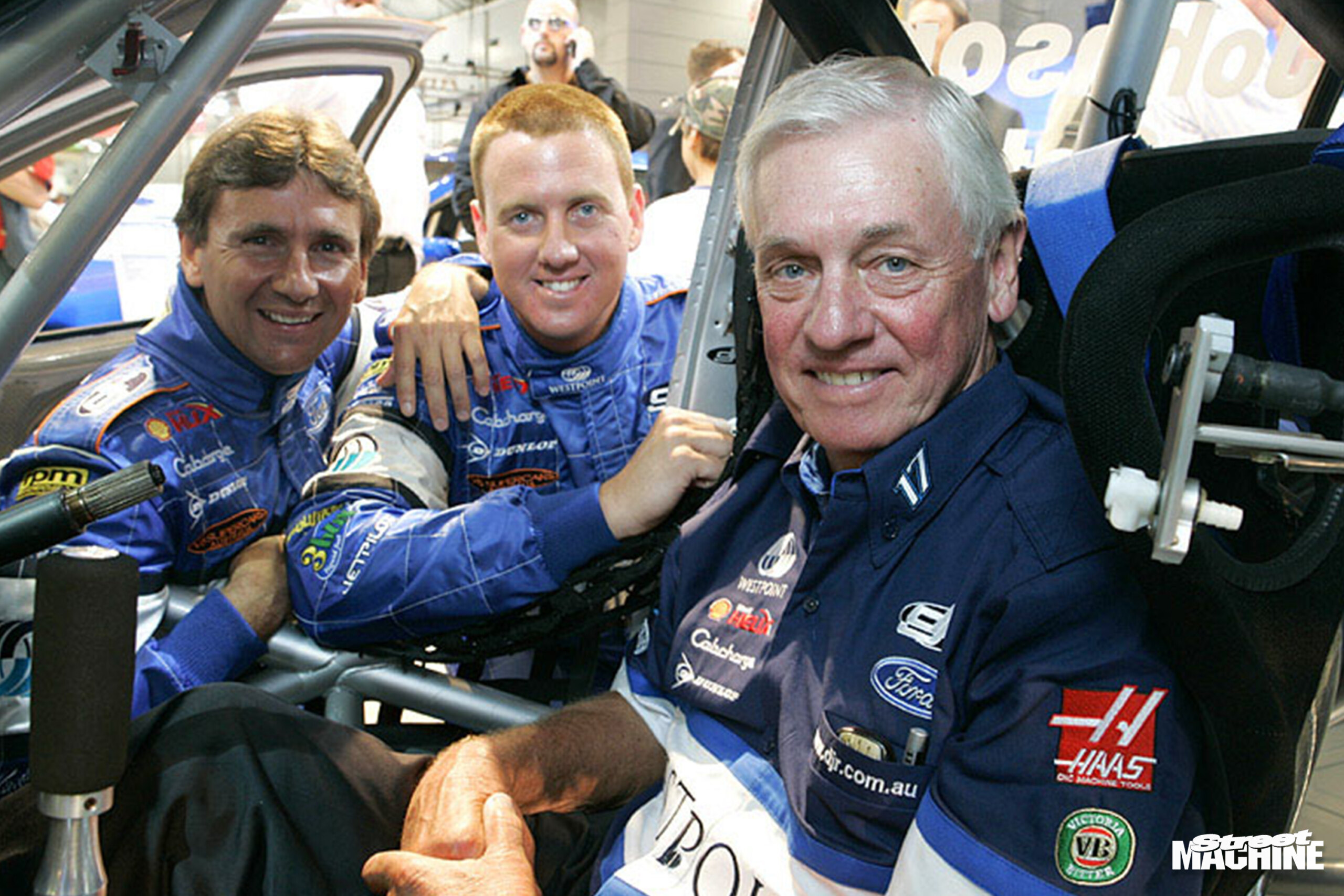
What does the future look like for DJR?
Really, really good. This year we’re just going to concentrate on consolidating into a consistent top 10 team; we want to improve our qualifying performances. If we give them a decent car, and we can understand it, the guys can go forward.
Have you fulfilled all your dreams?
Nup. I could die a happy man if we could get the team back to being winners. There’s nothing I would like more than to give Glenn his first Bathurst win. He’s never said it to me, but deep down he feels he won’t have achieved anything until he wins Bathurst. It would cap his career.
And, in a way, cap yours.
Yeah, it would.
That says more about giving than taking; do you think that makes you different from other team owners?
Maybe I can look into the future. I want to build the category into something that’s going to give a future to everyone.
Are you more proud of the fact that you’ve helped build this category, than what you’ve done on the track?
Absolutely. And I don’t care if nobody ever knows, but I know myself and I’m more proud of how I’ve achieved than what I’ve achieved.
THE WAY IT WAS:
JOHN BOWE
Team-mate from 1988-1998
I knew of Dick, of course, because he was quite famous, but I didn’t meet him until 1985 when we competed in the Nissan ET Pulsar series. All the top touring car drivers, except Brock, were in it, and other than rally drivers George Fury and Geoff Portman, I was the only one who wasn’t a hero.

Then in 1986 I drove a Volvo in my first season of touring car racing and I had a couple of good races with Dick, particularly at Bathurst. Dick was in the Mustang. The Volvo was quicker up the hill but the Mustang was quicker across the top, and we had a fun dice. At the end of ’87 he offered me a drive in a Shell Sierra, and from that time on I became almost part of his family. We shared some fantastic fun times and some heartbreaking times, as you do in an 11-year relationship in a sport as volatile as ours.
You all know how funny Dick can be. One day I went to a Glenelg footy club function with him – he was the guest speaker – and we were up on stage and he started telling this joke, and I had no idea what he was up to. Anyway, this is how he told it:
“I had this terrible dream last night; JB and I were in a car crash and were both killed. I thought we were going to go to Heaven but we end up in Hell, so we’re at the gates of Hell and we say to the Devil, ‘How do you get out of here? We want to be in heaven.’
“The Devil says, ‘There’s only one way to get out of here: you’ve got to find the ugliest girl here and make love to her.’ So we decide to split up; I go one way and JB goes the other way. I’m wandering around trying to find a girl ugly enough to get me out of Hell when I come across JB making love to Elle Macpherson!
“So I run back to the Devil and say, ‘Listen, you said I had to make love to an ugly girl to get out of Hell,’ and the Devil says, ‘Yeah, that’s right.’ But JB’s over there making love to Elle Macpherson! How’s he going to get out doing that? And the Devil says, ‘He’s not going to get out, but she will.’ ”
As a driver, Dick was very, very natural, very gifted. He always did it quite easily and, like most drivers of that era, if there was a problem with the car, he could drive around it very comfortably. I think Steven is similar; the art of driving is not a problem to them. He had a very long-armed style, which created a few problems for me when we drove together, so we made a little baby seat that fitted in the seat for me. He was a very relaxed driver, had a very easy style and great mechanical feel. Brock has always been credited for having great mechanical sympathy, but I reckon Brock was much harder on a car than Dick was. Dick had a real light touch. I think it came from those Group C hardtop days; if you didn’t have a nice soft feel, you used to stuff the cars.
I’m sure there were times when Dick was unhappy with me, but he never, ever dressed me down. Actually, he’s not the world’s best communicator; you never knew that he liked you, either.
In a way, I have regrets about leaving Dick, but it was just a stage of my life I had to go through. If I had have stayed with DJR, I don’t know if I’d still be racing now; I probably would have stopped, and I don’t want to. But I have incredibly fond memories of the time we spent together. We had quite a lot of success and good times together. Dick’s people, not Dick, have asked me since to rejoin the team, and it’s only because of my relationship with Brad and Kim Jones that I haven’t. I have a very soft spot for DJR, and I couldn’t say that I wouldn’t be involved with them again somewhere down the track; you never know. I have an emotional bond with Dick.
DAVID SEGAL
DJR’s PR bloke
“Who do you think you are: Dick Johnson?” an agitated gate attendant at Mallala once asked me.
“No,” I replied. “He is,” jerking a thumb in the direction of my front-seat passenger in the Falcon hire car, grinning laconically.

Driving Dick and then team-mate John Bowe to and from the races was part of the job description in the early days of my role as the Shell team’s PR, a responsibility that remains mine 16 years later.
If driving around the then two best race drivers in Australia sounds daunting, it wasn’t half the challenge some of Dick’s on-track antics have created for me during the decade and a half we’ve worked together.
I first met Dick as a young journalist in the early/mid-80s and got to know him better when JB joined him in ’88. I’d been good friends with John in his open-wheeler days and that continued when he made the move to tintops.
When I came on board, Dick was not positively disposed to the media. He’d been burned a few times and was wary; similarly, the media weren’t always positive because they’d picked up his reticence. My mission was to bring the two together – to educate Dick that the journalists had a job to do and we’re actually pretty easy to get on with, and to get the media to build up a rapport with Dick, to appreciate him for who he is and what he’d achieved. I knew I’d succeeded sometime in the second year when Dick turned to me and said, “These journos aren’t bad blokes, Seagull.”
Dick was famous for his one-liners, stories and jokes – often told at full race speed on what was then RaceCam. What you don’t know is that Dick practised those jokes on the team throughout a race weekend; by the time they got a run on RaceCam we’d already heard them four or five times!
Some of his lines caused me heartache, too – like at Bathurst one year when he described a certain not particularly competitive female race driver as being “as useful as an ashtray on a motorbike”. I was writing letters of apology to disgruntled Bathurst television viewers for two months after that one!
Dick also famously described Glenn Seton as “having the personality of a speed hump”, and this caused quite a furore in the media and at Ford, whose V8 Supercar program was then led by the Johnson and Seton teams. Glenn responded brilliantly with a ‘Speed Hump Ahead’ bumper sticker on his racecar and proceeded to beat us at the next race (Phillip Island, Glenn’s home track).
Now Glenn drives for Dick and the two have struck up a great and very close friendship – because they’ve got to know one another for the first time, after being competitors for the past 20 years.
I’ve enjoyed the occasional ride, too, and one is particularly memorable. It was beside Dick in the Sierra at Sandown, and we went round together very close to the lap record. I was talking to Allan Moffat about it later and it turned out I’d been round Sandown that day faster than he qualified at!
The worst moment in my DJR career? Easy. The 1992 (I think) Bathurst 12 Hour, when I put together a program to run Dick, Steve Johnson and Cameron McConville in a turbo Laser production car. Race start was 5am or something similar, Dick was in the car, it got to the top of the Mountain on the first lap, and in the cold morning air the turbo blew itself apart. End of race. That race has been henceforth known by the DJR insiders involved as the Bathurst 12 minutes.
Probably the two highlights for me were winning Bathurst in ’94 with Dick and JB, and winning the ATCC title in ’95 with JB.
At Bathurst last year, a corporate guest asked me how long I’d been with Dick and, when told, commented, “You don’t know how lucky you are.” Oh yes I do.
JOHN FRENCH
Co-driver in early 80s
Dick and I go way back. We drove an Alfa at Bathurst in 1973 or ’74. We never tested it much (before the race) because it was my wife’s car; racecars were pretty standard back in those days. To this day, Dick says I tried to kill him in the Alfa.

We’d put a bladder fuel tank in it and we were quickest in our class, but we’d never run with a full load of fuel until the race.
I went out first and didn’t have any trouble. We filled her up and Dick went out and when he went over Skyline and put the brakes on it went BOOM! And it blew the boot open. It had happened two or three times, but this time he pulled up at the esses and they had to put out a fire. When they looked at it, they couldn’t see what had happened. Dick didn’t want to drive it any more, but we kept going only using half tanks.
What had happened was, when we put the bladder in, it was leaking around the float and there must have been a short around the tail-light, so every time he jumped on the brakes the fumes went boom. I never had a problem; I guess I mustn’t have used the brakes!

The funniest thing was the year Dick hit the Rock. He had just lapped Brocky in the pits when he hit the Rock on lap 17. I was just walking out to put my overalls on, and the crew said, “Dick’s just hit a rock!” and I said, “Bullshit!” I thought they were having a go at me, but when I looked at the TV, I thought, “Holy smoke!”
We won Bathurst in 1981, but even to this day there are people who say we wouldn’t have won it if it hadn’t been for the crash [that blocked the mountain], but that car was so good, nobody would have caught us. The ’80 and ’81 cars were probably the best cars I’ve driven at Bathurst.
I asked Dick if he wanted to drive the last stint to win it and he said, “No, you finish it.” Despite all the things some people say about him, Dick wasn’t really a limelight grabber. Winning Bathurst was very important to him because he had everything mortgaged and he’d taken a big plunge. Winning Bathurst wasn’t an all-consuming thing for me, like it was for Dick, or the young blokes now. But it was nice to win it with Dick.
PETER BROCK
His greatest rival
Dick and I had a lot in common over the years, both running Toranas in the early days before he branched into Fords and started to make a name for himself. When Dick hit that rock at Bathurst, I was right behind him and I ran over the damn thing, too, which flattened the fuel tank, and I had to do a pitstop every 15 laps after that. It didn’t cost me the race, but I can assure you if it was a Holden fan who rolled that rock out there, he was pretty bloody accurate! He maimed mine, but he got Dicky.

Dick was a bloody good driver, hell yeah. He was always a pretty determined, formidable opponent and always got as much as he could out of the machinery, and he had some pretty advanced engineering. He got hold of the right blokes and always had the right levels of technology; Dick was always on the cutting edge when it came to the right bits to have on a car to get it cracking. And he drove accordingly. His driving really matured in the 80s and 90s; he just got his act together. He was the man in a Sierra, and we had some good stoushes.
I can’t remember ever having a run-in with Dick. We had some very close races, but we remained matey enough to always be talking about other people who were off the pace or doing something that we weren’t too thrilled with instead.
One of the most memorable things I remember was Hardie’s Heroes at Bathurst in 1983. Dick was about the second last car out and he was going for it in that green Falcon – it was a quick car – and he just clipped that kerb coming out of Forrest’s Elbow and stuck it in the trees during his hot lap.
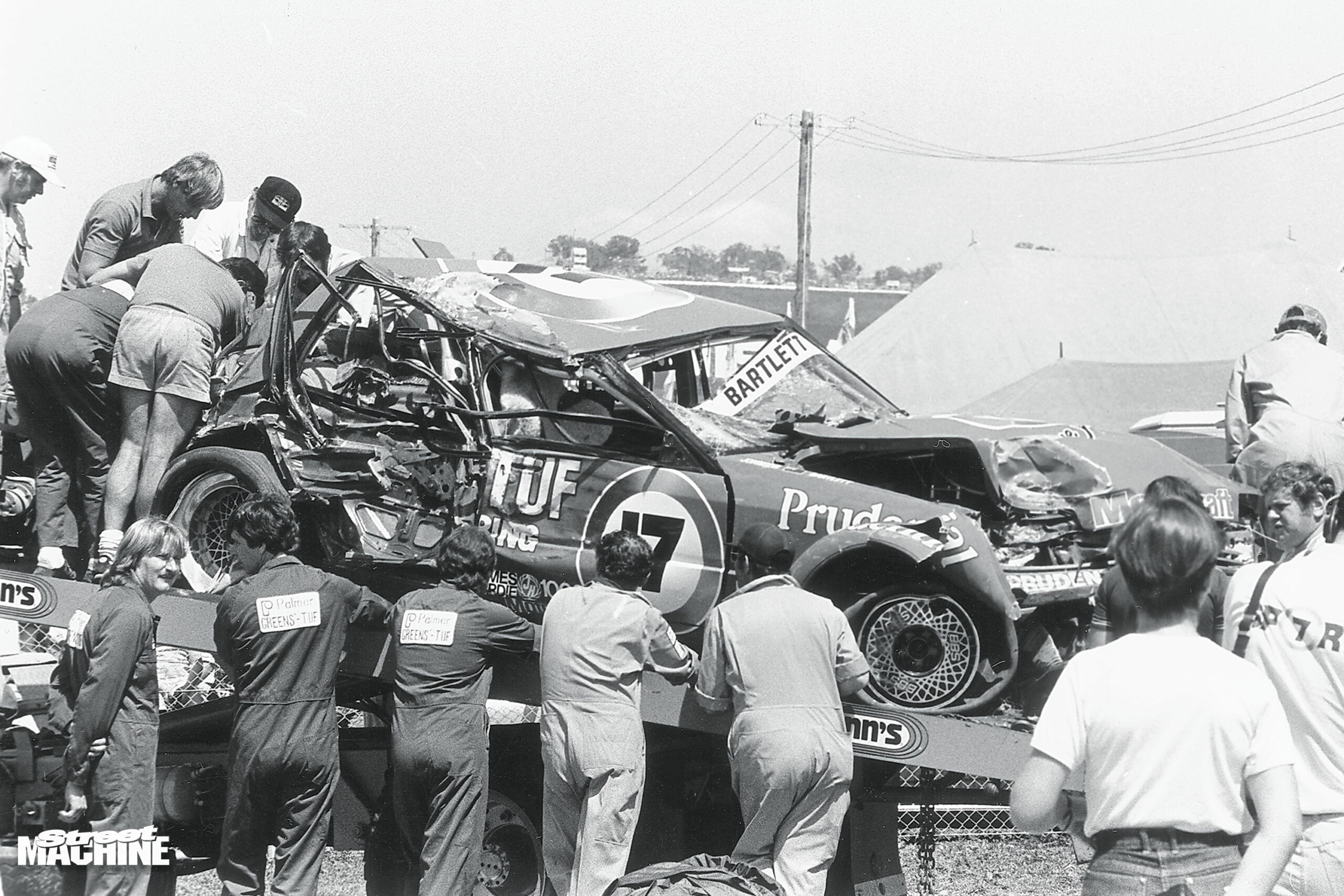
I was on my out lap and I’ve come around the corner to find people waving and it didn’t look too good, I can tell you, because he’d put the car between all these fat gum trees and it was smashed to smithereens. Dick was wandering around a bit dazed and confused and I pulled up and gave him a lift back to the pits. The powers that be got stuck into me for that. For once, I think Dick was short of a quip and there was no chat about riding in a Holden.
There was very amusing incident once in the 80s; I think it was at Sandown. At least, Dick thought it was funny. There was a kid wandering around with a long ponytail, and he came up to Dick to get his autograph. Without saying anything to anyone, Dick’s grabbed a pair of scissors and cut his ponytail off! The kid was mortified, as was his team. Oh Dicky, what have you done? One thing you could say about Dick: he was never politically correct.
I think Dick will be remembered as a genuine Ocker, a character who spoke his mind, and definitely not a sensitive new-age guy. But he was very emotional and wore his heart on his sleeve. Dick was a lot more serious than what people thought he was. He would crack a one-liner because he thought it was a good thing to do at the time, not because he was naturally humorous. Dick is a total one-off.
Comments