
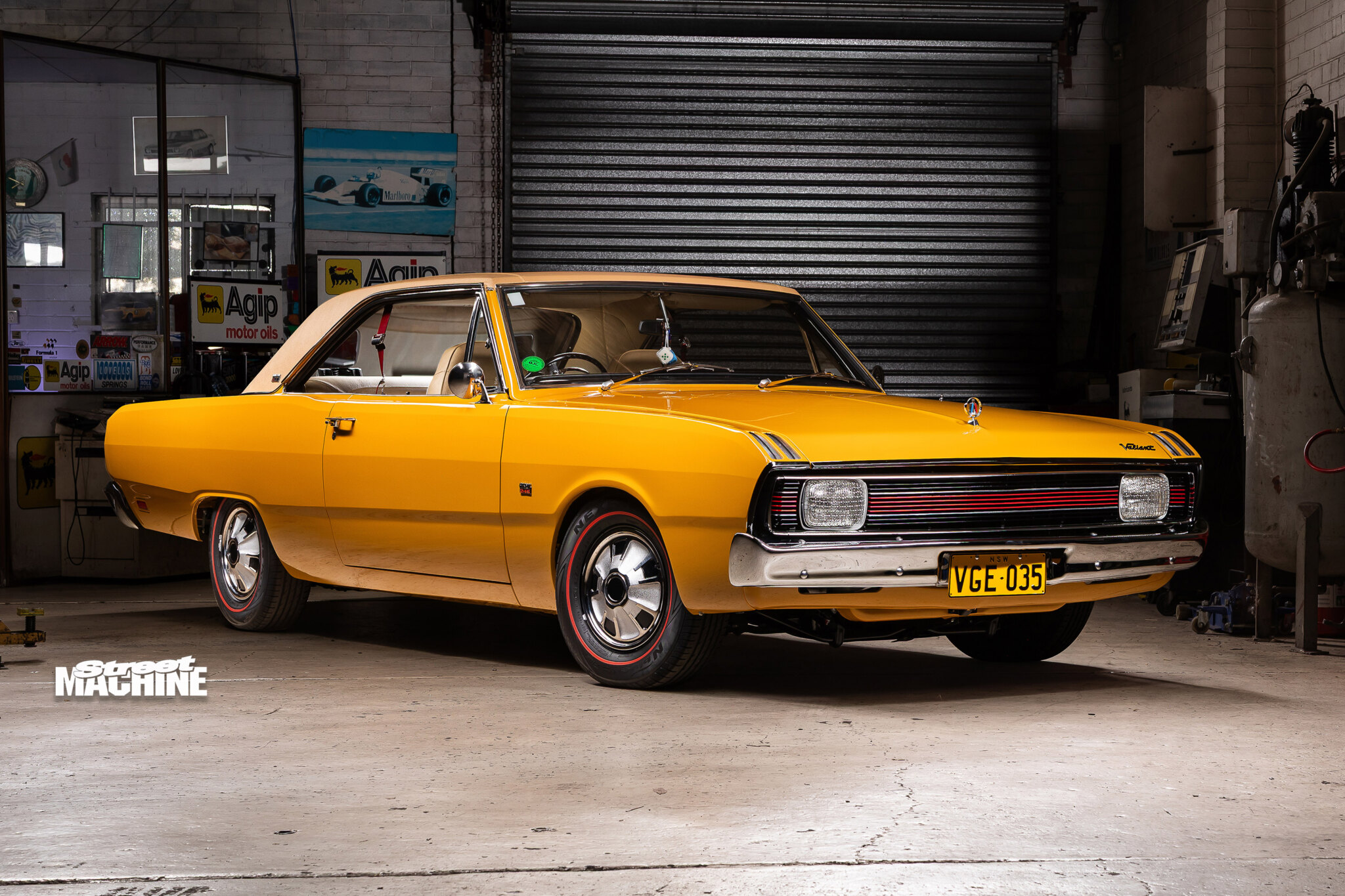
Only the bold would modify the genuine version of any factory muscle car nowadays, so there’s much to be said for going a different route and building something from a donor car that isn’t burdened with an inherent dollar value. Sydneysider Chris Symeou fell somewhere in the middle with the build of his VG Valiant Hardtop.
First published in the May 2025 issue of Street Machine
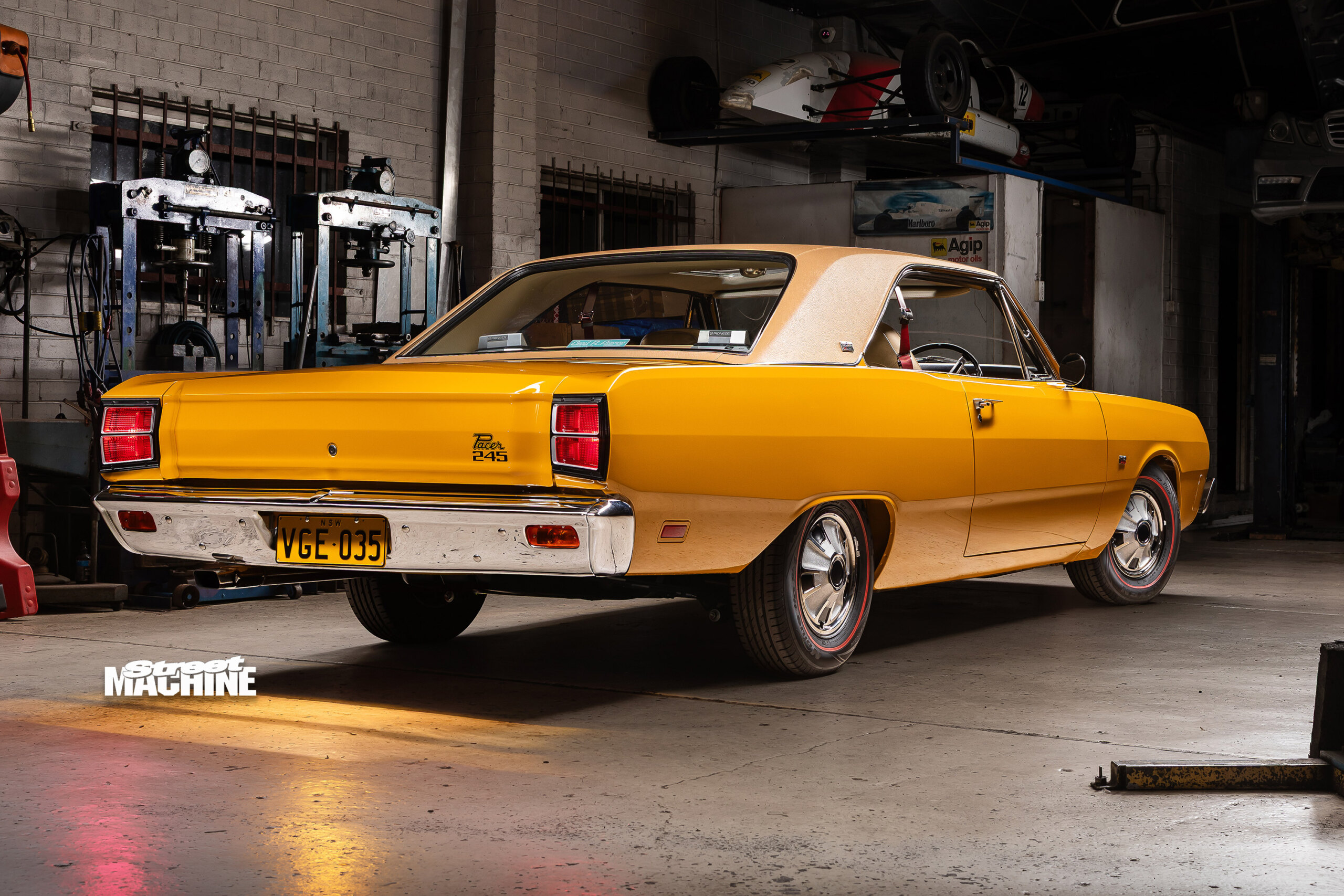
“I wanted to build a replica E35 Pacer, but my Hardtop left the factory as a Regal 770 with some rare and unusual options,” Chris says. “I decided to make this build a happy compromise between both, which created something completely one-off.”
Modifying cars is about expressing one’s individuality and personality, and Chris has followed that mantra to a T. But, like many projects, it all started from very humble beginnings. “The car was a mess,” says Chris. “I bought it out of Queensland as a bare shell with boxes full of parts. It was allegedly complete, but once the build commenced, it became clear that a heap of stuff was missing.”
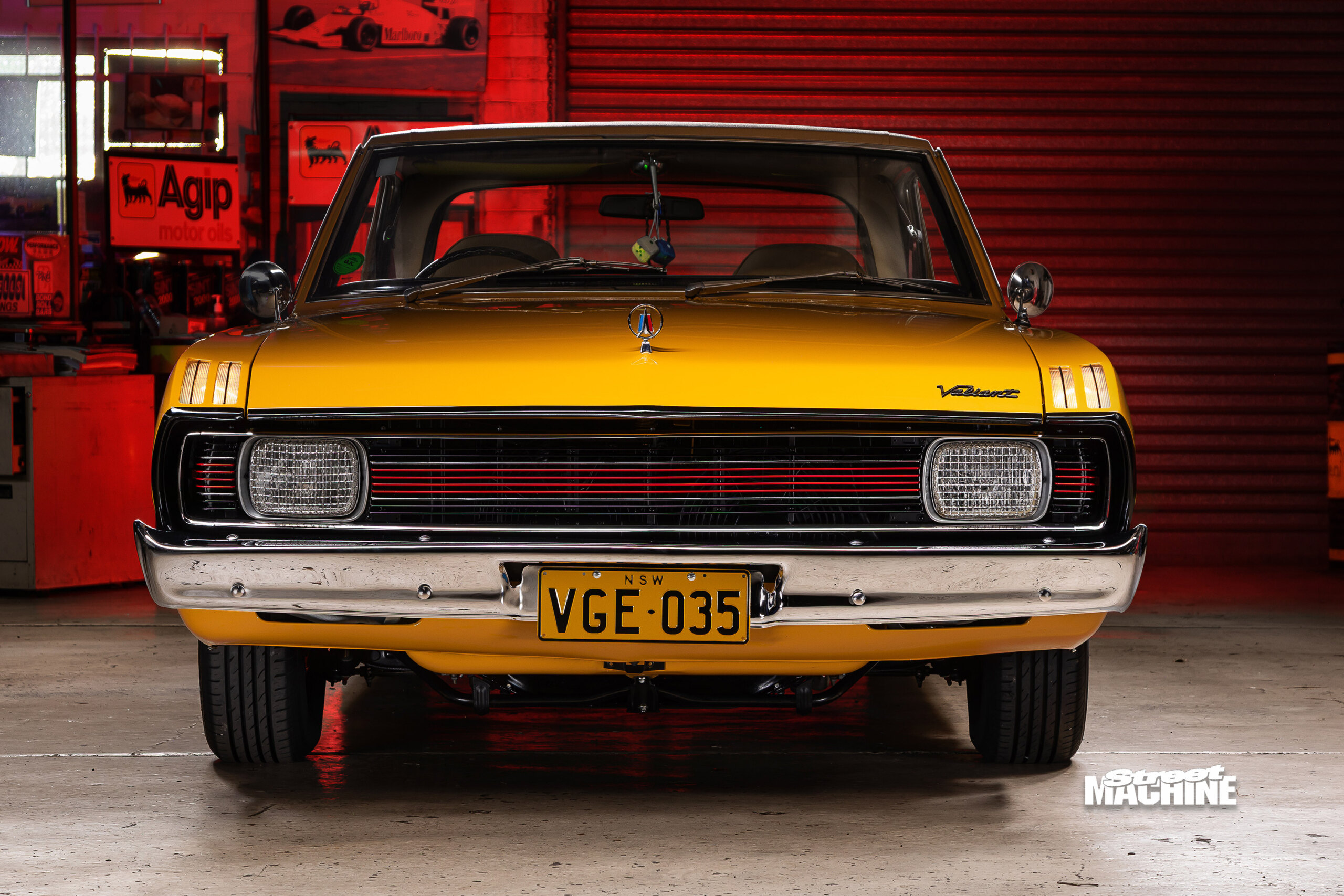
Not one to be deterred, Chris ploughed ahead, starting with getting the swoopy two-door shell knocked into shape by panel maestro Sebastian Desisto. Sebastian bare-metalled the body and hanging panels before replacing both rear quarters and the deck panel behind the rear screen. Any other rusty sections were patched with fresh metal, an era-correct Golde sunroof was inserted in the lid, and the ready shell was prepped for paint.


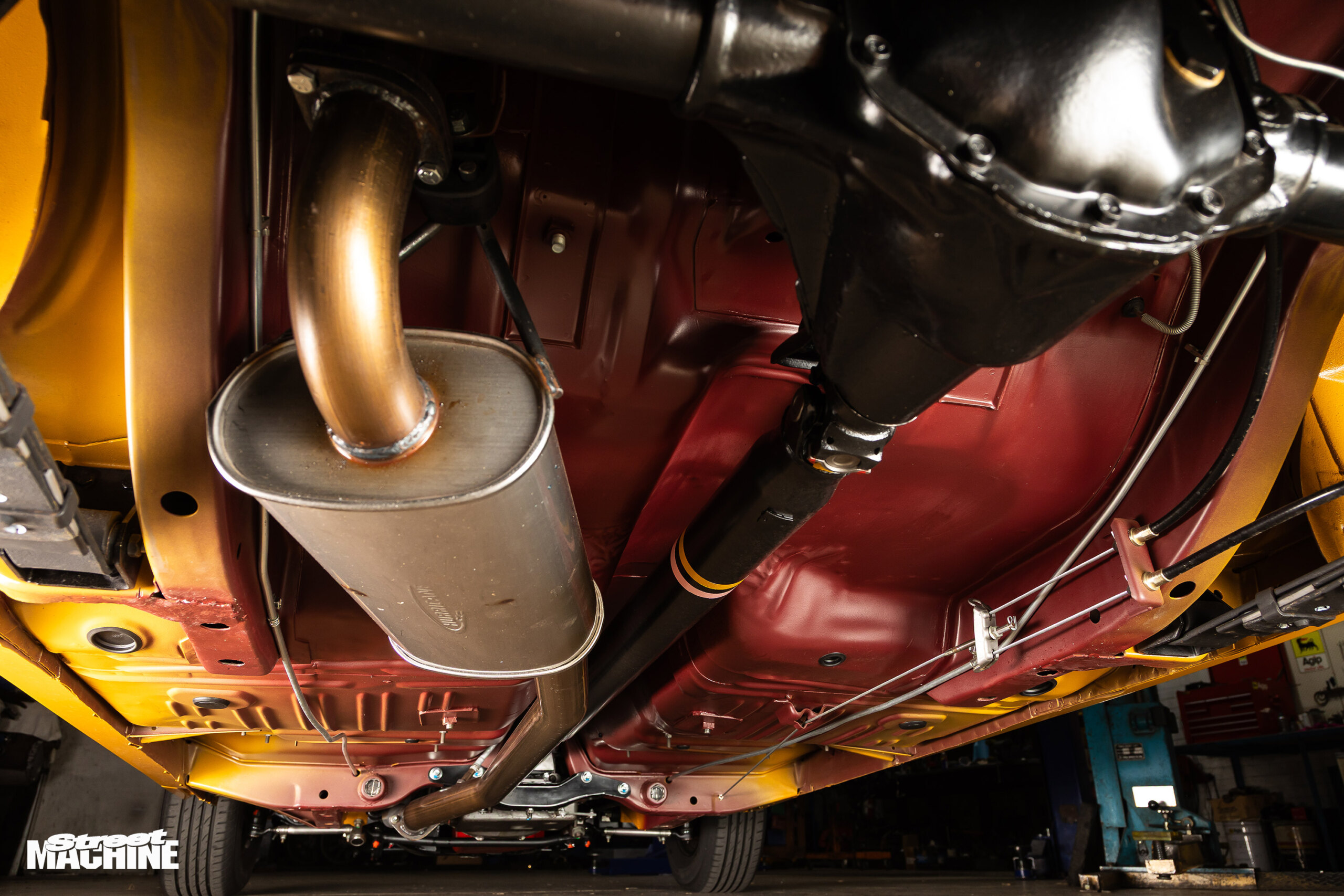
Father-and-son team Nick and Chris Pikis handled painting duties, lathering the body in Hot Mustard two-pack while finishing the inner surfaces such as the engine bay, door jambs and boot using methods to best resemble the factory acrylic finish. The undercarriage was finished in factory-spec reddish-brown oxide, with mustard overspray added, just as Mother Chrysler had.
Earning a crust as a painter and decorator means Chris has an excellent eye for detail. He knew exactly what he wanted his Val to look like, and he stuck to his guns to get it. “An E35 will normally have the full bonnet blackouts and side stripes,” he explains. “However, I aimed the Pacer styling cues at the smaller body details, such as the black eyebrow and bonnet moulds, grille treatment and tail-lamps, while the badge placement and decals use the Pacer influence over the traditionally more jewellery-heavy Regal finish.”


When it comes to Valiants of this era, the tan vinyl roof is a very rare option to accompany mustard paint. Most buyers went with black ones, with tan more commonly reserved for darker body colours. So, when Chris spied the respective ‘VT’ and ‘V10’ tan vinyl roof codes on the compliance plate, his hand was happily forced to retain that quirky combo. A fresh vinyl top was laid down by 50-year veteran James Here, who also beautifully tied in the sunroof metal for the perfect finish.
While we’re nerding out over factory codes, the interior boxes ticked for this car back in ’71 are also a rarity for a mustard-coloured Val – Parchment vinyl for the seats and door trims matched to red carpet and red seatbelts. While this reads like a mismatched nightmare, especially against a mustard finish, cast your eyes over the interior pics and you’ll likely agree that it’s on-point.
“I’ve had a few Chrysler boffins tell me it’s likely a one-of-one or one-of-two car, but I just asked them to stop throwing me into XY territory; let’s leave that stuff for the Ford guys,” Chris laughs. “I just got lucky; whoever originally ordered this car just knew what they wanted and had a great eye.”
Carl Bowerman was responsible for fastidiously retrimming the interior appointments to Pacer specs. A Pacer tacho instrument cluster and dash trims were restored, along with the factory twirler and floor shift console.
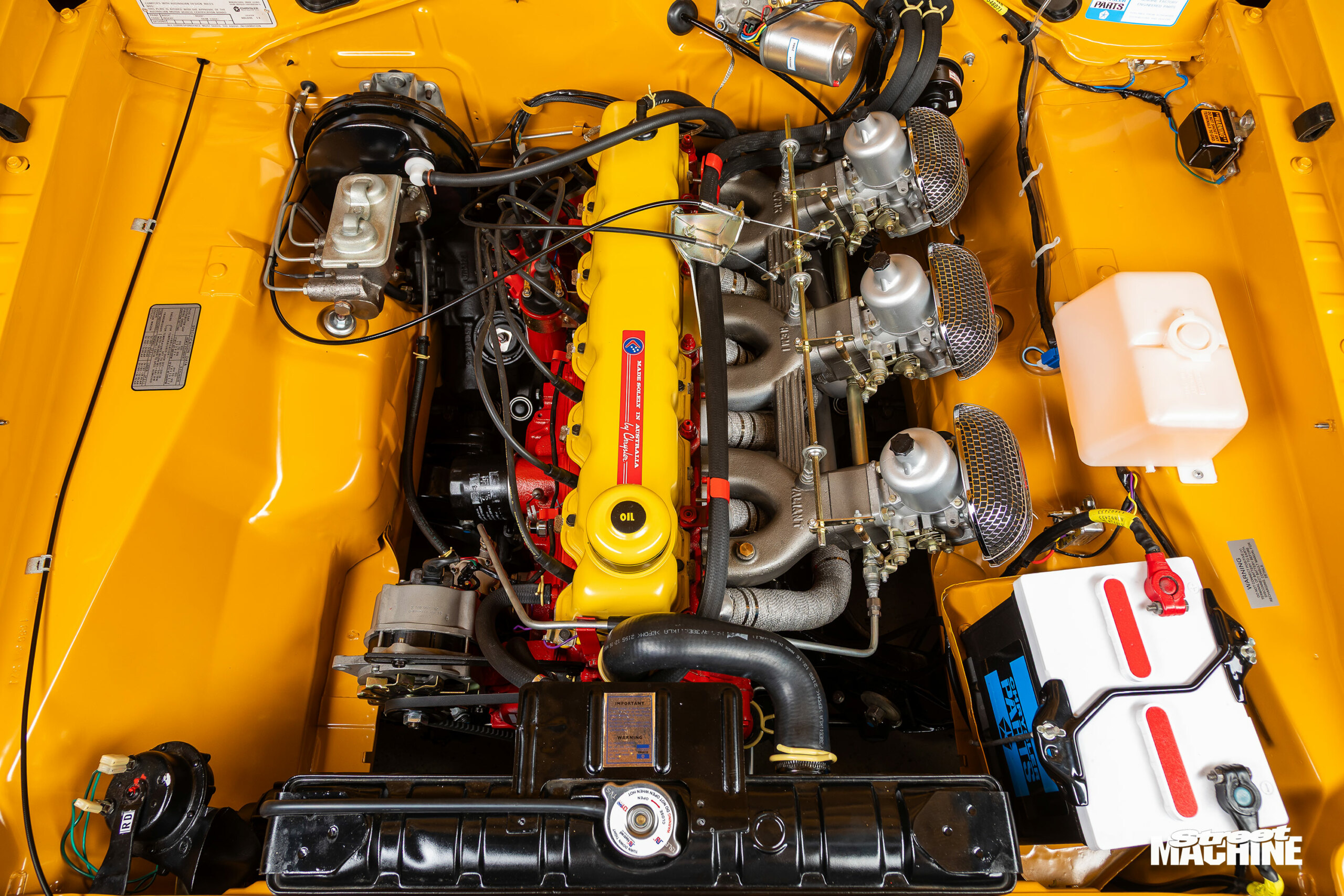
When Chrysler released the VG Valiant it used famous race car driver Stirling Moss to introduce the all-new Hemi 245-cube six-cylinder. This was the engine chosen for the manufacturer’s Pacer factory hottie, so for Chris’s E35 Pacer-inspired build, a Hemi was likewise the logical choice.
While many spruik the advantages of the bigger 265-cube version, the Hemi 245 is a great engine in its own right and responds well to the same sorts of mods that made its bigger brother famous. The engine package for Chris’s Valiant was a team effort between Bobby Angelkovski, Jim Koundouris and Arthur Johnson Engineering.


The standard block was stretched 40thou and filled with SRP forged pistons, while the crank was micropolished and the rotating assembly balanced. Hemi heads are heavy breathers, even in stock form, so the original cast unit was simply ported and polished and treated to oversized Ferrea valves, double valve springs and Yella Terra roller rockers. A modified standard oil pump keeps the juices flowing, while spark is provided by a later-Hemi Bosch electronic dizzy and a hidden lone LS1 coil.
While an E35 Pacer is more traditionally fed via a four-barrel carb, Hemis love fuel, so Chris chose to run with a triple set-up that is a little different to the well-trodden Hemi/Weber carburettor path. While a trio of SUs isn’t a totally uncommon choice amongst the Valiant faithful either, here they feature in body alone. Hidden in the base of each SU casting is a Nismo 555cc injector. This, along with a Haltech ECU and Aeromotive pump, has given Chris the ease and reliability of EFI whilst retaining old-school looks.
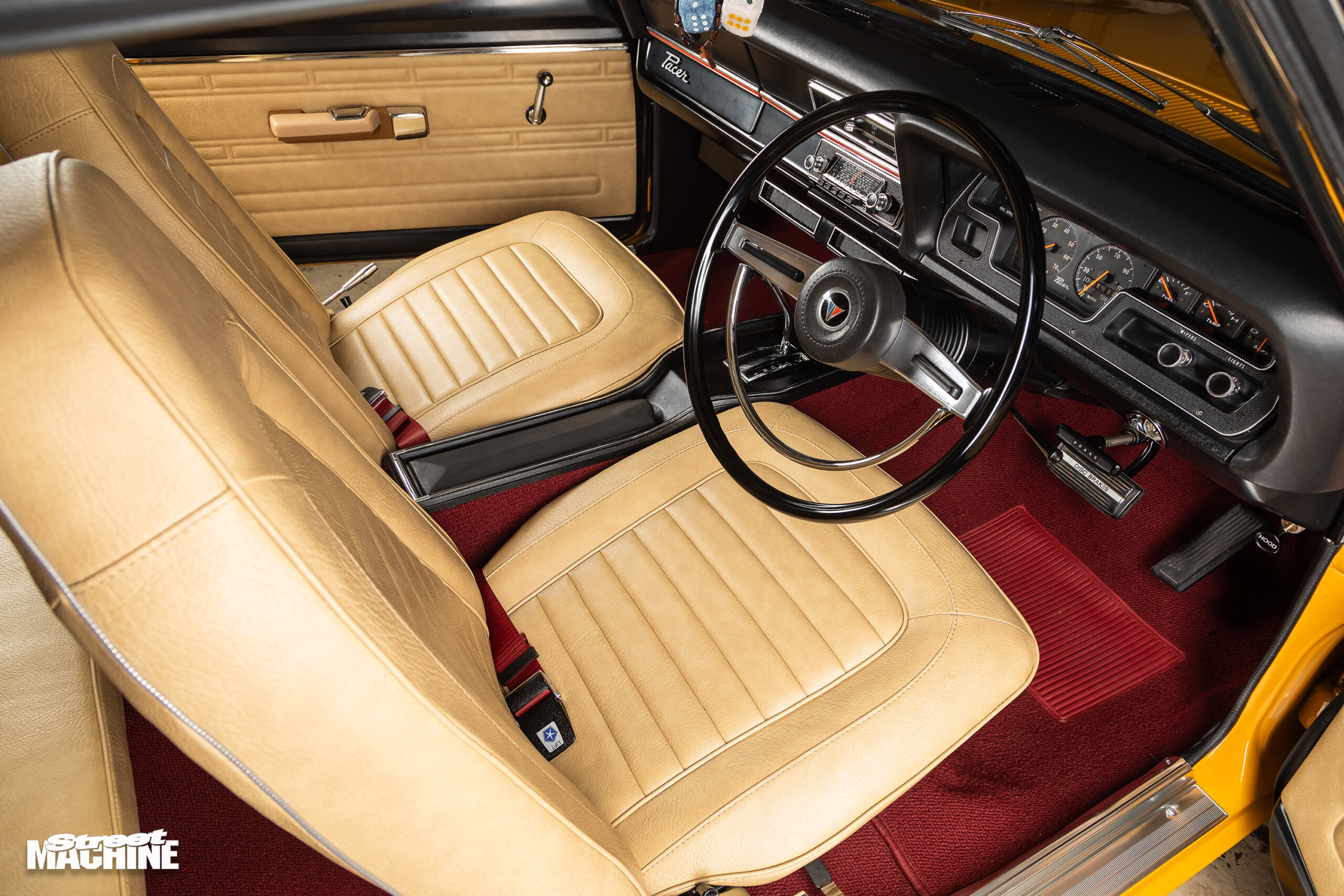
This melding of new and old doesn’t end there. Concept Cooling was responsible for the stealthily installed electronic air-conditioning system, while a factory Chrysler power steering box is pressurised via a concealed Holden Astra electric pump and lines to keep the ancillaries appearing factory fresh.
“Everything modern is hidden, which is both a challenge and part of the fun,” Chris says. “I wanted it to look how they would’ve built it in 1971.”


The rest of the driveline is fairly standard fare, just improving on known Valiant trouble spots. The BorgWarner diff has been upgraded from a 25-spline to a 28-spline axle configuration and outfitted with an LSD centre that supports Pacer-spec 3.23 gearing. Similarly, the BorgWarner 35 automatic transmission has been strengthened internally and fronted with a TCE 3500rpm converter to better suit the healthier engine specification.
After six years in the build, Chris was keen to share the Valiant with his fellow car-loving brethren, and to date has nabbed a Top 60 unveil spot at Street Machine Summernats 37, while more recently placing in the Top 5 Australian class and scoring a first-place VF-VG Hardtop gong at Chryslers on the Murray.


“I’d love to do an HK or HQ Monaro, or even a ’69 Dodge Charger next, so the Hardtop build didn’t burn me out,” says Chris. “The only real hurdles were making some of the new parts fit correctly and trying to achieve modifications that didn’t detract from the car’s original look. But now that it’s done, it’s time to get out and enjoy it with my family and friends. This build brought us all together like moths to a flame, which has been one of the best parts of the project – building a car at home with your mates, just like we did as young blokes.”

CHRIS SYMEOU
1971 VG VALIANT HARDTOP
| Paint: | Baslac Hot Mustard |
| ENGINE | |
| Brand: | Chrysler Hemi 245ci six-cylinder |
| Induction: | Lynx Hemi Valiant intake, triple 1.5in SU carburettor bodies, hidden Nismo 555cc injectors |
| ECU: | Haltech Elite 750 Head: Standard cast-iron, ported and polished Camshaft: Hydraulic, 0.302 lift, 238@.050 duration |
| Pistons: | SRP forged |
| Crank: | Factory, micropolished and balanced |
| Exhaust: | Genie extractors, 2.5in system |
| TRANSMISSION | |
| Gearbox: | BorgWarner 35 automatic |
| Converter: | TCE 3500rpm stall |
| Diff: | BorgWarner 28-spline LSD, 3.23:1 gears |
| SUSPENSION & BRAKES | |
| Front: | Factory torsion bar, K-MAC shocks |
| Rear: | Leaf springs, K-MAC shocks |
| Brakes: | Ford discs (f), Pacer vented drums (r) |
| WHEELS & TYRES | |
| Rims: | Standard steel 14×5.5, Pacer hubcaps (f & r) |
| Rubber: | Nexen 205/70R14 with redwalls (f & r) |
THANKS
Bobby Angelkovski, Jim Koundouris and Arthur Johnson Engineering for the engine; Sebastian Desisto for panelwork; Nick & Chris Pikis for paint; Carl Bowerman for the interior trim; James Here for the vinyl roof trim; Kosta and Jimmy at Formula 1 Pitstop; Mick’s Motorsport for tuning; all of my friends and family for helping with assembly and keeping me company – they know who are.
Comments