
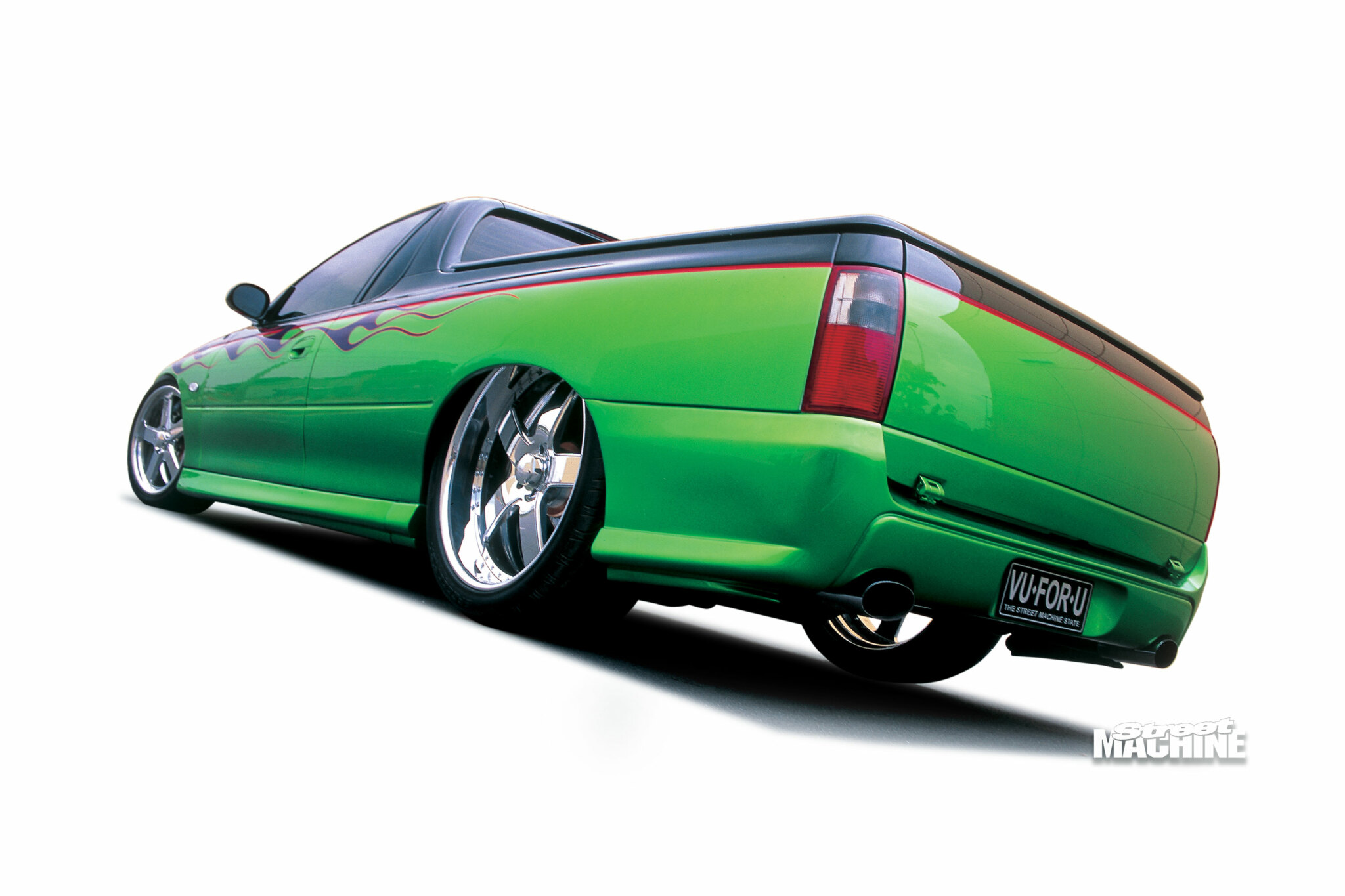
First published in the September 2003 issue of Street Machine
There’s nothing new about air bag suspension systems, auto manufacturers have used them since the turn of the century and they’ve become more popular in recent times. That’s because you can slam your ride down low when on show, then raise things back up to a suitable cruising height at the flick of a switch. Our own Project VU FOR U features a full Air-Glide system from Tubular Suspension Systems (TSS) to give it dumped-in-the-weeds impact when on display. While TSS were fitting the ute’s system we picked their brains on the what, why, where and how of aftermarket air bag suspension systems.

KNOW YOUR BAGS
In most aftermarket air bag systems, the air bags (or air springs) are designed to replace your car’s factory springs. The rubber bag is filled with compressed air, which then acts as the spring so the car effectively floats on air. One exception is leaf spring applications where the norm is to remove two or three leaves, reset the main leaf (to a lower level) and use the air bag to restore ride height and spring stiffness. With leaves removed the leaf spring becomes an inferior axle locator, so it’s recommended to install a set of Cal-Tracs and a Panhard bar. Many air bag customers opt to dice the leaf spring rear completely and convert to a four-link set-up.
The beauty of using a rubber bag filled with compressed air as a spring is that you can adjust the height (and spring rate) by varying the pressure in the bag. In short, the greater the pressure the greater the effective spring rate. Naturally, lower pressures reduce the spring rate. Knowing that fact, we can quickly dispel a couple of air bag myths.
You can’t drive your car dropped all the way down. When driving with the air bags completely deflated your streeter will be riding on the bump stops – no air, no spring. This is very unsafe, both in terms of vehicle control and the structural integrity of your vehicle. Inversely, pumping too much pressure into the bags (to achieve full height) will dramatically increase the spring rate (spring stiffness) and make your car ride like it’s running on solid blocks of rubber – also very unsafe and mechanically harmful. Fully dumped is strictly for use when parked and full height is only for clearing obstacles at low speeds or compensating for dramatically increased loads.
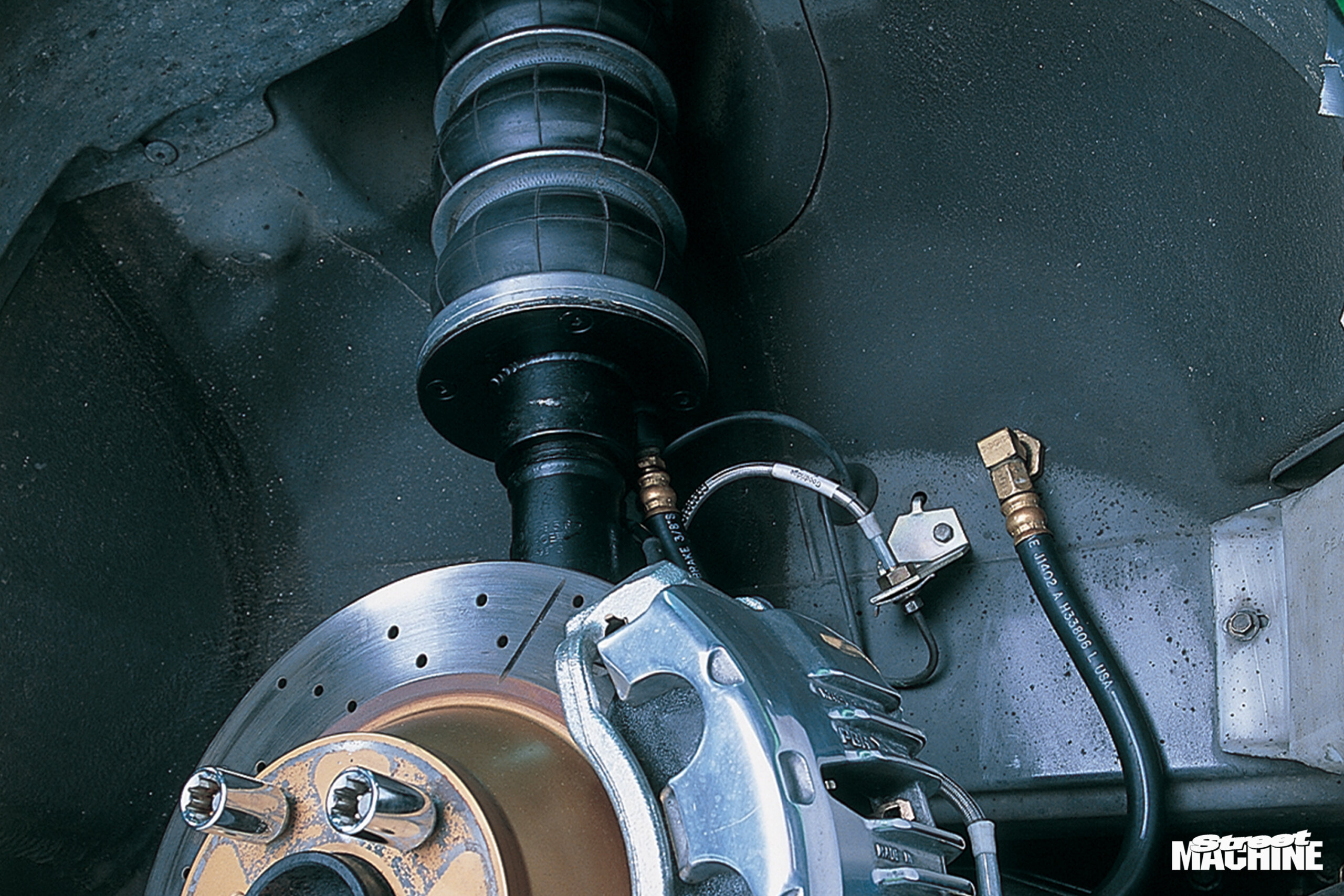
- 1. This is the front strut installation in VU FOR U. The top retains the factory bearing allowing the entire assembly to rotate so the bag doesn’t twist. Note the spring (lower right) cable tied to the hose ensuring it doesn’t rub on the tyre.
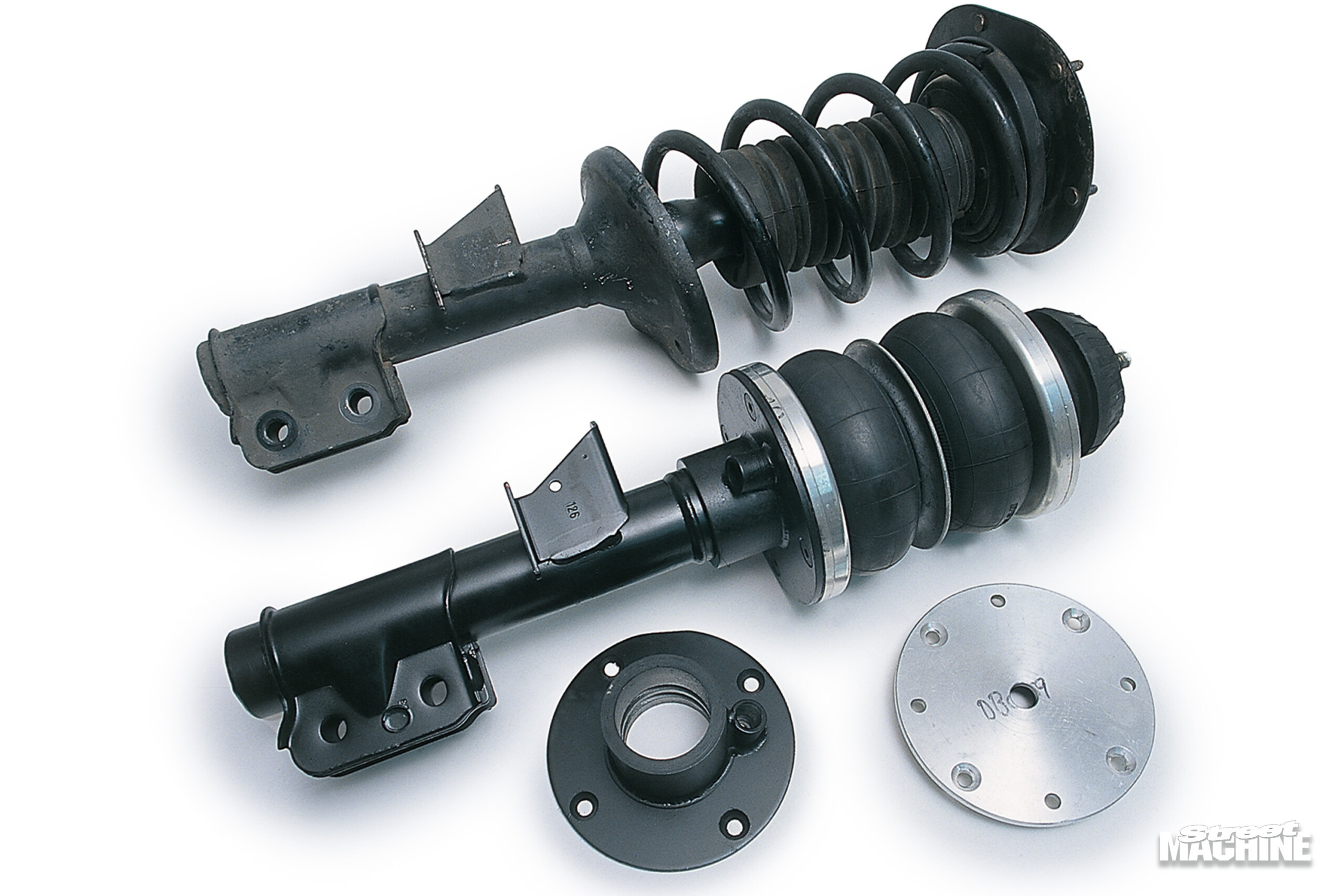
2. Here is Tubular’s Commodore strut conversion. As well as these, Tubular offers ready-to-bolt-in struts for all popular makes of car. All units are supplied with full certification for both the components and welding.
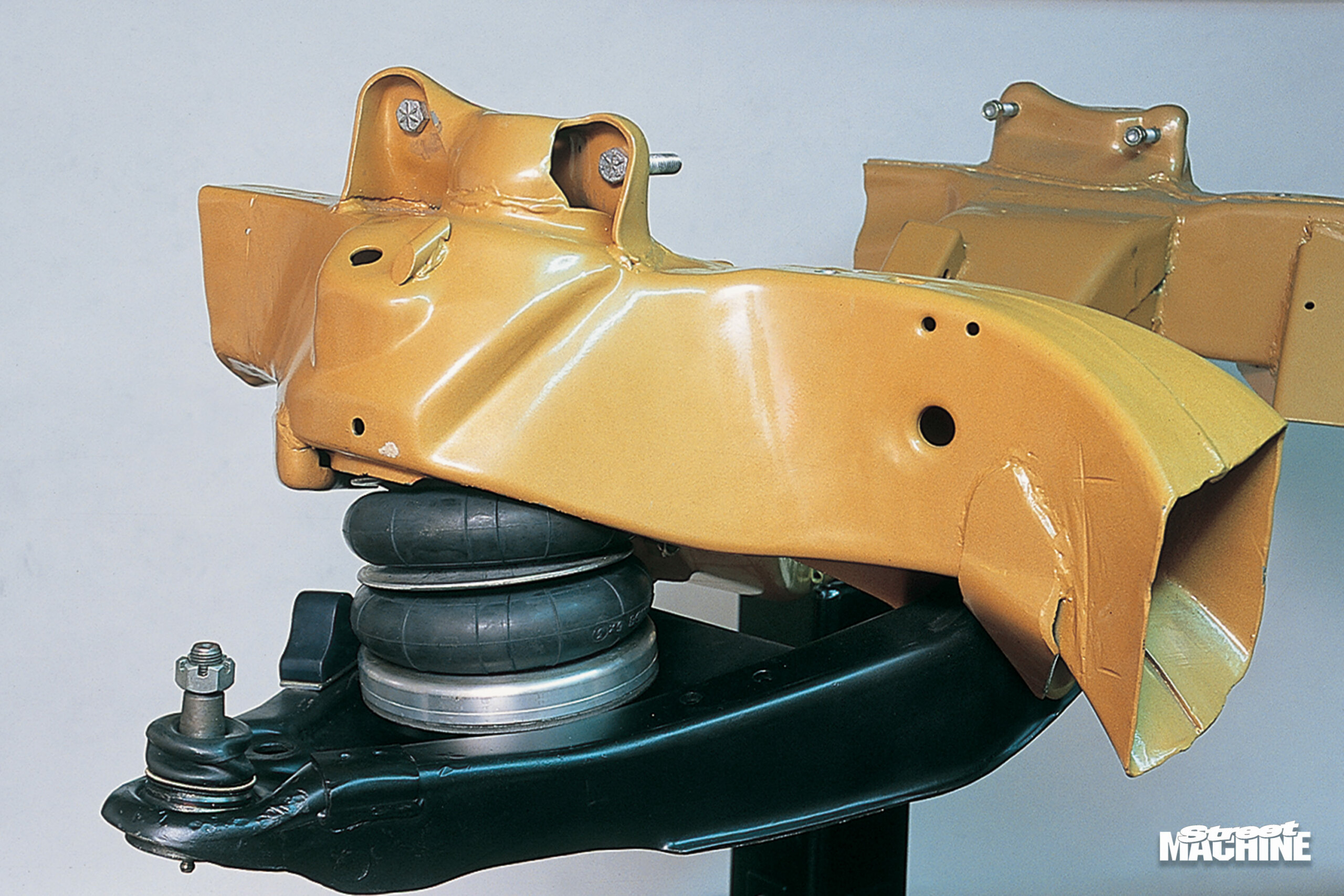
3. Like in this Holden HQ-WB set-up, swapping from coils to air bags is quite straightforward. Just remove the coil, fabricate flat upper and lower mounts for the air bag to mount on and in she goes. You’ll need at least 10mm of clearance around the convoluted bags to prevent them from getting damaged.
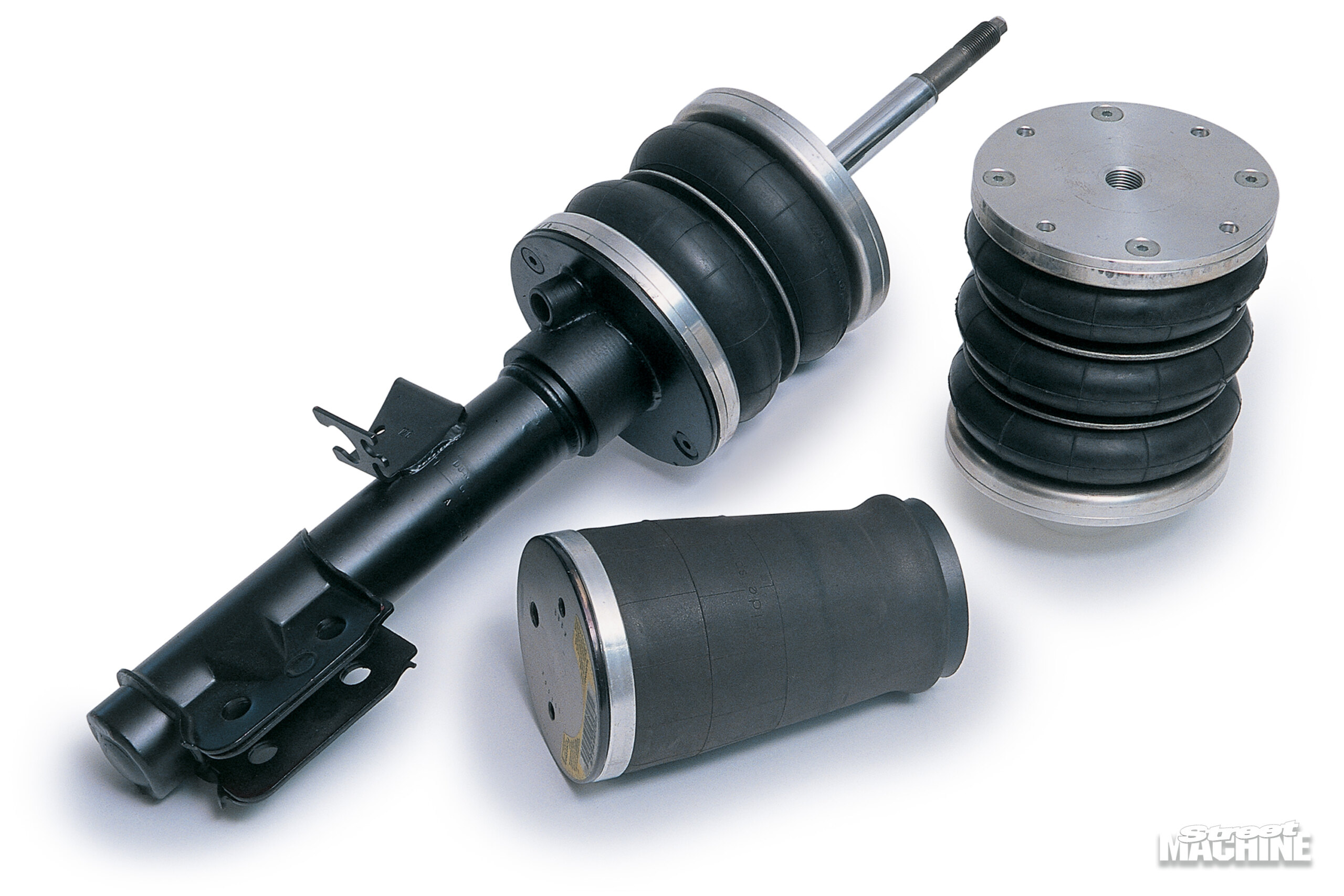
4. The three most common air bags. Double convoluted bag is 80mm collapsed, 225mm full height and can carry 1300kg. Triple convoluted bag is 95mm collapsed, 275mm at full height and can carry 1400kg. Rolling sleeve bag is 115mm collapsed and 300mm extended. It’s rated to 680kg.
BAG MANIPULATION
The upshot is you need to select a bag pressure that gives an acceptable ride quality when driving. Overall vehicle weight will largely determine the pressure you choose with suspension geometry being another big factor. Too soft and the car will bottom out, too hard and the suspension won’t have the compliance to absorb road irregularities. Just remember that air bags are just a spring and must always be used with a shock absorber. Lastly, while it is possible to make your car jump, hop or bounce with air bags, these antics are realistically the domain of hydraulics (which TSS can also help you with). We’ll look at hydraulics later on.
Another thing to keep in mind is to never allow the bags to rub or foul on anything – a catastrophic failure can occur quite quickly if the bag is allowed to be chaffed in any manner. When used correctly air springs should last for 15 years or more.
The two most commonly used bags are double or triple convoluted, which look like stacked doughnuts; and rolling, tapered or sliding sleeve. Convoluted bags can be used at either the front or rear, while the sleeve bag, which has a lower weight carrying capacity, is generally reserved for the rear of the car.
Airflow in and out of the bags is controlled via solenoid valves, which give you the freedom of on-the-go adjustment. These solenoid valves are controlled by a small current through switches in the cabin. Fully integrated systems feature cabin-mounted pressure gauges so you can set your preferred driving pressure, and it’s at this setting where you’ll need to get your wheel alignment done.
Independent control on each corner is the recommended way to go to achieve the best driveability. To cut down on expensive control solenoids, linking the two front bags or the two rear bags is an option but there are problems with this arrangement. Linked systems suffer badly from body roll, as the air is allowed to transfer from one side to the other when cornering. While fitting a stiffer sway bar can help reduce this effect, it’s still a compromise. The extra cost of a full independent system is definitely well worth it.
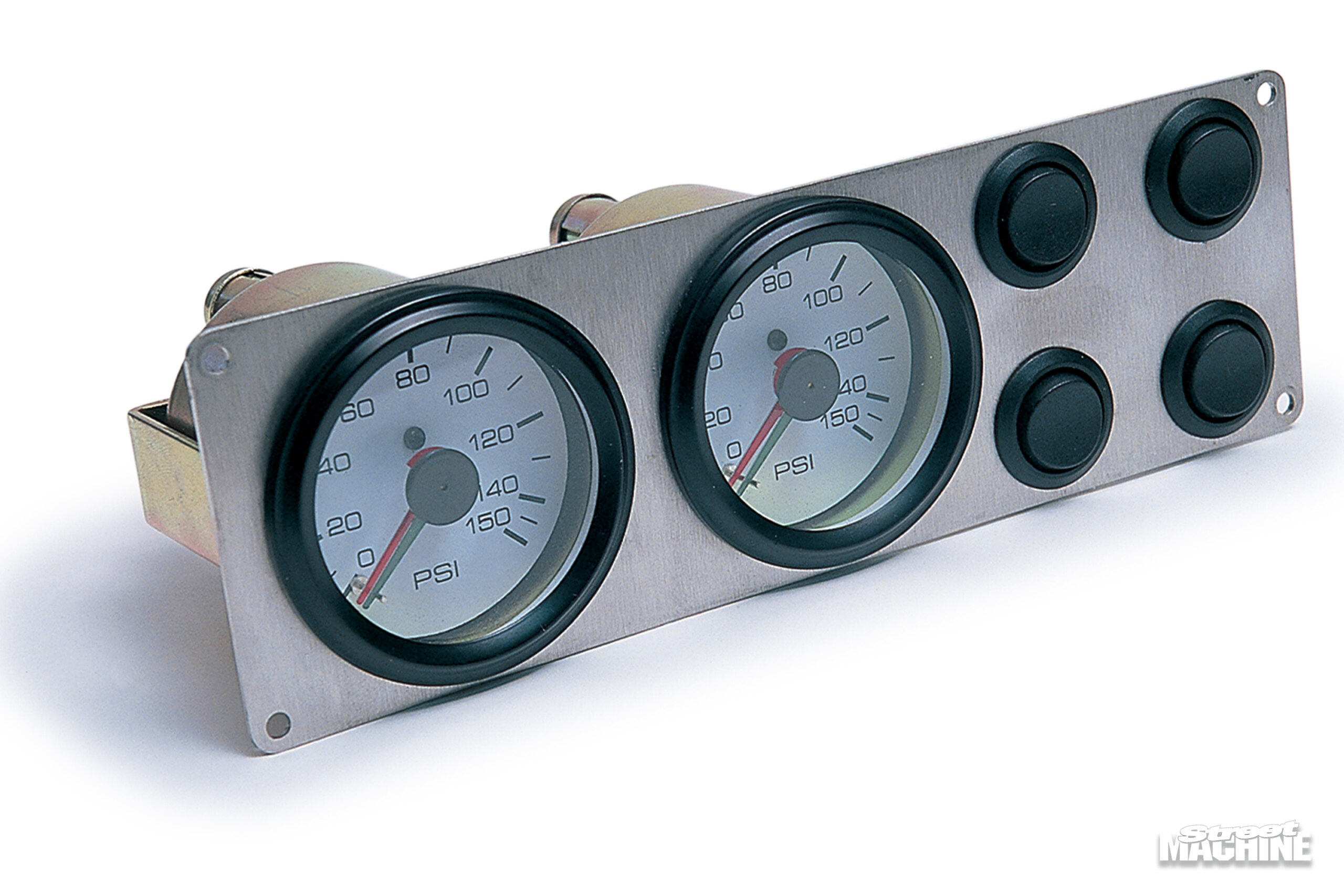
- 1. A set of dash-mounted gauges and switches like these will allow quick and easy on-the-go adjustment of your air suspension system.
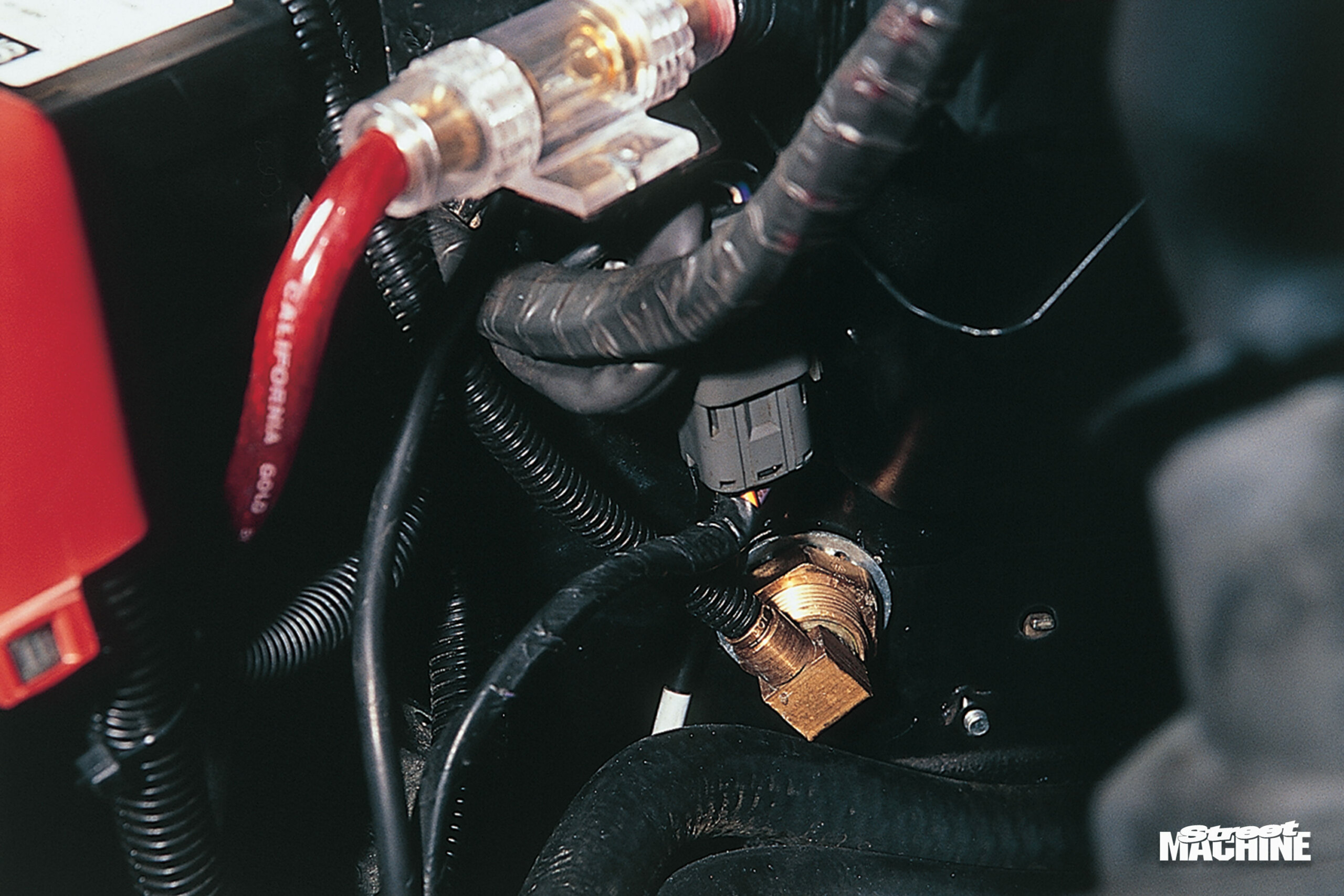
2. Make sure the bag cannot foul or rub on any edges. Chaffing through the bag will lead to instantaneous failure – very bad. Same goes for the airlines, you’ll notice that the air hose has been covered in convoluted tubing for added protection.
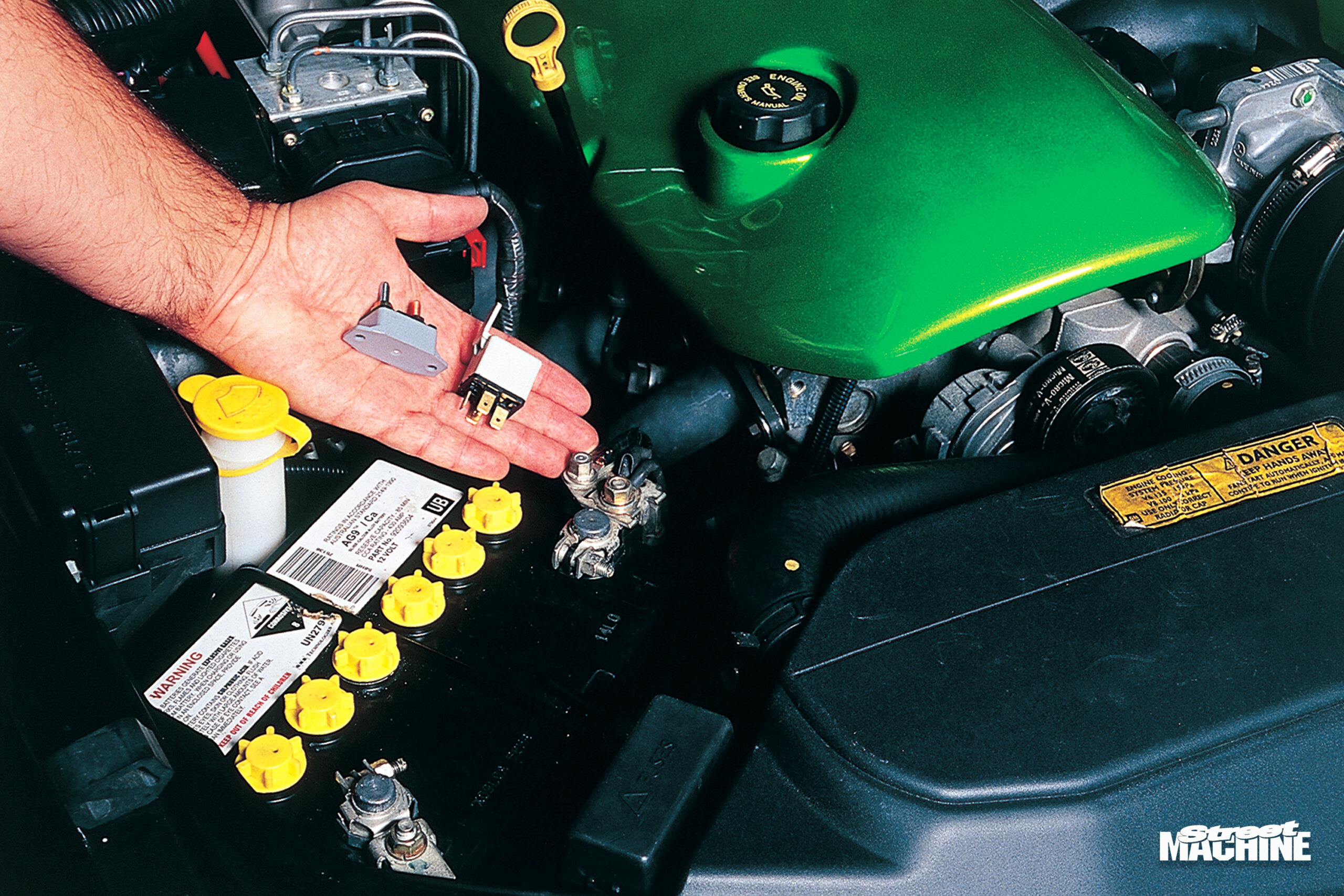
3. All electrical devices need circuit protection. The compressor draws a hefty amount of current so it’s best to use a circuit breaker (left) placed close to the battery. Route power through a relay so the pump will only work when the ignition is on. Control switches for the solenoids draw minimal current and can be tapped (and fused) off an adequate ignition source closer to the switch’s location.
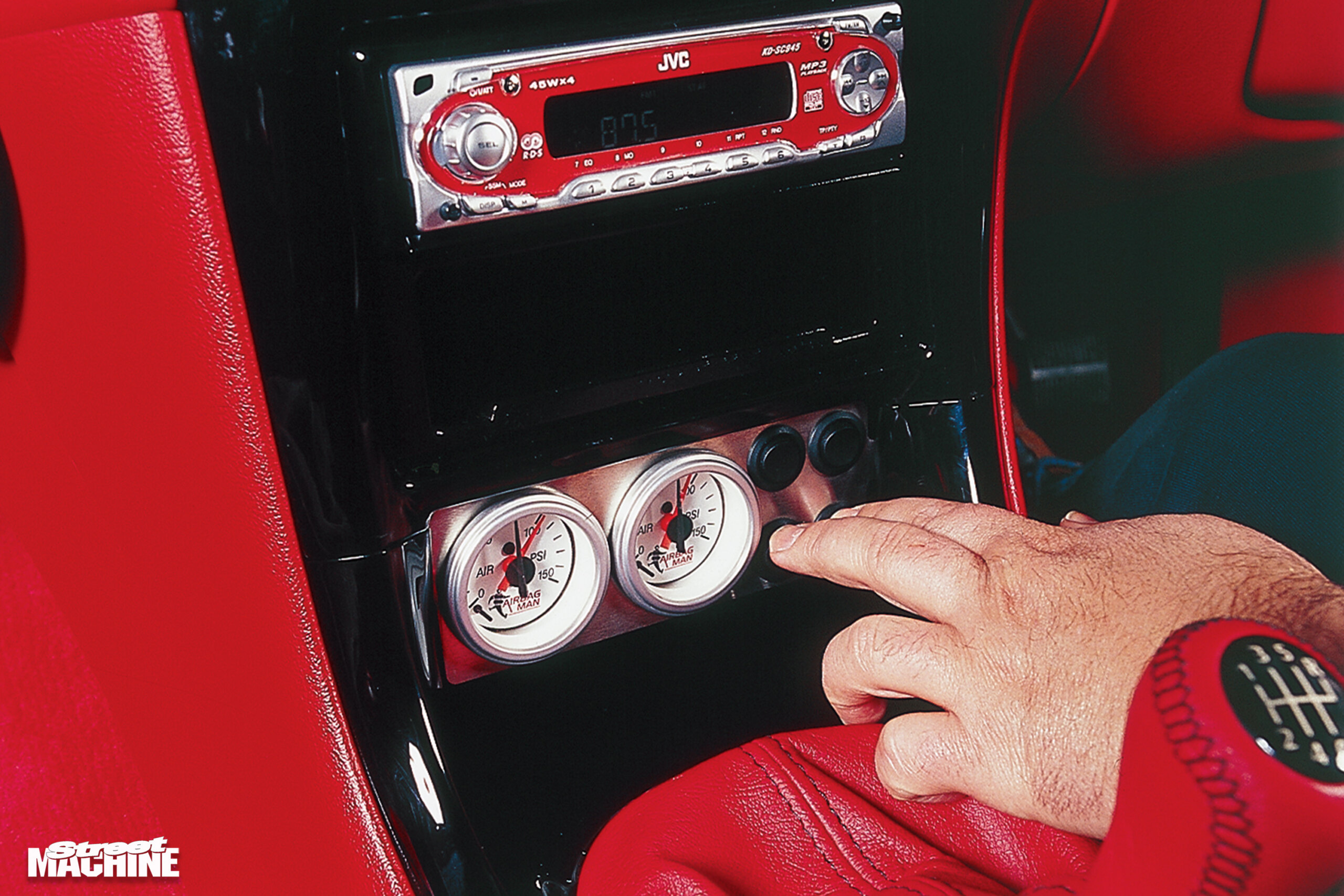
4. With independent systems it’s awkward to raise the front or rear end as one unit if the switches are mounted apart. Mounting the left and right switches side-by-side makes it far easier to lift or lower either the front or rear bags simultaneously.
BAG PUMPING
All systems require a pump and reservoir tank which work just like a workshop compressor. As pressure in the tank drops, the pump kicks in to refill the tank to a pre-determined pressure (usually 100-150psi).
Note: air bags should not slowly deflate! If your system needs to be topped up periodically, there’s a problem. Spray the joints with soapy water and look for small bubbles which will indicate the leak/s.
Pump and tank size depends on how quickly you want the vehicle to rise. The system in VU FOR U uses an 11-litre (three-gallon) tank and the smallest recommended pump. It takes a few seconds to go from fully dumped to driving height (45psi front, 65psi rear) and a bit over a minute to get to full height (100psi all ’round). Bigger or multiple tanks and bigger pumps can dramatically cut those times. Most pumps are designed for intermittent operation so if you want to raise and lower your car repeatedly you’ll need to use a pump that is rated to run continuously (100 per cent duty cycle).
Getting up and down faster doesn’t stop with larger tanks and pumps.
The standard quarter-inch lines need to be upgraded to 3/8 or half-inch along with matching control solenoids – all of which cost more. Fully-independent four-way systems start at $3900* and expect to pay up to $8500* for bigger, faster systems. As well as beiong more expensive, bigger systems take up more space and require more current to drive them. Complete systems are not cheap, so before slapping down your hard-earned cash, be sure of what you’re trying to achieve.
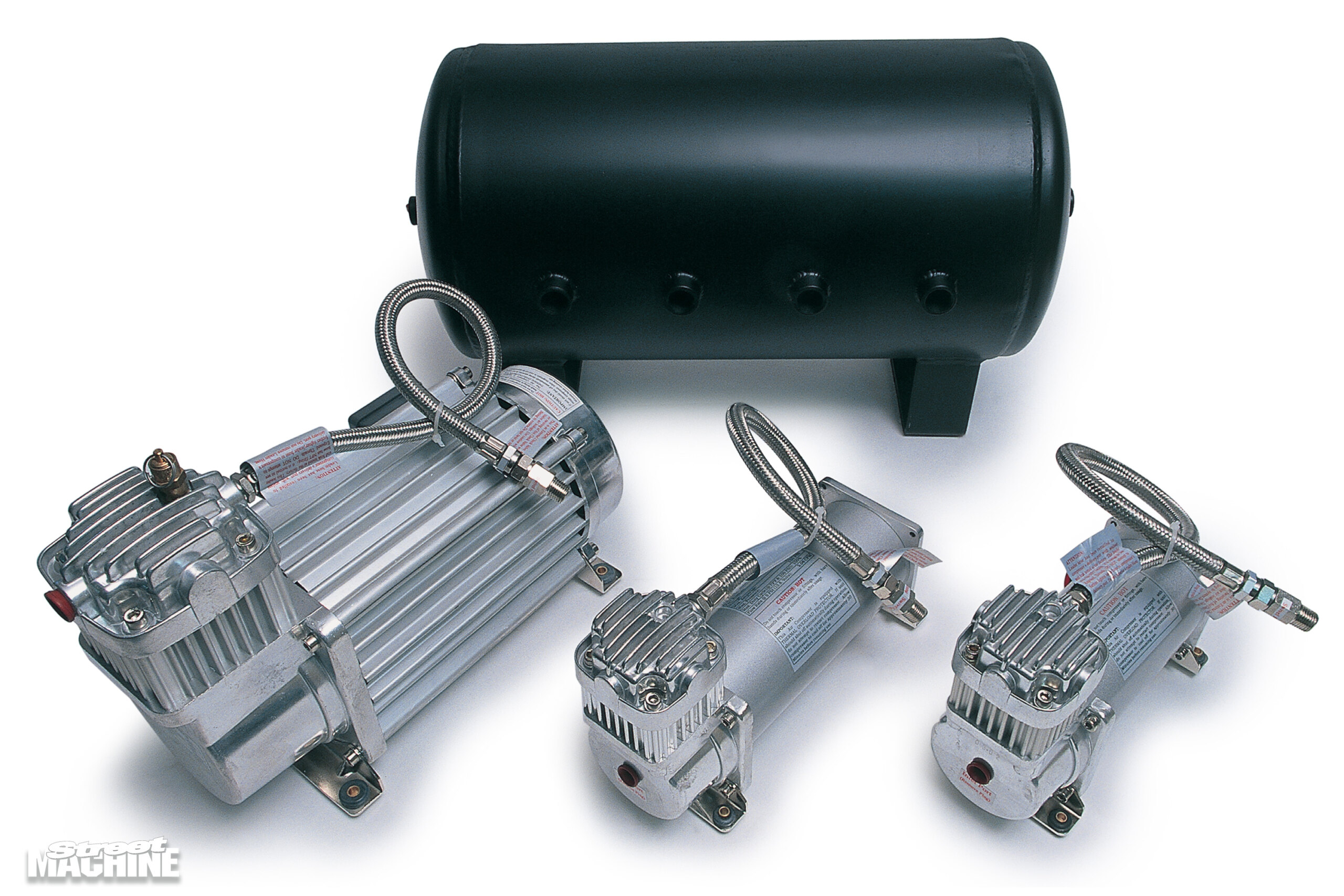
1. The small 350 Series compressor (right) will refill this standard side-ported 19-litre tank in around 90 seconds. The big 550 Series compressor (left) will fill the same tank in 35-40 seconds seconds. Drain moisture from the tank at least once a week.
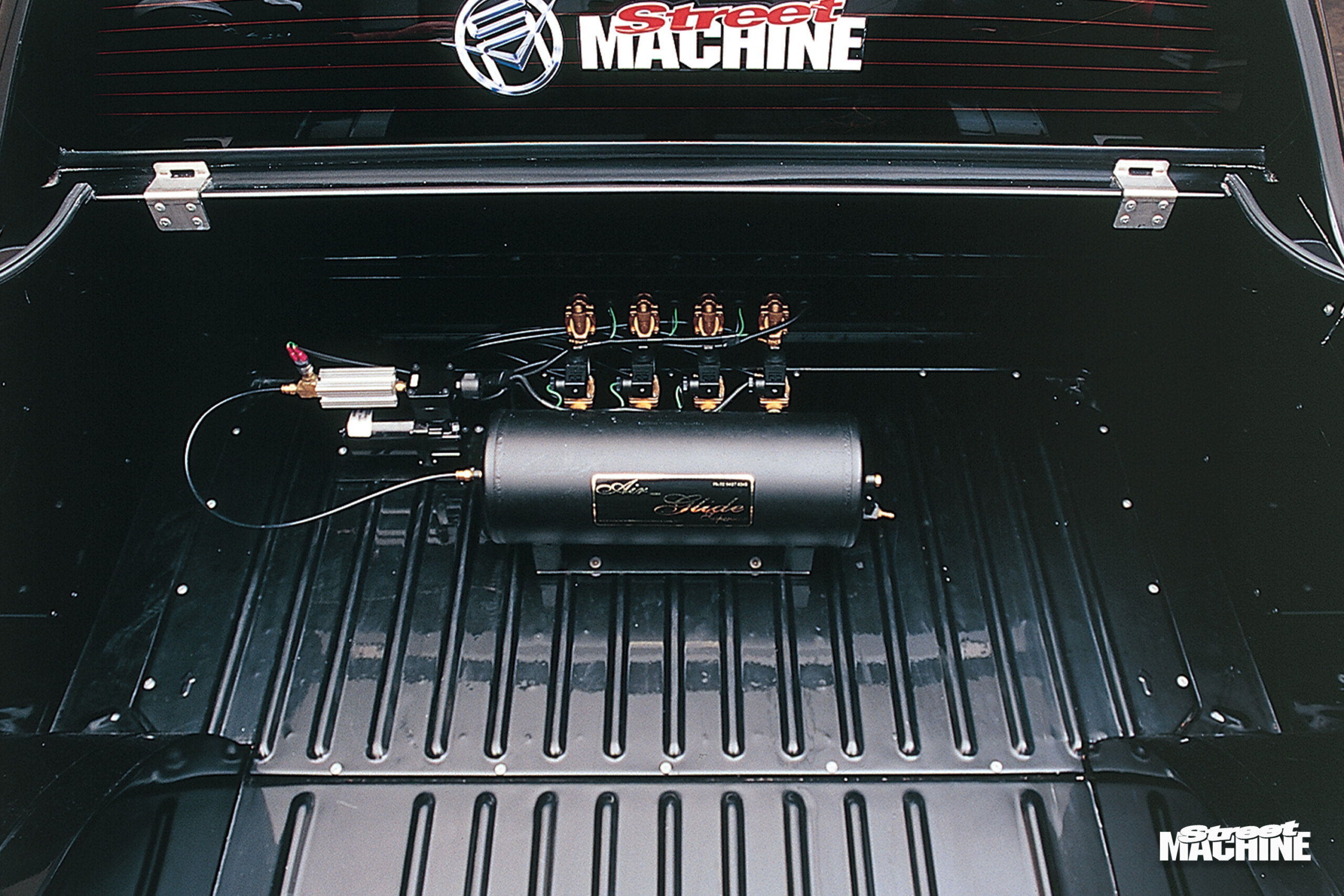
2. Tank installation into VU FOR U is typical (in a sedan the tank normally mounts up on the diff hump). You can see the eight control solenoid valves (four up, four down) for the four-way, fully-independent system.
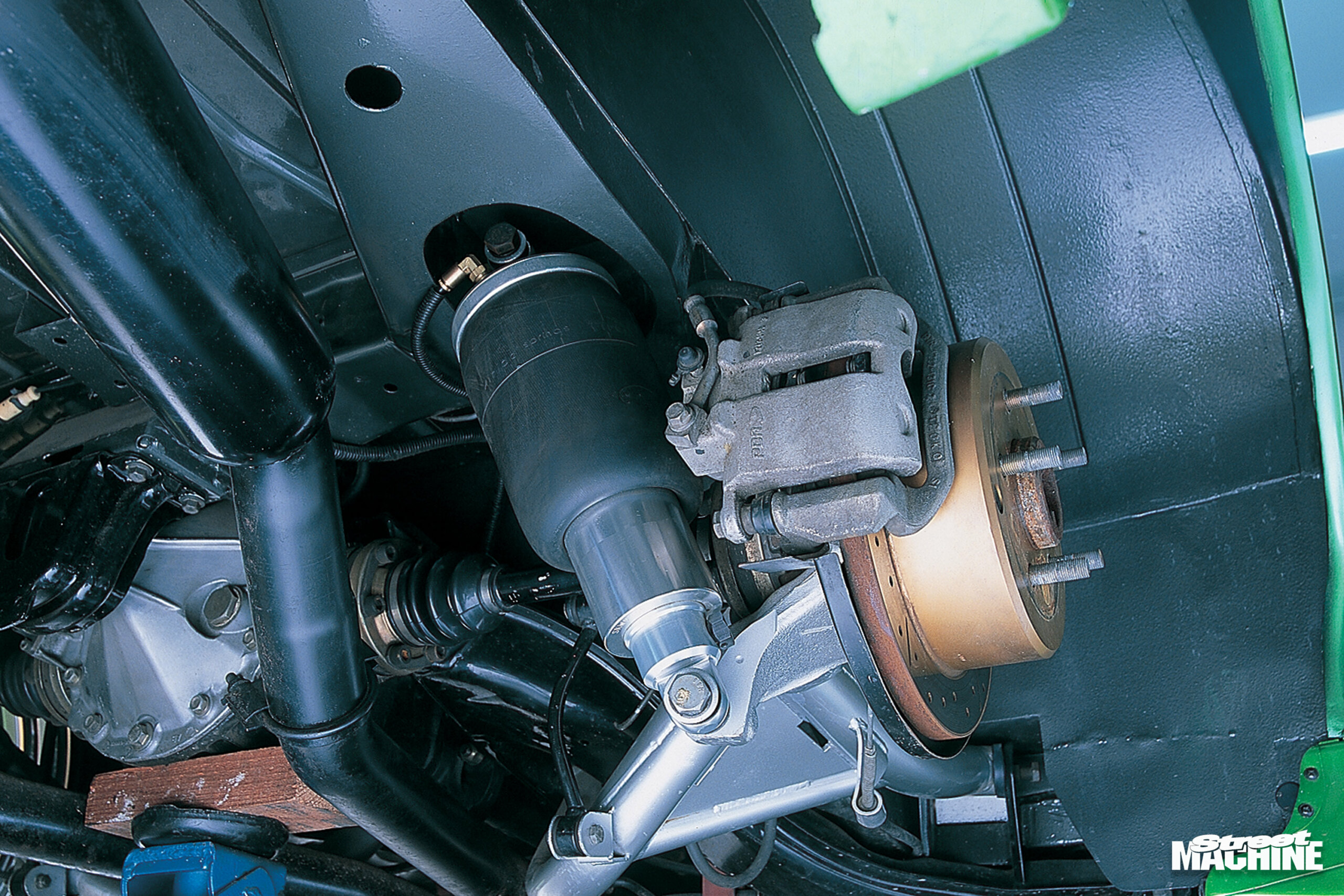
3. In a Commodore the bags would normally replace the rear springs but in VU FOR U there was insufficient room after mini-tubbing and modifying the rear suspension. We converted the rear to accept these universal-fit Air Ride Shockwave bag/shock assemblies supplied by Airide Suspension Supplies.
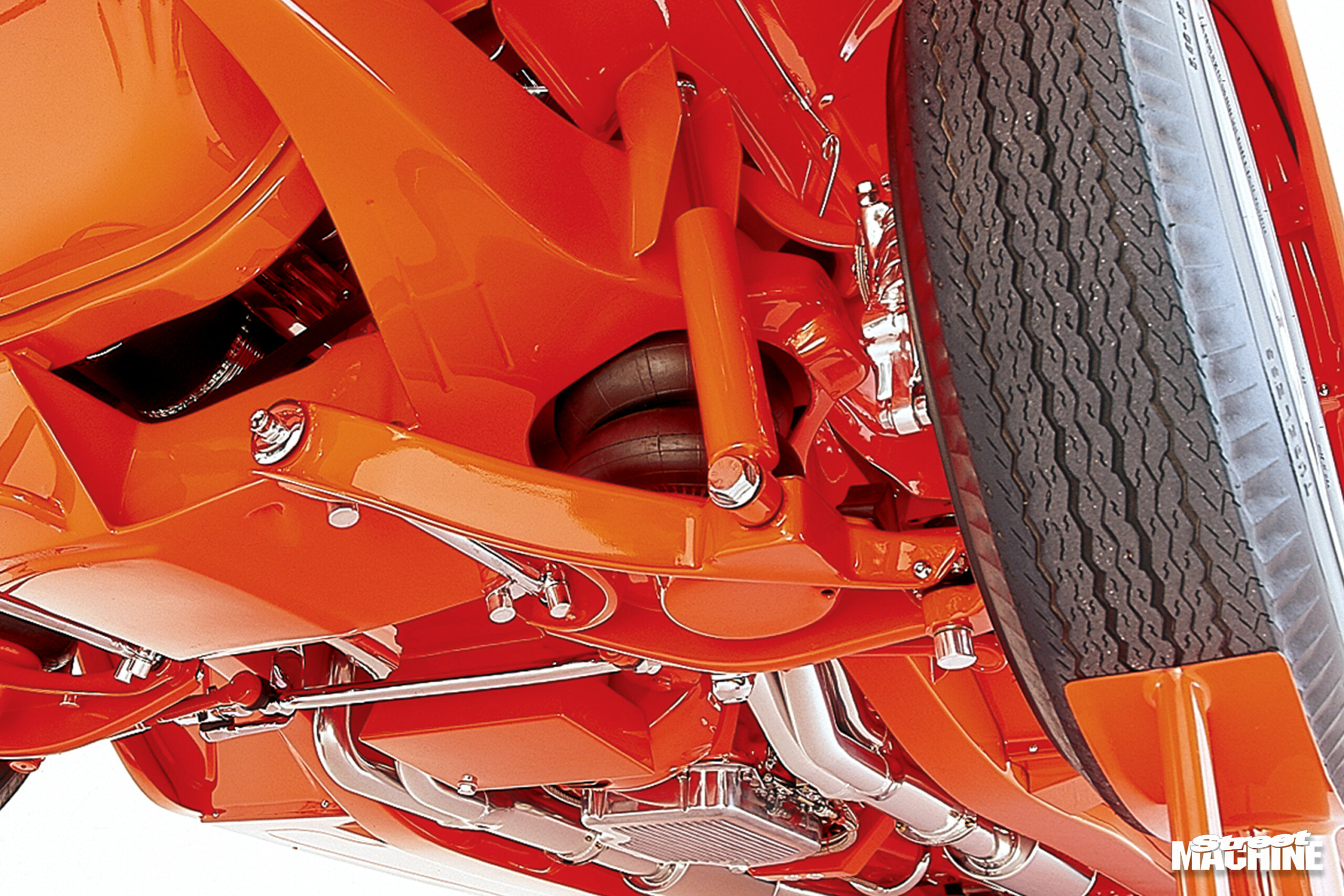
4. The air bag and shock installation on the front of Laurie Grima’s ’56 Chev is typical for an A-arm front end. Note the customary shock location; off the side of the lower control arm running up to a bracket fixed to the chassis rail.
BAG STANDARDS
Hoses and couplings used in an air bag system must comply to a particular Australian standard. Airbrake push-to-connect fittings and hard plastic hoses are fine when attached to the end of a bag that’s fixed to the car’s chassis. However, on a strut installation, where the hose and its connection need to move up and down and rotate, an approved reinforced rubber hose and articulated fitting must be used.
TSS can custom-build an air bag system for any car and offer a range of ready-to-go kits for the more popular cars – all of which are supplied with a preliminary engineer’s report for the supplied parts. Some of these kits are a straight bolt-in proposition, while others require some fabrication. TSS recommends that a professional or skilled trades person conduct the installation.
HERE COMES THE LAW
Make no mistake, converting your car to air bag suspension constitutes a major modification under the transport laws in all Australian states. So regardless of how safe the set-up is, for your vehicle to be deemed legal you will be required to obtain a report for the components and modifications (especially any welding) from an engineer who has accreditation in the state in which the car is to be registered. In spite of what you may have heard or been told, there are no exceptions! Having an accident in an air-bagged car that is not properly engineered or certified can be a serious offence.
* Prices quoted from September, 2003

Comments