
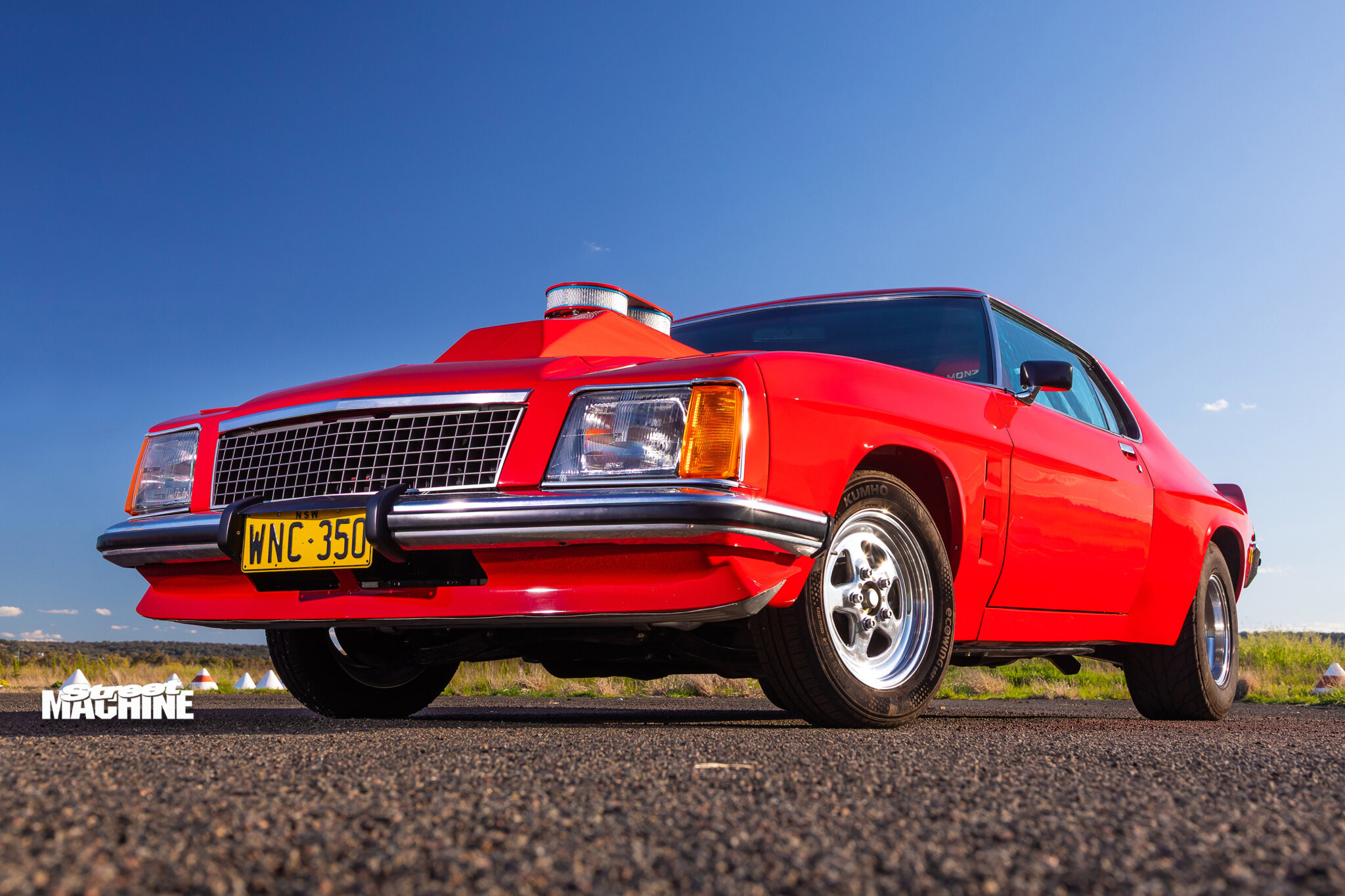
When it comes to assessing modified car builds of yesteryear, today’s street machiners usually fall into one of three camps: They understand it, respect it and love it; they understand and respect it, but it isn’t to their liking; or they do not understand it due to ignorance, and don’t respect it because they think a classic has been wrecked. Bill Cooper has heard it all in the 45 years that he has owned his Commodore-fronted HQ Monaro.
First published in the March 2026 issue of Street Machine
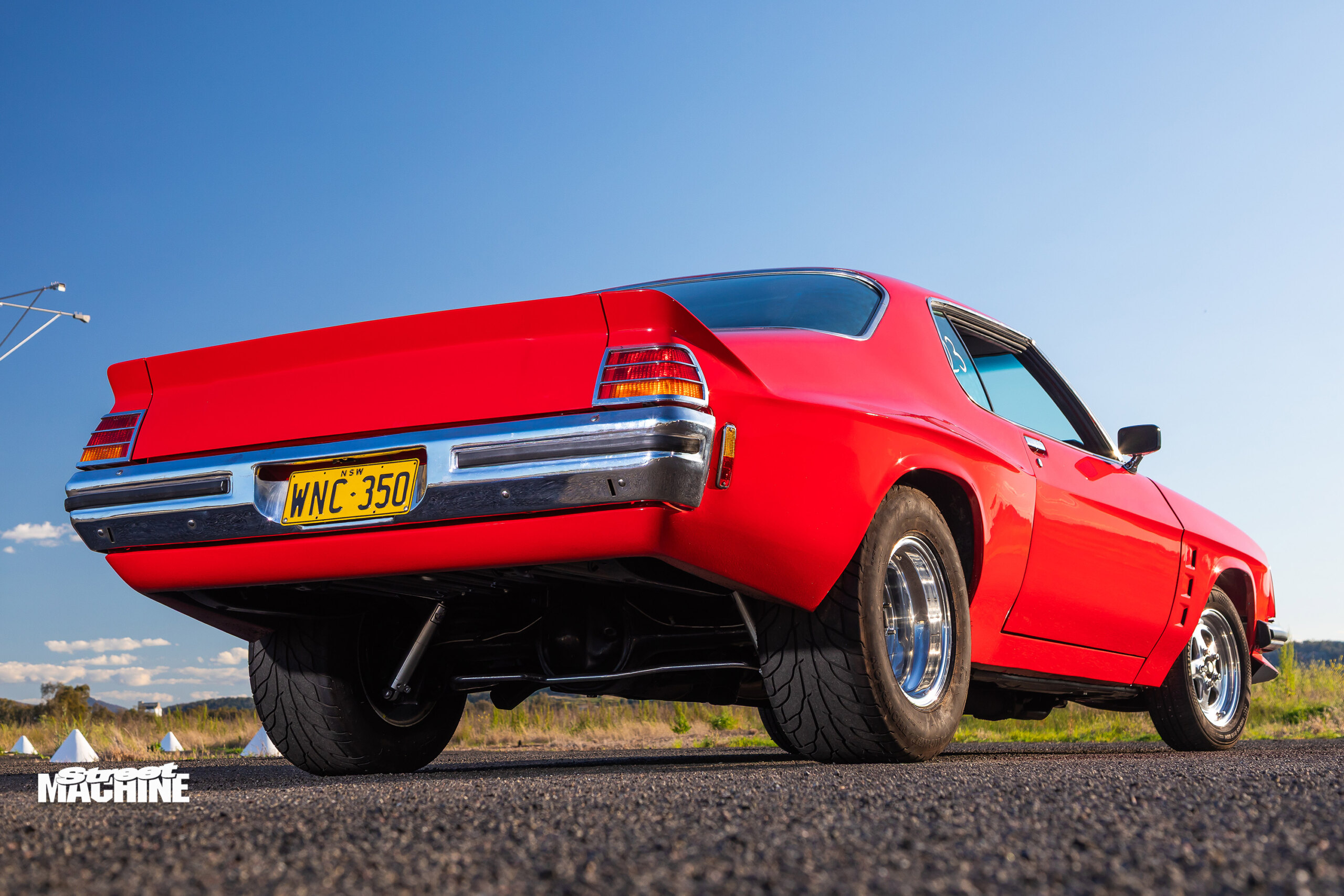
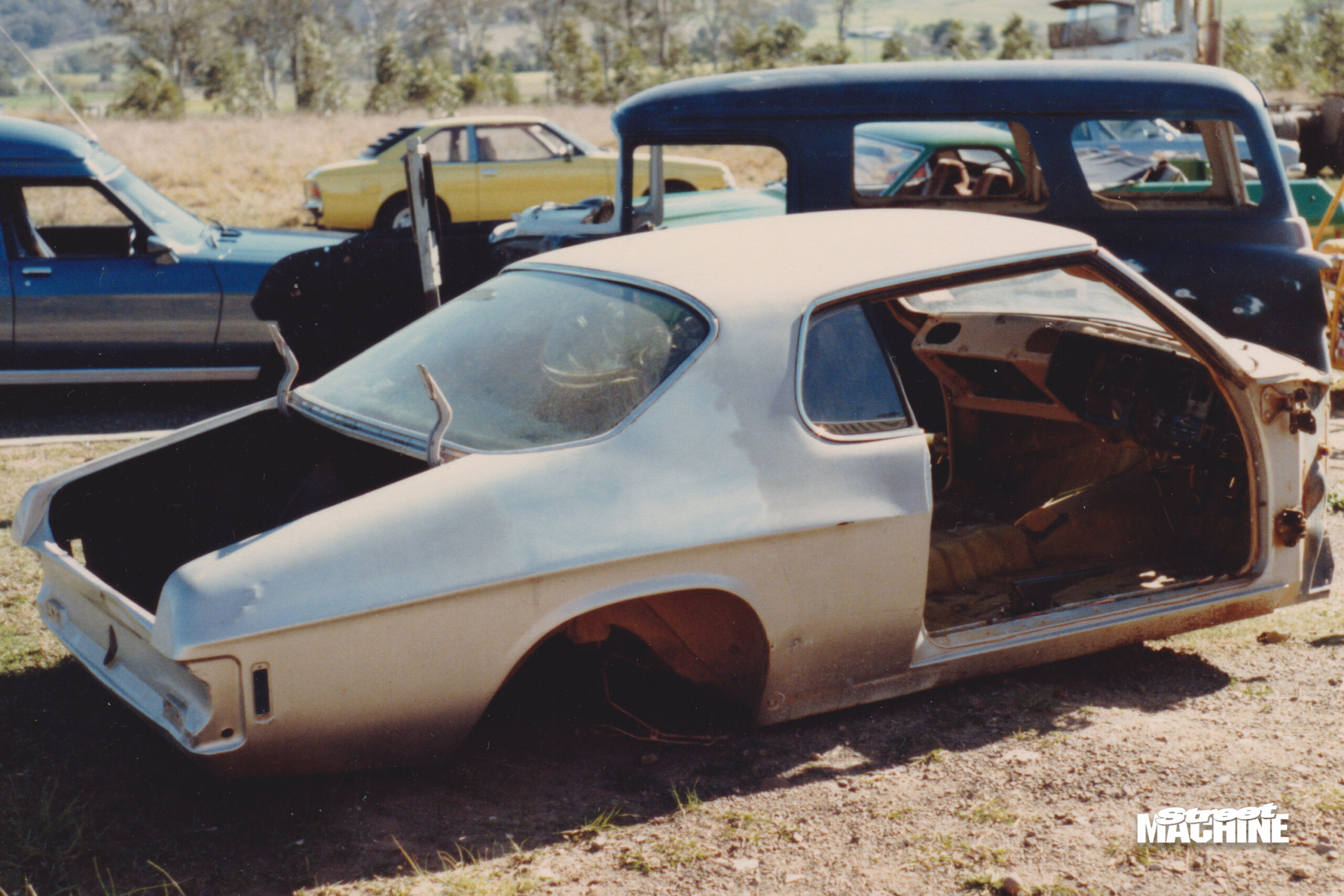
“I bought the HQ as a shell from a wreckers in Muswellbrook in 1980,” Bill explains. “It was only nine years old, but wrecking yards had plenty of cars like this.” He assures everyone that no ‘classics’ were harmed in this car’s creation.
Bill recently got the Monaro back into action after it had spent more than two decades gathering dust, and the car provides a wonderful insight into a certain period in street machining history. It’s a reminder that many cars of this era and older were rusted hunks of junks by the time they clocked a decade, assuming their engines weren’t puffing smoke rings before that. This situation helped spawn a golden age of modified car building, where imaginations ran wild and people built cars for themselves, with no worries about resale values or appeasing social media audiences.

Aged 24 at the time, Bill plonked down the readies for an LS-spec HQ body and got busy. His motivation was simple: “I’d always wanted a blown street car. I had the shell sandblasted, and then started on the body mods. You could still buy brand-new parts from Holden then, so I sourced new front chassis rails and body panels, and bought any other missing parts as the project went on. Later in 1980, I went to America and brought back the blower assembly along with some of the bottom end. I built the first engine in the laundry of a rented house.”


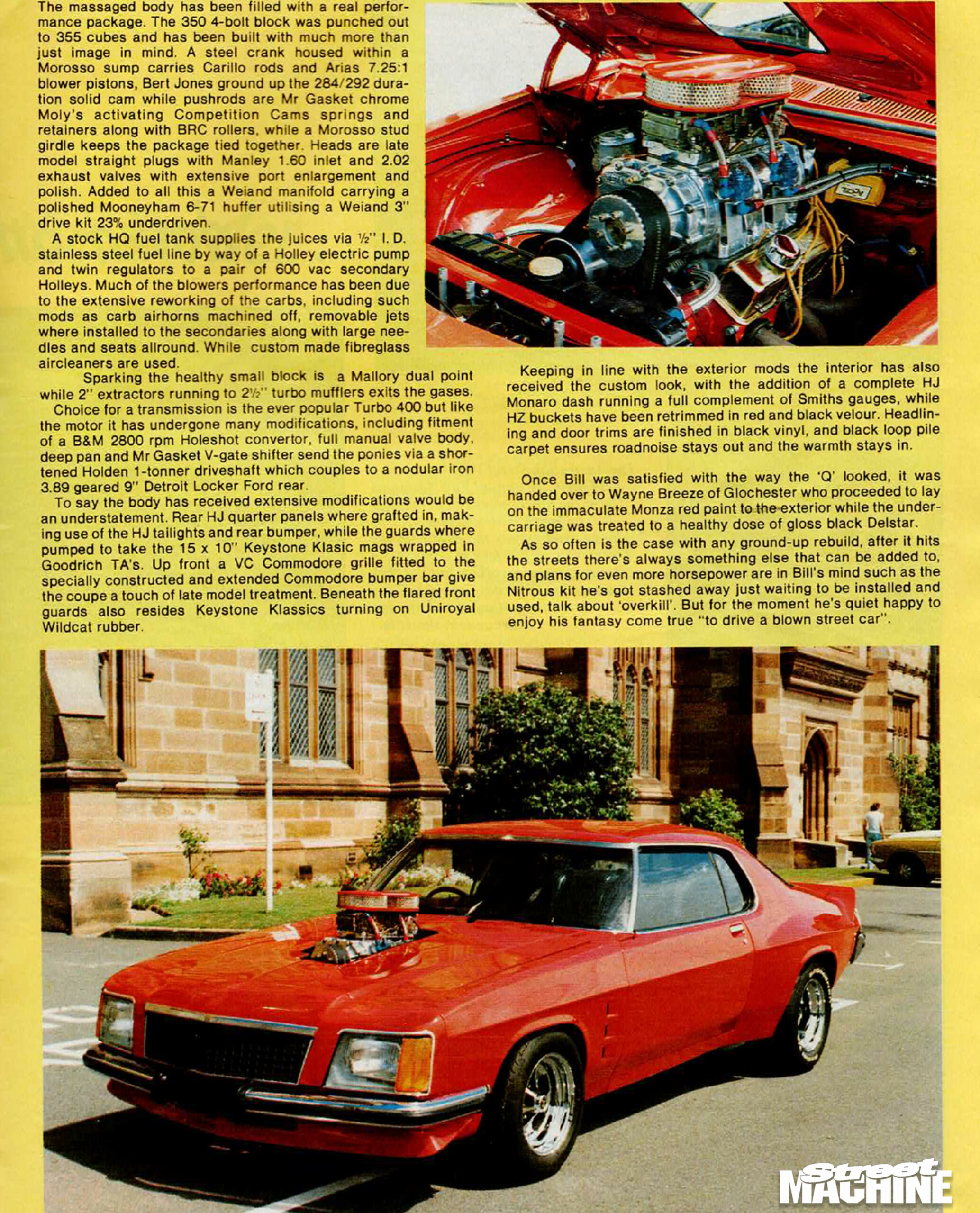
That engine was a flash bit of gear for the era: a four-bolt 350 Chev running a steel crank with Carrillo rods and Arias blower pistons. It had Power Pack cast heads and a BDS intake manifold, with a Mooneyham 6/71 and Weiand blower drive kit. A Turbo 400 transmission was fronted by a B&M Holeshot converter, while the nine-inch rear contained a Detroit Locker with 3.89 gears.

The crossover stylings of the outgoing van scene and hard-charging street machine movement of the time saw many custom modifications adapted between the two genres – it was all about being different. The body mods on the HQ commenced with pumping the rear guards four inches to house 10-inch Keystone Klassic rims and fat T/As, along with fitting an LE Monaro rear spoiler and HJ sedan tail-lights as a nod to what could have been by the GM-H boffins for the later Monaro models.
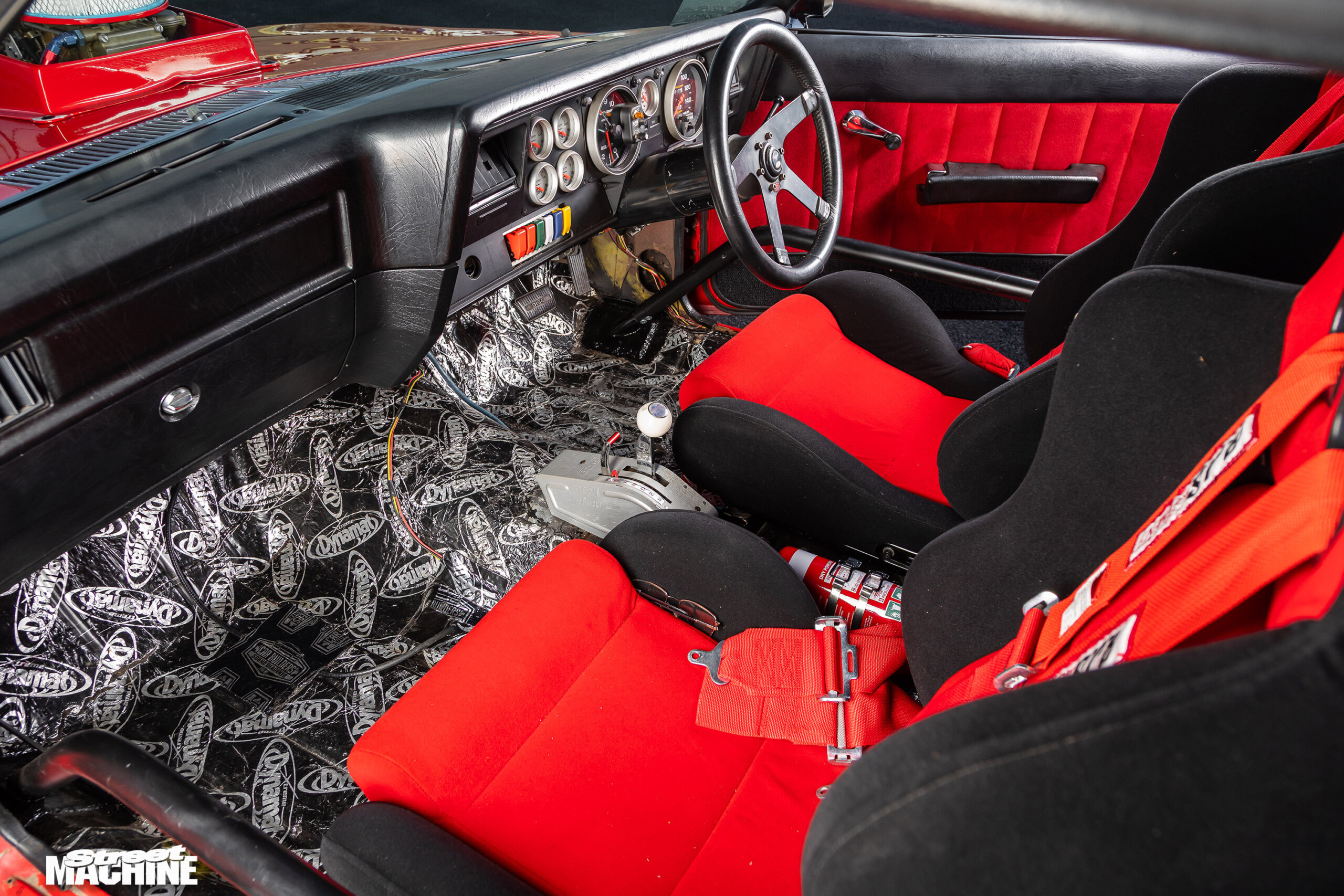
It’s no mean feat to accomplish significant body mods like these, but the hardest job of all? “Changing the dash to the HJ type, no question,” Bill says. “It was a lot of work and effort for something that most people don’t even notice.”


The front guards are steel GTS originals, while the bonnet is fibreglass, with a ‘rego’ scoop attached by Dzus fasteners. The fibreglass Commodore frontal treatment was a kit offered by Kommodore Konversions out of Shepparton in the late 1970s and early 80s. Although aimed mainly at vanners, it has stamped Bill’s HQ with an identity all its own. He chose to go with the then-new VC Commodore grille over the VB, and it would surely have to be the last of one of these kits still in captivity.
With the major bodywork sorted by Wayne and Ian Breese, Bill had Wayne paint the car in Ford Monza Red, which suits the Monaro’s lines perfectly.
Bill was adamant that the HQ be fully engineered and road-legal with the 6/71. After an eight-month wait, it was finally registered in 1984, and Bill, along with his wife Elsie, were away!
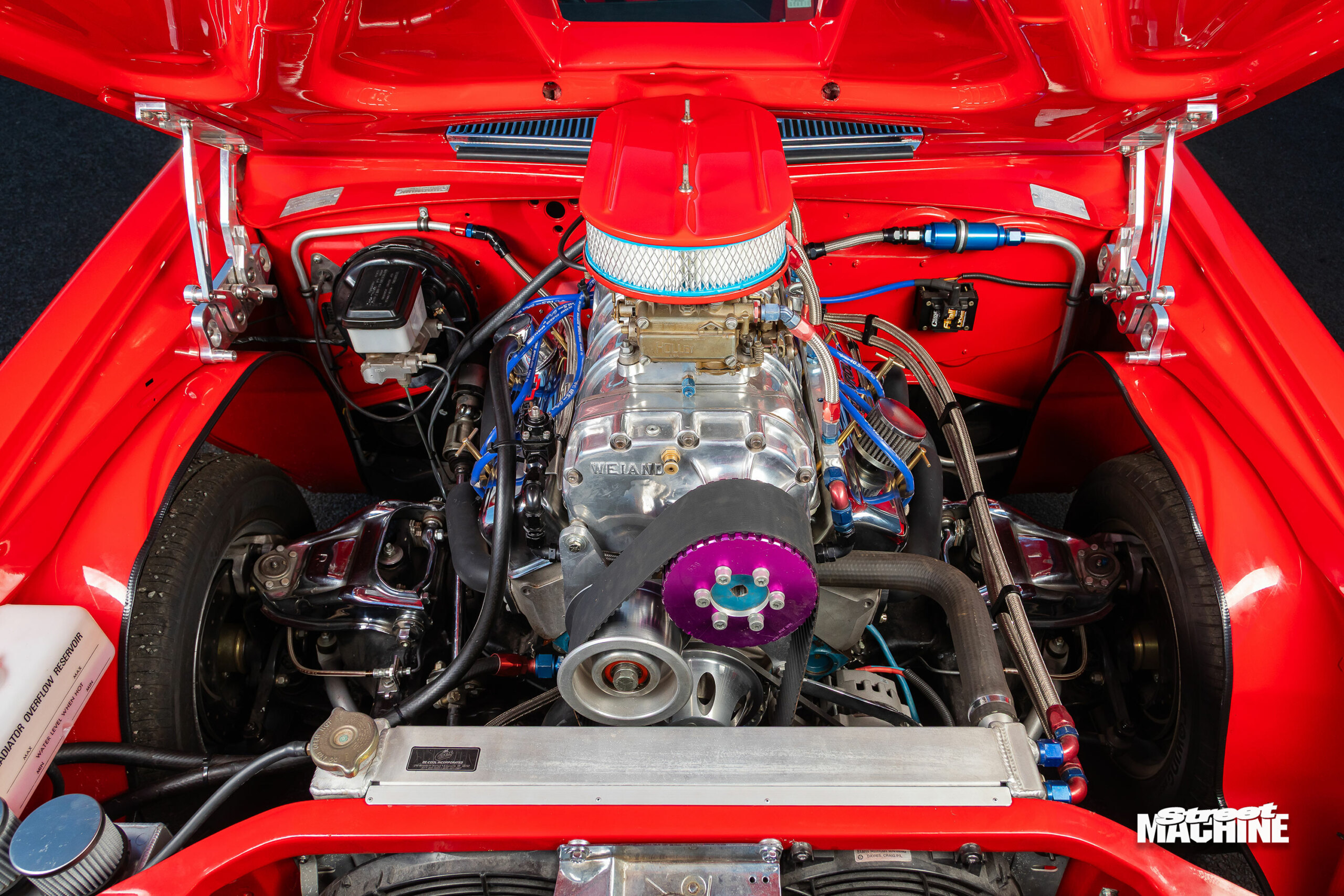
“After about a decade, I upgraded the cam and replaced the cast heads with some early Brownfield alloy versions,” Bill says. “But that cam wiped a lobe, so I replaced it with one from Crow.”
For close to two decades, the Coopers covered thousands of road miles in the Monaro – the car has never been trailered to an event or a show. The car ran a best of 11.13@123mph at the old Eastern Creek drag strip in the mid-80s, but it was a different kind of motorsport that really snagged Bill. “Sprints and hillclimbs,” he says. “The Tamworth Sporting Car Club hosted a hillclimb up to the lookout at Gunnedah, and I twice recorded the fastest time.”

No doubt the Monaro lunging up there would have been an amazing sight to behold, but the well-used HQ could also hold its own at car shows like the Rickshaws Hot Rod shows in Newcastle and the Street Machine Nationals in Canberra.

The dream run came to an end in 2003, when the engine decided to snap the snout off the crank and the Monaro was pushed into the naughty corner for an extended stay.
“I wasn’t even up it; I was just cruising along,” Bill claims. “The engine gave a cough and a wheeze and that was that.”
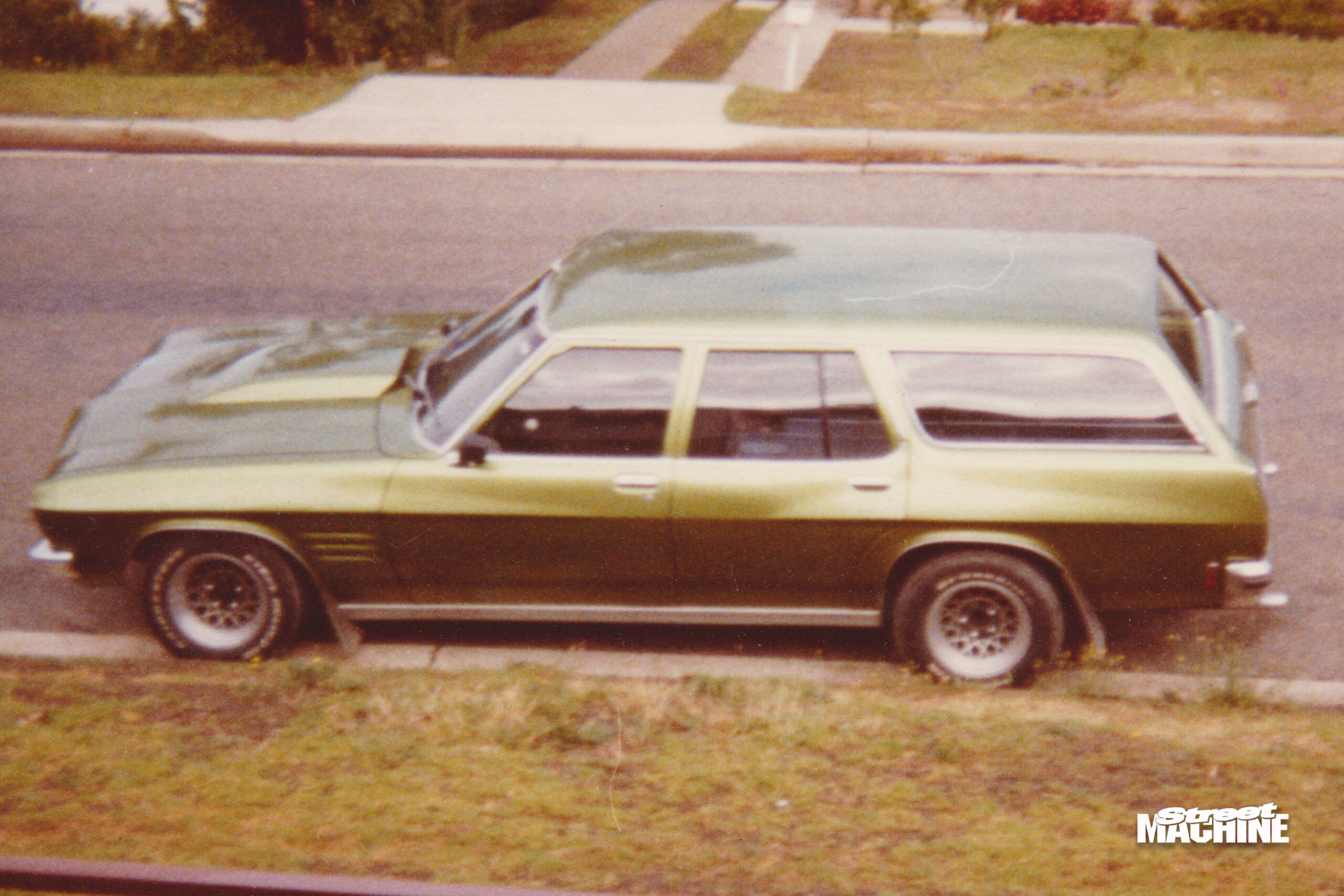
Family commitments and other life priorities saw the calendar years start to slip by, but the Monaro was never far from Bill’s mind. “It was nearly 20 years’ worth of calendars in the end,” he says. “The years were marching on and I wasn’t getting any younger; I just needed to drive it again.”

The ante was upped with a plan for a fresh small-block build. This time around, Bill retained the same block and conrods but added an Eagle crank with a Newby crank support – he was adamant about not going down the broken snout road again – while a pair of Racer Pro alloy heads replaced the Brownfields. The same 6/71 blower and intake remain, albeit topped by a pair of more modern 780cfm carbs.
Bill went through the car from front to rear, replacing and updating everything, including Mark Williams axles for the nine-inch, fresh suspension both ends, and a brake upgrade to BA Falcon discs.
The Monaro returned to the spotlight in September 2025 at the Gunnedah NPRA eighth-mile events, and things are already looking promising for a 10-second pass when it returns to Eastern Creek.

“It’s time to start playing with the suspension to try and eliminate some serious wheelspin; I think once we can get that dialled in, we’ll head to Sydney and give it a go,” says Bill. “The Monaro is still on full street registration, and I do quite a few formals and weddings for friends and family. Oh, man, it loves a drink though – it doesn’t have fuel economy, it has fuel consumption!”

Looking back on the entire journey, Bill is grateful to have done it all with the support of Elsie, whom he says has been “the garage widow” on occasion. “I am very fortunate that Elsie has always let me go and play race cars,” he says. “After one of my very out-of-control drag runs, she grabbed me by the shirt-front and said, ‘Don’t ever do that again!’”
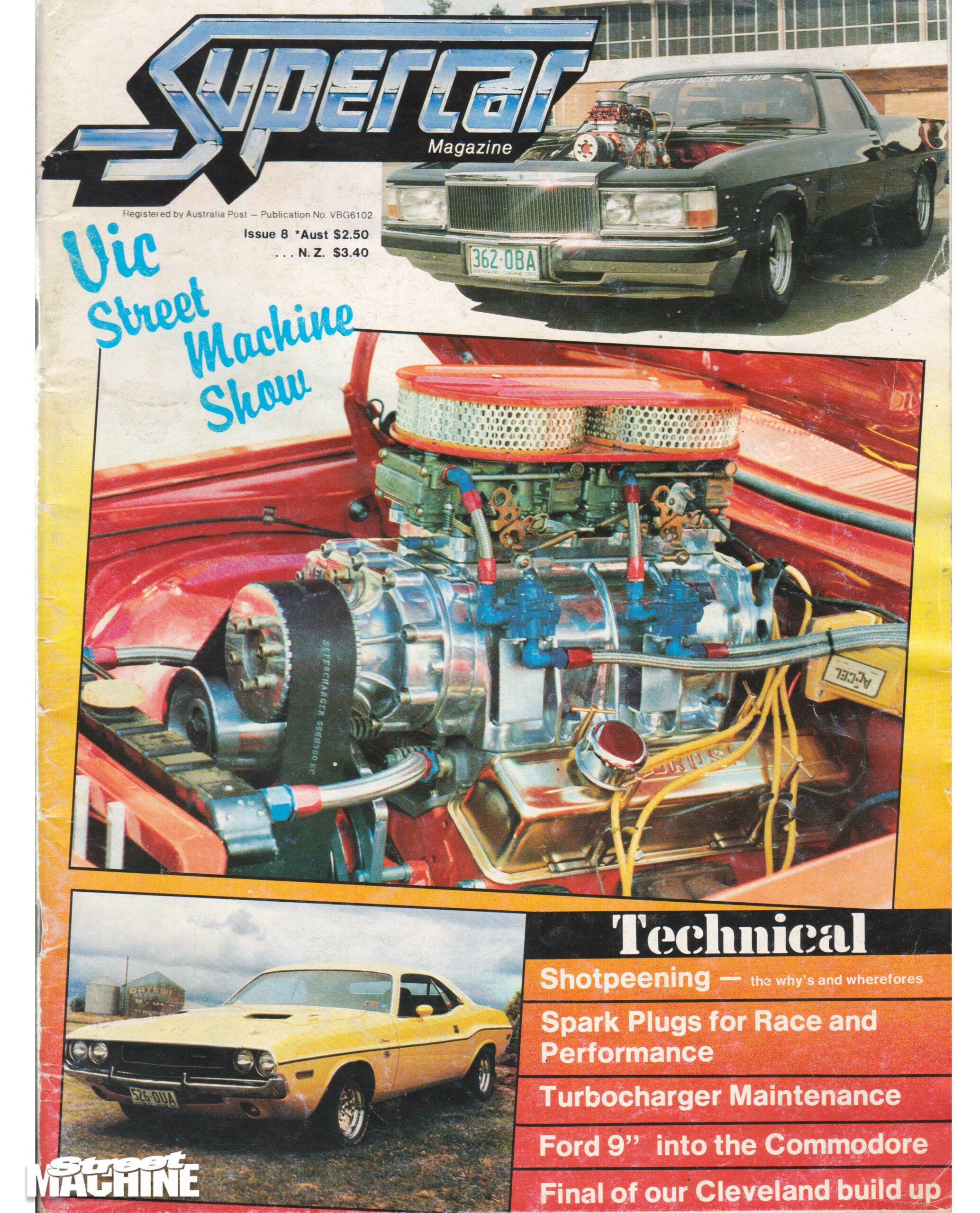
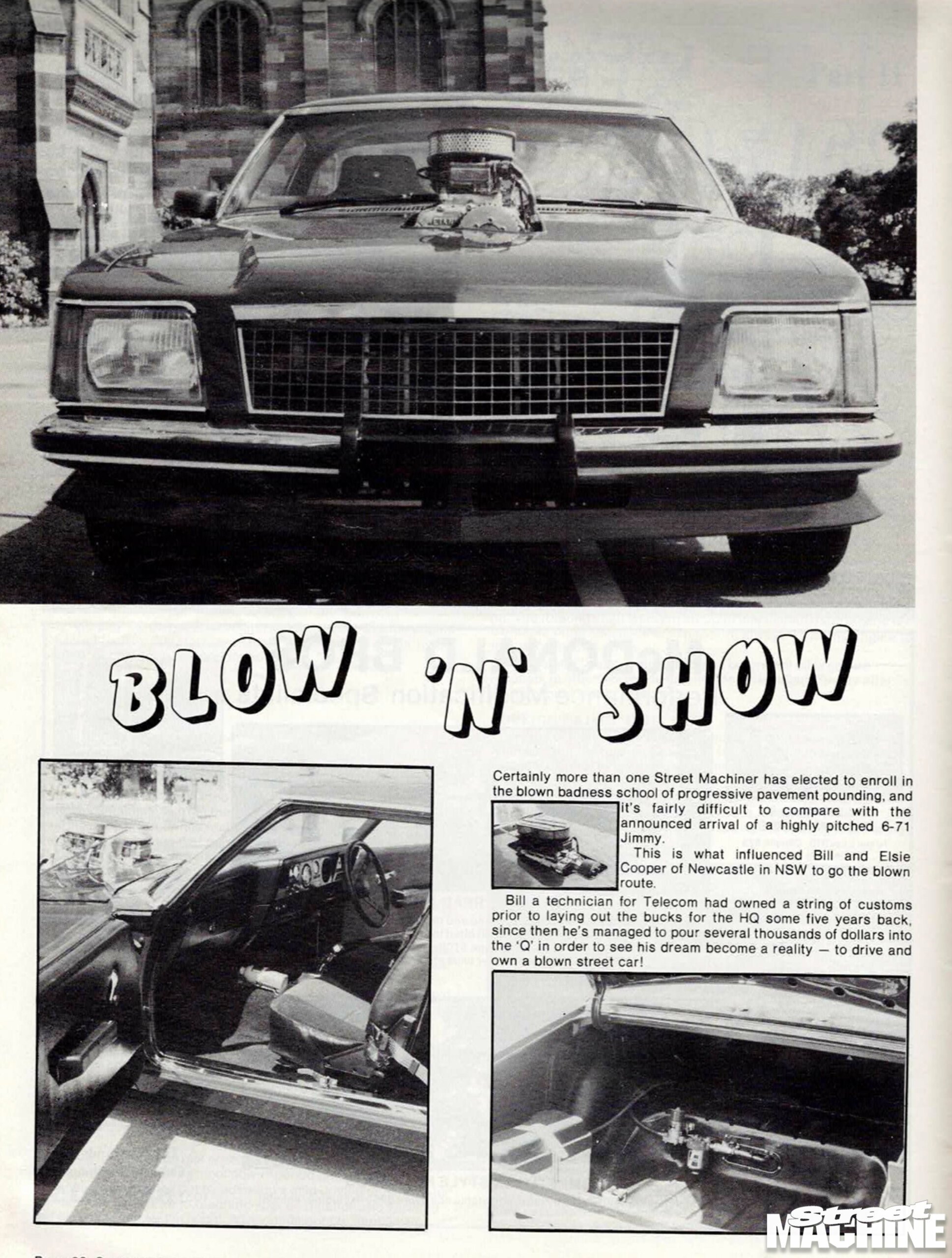
FRONT UP
The nosecone kit was developed by Kommodore Konversions at the height of the van craze, back when VB Commodores were new. The VC-grilled version has been the unique face of Bill’s Monaro for the past 45 years.


The large bonnet scoop covering the supercharger was necessary for rego. “My engineer’s letter literally said, ‘Its chances of registration are marginal at best, but let’s give it a go,’” Bill recalls with a laugh.
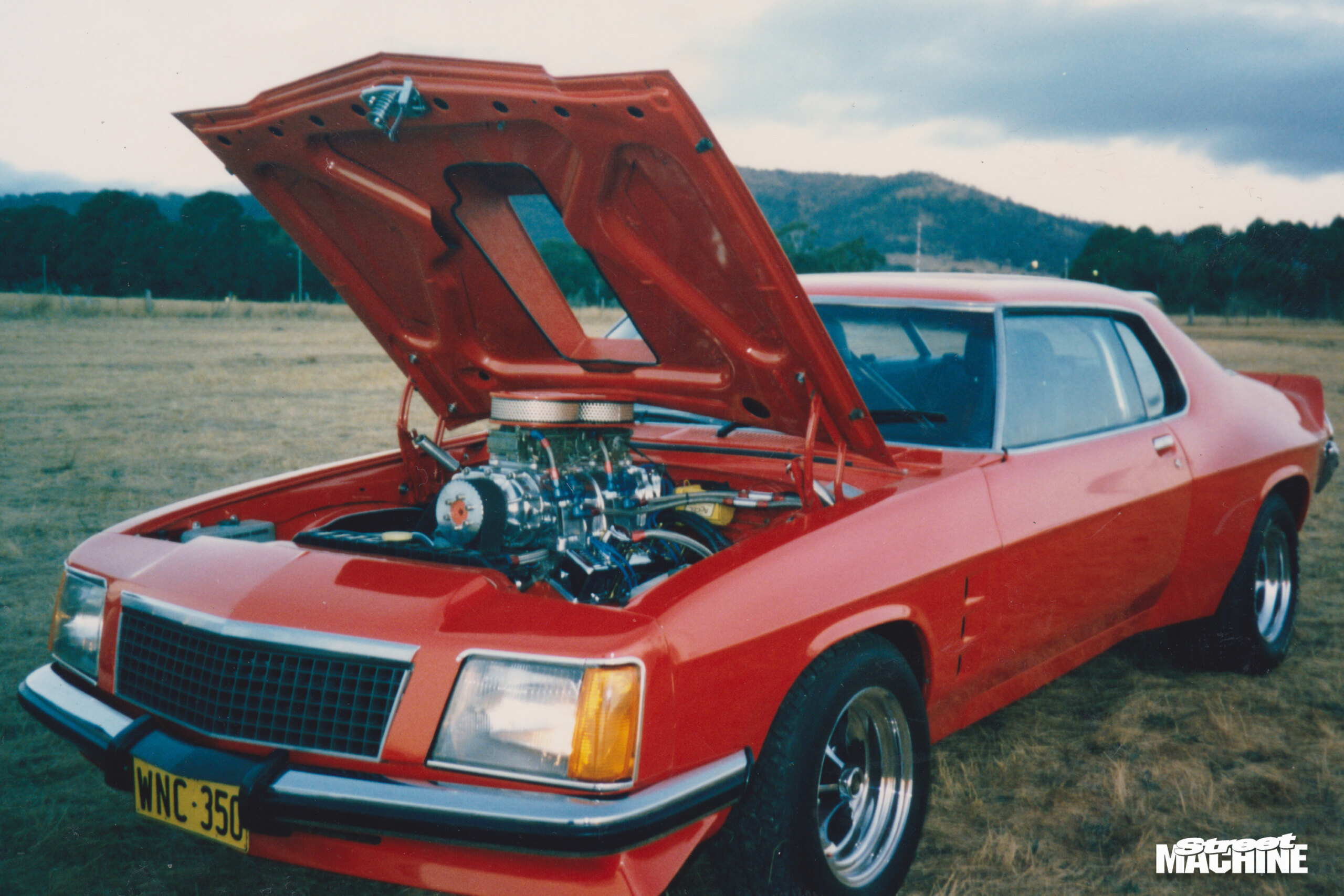
“My dad was a cabinet maker, so we made the mould out of timber before making it in fibreglass,” he continues. “I still have that timber buck hanging in the shed, along with a ’glass mould we took off the Commodore nose back in the day, just in case I ever pranged it. Thankfully I haven’t had to use it yet – touch wood!”

The scoop is quickly removed using Dzus fasteners, a homegrown feature that further highlights the HQ’s individuality.
Comments