
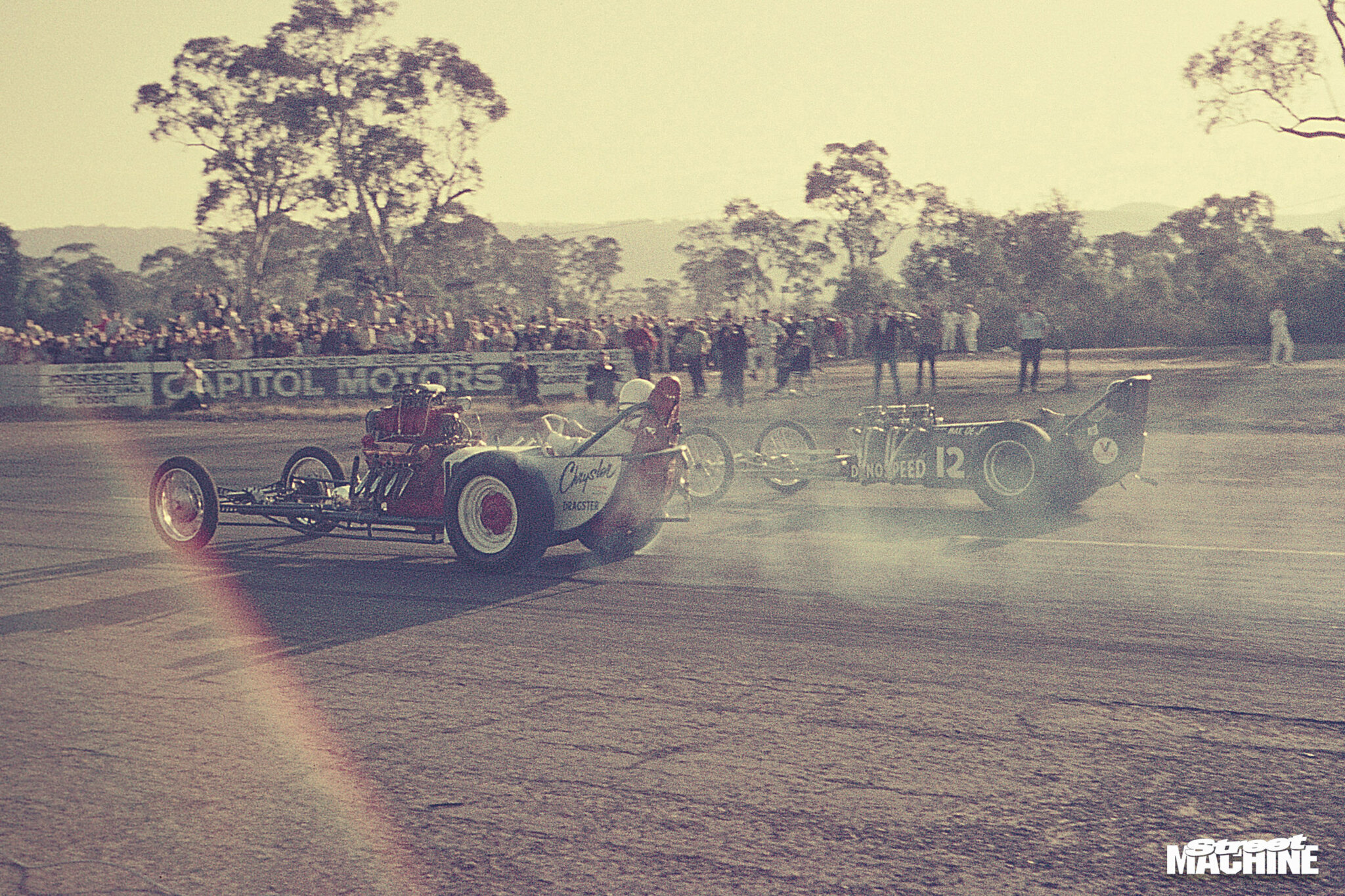
First published in Street Machine Hot Rod #12, December 2013
Drag racing was as much a part of hot rodding as ’32 roadsters and flathead engines in the early days, but it took more than just one individual’s determination to build a cool set of wheels. It took organisation and teams of volunteers, marketing and entry lists, complex timing technology and cash-handling facilities. In short, it was difficult.
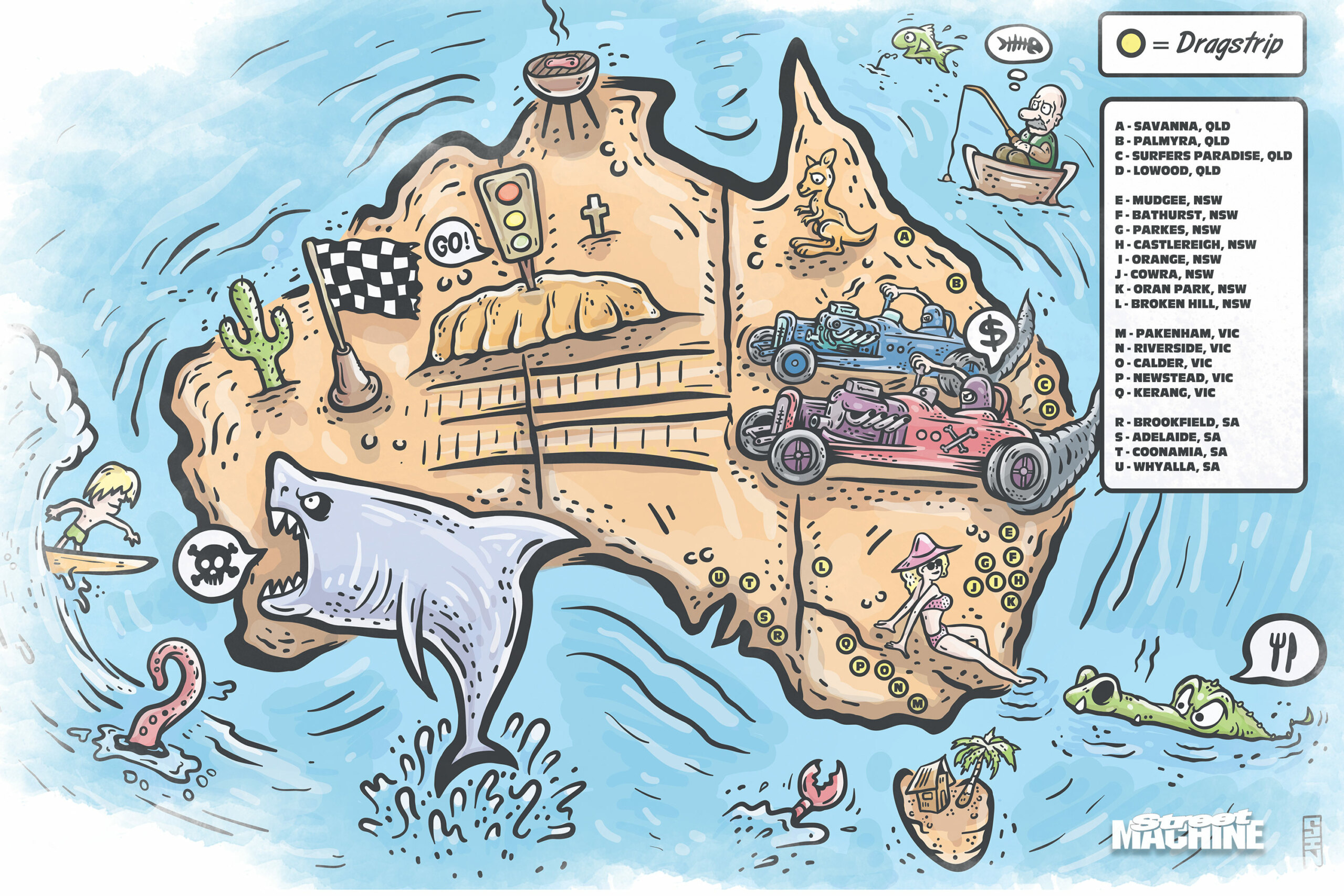
But inspired by images and reports of drag racing in the US, and eager to avoid the dangers that arose when trying to race on the street, starting in the late-1950s Aussie hot rodders began to spawn drag strips in various pockets of the country.
So let’s remember those early race tracks, many of them long gone, that have been the scene of so much joy and the occasional tragedy, and which have permitted generations of young men and women to show just how creative and energetic they could be in an environment that was all of their own making.
PAKENHAM ( MELBOURNE, VICTORIA )
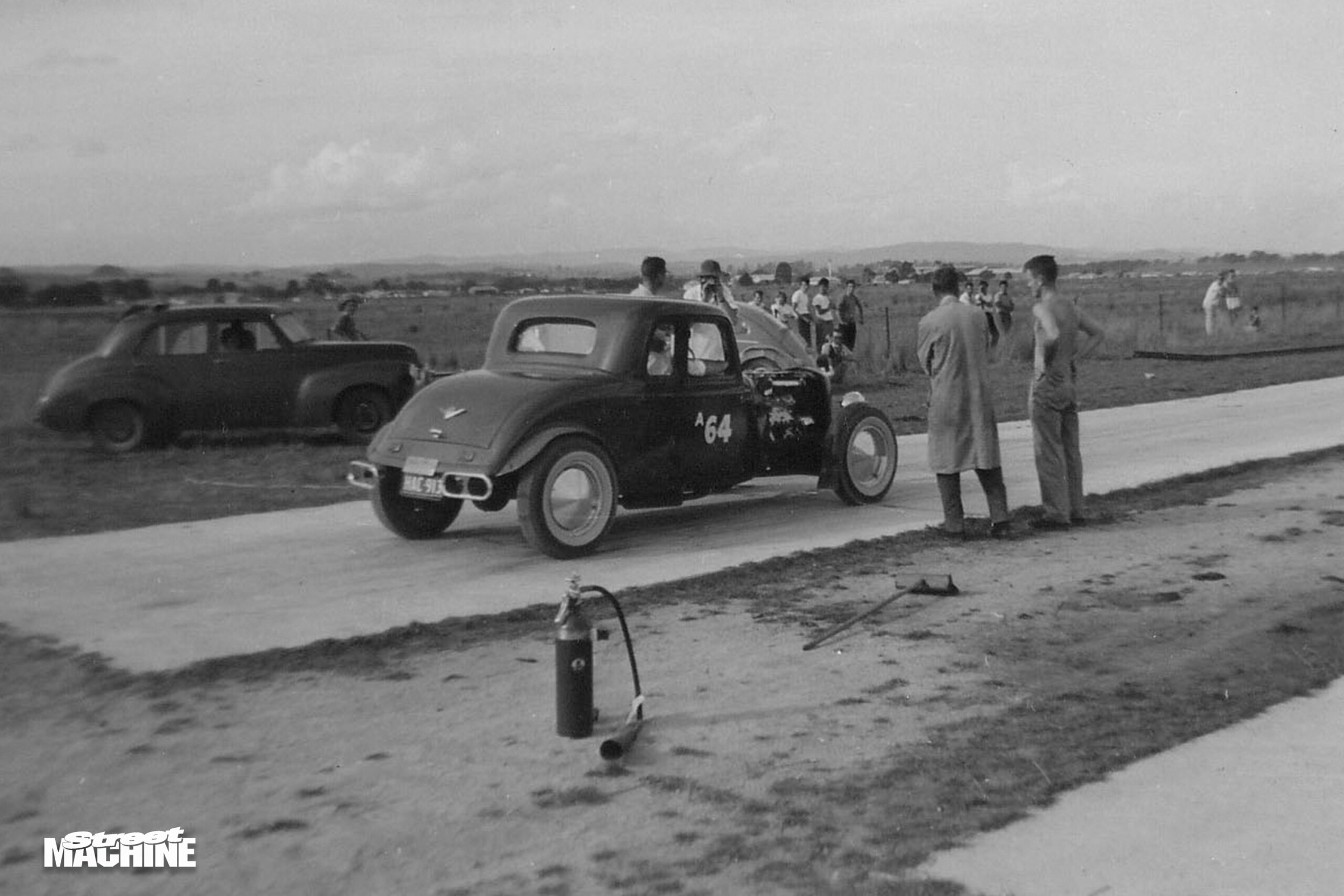
In 1956, Melbourne’s Southern Hot Rod Club was formed. It was the first of its type in Australia, and unofficial street racing took place randomly among its members whenever someone issued a challenge at a set of lights. But when a member’s roadster was hit at an intersection and the two occupants killed, an effort was made to organise legal racing.
The club found a backroad at Altona North called Doherty’s Road. They marked out a quarter mile, a set of timers was fabricated, and a radio link set up between each end. Over the course of the following year, several race meetings were organised there. Oncoming traffic was held up by club members until each batch of racers came through.
There were also attempts to hold events on the old Geelong Road at Brooklyn, and at Oakleigh, but in 1958 it was decided these activities should take place in a safer setting, so the club moved to an old WW2 airstrip at Pakenham.
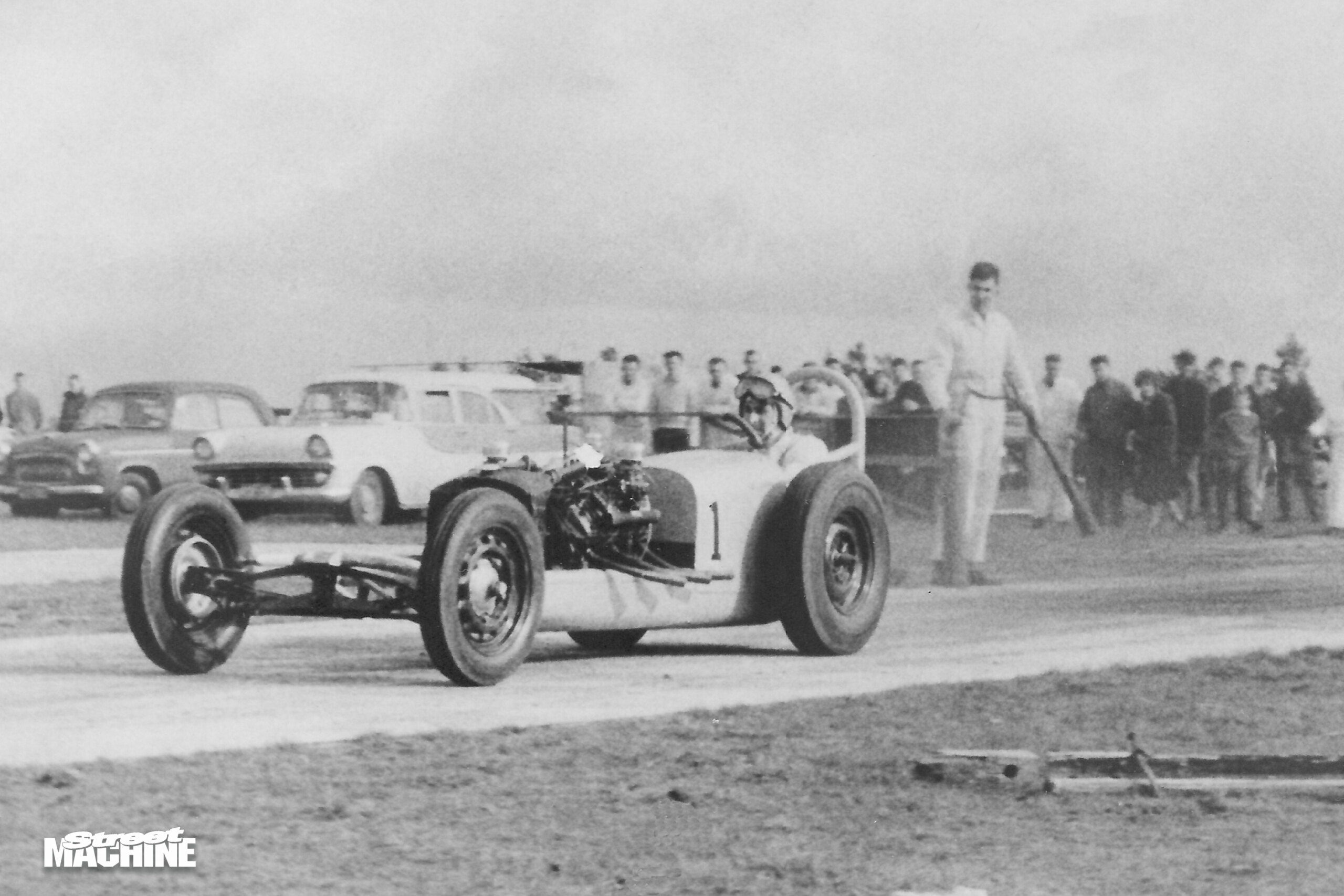
This site was located on a farm owned by the Williamson family. It had a gravel surface and needed setting up each time it was used. Club members arrived the day before, chased away the cows, had the track graded, and set up the PA system and timers. The “timing tower” – an old 1920s Karrier truck – was driven down from the farmhouse.
Publicity was simply by word of mouth, and competitor numbers got to around 40 at best, with up to 300 spectators lining the nearby fence.
Eventually the Pirotta family’s concreting company, with the backing of Ampol, poured two 30 x 4.5-metre launch pads.
Most competition came from hot rods, boosted by circuit, speedway or sports cars, and, while performances weren’t great, especially on the dusty gravel, some of the great names of early drag racing – John English, Joe Pirotta, Greg Goddard, Max De Jersey and more – got their start here.
In 1959 the paddock began to be used by a skydiving club, and, occasional landings by light aircraft disrupted events. By 1961 the pressure of increased rent, CAMS interference over sanctioning and the regular use of the site by parachutists and aircraft were too great and the sport moved on.
RIVERSIDE ( MELBOURNE, VICTORIA )

Even while the Pakenham strip was going strong, Graham ‘Bluey’ Wilson led a bunch of fellow hot rodders to an old airstrip at Fisherman’s Bend, behind a rubbish tip and through head-high grass. They found a 200ft wide, mile-long strip of asphalt leftover from WW2 and the nearby Commonwealth Aircraft Corporation (CAC).
In 1962 the newly formed Victorian Hot Rod Association joined with the Victorian Police Motor Sport Club to convince the CAC to permit the use of that old runway for “speed trials under police guidance”.
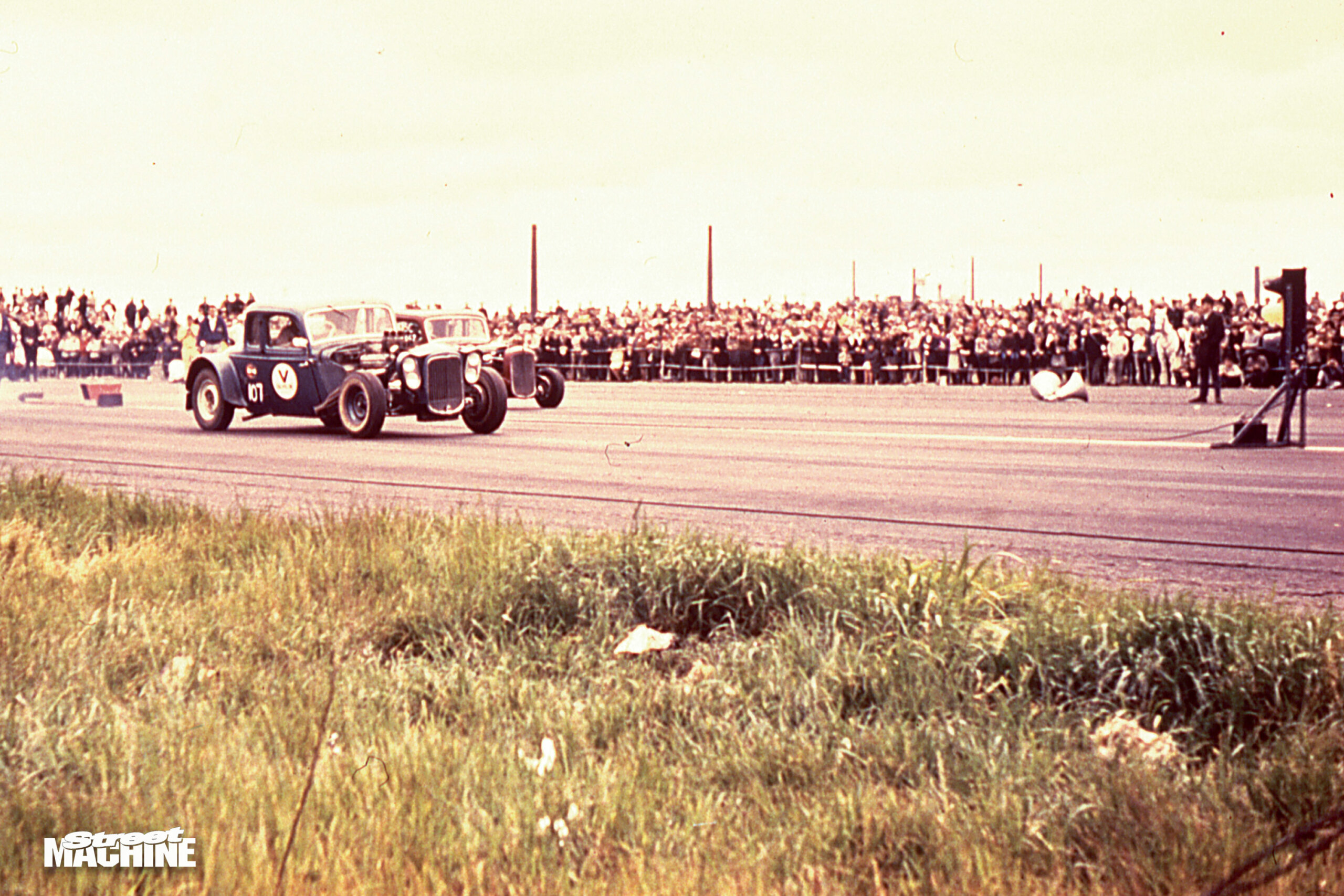
In October of that year, the police unlocked the gates for the first time and the hot rodders had access to a full quarter mile of asphalt. “Riverside”, as it was named by rodder Grenville Finger, became the home of drag racing until its closure in December 1966.
The track had a questionably short braking area (they were forced to use the lesser of two runways), and more than a few racers finished in surrounding swamps or bouncing off piles of rubble, but in general it was perfect for the young sport. It was flat, there was plenty of room for pits and public parking, and it was situated just 1.5 miles from Melbourne’s CBD.
It was here, in October 1965, that the first Nationals was held.
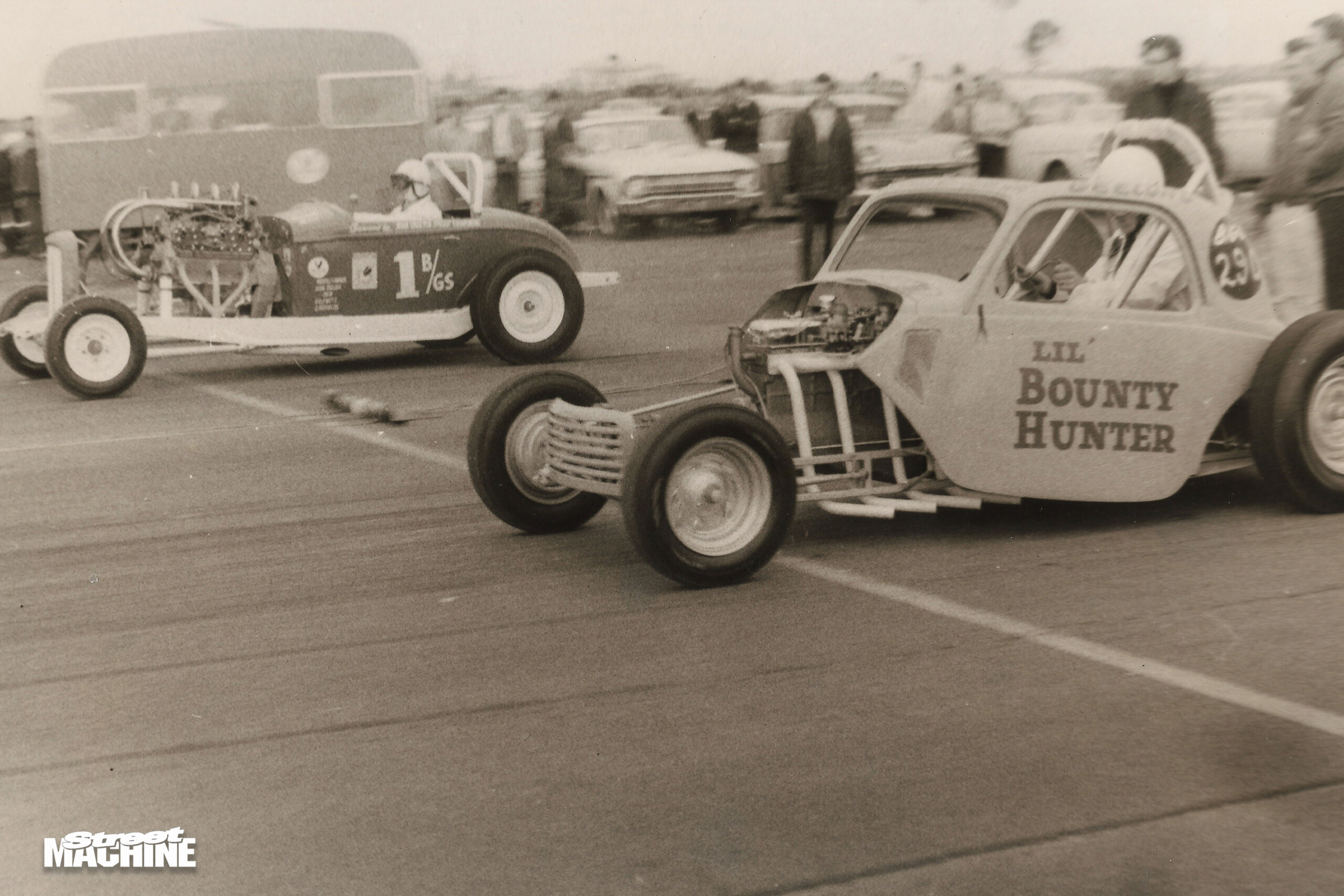
The intention was to provide for the hot rodders, and they were originally not supposed to admit spectators, but by the second event there were queues when the gates were opened at 8am. The driver of the first car in the queue asked, “How much is it?” The bemused official, Bob Lees, said, “Well, five shillings (50c).” At the end of the day they had collected 4 to 500 pounds ($800 to $1000) in cash and didn’t know what to do with it. Soon after they began to pay Max De Jersey £20 ($40) a week plus petrol money to act as manager.
What was to have been the track’s highlight became its low point when, in April ’66, the VHRA was about to stage a round of the Dragfest, a tour by six American dragsters. The track had been resealed and the pits extended when the CAC pulled the pin. Their argument was that four years earlier they’d decided to allow young kids to try to get to 100mph on their land, now they had international stars coming to run at over double that speed. This was outside the agreement.
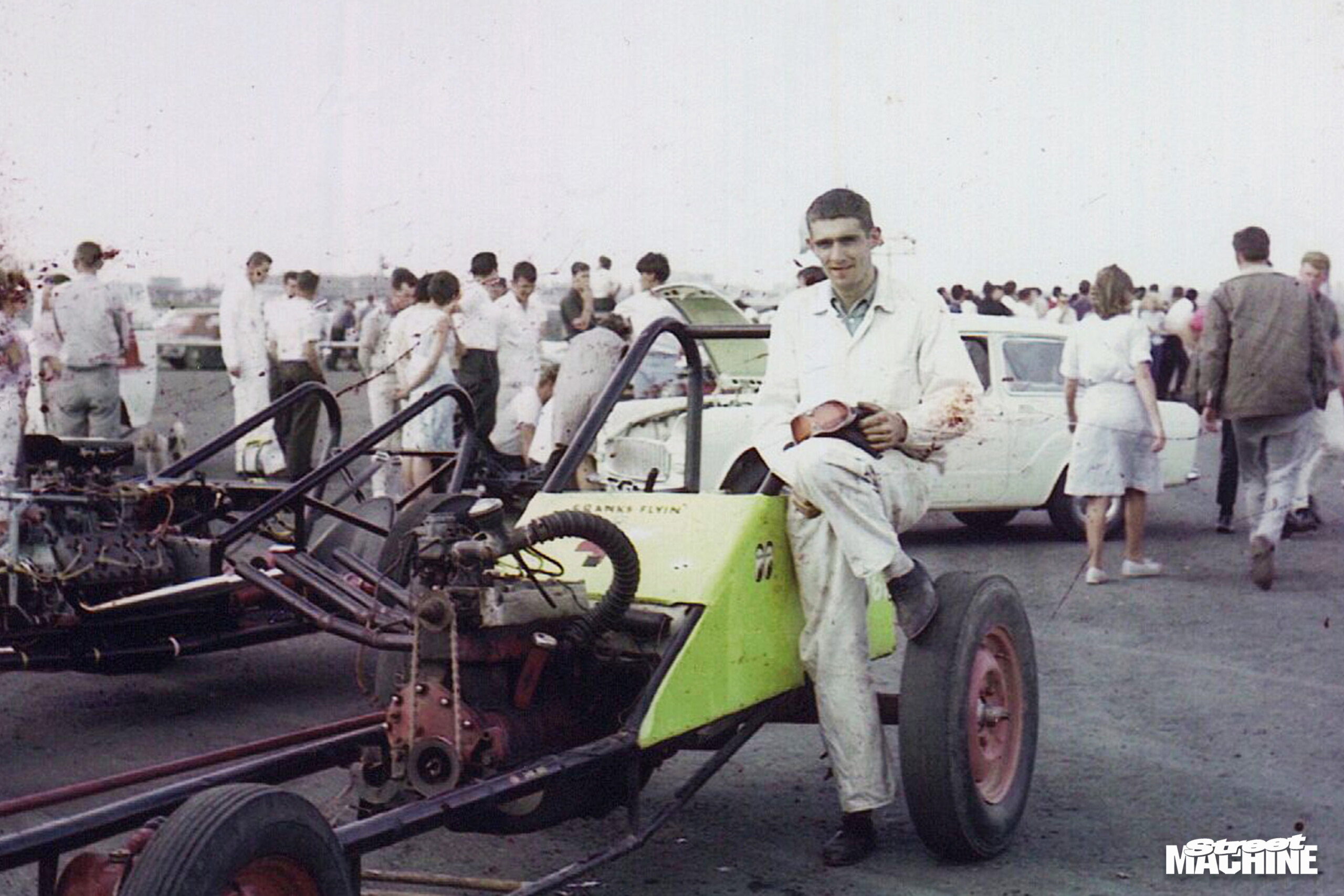
After the Dragfest was diverted to Calder, Riverside returned to its regular first Sunday of the month schedule (with a 130mph limit imposed by the CAC) but by year’s end it was all over, as previously planned site redevelopment – including the West Gate Freeway – took over the land.
CASTLEREAGH ( SYDNEY, NSW )

As with many of Australia’s major cities, WW2 created a ring of emergency airfields around Sydney. One of these, at Castlereagh, at the foot of the Blue Mountains 50km west of the city, was ideally located and its owners began leasing the site for motor racing from 1947. In 1959 the Australian Racing Drivers Club, having seen their Mount Druitt circuit fail, leased the site, and from October 1959 to May 1960 staged a sprint meeting and two drag racing events, introducing some of the early big names of the sport to active competition.
In 1960, after securing a home at Catalina in the Blue Mountains, the ARDC moved out of Castlereagh and drag racing went into dormancy in New South Wales.
From 1962 to 1966, Riverside in Melbourne began attracting the attention of Sydney hot rodders. Sparked by what they saw, they returned home determined to create something similar.
The most obvious target was that old Castlereagh airstrip. When the hot rodders began nosing around in May 1964, a sports car club staged a drag racing event there, but when the hot rodders later drew a better crowd to their own event, the land’s owners were happy to sign a lease with them – for 15 per cent of the gate – securing the venue for quarter-mile competition.
Castlereagh became widely regarded as the principal drag strip in Australia
Every weekend the hot rodders gathered at the lonely stretch of patchy spray seal asphalt. They patched the surface with cold-set asphalt stolen from a roads depot down the road. They erected fencing, painted lines, marked out pits, and cleared trees for a car park. They towed in an old bus for a timing tower.
From the first meeting in November 1964, the track blossomed. The track was resurfaced and services extended for an April ’66 tour by a team of American dragsters, and it was officially named Sydney International Dragway in mid-1966 (later changed to Castlereagh International Dragway). It became the first Australian track to run night racing with sketchy dim lighting in March 1967, was raided (foolishly) by the police in 1968, and was the first to run “street meets” in 1971. By 1974 plans were being laid for a three-story control tower and grandstands.
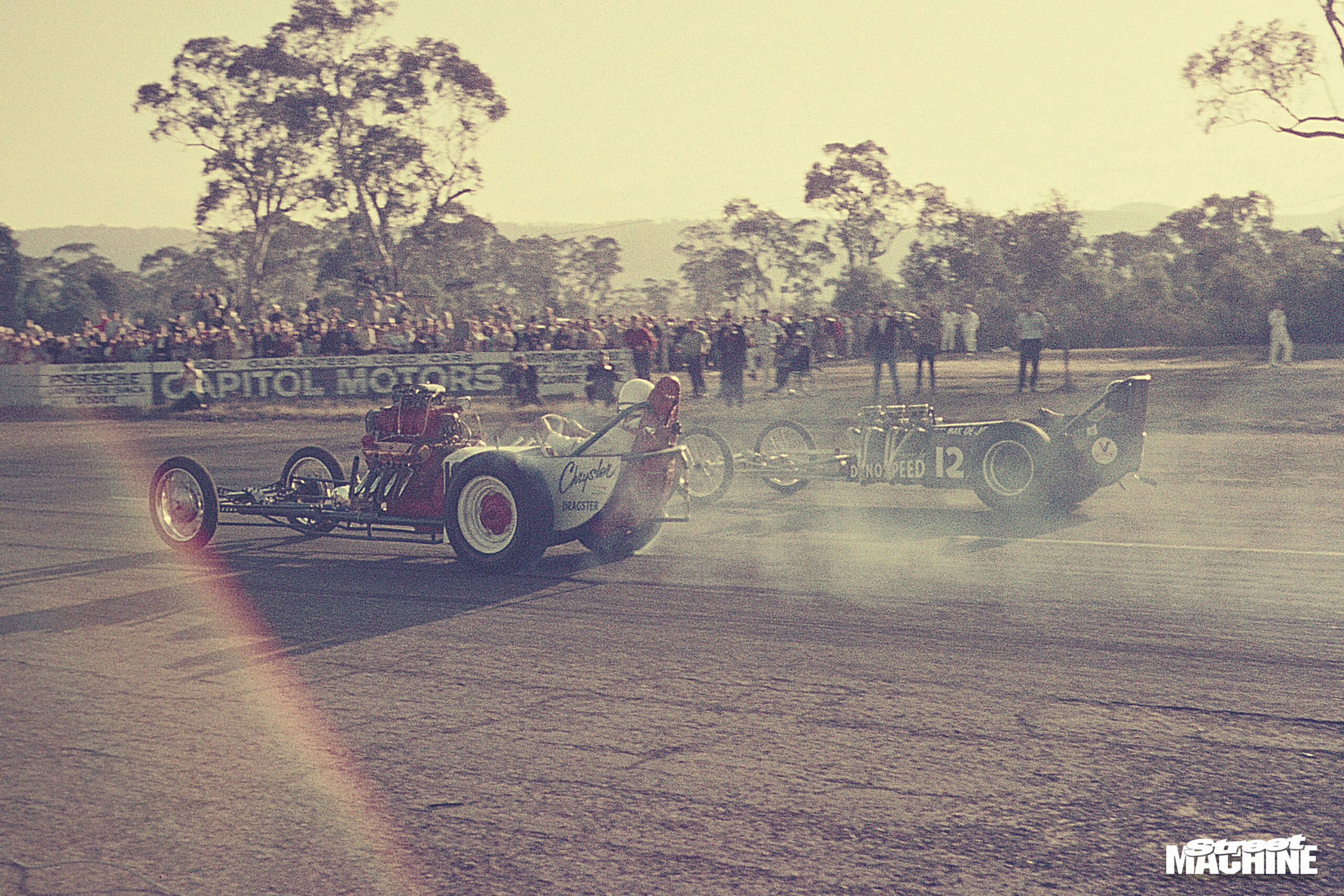
Castlereagh became widely regarded as the principal drag strip in Australia, until the early 1980s, when the land on which most of the track sat was re-zoned for five-acre building lots.
The price was out of the drag racers’ reach, even though original track manager John Fleming had been in the process of assembling the finances to purchase the land in 1969 when he was overthrown in a coup. In December 1983, a developer moved in. The land owner gave the racers until the end of April ‘84 to be off site, just before his Development Approval expired. Amid a flurry of drama and emotion, Australia’s core drag strip expired.
SURFERS PARADISE ( QUEENSLAND )
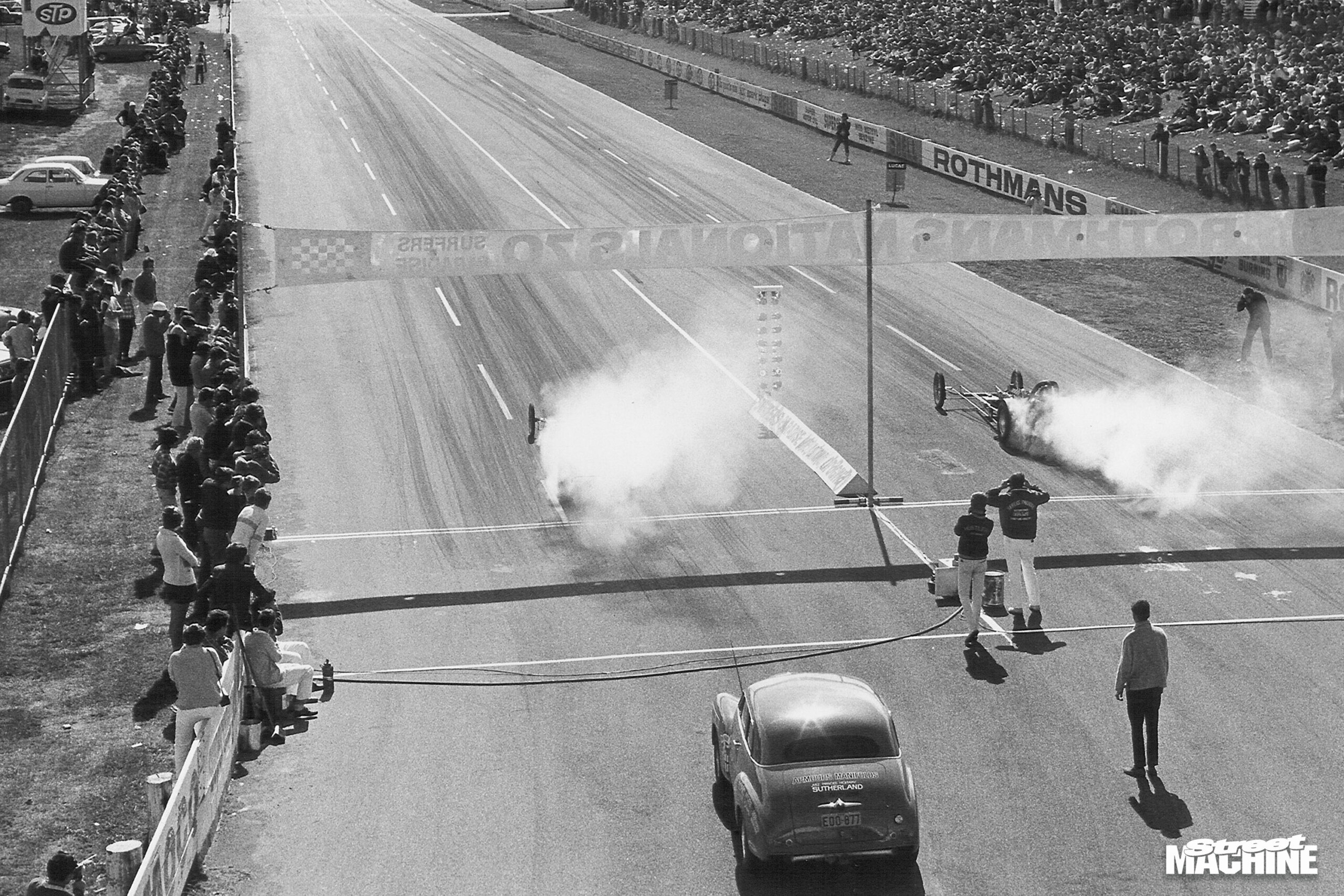
Drag racing in Queensland was officially launched in November 1965 on the main straight of the old Lowood circuit in the Lockyer Valley, 70km west of Brisbane. The maiden event was the first of three held there before the sport moved to the more lavish location of Surfers Paradise, but it initiated the careers of some drag racing greats, including Dennis Syrmis and Jim Reed.
Gold Coast entrepreneur Keith Williams had made a killing with his Ski Gardens tourist attraction on the Nerang River and subsequently bought a parcel of flood-prone land across the road upon which he began to build a motor racing circuit, with an airstrip and speedway to come later. A local ski racer convinced him that drag racing was the coming thing, so he and right-hand man Bill Pickett flew to Riverside in Melbourne to check it out. “My impression was one of mayhem, nil safety precautions, primitive spectator facilities, but what a crowd,” recalls Pickett.
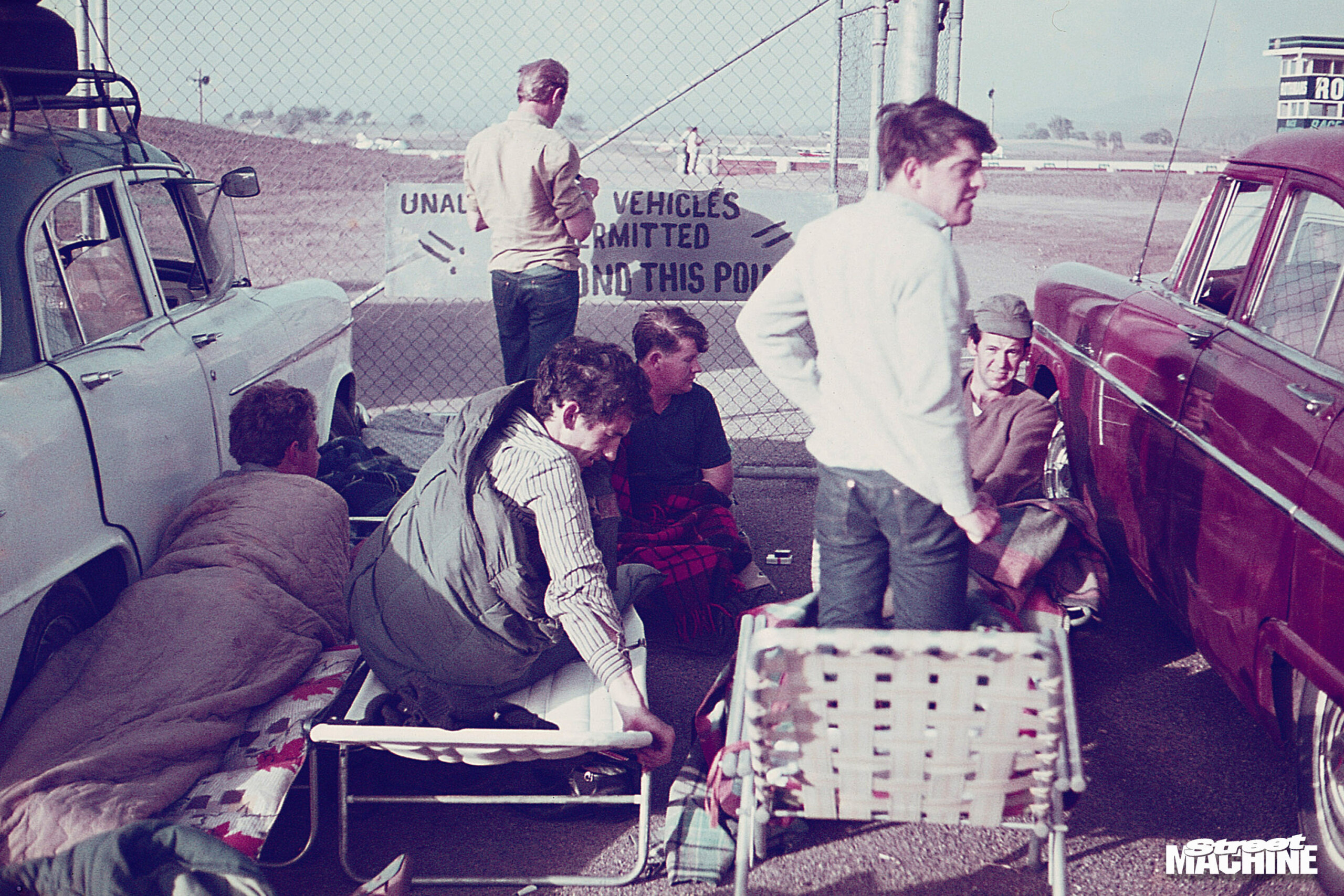
It was too late to do more than widen the main straight to incorporate a drag strip, but it proved to be a smart move, with the drag strip paying for the running of the entire facility for many years, with every other dollar coming in as pure profit.
The venue was due to be complete in mid-1966, but was hustled to completion in April to enable the running of a round of the Dragfest tour. The place was dusty and only partly complete, but it was the kick start to big-time drag racing in Queensland.
SPID became the breeding ground for many great events, including the annual Ampol New Year Series, which brought many big (and little-known) American racers to these shores, the Tin Top Titles, the Winternationals, Speed Week and many more.
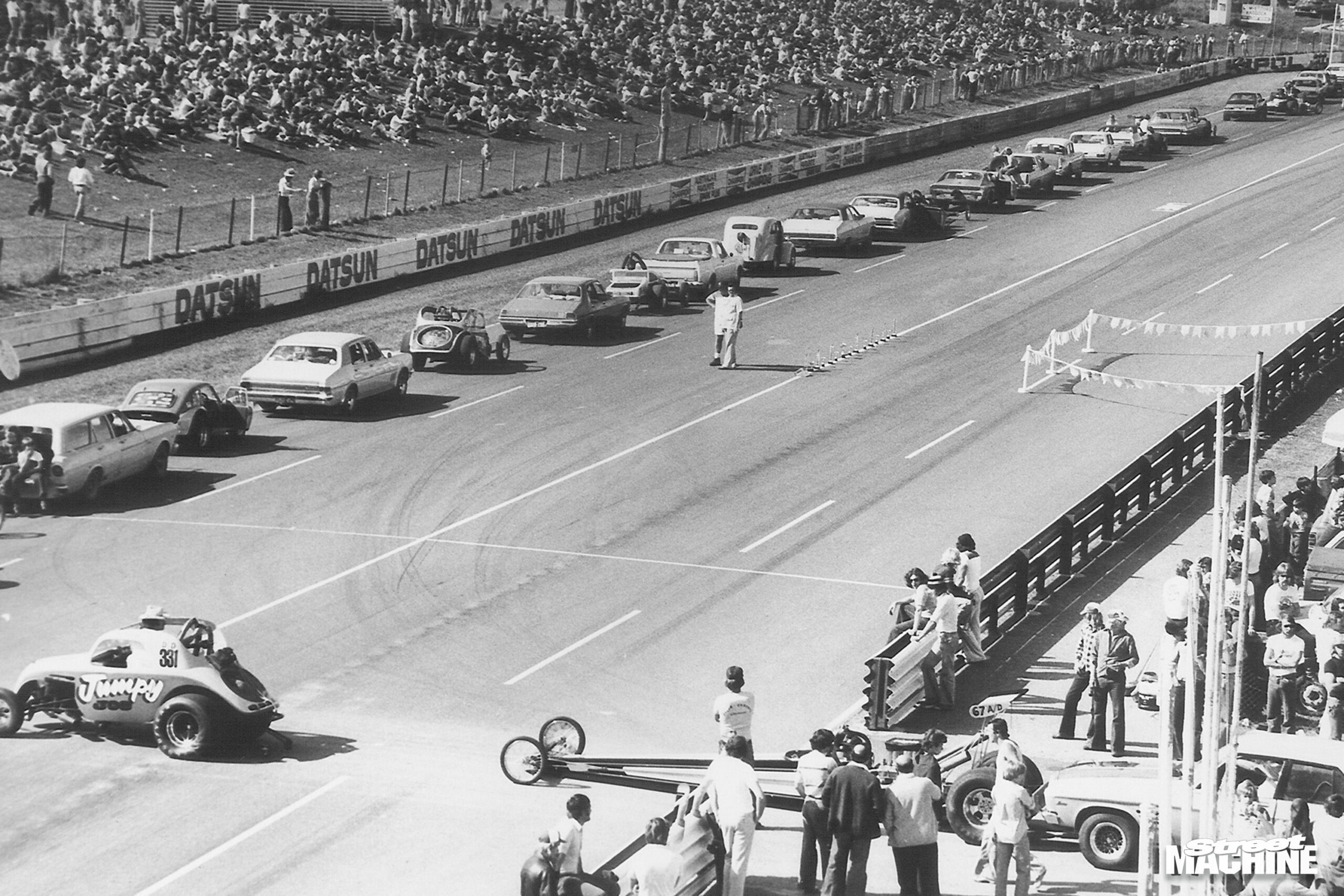
The last-minute addition of the drag strip meant that the access road to the start line from the pits was the strip itself. Race cars had to be towed (usually in large numbers) up the strip to behind the start line and then each pair of race cars was followed down track by the tow cars.
The secret to its succss seemed to be its proximity to the coastal strip, which ensured a willingness by many to travel there for a weekend of racing, and provided a ready pool of fans eager for a good night out.
However, the track was always on dicey ground due to nearby development. As housing closed in along Nerang Road, Williams sold it off to gather cash to fuel a development at Hamilton Island. After passing through several hands it was closed by its new Japanese owners in September 1987. Fortunately the drag racing community had seen it coming and, in 1985, had opened a back-up at Willowbank Raceway.
CALDER ( MELBOURNE, VICTORIA )
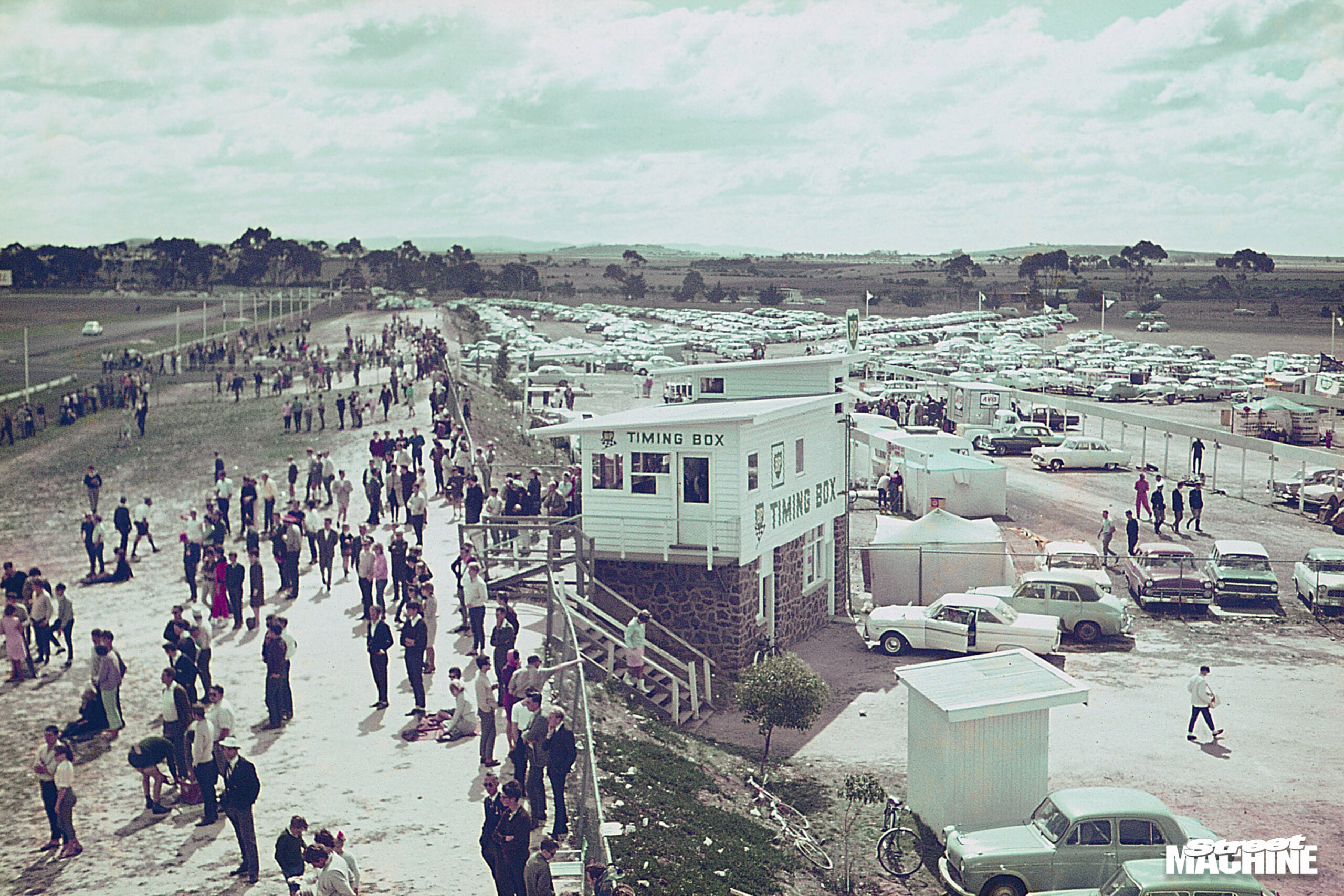
Calder Park Raceway was built at Diggers Rest, north of Melbourne. Starting as a dirt track circuit in a paddock, it was developed into an asphalt circuit by the Australian Motor Sports Club in January 1962. The narrow and inadequate track was thrust into the hot rodding limelight in April 1966 when it was co-opted for the Dragfest event that had been diverted from Riverside.
It was short – limited to eighth-mile racing – and narrow – restricted to single passes – but even as a poor substitute it served the urgent need at the time. When Riverside closed at the end of 1966 Calder reopened its gates to drag racing in January 1968, with Jack ‘Fizzball’ Collins acting as drag racing manager.
The main straight had been widened and extended, but in the end it proved to be still too short, with a number of serious braking area crashes. These continued into the 1980s, until a serious effort was made to extend the braking area on newly acquired land.
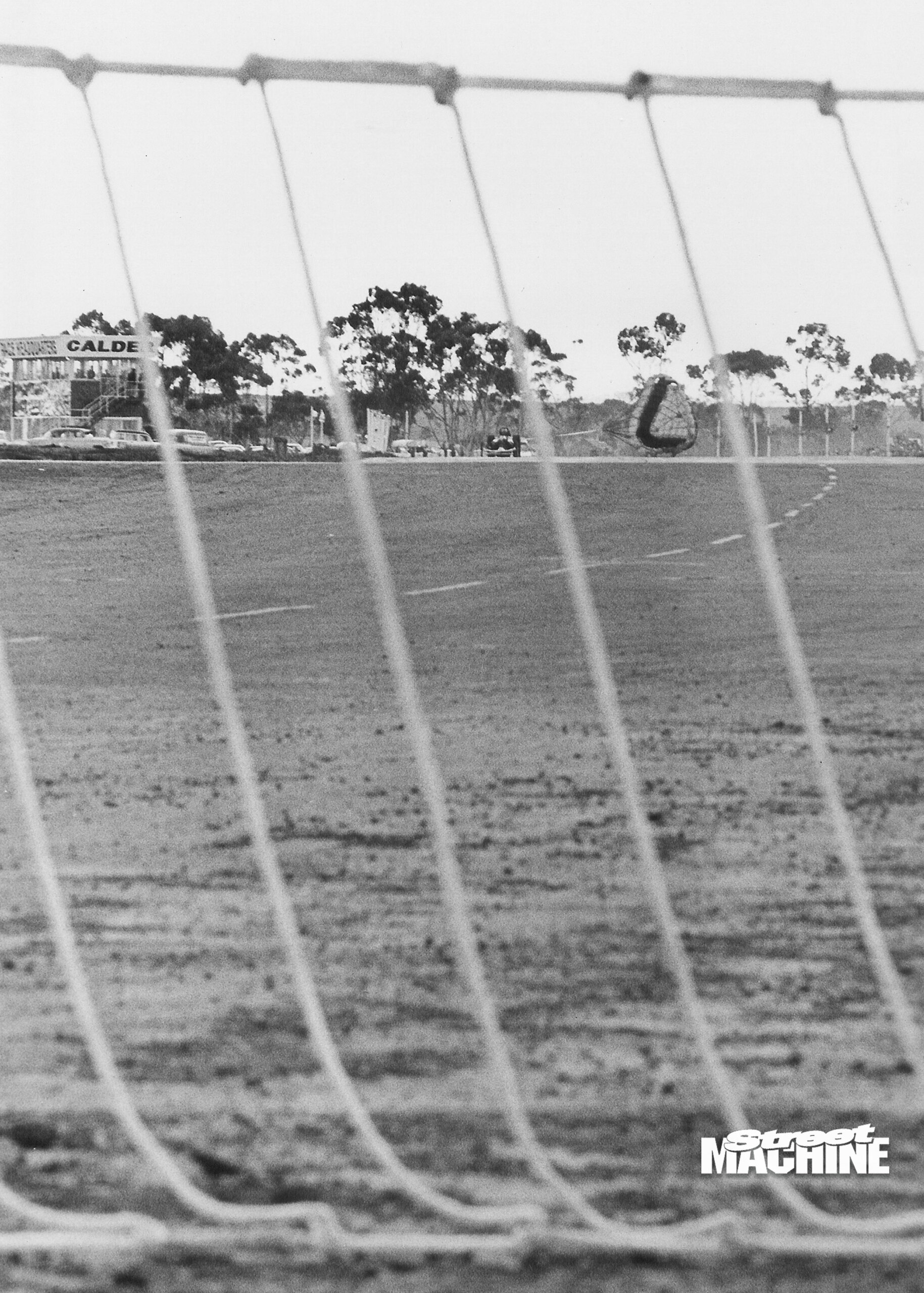
The braking area problem caused the track to lose the rights to host the ’71 Nationals.
When the Australian Hot Rod Federation requested that the track be fixed or the racing distance shortened, owner Bob Jane, in a huff, closed it to the sport. In 1972 the Victorian Drag Racers Club hired the track and commenced running events over 1000ft. They were so successful, leaving the club embarrassed by the financial surpluses, that Jane began running drag racing again.
Drag racing continued to grow at Calder over subsequent decades. In the 1990s, following major facility development, it was undoubtedly one of the most successful drag strips in the world, pulling in genuine one-day crowds of up to 30,000 (despite the imaginative claims sometimes made by the track’s marketers) for major events like the Nationals.
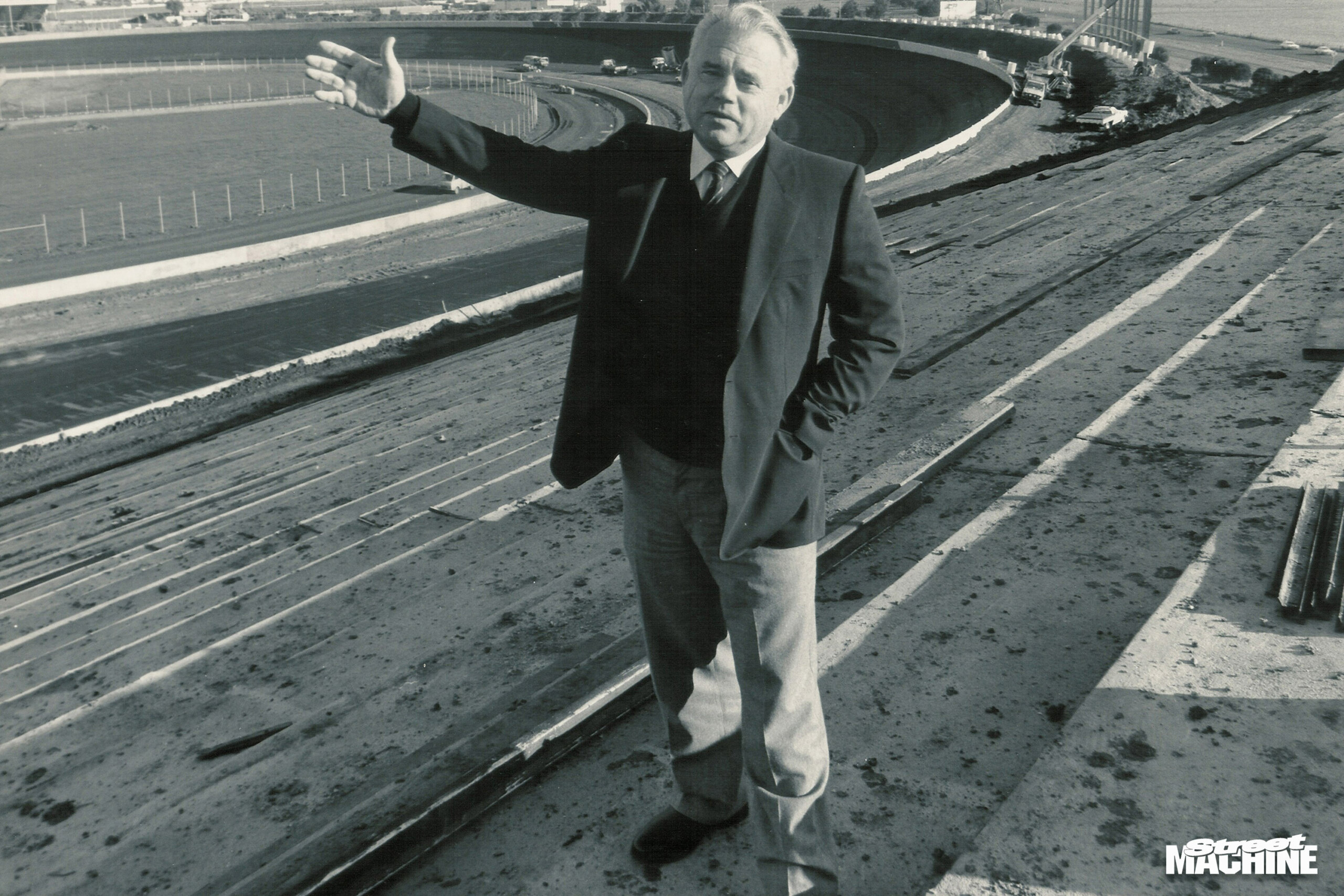
It was a seemingly unstoppable cash cow for the venue, which also included the financial black hole of the Thunderdome NASCAR track, as well as the circuit, until Jane picked an argument with ANDRA and the sport over sanctioning fees.
The edifice reverted back to holding relatively small-time and largely localised events, though the manipulative practices of some other track managements encouraged some of the sport’s top runners to put in appearances.
The future, may, at least temporarily be brighter, with ANDRA taking out a lease on the strip, with plans to run everything from test and tunes to full blown Top Fuel meetings.
BROOKSFIELD ( TWO WELLS, SOUTH AUSTRALIA )
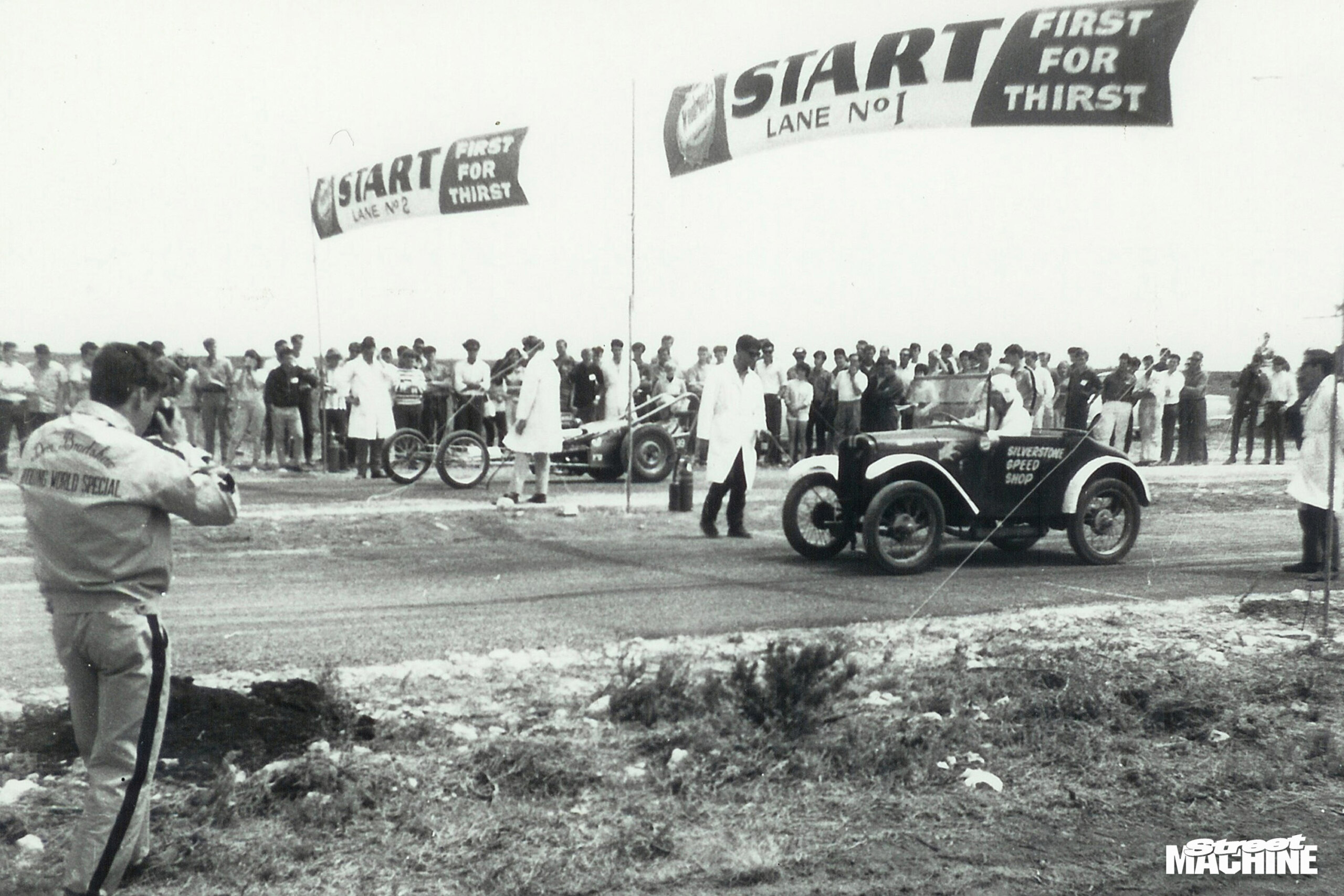
Drag racing in South Australia had to be content with occasional sprint meetings run by sports car clubs or the annual South Australian Quarter Mile Sprint Championships, which were held at the Weapons Research Establishment at Salisbury in the mid-60s.
In June 1965 a nine-chain (a “chain” being a measure of length – 66ft or 20m – meaning that nine chains is 22 yards short of an eighth mile) sprint meeting was held at the Gawler Belt, 40km north of town. As had happened at Castlereagh in Sydney, the drag racers liked what they saw and set about taking over. In July the newly formed South Australian Hot Rod Association staged its own event, this time tagging it drag racing.
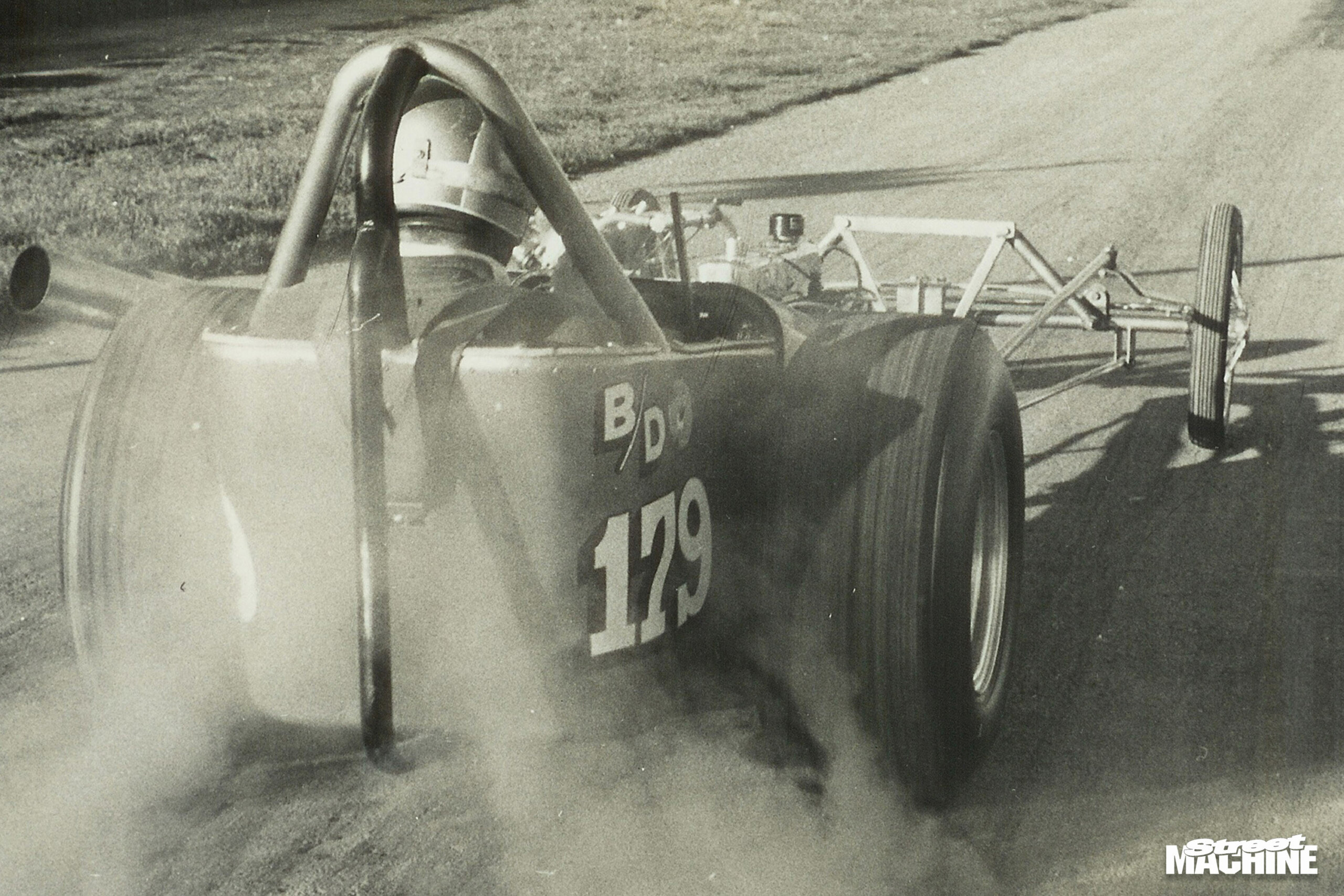
There was another race at the Gawler Belt, but there was a desire to move to a purpose-built venue. Led by the energetic Crusaders Club, the SAHRA found suitable land at nearby Two Wells.
Shortage of money limited the strip to an eighth mile, with two separate strips of bitumen and oiled dirt braking areas. It wasn’t great, but it was better than anything before, and the saltbush down the “centre” of the track added that unique South Australian touch. The new track was named Brooksfield.
The first meeting was a “shakedown” in October 1965, attracting 4500 fans. The official opening three weeks later drew nearly 5000 fans and racers from Victoria.
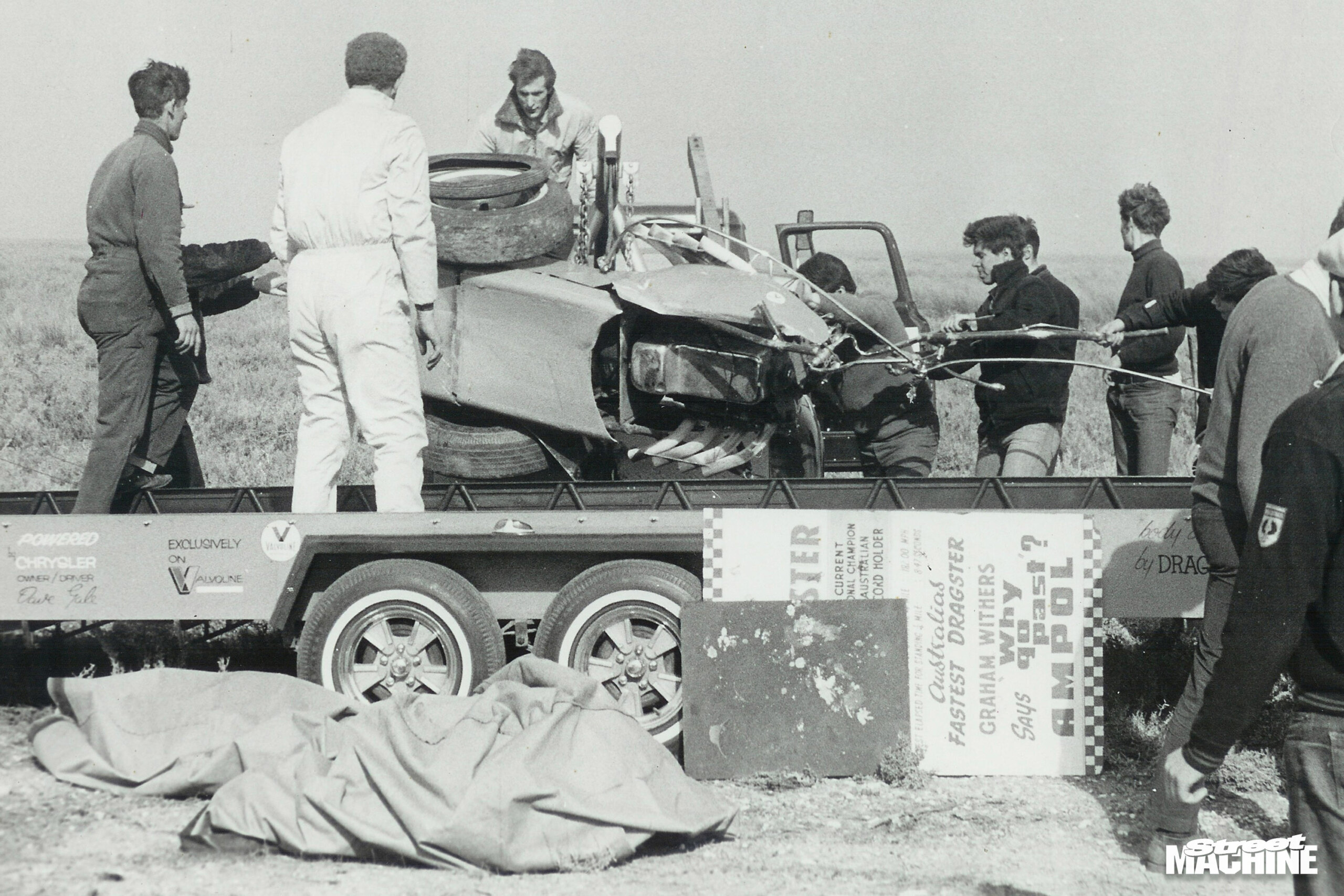
Crowds grew to as much as 10,000, and there was TV coverage and things looked very positive. But there were limitations, such as dust so heavy that at times you couldn’t see the finish from the start line.
After a bad crash by Victorian dragster racer Dave Gale in 1967 things began to go downhill, and Brooksfield fired its last shot in front of a record crowd and an entry list of 75 in 1969.
This was the last drag race in South Australia until the AIR complex opened three years later, but Brooksfield had bred a solid core of enthusiastic racers ready to carry the sport on.
PALMYRA ( MACKAY, QUEENSLAND )
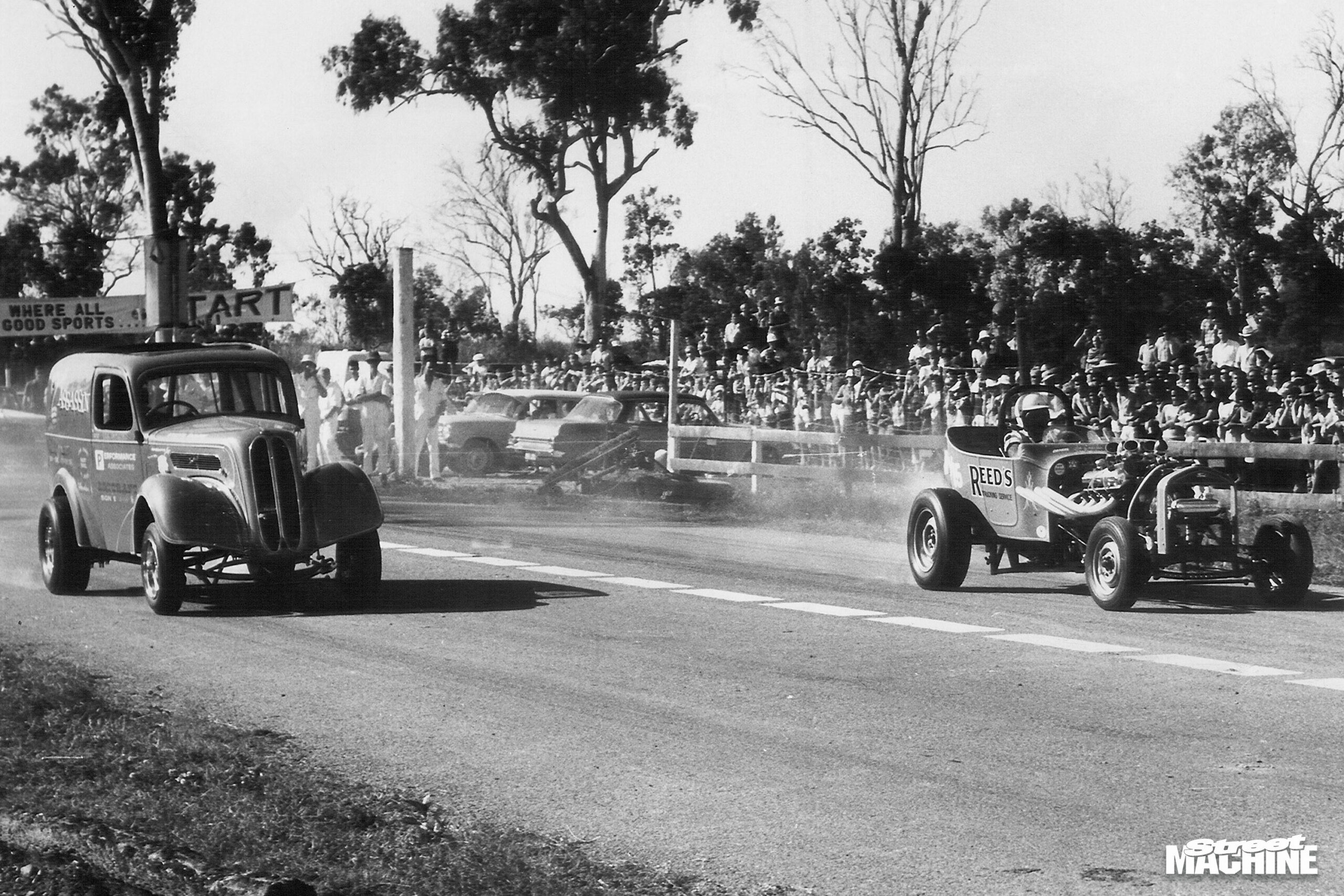
Up in the far north they don’t do things by halves. So when the Pioneer Sporting Car Club was formed in the central Queensland town of Mackay in August 1966 (with $13 in the bank) and declared it was building a drag strip, nobody doubted them. They began at a locale at North Eton, but the land’s owner withdrew when it was half built and the club had to start all over.
It took another 16 months and $10,000, but the club carved a quarter-mile track out of tropical jungle. After its first and very successful event in December 1967, with a booming 7000 spectators (Mackay was a pretty small town in those days) and 59 entries, they had paid off everything and were optimistically planning extensions.
The track has had a very chequered history since, being closed several times when things have gone awry.
A cyclone caused serious damage in 1970, and, in 1987, a resurface of the track went badly wrong and the new asphalt came away in chunks. When the club went after the company that did the work, they went into bankruptcy, putting the track out of business while the club raised the money to have it fixed.
However, improvements have continued to be made, with lighting installed in 1974, new timing equipment and other upgrades in 1978, a club house and new Armco fencing in 1980 and further upgrades in the mid-2000s.
The track is still going strong, despite tough times along the way, and is the longest continually running drag racing venue in the nation.
STEEL CITY RACEWAY ( WHYALLA, SOUTH AUSTRALIA )
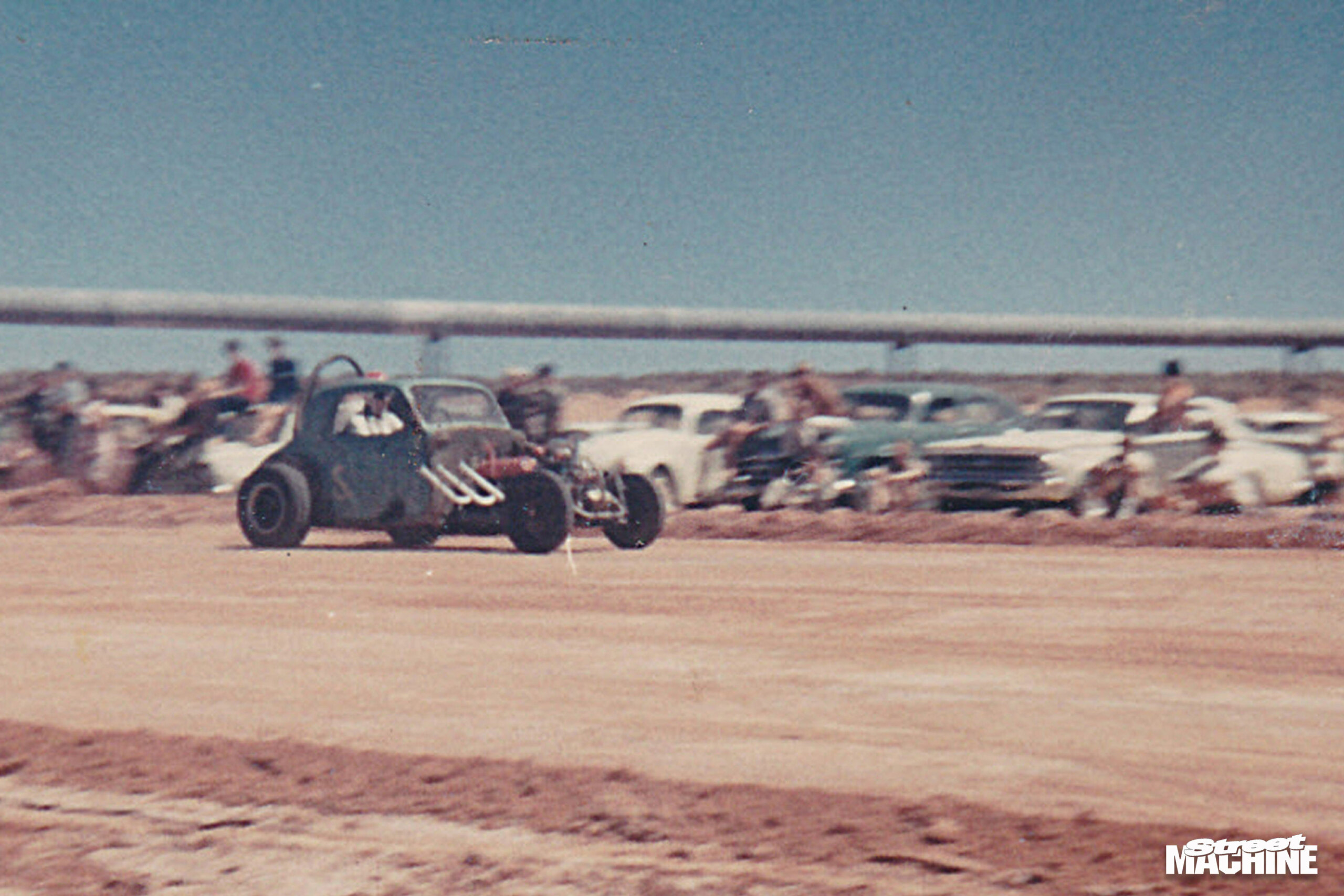
With growing interest in drag racing in SA, local racers under the Steel City Drag Club banner began to gain force in the industrial town of Whyalla. The club was formed as early as 1966 by local enthusiast Charlie Dennis and a bunch of others. They acquired access to land on the Point Lowly Road, alongside the Morgan-to-Whyalla water pipeline, which formed one boundary fence, and ran over an eighth-mile distance on dirt until 1969.
Then, with the backing of BHP, they pulled together an all-concrete eighth-mile strip (concrete being cheaper than asphalt in Whyalla), which opened in January of that year.
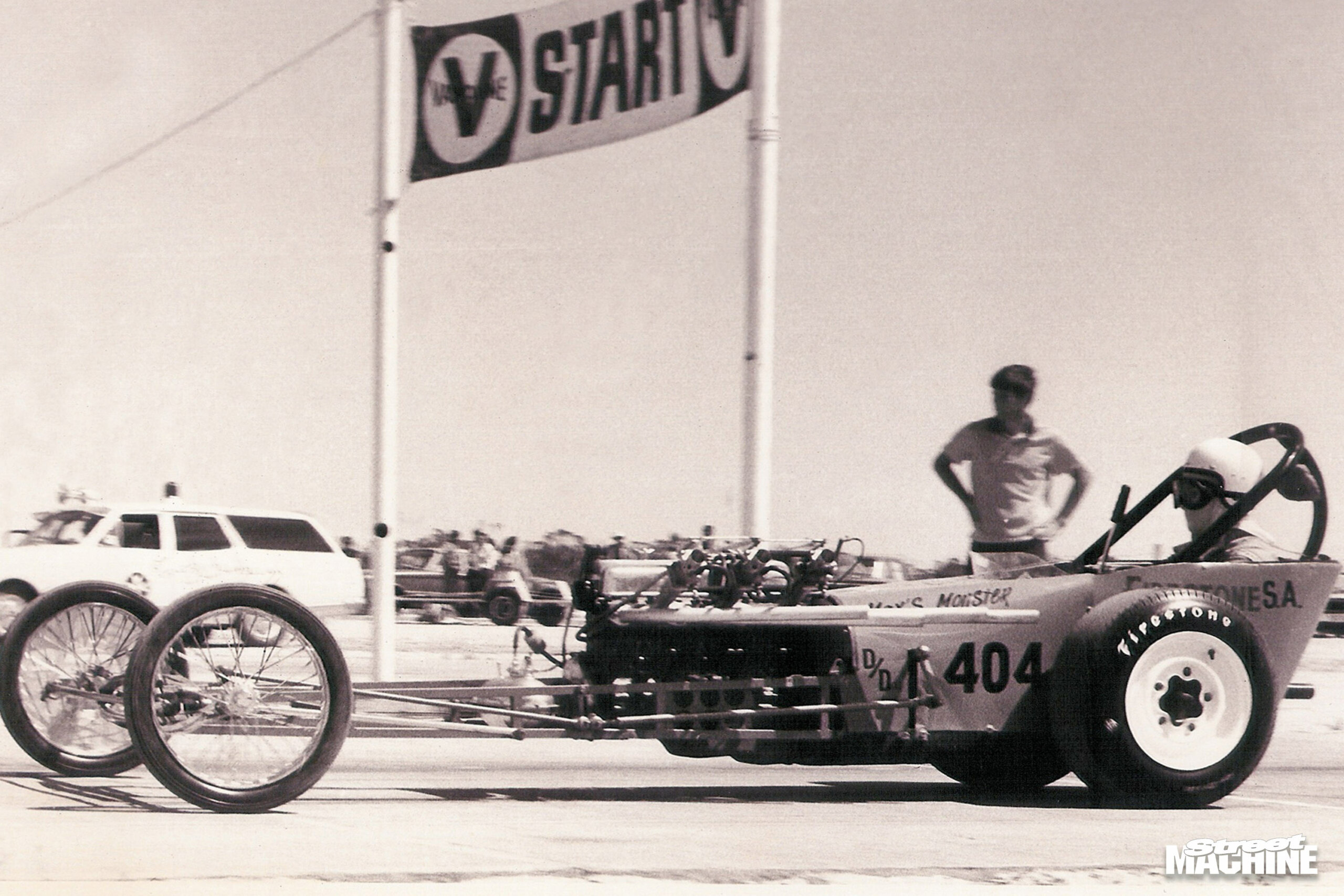
The early days of the Steel City Raceway were often a struggle, with sometimes only one or two events held per year, but it has continued to operate except for a period of five years (1979-84) following the death of Dennis in an accident at an unsanctioned event that saw ANDRA imposed a ban.
Since resuming racing the track has continued its operations and has recently undergone a period of growth, with new concrete, new concrete safety barriers and other facilities.
DARWIN ( NORTHERN TERRITORY )
Few people in the Top End even knew what drag racing was in the 1960s, but a handful that did got together to form the King Cobra Rod and Custom Club in 1969 and began lobbying to hold drag racing on the old Livingstone Airstrip, 50km down the Stuart Highway from Darwin.
The racing was pretty basic and the facilities similar. The airstrip surface, leftover from WW2, was rough and undulating, making it almost impossible to keep wheels on the ground at speeds over 100mph.
By the early 1970s lobbying was underway to move to a better site. The process was a long drawn-out struggle, but eventually, with NT Government assistance, the drag racers moved into the Hidden Valley complex in 1986, and it’s been all strong going from then.
SAVANNA ( TOWNSVILLE, QUEENSLAND )
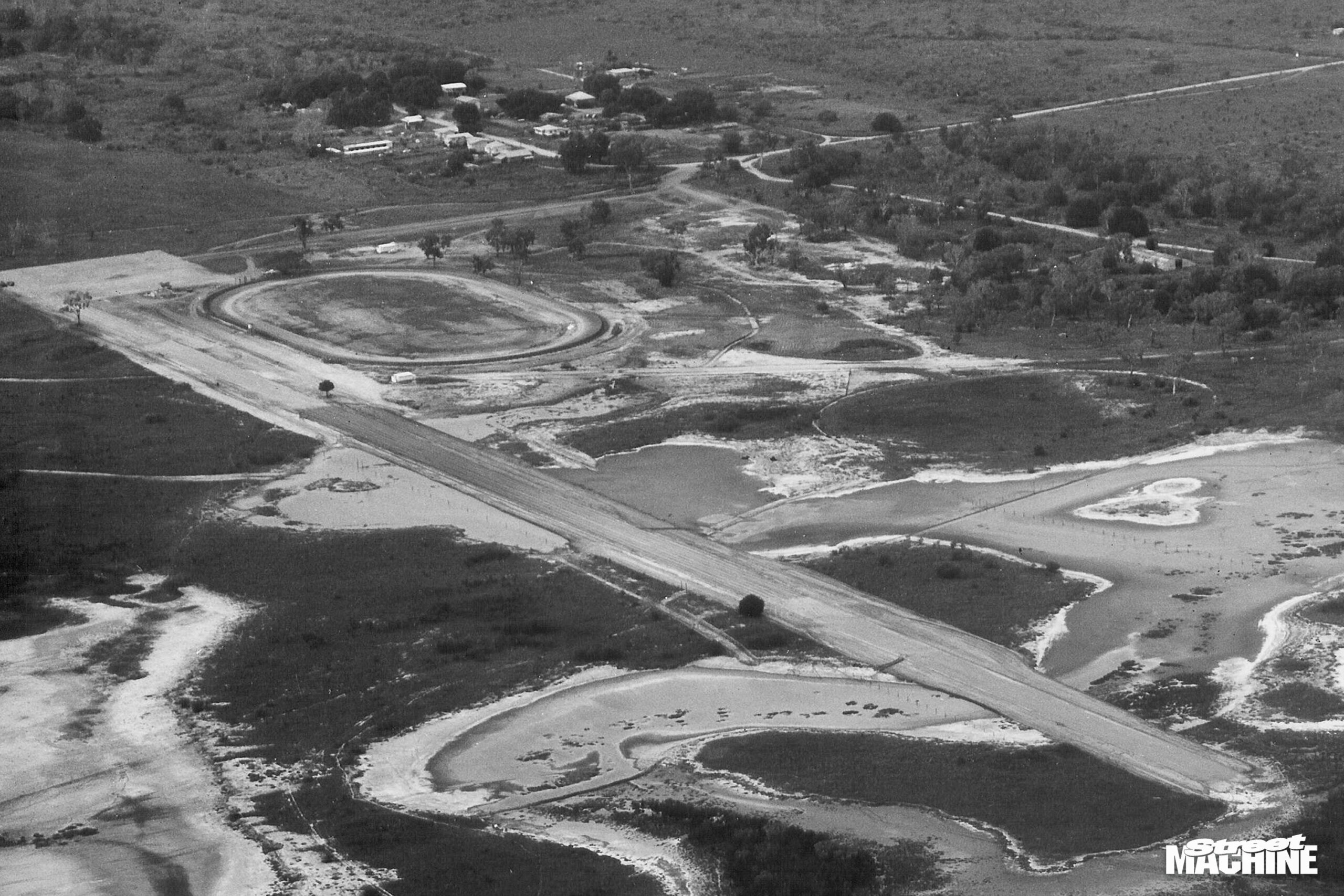
Having profitably launched his motor racing at Surfers Paradise, largely due to the success of the last-minute inclusion of drag racing, Keith Williams began looking for alternative sites to repeat the recipe. Proposed tracks in Sydney and Melbourne never got off the ground, and the Adelaide track was a long way off, so Williams went looking closer to home and came up with a site near the fast-growing city of Townsville in Far North Queensland.
The combined drag strip and speedway facility, named Savanna Raceway, was built into a mangrove swamp just off the highway to the south of the city and opened its doors in July 1969.
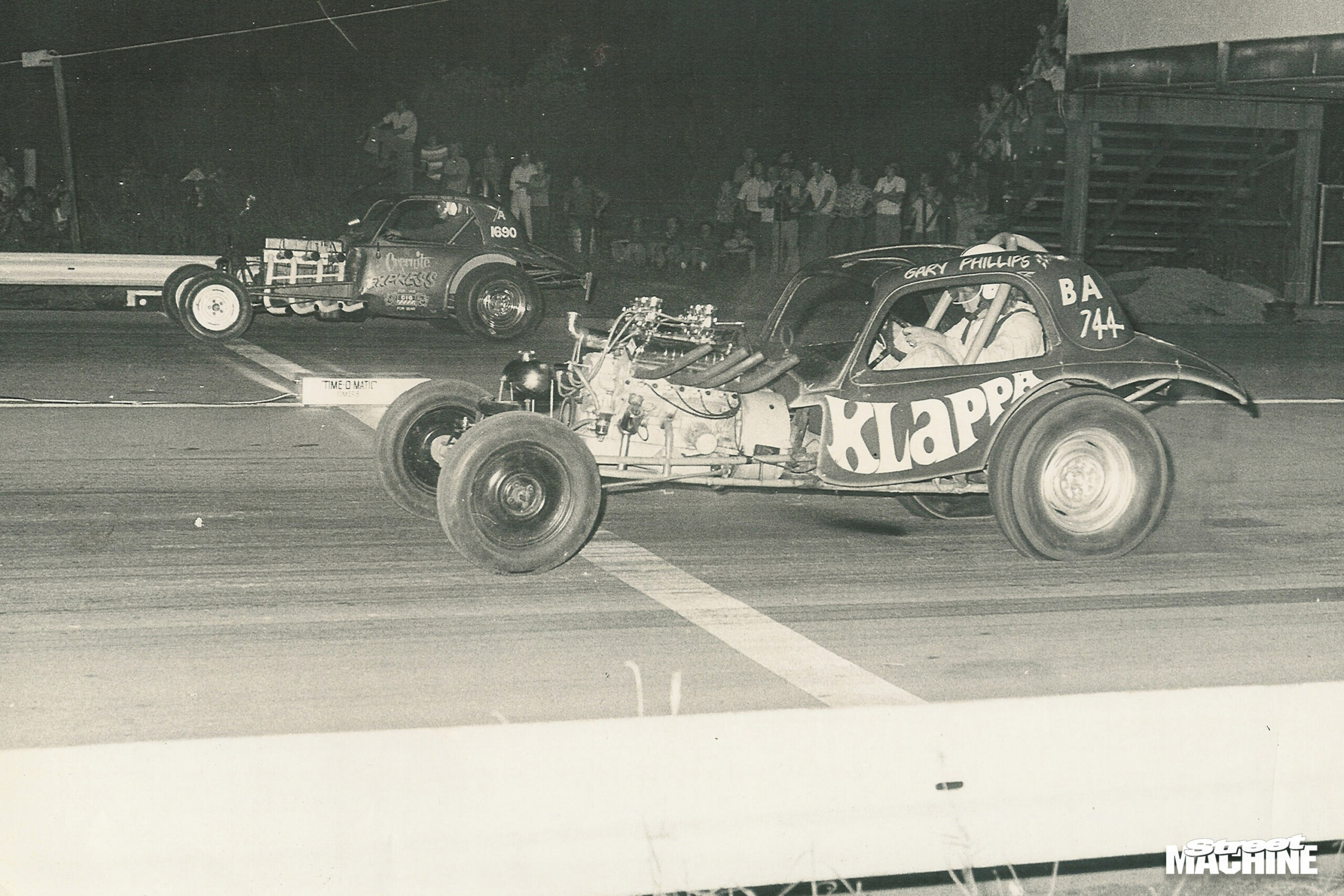
Its location presented some problems, like when Peter Dykes ran the Surfers Paradise track-owned Top Fueller off into the mangroves at the opening event and rescuers had to spend some time warily assisting in the face of potential threats from possible saltwater crocodiles!
Savanna was a critical link in the chain of Williams’ drag racing success, being an outlet for his imported US race cars, which arrived at the end of each year.
Williams owned the track until 1974 when it passed into the hands of a group of local businessmen, who ran it firstly under the capable guiding hand of Trevor Mobbs. The track suspended racing in August 1975 while management was sorted out, then was leased shortly after to local racing identities the Brosnan brothers, who ran it in their own unique Far Northern cowboy style – including such actions as protecting the finish line light beams with concrete blocks.
1976 was a troubled year for Savanna, with local racers instituting a ban on the track in August, racing being suspended in September after its sanction was reduced to B-grade, ending with the Brosnans announcing its closure in October.
TOWNSVILLE DRAGWAY ( QUEENSLAND )
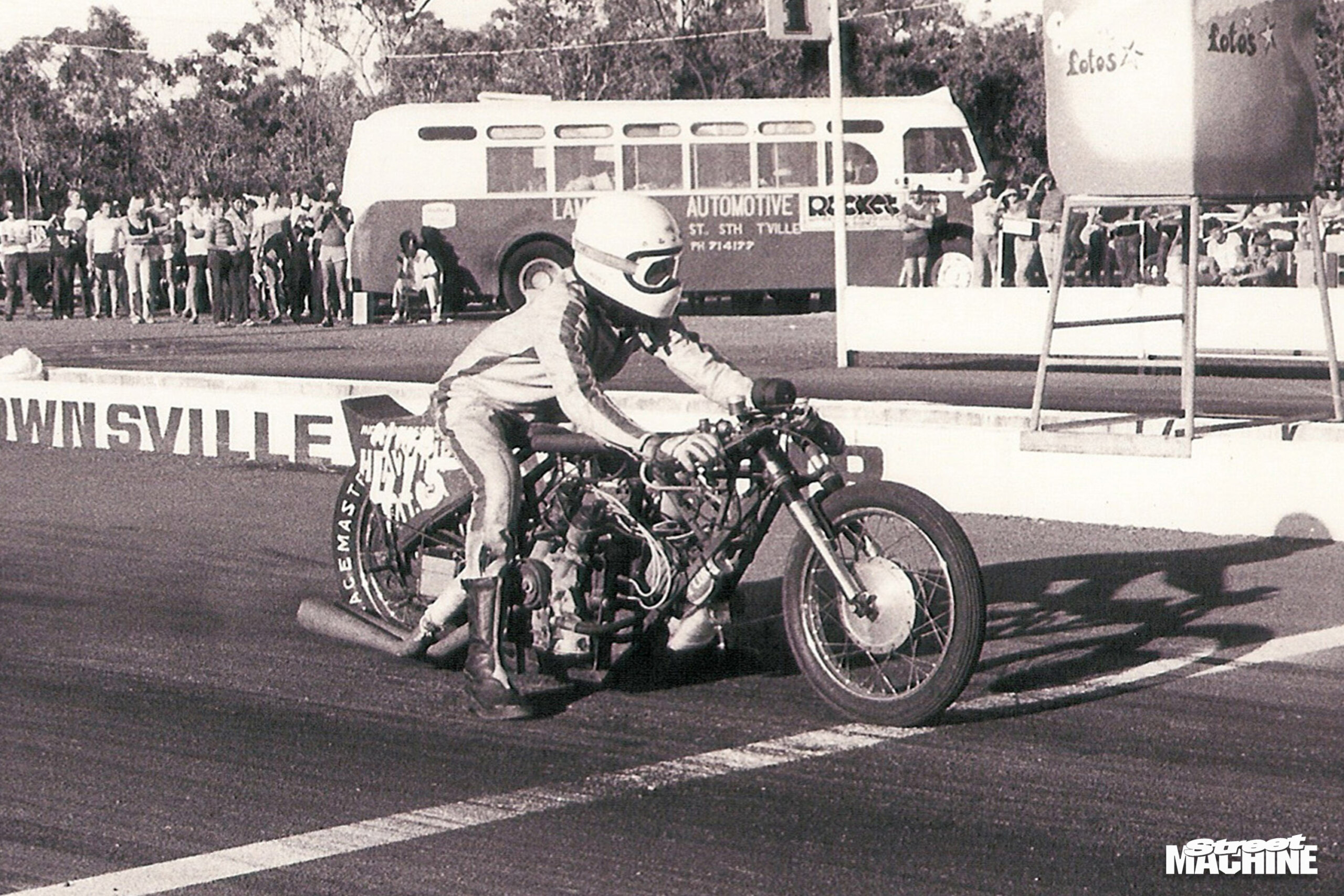
The expiry of the Savanna track provoked the Townsville racing community into a search for an alternative. Another site to the north of the town was located on private land in 1977 and the conversion of the old bomber airfield into Townsville Dragway began.
The track, near the Bohle River, was managed by the highly respected Trevor Mobbs and quickly developed into a well-run venue. In those days it was run by the Ladies Bohle River Cricket Club, a shadow organisation which got the racers around some council regulations, since drag racing was not an officially recognised sport.
There was a steering committee of representatives from all of the regional clubs, and most of these contributed financially to the track’s construction, along with lots of working bees and voluntary work. Eventually Mobbs decided to buy the track, and set out to repay the donated money to the clubs. This time it became a hot centre for racing, including a visit by US funny car racer Gary Densham, which gave them a sell-out crowd.
Then Mobbs became seriously ill and passed away, and the ownership of the track passed to his brother Ray, who began to take it away from ANDRA sanctioning. The track development largely stopped and it remained much as it was at that time until the middle of 2012, when the track was closed by the city council because of encroaching urban development.
A search was soon underway to establish a replacement venue.
COONAMIA ( SOUTH AUSTRALIA )
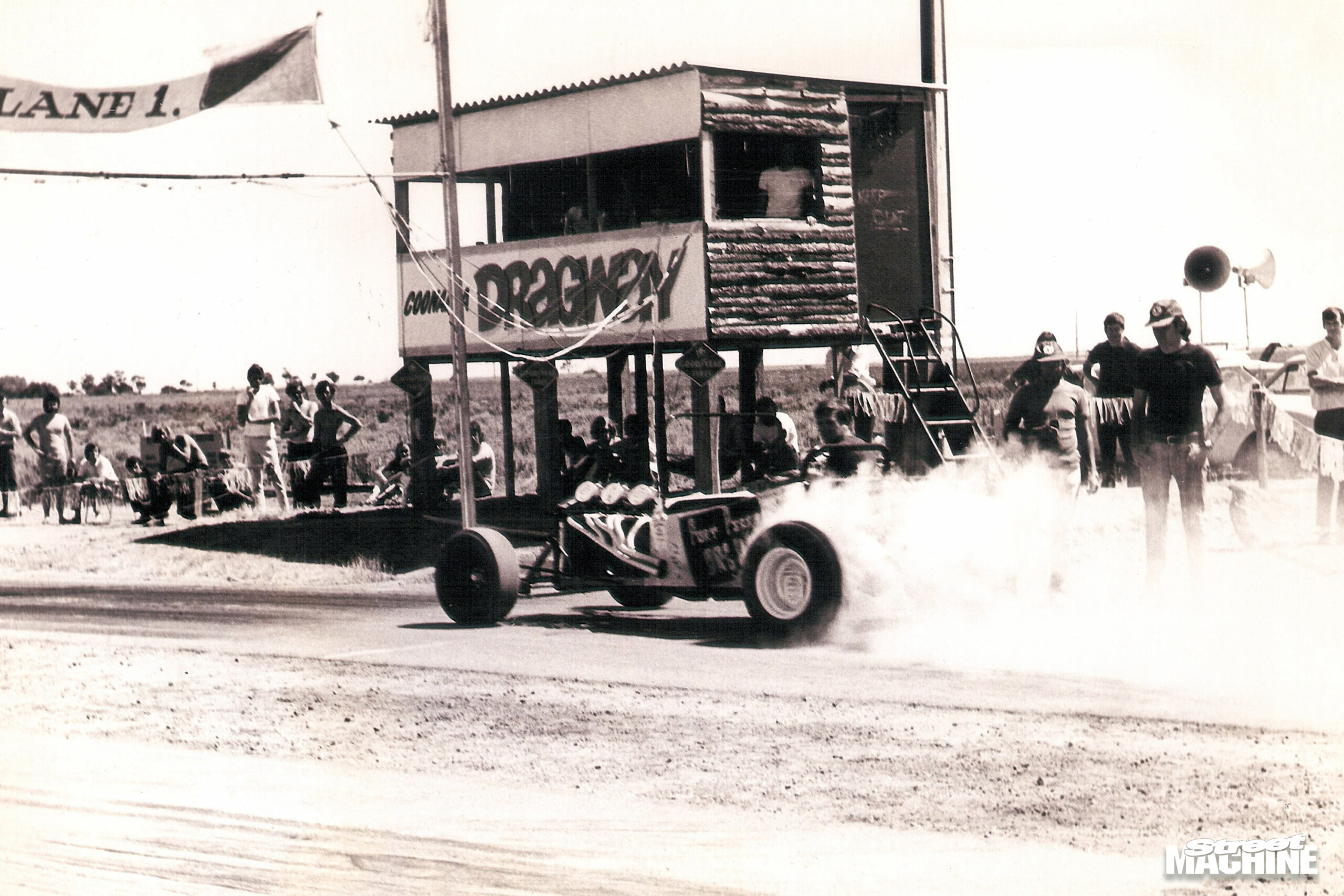
Smaller regional drag strips seemed to be popping up all over South Australia, with the industrial city of Port Pirie opening its own track under the name of Coonamia Dragway.
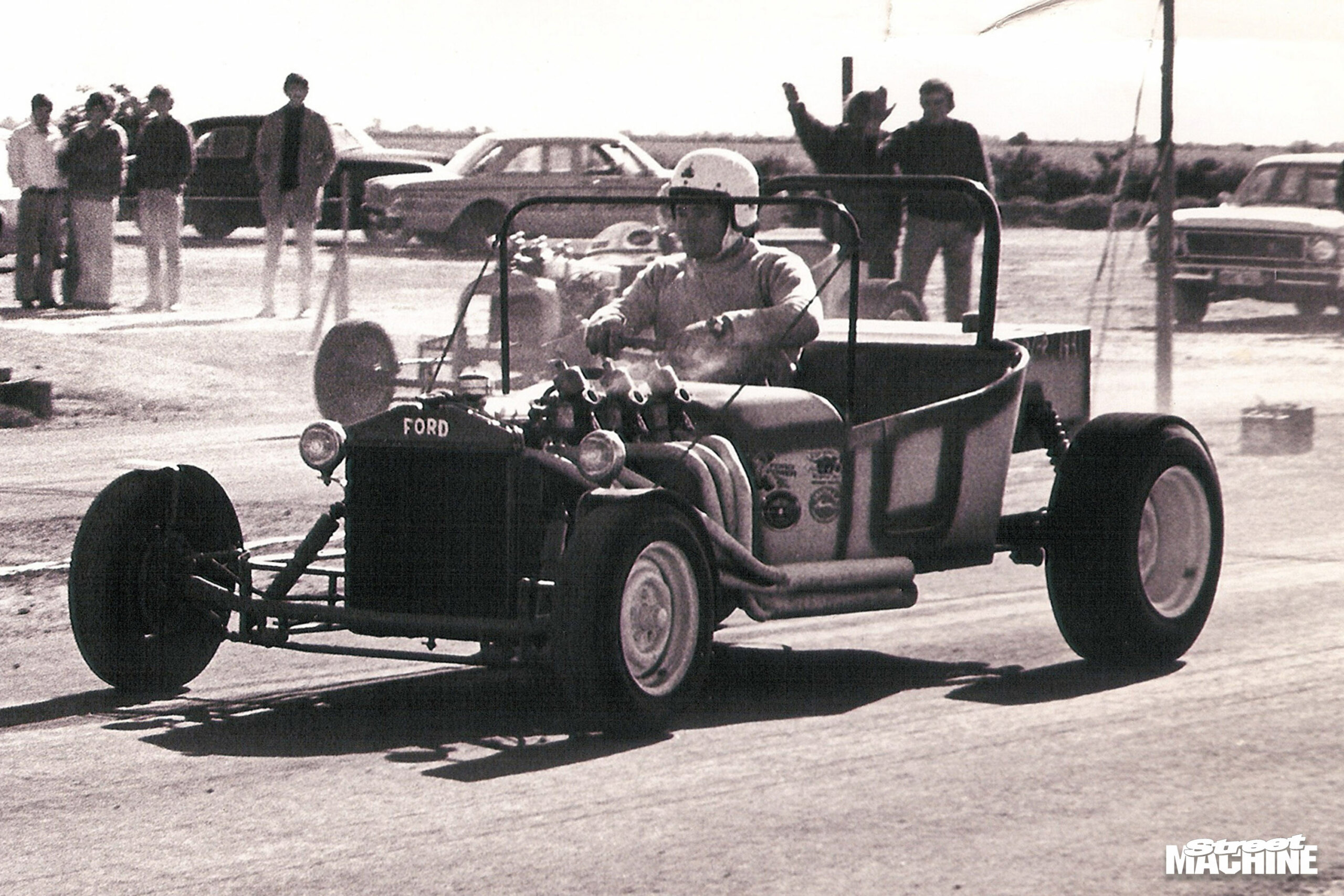
Run by the Port Pirie Drag Club, the eighth-mile track was launched in 1970 with a C-grade ranking, upgraded to B-grade mid-year following improvements. It continued until August 1971, helping to fill the void after Brooksfield’s closure, but with the pending opening of the new Adelaide strip the wind in Coonamia’s sails fell away and the track quietly closed its doors.
ADELAIDE ( SOUTH AUSTRALIA )
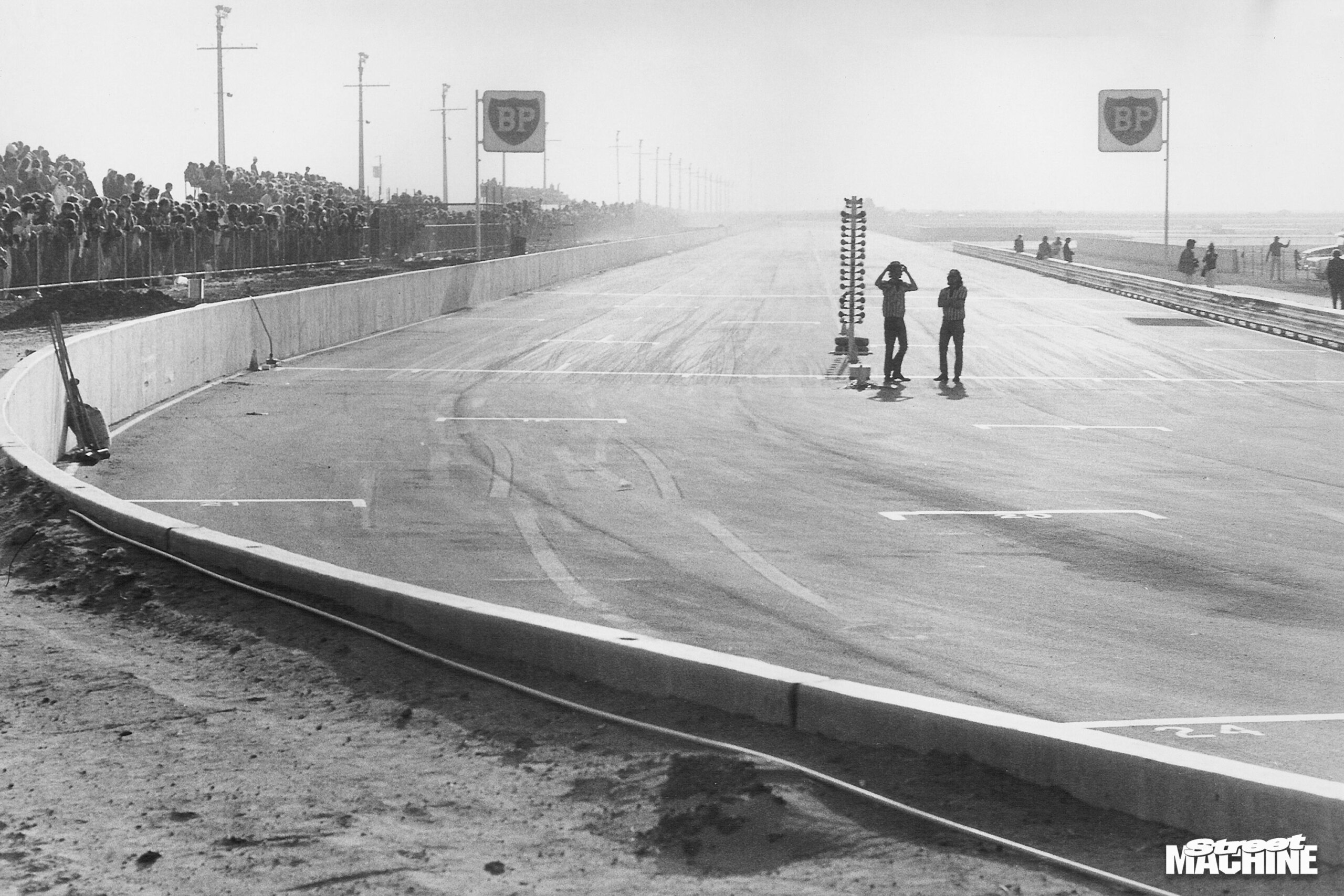
After Brooksfield closed in 1969 the core of South Australian racers had to tow 400km to Calder to get their jollies, until Surfers Paradise track owner Keith Williams announced he was to build a new track at Virginia, north of Adelaide.
The new venture – Adelaide International Raceway – was approved in 1970 and opened for its first meeting in January 1972 with a double bill of two stunning American race cars – the Doheney and Fullarton Mustang Funny Car and Vic Wilson in the Courage of Australia rocket car.
With Williams’ right-hand man, the much-respected Bill Pickett, instilled as manager, the track went from strength to strength, instantly becoming one of the big five venues in Australia, notwithstanding the limited braking area, which caught out any racer with a late ’chute. With a stopping area that was just a quarter mile in length, it was okay for smaller vehicles, but faster cars continued to have occasional trouble and plenty finished up in the catch net. There was no capacity to extend the strip, so eventually the track installed warning lights which flashed at the finish line as racers approached, warning them to get their ’chutes out quickly.
The track had a good surface, which meant good grip, and in those pre-traction compound days every racer wanted to, at some time, test his car on the AIR asphalt to see just how quick it could really go.
Williams sold the track at auction in 1982, with the Melbourne-based Bob Jane Corporation buying it by negotiation after it was passed in. It remained a prosperous centre for the sport until it was caught up in Jane’s dispute with ANDRA and the bulk of the drag racing community and slid into a string of purely local events.
Despite several quite successful promotions in recent years there have been active attempts to locate an alternative site for another strip so that championship drag racing can return to the state.
ORAN PARK ( SYDNEY, NSW )
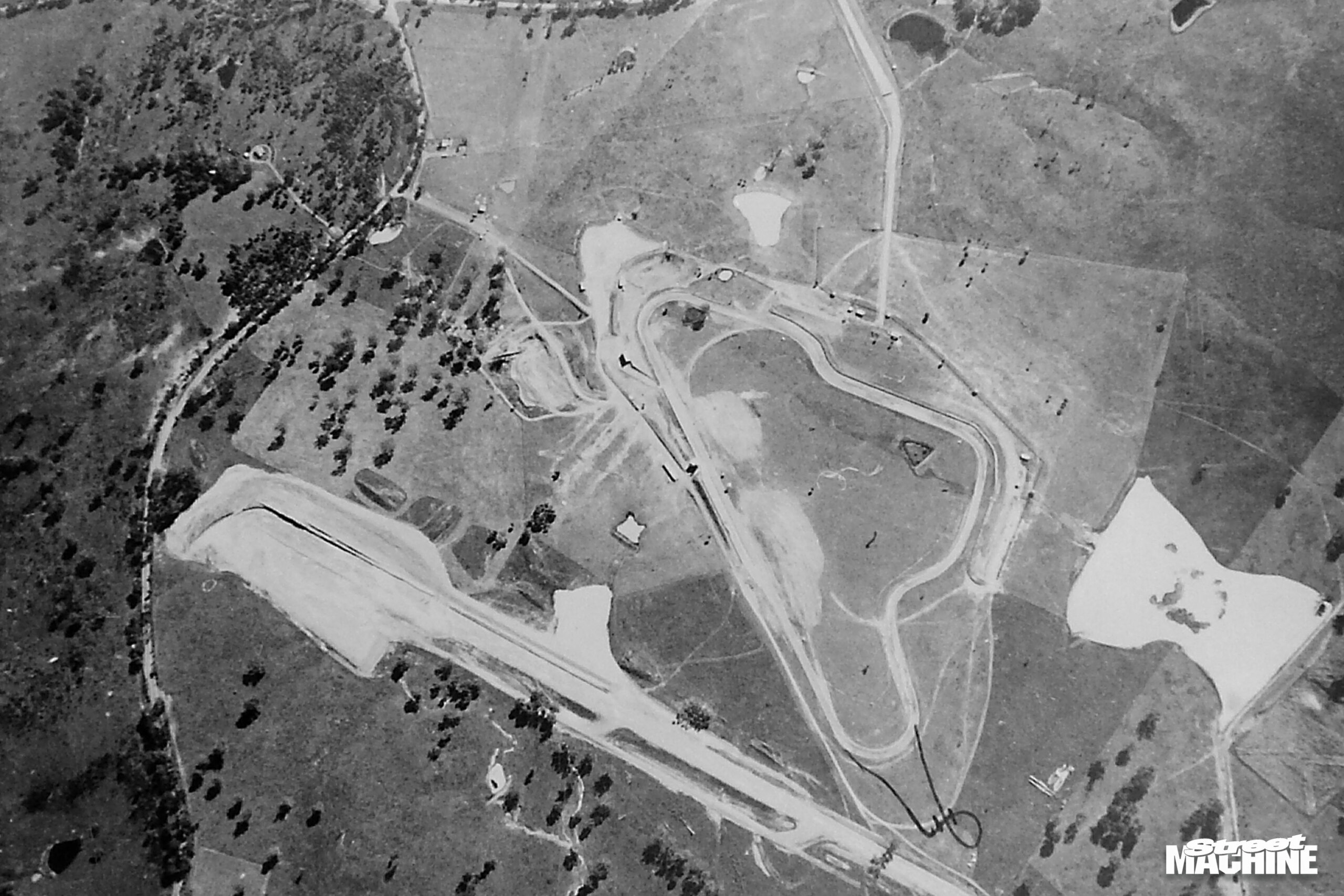
Oran Park at Narellan on the south-western fringe of Sydney had been a motor racing circuit since 1962, when the Singer Car Club launched its operations. After John Fleming was deposed from his position as manager of the Castlereagh strip, he began casting around for an alternative strip, but prospects at suburban Minchinbury and Liverpool, in partnership with Top Fuel racer Ash Marshall, fell through, so he joined forces with the Cleary family who owned the Oran Park venue.
While there were plans to establish a separate quarter-mile strip, with work commencing in 1971, this came to a halt with over 50 per cent of the work completed when the head of the family passed away and the family company was placed in suspension until probate was granted. As an interim measure the circuit’s main straight was opened for racing over 1000ft in December 1975 after relocating the control tower, which, being right on the track edge, cut off vision for the drag racing spectators around the start line.
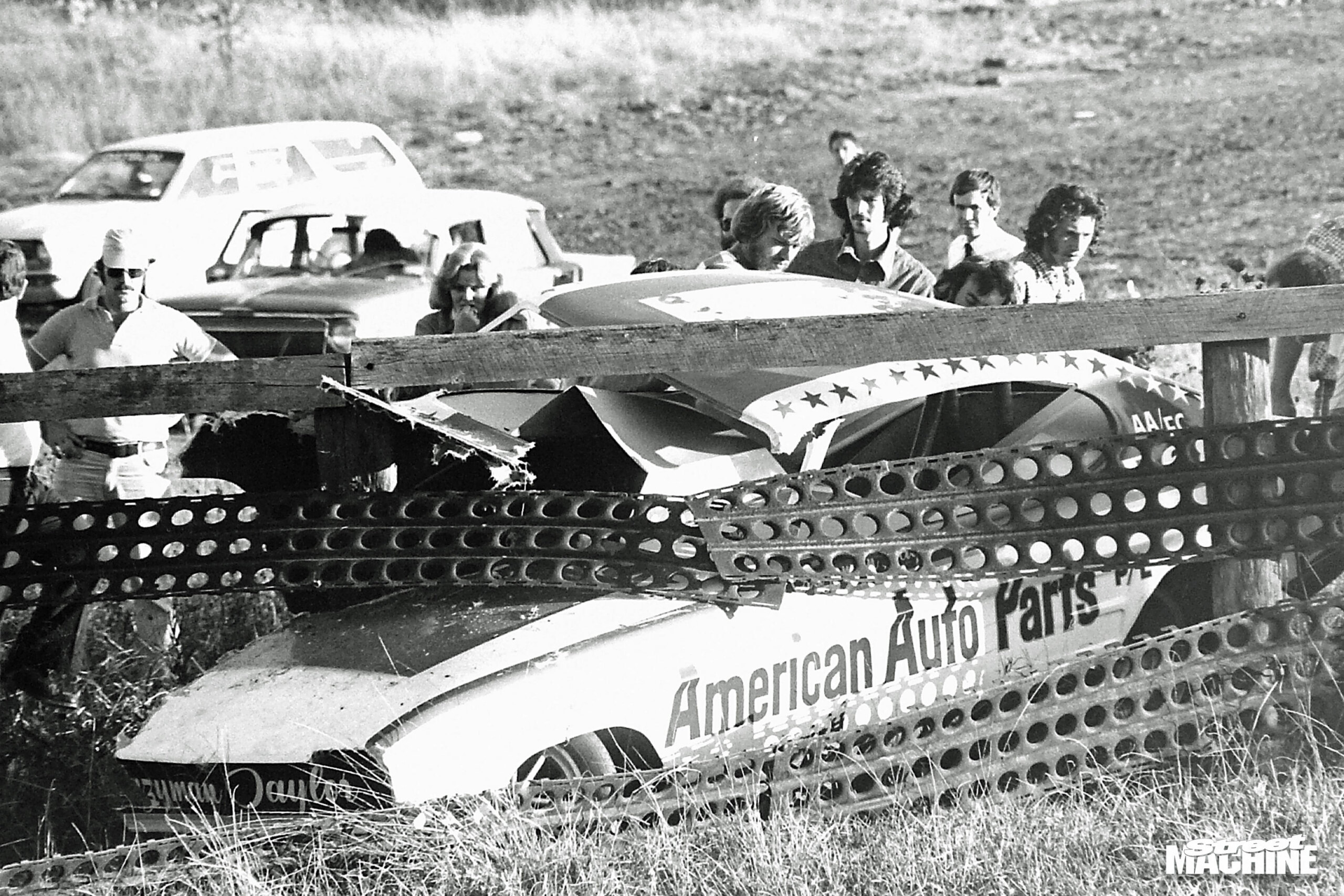
The braking area proved inadequate, even on the shortened racing distance, and there was one nasty accident as a result at the opener. This was alleviated by removing the offending safety barrier and building an extension, but this had a serious drop at the end which resulted in John Taylor’s FC finishing in a cattle yard shortly after.
Oran Park continued its drag racing into 1977 but it was never the great success that had been hoped. In the face of complaints of date clashes with events at Castlereagh, and vice versa, it simply stopped.
Drag racing ceased at the venue until 1984, when Castlereagh closed and the NSW Hot Rod Association transferred its activities to the track, though in a reduced format as the local council refused to approve the sport in all its forms due to noise issues. Despite intense lobbying and a public campaign, Oran Park’s racing remained limited to muffled forms. Drag racing at Oran Park ceased in 1991 when the sport started up at Eastern Creek Raceway.
RAVENSWOOD ( PERTH, WESTERN AUSTRALIA )
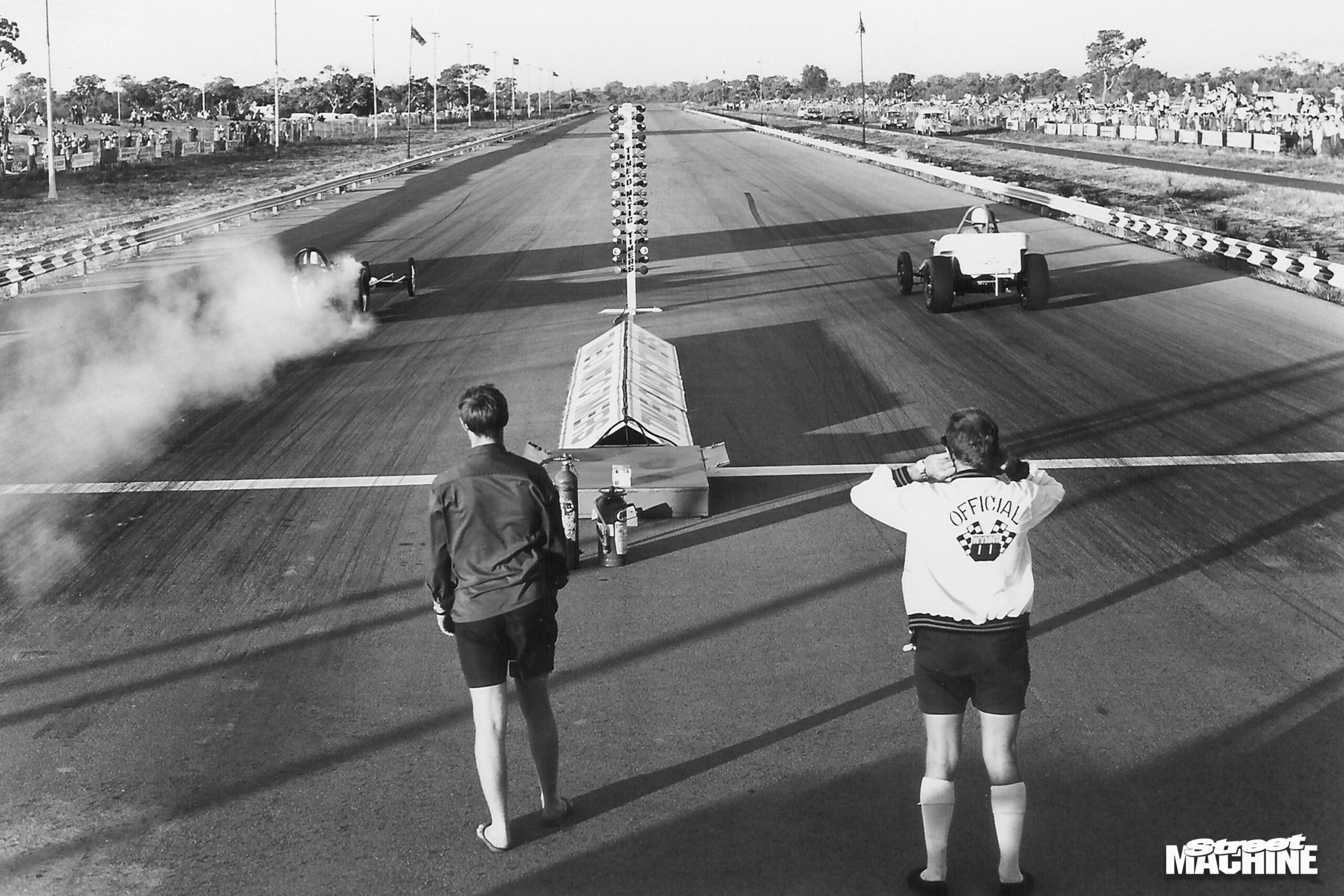
Straight line motor racing in the Perth area was a hit and miss affair until the 1320 Drag Club secured access to an old airstrip known as Fairbridge Farm, near Pinjarra, 80km south of town.
The club ran monthly meetings from April 1968, drawing up to 3000 spectators and reasonable competitor turnouts, which planted the seeds of drag racing in WA. The strip was nearly a mile long and 150ft wide, with a nicely grassed spectator area.
The 1320 Club’s ambitions soon led to an arrangement with two businessmen – Keith Tyler and John Sulley – to construct a purpose-built drag strip just outside Mandurah, on the banks of the Murray River, south of Perth.
Named Ravenswood Raceway, the track opened in November 1969 and became the heart of the sport in the west. Its history was a mix of progress and pause, with new night lighting installed in 1971 and a steady upgrade of facilities until the late 1980s.
However, there were a string of problems in the early days, including difficulties with bikie gangs, the police and vandals in the mid-70s; a near closure due to cost over-runs in upgrading plans in 1976; and a bushfire which nearly burnt out a meeting in 1982.
A triumvirate of three WA racing personalities bought the venue from then sole owner Tyler in the late-80s. Under the energetic management of firstly Kevin Prendergast and then Gary Miocevich, the track boomed, with the installation of grandstands, extensions to corporate facilities and the pit area.
The high point of Ravenswood’s history was the successful running of the 1990 Nationals, the only time the nation’s premier event has been staged in WA.
However, as with so many other drag strips, it was the encroachment of urban development – in this instance the boom of local resort areas – that brought an end to Ravenswood. The West Australian government recognised the importance of the sport and acknowledged its prior existence near Mandurah and found an alternative site. In 2000, drag racing in Perth was shifted to the new Kwinana Motorplex.
BOOM & BUST

The end of the 70s brought with it a boom in new drag strip construction: Heathcote Park in Victoria, Tarmak near Launceston, Tasmania, and River Bend near Murray Bridge, SA. Space does not permit any greater coverage of these venues in this feature, but watch for future instalments in this series.
And, while there was a strong move to major venues, the sport was often founded on small, localised events, often on temporary racing surfaces. As far back as 1958-59, hot rodders in the Wollongong area south of Sydney had organised unofficial racing at the old Picton airstrip, near Wilton.
Regional drag racing in New South Wales took place at Cowra, Orange, Parks, Forbes, Mudgee and Bathurst, and got quite serious at Broken Hill in 1971-1972.
In Victoria they raced on a closed road at Kerang, on the dirt at Bendigo, and there was a single lane track in Newstead.
Comments